Category: Tools & Workshop

  • Why Weather-Sealed Yard Cabinets Outperform Basic Outdoor Storage Solutions

    Most yard storage setups look right on day one—stacked bins along the fence, a chest tucked by the gate, a cabinet wedged by a dead corner. Everything’s off the ground and visually tidy. But “order” unravels fast when routine sets in: you grab muddy hoses, drop gloves in a rush, and reach for pruners with soil still clinging to your hands. The ideal layout starts to show its cracks after your first few cycles of use. Instead of a smooth return and easy access, you meet small blockades, cluttered edges, and the creeping sense that the setup is working against you.

    First Glance vs. First Week: The Real Test

    Out of the gate, any closed bin or chest feels like a solution, especially when grouped neatly by the wall or in a zone you want to keep clear. But organization that just looks neat quickly reveals its limits. Loose lids let in rain and leaves. Corners that were clear at setup become jumble zones by Wednesday. Each round trip—stowing a shovel, grabbing garden stakes—adds a new layer of inconvenience. Once you’re forced to slide a bin sideways or reach awkwardly behind a chest that crept out of place, you know the setup isn’t keeping pace with routine reality.

    Where Clutter Actually Begins

    The friction isn’t immediately visible. You notice it when grabbing clippers means reaching around a bin half-blocking the cabinet door, or when you have to rescue a trowel that slipped into standing water at the bottom of a supposedly “sealed” chest. Open bins that made sense fill with debris; tools you rinsed yesterday now rest against a slick of mud accumulation. Each retrieval or return is a little slower, a bit less direct—micro-hassles stacking up with every use.

    Clutter creeps in through repetition, not rescue: it’s found in the daily detours, the extra hand shuffles, and slowdowns that chip away at the promise of a tidy, ready zone.

    Sealed Cabinets vs. Reality—Where Protection Counts

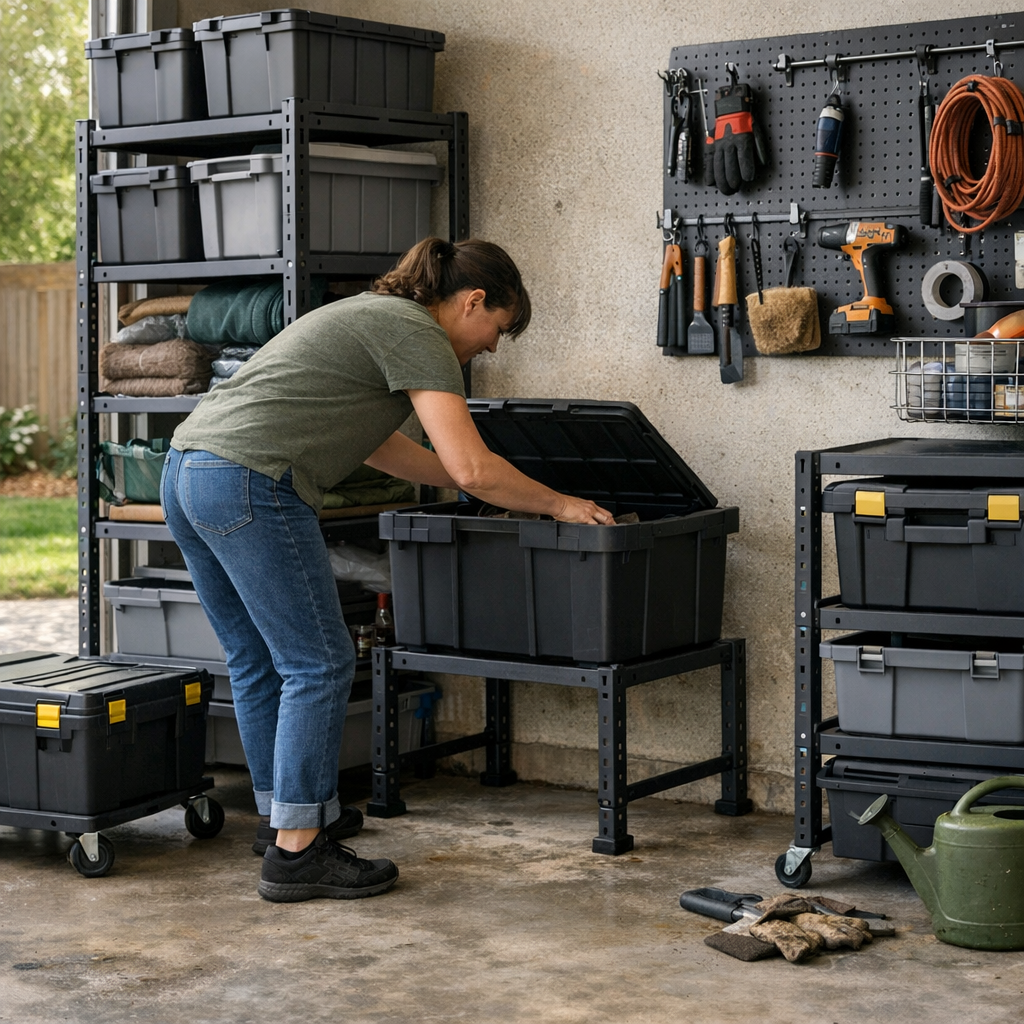
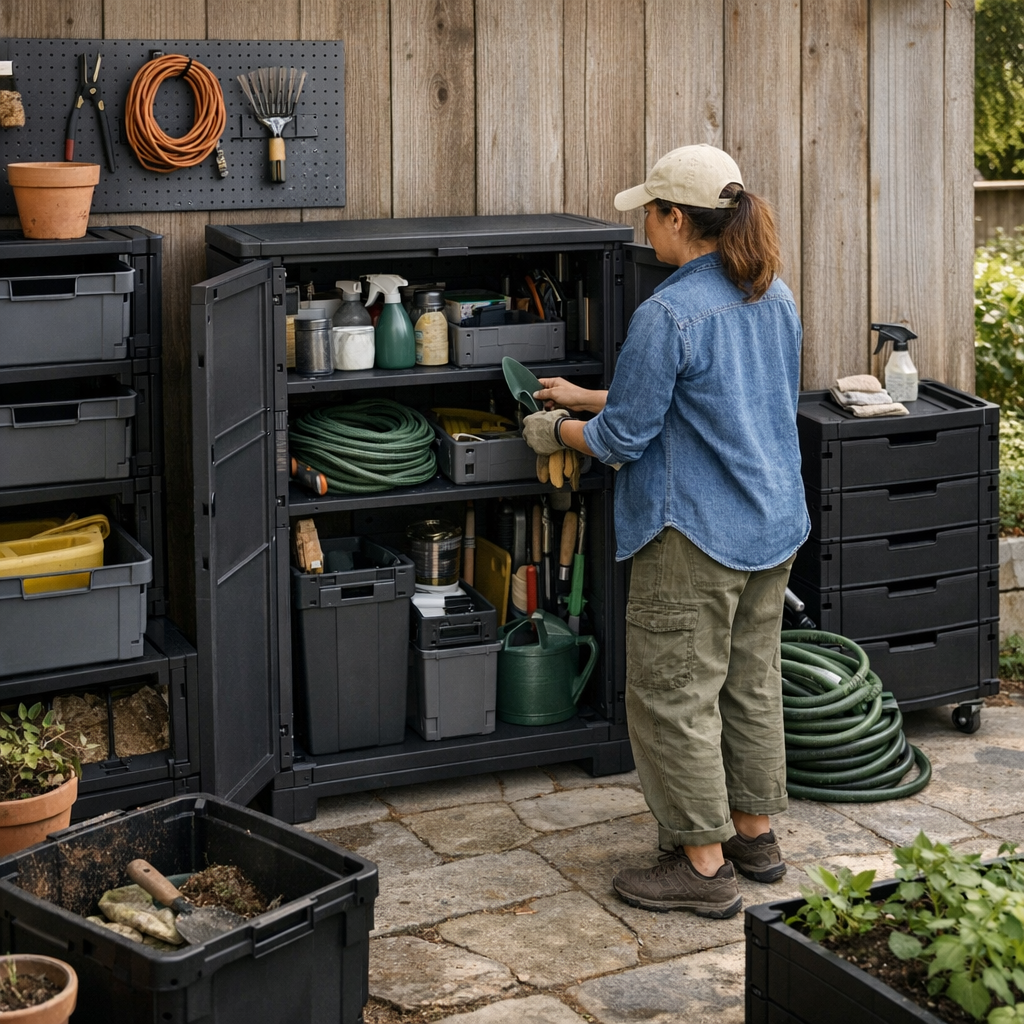
    The real difference surfaces on the third or fourth cycle of use. True weather-sealed outdoor cabinets, with their fit-tight doors and elevated shelves, protect against outdoor chaos. No corners turned into puddles, no tools blending in a debris-filled heap. When you finish watering or pruning, the action is quick: cabinet opens smoothly, everything lands in a defined slot or on a shelf, and you’re done. You don’t need a towel to reclaim your hand spade, and you skip the “sort, shake, and hope nothing’s ruined” ritual every time it rains.

    Scenes That Spell Out the Gap

    Think of this: late afternoon clean-up, a little tired, ready to wind down. The open bin? A single glove slides into a pool at the bottom, the pruner sticks on gritty residue, and you lose time trying to wedge tools around standing clutter. With a proper outdoor cabinet, you swing open the door, slot each item onto a clean, dry shelf, and close up—no improvising, no retracing your steps. The next morning, you start fresh instead of re-sorting. The cabinet isn’t just holding the gear—it’s holding the line for your whole routine.

    Reset Friction: Why “Almost-Right” Setups Stall Out

    It’s easy to cheat space with exposed bins or mobile chests, nudging them for a better fit. But these movable clusters almost always drift—blocking walkways, stacking in corners, and collecting a mess right by the entry. A bin rolls an inch too far and suddenly you’re sidestepping every pass-through. Overflow jams up a corner that’s supposed to be functional. The space that once looked so efficient on paper devolves into a slow-motion shuffle, especially as the weeks go by.

    When you swap a balancing act of loose bins for a proper weather-sealed cabinet—especially one at waist height and with the right shelf—you stop sacrificing floor space and flow. Wet days no longer spawn puddles under your gear. Dead corners aren’t clogged by makeshift stacks. That single upgrade cuts the invisible friction: fewer detours, no more blocking your own path, and less frustration on every lap around your yard.

    Spotting Genuine Friction in Your Storage Zone

    Most organization mishaps aren’t headline moments—they hide in patterns. If you shake water off gloves before starting, dodge a mobile cart you never meant to park there, or find a shelf dusted in windblown grit every week, your system is signaling trouble. Rust patches on hand tools, sluggish resets after rain, and needlessly repeated reshuffling are not minor annoyances—they’re signs that superficial order is masking deeper clutter.

    When Shelving Isn’t Enough: Racks vs. Cabinets

    It’s appealing to keep gear visible on wall racks or rails, but unless the spot is dry and protected, you’re just swapping floor mess for wall mess. Damp tools dry slowly, and visible “order” becomes an illusion when you’re still pausing to clean before use. Fully sealed storage—whether low cabinets or upright chests—not only keeps tools dry and categories distinct, but sidesteps the trap of maintaining a wall of almost-right organization that requires constant tweaking.

    Small Improvements, Big Difference: Why Protection Matters

    The benefits aren’t dramatic at first. No big reveal—just the slow, satisfying lack of clutter, hassle, and backtracking that chips away at your patience in lesser setups. Over the weeks, this streamlined routine shows its value: you walk a clear path, return items in one step, and skip the busywork of draining bins or clearing sidetracked piles. The setup becomes an invisible ally, not another round of work after the work.

    The true test for outdoor storage isn’t a tidy photo—it’s how the space handles a wet Saturday, a quick morning rush, a messy return: staying ready, not just looking ready.

    What to Fix (and What to Abandon)

    If your zone demands constant reshuffling, leaves puddles in supposedly “sealed” bins, or turns every return into an obstacle course, it’s time to rethink—not just tweak. The real gains come from direct-access flow: sealed storage raised off damp ground, routes that don’t force detours or repeated reshuffling, and layouts that match how you actually move and return gear, not just how much fits at rest.

    Quality setup means the area feels easier every week, not harder. That means fewer blocked pathways, actual wall utility (not just filled wall space), zones that aren’t collecting overflow by Friday, and cabinets that stay put—holding the line for both order and speed. True storage solutions do more than look tidy on day one—they work with your real routine, week after week.

    You can browse practical storage solutions at StackNest.
  • How Thoughtful Storage Design Speeds Up Daily Cleaning Routines

    If your home always seems to hover somewhere between “almost clean” and “almost chaos,” there’s a silent culprit: the way your storage is set up. It’s not that you’re lazy or messy—your shelves, bins, and baskets might actually be working against you. Sound familiar? You open the linen closet and instantly sigh. You reach for a flashlight, but end up digging beneath batteries and tangled cords. Entryway benches collect stray gloves, mail, and yesterday’s scarf. And every “quick” reset ends with a half-hearted shove somewhere out of sight. A space can look perfectly organized on day one, but after a handful of rushes and drop-offs, the fault lines in your storage system show fast. A setup that only looks neat can’t keep up with real daily use.

    How Storage Friction Builds—And Why Resets Start Dragging

    It’s easy to blame yourself for slow cleanups or crowded surfaces. But most of the time, storage that just holds things—without clarity or access—makes every put-back harder than it needs to be. These small frictions pile up day after day, quietly draining your time and energy.

    Where the system breaks down most:

    • Shelf edges fill with half-stacked, leaning items that block your view of what belongs where.
    • Bins that started out “organized” become mixed: today’s cleaning spray lands on batteries, tomorrow’s light bulbs beside doodads you forgot you owned.
    • Folded towels collapse into slopes, so you dig for face cloths buried underneath—every stack losing shape by midweek.
    • The front of every shelf or bin turns into a blockade; you can’t grab one thing without displacing three others.

    When life gets busy, every quick return means more hunting, unstacking, and reshuffling. Instead of putting something away in one motion, you’re double-checking piles and still never seeing the whole shelf clear at once.

    Staged for Show—But Not for Everyday Life

    The appeal of a visually tidy storage upgrade is undeniable. High shelves, deep baskets, broad bins: at first glance, it all looks calm and contained. Yet the trouble starts the minute you reach for something that’s not right at the front.

    Picture your hallway utility closet: Two big baskets—one for cleaning, one for home stuff. The system works for a week, maybe two. Then you try to return a pack of batteries and find yourself up to the elbows in a pile of extension cords, old tape, and four types of light bulbs. Tools have wandered across the aisle. The neat separation fades, things migrate forward, and eventually, you’re scooting stuff aside just to slide in a can of polish. That five-minute “straighten up” turns into a hunt-for-space event, every time.

    Maintaining Clarity: How Category Boundaries Make Real Order

    The organizing setups that actually work long-term make two things obvious: what you have and where it goes. Shelves with distinct zones, slim bins dedicated to single item types, and clear labels aren’t about being fussy—they let you grab, return, and move on, even with one hand full. No second-guessing, no balancing stacks, no rummaging behind last week’s purchase just to get what you use every day.

    A Real Fix: Swapping the “Catch-All” for Slim Dividers

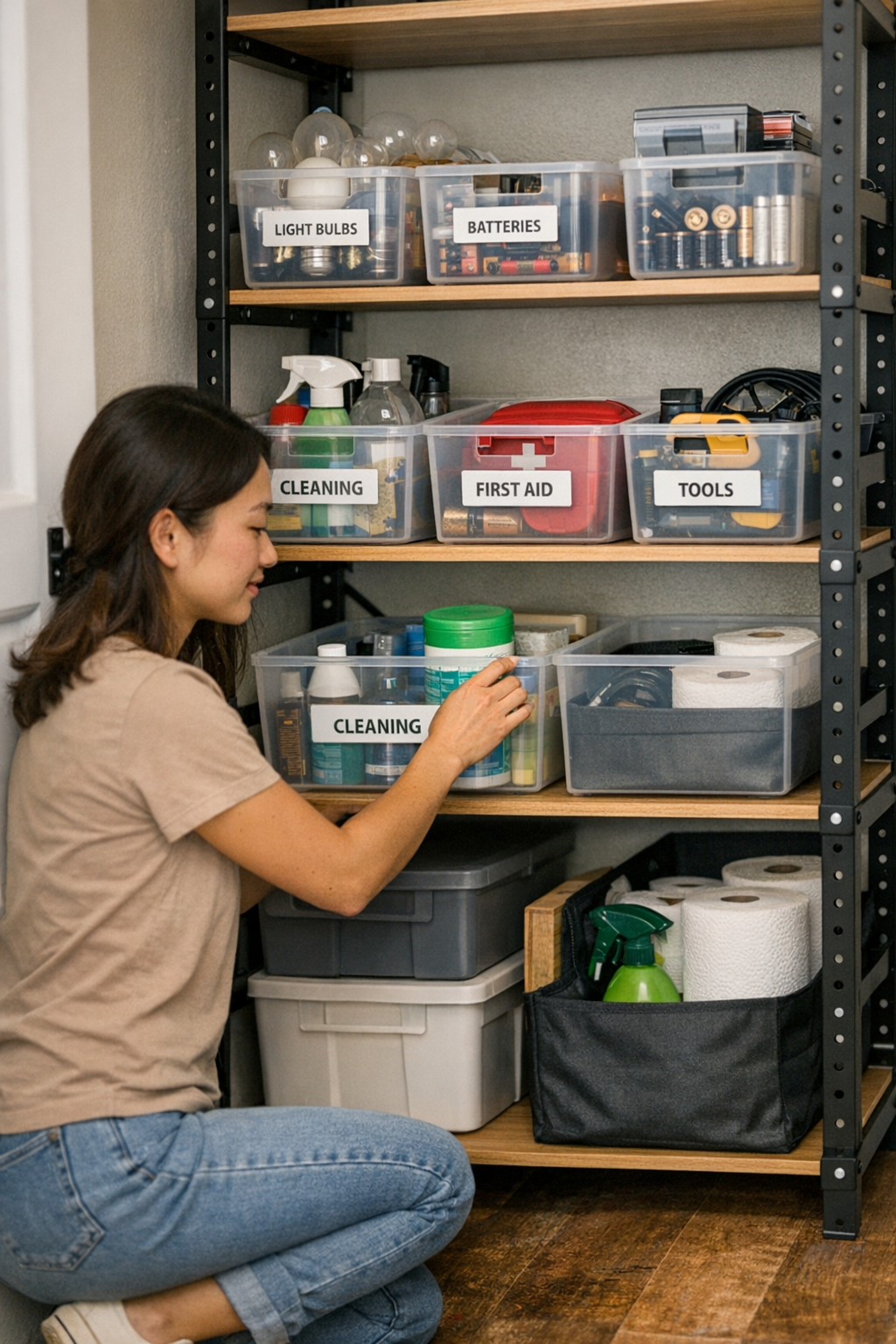
    Go back to that overstuffed closet. Instead of a single catch-all basket (where everything collects and nothing quite belongs), split the space with four narrow, clearly labeled bins: sprays, bulbs, batteries, tools. Now, each item slides into its lane. Bulbs don’t topple into wipes, a screwdriver doesn’t hide under a rag, and you’re no longer rearranging the pile just to put something away. Return an item in one move, walk away—the boundaries hold, even during the busiest week.

    Daily Red Flags: Is Your Storage Slowing Everything Down?

    How do you know your storage is underperforming? The warning signs are in the little annoyances:

    • To put one thing away, you first have to lift, shift, or dig through other stuff—sometimes every single time.
    • Categories blend together: phone chargers end up with garden gloves, mystery hardware migrates into the laundry shelf.
    • Flat surfaces quietly turn into unofficial dumping grounds, squeezing out their original purpose.
    • Each tidy-up feels close to finished, but never quite done—instead of “place for everything,” you settle for “good enough for now.”

    Contrast that with storage where every item can go right back—no shuffling, no guessing, no hesitating. If your hand doesn’t need to clear the field for every return, your reset speed improves immediately (and it actually lasts).

    Basket, Bin, or Shelf? Why the Form Matters on Busy Days

    How you store things shapes how your space feels—and how long it takes you to get out the door. Oversized baskets and deep bins are great for concealment but almost always become black holes for related (and unrelated) items. The difference is clear: an entryway bench with one big “catch-all” gobbles up keys, sunglasses, and mail into a single heap by Thursday afternoon. A shelf with compact dividers and tidy labels? You can grab your gloves or dog leash without the morning scramble—no more sliding shoes aside to find the umbrella.

    Master closets see the same story play out. An extra-large drawer looks serene for a while, but soon one sweater is wedged beneath three others, and bags start swapping spots during every weekly reset. With shelf dividers or adjustable racks, everything holds its place—sweaters aren’t lost, purses have a predictable home, and each return steps takes seconds, not minutes.

    Simple Upgrade: Make Access as Easy as Use

    If you grab something weekly or daily, its home should never be hidden behind, under, or inside something else. Add slim dividers to wide shelves so a single category gets each compartment. Use adjustable inserts to split large bins, or break up a deep drawer with upright organizers. Even just a couple clear labels fend off the slow creep of a “miscellaneous” pile.

    When “Organized” Isn’t Actually Efficient

    Lots of storage systems look magazine-ready. That’s not the same as being functional in real life. Overlapping bins, undivided drawers, and one-size-fits-all shelves stay photo-worthy only until the third or fourth real use. Then you’re right back where you started—resetting more often, reshuffling more items, and losing the speed and clarity the system promised.

    A storage system works if it keeps up with living—not just with arranging. The homes that reset fast have clear, uncrowded shelf edges, visible category lines, and a return routine that ends in one step, not five. They aren’t perfect, but they make every cleanup feel like progress—not defeat.

    Small Changes, Real Results

    You don’t need a total overhaul to notice the difference. Trade an overflowing bin for two targeted containers. Add dividers to a shelf that always becomes a “drop zone.” Stick a few labels on containers that keep swapping contents. A little more structure equals a lot less hunting, stacking, and re-doing—week after week, the minutes add up and the clutter stays at bay.

    Storage isn’t about hiding mess. It’s about supporting daily life—making it easier to grab, put back, and move ahead without the endless side quest of straightening. If your system works hard, your space will finally keep up.

    For more practical storage solutions designed for daily life, visit ClosetWorks.

  • Mastering Heat Gun Temperature Layering for Flawless Surface Finishes

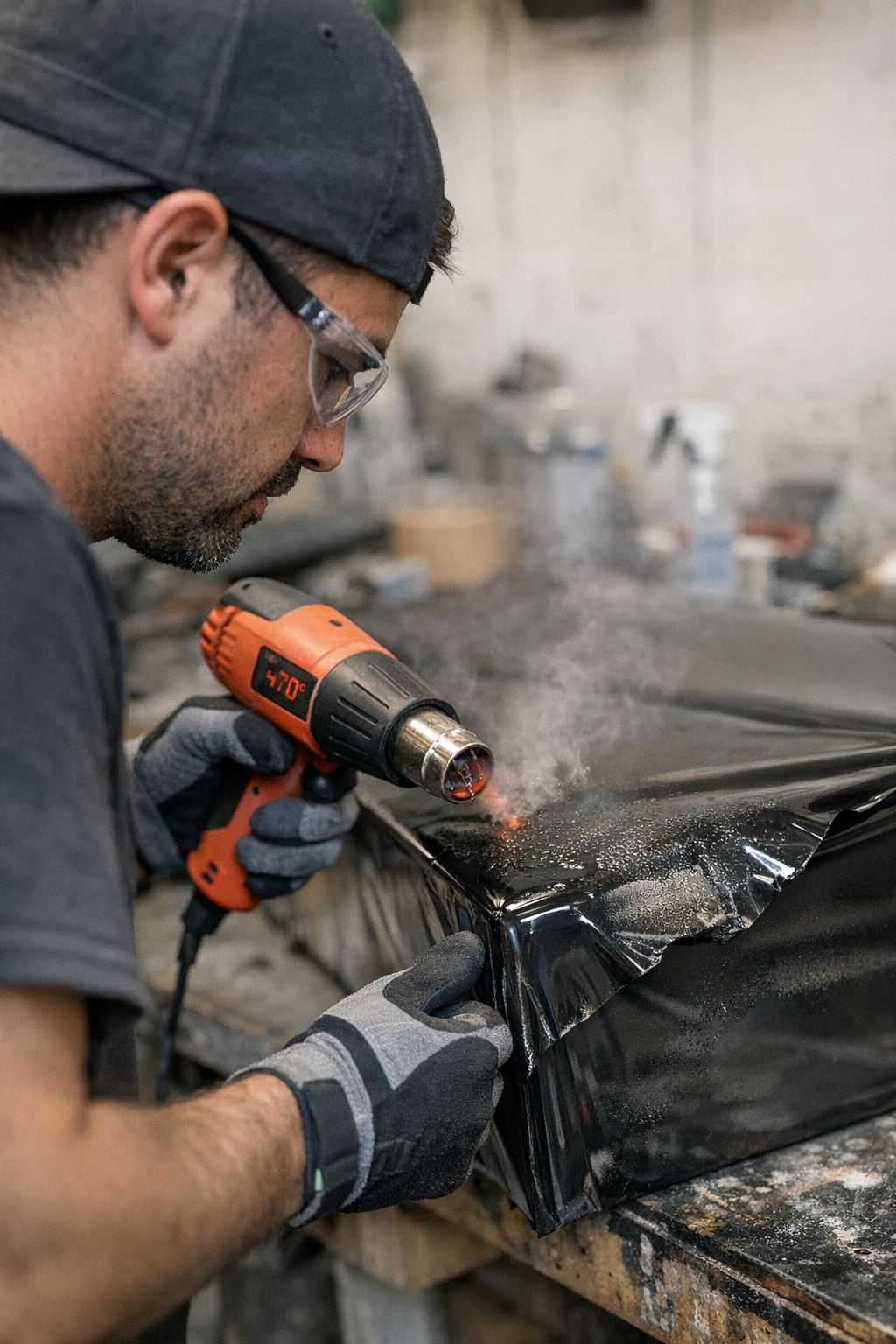
    The fourth time you pass a heat gun over a surface, the job reveals its true nature. What started as fast, flawless layering—on vinyl, pipes, or composite plastics—suddenly gets complicated. The gloss that popped after pass one turns unpredictable by pass four. Edges start to ripple. Gloss turns patchy. The surface, once perfect under fluorescent shop lights, gathers small betrayals: a rough spot here, a hairline bubble there. Every finish flaw adds time at the sanding bench, working overtime to erase mistakes that crept in while you tried to move fast and keep up with the rest of the workbench routine.

    Early Passes Hide the Real Battle

    It’s easy to trust the first layer. Both bargain and mid-range heat guns, straight out of the box, give you steady airflow and set-and-forget control. The job feels predictable—until the real workflow kicks in. Drilling, cutting, battery swapping, and then, by the third or fourth layer, you notice what the specs never tell you: a flawless start doesn’t guarantee a finish you can stand by. Rushing through the first passes encourages carelessness on the next, and that’s when seams turn soft, haze creeps in, and tiny flaws appear in places you already promised yourself you wouldn’t have to sand again.

    Layering Under Pressure: Where Precision Slips

    End of shift. You press a new vinyl seam. Yesterday’s panels looked sharp, but today, fine dust clings to sticky edges and that two-second hesitation with the gun leaves an entire corner too soft. Overlapping jobs mean you’re juggling overhead sanding, bit changes, and a queue of pieces all needing the same tool. The real threat? Sudden, careless temperature jumps—especially swings of 30°C or more between cycles—quietly set you up for streaks, micro-bubbles, and stress lines beneath the top layer. They don’t look like faults at first glance, but run your gloved hand along the seam, and you’ll feel roughness that wasn’t there yesterday. That’s the price of rushing in real-world shop conditions, whether it’s cramped job trailers, an unheated garage, or just pushing to clear a cluttered bench for the next stage.

    What Happens When You Rush the Heat

    Under pressure, it’s tempting to crank the heat to speed things along. You’re swapping dead drill batteries, scraping glue, and stretching the workday. The temptation is real—but the repercussions are, too:

    • Blistered edges—raised seams and random bubbles hiding out until your cleanup pass reveals them, ideally before the supervisor does.
    • Patchy gloss—a band of dullness or streaked surface where air lagged or the temperature crept up far too fast.
    • Sanding purgatory—flaws locked under layered plastic, demanding coarse grit or even a full strip and restart, which ruins flow and morale fast.

    Most of the time, these missteps don’t show up until several batches later, long after the chance for an easy fix has passed. By then, workflow slows and the project starts feeling like a lost cause.

    Small Adjustments That Actually Save Jobs

    The experienced crew learns fast: it’s not about fancy heat gun attachments or spec sheets—it’s about patience and repeatability. Move in tight temperature steps—no more than 20°C at a time—and let each layer settle. It’s a discipline as much as a technique. This rhythm cuts down on rework, keeps seams sharp, and makes end-of-day cleanup less of a chore. When you run a batch of a dozen parts, and your finish sticks, you notice real efficiency: less running back and forth for tool swaps, fewer surprises after cooling, and less fatigue chasing flaws down the line.

    Those small, habitual tweaks—steady increments, regular cool-down checks—quietly beat “maximum power” shortcuts every single time. Workflow stays smoother, and you spend more hours assembling or fastening new projects, not revisiting last week’s mistakes.

    Know the Signs Before It’s Too Late

    A heat gun that’s a little unpredictable is like a dull cutter: by the time you spot burnout, the damage is baked in. What should you actually watch for, before the job’s out of reach?

    • Puffed seams and softened lines—corners lose their edge, particularly where overlaps stack up or the temperature gets left unchecked.
    • Discolored patches—that off-tint or yellowing that tells you heat isn’t settling evenly, especially nasty on white plastics or light panels.
    • Scorched fragments—barely visible at first, but once layered over twice, nothing but a sanding wheel is going to get rid of them.

    Pause after each pass. Use the downtime from other tool changes—bit swaps, battery charges—to give each layer a quick inspection. It saves jobs, saves panels, and saves your nerves on deadline days.

    Getting Reliable Results, Not Miracles

    Great layering isn’t about chasing the latest multi-mode heat gun. It’s about using what you have in a way that fits the pressure and pace of real shop days: keeping temperature jumps in check, respecting cooldowns, and treating each pass as a chance to get it right—not just fast. Every new tool or blade upgrade helps only as much as your basic approach. In the real world, the small habits—tight control, methodical pace, constant checking—are what turn out consistent, professional surfaces batch after batch.

    The takeaway: Don’t let the quick wins of early passes fool you. Stay patient, keep temperature shifts measured, and let each layer prove itself before moving on. It’s a discipline, not a shortcut—and over the long haul, it’s what gets you off the sanding bench and back into real work.

    For tools and equipment built to handle the real grind, visit Gumboll.

  • How Weather-Driven Storage Design Prevents Hidden Damage Over Time

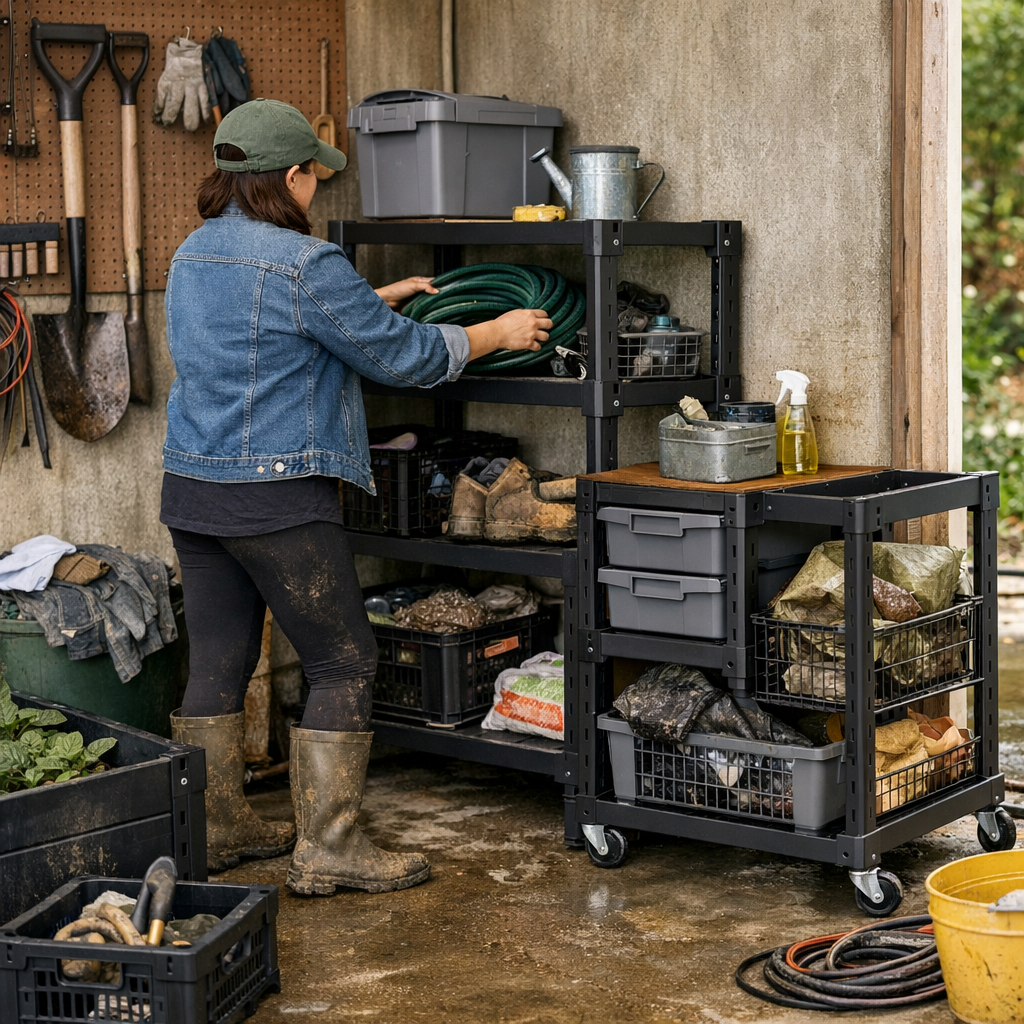
    Nothing tempts optimism like a freshly organized garage or shed. Crisp columns of bins, spotless wall panels, every cart and unit just off the floor—it all feels finished, even resilient. But every returning user recognizes the illusion. A busy week, a string of soggy days, and what worked on day one starts working against you. The real test isn’t how slick the setup looks, but how it holds up, day after damp, messy day, to the real push-and-pull of weather and use.

    Why “Off the Floor” Doesn’t Buy You Immunity

    There’s an undeniable appeal to getting storage up and out of the puddles. Bins perched on shelves, racks wheeled just an inch clear of the slab, all suggest that a tidy fix is in place. Until rain or snowmelt inevitably finds a way in. The smallest gap invites a cold pool under those carefully raised bins. Condensation rides up slab floors and clings to shelving legs. With each wet cycle, what looked organized morphs into a humid puzzle—bins tack to floors, wheels grind instead of roll, and suddenly the direct path to your tools is blocked by last week’s emergency reshuffle.

    The pattern is painfully familiar: That tight wall of bins starts dragging in corners. Mobile racks don’t budge when you need quick access. Overflow piles settle in just out of reach, building up with every chore until even the cleanest arrangement now slows your routine instead of streamlining it.

    Where Weather Sneaks In, Function Slips Out

    Every storage area carries its built-in weak spots. Maybe it’s the baskets stacked near the chilly outer wall. Maybe it’s the rolling trunk you regret every time you have to muscle it back into place. These friction points only multiply once water and humidity get involved:

    • Pooled water slips in unseen. Even a minor seam under shelving or a low cart can become a reservoir, quietly wicking moisture up into your gear.
    • Condensation lurks beneath and behind. Walls and bases that seem bone-dry turn out clammy on inspection, pushing rust along the frames and swelling the bottoms of particleboard.
    • Overflow turns into obstacle. Every time storage units clog the main route—from door to bench, or out to the garden—the irritation quietly escalates. Resetting doesn’t happen seasonally; it becomes a weekly battle.

    This isn’t just a yearly inconvenience. Left unchecked, each round of weather makes the system more sluggish. Access slows, paths choke up, and the difference between “looking organized” and being usefully organized grows wider. Bins that used to be easy grab-and-go zones become dead-end stacks. The once-promising setup becomes something you work around, not with.

    Frustration Arrives Before Damage

    The most telling signs a setup has gone sideways aren’t ruined tools or warped panels. It’s the little frictions that show up every time you try to use the space:

    • You end up shuffling two or three bins just to keep the way clear for the door.
    • A quick grab for shears means always squeezing around that same cabinet edge—again.
    • Resetting after a job drags on, as swollen bins wedge together and wheels resist the turn.
    • Overflow “catch-alls” swallow not just spares, but damp towels, dirt, and whatever you haven’t found time to sort—making layout and access worse with every pass.

    Surface order hides these growing inefficiencies. Your system might look crisp in a photo, but live-use tells a different story: flow gets clumsy, resets stretch out, and frustration builds every time a once-bright idea ends in an awkward cart dance. Storage that fits but never truly clears a path, ends up stealing time and momentum with every visit.

    Weather-Smart Setup: Real Tweaks That Hold Up

    So what stands up to the ongoing mess and moisture? It comes down to setups that don’t just avoid the floor—they beat the weather where it attacks most:

    • Lift everything—properly. Raise bins, racks, and mobile units a solid two inches or more. Sturdy blocks or feet, not just thin casters, break the path for sneaky seep and mean nothing welds itself to the slab after a wet weekend.
    • Give your storage room to breathe. An inch or two gap along every wall isn’t wasted space—it keeps condensation from creeping up and prevents mold from taking root.
    • Skip the dead corners and risky seams. That awkward spot behind the chest invites soggy buildup. Leave it open or limit use to gear that shrugs off damp.
    • Go non-absorbent when you can. Plastic bins, powder-coated metals, anything that sheds rather than soaks up moisture. One damp blast shouldn’t mean a season of stuck lids or warped bottoms.

    Spot-test your fixes: After heavy rain, wedge a wood strip or paver under the lowest bins and see which ones actually dry out. The ones that still sweat or cling need a better lift or a new home—no matter how “waterproof” the container says it is.

    Real Life: When “Safe” Storage Trips You Up

    Picture gearing up for spring yard work. A week of rain, and now those bins—raised just an inch, stacked along the far wall—are sticky, lids won’t budge, and the aisle to your spade twists around half-boxed supplies. Each small design compromise from day one now piles up, literally, in blocked corners and awkward footprints.

    The turning point comes with a rethink: Lifting every bin higher than before and refusing to let storage block the main lanes. Suddenly, carts and bins come free without a wrenching pull. Cleanup after every job takes minutes, not a half-hour shove. You spend less time rescuing supplies, more actually using the space—rain or shine.

    Routine Patrol: The Non-Negotiable Upgrade

    No system is ever fully set-and-forget. A weather-hardened setup still needs an occasional walk-through: move a bin, slide out a shelf, open up dead corners. These seasonal patrols keep airflow moving, outsmart slow leaks, and catch issues like early mold before they turn decks and bins into rescue projects. It’s a habit that pays off every time the next big reset never comes, because small adjustments keep the space on track.

    The Setup That Survives Return Trips

    The setups that truly work aren’t the ones that look perfect when freshly installed. They’re the ones where every return trip—rainy, rushed, or routine—feels easier than the last. Where raised bins and clear zones mean fewer reshuffles, and every main path stays open for actual movement, not just display. By treating weather as a regular opponent and leaving room for quick fixes, you’re building a storage system that quietly stands the test of time and the messes you throw at it season after season.

    StackNest

  • Why Leaving Gaps Between Storage Bins Transforms Closet Organization

    It starts out looking perfect—or so you think. You line up bins across your closet, pantry, or laundry shelf, pressing each container tight against the next. The shelves look satisfyingly full, like you’re making every square inch count. For the first day or two, you feel organized. Then real life creeps in: you reach for a towel, push aside a cereal box to grab coffee filters, wiggle a laundry basket out from under a precarious stack. Each move ripples across the shelf. Soon, bins drift, stacks lean, and your careful setup loses its edge. Instead of finding what you need—or putting something away—in one smooth move, you find yourself hesitating, shuffling, and reconfiguring. The shelf fills up, but your daily rhythm stalls.

    Why “Packed Full” Makes Storage Harder

    Rows of bins sitting shoulder-to-shoulder look efficient in photos—but in a lived-in home, this tightly packed approach is where the problems begin. There’s no breathing room between categories. Containers blend together; a section for linens blurs into board games, dish towels start inching into the napkin bin, and loose socks migrate to wherever they land. Every quick grab tugs at neighboring stacks, making the next reach a little more awkward. Categories lose their shape, and the act of putting something back becomes a slow puzzle—where did this even come from?

    It’s not just a visual mess. It’s a practical slowdown. Wasted time adds up: searching for the right basket, moving three things to reach one, or returning items with a sigh instead of a snap. Little by little, efficiency leaks away—until “organized” no longer feels organized at all.

    Purposeful Gaps: Small Spaces, Big Difference

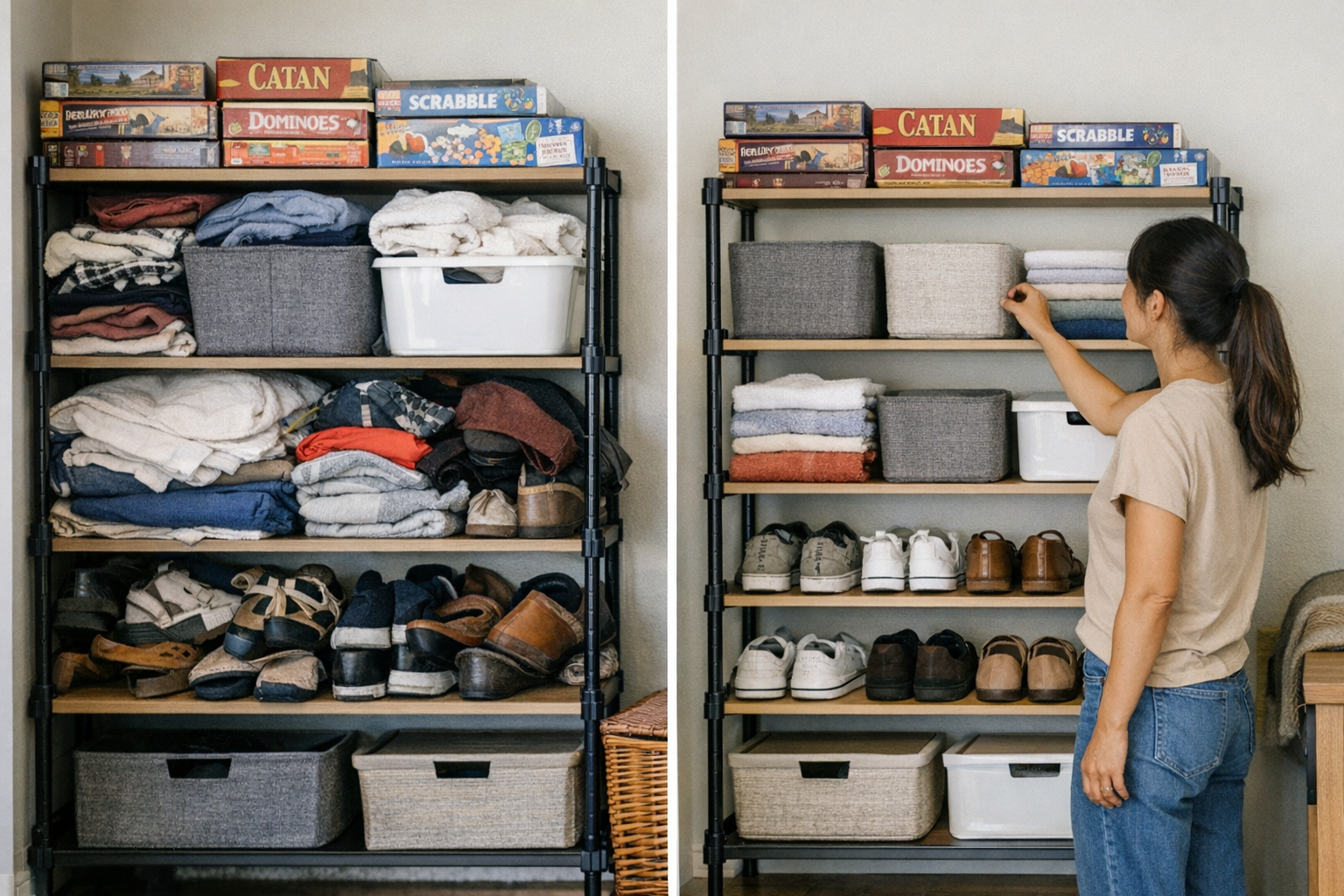
    The remedy isn’t to buy more bins, but to introduce small, visible gaps—about a finger’s width—between each container or category. This isn’t lost space. It’s a clean line between zones, a visual and physical reset point. Need to put away bath towels? The gap lets you target their spot without nudging a pile of board games out of the way. Categories stay sharp. Grabbing one thing doesn’t topple an entire row.

    After just a few days of normal use, the difference is impossible to miss. The boundaries hold, even as you and your family reach, return, and repeat. There’s no guesswork. Resets take seconds, not minutes—because you know where everything lives, and the system doesn’t break down with every hurried put-away.

    Real Storage Moments: What Changes With Gaps?

    Closet Shelves: No More Stack Collapses

    Think about a closet shelf holding out-of-season clothes, blankets, and shoe bins. When these touch, pulling out a single blanket means disturbing everything else—nothing is stable. Shoes wander into linen territory, hoodie sleeves snake their way into the sock bin, the “home” for each item feels temporary at best. Returning items means restacking or, worse, starting over.

    Leave an inch of space between each bin: suddenly, each category stands on its own. Need something from the back? No more domino effect. Linens slide back in beside games, not on top. Shoes don’t invade towel territory. A week later, categories are still clear. Tidying up takes seconds, not a full-blown re-org.

    Pantry: An End to the Scavenger Hunt

    The pantry is where well-meaning systems go to die, fast. When bins are squished together, snacks migrate into the pasta basket, lunch supplies nudge pantry staples into hiding, and soon every shelf becomes a general “miscellaneous” zone. You waste time rooting around for the last pack of rice cakes or knocking over three cans just to grab the oats in the back.

    Add narrow gaps, and the lines stay clear—less spillover, less shuffling. You see what’s missing before it gets buried. During the most rushed moments—packing lunches, prepping dinner—the right item is just a reach away, not a five-minute hunt.

    Staying Clear When Real Life Isn’t Neat

    Shelves always look their best right after a full reset. But as the week wears on, entropy wins—unless there’s a system that actually stands up to daily use. Visible gaps become a structural buffer, absorbing the chaos of life in motion: hurried hands, shifting needs, and family members who don’t see “organization” the way you do. Instead of everything devolving into one muddled heap, boundaries keep drifting items contained. When something’s out of place, it’s obvious—and fixing it is a quick adjustment, not a weekend project.

    Those “lost” inches of shelf space? You get them back through faster resets, steadier stacks, and less drift—meaning you spend less time fighting clutter and more time letting your system just work.

    Everyday Tips: How To Add Gaps Without Losing Space

    • Target your busiest shelves first: Where do things get messy fastest? Pantry snack zones, closet top shelves, entryway cubbies—start there for the biggest payoff.
    • Keep gaps just wide enough: All you need is space for a finger between containers—not a cavern. It’s about signaling a boundary, not giving up valuable real estate.
    • Test and tweak: After a week, take stock: Does everything still feel “zoned”? Are bins creeping together again? Adjust as needed—move things back, or tighten up if the gap feels too big.
    • Experiment small: Try this approach on a single problem shelf before committing. You’ll spot friction points fast, and see if the change holds up after a week of rushed mornings or after-school dump zones.

    The Spaces Where Gaps Matter More Than You Think

    Certain areas are naturally vulnerable to “category creep”: the utility room, the main entryway, any closet multiple people use. Gaps here are more than cosmetic—they keep peace and clarity. Kids see where shoes go, not just where the pile is biggest. Housemates don’t argue over where cleaning products start and party supplies end. Each reset—no matter how small—reinforces the order, making it durable instead of delicate.

    Even in less-frequented spots, these breaks work as an early warning system. When bins suddenly fill, the overflow is obvious, not hidden. Instead of spending Saturday undoing a week’s worth of gradual clutter, you catch it mid-week with a two-minute sweep.

    What You’ll Notice After Living With It

    The real payoff isn’t on day one. After a week, maybe a month, compare the shelves that looked “full” with the ones you gave breathing room. The gapped shelves don’t just look calmer—they are easier to use, faster to reset, and hold their organization even as household needs evolve. When you swap out winter gear for swim towels, or kids’ clothes for school supplies, boundaries stay clear instead of vanishing overnight.

    Just as a pause between songs makes a playlist better, intentional negative space is what turns shelves from stressful to sustainable. Those little gaps aren’t lost storage—they’re the invisible structure that helps order survive daily life, week after week.

    Shop ClosetWorks storage solutions here.

  • Why Matching Screw Heads to Driver Bits Prevents Costly Jobsite Errors

    You feel it before you see it: the bit stutters, the screw head chews out, and suddenly a smooth drive is replaced by grinding resistance and ugly scars around the fastener. This isn’t the rookie mistake of the first screw—this is what happens as the hours stack up, as repetition exposes the difference between “good enough” tool pairing and the small mismatches that can sabotage your finish. On deck builds, subfloors, framing runs—when the pace matters and consistency pays the bills—a mismatched driver bit isn’t just an annoyance. It’s what slows you down, wrecks your lines, and, an hour in, turns tool confidence into tool fatigue.

    Why “Close Enough” Isn’t: Real Consequences of Bit-Screw Mismatch

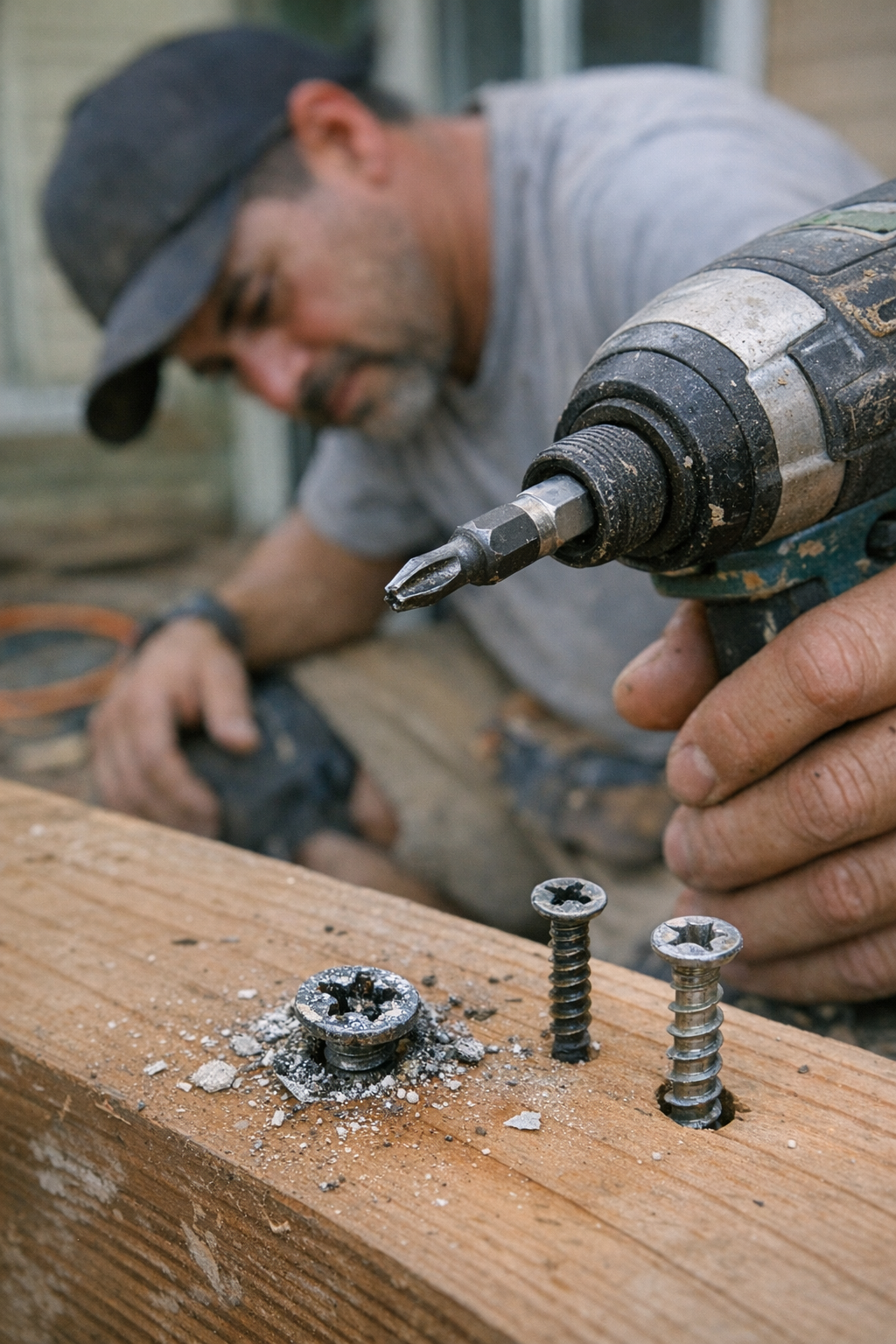
    Spread out a pocketful of crosshead screws—Phillips, Pozidriv, even JIS—and they all blur together. When you’re behind schedule or working in low light, it’s easy to grab the “almost right” bit and push on. For the first few screws, there’s a false sense of security: the fit seems tight; the screws bite. Fast-forward fifty screws, though, and the cost starts tallying up. Cam-out lines snake across the heads. You get screws proud of the surface, seams you have to wrangle back together, driver bits that start to feel like they’ve got a mind of their own. That tiny slop at the bit tip multiplies—joint after joint, panel after panel—until proud heads and unsightly chips become not just cosmetic issues but real structural annoyances. More time sanding, more time re-aligning, more patchwork just to make things look finished.

    How Bit Problems Multiply Over the Day

    What starts as a barely-there wobble turns into a pattern. Especially with near-identical bits—Phillips, Pozidriv—the difference hides until you’re deep in a board run. As the torque ramps up (fastening subfloor, finishing drywall, pinning decking), you hear the grinding skip. The driver jumps, leaving those silvery trails, and then you’re wrestling half-driven screws or scraping knuckles on the joists prying out mistakes.

    The problem is relentless with impact drivers. Under speed, every mismatch is magnified—sometimes you get a perfect drive, more often there’s a slip or a flare just as the joint tightens. You lose the steady rhythm, and so does the work.

    On Site: Why “It Fits” Can’t Cut It

    Tool tests don’t stop at a handful of screws. Real jobs look like full sheets, long rows—one after another for hours. Whether you’re running fasteners through treated lumber or pre-drilled metal, your bit is in the wood as long as your hands are. If you reach for “close enough,” bit-to-head slop quickly blooms into bigger problems: cam-outs multiply, screw heads collapse, and once-tight seams drift as tension gets lost mid-run. Suddenly, you’re pulling fasteners back out, re-setting panels, burning minutes on fixes you wouldn’t need if each drive actually counted.

    Fatigue: Not Just Physical

    The real grind of cam-out isn’t just how it slows your hands. Every time the driver skips and the bit smears, you’re forced to double down—more pressure on the trigger, more micro-adjustments, more minutes lost swapping bits or chasing a “good enough” fit. The wrist takes the hits, but so does your focus. Rework interrupts the flow, turning straightforward tasks into stop-and-start marathons.

    Where Small Details Change Everything: Phillips, Pozidriv, Torx, and Square

    What looks identical in the toolbox rarely acts identical under stress. Phillips and Pozidriv—even the most practiced eyes can confuse them, but their performance tells the truth after a few dozen screws. A true match lets you cruise: reliable grip, predictable depth, zero hesitation between fastenings. But a lookalike bit? Suddenly you’re finding metal dust on the tip, feeling the bite go soft, watching screws stall halfway through the board.

    The stakes go up with harder wood and high-torque drivers. Perfectly matched sets—Torx for Torx, Square for Robertson, Phillips for Phillips—turn what used to be guesswork into muscle memory. Each screw seats cleanly, rows pull flush, and the only time you pause is to reload the driver. Over a full workday, that predictability keeps projects moving: less rework, fewer strip-outs, and smoother transitions panel to panel. The contrast is real—the day’s effort goes further, the finish looks sharper, and the whole job feels less of a grind.

    Fasten Smarter: Habits That Save Projects

    Swap bits at the first sign of trouble. Don’t settle for “almost works”—replace worn or dirty bits before they force costly fixes. Keep your bit sets organized and within immediate reach, especially for high-turnover tasks. Spot metal shavings early? Bit skips even once? Better to change now than to dig out ruined screws later.

    When loading up for high-speed fastening, take three extra seconds: check not just the size, but the actual pattern. A Torx bit that’s even slightly off won’t hold up under torque; a Phillips or Pozidriv that doesn’t fit true is an invitation for cam-out chaos. If the bit rattles inside the screw, swap it. That hesitation is your warning; don’t ignore it. Every swap is cheaper than a half-day spent hiding torn-out fasteners.

    Field Habit: Run the “Last-Check” Test

    Before tackling a row—be it framing, drywall, or trim—run two test screws. Listen for the click, feel for immediate slop, and actually look: is the screw sitting flush, is the drive clean, is the bit quiet? If a test run shows trouble, fix the pairing now. Catching small mismatches here means fewer surprises mid-job and less strain at the finish line.

    Warning Signs: Don’t Ignore These Bit-Head Clues

    • Driver skips or slips under steady pressure
    • Metal or paint dust gathering at the screw head
    • Screws that never seat flush—no matter the pressure
    • Tiny gaps showing up after you finish a panel
    • Bits and screw heads feeling loose, even fresh out of the box

    Any of these is more than an annoyance—it’s an early warning that your setup needs work. Waiting only makes the repair job longer and the day more frustrating.

    The Real Payoff: Why Bit-Screw Matching Changes the Job

    The win isn’t perfection—it’s consistency and control, especially when speed matters. Matching bits exactly to each screw head isn’t busywork; it’s the fastest fix for preserving workflow, preventing fatigue, and protecting every visible edge and seam. That minor adjustment—choosing the right bit every single time—pays you back over an entire project. Suddenly, fastenings stay flush, corrections shrink, and you’re able to hand off a finish that stands up to scrutiny. Every matched pairing saves a handful of seconds, but across hundreds of screws, it’s the margin between sprinting to catch up and moving confidently to the next job.

    On every worksite, a smarter approach to your bits doesn’t just cut out hassle—it keeps the work clean, the timeline tight, and your tools (and wrists) ready for more.

    http://gumboll.myshopify.com

  • Why Modular Outdoor Storage Outperforms Traditional Weatherproof Chests

    The first day you finish an outdoor storage zone, it looks like you finally solved the chaos. The bins line up in crisp rows, the chest is wedged tightly to the wall, and every tool stands at attention on a shelf. You step back and feel ready for anything—until reality takes over. The next rain rolls through. You slog in, boots dripping and arms loaded, only to trip over the chest blocking your path. The “waterproof” lid jams on the wall, impossible to open without shifting the whole box. Gloves and towels pile up at awkward angles. The walkway that looked so clear yesterday now feels like a crowded alley, and each return becomes a clumsy detour through muddy bottles, tight corners, and bins too packed to budge.

    Why Order Doesn’t Survive the Elements (or Real Life)

    It’s not the setup—it’s what happens after. Outdoor storage always looks finished on day one, but repeated weather and daily use expose every shortcut. Lid clearance you never considered is suddenly tight. That chest whose footprint once felt smart now traps your movement, forcing you to sidestep and nudge it for every pass. Tools creep into unused corners, creating new overflow spots you never meant to have.

    This isn’t a flaw in your plan—it’s what happens when real routines crash into static arrangements. You bend around bins to grab one rake, only to notice you’re always moving something out of the way. The clever wall rack now breaks up the space so much you flow from task to task slower than before. “Organized” melts into aggravation as dead corners swallow gear and tight gaps choke the route you walk every day.

    “Organized” At a Glance, Friction Every Time You Return

    The visual calm of opening day has a hidden cost: movement stalls, access tightens, and you spend more time fixing the setup than using it. The difference between “it fits” and “it works” gets obvious fast. The matching bins that lined up so satisfyingly now block you when a single awkward rake or lopper won’t slide in. The neat shelf you planned for gloves crowds the entry the moment a basket overflows. Every trip out means stepping over one thing, shifting two others, and telling yourself—again—you’ll reorganize later.

    The symptoms build up in daily returns: the rush to get gear inside before the next downpour, the tangle of basket handles against the door, and the frustration of pulling out boxes just to stow a hose. Each cycle adds a new layer of friction. It’s not storage—it’s a daily shuffle, and by midseason the tidy layout is already unraveling, one soggy pile at a time.

    Scenes From an Outdoor Setup That Doesn’t Flow

    Picture a real return: The rain’s just stopped; you’re juggling potting soil, muddy gloves, and the shovel you used yesterday. As you squeeze past the chest wedged by the walkway, your elbow grazes a shelf that seemed perfectly placed—until now. The “sealed” bin that dominated your setup becomes a recurring obstacle for your boots and buckets. Overflow baskets by the door fill up, so you stop to untangle gloves from a garden fork—is anything actually easier?

    Here’s what keeps breaking down, no matter how organized things look at first:

    • Shoving the heavy chest aside just to access what’s behind it.
    • Boxed-in corners that turn into dumping grounds for stray hoses and tools.
    • Wall racks that slice up the space, making every movement a zigzag.
    • Bins crammed tight, so getting anything out means a game of reverse Jenga—every time.

    With each use, your carefully planned order becomes a shuffled-in shortcut. The more the weather shifts, the more often you’re forced to reshuffle just to keep the space usable.

    From Cluttered Reset to Real Flow: Modular Storage in Action

    The big shift came after one too many muddy struggles. Swapping the chest for a modular rack seemed minor—until it wasn’t. Open shelves, lifted just enough to let runoff escape, and no tight corners to crowd your movement. The game-changer? What the setup didn’t do: no blocked path, no lids jamming against the siding, no dead zones attracting the overflow.

    Returning with soaking-wet gear, you could drop items straight onto an open shelf, let the airflow dry them down, and be done—no twisting, dragging, or stacking on top of old bins. The path stayed clear, every return felt less like a shuffle, and resetting the area was almost automatic. Real flow meant not thinking about your storage during the messiest days, because nothing forced you to work around it.

    When a Chest or Bin Still Makes Sense

    Some storage zones don’t demand daily access. Sealed chests are fine for gear that stays put—winter covers, pool floats, or spare hose. But if your setup has tools, boots, or supplies that rotate seasonally or get wet and muddy, closed bins quickly become an anchor. The difference stacks up: open racks adapt, while closed containers keep asking for workarounds, stacking, or extra trips to unbury a single thing. Overflow is rare, resetting is faster, and the gear you use most lands exactly where it needs to, every time you come back.

    Practical Moves: Small Changes, Smoother Routines

    • Go for open racks with raised feet: This lets water drain and air move, speeding up drying and making it easy to clean up after storms.
    • Don’t stack bins just to save space: Stacked bins always look neater in a catalog than in real life. Every extra layer means triple the work later.
    • Test door and lid clearance now, not later: Even a couple inches add up with muddy boots and wet arms. If the lid or door blocks your movement, your routine pays the price.
    • Find and fix “overflow magnets”: The same corners and shelf edges collect the cast-offs every week. Small tweaks here—like shifting a rack or adding a landing space—save hours across a season, and keep clutter from making a comeback.

    The Lasting Difference: Function Over First Impressions

    Most outdoor storage setups crack after a few weeks of real, dirty use—not because they weren’t neat enough, but because they weren’t built for movement. You don’t feel great storage when you’re looking at it; you feel it when nothing blocks your path or slows your return. The proof is in the afternoon when you toss a muddy shovel onto a clear shelf and step away, ready for next time.

    If the setup looks organized but blocks your route, those lost minutes pile up—reshuffling, unstacking, sloshing past half-closed lids. That’s where modular storage shines: built for seeing, grabbing, and returning gear without thinking. It’s not about “perfect” order. It’s about less friction, more flow, and a space that keeps working no matter how rough the season gets.

    Explore modular storage that actually works with you at StackNest.

  • Solid vs Wire Shelf Dividers: Which Keeps Your Closet Neater Longer

    Most closet shelf dividers sell the same day-one promise: stack your shirts, bags, or towels neatly behind each barrier and—at first glance—everything looks fixed. But real life isn’t still. By the end of the week, you start to notice the gap between “organized” and actually workable. Sweaters lean, t-shirts droop sideways, and boundaries blur almost imperceptibly. Suddenly you find yourself shuffling through mixed piles, reaching around slumping stacks, or even digging for a lost scarf that slid between dividers. The question of wire versus solid shelf dividers stops being theoretical—and starts shaping how much effort you spend just keeping your closet in check.

    Day-One Order, Day-Four Friction: Where Shelf Dividers Fall Short

    At first, every divider promises separated sections and stable stacks. In reality, their true test comes not in the setup, but in the scramble: quick grabs for pants on a weekday morning, pulling out one towel while other piles crowd in, stretching for that one bag wedged behind others. This is when you see the difference between a shelf that holds its shape—and one where divisions melt away as the week goes on.

    Wire Dividers: Boundaries with Blind Spots

    Wire dividers advertise structure but often leak stability at the edges. Sure, they keep boots and folded jeans roughly contained. But when you pile up softer clothes—think stacks of tees, rolled gym tanks, loosely folded pajamas—small items slip through the gaps. One shirt corner droops between wires. By Friday, the stacks lean, merge, and you’re left untangling a subtle pile-up. Worse, when you’re in a hurry, reaching for one thing often unbalances everything nearby, making each reset slower and messier.

    Solid Dividers: Stacks Stay Put

    Solid shelf dividers create a different rhythm. The wall they provide means a hoodie can be tugged free without causing the neighbor pile to collapse. Soft scarves, thin tees, even slippery athletic gear—these don’t cascade sideways or fudge the boundaries as easily. When you push stacks higher to maximize space, solid dividers keep them upright, letting you actually use the full vertical height without risking a midweek slide. The difference isn’t just neater lines; it’s the way categories maintain their shape through your daily rushes, resets, and lazy toss-ins.

    Midweek Reality: The Grab-and-Go Test

    The cracks show up right in the middle of an average week. Imagine stretching on tiptoe for a favorite shirt and dislodging half a pile of tees, which then slouch into another section. Instead of a clean pull, you’re left restacking what you disrupted—sometimes during the morning rush, sometimes late at night. Those extra few seconds add up, making the closet feel more high-maintenance than helpful. Every repeat reset chips away at the illusion of order, until you realize you’re spending more time fixing the system than enjoying it.

    With solid dividers, resetting is a two-second gesture: a quick hand swipe lines things back up, no fiddling with lost socks poking behind wires or scarves slipping out of sight. Order survives the weekday rush—and comes back instantly after laundry.

    When Dividers Decide: Does Your System Hold Up?

    Without meaningful boundaries, categories crumble fast. What started as separate stacks merges into one sprawling blend: gloves with hats, towels with sheets, handbags tangling together. Entryway bins absorb every lost mitten; closet shelves devolve into a guessing game. This spiral is especially quick if your shelves are crowded or if vertical space isn’t fully used. Wire dividers let boundaries sag, so shelves “fill up” well before they should. Solid ones, by actually supporting higher stacks, let you claim back vertical inches and keep piles standing tall. Suddenly, those shelves that always felt cramped can hold more—without sacrificing clarity.

    Bags, Shoes, and Why Solidity Matters

    Handbags and purses are the biggest giveaway. On wire dividers, stray straps droop, small bags fall sideways, and corners wedge awkwardly between bars—a slow slide towards clutter. With solid dividers, each piece stays upright, ready to grab and instantly visible. Pull out your work tote and you find it facing forward, not buried sideways or pressed out of sight. The same goes for shoes on higher shelves or hats in a mudroom—solid lines mean you don’t sift through a mixed-up crowd every time you need something.

    Reset Frequency: Divide Less, Adjust Less

    It’s not just how dividers look, but how often they force you to intervene. Wire-divided shelves demand micro-adjustments after every use—rescuing slumped socks, straightening piles, untangling hats. Solid dividers, meanwhile, buy you quiet time between resets. When it is time to tidy, a single pass is usually enough: slide a stack straight, dust off an easy-to-reach surface, grab what you need without chaos rippling across the shelf. Every daily routine—from grabbing gym clothes to restocking towels—becomes faster, calmer, and a little more satisfying.

    Micro-Tweaks That Actually Help

    • Lock dividers tight: Wobbly dividers, no matter the style, undo the point. Make sure every divider is firmly in place after each shelf reset.
    • Don’t overcrowd: Overstuffed shelves defeat even the best dividers. Leave a sliver of space beside each wall for a smoother grab and easier maintenance.

    These details keep your dividing system visible and useful, instead of one more thing you stop appreciating after setup.

    The Right Divider: For the Way You Really Use Space

    A freshly divided shelf is only the beginning. The real question is: does it stay organized through a regular week—mornings, evenings, five-minutes-til-out-the-door? Choosing between wire and solid isn’t about looks; it’s about what you want at the end of your day. If you find yourself constantly reshuffling stacks, watching categories blur, or losing time on slow resets, solid dividers deliver a working upgrade: steadier stacks, faster access, and less daily annoyance.

    Solid dividers are rarely glamour purchases, but for crowded shelves, soft fabrics, or high-turnover closets, they pay for themselves in time saved and friction avoided. If a divider lets you spot what you need—and the system holds after a week of grabs and resets—you’ve found a better way to run your space.

    Find storage dividers that hold up to real daily life at ClosetWorks.

  • Choosing the Right Multitool for Precise Cuts in Tight Spaces

    Crammed under a cabinet, knee pressed against cold tile, one hand straining to hold a multitool steady while the other fights gravity—this is where shortcuts and spec sheets stop mattering, and real control becomes the only thing that counts. When the angle is wrong, the cabinet lip blocks your sightline, and every inch of movement risks splintering trim or scuffing a pipe, you feel the difference between a tool that just fits and a tool that actually helps you get the line right. It’s not raw power—most cordless multitools will chew through drywall, plywood, or copper the first few passes—but the details shaping the last pass: vibration, grip, blade stability, and the real biting control that lets you finish one-handed, in the dark, with dust settling on your sleeves.

    The First Friction: When “Good Enough” Stops Working

    It doesn’t take long on a real job—especially an old rental or a retrofit—to realize the headache isn’t always reaching the work. Any multitool might squeeze behind a joist for the first couple of cuts, and if both hands are free, you’ll fly through clean plywood edges. But those are the rare easy moments. Arms stretched overhead, shoulder wedged under a furnace duct, the job changes: tool stability starts making or breaking your cuts. Even a faint shudder in the handle, if ignored, turns straight lines jagged or pitches the blade sideways when you’re flush-cutting casing or notching subfloor. Before you know it, you’re left with gaps to fill, corners to sand, and hand cramps that never make it onto a punch list.

    Shave a few millimeters off on every cut, and suddenly panel fit and outlet covers become a grind. That “almost straight” kerf? Multiply it by six rooms or a dozen pipes, and it becomes the difference between walking away finished and coming back with sanding blocks.

    The Creep of Fatigue and Wander

    These aren’t big, dramatic failures—they’re subtle, stacking annoyances. Vibration starts as a hum, ends as a buzz in your bones. A multitool that feels stable for the first outlet soon becomes a fight after a run of maple baseboard or dense cement board. The grip demands a tighter squeeze, your wrist starts to stiffen, and by the tenth cut, you’re compensating so much you lose all sense of the original line. Small mistakes—drifting off a mark, slipping against a copper pipe—now need hand-filing or double passes, with more dust and less patience.

    Real Difference: One Closet Install, Two Tools

    Picture this: two multitools, brand-new blades, a cramped closet. The first tool—short body, real vibration-dampening grip—stays on mark, whether slicing a drywall patch or making clean corners in old pine. Twenty cuts in, you still feel in control. The other tool, just slightly heavier and less balanced, starts wobbling as soon as you reach overhead. By cut five, it’s sliding away from the pencil line, gouging drywall, the edge going ragged. Now every notched stud or panel needs extra work with a rasp or filler—work added by tool drift, not user error.

    Balance and design are everything when a task isn’t at bench height. Even a few extra ounces in the wrong spot multiplies your effort, especially one-handed or with arms extended. The awkward “walking” motion of a blade meeting resistance breaks focus, breaks rhythm, and makes simple jobs feel heavier than they should.

    Cramped Realities: The Truth of Working in Tight Spaces

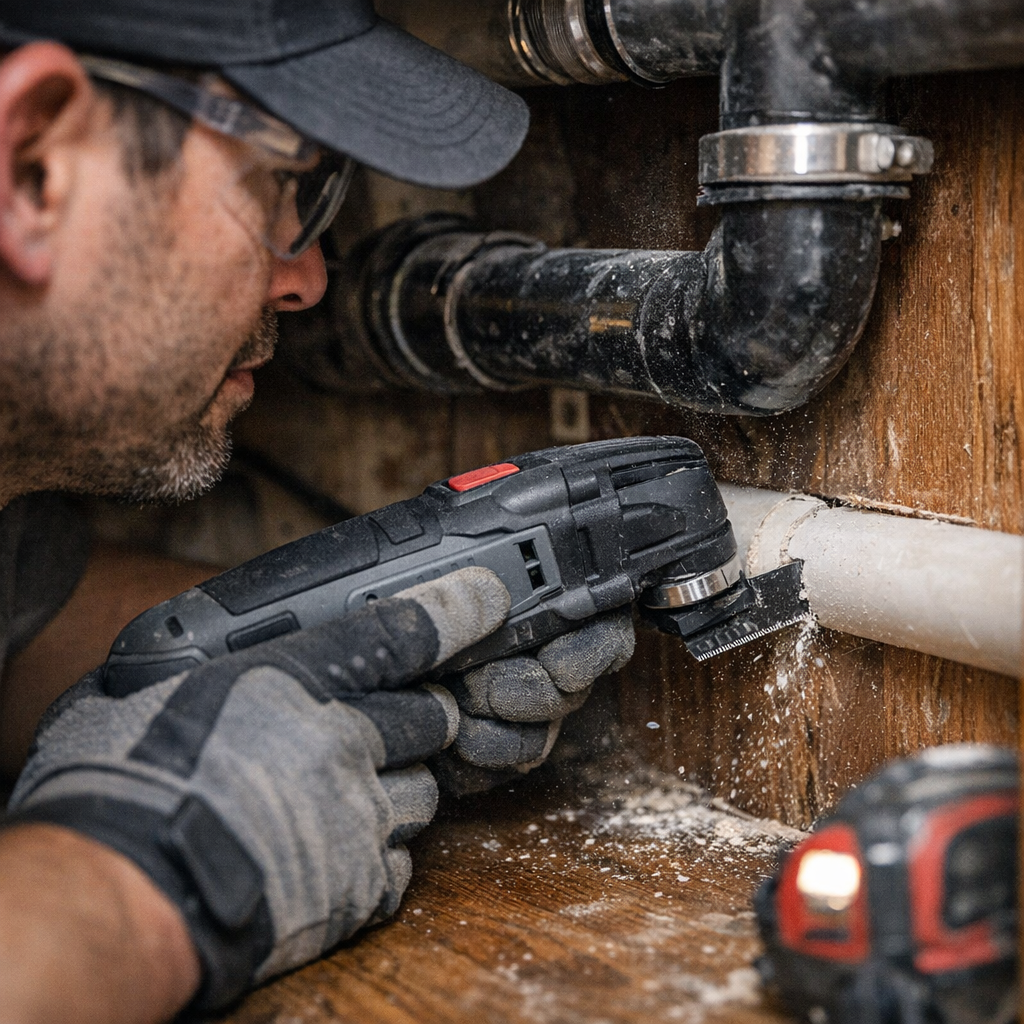
    Here’s where theory gets tested: Wedged under a 1960s kitchen sink, hacking through a PVC trap that’s up against the back wall, you trust your multitool—because every slip could mean a leak or an ugly scar on the cabinet. Elbow grinding against wood, dust falling into your shirt, you start to notice every bit of vibration or front-heavy bulk. With the right tool, the blade bites neatly, steady at slow speed, following the contour of the pipe without jumping or leaving a shredded edge. With the wrong one, after two passes, vibration ramps up, the tool skips out of the groove, and you’re left with a cut edge too rough to seal, plus another chunk of wasted time wrestling with sandpaper.

    This is not a rare ordeal—it’s standard in crawlspaces, behind shower pans, inside laundry alcoves. The takeaway: Every bit of control counts more in contorted jobs, magnified by every cut and every mistake you can’t un-do in cheap laminate or brittle ABS.

    Upgrades That Pay Off on Every Job

    The surprise is how much subtle improvements flip the script. Swapping to a multitool with an 80mm short body and genuine anti-vibration grip, you suddenly last longer before the pins-and-needles start. The bigger breakthrough is in the accessories—moving from basic blades to sharp Japanese-tooth versions brings:

    • No more lurching starts—the blade glides into cuts, with less bouncing or chatter in knots and tight corners.
    • Smoother finishes every time—even when kicking up dust or hitting an old drywall screw hidden in the wood.

    What changes, job after job? Less fatigue, steadier hands, cleaner results—fewer return trips with a sanding pad or filler. Your workflow stops stalling, and you actually end up finishing more, fixing less.

    The Warning Signs: When Vibration Becomes the Boss

    You don’t always catch the problem in the moment. Only when your palm is fizzing and you notice your blade’s wandered out of its track do you realize fatigue has taken over. You’re stopping to massage your hand, double-checking every new cut, momentum gone.

    Multitools with anti-vibration grips and well-matched blades aren’t just easier on your hands—they keep the job on track when the angles are bad and the space is tight. Pair Japanese-tooth blades for wood and finer teeth for stubborn plastics or pipes. These aren’t minor tweaks—they’re the difference between consistent results and an afternoon of chasing flaws.

    Finish Strong: The Real Difference After Hours of Work

    Specs matter far less than what you feel after the fifth battery swap or the fortieth flush cut. A well-engineered multitool—compact, balanced, gripping true, and vibrating less—delivers repeatable results, not just on open bench cuts but in the contorted, overhead, or awkward spaces that never make the promo reels. Set your pace, finish with fewer redos, and spend less time on cleanup you didn’t plan for.

    And don’t ignore comfort when things heat up. If you’re working gloved in summer, or fingers sweating in a furnace-blasted crawlspace, grips that resist slip, heat, and fatigue buy you more usable hours—especially when the job can’t wait and you’re fighting through a mess of old wiring or stubborn hardware in a corner nobody sees but everyone will notice if it’s rough.

    The bottom line? Tools aren’t made equal once you’re past the setup phase. In the spots nobody brags about—half-lit crawlspaces, behind toilets, backs of cabinets—it’s the feel in your hand, not the nameplate, that decides if you keep momentum… or wish you’d brought better gear.

    Find practical multitools, blades, and jobsite gear at Gumboll

  • Why Choosing Fewer Storage Units Improves Workshop Efficiency and Flow

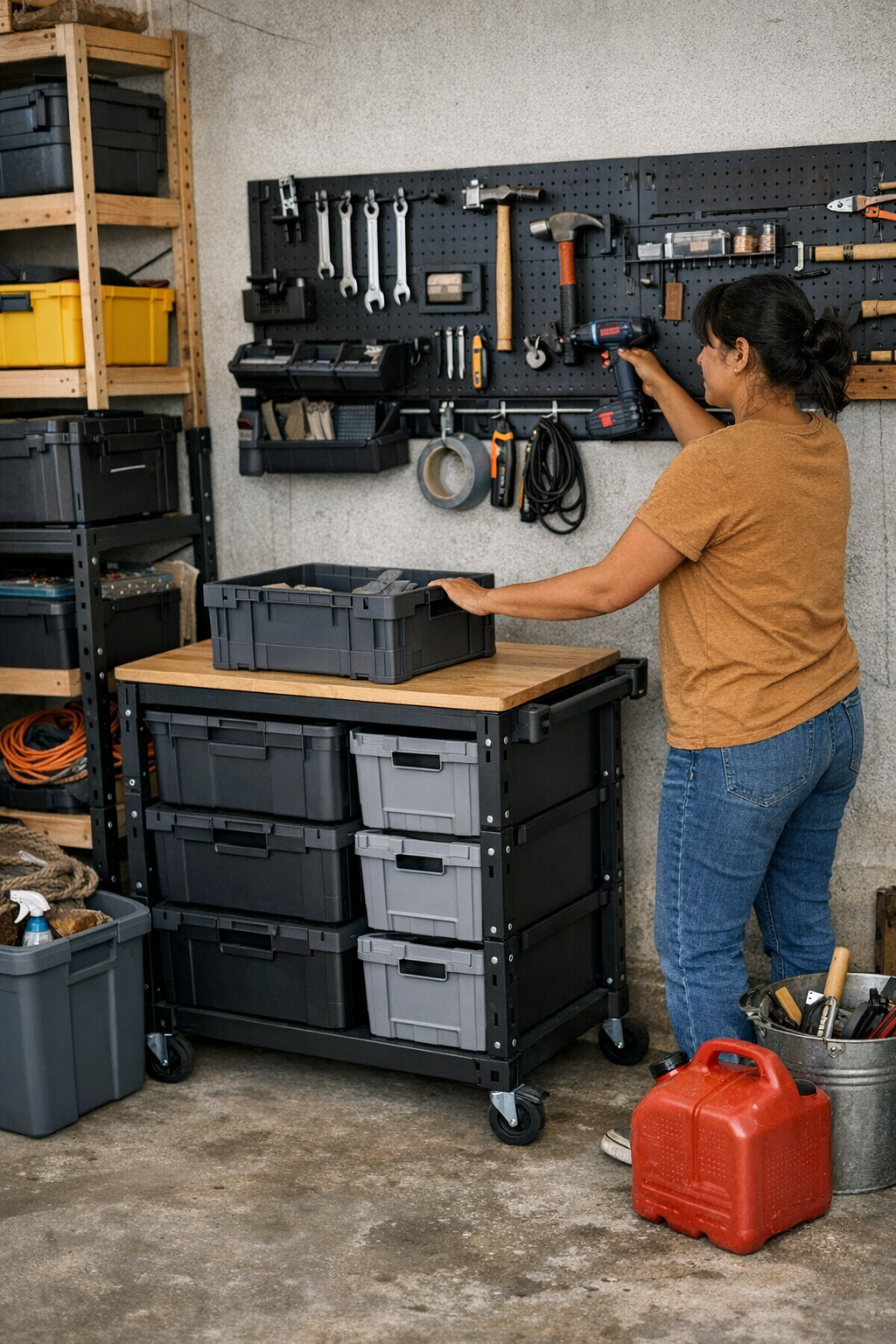
    Overflow corners—everyone’s got one. In any working garage or workshop, there’s that spot where the system starts to break down. What begins as a carefully organized zone—tools lined on hooks, supplies boxed on shelves—inevitably hits a wall. A new cart, a tall shelving unit, or “just one more” storage bin feels like the fix. For a day, maybe two, the area looks crisp. But by the third rushed project or busy Saturday, you notice the cost: you’re shifting carts to get through, edging around sharp corners, stretching for bins that seemed accessible on paper but hide behind layers in practice. The overflow corner, once meant to help, gradually becomes the main source of friction—forcing workarounds that sap your energy and slow your routine.

    Why “One More Storage Piece” Rarely Solves It

    It’s easy to rationalize another rack or shelf when open floor feels like missed opportunity. But every addition comes with hidden consequences. What felt like efficiency—an extra cart tucked between workbenches or a new shelf filling the wall—rarely lasts through actual use. As soon as you’re carrying tools in both hands or moving fast between tasks, you run up against it: that rolling cart you have to angle just to open a cabinet, the shelf that crowds out your step as you prep at the bench. It looks sleek until you’re forced into a shuffling, sidestepping routine that eats up time and focus.

    The Realities of Shift-and-Squeeze

    Imagine sprinting into a project, arms full—cordless drill in one hand, box of screws in the other. The path you cleared yesterday is now blocked by the “fix” you added last week. You’re nudging the shelf a few inches, dodging the new cabinet edge, and somehow always reaching behind something to get the tool you actually need. These aren’t just minor annoyances—they turn quick resets into drawn-out puzzles. Each work session ends with you piecing the area back together, hoping next time you won’t be trapped by your own setup.

    When Maximizing Space Backfires

    At first glance, stacked bins, tall rails, and multilevel carts promise an end to chaos—they make unused air space work and clear the benchtop, right? That’s the theory. But the “everything visible, everything accessible” dream doesn’t hold when you’re in a rush. Hooks positioned too high, bins layered behind others, and shelves packed so tightly you have to move two things just to grab one—they kill the flow. Instead of clear work zones, you build a layered obstacle course that demands constant shuffling and re-sorting just to stay on track.

    Vertical Overload: Wall “Optimization” Gone Wrong

    Wall systems seem ideal until you’re reaching for a wrench that’s tucked behind three other hanging tools. In a hurry? Good luck. Every “optimized” peg becomes a mini-bottleneck. Instead of a single, smooth motion, you’re lifting, sliding, and re-hooking items—a process that drags, especially over weeks of repeated use. A wall full of gear might look orderly for a photo, but if you can never return something in a single step, you’re losing the battle for real efficiency.

    In Practice: The Setup That Got in Its Own Way

    I once crammed a slender mobile shelf into my narrow garage, convinced it would eliminate the random heap of clamps and fasteners. At first, it worked: chaos was contained and every piece had a home. But almost immediately, the downsides appeared. To unload gear, I’d have to wheel the shelf—never quite straight—just to get to the main storage. Every time I tried to close the cabinet, I’d remember I needed to rotate the shelf out of the arc. Putting things away became a sideways zigzag through the zone, bouncing off units like a pinball. What solved scattered piles in theory slowed every project in reality—resetting at the end of the day felt like rerouting through a mini-maze, every single time.

    A Small Edit That Changed Everything

    Eventually, I ditched the shelf and went radical: a single adjustable rail, one basket, one row lower. Suddenly, the whole rhythm changed. I could reach, return, and move without a single sidestep. Floor space opened up and nothing crowded the doorway. Resetting—wiping down the bench, sweeping, stowing tools—shrank to minutes. For the first time, putting the space back together didn’t feel like solving a sliding-tile puzzle.

    How to Spot Real Storage Friction

    If you’re always managing workarounds, your storage isn’t working. Pause and take note—are you stepping over bins, sliding carts just to open a drawer, or negotiating sharp angles because there’s simply too much in the way? The more you find yourself rearranging the solution instead of using your gear, the less usefulness you get out of the setup. “Organized” doesn’t matter if it’s blocking your everyday movement. When obstacles outnumber clear steps, the system risks becoming another layer of clutter itself.

    The Problem of Clutter Magnet Zones

    Some corners just refuse to play nice—no matter how neatly you arrange things, they end up as accidental dumping grounds when traffic slows or access is tight. Piling in another cabinet or bin never really fixes the problem. Tightly packed dead corners limit what you actually use, turning valuable floor or wall area into a stalled, unusable pocket that only collects more overflow with time.

    How Less Storage Builds More Movement

    The real win isn’t squeezing more units into the floor plan—it’s about letting your routine dictate what stays, where. A reliable layout is one where every tool has a direct, no-obstacle path back home, and you instinctively flow from task to reset. This isn’t about Pinterest-level neatness; it’s about open walkways, fast cleanup, and spaces that stay functional during the busiest Saturday rush. On days when projects multiply, you notice: fewer bottlenecks, no reshuffling, no more wrestling overflow carts just to sweep up.

    Micro-Adjustments, Outsized Results

    The biggest performance leap sometimes comes from the smallest changes. Dropping a basket one hook lower, shifting a cart to the room’s true edge (not its path), or even removing a shelf entirely can transform awkward navigation into easy, repeated flow. The difference appears not just visually, but in how smoothly you glide through work, how little you have to think about returning tools, and how much less effort it takes to keep things in check.

    Measure Efficiency by Movement, Not Just Capacity

    Real workshop efficiency isn’t about maximum storage. It’s about minimum interference: how few steps it takes to grab, use, and put away the essentials. No unnecessary backtracking, no detours around crowded corners, no long pauses to reshuffle bins just to put things back. If cleanup feels quick and returning tools takes almost no thought, you’ve found the sweet spot. Sometimes the best addition is removing what gets in your way.

    Find more practical modular storage ideas for real workshops and garages at StackNest.