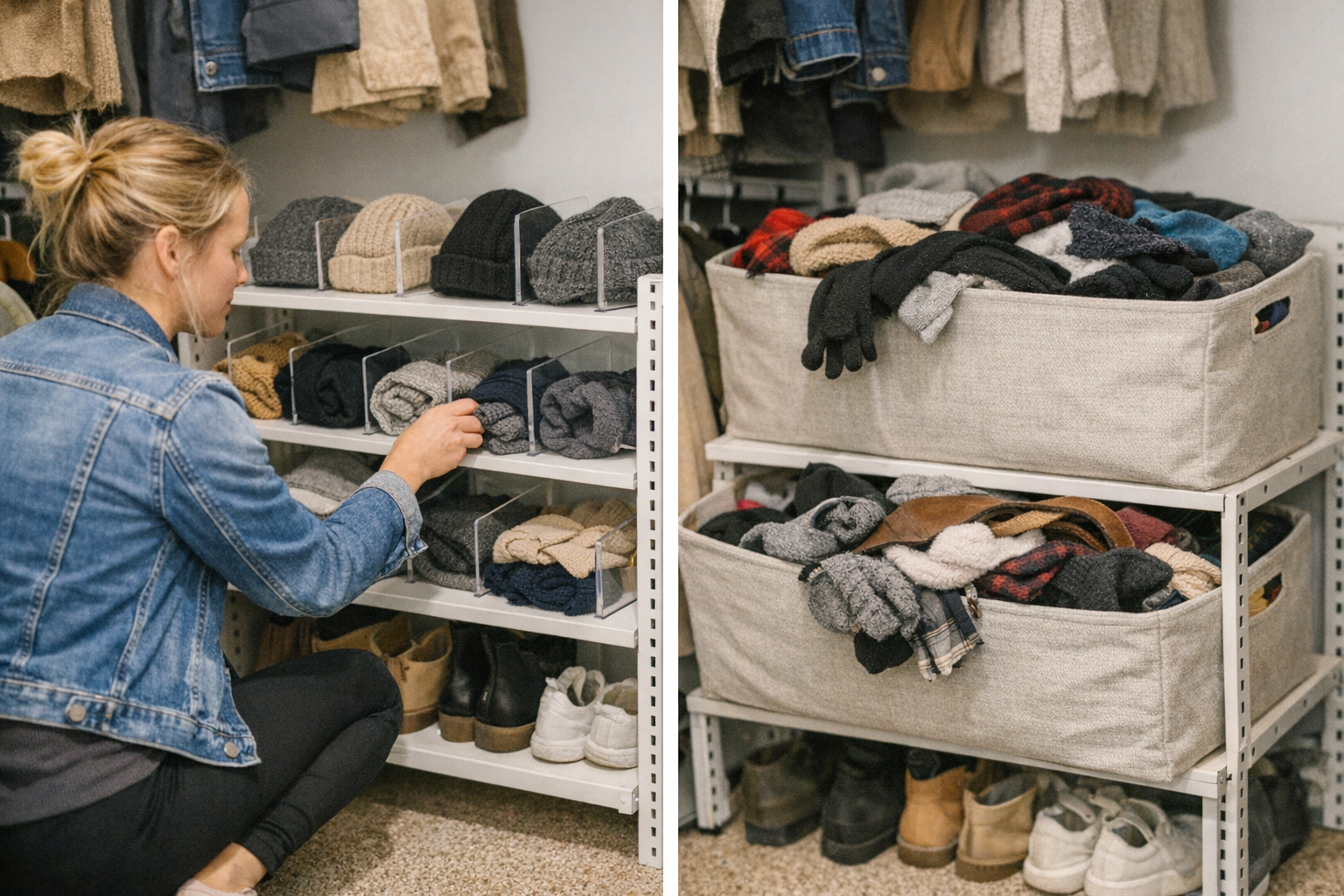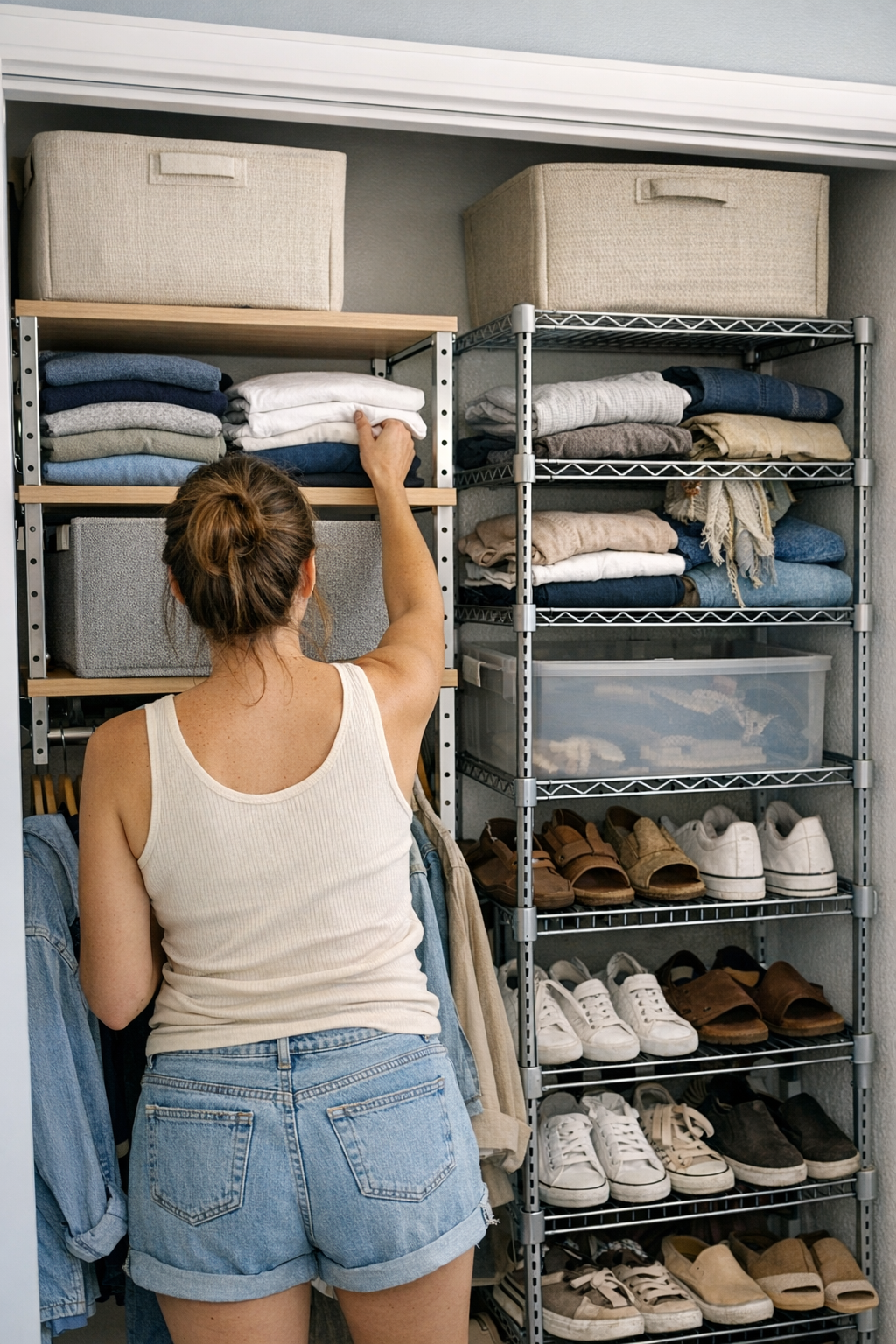
Wire or solid shelving? The question seems minor—until your closet gets a week of real, daily traffic. At first, both options promise easy tidiness: socks off the carpet, bins upright, shoes no longer fighting for floor space. But as routines stack up—those ten-second grabs before work, the quick stashes before guests arrive—the gaps show up fast. What once looked “organized” starts requiring extra hands, extra resets, and a little more patience than you usually budget for on a busy morning.
When “Neat” Starts to Slip: The Surprising Friction in Closets
That first Sunday, everything’s sharp—shirts folded into perfect rows, bins lined up by color, nothing crowding the floor. But watch what actually happens by midweek: a couple of shirts lean toward the edge, socks poking through wires, and bins drifting out of alignment. Suddenly, grabbing one t-shirt means nudging a whole stack back in place. The frustration is subtle—a lift here, a rescue there—but it adds up, making what should be two steps into a slow-motion shuffle, especially when you’re late or sharing the closet rush.
Solid shelving hides its usefulness—items stay put, bins keep their shape. With wire, every gap is a chance for something to sag, snag, or disappear just out of reach.
Your Routine, Reshuffled: How Shelf Choice Changes Daily Use
Grabbing in a Hurry: One Smooth Reach or Clumsy Double-Grab?
Solid shelves turn a grab-and-go into just that: pick up a folded shirt and the rest stay in line. But reach for the same shirt on wire shelving and you might slide out a second one, or unfold half the stack edging through the gaps. Socks or lightweight scarves? They slip through the wires, falling to wherever’s hardest to reach—often vanishing until your next deep clean or morning panic.
Stack Shape vs. Fresh Air
Wire shelving wins for drying boots or letting gear breathe—great for mudrooms or keeping mustiness at bay. But when it comes to piles of t-shirts, towels, or work clothes, the lack of a flat surface slowly takes its toll. Corners droop, stacks shift sideways, and before Friday, categories mingle. Suddenly, “organized” means restacking, hunting, or just sighing at a now-lumpy pile.
Bin friction is silent until it isn’t: Bins on solid shelves slide in and out, no guesswork. On wire, they catch, tip, and sometimes spill, especially when you need just one thing from the bottom. Over time, those tiny snags eat away at the sense that your closet has a clear system—and slow you down just when you need it most.
Real-World Closet Scenarios: Shelving Differences That Actually Matter
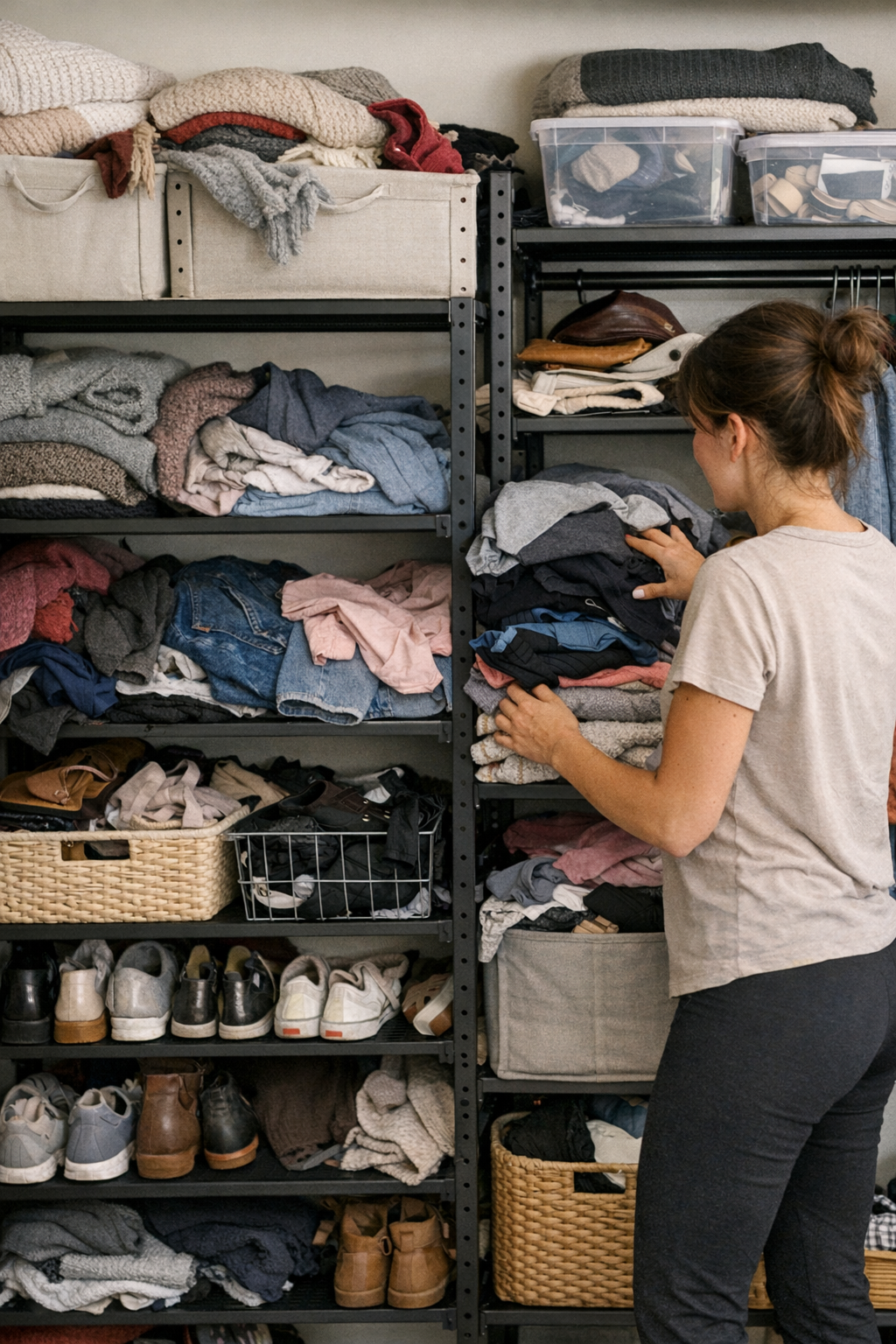
Imagine a typical reach-in closet. Shoes lined on a wire shelf, clothes folded overhead, bins waiting at the back. It looks great after your Sunday reset. Midweek reality?
- You reach for a mid-stack shirt—half of it’s been creased by a wire rung, the sock that once sat on top is now on a shoe below.
- Sliding a bin back into place, it tips against the wire rather than gliding home, scattering odds and ends into your neatly hung shirts.
- That stack of folded towels? They’ve started to wander, each pile blending into the next as small sags and sideways shifts blur any real category.
This isn’t chaos—it’s a quiet creep toward clutter. Instead of a clean grab, now you’re chasing socks, restacking shirts, rescuing a bin, all in the time you meant to spend just getting dressed. It’s not about “mess”—it’s about how quickly small problems add minutes (and irritations) to your reset routine.
Why Resets Get Slower—And How to Fix Them
Laundry day should reset everything. But if wire shelves underpin your most-used stacks, you’ll notice: creases deepen, piles slip, and bins tilt out of formation by Wednesday. Fixing it means more steps—unstack, restack, poke things back through the wires. Swap in a solid shelf and this friction fades: you place a pile and it holds, lines stay neat even if you’re digging for that one favorite tee. The more you skip these micro-corrections, the faster and easier the space is to actually live with.
Dust, Droppage, and What Actually Stays Clean
Solid shelving shields your lower shelves—no dust raining down on shoes or winter coats. The tradeoff: you’ll notice dust accumulate and need a wipe now and then, but it’s all on one easy-to-clean surface. Wire lets dust (and sometimes loose change or tags) fall to whatever is underneath—usually right onto the boots or bags you don’t want to wipe every week. That means extra cleanup, a little frustration, and another maintenance habit you didn’t ask for.
Shelf Strength: Keeping Categories Clear, Not Crammed
Weight isn’t the main issue—most shelves take whatever you stack. What changes is how each type handles off-center weight or shifting piles. Wire shelves flex, making one stack tip into another, so separation blurs and your categories become a jumbled lineup. Solid shelves hold their own, so categories stay distinct: sweaters don’t spill into the towels, and bins keep their lane. Less flex means less mixing, less double-checking, and more time saved on every reset.
The Real-World Mix: Where Both Shelf Types Fit
It’s rarely about picking one format for your whole closet. Use solid shelves anywhere you need stacks to hold, categories to stay crisp, or bins to actually slide. Keep wire for spots where airflow matters—soggy boots, running shoes, gym gear. The trick is getting honest about your habits: If you dread constant straightening, go solid where you reach most. If you need speed-dry for outdoor gear, let it breathe—just not under the folded stacks that drive you nuts.
Immediate upgrade, zero remodel: If changing shelves isn’t in the cards, use a rigid liner or board cut to fit the wire section holding your stacks. Suddenly, shirts and bins stop tilting, and you keep the airflow (and easy cleaning) below.
The Subtle Shift: From “Looks Organized” to Truly Usable
The surest sign your closet setup is working? You back away midweek and nothing’s toppled, drifted, or disappeared. Stacks hold their shape. Bins return home after each use. There’s no morning hunt for socks lost through the wire, and resets don’t drag on. It’s not showroom-perfect—just easier, clearer, faster. That’s the difference: less reshuffling, better flow, and a closet that quietly supports your routine instead of sabotaging it.
If you’re looking for custom storage that fits your real routine—not just a tidy Sunday photo—explore practical solutions at ClosetWorks.