Category: Tools & Workshop

  • Why Router Base Plate Flatness Is Crucial for Consistent Cuts

    The difference between a flawless routed edge and a botched one is rarely dramatic—until you’re the one re-sanding for the third time in a cloud of dust. That moment when your arms ache, your patience thins, and a tiny, almost invisible problem—a warped router base plate—wrecks what should have been a clean, fast job. The longer you work, the worse it gets. One minor deviation at the router base turns into seams that won’t sit flush, edges that look “off,” and finish quality you just can’t rescue. You catch yourself thinking, “Wasn’t this supposed to be a simple run?” Only then does the true cost of a bad base plate come into focus.

    Where Flatness Fails You: The Trouble Isn’t at Setup—It’s in the Real Run

    On the assembly bench, every tool looks ready. The router base is snug, the screws sit flush, nothing obvious dips or bows. The first test passes—usually on forgiving pine or plywood—give no sign of trouble. The catch comes later, midway through a serious job. Working a full-length maple slab, you notice an uneven drag. The router dips slightly, pressure shifts. By the end, a gentle wave shows up along joints that were supposed to stay dead-on flat. Suddenly, the line between professional-grade output and amateur repair work is as thin as the base plate gap you missed.

    What makes this friction even sharper: you don’t see it coming. At first, it’s an oddly stubborn patch of resistance or a barely visible dip. Soon enough, it shows up as steps at seams, faint burn marks where pressure dropped, wavy profiles where your edge should stay crisp. Sanding hides some of it, but repeat the run a few times—on doors, on fascia, on the face frames where details matter—and the flaws multiply. Flatness isn’t a theoretical spec; it sets the standard for whether you trust the next pass, or grit your teeth and reach for the filler.

    Small Warp, Big Consequences: How Wear Snowballs Mid-Project

    No shop tool stays factory-perfect. A slight curve in the router base—a gap thinner than a business card—doesn’t announce itself boldly. But every pass forces you to chase the correct angle, adapt your grip, and work against the grain of your own muscle memory. After hours on a big build, that 0.2mm warp shows up in the fit of every seam and the hours lost to rework. What starts as subtle “grabbing” and odd chatter becomes a pattern: the first door edge looks decent, but consistency breaks down, and your final pieces look like they swapped hands halfway through production.

    It isn’t just pride at stake—those incremental misalignments mean more returns to the sanding bench, eating shop time you needed for the next job. Worst case, a ruined edge means tossing a finished panel and burning both material and profit. What should be routine control turns into an exhausting guessing game, just to keep corners square.

    Why Router Base Plates Warp: Shop Realities, Not Just Bad Luck

    The lifecycle of a router base is brutal. Hands constantly torque screws tighter, plates take bumps from benchtop drops, and heat cycles swell and shrink edges over time. Plastic bases start to arc around screw holes after a few dropped tools; cheaper aluminum plates can bend beyond recall with one wrong knock. The visual check offers false security—the plate looks clean and the screws are tight, but the next time you route, the tool rocks ever so slightly, rhythm breaks, and shallow cuts deepen unpredictably. By the time you discover the fault, it’s usually too late—the seam is split, or a deep burn has chewed through your maple edge grain.

    Field Test: When Subtle Defects Show Themselves Under Pressure

    Consider running a 3/8” round-over across a thick maple countertop. Initially, both your go-to router and a cheap backup feel identical—until a few feet in, and suddenly a tiny ridge appears near the midpoint. On closer inspection, the suspect base plate still looks fine. The evidence is only in the cut—a lip that no amount of pressure smooths out, and sanding can barely disguise. Multiply that by a set of cabinets, and you realize you’re sanding more, working slower, and still not matching the reliable results your best base always produced.

    The Straightedge Habit: A Shop Check That Actually Matters

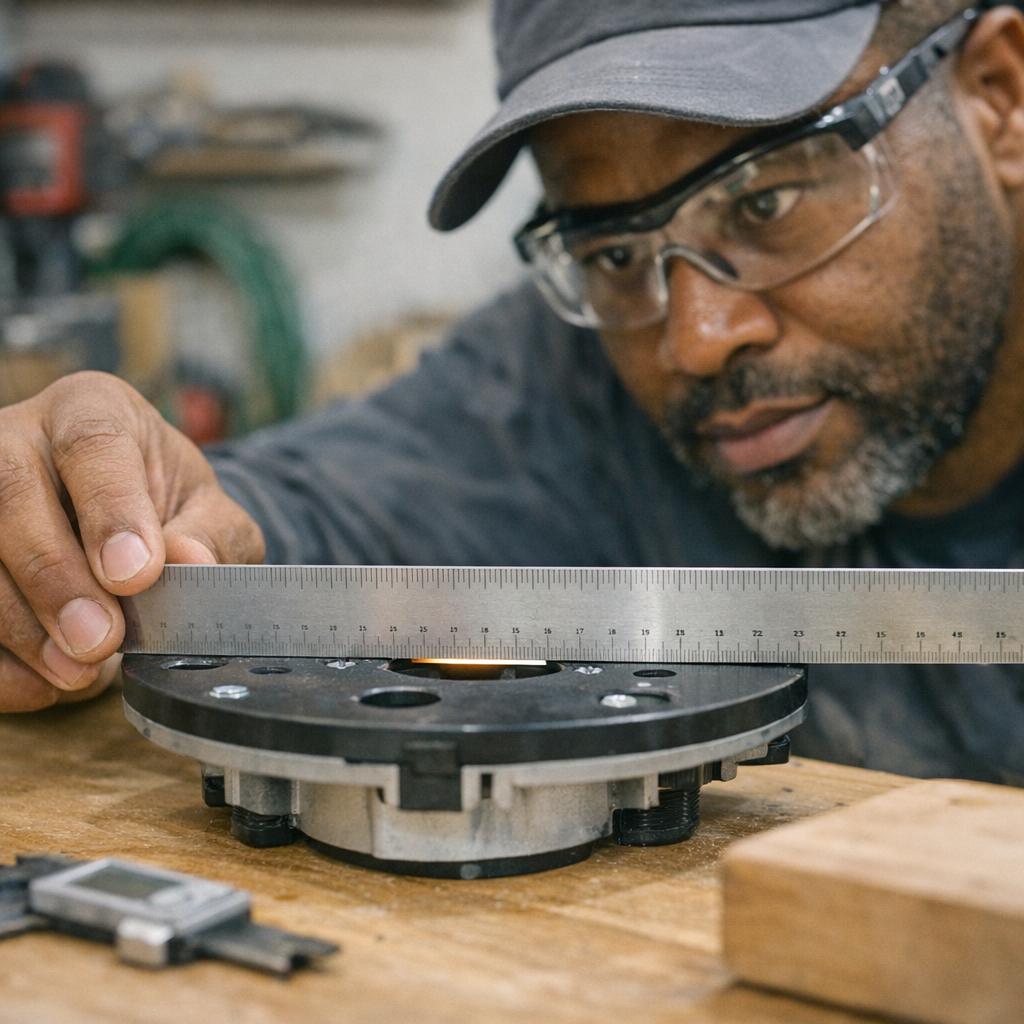
    The single most practical shift: check your router base with a straightedge before each big job—or after any drop, overtightening, or sudden stall. Lay the base plate on a dead-flat surface—the cast iron saw table, a scrap of thick glass—and sweep a metal straightedge across its corners. If you see daylight, especially more than 0.2mm, take action. Swap the plate, or set it aside for rough work. This isn’t fastidiousness; it’s a method to prevent unpredictable, costly rework, especially when deadlines and finish quality count.

    Shop-Worn Advice: Spend Small to Save Big

    Swapping a $25–$40 base plate stings less when you compare it to hours spent dressing seams on $100+ hardwood panels. Over months of production, the minutes recovered add up—less sanding, fewer rejected edges, more consistency across batches. In straightforward terms: a cheap base costs more in late-night rework and wasted materials than a replacement plate ever will.

    Saving Perfection for Where It Counts—But Never Ignoring Flatness

    If you’re doing demolition, quick rough-outs, or router work that’ll be buried under trim, a minor dip in the plate won’t ruin your week. But run architectural mouldings for repeat builds, or dress visible cabinet faces, and base flatness is non-negotiable. Smart shops keep a “runner” plate for finish jobs and a scratched, slightly warped spare for construction-phase mess. The distinction between the two? Visible results, not a clean spec sheet.

    Trouble Signs That Signal It’s Time to Inspect

    • Edges that suddenly dip or gouge during a run that started clean
    • Needing extra arm pressure to keep the router tracking true
    • Unexpected chatter, burn marks, or “catch and release” stalls
    • Panels that refuse to mate flush, despite careful fitting

    Especially in shared shops or high-traffic benches, a base plate’s true condition can change overnight—loosed screws, a single drop, or a tool that “walked” across a vibrating table. A two-minute check spares hours spent hunting the root cause of unpredictable, blunted results.

    The Payoff: Fewer Surprises, Smoother Workflow, Cleaner Results

    Achieving repeatable, professional work isn’t about chasing perfection on every tool or spec. But treating base plate flatness as essential—right alongside sharp bits and steady feed rates—can avert most headaches before they start. An extra glance with a straightedge lands you more predictable cuts, less fatigue from over-correction, and the sort of workflow where mistakes aren’t revealed at the finish line. It’s not a glamorous habit, but it’s one of the few that pays itself forward on every single job.

    Find more practical gear for router setups and shop work at Gumboll.
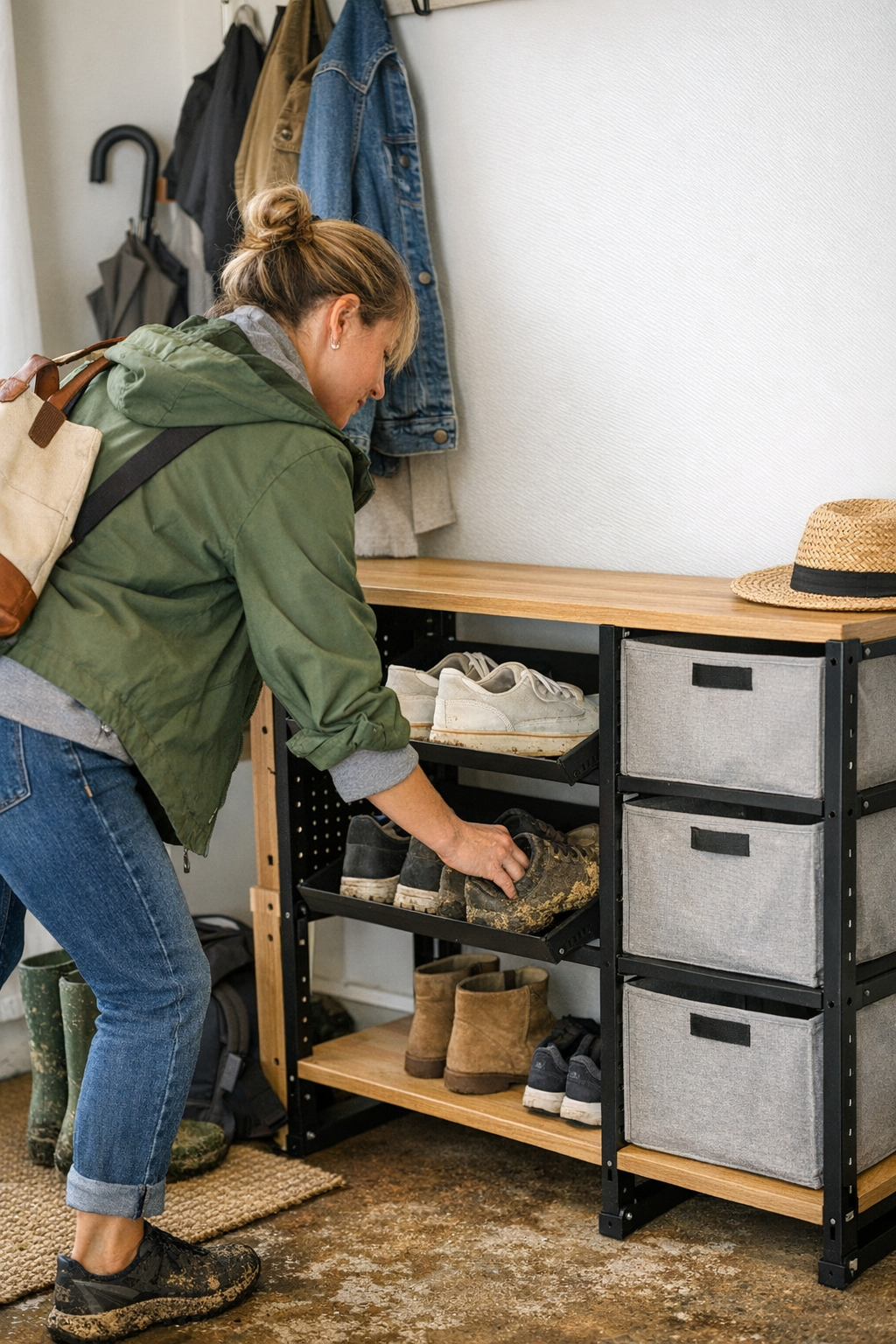
  • Creating Seamless Storage: How Closed Loop Systems Transform Mudroom Organization

    Mudroom Storage Frustrations: When “Organized” Isn’t Enough

    Walk through the door, arms full—your keys, the dog leash, at least one bag slipping. The mudroom bench, lined with crisp baskets, promises calm. But it’s a promise with holes. By the third day, the baskets start sticking, stray shoes wedge themselves sideways, and every “quick reset” becomes a juggling act. Each extra step—pulling out an overloaded bin, scooting boots that never quite fit back underneath, rescuing lost gloves mashed beneath a bag—chips away at your patience. Over time, the setup isn’t helping you; it’s just a new source of stress, camouflaged as “order.” The mudroom that should smooth out the chaos of family life quietly becomes another friction point—a spot where you dodge clutter instead of corralling it.

    The Closed Loop Advantage: Storage That Actually Stays in Sync

    A real “closed loop” storage setup doesn’t make you think. You grab what you need in a single step. You put things back just as easily, without clearing a path first. No puzzles, no wrestling baskets or shifting a mountain of winter boots to shove your work bag into place. In real life, any system that makes you rearrange, stack, or hunt simply falls apart. The mudroom can’t reset in a hurry—and the mess seeps out, spreading to hallways and kitchen counters.

    Friction in Action: Where the Mudroom Slows You Down

    The routine glitches are small, but relentless. Your sneakers are behind three pairs you don’t wear, so you reach, knock a stack sideways, and promise yourself to “fix it later.” Kids empty backpacks onto whatever surface is easiest, because opening (or even finding) the “right” bin takes too many steps. You spend more time moving things out of the way to get to your actual shoes than you do walking out the door. Over days, the storage looks managed—but it never actually functions the way you need.

    Mudroom Benches: The Real Test of Cubbies vs. Bins

    Bins seem like tidy magic—until you use them daily. Pull-out bins look organized, but with hands full or boots dripping, the extra motions are a dealbreaker. You need both hands. You have to set things down to open the bin. If there’s a traffic jam—basket blocked by a pile of shoes, or a bin too tight against another—all momentum is lost. The hidden mess gets shifted, not solved: shoes pile on benches, soggy gear gets abandoned anywhere flat, and after a week the “perfect” setup is undone by a handful of small, repeated hassles.

    Open cubbies fix some of that. You can toss shoes in without breaking stride and grab them on your way out. But nothing really stays separated. Dirt is in plain view, shoe pairs go missing, and sandals migrate to the “work shoes” zone by Wednesday. In reality, both bins and cubbies unravel if the design doesn’t match your daily move-grab-return rhythm.

    Scene From a Rainy Week: The Mudroom Bottleneck

    Picture this: you come home soaked, balancing groceries and a laptop bag. The entry is already choked with shoes left askew, that “easy to access” bin is wedged in place, and you have no spare hand to wrestle it out, so your wet shoes end up on top of whatever’s nearest. Flip this scene for every after-school drop, every muddy soccer gear dump, every time the laundry basket detours through the mudroom. You don’t need dozens of examples. Just one routine interruption, repeated every day, is enough to turn “organized” into yet another ongoing headache.

    It’s always the smallest resistance—a stuck bin, a shelf just out of reach—that kills the habit of putting things back.

    Flow Over Perfection: A Storage Shift That Actually Helps

    Here’s the real upgrade: swap those deep bins for angled shelves or open, shallow cubbies. Suddenly, access is direct. Shoes slide in and out—no scavenger hunt, no multiple hands, no bending or stacking. Designated spots emerge naturally; cleats and boots aren’t creeping into slipper territory. Every pair stays visible, so three-minute resets stay three minutes, not thirty. The result isn’t picture-perfect, but it is fast— and that’s what actually keeps the space under control.

    Ease Drives Real Habits—Not Just Neatness

    Forget aiming for the showroom look. The best system is the one that works on a Monday morning just as well as Sunday night. When putting something away is consistently easier than leaving it out, clutter fails to get traction. If it takes another step or a spare hand to reset, you’ll skip it. The real test isn’t appearance, but whether the right spot feels obvious even during the daily rush.

    Is Your Storage Setup Working—or Getting in the Way?

    If your mudroom feels like a battle zone, check for these friction points:

    • You have to move shoes or bags just to return something to its “spot.”
    • Shoes gather around bins, never quite inside them (or bins are always half-open).
    • Piles reform overnight, no matter how many times you organize.
    • Return paths are crowded—every surface attracts stacks instead of staying clear.

    Each extra motion is a sign you’re fighting the setup—not being supported by it. Over time, any excuse to skip resetting becomes the new routine.

    Cubbies or Bins: Which Survives Real-Life Use?

    Bins hide mess and hold grit at bay, but only if you can reset them in seconds. If you’re frequently in a hurry, bins become one more thing to move or reposition—and lose their appeal fast. Open shelves or angled cubbies make resets nearly automatic, even if they reveal a little more daily chaos. The goal isn’t showroom order: it’s a mudroom where things return to their place between uses, instead of migrating into the rest of the house.

    The Cost of Small Obstacles: How Tiny Hassles Become Big Clutter

    The cracks always start small—a bin off track, a shelf that’s too deep, a pile that never fits quite right. Soon, whole zones lose definition, categories mix, and putting something back becomes a workaround. Instead of discipline, you get improvisation. Shoes go wherever, bags stack in corners, and the mudroom shifts from organized to overwhelmed, one semi-blocked return at a time.

    Long-lasting organization isn’t about perfect lines—it’s about setups that survive repeated, messy, real use. If resetting isn’t easy, the system won’t last past the first week.

    Noticing Trouble Before It Spreads

    Overflowing bins and scattered shoes are only the final warning. The first clue is slower resets: you sigh before organizing, or leave one item undone every day. Certain surfaces become magnets for clutter—no matter your hopes. These are the signals that your storage design is getting in the way of daily life. Instead of blaming motivation, look for where things stick—literally or figuratively—and experiment with removing just one obstacle. Often, it’s that simple shift that keeps the rest of the room from caving in.

    A Real-World Tweak: Keep the Put-Back Path Open

    Want to fix almost any storage pain point? Focus on the return route. If there’s something to move—another bin, a fallen boot, a shelf too crowded—no one resets as they go. Make the direct path to “put it back” totally clear, even if that means rearranging shelf heights, ditching a bulky basket, or swapping in a row of hooks. When the return is always obvious and nothing’s blocking the way, the odds of staying organized skyrocket—especially when life gets busy.

    Storage That Works Because You Actually Use It

    No mudroom holds perfection, and no storage solution stays pristine. What matters is steady, low-friction resets: you grab, you use, you return, and the space recovers—again and again. The right setup shrinks the steps, removes hesitation, and adapts to the real chaos of daily life. That’s the only kind of “order” that lasts, even as seasons and routines change.

    See practical storage options at ClosetWorks

  • Why Traditional Garage Storage Fails When Rain Hits Your Workspace

    Every tidy garage or workshop comes with an expiration date. The first setup always feels satisfying—a weekend spent stacking metal shelves, lining up bins, and coaxing wall hooks into a grid that makes the space look driven and ready. Open the door, and you’re greeted by crisp ranks of tools and clear walking paths. But that visual order is fragile. The first stretch of wet, unpredictable weather puts the whole arrangement under pressure, and beneath the surface, the cracks spread faster than you think. The routine that felt sharp on day one quickly turns clumsy, weighed down by minor hassles that multiply as the months drag on.

    How Rain Exposes Every Weak Link in Garage Storage

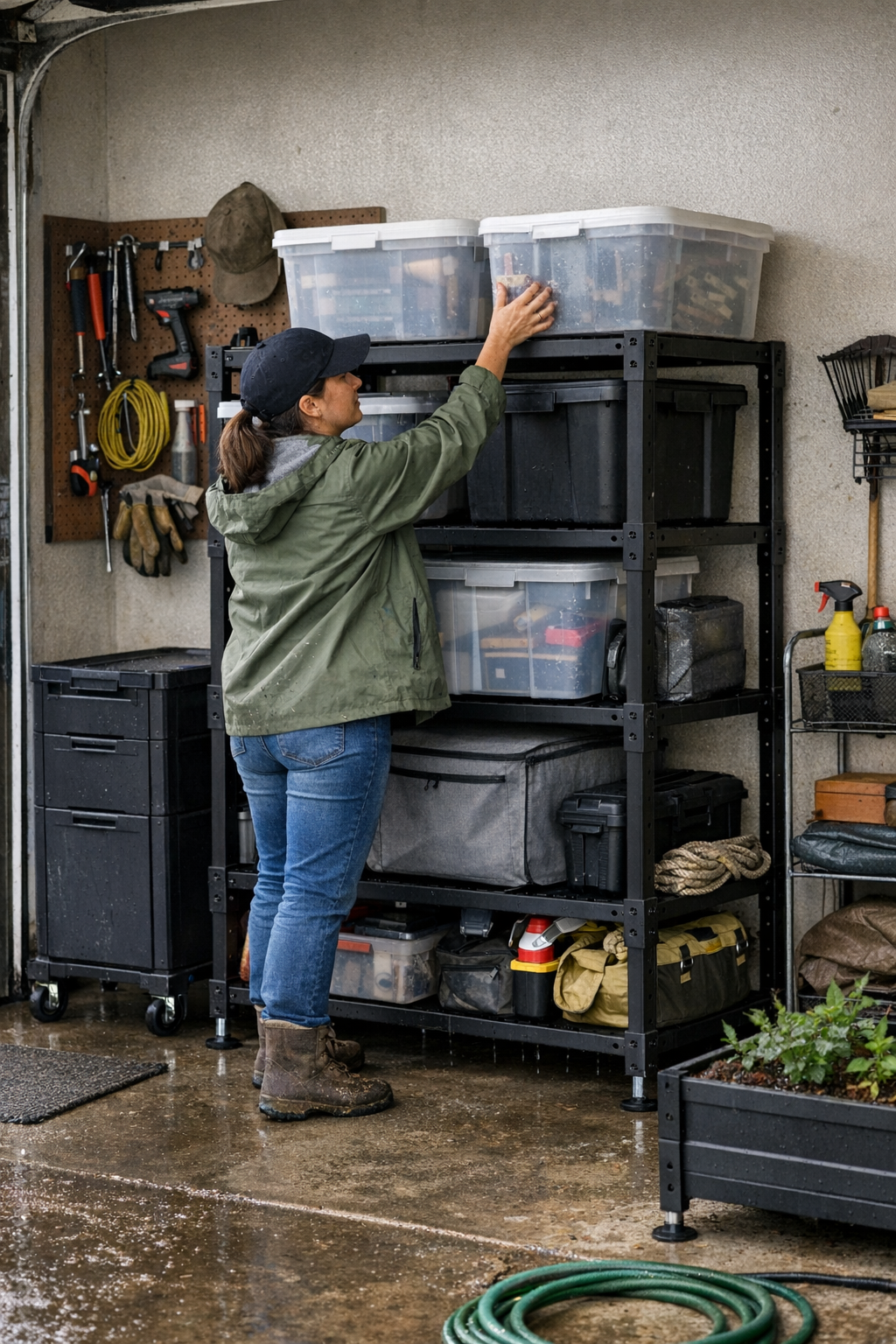
    At first, it’s tempting to call any packed wall “good enough.” Shelving runs are loaded up, bins line the concrete, and for a while, everything stays more or less under control. Then the weather slides into its third gray week. Muddy boots come in, garden trimmings pile up, and water finds every low spot. Bins stacked low start to fight back; you kneel down only to realize they’re stuck like glue to the floor. Even a minor spill feels like an ordeal as you mop around every shelf post and box edge. Quiet leaks turn into slow rot behind wooden walls, or trigger streaks of rust on lower steel supports—problems you barely register until they’re routine.

    This is the kind of friction that creeps up, not crashes in. Cabinet doors that used to swing wide now creak and catch. Handles get sticky, drawers swell, quick grabs become small wrestling matches. Those “quick fix” habits—propping up a bin with a spare board, sliding containers away from puddles, using towels as makeshift moisture barriers—go from rare to permanent. Each work-around edges the whole system closer to chaos, and yet the room still manages to look neat at a glance, lying about how hard it’s become to use.

    Looks Organized, Feels Clogged: The Misery of Static Storage

    Every storage setup photographs well on day one. But the reality of real use, over time and especially in less-than-ideal weather, peels back the façade. Low bins and flush shelving turn into anchors for condensation. Shelves by the main door become landing strips for runoff. Neat rows get blockaded by overflow—landscaping gear, cardboard left “for later,” a damp bag that never quite gets emptied. Movement slows to a shuffle: you nudge a rolling cart to clear your way, duck past the corner of a cabinet that always juts out, or reach awkwardly behind bundled hoses just to get at a screwdriver.

    Wall space, originally meant for fast access, turns patchy and awkward. You use the hooks, but too many things hang in reach without ever really staying accessible. Corners that should be empty fill up with every unfinished project and “active” pile—visible, taunting reminders that the system supports storage, but not flow. It’s storage that works on paper but never quite matches how the space is actually used when the weather turns challenging.

    When Wet Weather Turns Routine into Obstacle Course

    Picture the reset after three days of relentless drizzle. You tramp inside with spattered boots, tools in one hand, dripping gloves in the other. The bins nearest the door are fused to the concrete by humidity. A storage rack beside the window shimmies with rust, starting to resist every time you pull on it. A plastic tote, its lid warped from inside damp, refuses to close no matter how you press. Last week’s mud lingers as a gritty crust where water pooled, and what once was a ten-second handoff—drop tool, grab boots, swap gear—now slows to a routine of wipes, shuffles, and unplanned wrestling matches.

    It doesn’t blow up at once—it just gets messier, slower, and less inviting. Miss putting something back once and a new stack forms “for later.” Soon, a clear aisle clogs, key shelves become landings for overflow, and each pass through the garage means maneuvering past blockades you never intended to build. It’s a familiar downward slide: less access, more reshuffling, and a growing sense that the setup isn’t keeping up with you, just holding you back.

    The Shift: How Raised Modular Storage Quietly Solves Everything

    Eventually, after enough cycles of frustration, the pattern snaps into focus—and the solution isn’t just new shelves, but a wholesale shift in the way storage meets real conditions. Elevated, modular systems change the baseline: shelves perched above the floor avoid wet zones entirely, open frameworks promote airflow beneath bins, and wide open legs mean you sweep or mop underneath instead of around. No more muscling plastic bins off soggy concrete. No more unloading whole shelves just to discover which box is damp. Instead, weather-induced rewrites—propping things up, rehousing overflow, creating weird new traffic routes—fade out. Every “reset” becomes quick, functional, and almost boring in its simplicity.

    One less shelf to drag dry. No more stacked-together bins trapping moisture for weeks. And most days, you don’t give the rain a second thought—you just hang things up, push the cart back to its zone, and move on. That’s the subtle but tangible upgrade: movement returns, bottlenecks disappear, and every item feels not just stored, but ready for use the moment you reach for it.

    How Do You Know It’s Time to Adapt?

    If your garage is a perfect climate capsule—sealed floors, never a hint of condensation, bone-dry corners even in storm season—you’re lucky and possibly alone. Most setups are at the mercy of at least one weak spot: a door that leaks, vents where cold air condenses, walls that sweat, or concrete that gathers damp overnight. The real signals? You have to sidestep an overstuffed bin to reach anything. A corner always smells musty and never quite dries out. Putting stuff back takes more steps every season. Those are signs the current setup was made for another reality, not for repeated daily flow in the real world.

    What Real Adaptability Looks Like: Beyond Eye-Candy Organization

    Not all shelving earns its keep over time. Wood warps, steel dulls and rusts, even “heavy-duty” hinges get sticky. The appeal of modular, raised setups is that they adapt—add a riser under a shelf, swap a warped panel, shift an entire bay as needs change or seasons shuffle the playbook. You aren’t locked into a layout that made sense only in dry weather or when storage was static. You can lift lower levels out of puddle range, widen a narrow shelf to keep gear apart, reroute carts for returns that don’t require zig-zagging around permanent obstacles.

    This is the real secret to storage that works—and keeps working: it bends, evolves, and keeps access clear, instead of forcing you to fight a losing battle with last month’s footprint. The worst corners become useful again; blank wall feels like an asset instead of wasted real estate. Instead of repeating the same slow dance around roadblocks, you finally get to reset, adapt, and stay ahead of the frustrations that usually collect under the radar.

    Flow Restored: Living with a Space That Moves with You

    Raise your storage, and the biggest issues just start to vanish—not perfectly, but enough that friction recedes into the background. Water stains and swollen drawers become early warnings, not full-blown headaches. You stop burning ten minutes on cleanup for every trip inside. Wall hooks support what you use, instead of just displaying “stuff.” Aisles stay routes, not catch-alls. Most revealing: entering your workshop or garage actually feels like entering a workspace again, not an obstacle course or a holding pen for seasonal overflow.

    The end result isn’t showroom perfection. It’s a setup that resets cleanly, zones that stay accessible, and routines that run smoothly no matter what the weather throws at you. Each season, you’re unpacking less regret and more readiness—the real payoff of a system made for use, not just for show.

    Find more practical setups at StackNest.

  • How Thoughtful Storage Solutions Keep Your Closet Organized Daily

    The False Start of Tidy Storage — You know the sequence: Sunday’s overhaul leaves your closet looking like a catalog shoot—shirts in crisp stacks, baskets squared off, everything in its lane. But this isn’t your first round. By Wednesday, those neat rows are tilting, categories bleed together, and the bins meant to simplify things quietly morph into black holes. Socks, belts, a balled-up t-shirt—all thrown together in the same catch-all container. By Friday, the system frays. Now every quick reach or rushed search pulls you into a low-level guessing game: Where did that shirt go? Why are the gym shorts under a winter scarf? The longer you use it, the more daily friction creeps in, slowing you down and undoing all that Saturday work.

    Where Storage Setups Really Break: Daily Routines

    The true test of a closet, shelf, or entryway isn’t how sharp it looks right after sorting. It’s in those everyday drills: grabbing a sweater before work, rifling for a missing glove, sliding aside a pile for just one item at the back. Shared closets amplify the problem—two people, one small space, and a constant shuffle just to find what you need. Every tug, every over-ambitious pile, exposes the weaknesses that don’t show up in organizing videos. It’s never just about how things look—it’s about whether your system can take a hit and reset, or if it quietly falls apart under routine pressure.

    When Order Blurs: Blending Categories and Overflow

    Visual order vanishes at the first sign of hurry. Stacks start straight and strong but bend as soon as anyone grabs from the middle. That small disruption—snagging a t-shirt midweek—topples the tower, and next time, the gym shorts and undershirts get stashed in the same pile. Flat surfaces get colonized by whatever lands there next: a coat that didn’t get hung, last night’s laundry, the bag you swore you’d empty later. Each overflow blurs what belongs where, until there’s no real logic beyond “what fits right now.”

    Baskets and bins, if left unchecked, become a muddle. What starts as designated space for accessories blurs into a pile-up of mismatched socks, flyers, wallets, and whatever was easiest to stash out of sight. Without real separation inside the bin—or a habit of regular resets—what’s supposed to be convenient only sets you up for more work later.

    Deep Bins: The Quickest Path to Lost and Mixed-Up Items

    Deep storage doesn’t equal better storage. Deep bins seem practical—great for bulky items or seasonal swaps. But in daily use, they become the land of the lost. You toss things in “just for now,” but months later, good luck finding the scarf or backup towel you meant to keep handy. Worse, every new addition presses into the layer cake below, mixing unrelated things into forgotten territory. What began as a backup solution becomes yet another mess you’ll have to unpack and re-sort.

    This plays out all over the house: hallway cubbies that eat umbrellas and shoes until you find only mismatched pairs, or laundry areas where every clean wash ends up in the one overlarge basket, blending socks, towels, dish cloths into one heap that resists every reset.

    Reshuffle Fatigue: When Storage Asks Too Much

    When every retrieval feels like two steps forward, one step back, something’s off. The telltale signs: you’re restacking piles just to get what you need; you’re playing sliding tower to avoid a landslide; you’re fishing for lost socks at the bottom of a bin that was only ever meant for hats. If you waste minutes resetting what should be ready to go, your storage isn’t keeping up with real life. Over a week, a minor inefficiency multiplies—what should be a one-motion fix becomes a daily irritation you have to work around.

    Scene: The Shared Closet Crunch

    You and your partner reach for clothes in the morning. The front row looks tidy, but anything past that—half-zipped hoodies, off-season gear, the last-minute “where does this go?” items—sits half-buried in the back. The basket for belts is now a free-for-all: wallet, keys, a single glove. Every morning turns into a mini-reshuffle just to start your day. The original organization has turned into a puzzle box where the solution gets harder each round.

    Storage that Works: Anchoring Categories and Streamlining Access

    The leap from “looks organized” to “stays organized” comes from really dialing in how you separate, see, and retrieve what you need. Shallow bins with clear dividers stop the domino effect. Each type of item gets a defined slot—no rooting around, no upending a whole basket for one belt, no blind guessing. Categories stay visible and honest. You can use, return, and move on without breaking the setup; the shelf edge stays neat and nothing slips backward to be lost.

    The simple upgrade: Save deep bins for things you touch rarely—extra bedding, winter boots, those bulk-pack towels you never need in a rush. Reserve prime space for shallow, segmented containers, right where you need them. Label if you want, but the bigger win is making category lines so clear you don’t accidentally cross them during a hectic week.

    High-Traffic Trouble Spots: Entryways and Utility Zones

    Storage congestion isn’t only a closet problem. Entryways pull in their own circus: baskets for hats become the drop zone for whatever’s in your hands—mail, keys, reusable bags. By Friday, you’re digging through a mixed pile just to find the gloves you need for the morning commute. The fix: tighten the function. Use dividers or separate bins for each high-use item—one for mail, one for gloves, another for scarves or sunglasses. That focused separation means less spreading out, less “I’ll deal with it later,” and fewer last-minute delays while you hunt for something obviously out of place.

    Laundry rooms show the same tension. One giant bin might look efficient, but in practice, spills into other surfaces as soon as someone’s in a hurry. Smaller, labeled bins or trays for detergents and supplies mean you can restock or wipe up without constant rearranging. The end result: a daily reset in a couple of minutes—not a mini-project every weekend.

    Is Your Storage Setup Failing Your Routine? Key Warning Signs

    • Piles that sag, spill, or lean—never holding shape through the week
    • Bins that become a jumble—everything mixed, nothing clear
    • Overflow creeping onto the floor or spare surfaces
    • Needing more than one step to find your daily essentials
    • Locked in a weekly loop of sorting, shuffling, and starting over

    If these sound familiar, your storage isn’t keeping pace with real habits—it’s hiding extra work behind a surface-level reset, letting clutter regroup behind the scenes.

    Small Tweaks, Real Daily Difference

    Take fifteen minutes to map out your friction points: which surfaces collect clutter fastest, which shelves collapse by midweek, which bins you dread opening. Trade deep catch-alls for shallow, sectional storage in the high-traffic zones. Label only if it helps, but trust that real separation—physical dividers, distinct slots—matters more than a pretty tag. Sometimes just one divided bin transforms the daily grind—you grab what you need, things stay put, and the end-of-day tidy is almost automatic.

    The best storage doesn’t just look good on Sunday—it survives Monday’s rush and Thursday’s overflow with barely a reset. When you can access, use, and return each item in a single step, messes don’t pile up and “organizing” stops feeling like a never-ending redo.

    http://closetworks.myshopify.com

  • Why Outdoor Storage Systems Fail Over Time and How to Fix Them

    Every outdoor storage setup looks clever for about a week—until daily routines start grinding it down. That first afternoon arranging your backyard, garage wall, or utility corner is almost effortless: new cabinets fit, the deck box swallows the mess, and for a brief span, all your tools and gear march into place as if the system was custom-built. Then the rain comes, or you rush out for garden work, and it only takes a few muddy drop-offs before things unravel. With real use, order starts to slip: one corner jams up with “for now” piles, the cabinet lid catches on your shoulder every time, and you’re suddenly shuffling boxes or carts just to reach what you need. The friction builds—and so does the sense of wasted effort.

    When “Organized” Doesn’t Mean Easy

    Clean lines and storage bins promise control. At first. You line up matching cabinets, stack everything inside: hoses, rakes, trimmers, gloves—no stray clutter in sight. But it doesn’t last. The deck box turns into a jumble after just a few returns. Heavy tools sink beneath lighter clutter. Quick drop-offs become layered stacks—each one making the next retrieval messier.

    It’s worse on the wall. You mount hooks, shelves, clever racks—clear floor, instant efficiency. But as you start using them, the faults show. One shovel never quite sits right, blocking the next hook; gloves pile up on what was meant to be a “spare” shelf. A dead corner quietly fills with overflow: bent handles, bags of seed, coils of wire. The illusion of order fades with each routine reset.

    Where Storage Friction Builds Up

    The pain points aren’t obvious until you’re deep into daily use. It’s that familiar bend-and-stuff as you wedge a wet hose into a narrow cabinet, balancing muddy gloves on the edge because the shelves are filled—or worse, knocking something loose every time you reach for a hand tool. Rolling carts seem like a flexible fix until you realize you’re always nudging one aside to open a door, move down the path, or avoid blocking the walkway altogether.

    Organization shouldn’t mean working around your storage. Yet, too many setups do: fixed shelves demand awkward angles when you try to put away muddy gear, or you find yourself juggling three boxes just to return a single item. By mid-season, the whole storage zone slows you down with every reset. What started off as “order” now requires constant maintenance to keep from grinding to a halt.

    Prioritizing Return Flow Over Initial Order

    Durable, low-friction storage isn’t built on category—it’s built on actual movement. The most practical change is almost invisible: organize for how things come back dirty, wet, or in a hurry, not just for how they fit neatly on day one.

    Think of a typical storage zone post-rainstorm. Hoses, pronged tools, muddy shoes—everything comes in messy and at once. The designated “all-purpose” cabinet soon becomes layered and damp, and every clean handoff means digging through a grimy stack. Cabinet doors swing into bottleneck spots by the fence or walkway, halting traffic just as you’re trying to put something away quickly. Alone, none of these moments feels huge, but as a pattern, they slow you down and push mess elsewhere.

    A Real-World Adjustment: Letting “Messy” Gear Avoid the Main Storage

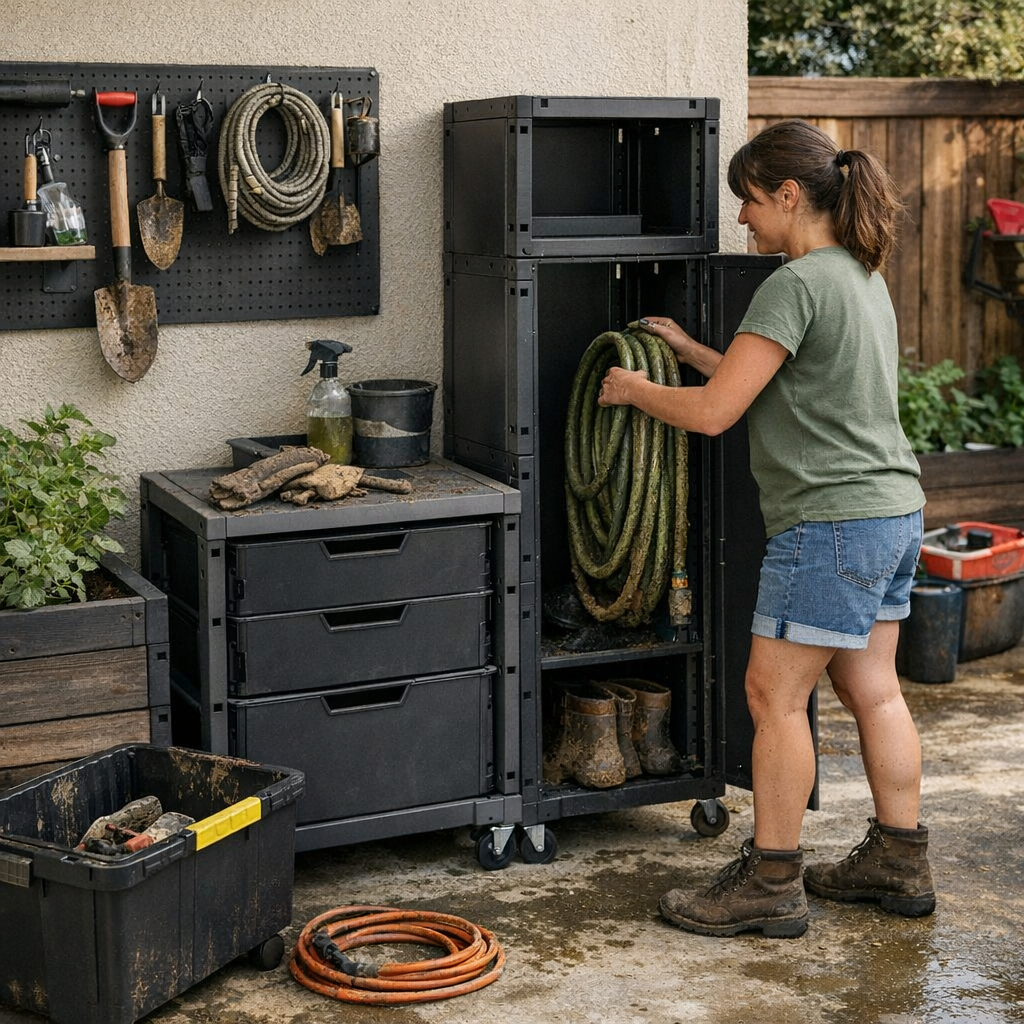
    Here’s a fix that actually sticks: split storage by likely mess, not just by item. Place a modular, weather-resistant cabinet right by the spigot—dedicating it solely to wet or dirty returns. Yank a shelf out and you’re left with a tall bay, perfectly sized to drop hoses, sodden trowels, or filthy gloves upright—no stacking, no digging. The dirty stuff goes direct, sparing the main area from gradual buildup and keeping cleaner tools cleaner.

    The impact is immediate. No more forced bending to squeeze gear where it doesn’t fit. No more blocking your own path to dump a muddy shovel. Instead, fast drop-offs go straight where they belong—so by the end of the week, you haven’t spent half your energy reshuffling the same tools. The whole setup is easier to reset, and far less cluttered, even after heavy use.

    Spot Trouble by Watching for Repeat Choke Points

    If you’re tiptoeing around loose gear, shuffling the same tools day after day, or dreading the reset after a busy weekend, those are your clues: storage isn’t keeping up with your routine. Watch for repeat offenders—the spot where piles start forming, the tool that’s always stuck out, the awkward reach you keep making each time you return something. These are signals the setup is working against you, not with you.

    Solutions can be direct, and you’ll feel the relief quickly:
    • Swap bulky cabinets for wall mounts where walkways are tight.
    • Remove shelves and design vertical slots for long or awkward-handled items.
    • Separate messy, wet gear from dry storage to stop grime spreading everywhere.

    Systems That Move With You, Not Against You

    The best outdoor storage setups anticipate your steps, not just your inventory. Think: slipping out in boots, trying to unhook a hose with one hand, or dropping shears on an easy shelf instead of hiding them under a stack. Modular units stay flexible—they adapt as you swap out gear through the season, or as one side of the system starts collecting too much overflow.

    But even the cleverest modular system fails if it ignores movement. A wall system is only as good as its depth—if tools stick out, you’re always dodging them. Floor cabinets save space until they clog a tight path. Rolling carts seem effortless, until you realize there’s no spot that doesn’t turn them into an obstacle after every use. The real test is after a dozen cycles of use, not after one photogenic reset.

    Make Outdoor Storage Work Harder Than You Do

    At the end of the day, storage that can’t handle muddy hands, surprise downpours, or hurried drop-offs is just aesthetic. What works week after week is a system that lets you move—no detours, no double-backs, no balancing acts. The real value is in setups that match how you actually use the space, not just how it looks after you clean it up.

    If you find yourself thinking, “Why do I have to keep fixing this?”—that’s your cue to rethink the flow, not just the footprint. A few small shifts in layout or zone rules can turn daily frustration into a space that works for you, not against you.

    Find modular systems and practical setups that adapt to your actual routines at StackNest.

  • Why Pausing for Router Bit Cooling Improves Hardwood Routing Results

    The unspoken threat of overheating router bits: If you’ve ever lined up a dozen hardwood edges for cleanup, you know the moment—router running, everything’s humming, then a thin whiff of burnt wood flips the mood. Your early passes felt crisp, almost easy. But as the stack shrinks, coasting turns into fighting: the motor growls, the cuts drag, and those last few boards each reveal ugly scorched edges and new dings that weren’t there before. This isn’t just about sharpening or shifting technique. It’s heat—slowly, quietly robbing the tool’s bite and turning precision work into salvage.

    Heat builds, and workflow breaks down

    Anyone making repeated cuts through hardwood gets a front-row seat to the issue. Heat stacks up quickly. You might start at full control, shaving oak or maple edges like they’re butter. But after a couple of grooves, suddenly you’re muscling the router, feeling extra vibration, and chasing a cut that keeps veering off mark. The bit, now hot, loses its edge. Performance sags. And every subsequent board takes a little longer and leaves the bench messier than the last.

    When skipping cooldowns snowballs into wasted time

    Chasing efficiency by skipping cooldowns seems tempting in the moment. Early warning signs are easy to dismiss—faint burn odor, slightly stiffer push, a telltale haze across the grain. But push further, and it spirals: straight lines pick up ragged edges, scoring and chips spread, dark char marks coat whole runs. You go from needing a light sanding to spending ten or fifteen minutes wrestling with scorched tracks and chipped profiles. All that “saved” time is lost to repairs—and then some.

    Invisible friction that creeps into every job

    Heat buildup doesn’t just threaten finish quality; it quietly saps your whole workflow. Batch-routing shelves or dado slots? As each pass heats the bit more, not only does the cut suffer—your router’s motor strains and your arms burn out faster countering new resistance. By the time the collet grows warm to the touch, you’re risking both safety and an expensive repair, all in pursuit of getting “just one more” cut before stopping.

    Lost momentum, more cleanup—the real financial cost

    If you’ve run a production line or just managed a longer project, the math gets grim. Five minutes here blending burn marks, ten minutes there patching blowouts—suddenly, your afternoon is lost to double-work that never made it onto the schedule. There’s no fighting the physics; hot tools only slow everything in the end. Try to power through, and you’ll pay for it later with both time and materials.

    Reading the signs: When tools ask for a break

    No beeping indicator tells you when a bit’s overheated. It’s all in the feedback: a router that used to glide now pushes back, edges that once felt like glass suddenly turn sticky, clean shavings switch to dust. Catch it early, take a pause, and those telltale marks stay temporary. Ignore it, and you’ll reach the ‘smoke and scorch’ phase—the kind of shop smell that lingers and takes elbow grease to erase.

    Shop-built efficiency: The two-minute reset

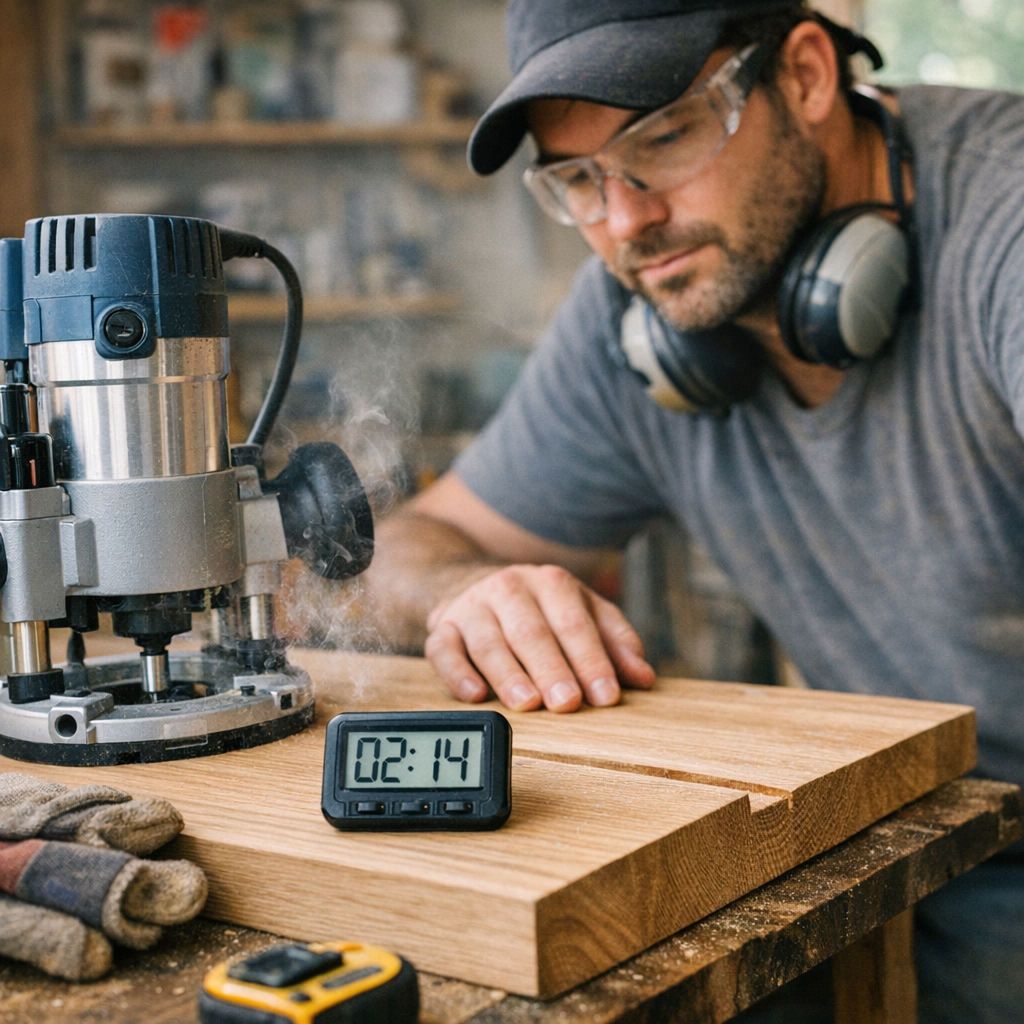
    No fancy accessory needed—just build in a deliberate 2–3 minute rest after every two or three passes. It’s less interruption, more routine: finish a pair of cuts, power off, slide boards aside, clear dust, check your lines. That pause lets the bit drop back to a workable temp, keeping edges sharp and the next pass gliding clean. The difference? Less edge crumbling, fewer burn streaks, and post-cut sanding that’s a matter of seconds—not a gritty grind.

    On a real-world run—thirteen oak shelves, two passes each—sticking with a short pause after every pair kept the cuts consistent all the way. Sanding off the router marks became a three-minute job, not a drawn-out rescue mission. The bit held its edge the entire batch, and cleanup was as quick as promised.

    Tune as you go: Material and workload matter

    Not every wood or job tolerates the same tempo. Pine boards, low-resin softwoods—they buy you extra time per run. Dense maple or tricky hickory? Heat sneaks in fast. If you notice the router straining or a faint singe at the edge, that’s your warning: give it a breather or you’ll pay for skipping it. The fastest hands sometimes know when to slow down.

    Hands-on tweak: If you’re working with especially dense or resin-rich woods, bring in a small fan to keep airflow on the bit or notch your router speed down a setting. It’s less about overhauling your workflow, more about tweaking for the session at hand.

    More than bits—heat travels through the whole rig

    Don’t overlook the rest of your kit. After a batch of heavy routing, check the base and collet—if either is heating up, that’s a sign heat is moving where it shouldn’t. Extended sessions without pauses don’t just dull bits; they cook motors, strain bearings, and eventually turn a trusty router into a “fix me” project. Cooldown isn’t just for edge quality; it’s tool insurance.

    Work smarter: Make cooling pauses routine

    Speed is nothing if you’re making extra work for yourself. Instead of sprinting until things go wrong, layer cooling pauses into your regular workflow—prep the next board, clear off shavings, check for chip buildup, grab a drink. Those brief stops more than make up for themselves: fewer burnt repairs, sharper results, less exhaustion, and tools that stay in the rotation longer.

    The real win: Making bit cooling part of your process isn’t wasted time. It’s the fix that leaves your work sharp, your sanding minimal, and your shop free of that burnt-wood frustration. On jobs big or small, it’s one of those nearly invisible tweaks that keeps your results clean and your bench moving forward.

    Visit Gumboll for practical jobsite tools and accessories

  • Avoid Surface Scorching When Stripping Paint With the Right Heat Gun

    Every heat gun looks the same—until you’ve spent hours stripping paint, fighting burnt edges and bitter smells that just won’t quit. You start with hope: paint bubbles, the scraper glides, the grain looks clean. But fast forward fifty feet of trim—or one hour in a cold garage—and what began as fresh progress is hijacked by a creeping patchwork of brown scorch marks and fragile splintered wood. The promise of even, controlled peeling collapses into stop-start agony, especially around finicky moldings or layered, century-old paint.

    “Good Enough” Heat Guns and the Work You Pay Back Later

    Every spec sheet tries to convince you: 1800 watts, standard grip, familiar nozzle. But anyone who’s gutted a room knows that paper promises mean nothing once you’re deep into a job. One heat gun can glide and lift entire strips in a single stroke, the next leaves behind stubborn halos and charred patches that only reveal their toll when you finally start sanding. What looked like a time-saver has quietly set up hours of rescue work—filling, feathering, endless fine-grit passes—making every attempt at a smooth new finish a reminder that you “settled” for a tool that couldn’t keep pace.

    This is the hidden tax paid by anyone who’s ever chased efficiency with the wrong gun. That brown shadow at the edge, that brittle rough feel under your hand? It’s the signal that your heat is spiking instead of spreading. Specs and wattage don’t account for how real paint and real wood respond job after job—and where shortcuts cost more in the long run.

    How Heat Gun Frustrations Mount Over Real-World Jobs

    The warning signs are subtle on a test patch. But the game changes fast when you attack years of layered paint, old shellac, and all the quirks of trim, rails, or raised panels. The rhythm: heat, scrape, slide—until a tight contour or stubborn knot throws it all off. A few seconds in the wrong spot and you get a sharp whiff of burnt finish or a fresh brown ring in the grain, the kind you’ll have to sand for ages.

    Every minor mistake snowballs: you slow down, scrape with more force, double back for missed flakes. Blade chatter sets in. That crisp peel turns chalky, making progress feel like starting over every foot. Fatigue builds faster than you expect. The more ornate the trim, the more likely every curve and swirl becomes a tedious repair job, prying brittle fibers from places a better heat spread would have kept intact.

    The Unforgiving Reality of Detail Work

    On actual jobsites, tools need to enable flow—not constant monitoring. An inconsistent, narrow jet means you’re endlessly adjusting: holding too far away (and barely peeling anything), or moving too fast (and risking missed spots), or going too slow (and burning the edges). The result is always the same: extra sanding, doubled-up labor, and finishes that just don’t live up to the care you put in.

    Why Even Heat—Not Sheer Power—Matters for Trim and Corners

    Brute force doesn’t deliver a clean result if the nozzle concentrates heat into a single point, baking the substrate underneath and sending smoke signals before you see the damage. What you’re left with are hidden scorch scars—brown ghosts that only surface in the final finish, often on the most visible surfaces. Intricate moldings are where average heat guns truly fail. Linger too long or lose focus for a second, and you’re not just stripping paint—you’re carving permanent reminders of every slip.

    A heat gun with a broad, even heat pattern changes the equation. You move how you need—not at the tool’s mercy. Pause to check your progress, adjust your grip, or refocus under a work light, without branding your project in the process. The whole surface stays workable, the paint lifts at your pace, and you spend less time and energy compensating for hot and cold spots.

    The Difference-Maker: Upgrading to a 50mm Wide Surface Nozzle

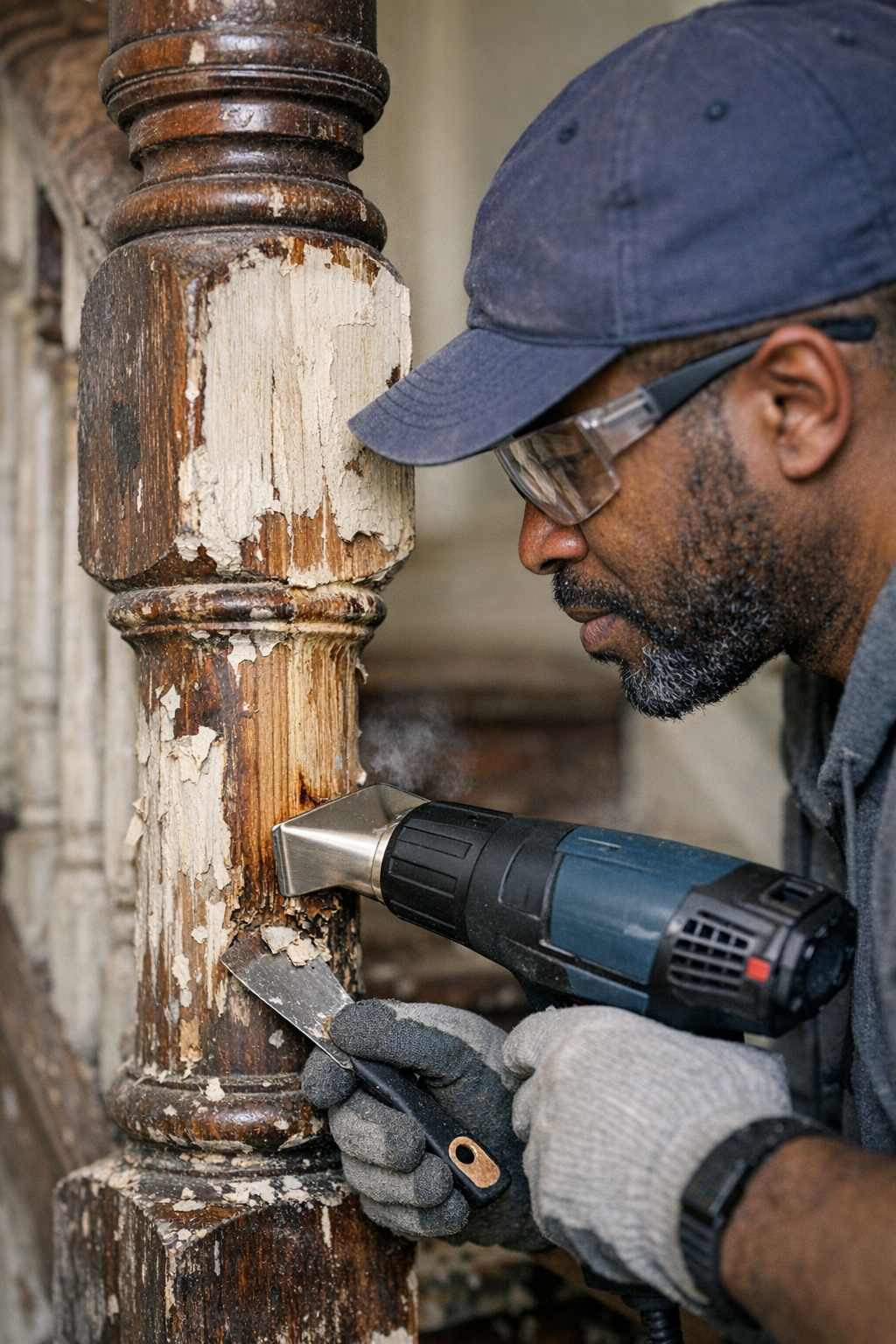
    Swapping in a 50mm wide reflector isn’t a minor tweak—it’s a line in the sand between struggle and control. Instantly, you’ll notice the change. Even on curved balusters and complex trims, the heat flows; the surface warms, not blisters. The paint softens predictably. Scraping becomes a single, calming motion instead of an anxious, stop-go scrape and reheat dance.

    The payoff is real, not theoretical. The simple act of broadening your heat path can rescue detail work, cut down on sanding, and lift your finish from “functional” to genuinely satisfying. Your wrists last longer. That signature burnt-must odor fades. It becomes easier to finish a large section at the same standard as your first test patch. And most importantly, you’re less likely to find last-minute disasters hiding under your sander weeks later.

    Know When Your Setup is Sabotaging the Job

    Your heat gun is holding you back if these frustrations keep surfacing:

    • Persistent brown spots or ghosted halos, especially near edges and joints
    • That burned varnish smell, despite careful temperature settings
    • Fragile, splintered wood and new cracks after scraping paint
    • Dragging, stuttering scrapers that resist every pull

    These are not just random annoyances—they’re signs of poor heat distribution or inadequate airflow. Each botched patch bleeds into more sanding, more patching, and the risk of blowing your project schedule (and patience) as the job demands more rescue passes with finer and finer grits.

    Small Adjustments That Make Hard Jobs Easier

    Don’t wait for mistakes to force you into better habits—build them in from the start:

    • Start with a wide nozzle—not as a backup, but as your default
    • Let your gun fully warm the surface before trying to strip—especially on cold mornings
    • Pause frequently; check the color and scent at the surface if something feels “off”
    • Keep your working angle flexible, especially on corners or carved trim, to spread heat evenly
    • If you spot damage, swap out for a better nozzle before continuing, not after the next disaster

    These fast, real-world tweaks add up. They’re the difference between a “good enough” project that demands endless post-work and a finish that survives the daylight and your own scrutiny for years to come.

    The Real Win: Tools That Match the Way You Actually Work

    A superior finish is built from more than just muscle or high wattage—it’s built from control, efficiency, and rhythm. The best tool is the one you barely notice: it keeps up with your workflow, supports your focus, and lets your results improve as your fatigue wears on. Whether you’re restoring old doors in the garage or running trim at a busy jobsite, long-term success comes from tools that fit your pace, your process, and the harsh realities of demanding jobs. That’s the line between finishing with pride and chasing repairs until the last minute.

    For more tools, accessories, and shop upgrades built for real work—visit Gumboll.

  • Why Weather-Sealed Yard Cabinets Outperform Basic Outdoor Storage Solutions

    Most yard storage setups look right on day one—stacked bins along the fence, a chest tucked by the gate, a cabinet wedged by a dead corner. Everything’s off the ground and visually tidy. But “order” unravels fast when routine sets in: you grab muddy hoses, drop gloves in a rush, and reach for pruners with soil still clinging to your hands. The ideal layout starts to show its cracks after your first few cycles of use. Instead of a smooth return and easy access, you meet small blockades, cluttered edges, and the creeping sense that the setup is working against you.

    First Glance vs. First Week: The Real Test

    Out of the gate, any closed bin or chest feels like a solution, especially when grouped neatly by the wall or in a zone you want to keep clear. But organization that just looks neat quickly reveals its limits. Loose lids let in rain and leaves. Corners that were clear at setup become jumble zones by Wednesday. Each round trip—stowing a shovel, grabbing garden stakes—adds a new layer of inconvenience. Once you’re forced to slide a bin sideways or reach awkwardly behind a chest that crept out of place, you know the setup isn’t keeping pace with routine reality.

    Where Clutter Actually Begins

    The friction isn’t immediately visible. You notice it when grabbing clippers means reaching around a bin half-blocking the cabinet door, or when you have to rescue a trowel that slipped into standing water at the bottom of a supposedly “sealed” chest. Open bins that made sense fill with debris; tools you rinsed yesterday now rest against a slick of mud accumulation. Each retrieval or return is a little slower, a bit less direct—micro-hassles stacking up with every use.

    Clutter creeps in through repetition, not rescue: it’s found in the daily detours, the extra hand shuffles, and slowdowns that chip away at the promise of a tidy, ready zone.

    Sealed Cabinets vs. Reality—Where Protection Counts

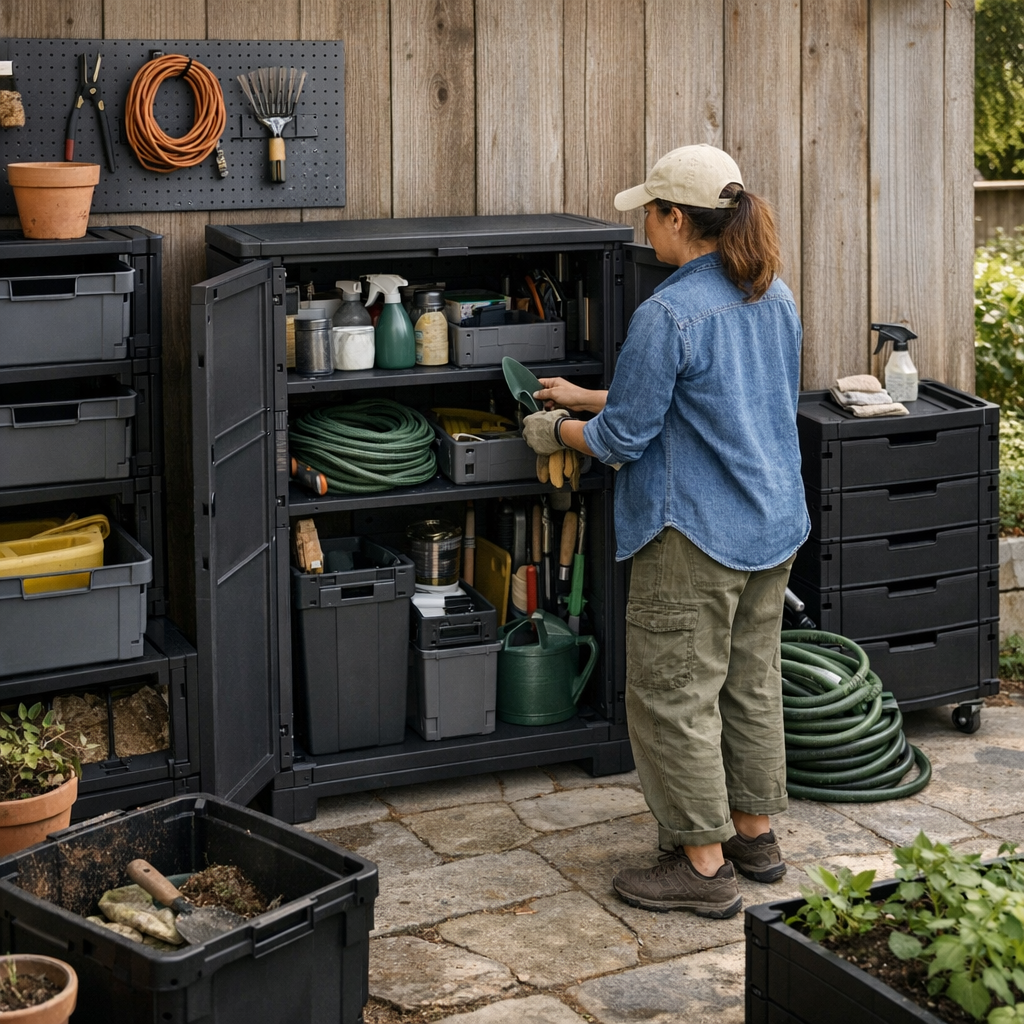
    The real difference surfaces on the third or fourth cycle of use. True weather-sealed outdoor cabinets, with their fit-tight doors and elevated shelves, protect against outdoor chaos. No corners turned into puddles, no tools blending in a debris-filled heap. When you finish watering or pruning, the action is quick: cabinet opens smoothly, everything lands in a defined slot or on a shelf, and you’re done. You don’t need a towel to reclaim your hand spade, and you skip the “sort, shake, and hope nothing’s ruined” ritual every time it rains.

    Scenes That Spell Out the Gap

    Think of this: late afternoon clean-up, a little tired, ready to wind down. The open bin? A single glove slides into a pool at the bottom, the pruner sticks on gritty residue, and you lose time trying to wedge tools around standing clutter. With a proper outdoor cabinet, you swing open the door, slot each item onto a clean, dry shelf, and close up—no improvising, no retracing your steps. The next morning, you start fresh instead of re-sorting. The cabinet isn’t just holding the gear—it’s holding the line for your whole routine.

    Reset Friction: Why “Almost-Right” Setups Stall Out

    It’s easy to cheat space with exposed bins or mobile chests, nudging them for a better fit. But these movable clusters almost always drift—blocking walkways, stacking in corners, and collecting a mess right by the entry. A bin rolls an inch too far and suddenly you’re sidestepping every pass-through. Overflow jams up a corner that’s supposed to be functional. The space that once looked so efficient on paper devolves into a slow-motion shuffle, especially as the weeks go by.

    When you swap a balancing act of loose bins for a proper weather-sealed cabinet—especially one at waist height and with the right shelf—you stop sacrificing floor space and flow. Wet days no longer spawn puddles under your gear. Dead corners aren’t clogged by makeshift stacks. That single upgrade cuts the invisible friction: fewer detours, no more blocking your own path, and less frustration on every lap around your yard.

    Spotting Genuine Friction in Your Storage Zone

    Most organization mishaps aren’t headline moments—they hide in patterns. If you shake water off gloves before starting, dodge a mobile cart you never meant to park there, or find a shelf dusted in windblown grit every week, your system is signaling trouble. Rust patches on hand tools, sluggish resets after rain, and needlessly repeated reshuffling are not minor annoyances—they’re signs that superficial order is masking deeper clutter.

    When Shelving Isn’t Enough: Racks vs. Cabinets

    It’s appealing to keep gear visible on wall racks or rails, but unless the spot is dry and protected, you’re just swapping floor mess for wall mess. Damp tools dry slowly, and visible “order” becomes an illusion when you’re still pausing to clean before use. Fully sealed storage—whether low cabinets or upright chests—not only keeps tools dry and categories distinct, but sidesteps the trap of maintaining a wall of almost-right organization that requires constant tweaking.

    Small Improvements, Big Difference: Why Protection Matters

    The benefits aren’t dramatic at first. No big reveal—just the slow, satisfying lack of clutter, hassle, and backtracking that chips away at your patience in lesser setups. Over the weeks, this streamlined routine shows its value: you walk a clear path, return items in one step, and skip the busywork of draining bins or clearing sidetracked piles. The setup becomes an invisible ally, not another round of work after the work.

    The true test for outdoor storage isn’t a tidy photo—it’s how the space handles a wet Saturday, a quick morning rush, a messy return: staying ready, not just looking ready.

    What to Fix (and What to Abandon)

    If your zone demands constant reshuffling, leaves puddles in supposedly “sealed” bins, or turns every return into an obstacle course, it’s time to rethink—not just tweak. The real gains come from direct-access flow: sealed storage raised off damp ground, routes that don’t force detours or repeated reshuffling, and layouts that match how you actually move and return gear, not just how much fits at rest.

    Quality setup means the area feels easier every week, not harder. That means fewer blocked pathways, actual wall utility (not just filled wall space), zones that aren’t collecting overflow by Friday, and cabinets that stay put—holding the line for both order and speed. True storage solutions do more than look tidy on day one—they work with your real routine, week after week.

    You can browse practical storage solutions at StackNest.

  • How Thoughtful Storage Design Speeds Up Daily Cleaning Routines

    If your home always seems to hover somewhere between “almost clean” and “almost chaos,” there’s a silent culprit: the way your storage is set up. It’s not that you’re lazy or messy—your shelves, bins, and baskets might actually be working against you. Sound familiar? You open the linen closet and instantly sigh. You reach for a flashlight, but end up digging beneath batteries and tangled cords. Entryway benches collect stray gloves, mail, and yesterday’s scarf. And every “quick” reset ends with a half-hearted shove somewhere out of sight. A space can look perfectly organized on day one, but after a handful of rushes and drop-offs, the fault lines in your storage system show fast. A setup that only looks neat can’t keep up with real daily use.

    How Storage Friction Builds—And Why Resets Start Dragging

    It’s easy to blame yourself for slow cleanups or crowded surfaces. But most of the time, storage that just holds things—without clarity or access—makes every put-back harder than it needs to be. These small frictions pile up day after day, quietly draining your time and energy.

    Where the system breaks down most:

    • Shelf edges fill with half-stacked, leaning items that block your view of what belongs where.
    • Bins that started out “organized” become mixed: today’s cleaning spray lands on batteries, tomorrow’s light bulbs beside doodads you forgot you owned.
    • Folded towels collapse into slopes, so you dig for face cloths buried underneath—every stack losing shape by midweek.
    • The front of every shelf or bin turns into a blockade; you can’t grab one thing without displacing three others.

    When life gets busy, every quick return means more hunting, unstacking, and reshuffling. Instead of putting something away in one motion, you’re double-checking piles and still never seeing the whole shelf clear at once.

    Staged for Show—But Not for Everyday Life

    The appeal of a visually tidy storage upgrade is undeniable. High shelves, deep baskets, broad bins: at first glance, it all looks calm and contained. Yet the trouble starts the minute you reach for something that’s not right at the front.

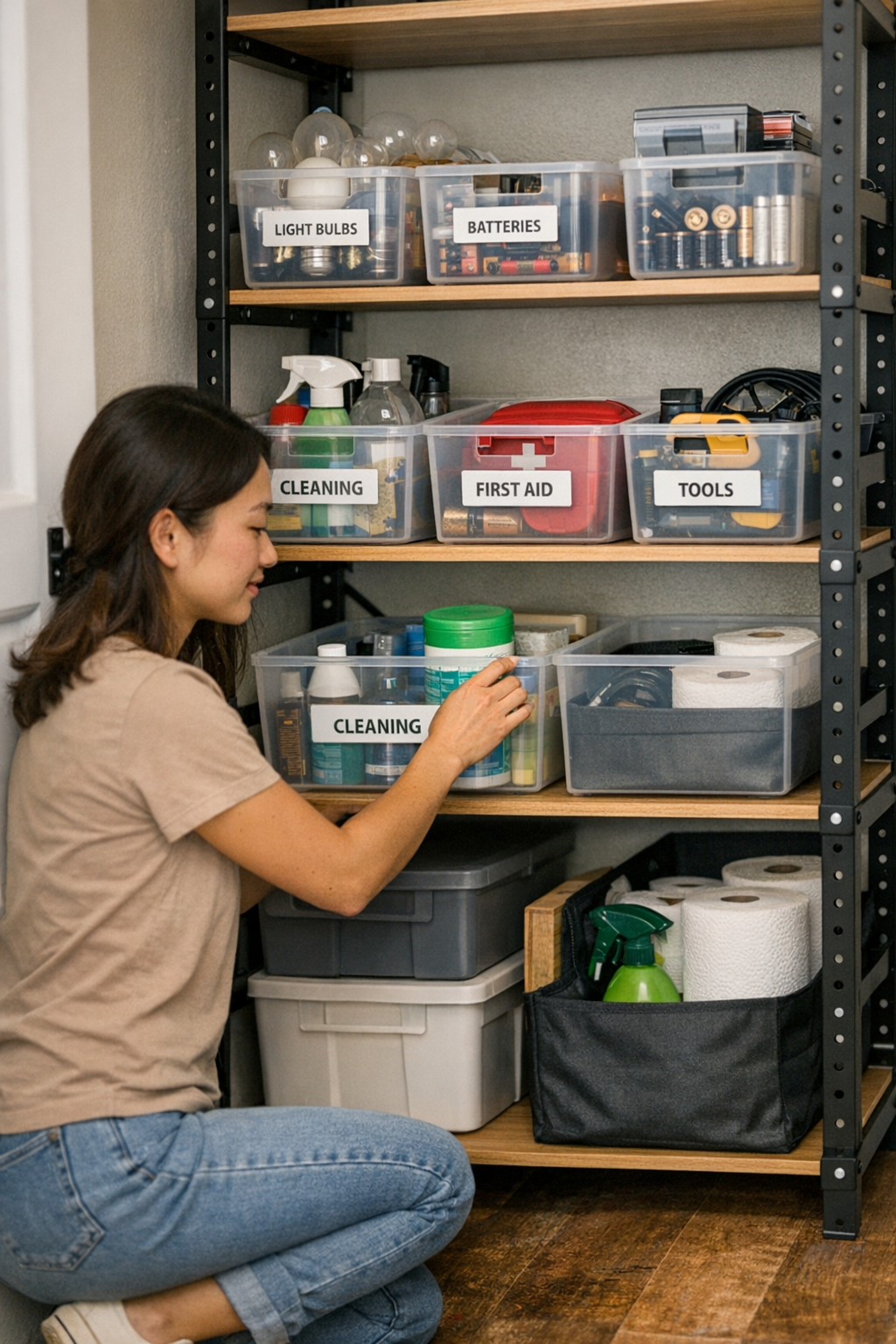
    Picture your hallway utility closet: Two big baskets—one for cleaning, one for home stuff. The system works for a week, maybe two. Then you try to return a pack of batteries and find yourself up to the elbows in a pile of extension cords, old tape, and four types of light bulbs. Tools have wandered across the aisle. The neat separation fades, things migrate forward, and eventually, you’re scooting stuff aside just to slide in a can of polish. That five-minute “straighten up” turns into a hunt-for-space event, every time.

    Maintaining Clarity: How Category Boundaries Make Real Order

    The organizing setups that actually work long-term make two things obvious: what you have and where it goes. Shelves with distinct zones, slim bins dedicated to single item types, and clear labels aren’t about being fussy—they let you grab, return, and move on, even with one hand full. No second-guessing, no balancing stacks, no rummaging behind last week’s purchase just to get what you use every day.

    A Real Fix: Swapping the “Catch-All” for Slim Dividers

    Go back to that overstuffed closet. Instead of a single catch-all basket (where everything collects and nothing quite belongs), split the space with four narrow, clearly labeled bins: sprays, bulbs, batteries, tools. Now, each item slides into its lane. Bulbs don’t topple into wipes, a screwdriver doesn’t hide under a rag, and you’re no longer rearranging the pile just to put something away. Return an item in one move, walk away—the boundaries hold, even during the busiest week.

    Daily Red Flags: Is Your Storage Slowing Everything Down?

    How do you know your storage is underperforming? The warning signs are in the little annoyances:

    • To put one thing away, you first have to lift, shift, or dig through other stuff—sometimes every single time.
    • Categories blend together: phone chargers end up with garden gloves, mystery hardware migrates into the laundry shelf.
    • Flat surfaces quietly turn into unofficial dumping grounds, squeezing out their original purpose.
    • Each tidy-up feels close to finished, but never quite done—instead of “place for everything,” you settle for “good enough for now.”

    Contrast that with storage where every item can go right back—no shuffling, no guessing, no hesitating. If your hand doesn’t need to clear the field for every return, your reset speed improves immediately (and it actually lasts).

    Basket, Bin, or Shelf? Why the Form Matters on Busy Days

    How you store things shapes how your space feels—and how long it takes you to get out the door. Oversized baskets and deep bins are great for concealment but almost always become black holes for related (and unrelated) items. The difference is clear: an entryway bench with one big “catch-all” gobbles up keys, sunglasses, and mail into a single heap by Thursday afternoon. A shelf with compact dividers and tidy labels? You can grab your gloves or dog leash without the morning scramble—no more sliding shoes aside to find the umbrella.

    Master closets see the same story play out. An extra-large drawer looks serene for a while, but soon one sweater is wedged beneath three others, and bags start swapping spots during every weekly reset. With shelf dividers or adjustable racks, everything holds its place—sweaters aren’t lost, purses have a predictable home, and each return steps takes seconds, not minutes.

    Simple Upgrade: Make Access as Easy as Use

    If you grab something weekly or daily, its home should never be hidden behind, under, or inside something else. Add slim dividers to wide shelves so a single category gets each compartment. Use adjustable inserts to split large bins, or break up a deep drawer with upright organizers. Even just a couple clear labels fend off the slow creep of a “miscellaneous” pile.

    When “Organized” Isn’t Actually Efficient

    Lots of storage systems look magazine-ready. That’s not the same as being functional in real life. Overlapping bins, undivided drawers, and one-size-fits-all shelves stay photo-worthy only until the third or fourth real use. Then you’re right back where you started—resetting more often, reshuffling more items, and losing the speed and clarity the system promised.

    A storage system works if it keeps up with living—not just with arranging. The homes that reset fast have clear, uncrowded shelf edges, visible category lines, and a return routine that ends in one step, not five. They aren’t perfect, but they make every cleanup feel like progress—not defeat.

    Small Changes, Real Results

    You don’t need a total overhaul to notice the difference. Trade an overflowing bin for two targeted containers. Add dividers to a shelf that always becomes a “drop zone.” Stick a few labels on containers that keep swapping contents. A little more structure equals a lot less hunting, stacking, and re-doing—week after week, the minutes add up and the clutter stays at bay.

    Storage isn’t about hiding mess. It’s about supporting daily life—making it easier to grab, put back, and move ahead without the endless side quest of straightening. If your system works hard, your space will finally keep up.

    For more practical storage solutions designed for daily life, visit ClosetWorks.

  • Mastering Heat Gun Temperature Layering for Flawless Surface Finishes

    The fourth time you pass a heat gun over a surface, the job reveals its true nature. What started as fast, flawless layering—on vinyl, pipes, or composite plastics—suddenly gets complicated. The gloss that popped after pass one turns unpredictable by pass four. Edges start to ripple. Gloss turns patchy. The surface, once perfect under fluorescent shop lights, gathers small betrayals: a rough spot here, a hairline bubble there. Every finish flaw adds time at the sanding bench, working overtime to erase mistakes that crept in while you tried to move fast and keep up with the rest of the workbench routine.

    Early Passes Hide the Real Battle

    It’s easy to trust the first layer. Both bargain and mid-range heat guns, straight out of the box, give you steady airflow and set-and-forget control. The job feels predictable—until the real workflow kicks in. Drilling, cutting, battery swapping, and then, by the third or fourth layer, you notice what the specs never tell you: a flawless start doesn’t guarantee a finish you can stand by. Rushing through the first passes encourages carelessness on the next, and that’s when seams turn soft, haze creeps in, and tiny flaws appear in places you already promised yourself you wouldn’t have to sand again.

    Layering Under Pressure: Where Precision Slips

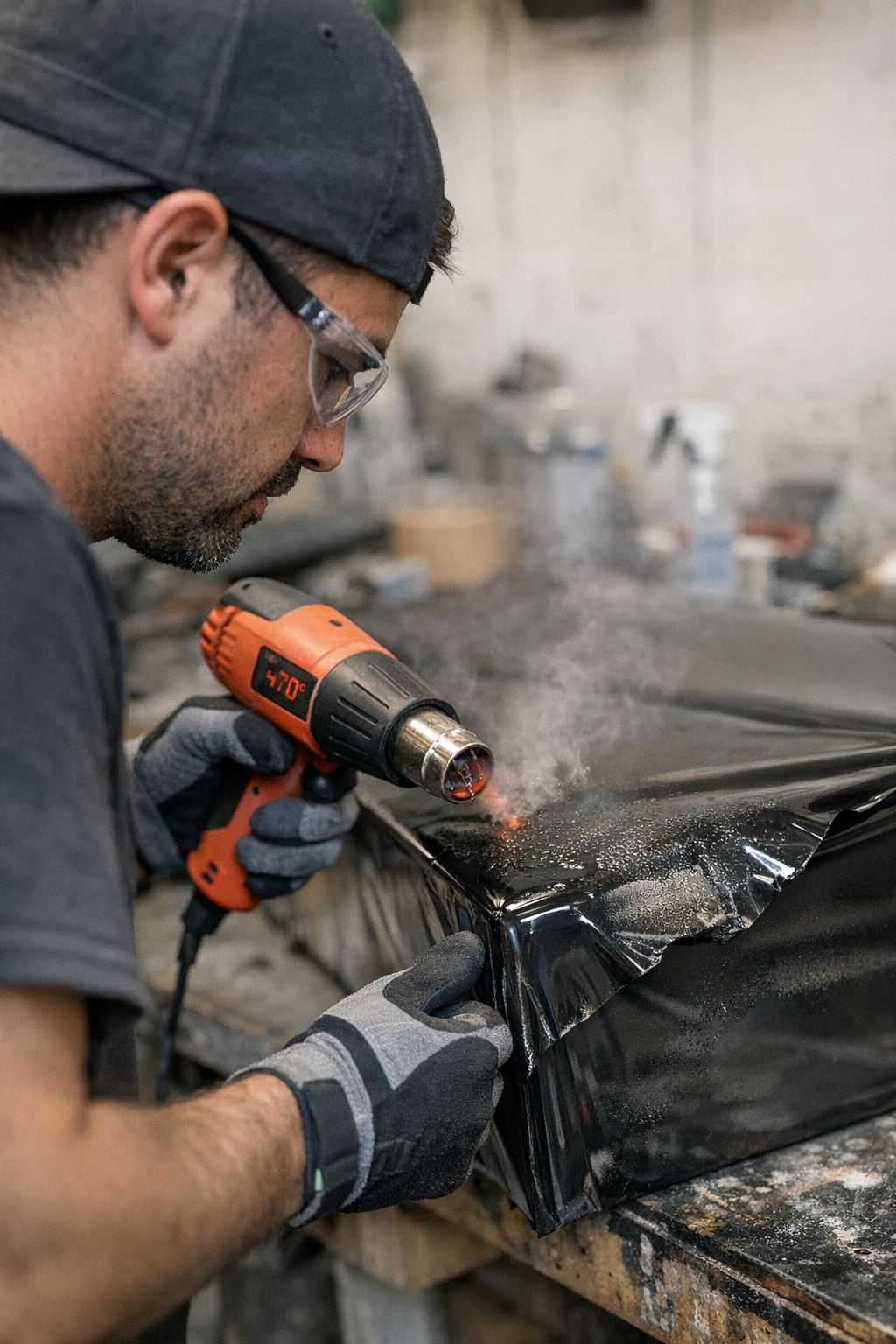
    End of shift. You press a new vinyl seam. Yesterday’s panels looked sharp, but today, fine dust clings to sticky edges and that two-second hesitation with the gun leaves an entire corner too soft. Overlapping jobs mean you’re juggling overhead sanding, bit changes, and a queue of pieces all needing the same tool. The real threat? Sudden, careless temperature jumps—especially swings of 30°C or more between cycles—quietly set you up for streaks, micro-bubbles, and stress lines beneath the top layer. They don’t look like faults at first glance, but run your gloved hand along the seam, and you’ll feel roughness that wasn’t there yesterday. That’s the price of rushing in real-world shop conditions, whether it’s cramped job trailers, an unheated garage, or just pushing to clear a cluttered bench for the next stage.

    What Happens When You Rush the Heat

    Under pressure, it’s tempting to crank the heat to speed things along. You’re swapping dead drill batteries, scraping glue, and stretching the workday. The temptation is real—but the repercussions are, too:

    • Blistered edges—raised seams and random bubbles hiding out until your cleanup pass reveals them, ideally before the supervisor does.
    • Patchy gloss—a band of dullness or streaked surface where air lagged or the temperature crept up far too fast.
    • Sanding purgatory—flaws locked under layered plastic, demanding coarse grit or even a full strip and restart, which ruins flow and morale fast.

    Most of the time, these missteps don’t show up until several batches later, long after the chance for an easy fix has passed. By then, workflow slows and the project starts feeling like a lost cause.

    Small Adjustments That Actually Save Jobs

    The experienced crew learns fast: it’s not about fancy heat gun attachments or spec sheets—it’s about patience and repeatability. Move in tight temperature steps—no more than 20°C at a time—and let each layer settle. It’s a discipline as much as a technique. This rhythm cuts down on rework, keeps seams sharp, and makes end-of-day cleanup less of a chore. When you run a batch of a dozen parts, and your finish sticks, you notice real efficiency: less running back and forth for tool swaps, fewer surprises after cooling, and less fatigue chasing flaws down the line.

    Those small, habitual tweaks—steady increments, regular cool-down checks—quietly beat “maximum power” shortcuts every single time. Workflow stays smoother, and you spend more hours assembling or fastening new projects, not revisiting last week’s mistakes.

    Know the Signs Before It’s Too Late

    A heat gun that’s a little unpredictable is like a dull cutter: by the time you spot burnout, the damage is baked in. What should you actually watch for, before the job’s out of reach?

    • Puffed seams and softened lines—corners lose their edge, particularly where overlaps stack up or the temperature gets left unchecked.
    • Discolored patches—that off-tint or yellowing that tells you heat isn’t settling evenly, especially nasty on white plastics or light panels.
    • Scorched fragments—barely visible at first, but once layered over twice, nothing but a sanding wheel is going to get rid of them.

    Pause after each pass. Use the downtime from other tool changes—bit swaps, battery charges—to give each layer a quick inspection. It saves jobs, saves panels, and saves your nerves on deadline days.

    Getting Reliable Results, Not Miracles

    Great layering isn’t about chasing the latest multi-mode heat gun. It’s about using what you have in a way that fits the pressure and pace of real shop days: keeping temperature jumps in check, respecting cooldowns, and treating each pass as a chance to get it right—not just fast. Every new tool or blade upgrade helps only as much as your basic approach. In the real world, the small habits—tight control, methodical pace, constant checking—are what turn out consistent, professional surfaces batch after batch.

    The takeaway: Don’t let the quick wins of early passes fool you. Stay patient, keep temperature shifts measured, and let each layer prove itself before moving on. It’s a discipline, not a shortcut—and over the long haul, it’s what gets you off the sanding bench and back into real work.

    For tools and equipment built to handle the real grind, visit Gumboll.