Category: Pet Life

  • How Consistent Pet Care Routines Create Calm Visitor Greetings

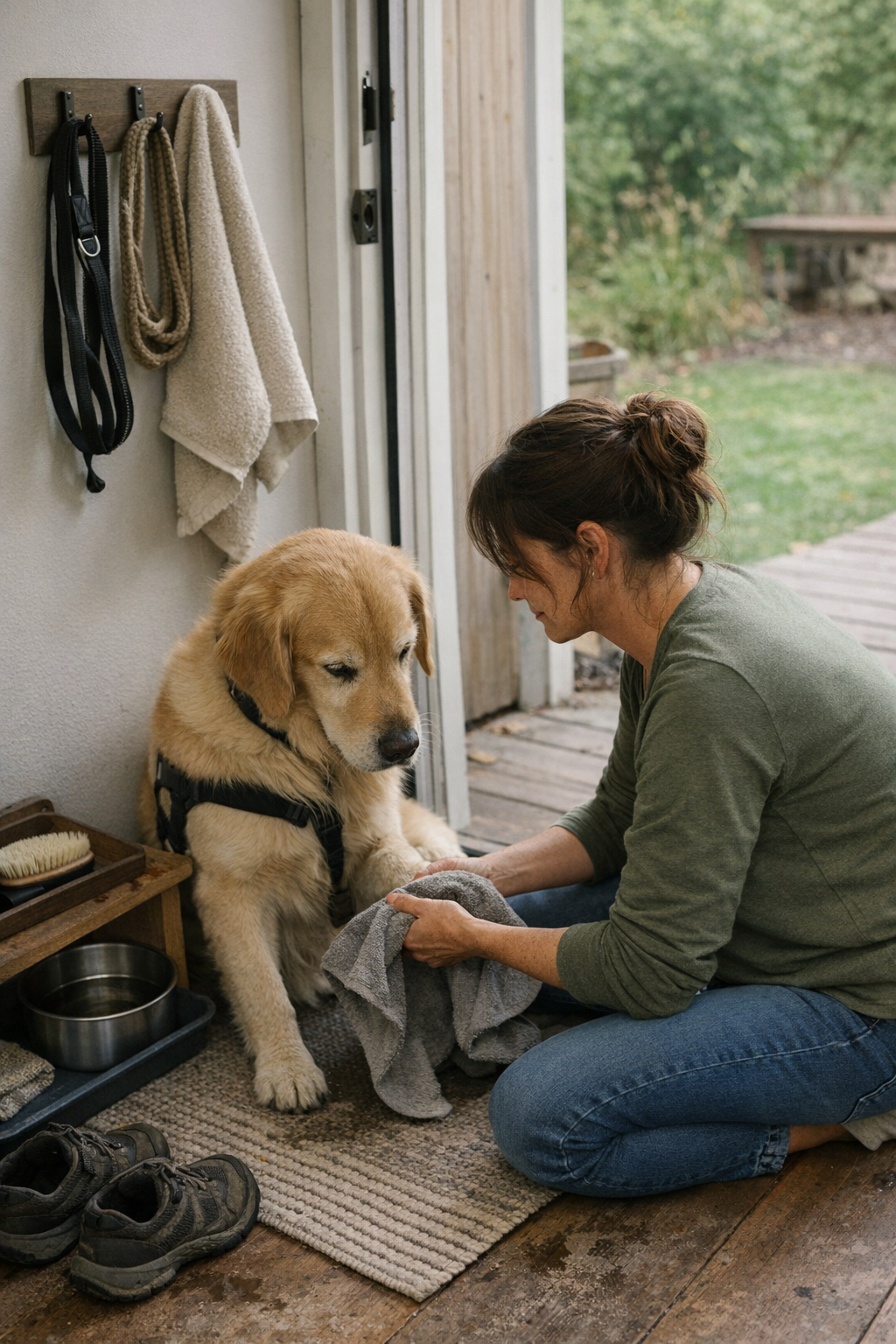
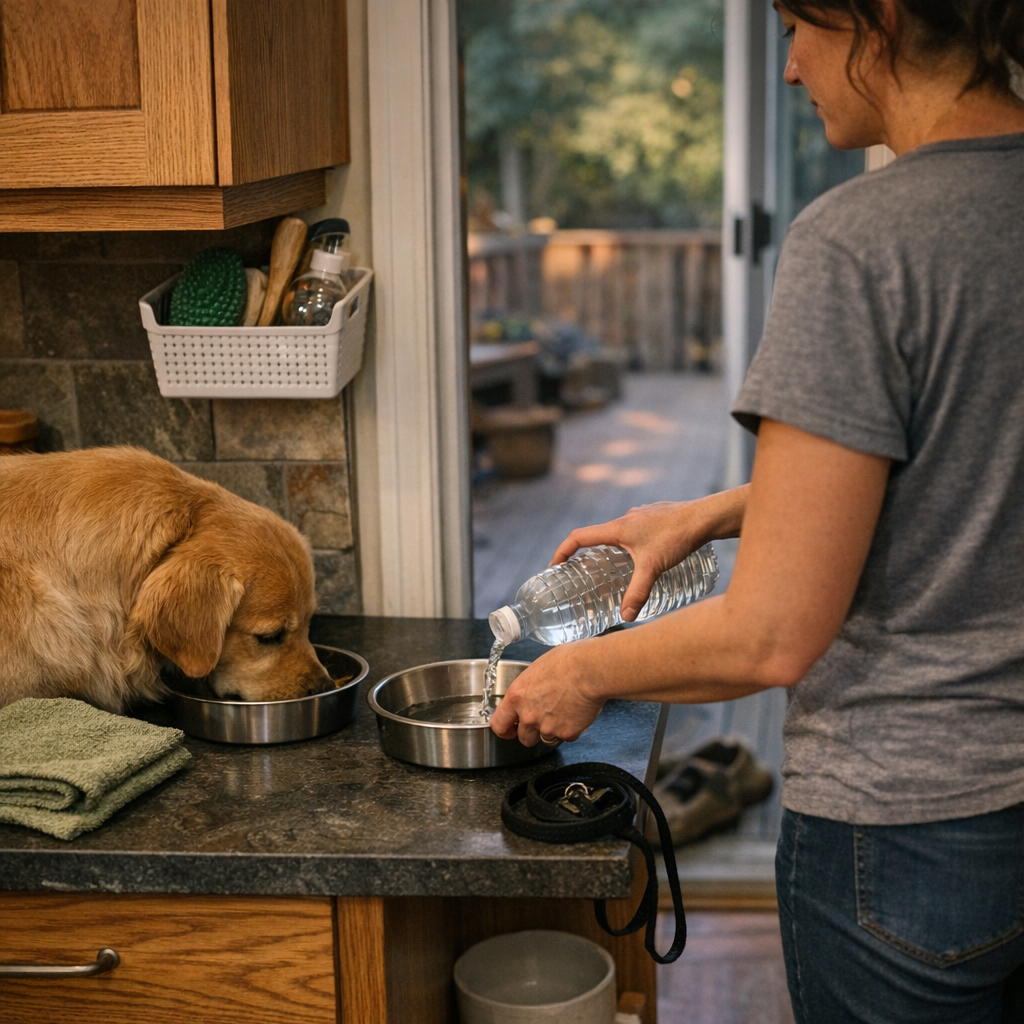
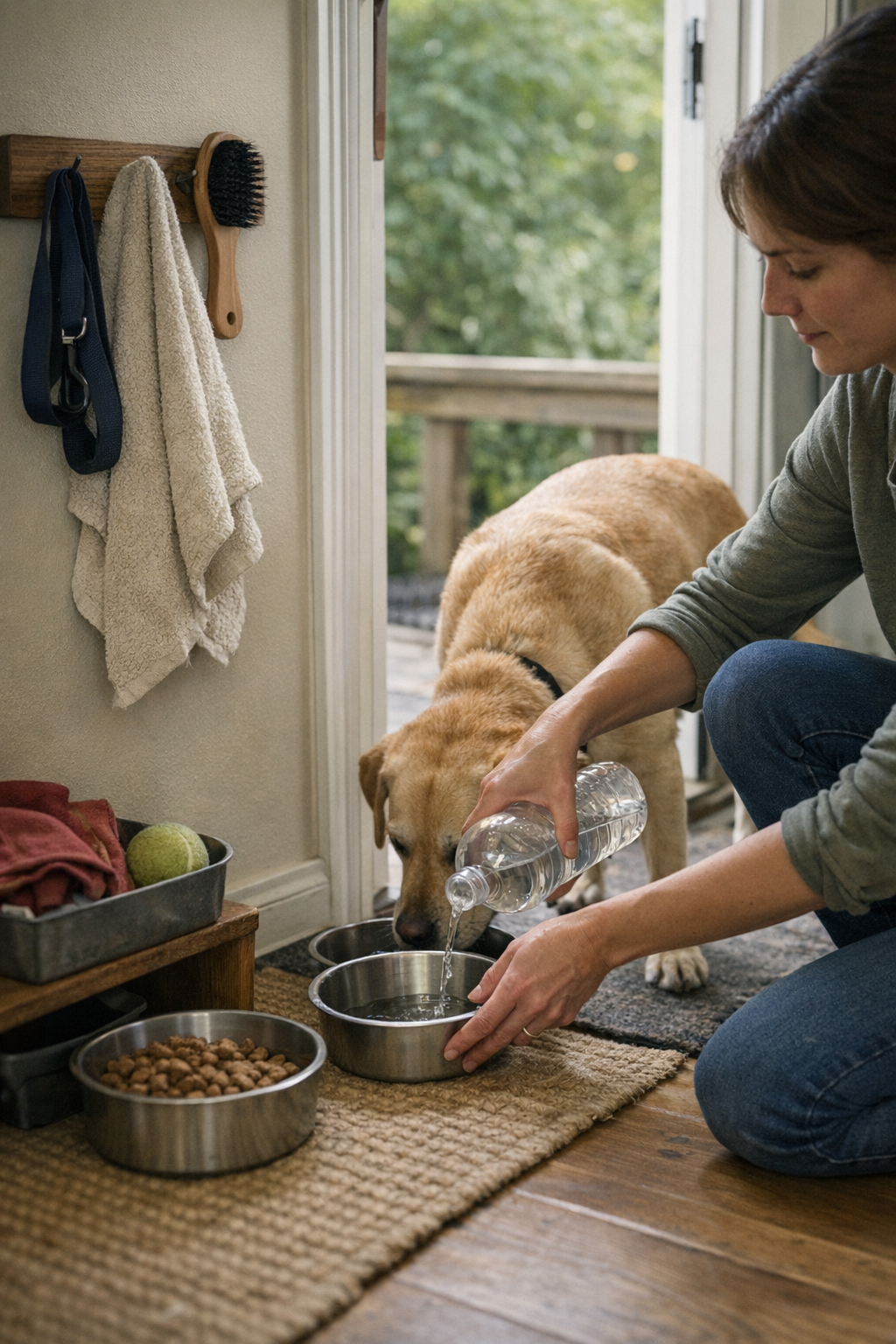
    Everyday dog care isn’t defined by how calm your greeting looks—it’s shaped by what you can actually reach, reset, or refill in the seconds before a visitor, a late walk, or a fast cleanup. The entryway might look organized, but your routine reveals the truth when you reach for a dog towel that’s buried under shoes, or find the water bowl’s still in the sink with yesterday’s dishes. Calm at the door isn’t just a product of good behavior; it usually falls apart when even one everyday item—leash, bowl, towel—is out of place, damp, cluttered, or not ready when you need it. This is the unglamorous repetition behind “calm” in CalmPetSupply’s world: does the care setup actually keep up, or does it stall you, right when each routine resets?

    The Real Reason Your Dog’s Greeting Feels Chaotic

    Surface order doesn’t guarantee functional calm. The leash is always supposed to hang by the door, but too often it’s on a crowded hook, buried under coats, or looped over a chair after the last walk. The water bowl—meant to be freshly filled—ends up forgotten under a pile in the sink, or only half-refilled after the morning chase to the door. “Tidy” can conceal repeated friction: the quick-brush for shedding is in a drawer across the room, the dog towel is clean but tucked next to still-damp laundry, the mat for muddy paws is hidden to keep the floor “clear.” So when a visitor arrives, you go from “ready” to scrambling—stalling, apologizing, buying time while your dog’s excitement builds and the actual moment feels anything but smooth.

    Every repeated routine tests the system. The dog towel is clean but missing from its spot, the brush helps but is never at reach, the essentials you need drift away from where they’d actually make each repeated transition easier. What looked orderly the day it was set up exposes its weak points by the third reset. “Out of sight” too often means “hard to grab,” and your calm moment turns into a repeat delay.

    Interruptions Stack Up in Unnoticed Ways

    It’s never just one snag—small breakdowns stack up. End-of-day: you return from a walk, hands full, reach for the towel you left “close”—but it’s disappeared, or still wet. Your dog leaves prints from paws you can’t wipe quickly. The entryway might look fine at a glance, but each pause, backtrack, and late wipe adds up; the space works against you, not with you. After play, you grab the water bowl for a refill, only to discover it missed a rinse and still has old kibble floating. Another missed step, another small frustration. If the same mistakes appear every few days, the calm routine starts to require extra labor and more apologies—drag that never quite shows in the neat version.

    Cleanup only gets harder when every key piece is stored out of reach. A brush in a distant drawer adds steps after each walk. If bowls, towels, and leashes aren’t put back to a true “ready” state right after use, you’re stuck repeating minor recovery jobs—wiping after the spill, running an extra refill, scrubbing stuck-on food. Those seconds lost reshuffling what’s basic become the difference between a calm entrance and yet another behind-the-scenes scramble.

    Repeated Use Uncovers What Needs Fixing

    The first week with a new setup feels fine: bowls stacked neatly, leash on a hook, towel folded. But by midweek, weak points appear. One person takes the water bottle to the car for errands and forgets to return it. The towel—needed for an emergency cleanup—ends up in the laundry pile, never replaced at the door. The brush migrates upstairs. Supplies drift into common spaces, stretching the routine and putting each small job just out of reach. The setup isn’t broken, but it no longer matches the way care really happens. The more you repeat daily routines, the more one missing or misplaced item expands the workload and slows you down.

    Chasing after supplies isn’t just inconvenient: it drains attention and patience. The seconds spent looking for a leash or bowl feel small, but put together they keep every routine less smooth than it should be. Suddenly a calm arrival turns into hunting for what you thought you’d already prepped—another “wait, let me just grab the towel,” another walk paused mid-step to refill a bowl you wish was ready.

    What Actually Changes Routine

    Routine friction doesn’t disappear with better storage or stricter checklists—what works is cutting the number of steps between use and reset. CalmPetSupply scenarios start to feel manageable when the reset flows naturally: towel back on the door hook as you enter, absorbent mat waiting for muddy paws in the same spot every walk, leash looped above clean bowls—not dropped on the nearest surface. Refills and wipe-downs are done before you leave the area, not put off for “later.” The next care moment—guest, walk, cleanup—needs fewer moves and less memory to work.

    For example, water bottles stay on a dedicated open shelf and are never borrowed for anything else; wet paws always meet a dry towel right at the door. The leash, brush, and bowls return to their spots before you move on, and the setup always assumes the next routine is minutes away, not hours. That’s what shifts the effort from a repeating hassle to a steady routine—one that stays predictable and reduces stress even when things get busy or unpredictable.

    Maintaining Function vs. Maintaining View

    Looking decluttered means little when it slows you down. Supplies hidden in bins or baskets often result in extra trips, while a “neat” hook overloaded with jackets just buries the leash again. The test isn’t whether your space looks photo-ready, but whether you can get to every daily need—the bowl, towel, brush, leash—without stepping over or beneath something else. The best CalmPetSupply routines hold up even on tired days and during surprise transitions, not just under perfect conditions.

    The moment you stop relying on memory, stress drops: bowls are wiped, refilled, and stacked right at hand; towels are hung within reach and dry; leashes return to their assigned spot every single time. Each handoff—late-night walks, sudden visitors, wet weather—stays routine, not a series of small firefights. Calm isn’t hidden behind order; it’s built by the physical setup keeping pace when basic care repeats and pressure points return.

    Everyday Calm Is a Physical Setup, Not Just a Goal

    Storing each basic where you use it—bowl by the feeding area, water within reach, towel hanging just inside the door, leash always above the ready bowls—and resetting every item immediately after use, is how interruptions shrink instead of pile up. Over time, you’ll have fewer rushed resets, fewer missed cleanups, and less daily drag. The calm you want for your routine isn’t abstract or a trick of better tidying—it’s the physical arrangement that handles real, repeating mess and movement every single day. Routine resets done right, right after each use, are what keep your setup working with you, instead of falling behind and forcing you into one more mini-scramble.
    See what keeps the routine ready at CalmPetSupply

  • Small Adjustments That Transform Your Cat’s Space Into a Calm Home

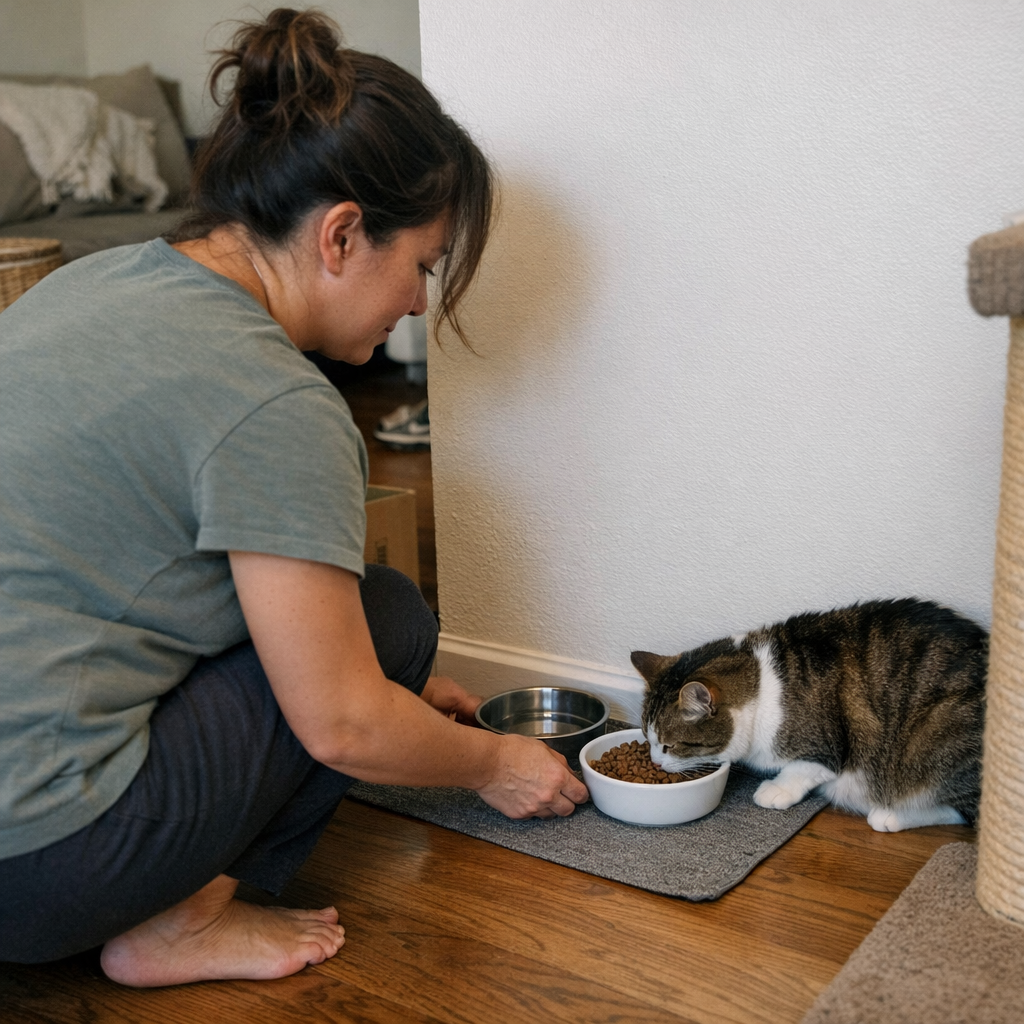
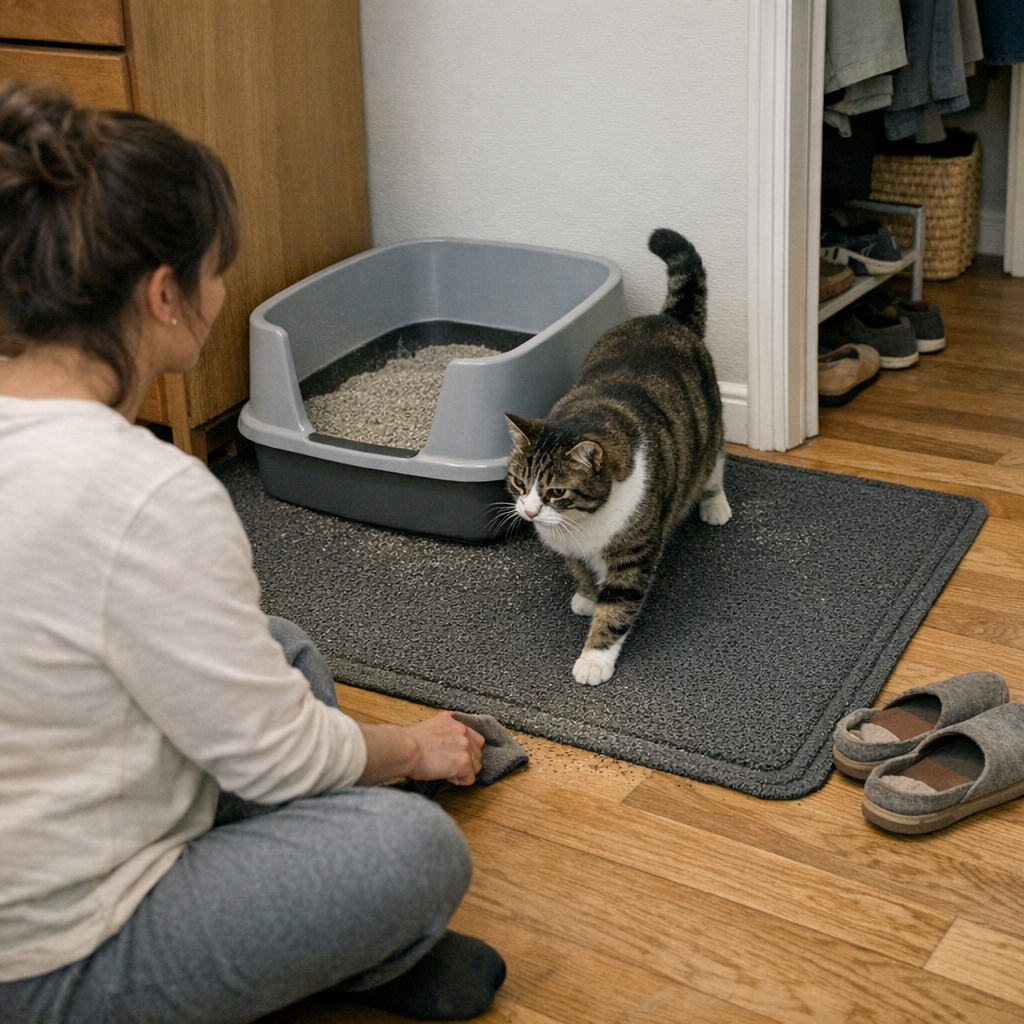
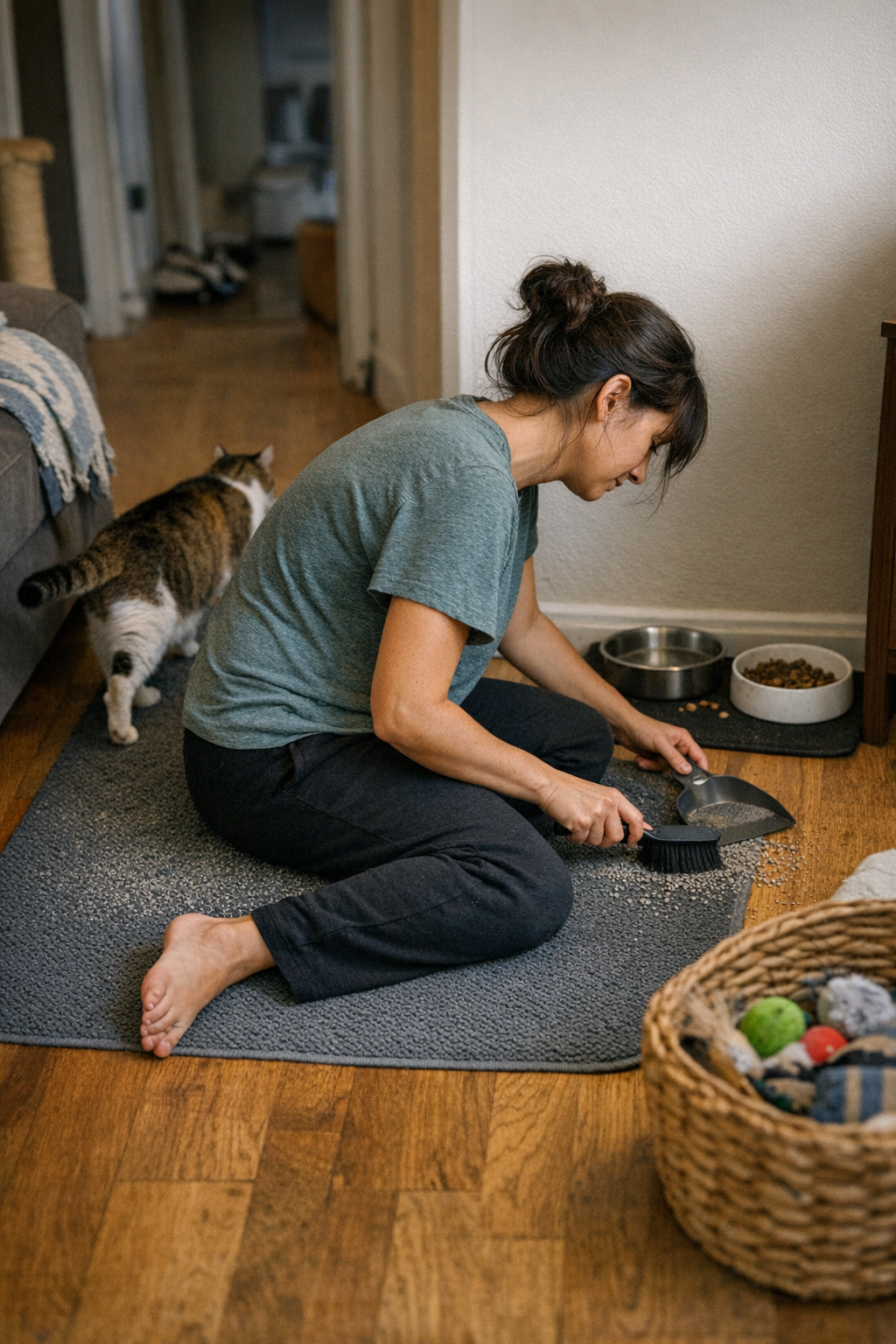
    Tidy setups aren’t always easier. In most indoor cat homes, the trouble starts after the first day—right when everything still looks organized but routines begin to snag. The bowls line up on the matching mat, the litter tray sits neat with a pad, toys vanish into bins, and the room looks “finished.” Then: the first refill stops short because a mat edge folds. Crumbs skip past the border. Water streaks dodge under a bowl, and the “organized” feeding corner quickly demands extra steps. Tiny setbacks multiply, and that’s how a supposed quick upkeep slips into a daily grind. StillWhisker isn’t just about clean lines—it’s about fixing the spots that cause you to double back, bend over, and deal with the same mess, day after day.

    When a Clean Setup Keeps Getting in Your Way

    A feeding area looks controlled until you’re nudging a bowl to pour water or sifting crumbs that slip just beyond the mat—at exactly the same spot, every meal. Food bits fall outside the coverage zone. The mat itself drifts as your cat’s real path claims more ground. Reset time stretches because you’re constantly scooting things aside, or stretching to reach, losing seconds to small, repeat annoyances. That “tidy” setup starts acting more like a set of hurdles than a help.

    The friction repeats in every zone: a litter mat that looks wide enough—but every sweep uncovers pieces migrating into the hallway. A water bowl wedged next to a chair so it’s hard to reach. The toy bin always half-filled, while favorites resurface under the couch only on cleaning day. These patterns aren’t new—they’re just the places most setups break down when real routines kick in.

    Recognizing Friction Points Hiding in Plain Sight

    The problem isn’t just stray mess. The true signal your routine isn’t working is repeated inconvenience—if you’re cleaning the exact same spot, moving the same object twice, or finding the same type of mess in the same place, the setup needs rethinking, not just tidying.

    Common checkpoints in daily cat-home rhythm:

    • Reaching for a food bowl and bumping into another dish or tool that shouldn’t be there
    • Kneeling to spot-clean only to realize the wipes or brush aren’t close at hand—again
    • Navigating around a “blockage” where cat gear cuts across your main walkway

    Each of these moments steals time and movement—one at a time, it’s minor; repeated at every reset, it adds up to real friction.

    How Invisible Mess Slips into Your Shared Space

    The real test is in shared zones. Mornings start clear; by noon, toy mice trace a crooked line behind chair legs, and that window perch blanket is already holding fur. Even after you tidy, some corners require one more pass—a sign the original placement isn’t matching your cat’s habits. Hot spots develop: a sofa side becomes a toy magnet, a mat edge always slows your stride, and the “invisible” mess is suddenly impossible to ignore. The difference between a room that just looks settled and one that’s genuinely less work lies in these details.

    Small Shifts That Change Your Maintenance Routine

    The most effective fixes aren’t about aesthetics—they’re about dropping routine strain. Small, targeted changes shift the real daily pressure points:

    • Enlarging a litter mat to fully cover the path your cat actually uses, not just the front of the box
    • Relocating feeding bowls so pour angle and access aren’t blocked by traffic—ending meal delays
    • Moving toy storage directly to the spot toys keep landing, not where they’re supposed to go in theory

    A well-placed mat cuts cleanup to one room—not up and down the hallway each night. The difference isn’t a “prettier” room; it’s a routine with fewer interruptions, no extra stretching to reach, and less mess leaking into new corners.

    Case in Point: The Litter Mat That Actually Contained the Scatter

    Too many owners fight a losing streak: scoop, sweep, repeat, but tracked litter always sneaks out somehow. A single practical change—a wider, better-placed mat, matched to the actual post-box sprints—finally kept the grit inside the zone. Separating the litter area with more coverage meant fewer midweek sweeps and less mental fatigue from unfinished cleanup. Over a few resets, the litter trail didn’t reappear, cleanup switched from a multi-step drag to a quick pass, and the feeling of constant redo faded. This wasn’t luck; it came from watching exactly where the problem happened, not guessing on setup day one.

    When a Setup Looks Tidy but Feels Off

    Even a neat-looking setup can slow routines to a crawl. The space looks ready, but use tells another story:

    • A window perch feels “finished,” but fur always piles at the same tight corner that resists fast shake-out
    • The scratcher blends into the décor but drops loose bits where you walk—demanding daily sweep-ups
    • Feeding mats catch most mess, but crumbs sneak past shallow edges, meaning a total sweep after every meal
    • Emergency wipes live in a “reasonable” drawer, but you’re always darting out to grab them exactly when the mess hits

    This is the gap between upkeep blending into your rhythm and it turning upkeep into a nagging project.

    How to Spot a Setup That Needs Tweaking

    The warning signs show in the pause: if you’re always slowing at one spot, battling the same debris, or spending more time in “quick resets” than you expected, your setup isn’t doing its job. Look for:

    • Crumbs, drips, or fur reappearing at the same mat border or behind the same bowl
    • Toys always lost under the same furniture edge and never quite returning to their bin
    • Cleanup supplies that remain tucked away but not where the mess keeps showing up
    • Routine resets taking longer each week even though the surface looks organized

    The goal isn’t mess-free living—it’s to shift obstacles and time-sinks so resets feel automatic, not drawn out.

    Targeted Adjustments That Actually Shift the Burden

    Update where patterns reveal weak points, not just what looks right on day one. Don’t overhaul everything—go where the routine actually stumbles: extend a mat where mess escapes, nudge feeding stations away from walkways, choose bins that match where toys wind up. After a few days, see which tweaks reduce “double-backs” and cut out the choreography of moving the same item, searching for a cloth, or shuffling bowls for reach. What feels easier isn’t the look—it’s the new normal of zero stalled movement, no unplanned trips for gear, and no more daily interruptions where mess wins.

    You’ll know it worked because the house gets quieter: blocked paths vanish, missed messes shrink, and resets become background—not a constant to-do list in your head.

    Room by Room: Real Improvements That Last

    Feeding and Water Areas: A mat barely “long enough” never holds up; extend it to where actual spills and crumbs fall—not just where bowls line up visually.

    Litter-Adjacent Zones: Watch the natural exit path—cats fling debris further on busy exits. Expand coverage and cut down on repeat cleanups.

    Toy Spread and Storage: If favorites always end up under the same sofa, adjust your system. Changing bin location or rearranging the trouble spot can eliminate the “lost toy” hunt during cleanup.

    Rest Corners & Comfort Setups: Window seats and plush blankets collect fur in predictable places. Have a mat or cover close by—choose one that shakes out in seconds and doesn’t become a backup project.

    Cleanup Access: Keep wipes and lint rollers where you pause for resets—not stashed out of sight. Each moved supply that’s within reach takes seconds off every interruption.

    It’s Not About a Perfect Room, But a Workable Routine

    Indoor-cat homes aren’t for magazines—they’re for living. The best setups prove their value not in looks, but in how fast you recover control after a feeding, refill, scatter, or return. If you and your cat both get on with your day—and the messes stop dictating your moves—the system works, no matter how settled it appears. The difference is clear when friction fades, not when the room looks staged. The proof?

    Explore what works better over time at StillWhisker

  • Why Consistent Dog Feeding Order Transforms Evening Routines

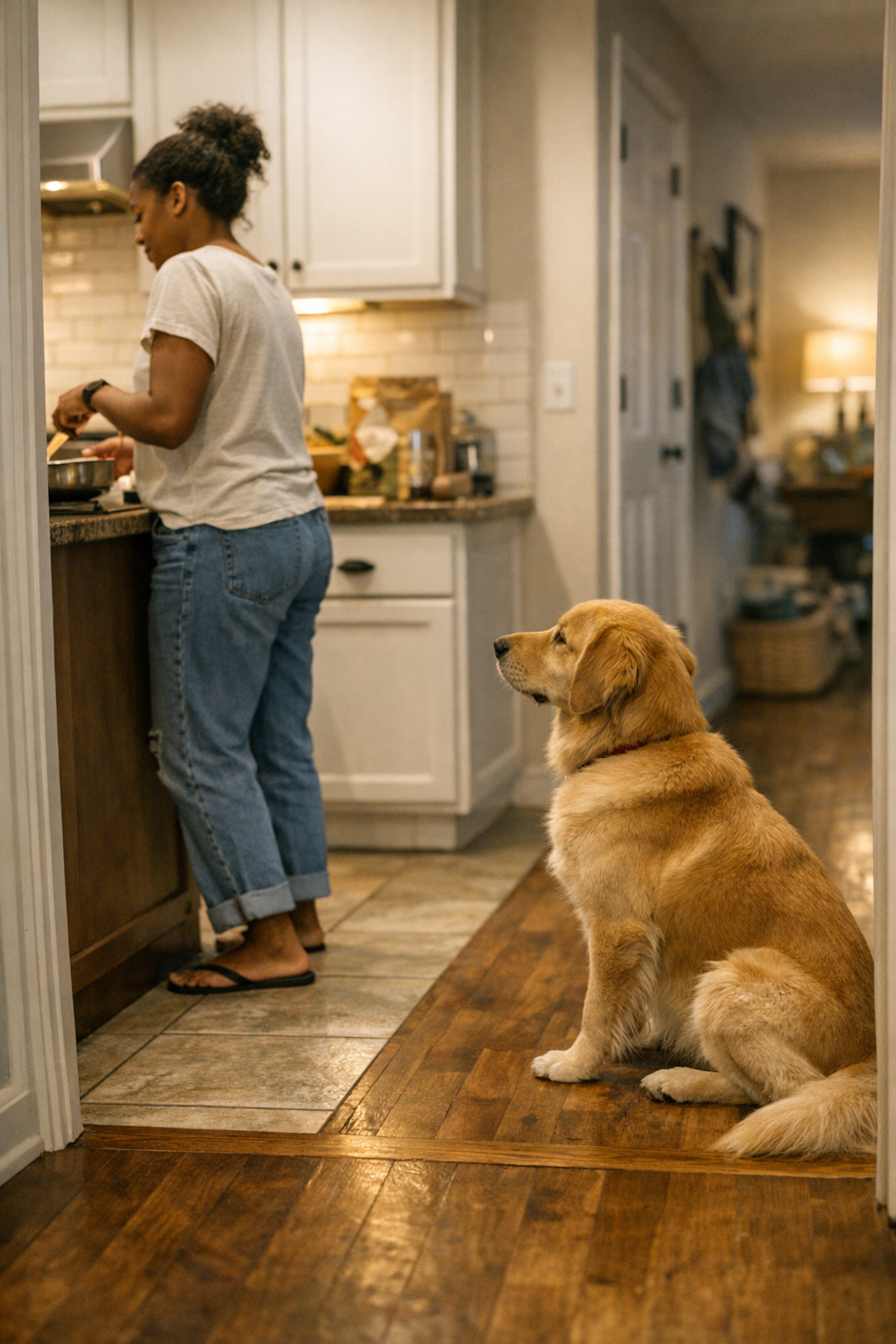
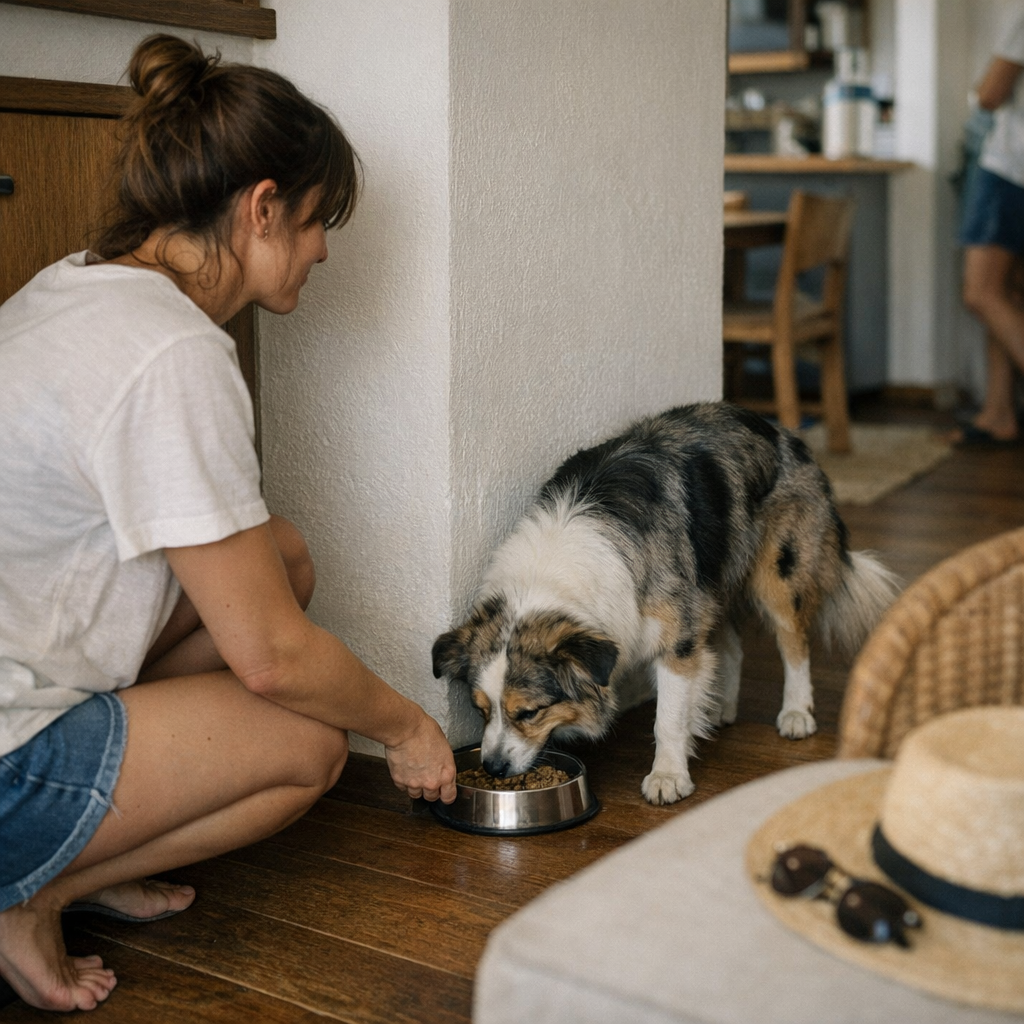
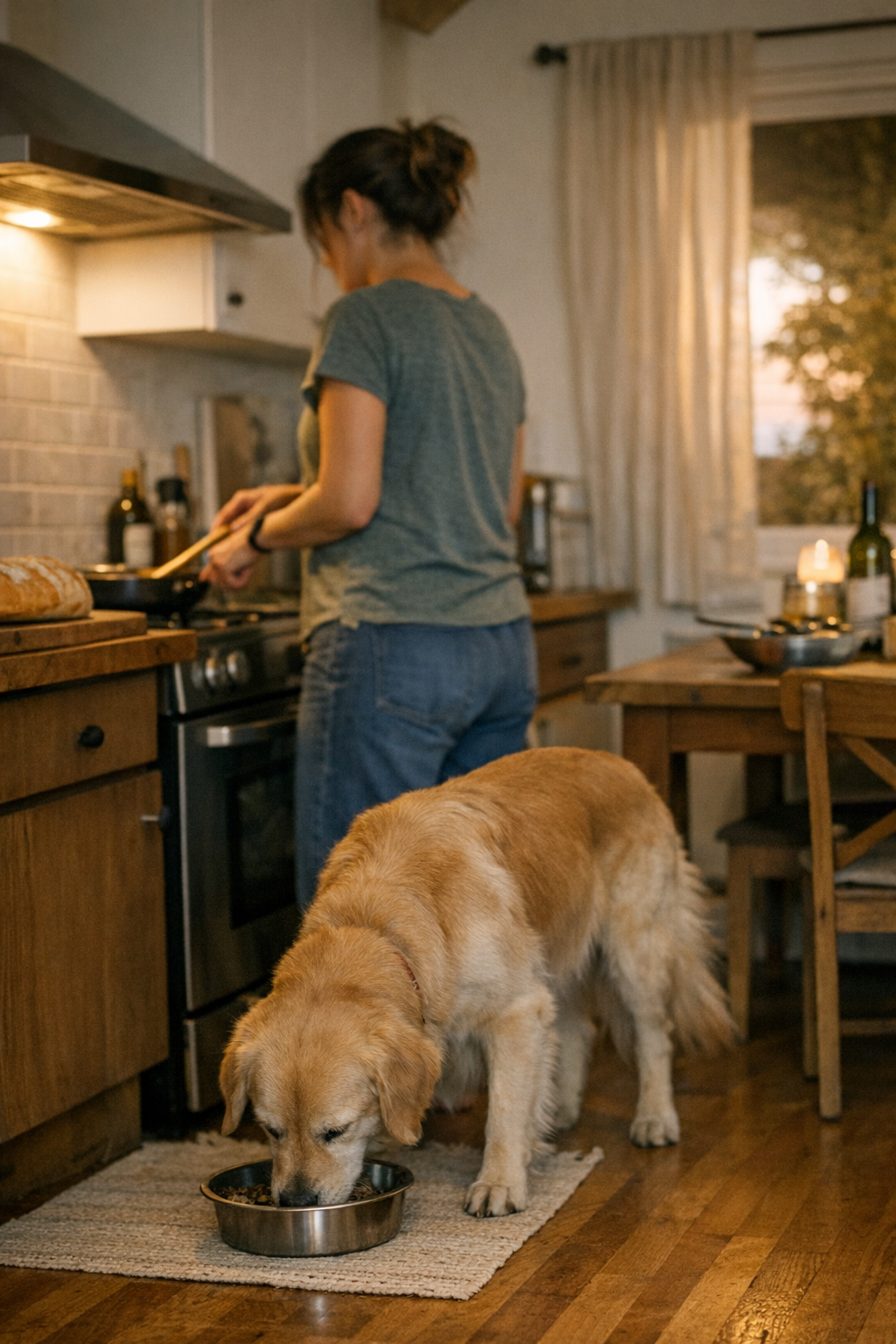
    Evening meal routines with a dog rarely stay as tidy as they look at first glance. You turn to fill your dog’s bowl, but she’s already pacing near your feet or blocking the walkway by the kitchen. If you prep dinner before feeding her, she’s hovering underfoot—sideways glances, bowl nudges, sometimes parking herself on the only spot you need. Every small mismatch in timing or order turns a supposedly organized setup into a chain of low-level interruptions: stepping around her, hunting for a towel just as paws smear the floor, reaching for the leash and finding a bowl creeping into your path. It’s the gap between a routine that functions on paper—and one that actually works when every movement matters.

    What Actually Happens When Meal Order Changes Night to Night

    Meal time isn’t a fixed sequence for most households. One night, the dog eats first and settles into her bed without comment; the next, your own dinner takes priority, so she paces, parks in the main corridor, or stakes out the kitchen mat. The unpredictability seeps in as restlessness: repeated circling, sidelong glances, extra hover-time where you need clean footing, silent but persistent negotiation. When a dog never knows if she’s next in the queue, neither owner nor space gets true relief—cooking turns into a game of sidesteps and soft reminders instead of a simple flow.

    The friction isn’t just occasional. When meal order jumps around, it erodes the calm that should settle into the evening. Dogs check in—again and again—for answers you haven’t decided, breaking your concentration just as timers go off or pans reach their hottest. A kitchen meant to be orderly ends up scattered by repeated bowl crossings, mop fetches, and improvised resets that are never quite as brisk as you planned. Calm fades, and the whole reset takes longer than it looks.

    How Inconsistent Meal Order Wears Down the Evening Flow

    Slipping into a reactive pattern is easier than noticing it. Feed the dog whenever she gets loud, or whenever you notice the clock—there’s no set signal for either of you. On quick nights, you remember as the leash comes off; on busy ones, you only react once the pacing breaks your focus for the third time. At first, the cost is invisible—just more background hassle. But over a week, it grows: after the walk, instead of resetting smoothly, your dog circles the same zone, you tiptoe between bowl and path, and the counter pattern for both of you is a constant re-negotiation.

    What looked like small details start stacking up. Where paws settle is less predictable; paw wipes and towels seem to hide the moment you need them. The feeding corner deals with more sprawl, and bowls drift into human paths. You clean up both meals, but it’s slower: more rerouted steps, more backtracking for supplies, more cleanup time added to the end of a supposedly “finished” dinner. Most dogs aren’t misbehaving—they’re simply following your scattered signals.

    The Setup That Looks Organized But Still Interrupts

    That picture-perfect feeding corner—bowls in a row, towel in reach, mat aligned—falls apart as soon as the sequence breaks. Cleanup gear parked by the wall but out of grasp means you have to leave the stove or cross the room at exactly the wrong time. Bowls end up nudged halfway into your traffic lane. Your dog shadows your every crossing, turning quick prep steps into zigzags, or blocking fast access to the wipes just as muddy paws appear. Even “organized” zones keep extracting one more step, one more detour, one more not-quite-complete reset. The space looks ready at a glance, but the reality is constant movement friction and the feeling of being one tool short at every turn.

    You finally clean up, but the deck keeps shifting underfoot—a bowl left in a new spot, a mat just off-square, a towel staged where you never need it most. Instead of smoothing out, the evening routine fractures into restarts, half-fixes, and the silent calculation of how fast you can reclaim space for yourself.

    The Power of a Fixed Meal Sequence in the Real World

    Swapping out the freestyle feeding order for one consistent cue isn’t about inventing new rules—it’s about stripping out repeated, low-grade interruptions that drag down both dog calm and your ability to move through the evening without sidesteps. You won’t see an instant transformation, but the contrast is real: pick a fixed trigger (say, feeding immediately after the evening walk). Your dog recognizes what’s coming next—the pacing stops, her eyes drift away from your hands, and she settles in as the bowl lands.

    With her routine set, you aren’t pushing her off the kitchen rug to stir the soup, or balancing plates around a dog camped exactly in your path. Your own meal prep happens after her rhythm is reset. What used to be a vague “background management” task is now a pivot point: when her bowl comes down, she relaxes, and you get a shot at an actual dinner flow.

    A Practical Example: The Dinner-After-Walk Routine

    Picture this: you unclip the leash after a walk, hang it up, and walk directly to the feeding area. Your dog pads behind you but doesn’t wedge herself into corners—she knows her turn comes next. Bowl down, meal served, and while she eats, you reclaim the kitchen. No bowl blocking your next step. No sidestepping nose-prods mid-chop. Within a week or two, pacing drops, you catch fewer shuffles between feet and fur, and the post-meal reset gains some real momentum instead of circling the same problems.

    Spotting Small Signals That Your Routine Isn’t Working

    The slip into a messy, friction-filled routine is usually quiet—unless you know what to watch for. Does your dog:

    • Pace or hover as soon as dinner prep begins?
    • Camp out in entryways or high-traffic spots while you move between stove and table?
    • Loop through the kitchen again and again as you work?
    • Park by the door even when it’s obvious you’re in cooking mode?

    If any of these sound familiar, it’s a signal your meal order is too unpredictable. But as soon as you settle on a steady, repeated sequence—regardless of whether the dog is fed before or after—those behaviors start to drop. Fewer kitchen crossings, more rest-time napping, and an actual sense that dinner cleanup is moving forward, instead of endlessly re-treading the same ground.

    Choosing a Meal Order That Works and Holding to It

    It isn’t about which order—dog first, human first—it’s about sticking to the same one repeatedly. For many, feeding after the evening walk fits naturally: leash off, bowl down, then human dinner. For others, the reverse feels smoother. The details don’t matter as much as your reliability. Dogs relax when the steps don’t keep moving. The upside builds: not a flawless evening, but less lingering stress, less underfoot negotiation, and a clearer evening path for both sides. The usual cycle—nudge, pace, wait, repeat—slides out of the picture. Your evening time becomes usable again, the house feels less tense, and your dog learns when to settle instead of keeping one ear trained for the next mixed signal.

    When a Small Change Resets More Than You’d Expect

    Even with a freshly “organized” corner, real pressure points reveal themselves only once the routine repeats enough times: bowls sneak into walking space, cleanup towels still drift out of reach, mats refuse to stay put. But fixing the friction that repeats most—the persistent, low-key drag—creates a visible difference. Make the switch: for one week, set one sequence (after walk, dog eats; you prep dinner right after, or vice versa). Notice which small tensions fade and which stick around. If the dog is less tangled in kitchen drama and your reset finally picks up speed, you’re on firmer ground.

    This isn’t about routines that look neat for visitors—it’s about setups that hold up under real, repeat-use conditions: hands full, distractions on, tools never quite where you want. Every small improvement that endures more than a weekend is a setup that has earned its place in your routine.

    For more practical home-and-routine tools designed for real dog-life, visit DogPile.

  • Creating a Seamless Porch Routine for You and Your Cat’s Comfort

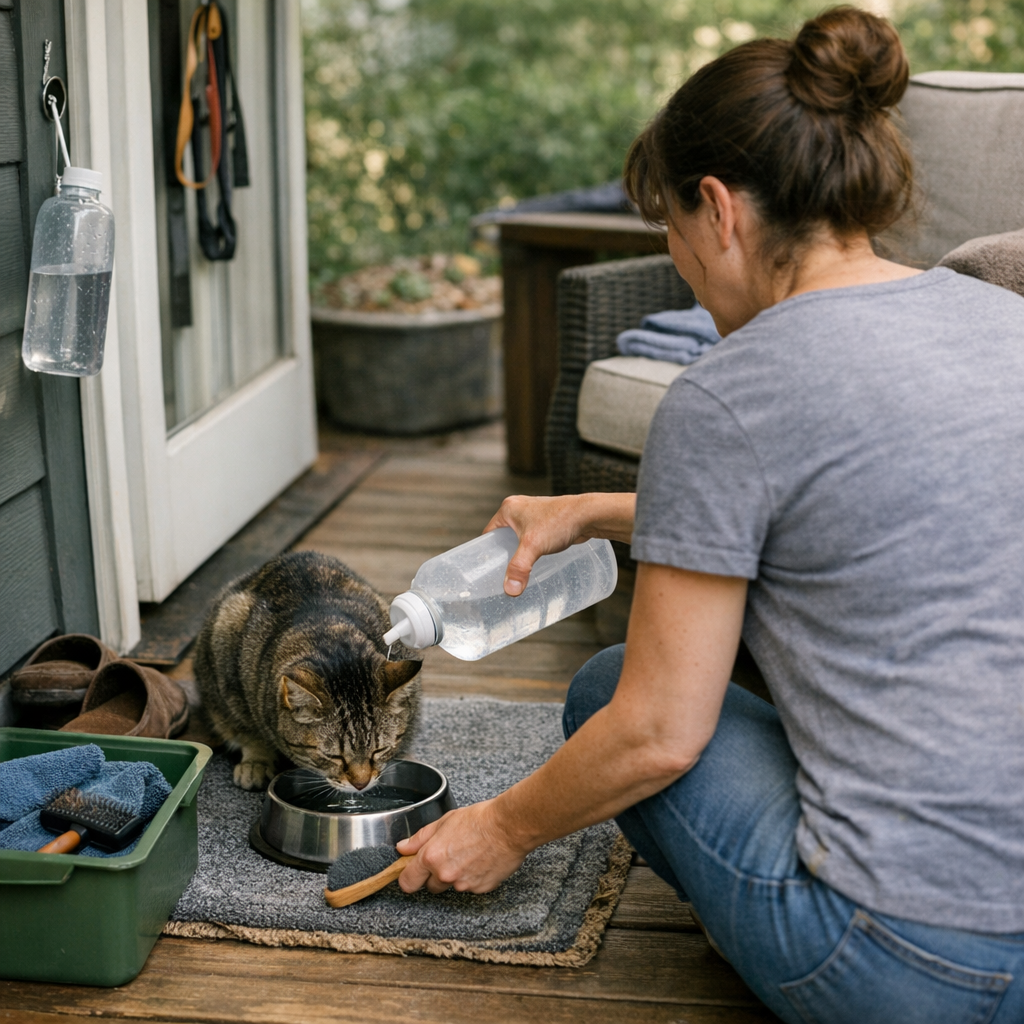
    Most cat owners imagine porch time as a low-effort extension of indoor life—a water bowl, a mat, and a spot in the sun. But within days, the real pattern surfaces: water bowls dry out before lunch, fur and paw prints collect faster than a single sweep can manage, and routine comfort is lost beneath scattered mess and sudden trips indoors for missing supplies. The expectation of easy enjoyment quickly runs into the reality of constant mini-resets, each one exposing a weak point in the setup. CalmPetSupply routines don’t fail because you forget the essentials—they break down when daily friction, not lack of care, blocks the small resets that keep comfort possible.

    When the Porch Routine Stops Feeling Effortless

    The intended retreat turns into a maintenance zone as soon as basic care slips even slightly. Skip refilling the water and the bowl dries out fast—especially outdoors, where sun pulls moisture away faster than you expect. Leave fur unbrushed or wipes unused “just this once,” and the space becomes a project, not a pause. What starts as neglecting a quick towel-off or putting off picking up the brush accumulates into a pattern: by midweek, you’re dodging small chores instead of sitting down.

    This drift doesn’t announce itself. You only notice the shift when comfort is interrupted—pausing to fetch cleaning wipes that aren’t there, realizing the bowl needs a rinse but the hose is blocked by a chair, or seeing fur drift into crevices right as you’re ready to relax. Porch setups fall short not by missing major items, but by missing the moment-to-moment readiness to handle what care actually repeats.

    Repeated Interruptions: Where Setup Breaks Down

    Every step outside turns into a test of access. You reach for a water bowl, only to find it half-trapped behind shoes or plants. A cleaning wipe slides beneath a chair, or the brush intended for quick touch-ups is buried in a cluttered bin. Even thoughtful setups break down when items get blocked or drift just out of reach. Now, the “quick reset” becomes a chain reaction—get the refill bottle (wait, that’s indoors now), clear the hose, move a garden chair, retrieve a towel lost among spare cushions. Any single missing link slows the whole porch routine.

    Take one common scene: you step out with your cat for a simple break. The bowl is nearly empty, but the refill bottle’s missing, left inside during the last cleanup. You walk back—your cat gets restless or finds their own mischief. If the bowl’s dirty from dust or an overnight drizzle, you discover the outdoor rinse hose blocked by a garden chair. What could be a 30-second care moment turns complicated because the setup demanded an extra fetch and a reshuffle at the worst moment.

    The Difference Between Looking Tidy and Running Smoothly

    An organized porch after a deep clean fools you into thinking upkeep will be easy—bowls stacked, mat brushed, wipes stowed out of sight. But the real test is whether you can handle a minor mess in the flow of daily life. When the brush or wipes are hidden away, you spot fur only once you sit, or notice paw prints after shoes have already tracked them inside. These missed basics stack up, turning what should be a quick fix into an afterthought—and a tougher cleanup session by the end of the week.

    Ironically, even storage solutions can backfire in repeated use. Tightly packed bins force you to pull out three items for one brush, while open baskets scatter supplies across the porch. Everything looks tidy in the morning, but the more you use it, the more items migrate, hide, or block each other. The porch loses its promise of an easy in-and-out transition and becomes another point of friction you never planned on.

    Practical Moves: Keeping the Comfort Without the Hassle

    Small, daily adjustments matter more than one-time organization. Hanging a refill bottle on a wall hook near the door—where you reach for your keys—means you miss fewer water top-ups. Grooming on a washable mat, with the brush left visible (not packed away), lets you brush as you step out or return, not just when fur piles up. Using cushion covers that shake or wipe clean makes post-porch resets a few seconds, not a standing chore. These aren’t upgrades for show—they’re shifts in where and how basics are kept so daily care adapts to real habits, not ideal setups.

    Real-Life Scenarios: Where the Routine Succeeds or Falters

    After running the routine for a few days, the cost of even small lapses becomes obvious. Forget a single refill, and you’ll find a dry or dusty bowl when your cat wants water most. Skip a quick wipe-down and mats trap smells you notice during the next session. Let the brush or wipes drift indoors, and you’re forced back inside just to handle a light shed. If supplies end up behind laundry baskets, blocked by plant pots, or just pushed a little too far from reach, the whole comfort cycle slows down. Not dramatic—but enough to erode the supposed ease of the space.

    The same friction leaks into the house. Swap out bowls or toys on the porch and, before long, grooming tools land next to mail, cleanup wipes linger by the back door, and pet items end up in traffic zones. A setup that trims visible porch clutter often just pushes interruptions elsewhere, keeping daily routines from ever feeling fully smooth.

    Building a Porch Routine That Keeps Its Calm

    The real test isn’t how tidy the space looks after a weekend clean, but how well it handles repeat pressure through the week. If grabbing a brush or adding water happens as naturally as picking up your keys, then cleanup blends into your rhythm—and the porch stays a retreat rather than a rework project. The “calm” in CalmPetSupply revolves around setups that minimize fetches, cut down reshuffling, and keep wipes or tools where you actually use them, not where you forget them.

    It’s not about perfection—it’s about setups that survive daily drag, leave less for catch-up, and let resets stay quick enough that you don’t hesitate before stepping out again. Every deliberate adjustment—keeping basics at arm’s reach, making wipe-downs automatic, giving each item a clear spot—means fewer interruptions and makes every shared pause with your cat count for more.

    Find your everyday porch and shared-space care basics at CalmPetSupply

  • How Moving Cat Essentials Away From Noise Improves Daily Routine

    The problem shows up fast, even in the neatest setups: You line up the cat’s bowls in a tidy kitchen nook, angle her bed by the window, tuck the litter box behind the door. It feels organized—everything in its zone, nothing obviously in the way. But predictably, half the food is left untouched, kibble starts gathering under the oven, tracked litter appears in the hallway, and toys sneak back into the living room each night. The setup doesn’t fall apart all at once. Instead, it goes soft at the edges—meals missed, messes growing, routines slowing down—until the “organized” fix starts creating new friction every single day. This is the real tension inside every indoor-cat household: a setup that looks right but breaks down under repeated, real use. The StillWhisker world is built to notice and fix exactly that.

    When “Organized” Isn’t Enough: The Hidden Impact of Home Noise

    On the surface, an indoor-cat setup can seem optimal—bowls tucked away from feet, litter in a corner, rest beds just so. Yet, what makes or breaks a zone is often noise: the hum of a fridge, the clank of a dishwasher mid-cycle, the unpredictable slam of a door. What’s invisible at first becomes obvious when daily life repeats: cats start skipping meals, retreating mid-bite, or circling litter trays but leaving them untouched. The food or litter location chosen for easy access actually sits in the crossfire of these background interruptions, and over a week the signs accumulate.

    You notice it as you reach for the bowl, only to pause—blocked by the edge of a clattering appliance or staring at ground-in kibble caught behind a kitchen leg. Wipe-downs that were supposed to be quick become late, scraping at patches that hardened while you weren’t looking. Even after a full reset—fresh food, wiped mat, cleaned bowl—the cycle restarts as soon as the ambient churn resumes. The home looks organized but operates with friction built-in.

    Why Cats Avoid “Well-Planned” Spaces

    The problem isn’t usually a dirty mat or a poorly chosen bowl—it’s the repeated surprise from noise or vibration right where the routine should be smooth. That’s why you see your cat hesitate: hovering next to the bowl, checking for a hum before eating, or wandering away entirely after a fridge kick-starts. Water bowls near pipes go ignored. Litter trays close to slamming doors get bypassed for corners you’d rather never have to scrub. Meals get left unfinished; the mat collects more stuck-on bits, not less; litter traces drift further from the box each time the daily cycle ramps up.

    The avoidance is subtle, but the signs persist: food meant to disappear sits untouched, tiny messes spread beyond containment, wipe-downs become less about maintenance and more about undoing yesterday’s fallout.

    Real-World Example: The Relocation Experiment

    A practical test: shift the bowls or litter tray just one stride away from the worst offenders—noise, vibration, door movement. Pause and reset the food mat outside the direct range of the fridge or dishwasher thrum. Result: most cats adapt within days. The bowl ends up a foot off the wall, not in foot-traffic’s path. Suddenly—less wasted food, faster cleanups, and messes that stop ballooning into whole-room annoyances. Instead of blocking yourself with a week’s worth of frustration, you spend less time and effort—often noticing the tension drop before your cat even finishes the meal.

    The Daily Cycle: Friction and Fallout

    A tidy corner turns into a spreading mess if the root isn’t noise- or traffic-proofed. Today’s neat bowl line leaks kibble by tomorrow. Dried food sticks outside the mat. In just a week, your routine changes: mornings spent prying up crust, stray litter brushed from the door track, or going back for a toy dragged away after a loud clatter. Toys reappear in odd spots, mats skate across the floor, wipe-downs slip ever later into the day. This isn’t just about “looking messy”—it’s ten extra minutes chasing a trail that never quite returns to zero. Organized layouts that look quiet at rest end up needing more interruption and more repeated effort than you ever planned for.

    Repeated Use: Where the Friction Really Shows

    Resetting a zone helps—once. But reality is reset speed versus the next new mess. If you need to work around a humming appliance, squeeze past obstacles to refill, or dodge foot traffic to wipe up, your routine stalls out: seconds stretch to minutes, and minor tasks pile up. The friction is clear in moments like:

    • Bowls blocked by kitchen gadgets: You lean, reach awkwardly, and end up spilling water or scattering kibble—fighting your own setup just to refill.
    • Cleanup wipes out of reach: You know where they are, but can’t grab them mid-mess, so spills linger and dry on.
    • Pawprint and kibble spillover: New messes invade human walking space before you’ve finished the last sweep.
    • Litter drag into the next room: No matter how often you scoop or contain, granules keep pushing out into soft carpet or across tile seams.

    Each repeat disrupts what looked like a settled solution. The zone only “works” until it’s actually used—on-the-fly, with nothing else in the way. When fast access is blocked, ordinary cleanups start feeling like chores you have to brace for, not routine resets.

    Looking Tidy Versus Working Smoothly

    Photos and first-day impressions flatter any zone. The reality sets in after a dozen cycles—does the setup get smoother, or does each use add another snag?

    • A mat by the fridge that stayed spotless for photos is a crust-ringed, ground-in patchwork by evening—requiring a scraper, not just a wipe.
    • The clever litter nook becomes a launching pad, leaving a path of dust through the house even after you sweep.
    • A bed by the entry devolves into a collection zone for stray toys and wrappers when your cat starts avoiding the noisy hallway.

    Visible order is easy; lived-in calm is earned. The gap shows itself at 7 a.m. when your arms are full and you discover, again, that yesterday’s “fix” didn’t prevent today’s interruption. Real indoor-cat zones succeed not when they look finished, but when they don’t trip you up or slow you down after the tenth cleaning, the twentieth feeding, the fortieth lap around the house.

    Small Changes, Big Routine Wins

    Massive rethinks aren’t required—often, moving things a foot or two makes all the difference. Pull bowls away from appliance hum. Shift beds out of pass-through spots. Nudge the litter tray further from slamming doors and the torment of the laundry cycle. What you get:

    • Meals finished with less mess—because nothing spooks or distracts mid-bite.
    • Quick, one-pass cleanups—no more doubling back for what dried on or what your cat scattered away from the center.
    • Toys and accessories stay put, not migrating overnight into shared spaces.
    • Litter and water mess remain local—no more surprise crunch underfoot in the next room.

    None of these changes create perfection. But over the course of a week, friction drops. Interruptions decrease. Ordinary routines get tighter, do not demand extra steps, and you actually reclaim time from your cat setup, not lose it to frustration or cleanup drift.

    Signs Your Setup Needs a Shift

    Here’s how you’ll know a change is overdue:

    • Partial meals keep appearing, and a bowl is rarely emptied—no matter what brand you use.
    • Food and litter scatter reappear each day, matching or exceeding yesterday’s mess, even after full resets.
    • Your cat waits out the appliance cycle or clears the hallway before using her bowl or box—consistent hesitation tied to daily noise or traffic.
    • Cleanup tools exist, but the time between noticing mess and acting grows longer; access is just inconvenient enough to delay.
    • Each tidy-up feels like a bigger restart, rather than small, manageable maintenance.

    If this matches your routine, shifting the setup further from noise and disruption usually outperforms buying the next clever mat or container. What matters most isn’t the gear—it’s structure that earns its keep by asking for less repeated work.

    Making the Change Last

    Indoor cat zones don’t stay static. What works today might start failing after a new appliance appears, the seasons shift, or the furniture gets nudged. The goal isn’t a frozen “perfect” spot—it’s a setup that resists getting harder, and recovers quickly from the new wave of friction. Watch for early clues: a bowl that gets skipped after a new vibration, litter tracking into unexpected places, or cleanup supplies that never seem in reach at the right moment. Strong arrangements don’t erase mess—all cat life leaves

  • How Small Routine Changes Transform Everyday Dog Care and Calm Greetings

    Why Pet Care Routines Break Down

    Most daily dog or cat care doesn’t break under training, but under basic friction. You walk in to refill a water dish—yesterday’s food bowl is still blocking the spot. You reach for the leash and realize it migrated somewhere else after last night’s walk. The towel for muddy paws isn’t hanging by the door but is missing again, so dirty paw prints scatter across the entry. These constant, low-level breakdowns aren’t dramatic, but they stack up: greetings get more scrambled, simple resets drag out, and a routine that should run smoothly grinds into repeated delays. CalmPetSupply exists because these points—feeding, refilling, grabbing, wiping, resetting—collapse more often than they should in ordinary homes.

    Minor Friction, Major Impact: How Little Issues Grow

    A pet-care setup might look fine for a day or two. Then, shoe piles block the water bowl. The towel slides out of the entry zone and into a laundry heap. The cleaning cloth is hidden under a stack in the wrong room, right when a spill hits. Brushes end up wherever someone last dropped them—kitchen, hallway, never in arms’ reach. Each small disruption adds seconds, then minutes, and soon routines stretch longer and feel heavier. What was supposed to smooth the day starts eroding it.

    Daily Scenes: When “Almost Works” Isn’t Enough

    Picture an actual evening: Groceries in one hand, leash in the other, sidestepping toys wedged by the door. You pause, scanning for the towel to stop muddy paws—no sign. The spray bottle is awkwardly jammed behind junk mail. Forced to choose, you rush, skip a step, or forget one task entirely. You find wet spots or hair trails later, after you’re already sitting down. It’s never one big disaster, but a pattern: each missing basic leaves you circling back, breaking the flow of any homecoming or reset.

    Water tracks appear because the towel didn’t make it to the hook. You’re hunting for supplies when you should just greet your dog. Disruption in pet care hides in these repeated, manageable but draining mini-messes—never big enough to overhaul, always annoying enough to interrupt.

    The Real Test: Repeated Use, Not Initial Setup

    Most so-called “systems” work great the first day. By the third, leashes slide to other hooks. Toys invade the walkway. That one towel cycles into the wash and doesn’t come back. Fixing one side—putting brushes in a bin—just lets another weak point reappear: water bowls tucked behind pantry clutter, spray bottles shuffled out of the way for groceries. Visual order means little if daily actions keep failing. The real test isn’t how tidy things look, but whether repeated care still feels smooth after a week.

    How Organization Can Still Derail Routines

    Even a space that looks organized on a good day can trip you up when you actually need to move fast. Most trouble sets in when “put away” means “out of reach”—leashes mixed with coats, towels in hall closets, food packed somewhere less obvious. The goal was less visible mess, but the real-life effect is more blocking—hesitation at the door, extra steps, rushed backtracking. In the time-crunch moments every dog or cat owner faces, these small barriers multiply stress instead of lowering it.

    Reducing Daily Drag: Anchors, Not Add-Ons

    Calmer care isn’t about piling on more baskets or organizers. It’s about shrinking the gap between use and storage. A towel hung on the back of the door, not the bathroom. A brush dropped in a tray by the entry, not another room. Leash, towels, bowls—anchored in one repeated-use zone—strip out mid-routine searching and surprise tripping. Even a simple fix, like tying the towel to its hook, stops it from wandering when you’re not paying attention.

    The payoff is obvious after a few days: fewer extra steps, resets that happen as you come and go, and less mental drag when the day is hectic or the deadline is tight.

    Maintaining Flow: Specific, Repeatable, Visible

    A setup that works makes resets automatic—not just cleaner but instantly usable. Keep core items—leash, towel, one tray for essentials—right at the entry and put lesser-used gear out of the main zone. When each item truly lands in its marked spot every time, “almost works” moments drop off and the habit of adding more “just in case” stuff fades. The fewer items to check or relocate, the steadier the flow—no last-second dash for a missing basic.

    Your pet notices too: steady routines signal calm, not rush. Having everything always at reach at the point you step in or out not only trims the mess but slowly makes daily transitions predictable—for you and for your dog.

    Everyday Reality: The Cost of “Almost” Working

    Routines that just “sort of” work cost you more focus and effort than you think. When leashes, bowls, towels, or wipes are a room away—or under something else—hectic transitions become the norm and each interaction gets slightly less smooth. Every bit of distance or delay turns into repeated tension: too many corrections, too few calm starts.

    The fix lives in one habit—anchoring each daily-use item exactly at the place you’ll need it, every single time. Backups stay in cabinets or closets, but the active zone stays lean so you’re not left scrambling. A “tidy” entry isn’t the real goal—it’s an entry you can actually feed, clean up, and reset through, even when the day goes sideways.

    Making Calm Possible—Even on Busy Days

    Real calm isn’t about having good intentions—it’s about a setup that stops breaking down the moment care gets inconvenient. When the towel, brush, bowl, and leash all sit within arm’s reach, with anchor points that resist wandering, those little breakdowns shrink. Instead of losing time to repeated hunting, you can handle after-walk resets, feeding, or late-night tidying without extra movement or re-do. Over time, these margins stack up—less energy wasted, more routines that actually last, even when the day doesn’t go as planned.

    Visit CalmPetSupply for practical solutions that fit real daily routines.

  • How Small Changes in Dog Dinner Routines Reduce Restless Waiting

    If dinnertime with your dog always feels a little more tense than it should—shadowed footsteps in the hall, glances fixed on an empty bowl, a low-grade patrol near the kitchen threshold—the problem usually isn’t just appetite. It’s a routine that keeps sending the wrong signals long before dinner’s ready. What should be an easy handoff turns into an evening standoff: you’re trying to prep food, your dog’s camped at the invisible border, and both of you are caught in a loop that keeps the whole house on edge. A few minutes of anticipation become forty minutes of restlessness, and the “neat” feeding setup that looks organized ends up ruining the flow for everyone right through bedtime. When routines force you to repeatedly work around your own setup, the cost is measured in more than a few stray kibbles—it’s felt in the drag that hangs over every evening.

    When Dinner Prep Keeps Triggering Restlessness

    The signs start subtle. Your dog waits at the kitchen line—always the same spot, nose just over the tile. It looks harmless: a cautious circle, a pleading look, a quick lean toward the counter then a retreat. But over a week, patterns harden. The “waiting” dog now paces the border or blocks the aisle. That patient sit mutates into a slow-motion blockade, and the edge of your kitchen becomes disputed space. Even the act of grabbing a scoop triggers a head snap. Each preparation step turns the wait into an obstacle course instead of a smooth routine.

    Instead of prepping and serving with fluid timing, you find yourself dodging paws, stepping over a dog, and adjusting how you move. The bowl never quite fits in its supposed “spot.” The counter feels crowded. What used to be a five-minute task extends itself, because your setup forces human and dog to contest the same ground. Evening calm slips further away every night, quietly eroded by a ritual that’s just slightly wrong—but wrong often enough to matter.

    Why Visible Bowls Signal “Start” Too Early

    Bowl placement sets the rhythm, not just the look. On paper, an “organized” station—bowl on the floor, food container on a shelf—should be enough. In reality, a bowl left in view acts as a false start signal for the dog. Every rustle near the prep zone, every step toward the shelf with the bowl on it, becomes a trigger. The dog learns to start waiting early and hard, sometimes shadowing you from the first movement in the kitchen to the final scoop.

    A visible bowl is a standing invitation to hover. It blurs the line between waiting and expecting, keeping your dog on constant alert long before food appears. The result is a wait that’s longer, heavier, noisier—and that tension never really resets.

    The contrast appears on the few nights you keep the bowl out of sight—tucked away in a cabinet, only retrieved at the final moment. Instead of patrolling, your dog lingers further back, less alert to kitchen movements, less fixated on every prep noise. The routine runs closer to silent, the friction falls away, and the “organized” look is replaced by an actually more workable flow. This isn’t about being tidy for aesthetics—it’s about disrupting the hidden chain reaction that a poorly timed bowl launches every single night.

    A Practical Example: A Dog on Patrol

    Picture the evening sequence. The floor’s clear, you’re ladling out food, and you reach for the bowl—left, as always, in plain sight on its shelf. The dog clocks your move and immediately circles closer. Maybe you sidestep, maybe you stick out an elbow to hold your ground. By midweek, the dog’s planted right across the kitchen’s entrance, head up, tail stiff, waiting for any cue. Suddenly, you’re prepping with one hand, bracing with the other, and hoping to avoid knocking over a hopeful nose. Even without chaos, the friction is real: movement is blocked, timing is thrown, and what should be a transition instead becomes a negotiation every night.

    Why Minor Friction Adds Up Over Time

    The main pressure isn’t a single bad moment—it’s the slow grind of repeating these frictions night after night. Owners start sidestepping waiting dogs, shifting bowls mid-prep, altering meal start times to avoid the worst crowding. The kitchen gradually stops being a neutral home base and becomes a zone managed around canine anticipation. Even minor delays—forgotten ingredients, a phone ringing, a late delivery—feel bigger, because the setup pushes both ends of the leash to hurry through the tension.

    Watch for the “creep”: the line where your dog once waited at the threshold now moves incrementally into prep space, until the quiet seal between dog and bowl is never truly remade. The unordered edge of the routine bleeds into the rest of the evening, dulling whatever calm might have come after dinner. Reset gets delayed; routines jam; relaxation shrinks. The root cause isn’t one wild night. It’s the repeated, slightly-wrong system that encourages all the wrong signals, every day.

    The Setup Tweak That Changes the Routine

    Most fixes start with chasing surface order. But the real shift comes from one simple adjustment: Keep the bowl out of sight—in a cabinet or up high—until food is ready to serve, only bringing it out at the exact moment you pour.

    This doesn’t mean a full kitchen redesign. It’s a ten-second, once-per-meal change: cabinet stays closed, bowl disappears between uses, and nothing in the visible space cues your dog to begin waiting early. As soon as the bowl comes out, the dog knows: this is the moment. On most nights, you’ll see your dog hanging further away, their energy softer, and their anticipation shrunk to the moment when the food actually hits the bowl—no more full-shift patrols starting at the first sign of activity.

    What Changes—and What Doesn’t

    This adjustment can reset the flow—messy spots reduce, pressure at the kitchen border drops, and you have less to sweep up or resettle when it’s over. Cleanup gets less frantic. You spend more time in the actual routine and less fending off a restless dog or fixing a chain of small messes. Reset for the next step—wiping countertops, moving on to your own dinner, opening the space for other routines—takes less effort, purely because the anticipation is no longer allowed to dominate the whole zone.

    It won’t turn your dog into a statue or erase all excitement—they’ll still know when food is coming, and will still hover sometimes. But the old cycle of premature cues, creeping boundaries, and split focus gets interrupted. The invisible split—“not yet” versus “now”—is finally made visible, setting a routine that both dog and owner can actually fall into, instead of constantly policing.

    Noticing the Early Warning Signs

    Recognize these friction points before they turn into nightly habits. Early restlessness around feeding isn’t dramatic, but over time it soaks into every detail:

    • Pacing or circling the kitchen’s edge, never fully settled
    • Holding a “guard” position right where you need to move next
    • The “waiting line” sliding closer every few nights, until you’re squeezed between the counter and the dog
    • Short, sharp barks or frustrated whines as anticipation stretches out
    • An earlier and earlier start to waiting—sometimes before you even get food out

    Individually, these are only nuisances. But together, they tighten the window for everything else in your evening. Every delay sharpens the standoff; every missing spoon or late delivery disrupts not just your meal but your dog’s state of mind. The wrong setup keeps stacking small costs until “feeding the dog” becomes a mini-battle zone nightly.

    It’s About Function, Not Just Tidiness

    A common mistake? Mistaking a neat-looking bowl on a coordinated mat for a working system. Rearranging shelves or matching storage bins might make the setup look managed, but if the bowl stays visible, the built-in pressure remains. The point isn’t a more attractive lineup—it’s a structure that sets clear boundaries on waiting, makes the start of the routine unmistakable, and limits false cues from sabotaging the timing every night.

    Real improvement comes not from better visuals, but from noise reduction: a setup that insulates prep from anticipation, letting you decide when the wait should really begin. This is the point where friction drops, routines speed up, and evenings regain their lost calm—because signals are actually under your control for the first time.

    A Setup That’s Easier to Reset After Feeding

    When prep tension drops, so does the leftover clutter. Dinner ends; the bowl vanishes; the reset is instant. Cleanup—wiping down, resetting for the next meal, or switching zones for a walk or play—is simpler because the feeding items aren’t spread into shared paths or stuck in “wait mode.” You’re not rescuing the process with a last-minute reshuffle or dodging a tail on a tight kitchen swing. Even after a muddy walk, when you return for towels or wipes, feeding gear won’t be lingering underfoot and slowing another routine.

    The

  • Why Choosing a Larger Litter Mat Transforms Home Cleanliness and Maintenance

    Every indoor cat owner knows the pattern: a fresh litter mat goes down, the floor gets a careful sweep, and for a day or two, it looks as if the litter zone might actually hold together. But by midweek, gritty granules crawl past the mat’s edge and wedge themselves everywhere you walk—into seams between floorboards, under the kitchen table, across the walkway where you top up water bowls or sweep out stray toys. What looked like “contained” order quickly crumbles, and routine resets become a constant, silent battle against slow leaks of mess that never seem to stop at the mat’s promised boundary. The real-life StillWhisker setup starts with recognizing this cycle, not glossing over it.

    The Small Litter Mat Problem: Looks Can Be Deceiving

    A standard litter mat gives a first impression of control—a landing zone that hints at less mess and a line your cat’s paws won’t cross. For the first couple of days, this seems to work: the edges line up, the walkway beside the box passes an eye test, and maybe you even vacuum with a sense of closure. But in reality, one look underfoot or a midday sweep tells you the boundary broke hours ago.

    Repeated use is where the flaw opens up. Each trip to the box sends grains arcing just beyond the protective edge. The instant the mat fills up, stray litter launches directly onto tile, carpet, or wood. By Wednesday, you track a faint, gritty line right into the kitchen or the refilling spot for the water bowl. Even when a small mat “looks” full, the escape continues, creeping silently under doors and into daily footpaths you can’t avoid.

    Where Setup Friction Shows: Beyond the Box

    Indoor-cat life means the litter box zone isn’t isolated—food dishes, storage bins, feeding mats, and the occasional dash underfoot all crowd the same corner. Place the box near laundry, a closet, or a busy hallway, and it’s only a matter of hours before the supposed boundary erodes. Real friction shows up when:

    • Reach Gets Interrupted: Topping up water means stepping over a scatter of litter pebbles—one misplaced mat edge, and suddenly each refill trip gets slowed by a surprise crunch or awkward sidestep.
    • Surface Stays Gritty: Entryway and kitchen floors start harboring hidden granules. Go to wipe behind a table or check under a chair, and what should have been a 10-second reset turns into dragging out the mop.
    • Cleanup Splits Locations: Instead of a contained spot, you end up wiping two, sometimes three different zones: by the litter box for the main dump, and wherever those persistent granules roll or hitch a ride.
    • Resets Stack Up: Instead of one quick routine after breakfast or a food refill, you’re retracing your route, scooping and shaking down crumbs from every mat and walkway the litter crosses.

    When the Mat Is Too Small: Tidy Looks, Messy Reality

    The first warning sign isn’t a messy-looking space—it’s the sensation of grit under your heel when you least expect it. The mat might trick the eye with a clean border, but as soon as the cat takes a single stride outside the coverage zone, the boundary flops. Cats that exit sideways, sprint out, or pick a favorite off-center route guarantee those edges won’t hold. Each day, the line of debris creeps further from the setup, and what started as a focused space now seeps into laundry corners and high-traffic hallways, making each sweep or quick reset slower and less satisfying.

    For anyone in a tight apartment or a home that pulls feeding, litter, and rest areas closer together than desired, the cost stacks up fast. Suddenly, you’re not just sweeping; you’re managing ongoing clutter in places meant to stay clear—across bare floors, under feeding stands, and in the very spots you hoped would be easiest to wipe down at the end of the day.

    Shared Spaces, Shared Headaches

    A mat that’s too small for the job doesn’t hide its failures; it just moves them around. You find clusters of litter in water splash zones, under the edge of a resting mat, or at the pivot point for stashed cleaning gear. Where cat space overlaps with daily life, narrow mats open up more places for debris to accumulate—and more moments where a quick task is derailed by unexpected mess or blocked access to a supply bin.

    Re-Thinking Litter Mat Size: Why Wider Is Different

    Choosing a larger mat isn’t just about adding width for looks—it’s about real, structural change to daily containment. Lay down a mat that extends 18–24 inches or more past the litter box exit, and you notice right away: gritty trails fade, the time until your next full sweep actually stretches, and the majority of kicked litter now lands in grooves, not on the open floor. This isn’t a small tweak. It’s a containment upgrade that stops the spread before it becomes a room-wide hunt for stray grains.

    The difference is sharpest where routines overlap: The margin between the litter zone and where food or water is prepped, the line you walk to put away supplies, the visible boundary between pet setup and shared home space. Suddenly, cleanup shrinks from endless spot-checks to a couple of planned resets. You feel it when refilling bowls no longer means tiptoeing around scattered bits, and when “quick wipe down” no longer stirs up a hidden mess from under the mat’s edge.

    Real-World Adjustment: Following the Cat’s Path

    Cats aren’t precision machines; few exit directly out the front every time. If your cat favors a diagonal jump, a sideways stride, or the occasional burst of speed, a mat centered only at the box’s front becomes meaningless—grit carves its own escape lane. Watch the weak side after three days. Where the first trail appears is where the mat coverage is failing. Shifting or swapping in a wider mat cuts down the spots where litter slips past, shaving off those creeping “surprise” cleanup needs from your daily routines.

    Compact Room, Large Mat: Fitting Without Overshadowing

    It may feel awkward to drop a big mat into a snug laundry nook or entryway, but the trade-off is visible in fewer patrols and less scattered mess bleeding into living space. Instead of policing every odd corner or resetting the floor after each visit, you gain a boundary that contains, not just masks, the recurring friction between “cat zone” and the rest of the home. It’s a swap: slightly less open floor for far less day-to-day interruption.

    Choosing the Right Mat: Details That Make a Difference

    Grabbing an average mat off the shelf is rarely enough. Surface and depth matter as much as size. Flat or glossy mats let grains skid off, especially if a cat’s paws are caked or the exit is energetic. Look for deep grooves or mesh overlays—designs that actually grip, not just display, the fallout from repeated passes. These details show up in daily results, not just product tags:

    • Size: Minimum 18–24 inches from main exit; wider if your cat has non-center habits.
    • Texture: Deep grooves or mesh layers stop the skip-and-slide routine, holding microscopic litter that smooth mats leave behind.
    • Reset Ease: Pick something you can shake out or vacuum in seconds, not a design that forces awkward flexing or constant wrestling. Plan to sweep or shake every few days, but upgrade to weekly resets, not daily fire drills.

    What Happens When the Mat Finally Fits

    A mat that matches your cat’s exit path doesn’t chase perfection—it creates repeatable containment. By Thursday, if the border still holds and the walkways feel smooth underfoot, that’s the test passed. The big relief isn’t eliminating every stray grain, but in reducing the number of times a “quick clean” stretches into a whole-home sweep. Fewer interruptions, walk zones stay comfortable, and the “reset” pressure falls back into line with actual living, not endless maintenance. The difference won’t always be obvious in photos, but you’ll feel it walking from room to room without the underfoot crunch returning on day three.

    Routine Tweaks for Easier Litter Zone Maintenance

    A well-fitted mat helps, but a few small habits make life easier:

    • Shake out or vacuum the mat every 2–3 days—or daily for multi-cat or high-traffic spaces.
    • Relocate water and food bowls if you spot litter working its way in—distance helps isolate the problem and shortens cleanup cycles.
    • Keep a brush or hand-vac within arm’s reach, not buried behind a storage tote—if it’s easy to grab, it actually gets used when quick messes appear.
    • Avoid letting supply bins or storage crowd reset routes. If access slows you down, relocation is overdue—storage should help the flow, not block it.

    Containment that actually holds up through the week means less time spent correcting the same old weak points and more space that works for both you and your cat. Litter management

  • How Evening Resets Keep Pet Care Counters Clear and Clutter-Free

    The real test of a daily pet-care setup isn’t whether everything looks tidy after a Saturday reset—it’s whether you can actually feed, refill, or wipe down without dodging yesterday’s clutter, blocked access, or stray tools after any ordinary use. In small homes, it takes just one round of feeding or grooming for pet gear to start invading shared counters and kitchen zones. Even with a fair effort, supplies barely land where you left them, and the “quick reset” quietly turns into a series of interrupted motions: shifting a water bowl for the coffee pot, pushing a grooming brush away from dinner prep, or returning a damp towel to its supposed spot before someone else needs the sink. You don’t need another organizer. You need a system that is easy to keep up with once the daily cycle repeats—something the CalmPetSupply world has learned by seeing care routines break down even in the neatest looking spaces.

    When Pet Care Routines Quietly Slip

    Resetting feels simple: refill, wipe, toss the brush back, hang the towel. But in daily reality, the steps that seem invisible upfront start to stack as the week moves on. What’s a five-second delay on Monday turns into a bowl left drying by Thursday, or that same brush “just for now” sliding into meal prep territory.

    One missed water-bowl put-away is fine, but three nights in, that same bowl sits just close enough to the counter’s edge to cause a H2O spill during someone’s late coffee fix. The grooming brush gradually claims a semi-permanent spot next to the knife block. A half-damp pet towel crawls toward the laundry pile, half-folded, never quite making it there. The mental notes to “reset later” never feel urgent—until every single surface becomes a half-pet-zone, and your shared space is full of reminders that pet care routines have quietly slipped.

    It’s not about big chores. These are stacks of micro-misses that nudge your space off course—and every skipped check-in makes tomorrow’s basic care slower, less smooth, and more frustrating.

    The Cost of “Almost Ready” Setups

    Many pet routines limp along in a state of “good enough.” The cleanup sponge is theoretically handy, but you have to move two treat bags and a food scoop to get to it. The bottle meant for water refills is clean but never actually back in reach when you need it. The grooming brush, if not returned instantly, ends up in the traffic lane, so when the next shed-hair moment hits, you search or reshuffle—again.

    Over the week, this friction builds. Five seconds here, thirty there, and suddenly pet care means digging for basics instead of just acting. Leave wiping to the next day and you’ll confront crusted rings around the water bowl; skip returning the towel to its actual home and you’ll watch it crawl right back into the busiest spot by dinnertime.

    Spaces that “look clean” often just disguise the migration of tools. If your towel doesn’t always go back on the same hook, or the brush’s storage spot competes with pantry items, clutter doesn’t vanish—it just keeps circumnavigating into prime real estate. It’s a cycle: the prettier the setup, the easier it is for one weak link to restore clutter and slow down your routines.

    How Small Misses Stack Up in Shared Spaces

    Shared spaces magnify every missed reset. Leave a water jug near the coffee pot once, and morning prep becomes a game of shifting items until you have actual surface to work on. Skip just one after-walk supply return, and a leash coils itself into the evening laundry scramble.

    Each out-of-place pet item isn’t just visual—it’s friction. The food bowl drifts out from its wall spot. The grooming brush floats onto the dining table. Suddenly, every quick routine diverts into cleanup, and the after-walk unwind gets rerouted by a hunt for that brush or a scramble to clear the feeding space before guests arrive.

    The outcome: care steps slow down, pleasant spaces feel hijacked, and the supposed “simple” routine is never a one-step reset. The effort shifts from helping your pet to battling lingering, shifting pet gear.

    Making the End-of-Day Reset Automatic

    The only real change comes when late-night resets aren’t skipped. Designate unmissable drop zones—a lidded bin under the counter, a compact hook behind the door, a storage caddy within arm’s reach of the bowl’s spot. These spots aren’t about decoration. They make it more likely that everything returns to where you’ll actually grab it again, not just where it “should” go.

    Station a low-profile towel or sponge right where you feed or refill. Wipe, put away, done—eliminate the pause that leads to “I’ll deal with it in the morning.” The difference isn’t one big clean; it’s dozens of micro-motions that now fit in flow instead of stacking up. This is how CalmPetSupply setups make the repeat work disappear, so your night counter resets aren’t undone by morning.

    When every piece returns to its real home, tomorrow’s care actually gets easier. No silent messes, no new chores, no “missing one basic” crisis when the pet’s water runs unexpectedly low at 11pm.

    Balancing Comfort and Consistency

    Plenty of setups get an initial win: the counter looks better, the mess is corralled. But move feeding gear to a closed shelf and it takes one extra step to refill, so gear drifts back; use a decorative bin for brushes and toys, and the distance from daily reach means the brush never really migrates back to its “home.”

    If you spot towels stacked but not put away, scoops flip-flopping between surfaces, or refill bottles just out of quick reach, recognize these as symptoms that your system is slowly adding extra work with each pass. Small delays become routine drags. The baseline should be smooth, not another pause before care actually happens.

    The Difference: Looks Tidy vs. Works Smoothly

    Tidy spaces feel satisfying for an hour. But a setup that works for daily pet care means you find every basic—bowl, towel, scoop, brush—where you need it, even after several messy rounds. The best systems are nearly invisible in action: the counter is clear at night and still clear after morning feeding, with no leftover gear sneaking into your flow.

    A smooth home pet-care setup doesn’t pretend the friction isn’t real; it just stops giving clutter a second chance. The right drop zone, return habit, or wipe-down anchor flips the day from “prepping around the pet mess” to “reset and done.” In the CalmPetSupply world, function wins over decorative “order”—and the best setups are the ones you barely have to think about, even when you’re wiped out from a long day.

    See how a real-world, keep-up-with-it setup looks at CalmPetSupply.

  • How Small Changes in Dog Bowl Placement Improve Feeding Calmness

    Feeding time looks simple—bowl down, food in, dog eats. But if you keep noticing your dog hesitating at the bowl—shifting weight, pausing mid-chew, glancing back whenever someone walks past—the real problem isn’t pickiness, it’s setup friction. Small, repeated interruptions turn a supposed routine into a slow-motion scramble: food goes untouched, play gets pushed back, and you end up nudging your dog along instead of moving on with your day. The space you set aside for eating isn’t working with your routine—it keeps getting in the way, but not loudly enough for you to call it out. DogPile is all about those pressure points. If feeding keeps snagging—if the routine never feels settled—there’s probably a better setup hiding in plain sight.

    When the Setup Looks Fine but Still Creates Friction

    Feeding areas can look organized and still fall short when routines repeat. Bowls line the wall, the location is neat, but if your dog is circling or stalling near the bowl, it’s not about food or attitude. It’s about location. Too close to the hallway, too exposed to movement. Mornings get crowded fast: people cross for coffee, a quick door slam, a burst of kid energy. Suddenly your dog faces distractions at every bite, flinching when shoes scrape or someone grabs a jacket. The “easy” setup stalls, stretching a two-minute snack into a drawn-out shuffle.

    Instead of calm feeding, you get constant darting glances and a meal that never quite finishes until the traffic dies down. Every time you walk by, you reset the process. A setup that looks clean still breaks down under real home pressure—especially when your dog’s back is exposed to repeated movement or noise.

    Repeated Hesitation Is a Setup Problem—Not a Quirk

    It’s tempting to blame a slow meal on your dog’s mood, but daily stalls mean structural friction. Dogs are always alert to movement or sound—especially during feeding. When meals become unpredictable, dogs struggle to relax, and you’re left running interference instead of letting the routine run itself.

    Example: The breakfast trap. You set the bowl down where you always do. But this morning, it’s a few inches closer to the kitchen entry. Suddenly, your steps for coffee or your partner’s phone grab turn the space into a bottleneck. Your dog approaches, pauses, sniffs, then backs away if someone passes. With every interruption, the meal window stretches and your morning flow tumbles—play gets pushed off, the routine starts fraying, and one wrong bowl position derails the next hour.

    Spotting Micro-Frictions Before They Undermine the Routine

    There’s rarely a dramatic collapse. It’s a matter of inches or a shift in traffic: a kitchen that’s calm at noon but chaos at six. Many owners don’t spot the pattern until it gets baked into daily life—now you anticipate the stall, you step around the bowl, you expect the hesitation. That’s when small friction becomes routine drag. If you catch it now—a glance back, a repeated backward step—you can cut off the chain reaction before it turns feeding into a daily detour.

    Everyday Example: A “Clean” Setup with a Persistent Weak Spot

    The bowl’s tucked under the wall, away from the main walkway. Then after dinner, the whole household rushes between the mudroom and living room. The dog steps up, then pulls back as someone sweeps past—laundry in hand, broom off the hook. The same meal that should flow quietly now stalls and restarts, the dog sniffing, waiting, dodging back to the bowl over and over. Each pass keeps the pause alive. On paper, the setup works; in practice, daily rhythm wears it down.

    It’s not about obvious mess—no spills, no toppled bowls. But after a week, you notice you’re always reminding your dog, reshuffling foot paths, or propping the bowl somewhere new. The difference between “looks good” and “works every day” only shows up when you watch what actually breaks under routine use.

    Subtle Adjustments: How Small Changes Can Rescue the Routine

    You don’t need a major overhaul—an extra six inches or a sturdier backing can change the whole flow. Move the bowl just clear of the walkway or set it near a solid wall, and suddenly the dog settles to eat without a hitch. The payoff is real: no more mid-meal “come back!” calls, no more blinking at why feeding is dragging. The new spot may only be a corner removed from the main lane, but it holds the rhythm in place. Routine returns. Ten minutes and the bowl’s empty, cleanup doesn’t trail into the kitchen, and you’re not resetting five times because a towel was too far or someone needed to reach for recycling.

    The change feels small—one adjustment, one habit. It puts routine support over visual neatness. Less stress, less owner-side interruption, fewer small negotiations just to get one thing done.

    When Tidy Looks Isn’t Enough: The Difference Between Visual Order and Real Ease

    It’s easy to admire a bowl lined up perfectly with the floor tile and food measured to the scoop. But when you keep dodging toys to refill, or move the bowl after dog water splashes halfway to the door, that neat setup just makes the routine slower. An organized appearance doesn’t guarantee smooth daily function. The need to grab a wipe, hunt for a towel, or push the bowl back into place—each signal means ease is missing. If small snags keep stacking, the “clean” look is just hiding the day’s extra drag.

    The Domino: How One Weak Point Interrupts the Whole Day

    Frictions around mealtime don’t stay contained. A slow meal pushes back the walk, a messier reset steals minutes from the evening, and soon the rest of the routine is bumping along—never disaster, but never quite right. You feel it most when you realize routines take longer, you’re nudging the dog more often, or your cleanup window keeps shrinking—even though nothing “looks” wrong.

    Walk-in example: After a muddy stroll, you manage the leash, shoes, and wet paws at once. The bowl is by the door—meant for quick feeding. But boots pile up and the towel lands on the same hook, blocking your access just when cleanup needs to be quick. Instead of a fast, hungry dog-to-bowl moment, you both stutter-step around each other. The “convenient” spot becomes the backlog. Repeat it daily and “fine on paper” never feels smooth in reality.

    Reading Your Dog’s Clues: What Hesitation Actually Says

    If your dog repeatedly stops mid-bite, scans the room, or leaves food untouched when someone walks past, chances are it’s your setup—not your dog’s appetite. Movement, noise, line of sight, even how backed-up the bowl feels—all signal comfort (or tension) to your dog. When you try new foods and nothing changes, or the same pause happens every day, routine friction is quietly running the show. The dog is reading the space—and asking for change you might not see until you focus on where the trouble starts.

    • Stopping mid-meal to check over a shoulder
    • Backing away from the bowl during movement nearby
    • Delays when the bowl sits in an open or traveled space
    • Less hesitation when the spot is moved from traffic or buffered by a wall

    Resetting the Routine: Practical Tweaks for Everyday Calm

    Feeding isn’t a stand-alone ritual—it’s a pressure point in your daily chain. If the layout supports confidence and quick access, you both get a smoother reset. Don’t chase perfection, chase stability: a consistent, semi-protected spot stops friction in its tracks. Make sure nothing crowds your dog’s bowl when traffic peaks—solid backing, no crossing feet, no competing reach for towels or toys. Watch the difference: feeding, cleanup, and post-meal flow click into place with less effort, and the mental friction fades for both sides.

    Most effective spots aren’t the flashy ones. Try a wall-cushioned corner, a few feet from where shoes pile up, or anywhere that makes access possible without blocking the day’s next move. Once settled, resist reorganizing unless friction returns. The shift isn’t always dramatic—but minutes and micro-interruptions vanish. Less owner effort, more actual routine.

    Recognizing Setup Friction—And Deciding When Change Is Needed

    Just because a setup looks tidy or “almost works” doesn’t mean it’s good enough to keep. True comfort comes from routines that don’t need repeated nudges, bowl slides, or workarounds. When pauses, repeat steps, and tiny resets dominate your morning or evening, it’s not just inconvenience—it’s lost time and lost calm. Spot the friction, choose function over first-glance order, and reset before the cost adds up.

    Find practical feeding-space resets and solutions for real daily use at DogPile.