Category: Pet Life

  • Daily Litter Box Scooping Transforms Home Cleanliness and Routine

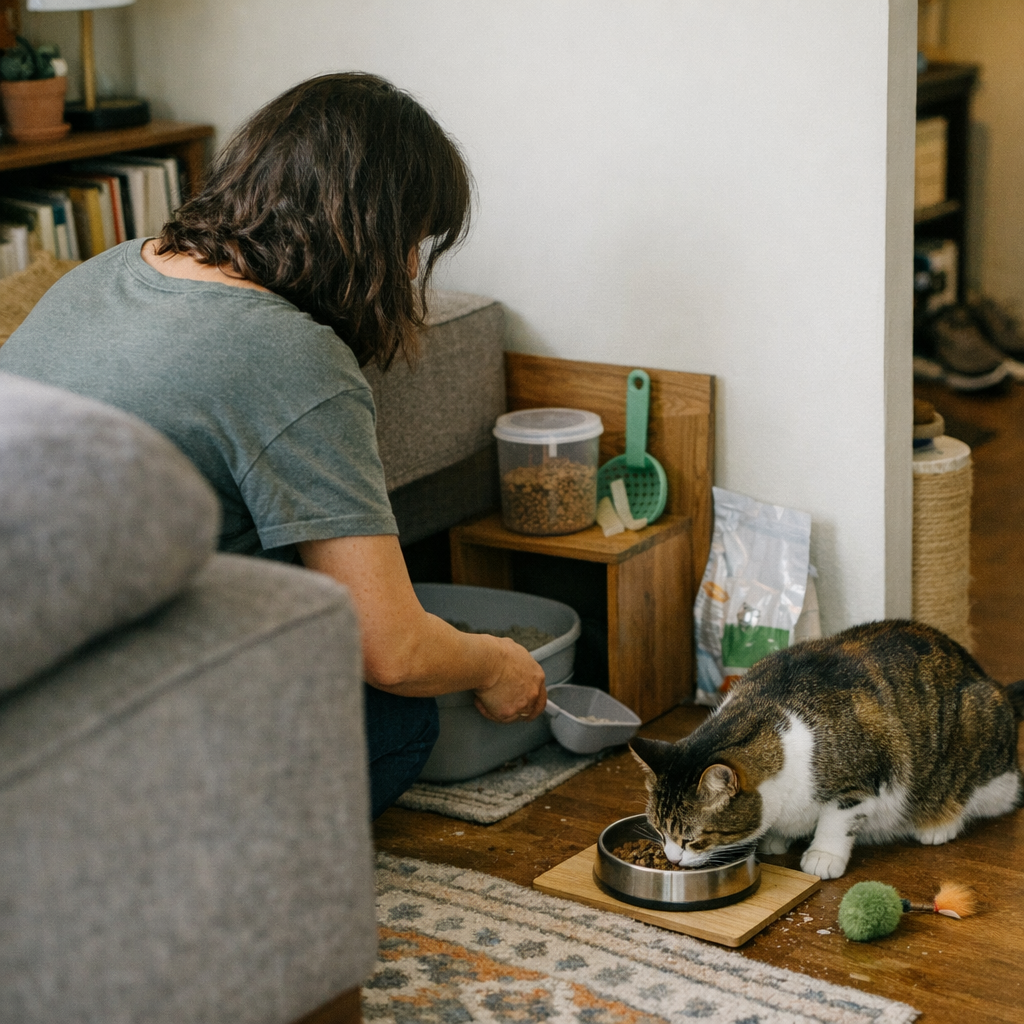
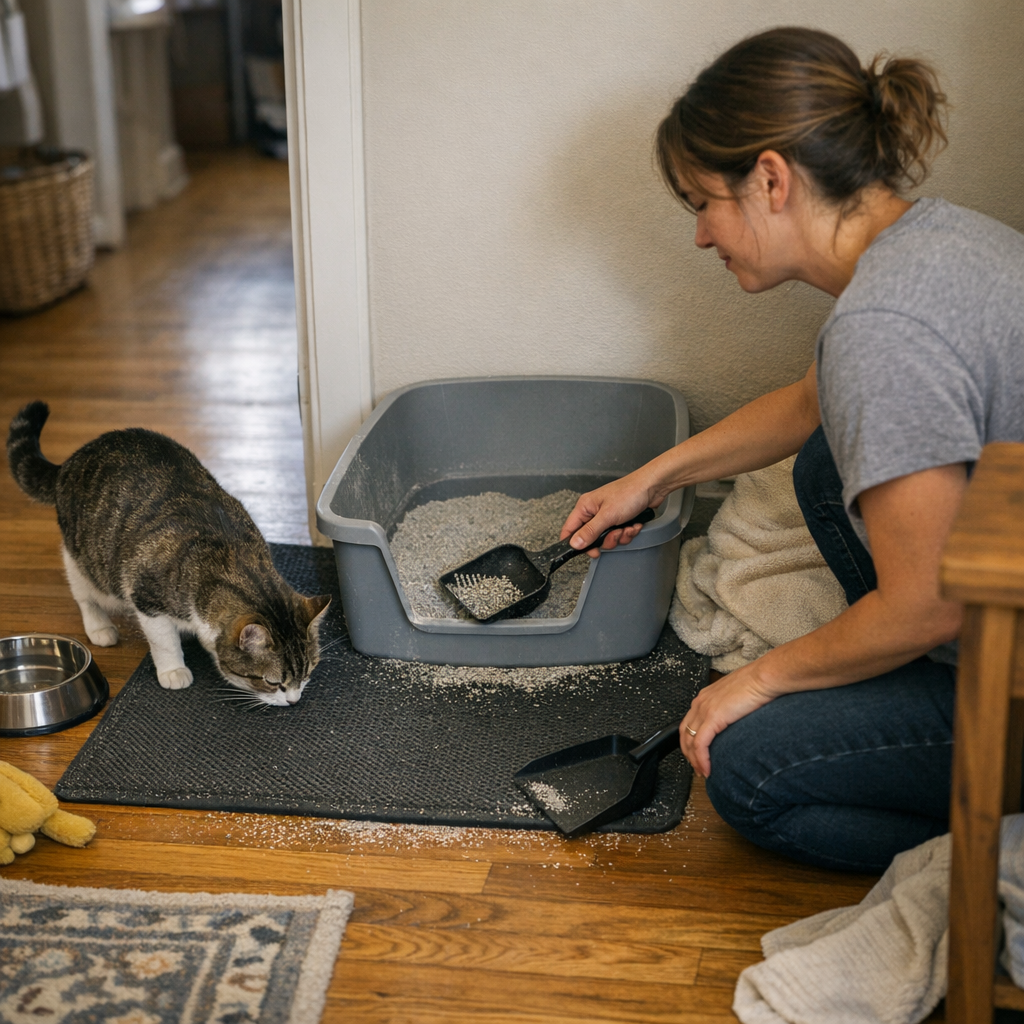
    Most hidden litter box “solutions” get exposed within days—not by cats, but by repeat use. A setup that feels neat on day one—tucked away, mat flush, box out of sight—quietly unravels under routine. After a couple of days, you notice a fine line of litter sneaking beyond the mat, a dusty trail that didn’t exist when you first set up the corner. Now you’re crossing the same patch of floor, bare feet catching stray grit you thought would stay contained. Even if the box looks invisible, the real test is how much it interrupts you every time you walk, reset, or clean. In the StillWhisker world, every arrangement has to survive more than its first impression.

    Orderly Looks vs. Friction Underfoot

    Placing the litter box in a remote corner, out of traffic and away from guests, seems like the obvious answer. On day one, it holds—a backdrop of calm, mat squared up, all visual noise hidden. But by week’s end, the illusion fades. “Looks tidy” only gets you so far when your routines rub against it. Suddenly, every crossing leaves a trace: a granule skating off the mat, a faint, repeated streak where paws and feet overlap. What seemed organized starts generating its own friction—a low-level irritation as you realize you’re chasing crumbs into other rooms or doubling back to sweep corners you thought were “solved.” No guest ever sees it, but your socks and floors do.

    The Daily Reset: Where Theory Meets Reality

    Small misses add up fast in a real home. Hiding the box doesn’t reduce upkeep—it just delays your response. Every cat visit, every escape route after a mad dash, sheds another sprinkle you don’t see until later. Miss a reset, and the edge of the mat becomes a border zone—this is where “contained” turns into “spreading.” Litter lurks under the kitchen table, the trail shows up under shelves, or you spot a new dust patch sliding toward the hallway. The out-of-sight setup seems clean, but it’s only building up backlog—small messes multiplying, tension rising until your next reluctant big clean.

    The more the box drops out of your line of sight, the easier it is to let debris linger. Hidden corners aren’t protected from mess—they’re protected from your attention until it’s too late.

    A Familiar Mess: How Small Problems Travel

    The spill always starts inside cat space, but it only takes one toy dragged across the mat, or one rushed scoop when you’re distracted, for the line to shift outward. “Just this once” skipped cleanup? Now that’s a recurring patch of odor and debris, traveling wherever you do chores, fold laundry, or try to relax. Even cats that usually keep it tidy will outpace a good mat by the third unaddressed spill. Containment quickly becomes catch-up, and the frustration accumulates in little, visible signals: a pile under a side table, crunches where you walk barefoot, mat edges pushed askew.

    Timelines That Actually Work: Anchoring the Routine

    What separates a maintainable setup from a recurring annoyance isn’t clever hiding—it’s a daily checkpoint that fits your real movement through the home. Choose a fixed, visible moment: late afternoon before the kitchen gets busy, or at the transition to evening routines. Forced consistency—anchoring scooping and reset to a predictable time—keeps the load small and visible. Skip it, and the space quietly fills up; stick with it, and you never have to chase the problem through the house.

    If the litter box sits just far enough from your normal path that you have to detour or mentally bookmark “go clean up later,” you’ll postpone. The space starts to betray you: mat off its mark, litter at the threshold, a faint hint at the doorway. Bringing it into semi-view—within your daily field but not crowding every step—means you spot and control mess fast, not react days later.

    How Small Tweaks Shift the Cycle

    Two practical shifts drive the biggest difference in routine:

    • Choose a spot visible enough to monitor, but not in the direct way— when you see a misstep or spill in real time, grabbing a broom or wipe for three seconds is manageable. Left unseen, a mess sprawls out until weekend effort is inevitable.
    • Anchor the daily scoop and sweep— make it a lock-in with some other task you already do. Don’t leave cleanup to “when I notice,” or you’ll always be a day behind your cat’s best scattering effort.

    Over a few cycles, the space stops pulling you out of routine and merges with it. Instead of being a zone you resent or scramble to hide, it becomes just one more reset in your ordinary path.

    When a Setup Looks Clean But Feels Slow

    The most misleading setups pass a visual check but fail every actual use. That clever box behind a chair, mat flared just-so, supplies tucked away—it’s a visual win. But the moment every sweep or scoop interrupts two other tasks, or a cleaning tool is just far enough out of reach to make you mutter, the system burns time instead of saving it. An “invisible” box that sends litter into living spaces or forces you to twist awkwardly for each reset exposes its real weakness: it doesn’t fit your flow, so you keep working around it instead of through it. “Organized” can still mean “always one step slower.”

    Repeated small barriers become patterns. You reach for a scoop hidden in the wrong bin, nudge supplies out from behind a planter, or edge around a scramble zone to avoid tracking more grit further. Everything is where it “should be” but still not where you need it in the second mess happens. Like a kitchen drawer you never actually use, the setup works on paper but grates in practice.

    Shared Space, Shared Stress

    Indoor-cat items leak—blankets, mats, scratch posts—creeping into shared rooms and high-traffic lanes. A box that looks camouflaged to guests is irrelevant when you’re the one stepping around micro-crunches, repositioning mats that always drift, or picking out litter-flecked toys from under the couch. Over time, these small, repeated interruptions add a background pressure—one more thing to adjust each day, pushing the area from “neat enough” to “never quite in sync.”

    Practical Fixes That Change the Outcome

    No arrangement escapes all mess, but routines reward a few key upgrades:

    • Pick a mat at least several inches larger than the box opening. A tight fit looks sharp, but a few extra inches on every side catch surprise landings and daily scatter. Go wider—early, not after the first missed cleanup.
    • Make wipe-down and sweep tools truly at hand. Keep them within literal arm’s reach of the box and mat—not tucked in a closet—so extra friction never delays a quick reset. Cleanup inertia vanishes when the gear stays parked right where micro-messes happen.
    • Reposition for fast visual checks, not only for aesthetics. If the first signal of trouble is litter in the next room, the box is too hidden for your habits. Try inching it closer to the natural path through your space, then watch whether cleanup speed improves.

    What to Adjust When the Cleanup Cycle Lags

    If grit keeps cropping up late or shared areas look less clean at day’s end, don’t rely on a future “big fix.” Instead, double down on the daily pattern: move reset times earlier, keep mats wide and anchored, and make the boundary zone impossible to ignore. Payoff comes not just in a tidier corner, but in less friction across the routines you didn’t expect to get interrupted by a litter mess.

    The Repeatable Setup That Gets Out of Your Way

    The best litter setup fades into the background—because it makes quick, daily resets possible without forcing extra work or blocking your rhythm. Once scooping and sweeping cue off your home’s real flow, stress drops: mats quit migrating, debris stays boxed in, and your living spaces stop accumulating micro-cleanups you never signed up for.

    Small flaws still surface, but easy access and clear lines beat any hidden arrangement that lets messes linger unseen. Build your setup to fit your routine as it actually happens, not just as it looks ideal, and the recurrent hassle finally slips out of daily life.

    For more indoor-cat setups that work in real homes, visit StillWhisker.
  • Keep Pet Areas Tidy by Placing Cleaning Cloths Within Reach

    Simpler Daily Pet Cleanup Starts With Setup, Not More Effort

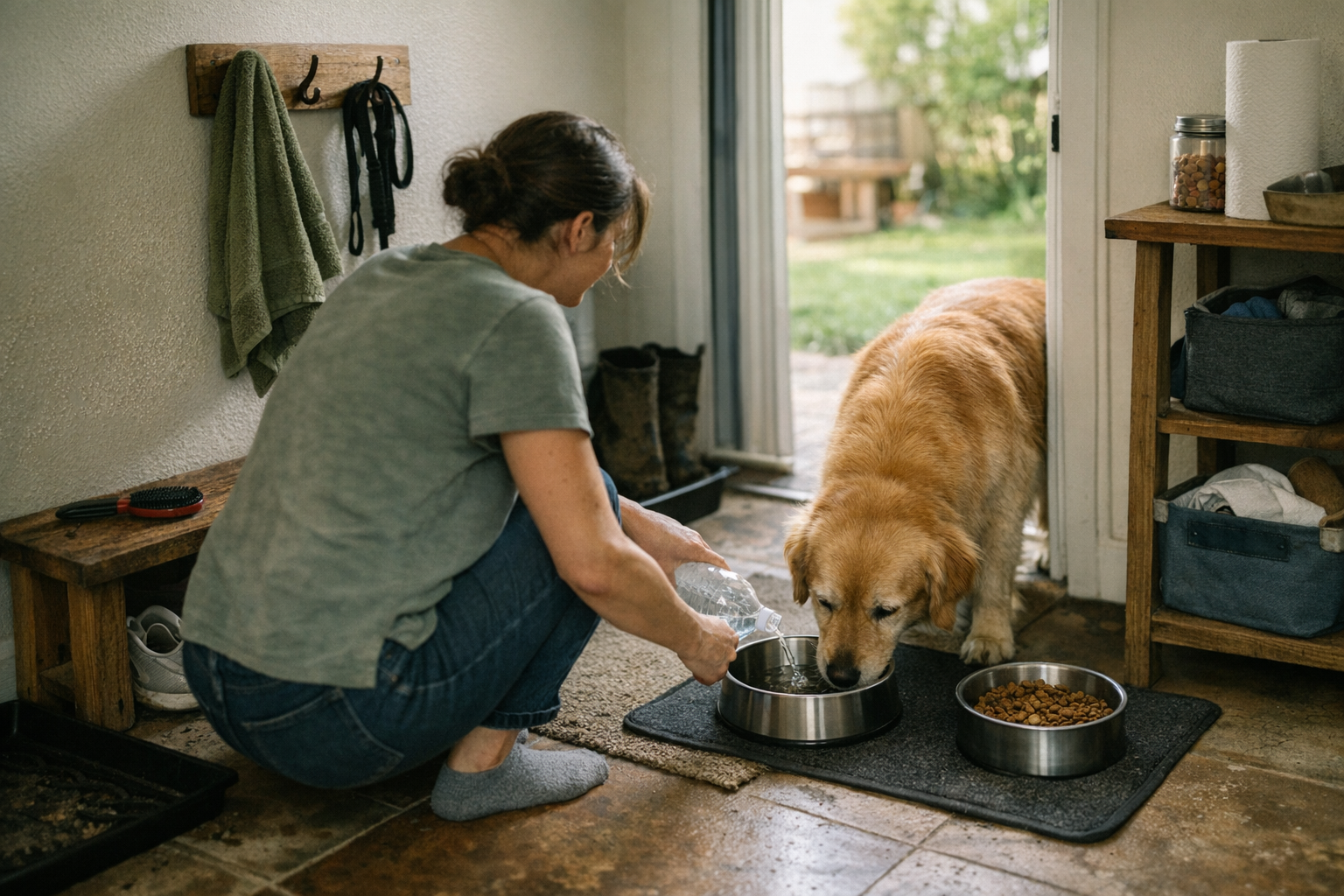
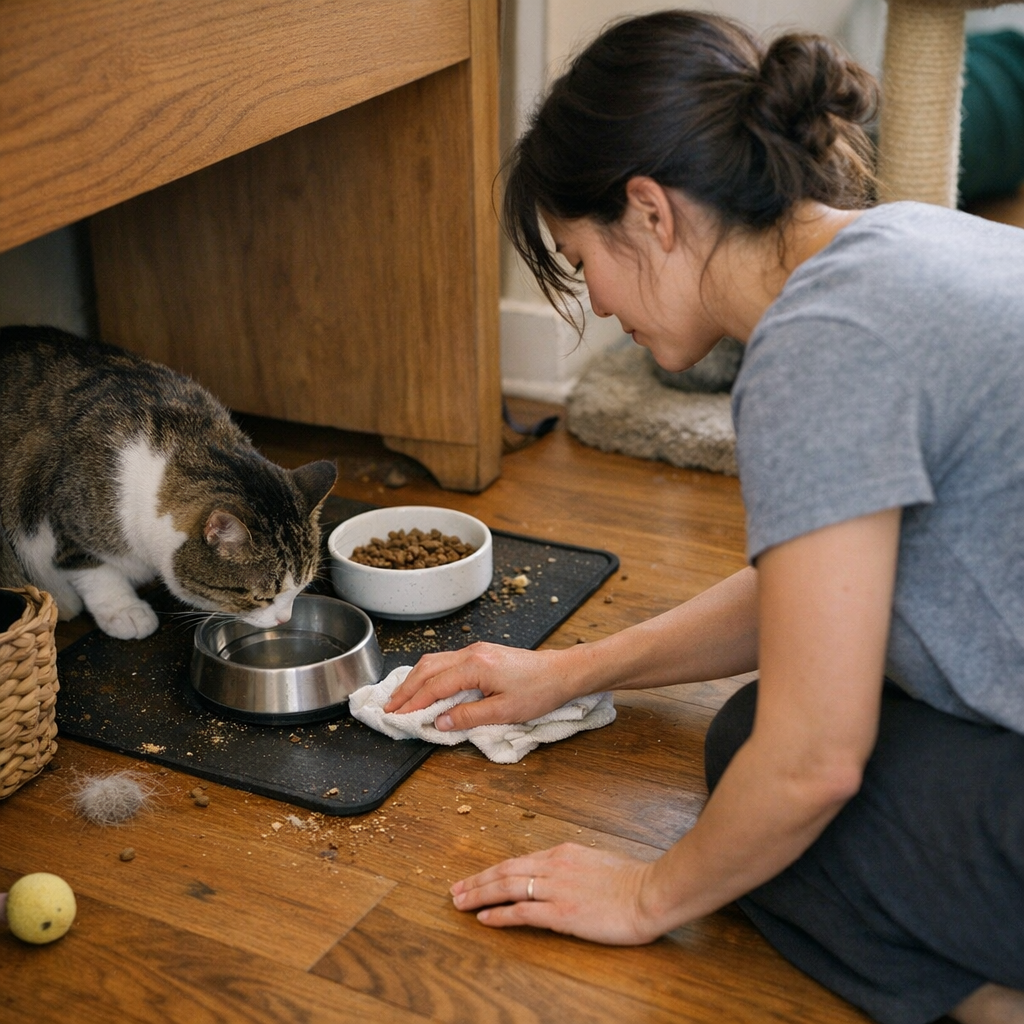
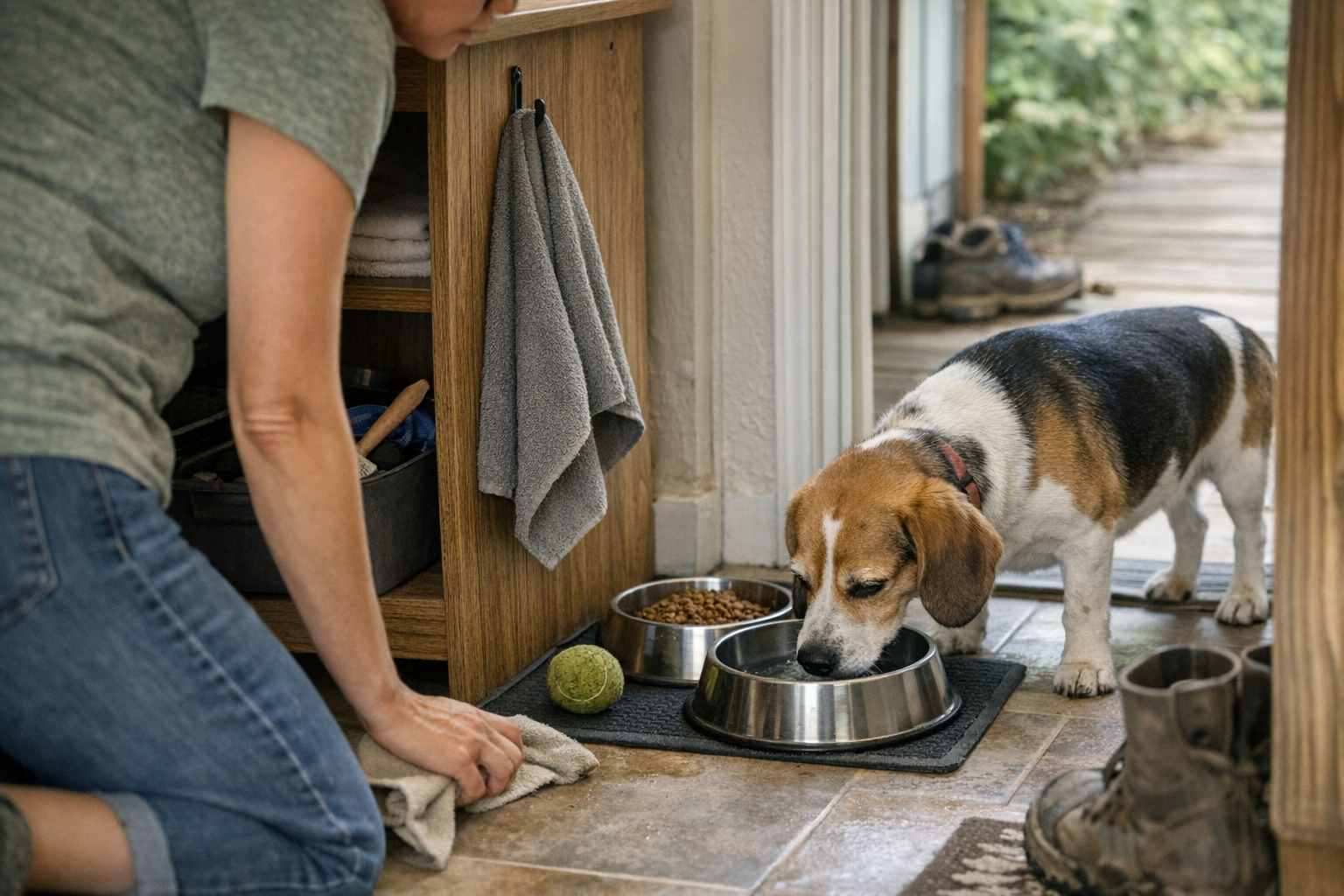
    Most daily pet mess isn’t dramatic. The real friction comes when you reach for a cloth after a water spill or a quick wipe-down post feeding—only to find the towel is across the room, blocked by recycling or missing entirely. Even the smallest missing detail—a cloth, a scoop, wipes left out of reach—can stall your whole cleanup, letting drips and crumbs collect until you’re stuck with a mess that’s harder to handle at the end of the day. What seems like an “organized-enough” setup in the morning can slowly drag your routine down by dinnertime, just because basic pet-care tools aren’t where they need to be, when you actually need them. This is where many setups quietly fail, even when everything looks tidy on the surface—revealing the everyday gap that CalmPetSupply routines are built to close.

    When a Care Area Looks Set But Still Slows You Down

    Start with a typical morning: bowls aligned, food and scoops stacked, wipes tucked somewhere “handy.” Once the day hits full speed, those details start breaking down. You reach to top off water and find toys and crumbs crowding the area, or discover the cleaning cloth is AWOL—lodged behind clutter or left in another room. The setup looks right, but the function’s never there in real time.

    You’re forced to leave drips and sticky bits “for later,” which means they solidify. When both cats and dogs share the same zones, that gap becomes an endless cycle: the dog bumps the bowl just as the cat swoops in for breakfast, messy pawprints multiply, and you skip the quickest cleanups because the tools require just one trip too many. Nothing is catastrophic, but your routine starts falling behind at every edge.

    Hidden Friction: When “Easy Enough” Isn’t Simple in Real Use

    Real-world friction doesn’t announce itself—it just accumulates. Maybe everything is technically tidy because you keep cleaning supplies tucked away, but even one extra drawer or sealed container is enough to justify letting a wet patch sit, telling yourself you’ll handle it later. Meanwhile, your pet’s paws track the mess into hallways, and the “easy enough” system proves slow when it matters.

    Every delay compounds. A once-quick swipe morphs into a baked-on patch by evening. A lint roller lives in the cabinet, but grabbing it means moving shoes or wrestling the door, so shedding sits longer and resets get skipped. Over the week, these small frictions repeat—until a simple cleaning habit feels like a chore that’s always waiting in the background.

    Real-World Scenes: Where Setup Makes or Breaks Your Flow

    Scene One: Hectic morning. You reach for a refill and step on a squeaky toy, which tips the water bowl over. The cloth you need slipped under stray mail, and instead of wiping up, you dodge the puddle—catching sticky pawprints later, after they’ve already spread.

    Scene Two: End of the day. Dried cat food hardens at the rim of the dish. The towel’s technically nearby, but grabbing it means dragging a cabinet door open behind a recycling bin. Rather than wrestling with the setup, you leave it—more gunk to scrub next time.

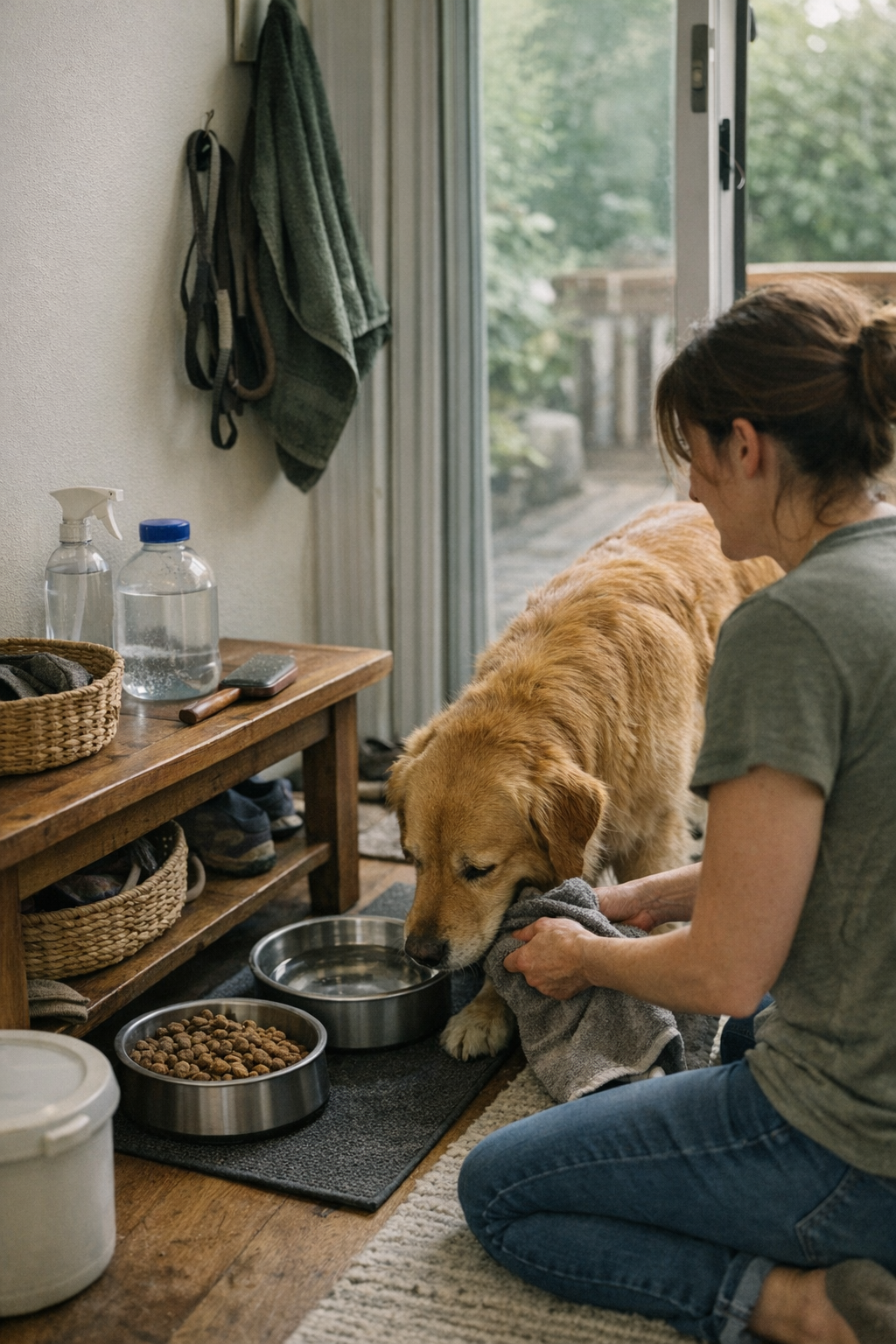
    Scene Three: Quick outdoor walk. The dog returns muddy. You know the brush helps, but it’s buried with leashes and harnesses. Pawprints trail into the room; cleanup gets postponed, and what could’ve been a one-minute reset becomes a late-night sweep.

    Why Setup Matters More Than a Prettier Space

    A clean look can mask repeated slowdowns. Whenever you have to shift food bags to grab wipes, detour for a towel, or dig behind toys for a cleaning cloth, the area “works” until it doesn’t—and those missed moments pile up. The best tool stashed just out of reach loses its purpose, turning what should be a one-step reset into extra work. Even the most streamlined setup can reveal cracks by week’s end, once daily pressure exposes whatever’s just far enough out of place.

    You notice the weak link most when routines overlap: the cat sneaks a second helping, the dog sloshes water across the mat, and you’re weaving around toys or bags—all while the cleaning wipe is missing in action. That’s when a setup’s convenience collapses, taking your sense of control with it.

    Practical Adjustments for Smoother Daily Flow

    The upgrade isn’t harder work—it’s in small, targeted tweaks that actually cut friction. Hanging an absorbent cloth on a nearby hook transforms delay into action: grab, wipe, hang back up—no more searching, no more excuses. Every cleanup resets before messes get a chance to harden or spread, tackling pet tracks and feeding spills with the least effort possible.

    Keeping a visible tote right next to your main care zone handles two jobs: key supplies are visible and at arm’s reach, and you spot instantly when something needs refreshing (like switching out a towel before it gets gross). This way, instant wipes after feeding and refilling become background routine—less mess, less stress, and no more dreaded “catch-up cleans” eating into your evening.

    Takeaway: Easy Access Wins Over Perfect Appearance

    Real pet care setups are measured by what you can reach, not by what you can hide. Keeping just the right tools within reach means you actually handle every small mess before it piles up. This approach shrinks routine interruptions, cuts out constant reshuffling, and lets feeding, cleanup, after-walk resets, and basic grooming all blend into the day—whether the schedule shifts or not. A neater look is only the side effect; the main advantage is less repeated cleanup strain, more reliability, and a setup that finally keeps pace with real daily needs.

    Find practical setups and everyday tools for real-life pet routines at CalmPetSupply.

  • Why Your Dog’s Favorite Blanket Corner Shapes Daily Rest Habits

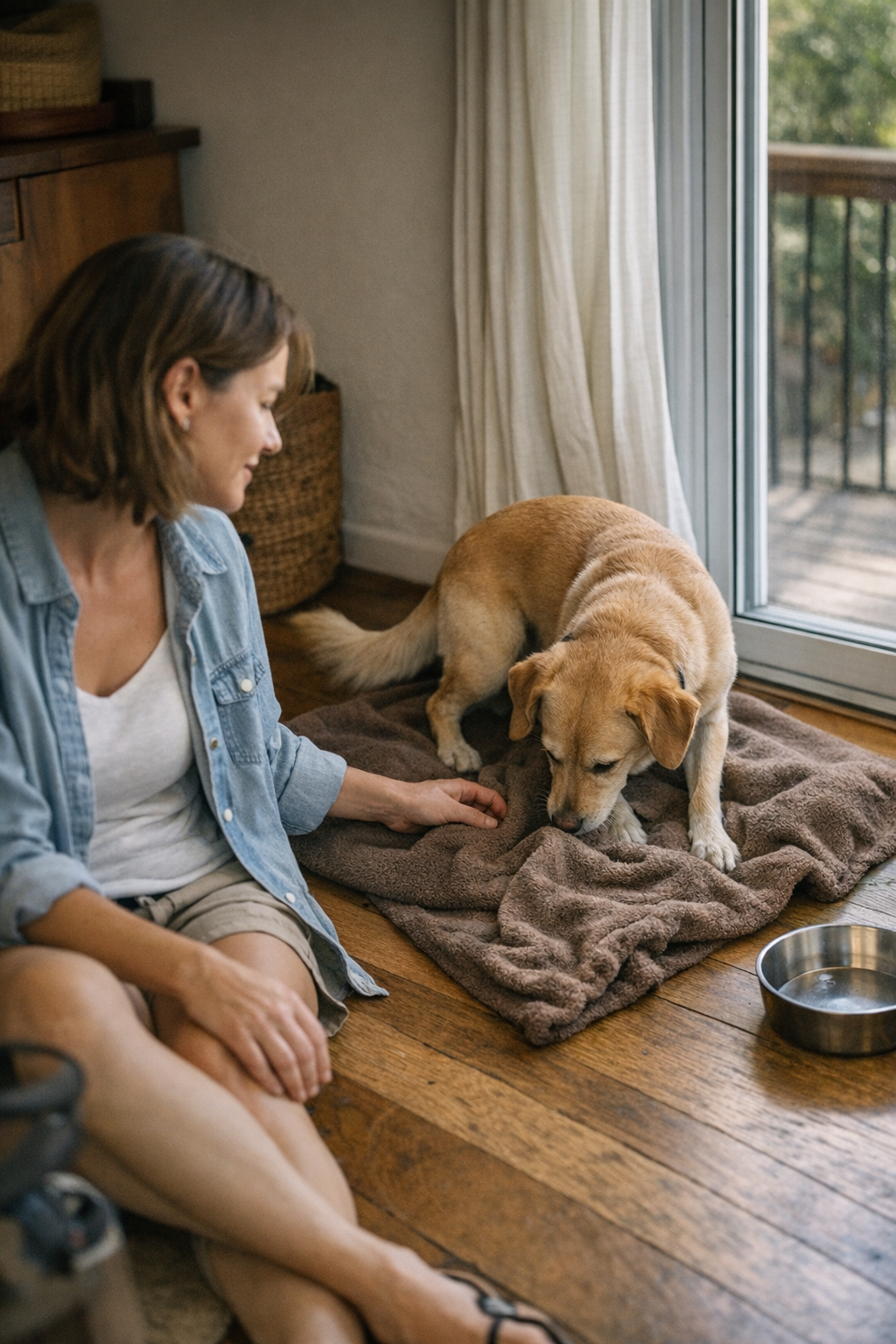
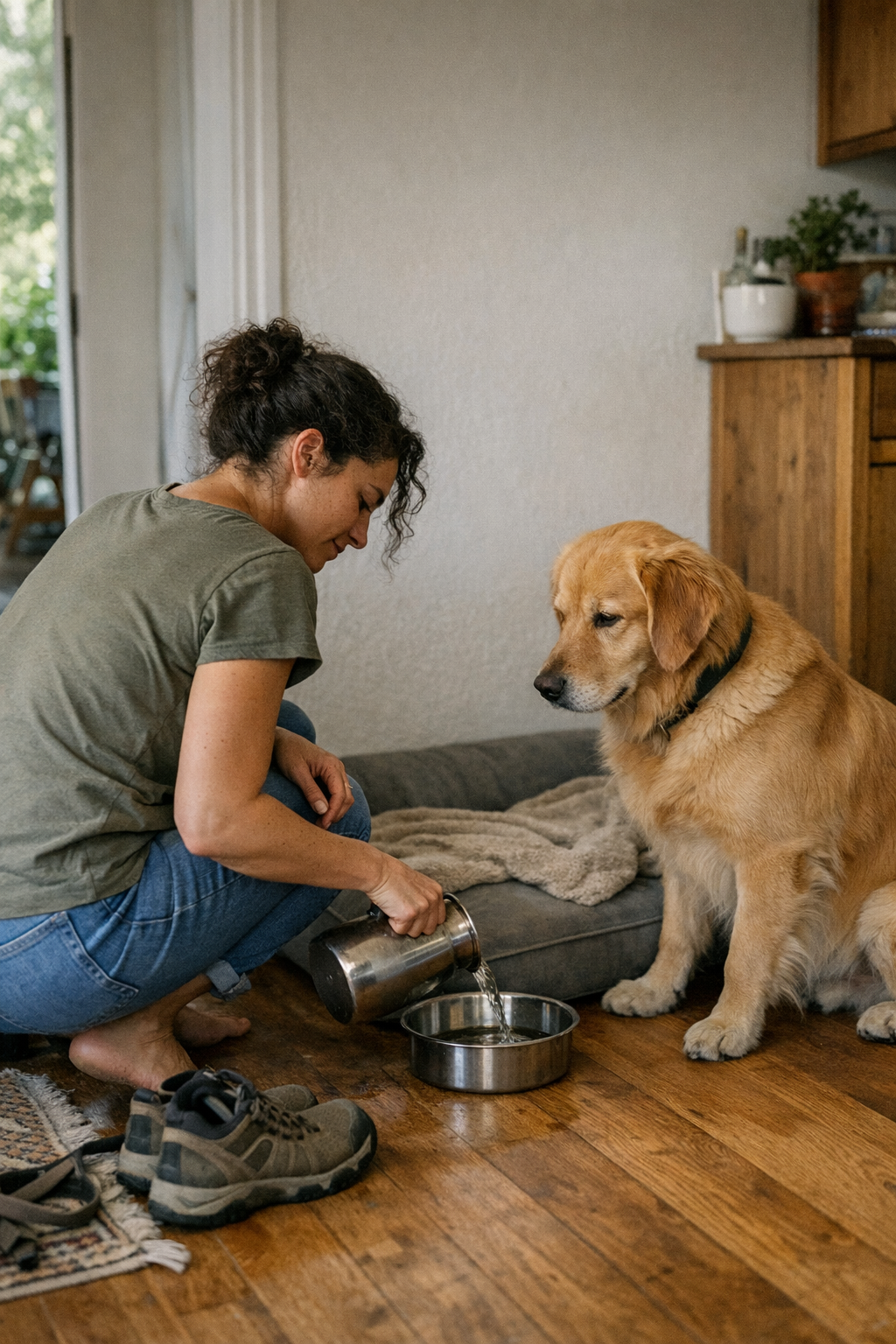
    The weak spot appears right after every walk or meal: your dog heads straight for their usual blanket corner—only to stall if it’s folded, shifted, or tangled. A few seconds pass. Circling, nose-prodding, that expectant glance—they’re all signals you’ve seen before. It’s subtle at first, just a pause where quick settling should be automatic. But as you move the blanket for laundry, tuck it aside for vacuuming, or accidentally flip it the wrong way, those disruptions pile up. Suddenly, your daily routine is haunted by split-second delays: a leash draped over a half-folded blanket, a water bowl in the wrong position, a comfort item blocking your path as you hurry to reset the room. The day keeps moving, but with drag you can’t see until it’s built into habit. What looked like harmless comfort now becomes a repeated snag during transitions—the kind you only notice because you keep having to reach, straighten, or explain why your dog just won’t settle on cue. This is where DogPile’s world of repeated-use setup comes into focus: not with show-dog neatness, but with corners, access, and rhythms that actually fit real daily flow.

    Why Dogs Anchor to the Same Blanket Corner

    This isn’t just “my dog likes soft things.” Dogs build patterns around anchors—predictable, repeated, always-in-the-same-place comfort points. After walks or feeding, that blanket corner isn’t just fluff: it’s the permission slip for downtime. When that precise zone shifts—folded differently, moved to mop the floor, overlapped by a toy or crate—the effect is visible. Your dog’s routine trips, not because of the blanket’s softness, but because the anchor cue vanished. Suddenly you see the results: sniffs, circling, nudges, waiting. It’s a negotiation, not an automatic return to routine.

    The Overlooked Source of Routine Friction

    Most owners miss that the real trouble isn’t the blanket’s material or the size—it’s that physical anchor. Lose it by cleaning, tidying, or folding absentmindedly, and you create a tiny but persistent break in the post-walk handoff. Each time you move or rotate that favored spot, rest needs to be re-negotiated. Now, instead of a smooth transition, your dog hesitates, and you’re forced to untangle, adjust, or guide. These micro-stalls are easy to disregard—until you’ve lost five minutes finding every missing cue in a week of routines.

    How Small Disruptions Become Repeated Stalls

    It seems minor: a slightly misplaced blanket, a towel blocking the leash hook, a food bowl nudged out of line. But after each walk or meal, these small misalignments trigger a growing pattern. You’re juggling bags or groceries, maybe wiping paws, reaching for that one tool you always need—only to realize it’s behind a comfort item, folded with the wrong edge up, or simply missing from its default spot. Instead of a fast reset, you get a stop-start rhythm—one more loop around the room, one more dog circling longer than usual, one more pause layered onto an already busy window.

    It stacks up fast. The setup you thought was “organized” asks for constant small interventions: straightening, shifting, refolding, or even calling your dog back over because they refused the new placement. Your own movements slow down every time their anchor isn’t where expected. Functional order gets quietly undermined, not by chaos, but by details just off enough to break the flow.

    When Comfort Becomes a Setup Weak Point

    The visible comfort zone can hide invisible friction. A neat blanket might look organized, but if it means you’re always unboxing, smoothing, or adjusting to get your dog to settle, you’re paying for “tidy” with time. You’re not just resetting the fabric—you’re resetting your patience. That repeated pause, those expectant looks or sighs, serve as reminders that every convenience for the eye can turn into a setup weak point as soon as real-world repetition returns.

    The Cumulative Drag of Routine Pauses

    Tiny interruptions start to echo louder by week’s end. You notice this after dinner, after late-night walks, or any time a rushed transition drags. Patterns emerge:

    • Blanket in the laundry: Dog stands, stares at empty space, paces until you grab a stand-in. Now you’re hunting for a backup right when you’d rather move on.
    • Spot is there, but misfolded: Dog noses, circles, waits—refusing the offer until you get down to tweak the setup. Dinner waits too.
    • A visiting dog mixed the edges: Your own dog hesitates, checks ownership, then waits for you to intervene before settling. Another lost minute as you play referee.

    The routines “work”—but slow. The underlying drag isn’t chaos; it’s a tangle of small, recurring corrections that build up, especially during transitions you rely on to keep your day moving.

    Reset Friction—Seeing the Real Signs

    Most people only catch routine friction when it becomes impossible to ignore: the dog double-circles, sighs audibly, or pauses at rest as if something’s missing. Each little fix—unfolding the blanket just so, moving the toy out of the way, explaining to your dog (again) that the corner is coming back—turns routine management into a series of micro-explanations. It’s not stubbornness. It’s setup resistance: the difference between a functional cue and a daily stall.

    Background Stress from Repeated Tweaks

    Every time you stop to adjust the resting place, guide your dog, or free the bowl blocked by a loose comfort item, it costs attention you didn’t plan to spend. By the third or fourth reset, you’re not just fixing a blanket—you’re feeling the drag in your own routine. The real impact is cumulative: transitions meant to be smooth become peppered with minor but insistent interruptions, steadily eroding post-walk calm, post-feeding downtime, and sleep prep flow.

    Designing a Reliable Dog Rest Setup

    Swapping in a plusher blanket or a bigger bed isn’t enough if its anchor keeps shifting. What matters is choosing a rest spot that maintains its orientation, familiarity, and access through daily traffic. Keep the anchor consistent: same location, same direction, same way of unfolding. Resist the urge to “tidy” by shifting or folding something that’s already working. Make sure other essentials—leash, towel, wipes—aren’t hidden behind comfort items. Position food and water bowls within direct sightlines of the rest spot, so after every meal, your dog turns and lands, not searches and negotiates. At scale, one less circling moment equals one less strain on your own next step.

    Observing and Adjusting, Not Forcing

    When you’re sharing space—visiting dogs, moved chair, vacuuming marathon—don’t chase symmetry or tidiness for its own sake. Offer a second soft spot nearby and see which one earns true repeat loyalty. Space comfort corners farther apart if you notice dogs crowding or negotiating the same edge. Use the pattern of their choices as your guide: true consistency is measured by which setup they return to, week after week, without your prompting.

    The real goal isn’t picture-perfect order but a backdrop that disappears from your attention—because neither you nor your dog needs to “fix” it in the middle of a normal day.

    When Setup Looks Right but Still Fails Routine

    Plenty of setups read as organized—blanket folded cleanly, bowls lined up, toys in a corner. But if routines keep breaking down—circling instead of settling, repeated nudges for help, migration of items into the wrong space—that’s the true report card. The dog cares less about aesthetics and more about frictionless permission to rest. If every settle feels like a negotiation, your “neat” layout is still failing real-world rhythm. The right setup doesn’t demand reminders; it lets everyone move past it without extra work.

    Spotting Early Warnings—Routine Drag Signals

    The pattern is clear when you look for it. If every leash grab sends you rerouting around a bowl, if every walk-in finds a blanket blocking the doorway or bedding migrating into cleanup space, the cost is visible. These aren’t just stray items—they’re repeated setups that keep interrupting the next step, especially during ordinary, high-traffic moments. Pay attention after each routine transition: when your dog expects their anchor spot and hesitates if it’s not available, that’s your adjustment point. Don’t just tidy or rearrange: make the access, anchor, and pathway work repeatedly in your actual schedule.

    The Usability Difference—Not Just Cleaner, but Smoother

    The target isn’t a prettier room or a blanket that never moves. It’s less interruption, fewer silent negotiations, and quicker returns to baseline—so real routines can stay on track even after the third walk or a muddy afternoon. When setups serve their anchor purpose—visible, accessible, unfussy—both comfort and flow return. For setups, tools, and practical solutions that fit the real pressure points of daily dog life, visit DogPile’s

  • Why Weekly Litter Box Edge Cleaning Prevents Hidden Cat Messes

    Most indoor cat homes look clean after a quick sweep, but under the surface, the real mess keeps returning—and keeps interrupting your day. You wipe the visible rim, vacuum a few scattered grains, call it handled. But by the time you’re resetting a feeding area, topping up water, or moving a mat to reach the edge, the friction comes back: persistent litter in the same thin strip where box, mat, and floor meet. Each “clean” reset buys hours, not days. The routine repeats—a little slower, a little less comfortable, one more unseen patch spreading into the paths you actually use.

    The Problem Line: Where the Litter Box Looks Clean but Feels Wrong

    Setups often start with a covered box on a mat, bowls nearby, a towel or cushion for comfort. On day one, this all feels in control. But a silent weak point emerges fast: the narrow margin at the rim where plastic meets floor and mat. Tracked litter sneaks out every time a cat jumps in, digs, or you do a late-evening scoop. It builds invisibly in those thin bands, just past the mat’s edge or under its curled lip.

    No matter how expensive the box or how plush the mat, grains cluster in the border that escapes daily cleaning. You notice it when kitchen socks crunch, or dinner prep means rescuing crumbs from under a baseboard. Each refill, scoop, and bowl reset pushes more grit where it’s least expected. Even a swept surface doesn’t hold up: comfort for the cat becomes inconvenience for you, as mess spreads on repeat through your regular paths—right where you prepare a meal or walk barefoot in the morning.

    Why Most Quick Cleans Don’t Stop the Mess

    Broom or vacuum runs clear the obvious, but ignore the thin, resistant band along the box’s rim and mat border. If your litter setup sits near a main walk-through, every daily overlap—from topping up cat food, to reaching for the vacuum, to stepping out of the bedroom—nudges more grains into circulation. Freshly swept looks mislead: new hard crumbs show up in the bathroom, or you stop mid-task to wipe the kitchen before breakfast.

    You end up spot-clearing more than planned. A brush for baseboards. A hand-wipe under the water station. Crumbs that evade every pick-up tool. The main problem isn’t neglect—it’s that surface-level cleaning can’t block mess that tucks itself just out of reach, only to emerge hours later in a smoother, once-clean room.

    The Weekly Edge Clean: Small Adjustment, Big Difference

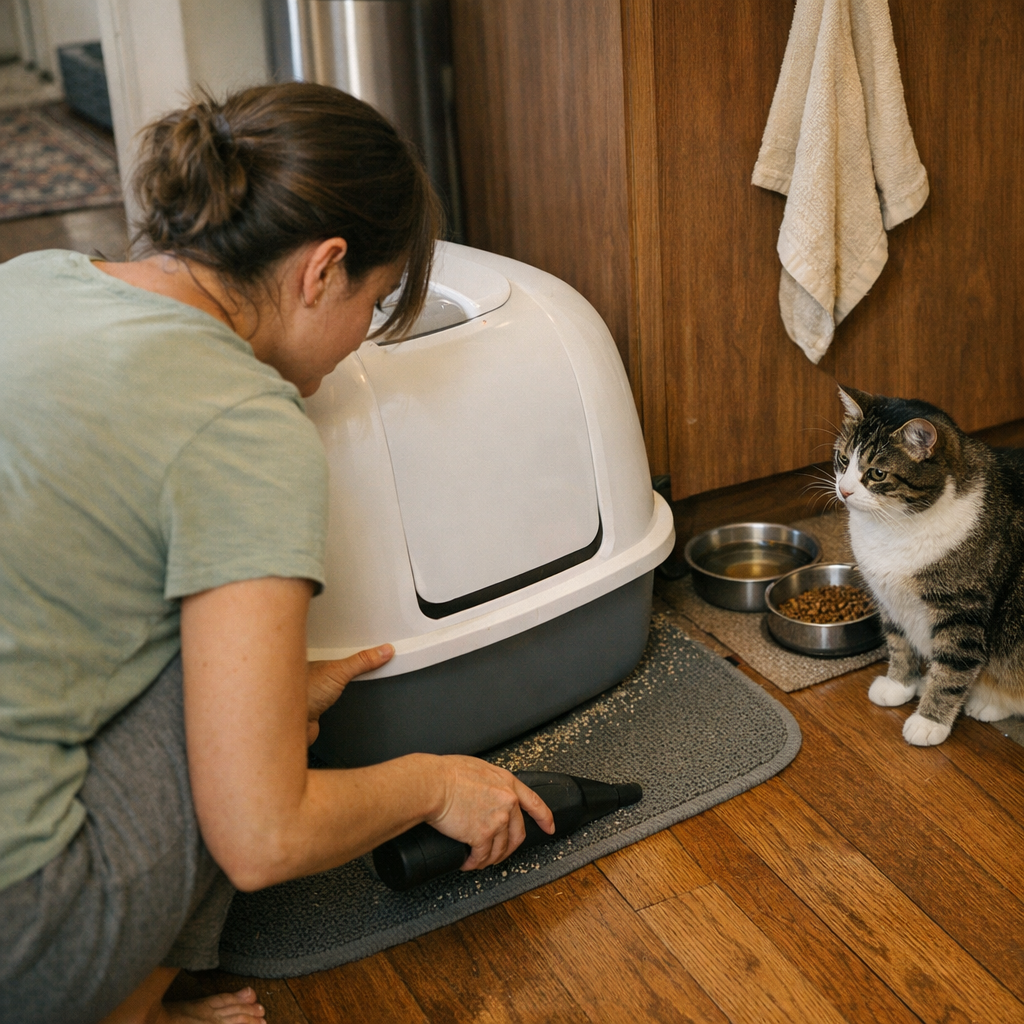
    There’s one shift that cuts the cycle: moving the litter box every week—just enough to reach behind and under the rim. This isn’t a full reset or deep overhaul; it’s about breaking the chain at its quietest link. Pick up or nudge the box a few inches. Run a handheld vacuum, brush, or damp cloth right along the edge. Peel back the mat, shake out the grains, and collect the litter that never appears on a daily walkthrough.

    This little reset prevents the “invisible spillway” from seeding your home with new grit. You don’t need to revamp your routine—just intercept the edge before it turns into a bigger problem. Within days, you see the pressure points fade:

    • Less litter stuck in mat corners or pressed into floor seams
    • Cleaner zones around food and water stations, so you don’t have to reach for a wipe between breakfast and litter scooping
    • Fewer surprise crunches underfoot on main walkways and kitchen entries
    • A cutoff in the chain-transfer of mess from the “litter zone” to every shared corner of your living space

    More than anything, your reset routine shrinks—and the cycle of endless touch-ups starts to taper off.

    What Real Use Looks Like: The Slow Spread vs. The Quick Reset

    Picture the test: a litter box pressed against a wall, mat underneath, food and water bowls a foot away. It looks tidy after a sweep, but by day two, there’s a tactile reminder—a grainy edge under your hand when you reach for a bowl, or stray litter showing up when you drag over a chair. Topping up water? You’re pausing to swipe a finger between mat and floor. Shifting toys? There’s a pocket of grit pooling in the crease. In the hallway or by shared space, edge buildup multiplies faster—cat routines and human routines keep dragging more litter further afield.

    The real-world sign: When your hand reaches for the refill scoop and you feel edge grit you missed. When supplies are in place but shielded by persistent crumbs. When a mat that looked settled turns out to be hiding a full new cleanup job underneath. That’s the signal: the setup is working against you, spreading out slow inconveniences until resets and walkways both start to drag and routines that initially felt “good enough” now require triple the attention just to stay under control.

    Making the Edge Part of the Routine: How and When It Matters

    The true test isn’t surface appearance, but how a full-use cycle exposes the edge buildup. Weekly edge cleaning isn’t glamorous or complicated, but it flips the long-term upkeep equation. How to work it in, so you stop trailing the problem:

    • Time it with your routine. Reset the edge during refill or scoop days—when the box already moves and the surface is open for a quick pass.
    • Shift, don’t just wipe. Even nudging the box a few inches reveals pockets of hidden grains along the rim.
    • Pull and check the mat. Fold or lift one side, and run a hand or vacuum along the border, especially if the mat sits up against a wall or cabinet base.
    • Target the margin—not just what you see. Where mat, box, and floor overlap, debris collects at double the usual rate and hides from typical sweeps.
    • Use a vacuum for tight edges. Cordless or handheld vacuums pull up embedded litter without recirculating the scatter that a broom just redistributes.

    The next day, you’ll experience the difference—fewer grains migrating past food bowls, less unplanned spot cleaning around high-traffic zones, and quicker resets that don’t turn into mini-projects.

    Compact Homes, Bigger Impact—Why Small Spaces Can’t Ignore the Edge

    In smaller apartments or multi-use rooms, tiny missed piles become instant interruptions. A forgotten margin spills into the kitchen, across the hallway, or under the only clear workspace. If you’ve ever switched steps to avoid a gritty patch or paused in the middle of breakfast to pick up litter stuck to a mat, you’ve seen how fast a small overlooked area can hijack flow in a compact space.

    Edge cleaning becomes a high-value routine in these places. That two-minute weekly swipe means fewer loops across the entire room. Instead of always seeming one cycle behind, your litter corner, mat, and shared paths start working together—less sidetracking, less reshuffling, fewer last-minute pauses to rescue the rest of your day from scatter overload.

    Mats Slow Tracking—But Only If the Hidden Zones Get Their Turn

    No mat stops grain migration entirely—especially not at the box/mat/floor border. Textured surfaces help, but most litter follows the path with the easiest escape: under mat edges, against baseboards, and deep along rim lines. Choosing a better mat is only half the fix. The true pain point is what gets shielded by a box pressed tightly into place, where you rarely check except during a full reset.

    Solution: weekly, lift or fold the mat, shake out trapped grains, check the border strip, and use a quick vacuum pass. These few seconds matter more than adding new surfaces or deeper grooves—this is how you actually keep litter from drifting into high-traffic areas before it becomes a pattern.

    The Takeaway: Why Edge Cleanups Matter More than Cosmetic Fixes

    Edge care isn’t a finishing touch. It’s the lever that keeps resets short and your rooms truly walkable. If you ignore the spot where rim, mat, and floor merge, you’ll always be caught by surprise crumbs and repeat cleanups. Put friction where it belongs—pick up the edge mess before it cycles out into every living area. The result: less backtracking, more usable space, and a setup that doesn’t steal time on each pass. Suddenly, even chaotic days don’t push your home into another mess spiral.

    See more practical indoor-cat-life ideas at StillWhisker.

  • How Quick Resets Transform Daily Pet Care Into a Smooth Routine

    The Hidden Gaps in Daily Pet-Care Setups

    That feeling of control—lined-up bowls, brushes at hand, fresh towel hooked by the door—rarely survives past the second feeding or first muddy walk. It looks set for easy care, but by lunchtime, the “organized” area is already fighting back: a wet bowl crowds the counter, the brush is gone, and you’re reaching past clutter to find even the basics. The illusion of order fades fast under repeat routines, and pet care slows as you reshuffle supplies or double back for missing items. What worked at the start of the week unravels by Wednesday, turning ordinary feeding and cleanup into a series of avoidable stalls.

    Where Pet-Care Routines Get Stuck

    That so-called organized corner breaks down the minute you try to use it under pressure. Reach for a water bowl and find a food bin shoved in the way—or yesterday’s rinsed bowl is still damp, awkwardly perched where a quick scoop should be. After a rushed grooming session, the brush is abandoned on the table, leaving you hunting for it with damp hands when you come back for the next round.

    Every small slip means another slow-down. The refill bottle’s empty and not where it should be; retrieving it means doubling back to the other room. That towel you rely on for after-walk paws is gone, so dirt travels farther into the house. Each “just a second” pause adds up, breaking the feeling of routine and pushing simple care into friction-heavy territory.

    Real Use Scenes: Interruptions That Sneak In

    Come in from an evening walk—leash in one hand, drippy toy in the other—expecting a towel at arm’s reach. Instead, it’s balled up on the sofa or vanished to the laundry pile. The jug you use to refill water dishes is empty, hiding behind unfolded laundry. You end up tracking messes through the space as you try to hunt down one missing supply after another, turning what should be a two-minute reset into a minor scavenger hunt.

    And during a busy week, the cat’s grooming brush never lands in the same spot twice—used by the kitchen sink, left on the coffee table, then migrated to the feeding zone. What saves a step in one moment adds to the search later, and you burn time chasing after items meant to be ready for quick routines. Even a feeding spot that started out “tidy” by evening is blocked off by scattered toys or abandoned breakfast bowls.

    Looks Tidy, Works Slower: The Practical Difference

    Visual order and daily function don’t always align. It’s easy to reset everything each night—align the supplies, wipe bald spots, hang that missing towel—but cracks show during high-traffic hours. The friction isn’t from visible mess; it’s from essentials going missing or getting harder to grab, so each basic care step slows or stalls. If you skip even one small reset, next time you’re left staring at a missing wipe or an empty water jug right when you need it.

    Focusing on appearances means you might beat back surface clutter, but routines pile up underneath. The towel isn’t ready for a muddy dog, the scoop’s gone missing, storage bins block the counter, and daily pauses multiply. The space designed for convenience keeps interrupting your real flow, and regular care starts to feel heavier, less automatic.

    Why Fast Resets Matter—And What Actually Helps

    A reliable pet-care area isn’t about perfect order, but about how quickly the basics land back in place after use. Immediate resets—refilling that bottle before it’s empty, hanging the towel as you finish, returning the brush right away—shorten the chain of slow-downs. Skip the reset and the next routine runs into a snag; build the habit and those missing-item interruptions mostly disappear.

    Fast resets work because every action counts: refilling a bowl right after feeding, stashing the brush as soon as you’re done grooming, and returning containers before stray items pile up. Supplies stop drifting out of reach, and routines start to run as intended—with care tasks handled before they turn into time-wasters.

    Troublesome Patterns & Easy Fixes

    Pay attention to the repeat offenders: the scoop always outside the litter area, the towel never on its hook, or a refill bottle that roams the house with no fixed base. These are the small leaks that drain your pet-care flow—even when the area tricks you into thinking it’s organized. Letting these patterns build up makes daily care feel like a string of micro-interruptions and forced resets.

    The solution isn’t a big once-a-day overhaul—it’s those simple, automatic resets baked into each routine. A quick return, a refill, a wipe-down in the moment keeps clutter from invading shared space and prevents pet-care basics from breaking down right when you need them.

    Function Over Appearance, Routine Over Reset

    A setup that works isn’t defined by how neat it looks, but by how smoothly it keeps you moving—feeding, cleaning, resetting, and repeating without slow-downs. Every small habit of putting things back saves time the next round, and your space quietly shifts from hidden obstacle to silent support. You don’t need a perfect corner—just a setup that keeps basic pet care from becoming a drain on your day.

    Browse practical pet-care setups at CalmPetSupply

  • Why A Fixed Dog Bed Spot Transforms Your Pet’s Sleep Routine

    You clean the floors, vacuum behind the sofa, and push the dog bed out of the way—just for a minute. Later, when it’s time for bed, the evening slows to a crawl. Your dog stands in the wrong spot, searching for the missing bed, circling, confused—even though the room looks spotless. A single change—moving the bed away from its anchored place—creates a snag in what should be your easiest routine. The living room feels tidy, but now every step to settle your dog feels slower. This is the kind of ordinary, repeated hitch that DogPile setups are built to expose and solve—where the tiniest disruption in placement keeps turning comfort into a nightly stumbling block.

    Shifting Sleep: When a “Simple Move” Breaks the Flow

    It’s tempting to treat the dog bed as just another cushion you tuck away to make cleaning or rearranging simpler. That flexibility seems smart—until the rhythm of your evening drags with every new spot. At first, it costs you a few seconds: your dog looks around, sniffs the air, perhaps circles once. By the third night, settling turns into minutes of pacing, backtracking, or freezing by yesterday’s corner. The process never explodes into chaos, but the whole wind-down grows rough-edged. The “before bed” routine becomes a puzzle you didn’t sign up for.

    How Repeated Bed Moves Undermine the Routine

    When you reset the bed’s location too often, the toll builds up in small, visible frictions:

    • Bedtime drag: A quick settle turns into a drawn-out hunt; what should take thirty seconds stretches out, with your dog stuck waiting for direction.
    • Ghost returns: Every dog has a favorite spot. When the bed’s missing, your dog walks to the empty place, pauses, and you can see the doubt: “Wasn’t rest supposed to be here?”
    • Owner-side stumble: You’re standing with the leash or prepping a towel, but your pace slows too—you’re dodging a restless dog, retracing your own steps, or refilling water behind schedule while the settling process hangs in limbo.

    Individually, these moments seem minor. Pile them up over a week, and your “tidy” setup keeps making the final routine feel misaligned—each evening a little less smooth.

    Everyday Examples: When Setup Friction Sneaks In

    This is the kind of trouble you notice only in motion. You walk back in after a winter walk, dog ready to flop, only to find the bed still propped on a chair or lost in a hallway from earlier cleaning. Now your dog tracks mud or circles on bare floor, waiting while you hunt down the cushion. You reach for a towel or wipes, but they’re across the room—belonging near the bed, but now disconnected from the routine. All your planning for fast resets, but the missing anchor turns a comfort ritual into another problem to patch.

    Or consider the after-dinner calm: you expect your dog to drift to their spot, but the bed is halfway to the kitchen. Instead of gliding from leash-drop to rest, you’re both thrown off. Your dog waits by yesterday’s footprint, and the whole bedtime shuffle has to be improvised again.

    Why Location Is Stronger Than Cushion

    It’s not just softness or warmth that drives your dog to rest—it’s knowing exactly where to go. Predictable placement means your dog moves right into relaxing, no searching or second-guessing. The real comfort comes from certainty: when the bed (and whatever towel, mat, or toy belongs with it) is anchored after every disruption, the “end of day” signal is automatic. Rest happens more easily, and you spend less time managing a process that should just work.

    This isn’t abstract. It’s a practical difference: A stable setup means fewer circles, less hesitation, easier cleanup, and a faster shift from activity to downtime—for the dog, and for you.

    Repeating the Mistake: The Hidden Cost of Floating Beds

    Keeping the bed out of sight or shifting it repeatedly may look organized, but each reset piles on small snags:

    • Your dog double-checks two or three spots every night, wandering through familiar zones only to find them empty.
    • After a walk, there’s nowhere obvious to catch muddy paws; you race to drop something absorbent in the right spot, but not before paw prints cross the clean floor.
    • Blankets and toys keep getting separated from where they’re needed. Every reset means extra steps—either for you, or for a restless dog.
    • The bed itself becomes a trip hazard mid-move, blocking easy paths or snagging feet until it finally lands—somewhere new again.

    None of these are “failures” by themselves. But your home’s flow gets chopped up, and bedtime shrinks into a cracked process—less calm, more correction, no matter how orderly the rest of the space appears.

    Reset Drag: How Looking Tidy Can Slow Everything Down

    It’s easy to assume a clear floor or tucked-away bed makes things run better. But every time you delay returning the bed to its real spot, the routine loses speed:

    • Your dog freezes at a room’s edge, scanning for an anchor that isn’t there—settling takes longer every night.
    • Cleanup gets skipped (“I’ll get it tomorrow”) because it’s not obvious where the dog will land tonight—and the dirt moves with them.
    • Treats, towels, and toys drift out of arm’s reach, so you’re forced to cross the room and start over, mid-transition.

    The room may look uncluttered, but the routine feels stuck in low gear. What saves seconds on cleaning costs minutes in hesitation and extra movement the rest of the week.

    Make the Bed a Constant: Rebuilding the Routine Anchor

    The most practical fix: set a permanent bed spot and stick to it. Choose a corner out of the traffic path—maybe near your regular chair, or somewhere the whole household passes in the evening. No matter how often you vacuum, rearrange, or host visitors, return the bed to that exact spot after every shift.

    When the anchor is reliable, the pattern repairs itself. Dogs transition from outside to inside, drop straight to their cushion, and settle with a single turn—no guessing, no excess pacing. Reset after a walk is automatic: wet paws go where the towel waits, not across your path. Bedtime becomes a real routine again, instead of a slow-motion quest for comfort.

    Real Flexibility: Temporary Moves, Not Nightly Shuffling

    Flexibility isn’t banned—but the core of your setup should reset to baseline after the outlier tasks. Move the bed for deep cleaning, for sunbeams, or guests when needed. As soon as you’re done, bring it back to its home. Skip improvising every night. A familiar object—one toy, a mat—left in place can reinforce the anchor, even if the rest of the room changes around it.

    “Tidy” Isn’t Always “Usable”: What Makes an Area Actually Work

    A space that looks organized isn’t always easier to use. A setup can be clutter-free but block quick movement—forcing you to bend, reroute, or handle dog items in the wrong order. Over ten rounds of walks, wipes, and bedtime resets, these small frictions add up. For beds, the cost hides in slow restarts and the mood of the room: does it invite effortless access, or does every task feel like an extra step?

    Consistency isn’t about control—it’s about reclaiming flow. The real value is making the routine run quietly, so you spend less time herding the process and more time letting it unfold the way you want.

    Patterns That Signal a Friction Point

    If you notice your dog keeps circling or standing by yesterday’s resting place, it’s not just a mild quirk. It’s the structural setup asking for correction. When the same slow or hesitant settling repeats—regardless of how organized your home looks—it’s a clear sign the “flexible” arrangement is subtly disrupting everyone’s night.

    Make a Reliable Bed Location Part of the Routine

    Certainty, not endless adjustment, creates practical rest. Pick a corner and make it unchanging. Return the bed there after every disturbance—walk, cleaning, guest, or furniture move. The result isn’t just less confusion for your dog. It’s a routine you can rely on—even when the rest of your day still feels busy or unpredictable.

    Explore better setups and more practical routines at DogPile.

  • Solving Indoor Cat Mess by Rethinking Your Daily Setup

    The real test for any indoor-cat setup shows up by the third day—not in how tidy the space looks, but in how the routine keeps fighting back. What runs smooth once can turn tedious fast: you refill water, but the counter is already streaked before breakfast is over; you swear the scoop had a home, but by midweek it’s gone wandering again. Routines slow, cleaning repeats, comfort setups start to sprawl, and the neat look you created on day one starts leaking messes and extra steps everywhere. That repeated drag is the StillWhisker world’s focus: not just looks, but setups that don’t crumble under real, repeated use.

    Why the Real Mess Sticks Around

    A space can look organized—bowls perfectly lined up, scoop tucked away—but if every refill or wipe-down makes you zigzag for supplies, you’re feeling friction that builds with every round. Mess appears wherever routines stall, not just after big cleaning sessions. The gap isn’t about decluttering; it’s about how each setup reacts when real habits test the limits.

    In tight apartments, every extra walk to a distant faucet or a hidden scoop adds strain. Leave gear scattered for “easy access” and the whole corner starts to block itself: hand bumps bowl, mat won’t lie flat, or you end up nudging the cat’s food station every time you just want to pass through. The surface says organized, but daily resets get slower and less satisfying—making “clean” feel more like a performance than a condition you can count on.

    The Hidden Costs of a “Clean” Setup

    Out-of-sight storage promises relief: scoop in a top cupboard, toys stashed deep in a side bin. On the first day, the floors are clear and breathing room is real. But every longer detour breeds “I’ll wipe it later”—those little interruptions that become new sources of stray litter, crumbs, and grit. Messes start creeping outside their zones, building up in places meant to stay clean, with the “not quite done” feeling sinking in every day the right tool isn’t close enough. Tidiness starts to hide deferred work, not reduce it.

    The Other End: When Everything Lives in One Spot

    Stacking it all together? Now the friction flips. The scoop is reachable, but the setup crowds in, forcing you to move a toy to wipe the mat or shift bowls just to reach underneath. Every action is blocked by something else—meaning a two-second reset grows into a longer round of awkward reshuffling. Instead of feeling equipped, you find yourself stepping over curled mats and guessing which pile holds what you need next. Easy access becomes its own mess trap.

    Where Setup Friction Sneaks In: Common Indoor Cat Scenarios

    The real weak spots aren’t obvious on day one—they reveal themselves after a few cycles of feeding, scooping, refilling, and clearing space. Practical examples:

    • Refilling water means carrying a heavy jug back and forth—one spill darkens the carpet edge, and you end up tiptoeing over slow-to-dry spots for days.
    • The scoop drifts behind a leaning board, so now there’s a trail of grit right through the main walkway, while the litter area only gets cleaned when you finally go searching.
    • Wiping surfaces gets postponed because the cloth or brush isn’t within reach, letting food dust and water tracks circle the bowls for hours.
    • Supplies “temporarily” stacked aside for company leave small piles that block the morning reset and slow down the next round of cleaning.
    • Mats or blankets for comfort take twice as long to put back—now you’re smoothing curled corners around other supplies, letting dust or stray litter cling until the next deep sweep.
    • Cat stations drift into walking zones: bowls edge out, mats curl, and scoops stray just far enough that both people and cats now trip over the fallout.

    None of these are disasters. But together, they’re the reason recycled mess and slow routines become the rule, not the exception. The difference between an “organized” space and one that actually feels easy only shows up when you’re back in the loop, doing it all over again.

    Questions to Diagnose Setup Trouble

    If your routine breaks down fast, the structure itself is likely the weak point—no matter how well you tidy up. Ask yourself:

    • Are you moving things just to start cleaning, instead of actually cleaning? If you spend more effort on the setup shuffle than the job, chances are essential items are out of daily reach, leaving real messes to linger “for later.”
    • Do you always have to nudge, juggle, or restack supplies to reach what matters? If every wipe, scoop, or reset comes with a mini dance, too much has crowded into too little space—or key clear space is gone.
    • Is your sticking point too many steps, or too much congestion? Whichever repeats most is your main friction—spreading out and slowing movement, or clustering and blocking every reset.

    The setup challenge isn’t about which cat gear you own, but where and how it fits into routines you repeat dozens of times a week. The best area isn’t the cleanest on camera—it’s the one that survives second and third rounds without forcing you into a loop of extra work or regret.

    Practical Scene: Real Repeated-Use Friction

    Picture a week in a cramped living room. The water fountain and litter tray share a corner behind the armchair—the only outlet forces them over a ragged strip of carpet. To refill water, you haul a jug past two obstacles and mop up drips from a greyed mat edge. By Wednesday, the bowl hasn’t been wiped in days; mentally, it drops down the to-do list because the trip itself feels like a bother.

    Toys scatter across the floor, creeping under furniture without boundaries. Come Saturday morning, the scoop turns up behind a leaning board, with a band of litter grit claiming the main walkway. Now, try the other extreme: every supply within arm’s reach of the sofa. Feeding, scooping, wipes—nothing demands a trip. But by Friday, you’re picking up toys with every step, guest traffic means bowls and mats break ranks, and every corner is a new obstacle course. The room looks unchanged, but resets drag and both humans and cats sidestep low-level mess fatigue.

    Smoother Reset: The “Route” Fix That Actually Works

    Most breakthroughs don’t come from another bin or a new round of deep cleaning. They come from mapping daily moves and matching placement to flow. Locate what you use most right where your route takes you—feeding or cleaning shouldn’t require detours or shuffling through a pile just to finish one job.

    This can mean putting the food bowl a foot closer to the water fountain—so wiping, refilling, and feeding happen in one pivot, not a room-crossing lap. Store the scoop in a slim cabinet near eye level, with just the daily basics—not the full supply spread. Extras that keep blocking movement or migrate into shared space probably need a new home or a less demanding spot. These are small, structural shifts—not photo-ready “after” shots, but changes that noticeably reduce repeated work.

    When every reset doesn’t require tracking down supplies or fighting congestion, fewer messes linger past their moment. The biggest sign of improvement isn’t how the area looks at a glance, but how much less you have to keep fixing the same problem.

    Worth Noting: Tiny Shifts, Big Difference

    This kind of practical adjustment won’t erase all setup friction—some tension between comfort and cleanup is part of real life. But by shrinking routine obstacles and keeping quick resets available, you start to gain ground. Mess loses its grip, and the space feels less like a repeating project and more like part of daily life you don’t have to dodge. The point isn’t “perfect”—it’s fewer moments spent circling the same frustration, and more time with a setup that survives the week without falling apart.

    Browse practical indoor-cat solutions at StillWhisker.

  • How Small Pet Mess Habits Drain Energy and Disrupt Your Day

    You can wipe a countertop and pick up scattered toys, but a home only works for real daily pet care if the setup matches what actually happens—where things get messy, where your hand reaches by default, and where supplies save or waste your energy. The letdowns don’t start with a disaster. They start when you kneel to refill the bowl and a tote bag’s in the way, or when you rush to wipe muddy paws and the one decent towel is across the hall, not by the door. One thing out of reach means the mess sits until later—or spreads. Those gaps add up: every time you hit friction, cleanup slows, resets get missed, and your setup stops helping you.

    Small Gaps, Big Friction: Where Pet Care Routines Break Down

    Routine drag almost never announces itself. You go to scoop food and find mail piled on the bin. The water bowl’s dry, but you only notice after you’ve finally sat down. That brush you left out for quick use? It’s tucked away, so the quick fix gets skipped yet again. What should be automatic turns into a repeat search—and eventually, a silent drain that makes each extra step feel heavier than it should.

    These friction points blur into the background. The feeding spot made sense by the door, until you’re dodging shoes and chasing the mat every meal. A towel is “right there” in theory, but it’s never waiting when muddy paws actually cross the threshold. What started simple quietly builds into a string of minor resets—postponed wipes, missed wipes, fetch-the-brush, detour-for-the-bottle—stacking until the end of the day feels cluttered no matter how often you regroup.

    Real-Life Reset Struggles: Scenes From Everyday Use

    Morning: You toss kibble in a rush, knock crumbs to the floor, reach for a paper towel—and remember they’re nowhere nearby. Crumbs stick as the hours pass. By the time you’re back, it’s a bigger, dryer mess—and cleanup is now a chore, not a quick swipe. Damage clicks in long after the moment.

    After a walk, damp paws hit tile. Last week you kept a towel at the door; now someone has tidied it away, and you’re tearing down the hall as mud hits both carpet and kitchen. The reset wasn’t missing so much as out of reach—which, when you’re tired or pressed for time, is the same difference.

    These aren’t just lapses—they’re signals that your routine design asks too much. A refill bottle out of sight puts off water changes until dry bowls cause a scramble. Grooming tools placed “tidily” instead of conveniently get skipped at bedtime. The gap between “looks good” and “works right now” is sharpest on the busiest days, when you realize your routine only held up when nothing else went wrong.

    The Spreading Effect: When Pet Gear Takes Over Shared Space

    Pet care gear doesn’t just collect around feeding areas—it spreads. A bowl nudged to avoid kitchen foot traffic soon ends up wedged behind table legs, forcing awkward reach and repeated reshuffling. Toys dropped in the living room become sudden obstacles when you’re carrying groceries. An area that feels orderly at noon can turn into a new circuit of clutter by dinnertime, triggering repeat interruptions.

    The headache isn’t always the pile itself. It’s the moments your hand hesitates: searching behind shoes for a brush, stopping mid-step to locate a refill bottle, or circling back when the only clean towel is at the other end of the house. Friction peaks at the worst times—late at night, as you’re rushing out, or after work—slowing you down just when you’re least willing to deal with it.

    Why “Tidy” Isn’t Always Enough

    Visual calm can be an illusion. You can line up containers and tuck away every bin, but if feeding means walking to another room for the scoop, or if every wipe-down means bending or dragging supplies into reach, you quickly stop bothering. A sealed food bin that’s “out of the way” gets skipped for refills. A mat that slides underfoot means more time repositioning than cleaning. Friction lives in the gap between what looks organized and what helps when you’re running out of patience.

    These small weaknesses reliably return: a towel never left at the threshold, a water basin that has to be checked constantly, a mat that never stays flat, supplies that migrate back out of reach. One minor inconvenience is tolerable; three or four mean you’re always a step behind and pet care never feels quite effortless.

    Shape Your Space for Real Life, Not Just A Clean Snapshot

    The real fix is not a dramatic overhaul—it’s placing basics where you always reach in a rush. Put a water bottle right by the mat so you pour without thinking; hang a towel at pet height on the spot where paws enter, not three steps away; stash a brush at the main traffic point so last-minute grooming isn’t another trip. These shifts make resets part of your routine, not add-ons that fall off on busy days.

    Watch your own friction points. Stopped mid-routine to hunt for gear? Postponed a task because tools were “put away” instead of on hand? Those are the gaps slowing you down. Fix the placement, and the whole system starts running itself—because the setup finally matches your actual flow, not just your highest-effort days.

    Reduce Reset Friction: Keep Basics Within Reach

    The real test of any pet setup isn’t Sunday-deep-clean perfection—it’s how much it interrupts you at your most distracted. Store towels, refills, and brushes exactly where spills and tangles happen. If you can clean up every mess with a single reach—no detours, no digging, no retracing steps—you cut the routine drag before it multiplies. That’s a care setup that actually backs you up when you run low on energy.

    Place the essentials where you naturally pause: at the entry, by the bowls, along traffic paths. Every obstacle removed and every reach shortened means less drag, less resentment, and fewer repeats. Routines that soak up messes and allow quick resets don’t just save time—they absorb chaos so you can return to what actually matters.

    Lasting Calm: A Routine You Can Rely On

    Most pet routines don’t collapse because you missed something huge—they slip because basics are misplaced, supplies are separated, or cleanup asks too many extra moves. Store the tool where the problem happens—at the point of entry, right on the usual path—and watch daily mess become a two-second reset instead of a multi-step hassle.

    Everyday, a setup that’s correctly aligned means your care actually matches your energy—especially on hard days when a single delayed reset can undo your best intentions. The difference is visible: less friction, more time, and a home that looks calm because it’s easier to keep that way, not because you scramble to maintain the illusion.

    See which small realignments make the biggest daily difference at CalmPetSupply.

  • How Small Changes in Your Dog’s Rest Area Improve Daily Routine Flow

    The reality of living with a dog is that “tidy” doesn’t always mean “easy.” That plush bed in the corner looks perfect the first night. Two days later, you’re sidestepping it as you carry in bowls, nudging it with your foot when your hands are full, or finding your dog awkwardly blocking the hallway just as you reach for the leash. The rest area that promised comfort now adds a minor detour to nearly every routine—reminding you, in small ways, that what looks organized on day one can turn into a low-grade obstacle after a week of real use. The solution usually starts with a shift in layout, not ordering more supplies.

    Why a Tidy Rest Area Isn’t Always a Functional One

    Pinning the dog bed to a “safe” quiet spot may feel organized, but it’s rarely friction-free. As days stack up, the bed drifts toward the bowl or pokes into the walkway. It isn’t dramatic—just an awkward angle here, a block for your foot there. Those small delays—dodging the edge with a filled water bowl, pausing so your dog can clear the entrance—don’t announce themselves, but they slowly turn routine steps into awkward pauses. Orderly corners are easy to admire, but it’s those invisible snags that keep routines from feeling smooth.

    Hidden Slowdowns: When Small Obstacles Stack Up

    Real friction shows up in micro-moments: the bed lines up too close to feeding, your dog hovers, uncertain if she can reach the bowl. Or she circles, confused about whether it’s time to eat or settle. You’re left shifting her bed with an elbow—never quite in the way, but never fully out of the flow. Each individual pause is easy to ignore, but over a week, repeated shuffles chip away at routine speed and make the simplest transitions feel heavier than they should.

    Repeated Routine Friction in Real Life

    The post-walk return is the pressure test: leash in one hand, towel awkwardly caught beneath an arm. You approach the corner to dry paws—except the bed blocks your path, again. Either you move the bed one more time, or you try to stretch over it and nearly miss your mark. Your dog waits, half in her spot and half out, neither comfortable nor truly out of your way. This is where “looks neat” collides with “doesn’t actually work.”

    When Comfort Conflicts with Convenience

    Most people design for comfort—thick bedding, soft blankets, close to some daily activity zone. But a plush bed creeping into a walkway, or overlapping the water bowl by just three inches, isn’t just a visual annoyance. It means extra adjustments for you and waiting hesitations for your dog, especially in busy moments: prepping food, heading out, or coming in after muddy walks. By midweek, you both reflexively work around the obstacle, accepting slowed movement as normal. Comfort and ease drift apart, and the setup never quite stops interrupting the flow.

    The Cost of Static Order: Calm on the Surface, Chaos in Motion

    Freezing the layout might look responsible, but it ignores how routines really unfold. Over time, a visually neat corner becomes a background irritant. Both you and your dog start hesitating in the same spots. She learns to pause at the bottleneck; you learn to preemptively nudge the setup, sometimes without even looking. More people or dogs in the home just multiply the impact—a space that seemed “put together” on Sunday turns into a slow collision course by Thursday evening.

    The Difference Between Looking Neat and Feeling Smooth

    Clean lines and tucked-away beds are satisfying, but a rest area that forces you to side-step, pause, or double-check is working against your day. When you realize you’re bracing for another slow shuffle after every walk, the illusion of order fades—routine performance, not visual neatness, reveals where the real bottleneck lives. The setup that tidied your floor now quietly taxes your patience.

    Small Shifts, Big Changes: Testing and Observing Micro-Adjustments

    The fix usually isn’t a full rework. Moving a bed twelve inches away from bowls or out of a walkway can dissolve the bump in routine almost instantly. Try shifting a corner just beyond the kitchen entry, or along a wall that doesn’t see direct foot traffic, and notice if water refills or towel grabs become automatic, without shoulder-squeezing detours. When routines—like drying paws, prepping meals, or letting your dog settle—start happening without pause, you know the adjustment worked. It’s not just about eliminating mess; it’s about removing micro-hurdles that make daily life drag.

    What to Watch For in Your Own Setup

    Start by tracking where you and your dog slow down. Do you find her stalling inside a doorway, waiting for clearance to move? Are you always shifting bedding with your hip, or carrying bowls high to avoid a plush corner? If the same friction repeats in the same spot, your layout’s not fitting your routine. It often takes a single busy rush—throwing down keys, wiping paws, or juggling dinner prep—to reveal the silent pull of a misaligned rest area.

    Everyday Reset: When and Why to Move the Rest Area

    Nothing about a dog’s home setup should be frozen. The purpose isn’t constant rearranging, but recognizing when friction recurs and letting layout evolve. Look for:

    • Stacked hesitations: Dog pauses or spins before meals and bedtime.
    • Blocked quick access: Bed positioning slows you from getting to a bowl or door.
    • Routine detours: The same sidestep, shuffle, or mental brace every day.
    • Cleanup drag: Wiping, sweeping, or picking up toys becomes a repeat hassle because the bed sits in the path.

    If you spot these triggers in your rhythm, it’s time for an adjustment—no matter how tidy the corner looks.

    The Relief of Fewer Pauses

    After moving the rest zone just outside the main route, the difference shows up in the pace, not just the picture. Dinner prep runs straight—not in a zigzag. Grabbing wipes or drying paws becomes one step, not three. Your dog slips in and out without stalling, and you stop noticing the bed because you’re never bumping it. A “quiet” setup isn’t about how it photographs; it’s about how little attention it now demands.

    When One Weak Point Keeps Returning

    Even with smart adjustments, the same snag sometimes comes back. Maybe bowls move, or a shortcut you didn’t think would matter starts drawing traffic again. Routines change, dogs change, and what once worked gets clunky. The difference between “looks organized” and “stays easy” comes down to whether you stop thinking about the corner, or keep having to work around it. One repeated stumble is more telling than a week of neatness.

    Perfection’s not the goal. Instead, aim for a rest, play, and feeding setup that gets easier—not harder—the more you repeat it.

    Toward a Home That Moves With You (and Your Dog)

    Order should work in motion, not just on display. Every micro-move—leash grab, food refill, towel pull, quick nap—needs space to happen without a thought. If a rest area keeps slowing you down, don’t wait for friction to pile up. Sometimes shifting a bed just six inches reroutes the whole week’s routine back to smooth.

    Track which moments keep asking for another workaround, and don’t hesitate to let your setup adjust when the signal’s clear. Removing small slowdowns is how you reclaim real calm in a dog-filled home—one plain, daily task at a time.

    Explore everyday dog-life setups at DogPile

  • Small Nightly Resets Prevent Mess Build-Up at Cat Feeding Stations

    A feeding area that looks organized on Monday morning can turn into a source of extra work by Friday—even if you never see a dramatic mess coming. For most indoor cat owners, the feeding setup is less a solved space and more an ongoing adjustment: bowls shift, mats creep, stray pellets migrate, and what started as “tidy enough” quietly becomes a small but persistent hassle. Walk by midweek and things might seem fine. But after a few skipped resets, unnoticed drips, and crumbs tucked just out of view, that low-key corner demands a full scrub and drains the energy you meant to save.

    When Visual Order Masks Real-World Mess

    The catch isn’t obvious—until it is. Bowls lined in a row and a mat sitting straight can hide an invisible buildup: grit settles under edges, water seeps behind seams, and debris drifts where you rarely look. Cleanup feels simple day-to-day—until you kneel down and realize most of the mess never showed up until the weekend reset, when you’re forced to dig it out. Visible order doesn’t equal easy upkeep; a setup that looks calm on the surface can still pile up the next big chore underneath.

    This problem goes past looks. The setup that appears “fine” can lull you into skipping quick wipes or failing to re-center the mat. Every shortcut after work quietly hands off residue to the next day—until, days later, one “easy” corner has hardened edges, stuck bowls, or that unmistakable gritty feel underfoot. The burden shows up all at once, not as a crisis, but as repeated work you thought you’d avoided.

    A Familiar Scene: When “Neat” Isn’t Actually Clean

    It’s easy to do a quick check after feeding: refill, glance, move on. But the mat picked up crumbs near its farthest edge, the back rim of the bowl collected a film after the last water refill, and that cluster of kibble near the wall hasn’t moved all week. On Thursday evening, nothing looks urgent. By Saturday, your foot snags a rough patch near the cabinet, toys from a late-night game carry bits of food into another room, and sticky spots resist a basic wipe. All the skipped “two-second” resets compound until you’re stuck resenting the corner you carefully organized.

    The Hidden Consequences of Skipping Real Resets

    Most indoor-cat cleaning is less about mess explosions and more about friction that accumulates—quietly, relentlessly—until it slows you down. A mat once good at trapping debris now has an immovable border. A bowl with “just a little” residue suddenly won’t wash clean. The headache isn’t the initial mess—it’s how invisible layers build up in places you thought were under control, forcing a bigger job you never scheduled.

    This is where appearance blindsides real function. Nightly good intentions fade; crumbs drift under the mat, dust combines with fur, and water sneaks between the mat and wall. When the “contained” zone seeps into shared space, you get reminded—you’re not just managing a feeding area, but chasing its creep all over your home, especially by the end of the week.

    What Actually Happens in Real Repeated Use

    Reaching for a Quick Fix—and Finding It’s Not So Quick

    Anyone who’s bent down expecting a fast bowl reset, only to brush old crumbs, knows the reality: supplies aren’t always handy, and grabbing that wipe from the next room is enough reason to put it off. The cleaning cloth lives in the drawer, not beside the bowls—so a two-minute task becomes a ten-minute chore on Saturday, when grit has set in and the whole area feels layered with missed details.

    The Human-Cat Dance: How Cat Life Complicates the Routine

    Small changes make a big impact. Slide the bowl closer to the wall to stop scatter, and feeding gets neater—but now the bowl blocks a cabinet or makes reaching awkward. Use a softer mat for comfort, and it cushions paws—yet it also hangs onto crumbs, making a one-wipe reset impossible. Every improvement for the cat can introduce one more friction point for you, slowing resets you wish stayed quick.

    Movement Patterns that Multiply Mess

    Cat routines don’t respect boundaries. One paw flick sends dry food moving; a tail swipe launches water past the mat. Toys rolling through the feeding area turn into debris couriers, redistributing dirt into living spaces. These slow interruptions aren’t accidents—they’re the pattern that guarantees even “contained” zones spit extra work into other rooms, bite by bite, swipe by swipe.

    Practical Tweaks That Shift the Whole Experience

    The difference between a once-a-week time sink and an easy daily upkeep boils down to what your setup allows you to do without thinking. In many homes, bowls are pushed tight together, the mat crowding the wall, and the most accessible path blocked by a stray item that “belongs” but complicates the reset. A setup that’s hard to move or clean locks mess in the same problem zone, every week.

    Move and Lift—Don’t Just Wipe What’s Visible

    Instead of only wiping where you see crumbs, get in the habit of shifting bowls and mats an inch or two after meals. That quick lift exposes where buildup starts: the seam behind the bowl, water that escaped the mat’s edge, crumbs hiding under the rim. Interrupting the layer before it hardens means resets don’t pile up—the weekend never surprises you with fossilized messes.

    The One-Inch Rule for Rim Grime

    The first spot to trap stubborn mess is the last inch along the back of the bowl. A single damp cloth pass here, right after dinner, stops sticky buildup before it becomes a chore. When you handle this each evening, bowls rinse clean, mats lose that tacky feel, and you avoid the musty end-of-week smell that signals skipped resets.

    Keep Cleanup Tools Handy—But Not in the Way

    A stash of cleaning wipes or a designated cloth right next to the station—within hand’s reach but clear of the feeding path—makes fast resets normal. Out-of-sight means out-of-mind; too close means blocked access and causes you to skip it anyway. Placement matters: if grabbing the tool is automatic, daily cleaning is too.

    The Real Test: How Setup Choices Play Out Through the Week

    The risk isn’t that the feeding area explodes into disaster—it’s that tolerable clutter silently becomes overwork because the system needs more daily intervention than it gets. What repeated use actually reveals: If you’re pushing bowls aside to chase old mess, you’ve already let the friction build up. If crumbs and dust travel past the “feeding zone,” the setup isn’t just holding pet life—it’s creeping into yours.

    Accept That Some Spill Happens—But Stop It from Settling

    No matter how carefully you arrange things, some food escapes, some water drips. The smart move is giving yourself a structure that lets you recover easily: quick resets, fast moves, nothing blocked or buried. If you notice Saturday is always the rescue day, your system is passing all the invisible work to the weekend—and the work always grows.

    Why Most Setups Need One More Adjustment

    A perfectly arranged feeding area is only as effective as its resetability. If it can’t be moved quickly, wiped underneath, or checked for stray debris in seconds, small messes become lasting friction. The real difference isn’t how straight things look, but how many times you find yourself re-setting the same items after the fact.

    Final Takeaways: The Difference Between Looking Fine and Feeling Easy

    Anyone can stack bowls in a row and smooth a mat. A truly workable feeding zone is one that lets you reset in real time, not one that quietly hands off stray work to your future self. The most livable setups don’t chase perfection—they make it normal to shift, lift, wipe, and get on with the day, saving every weekend from a project you didn’t plan.

    For more practical indoor cat setups and tested home-life solutions, visit StillWhisker.