Category: Pet Life

  • How Evening Resets Simplify Your Daily Pet Care Routine

    Why Daily Pet Care Starts the Night Before

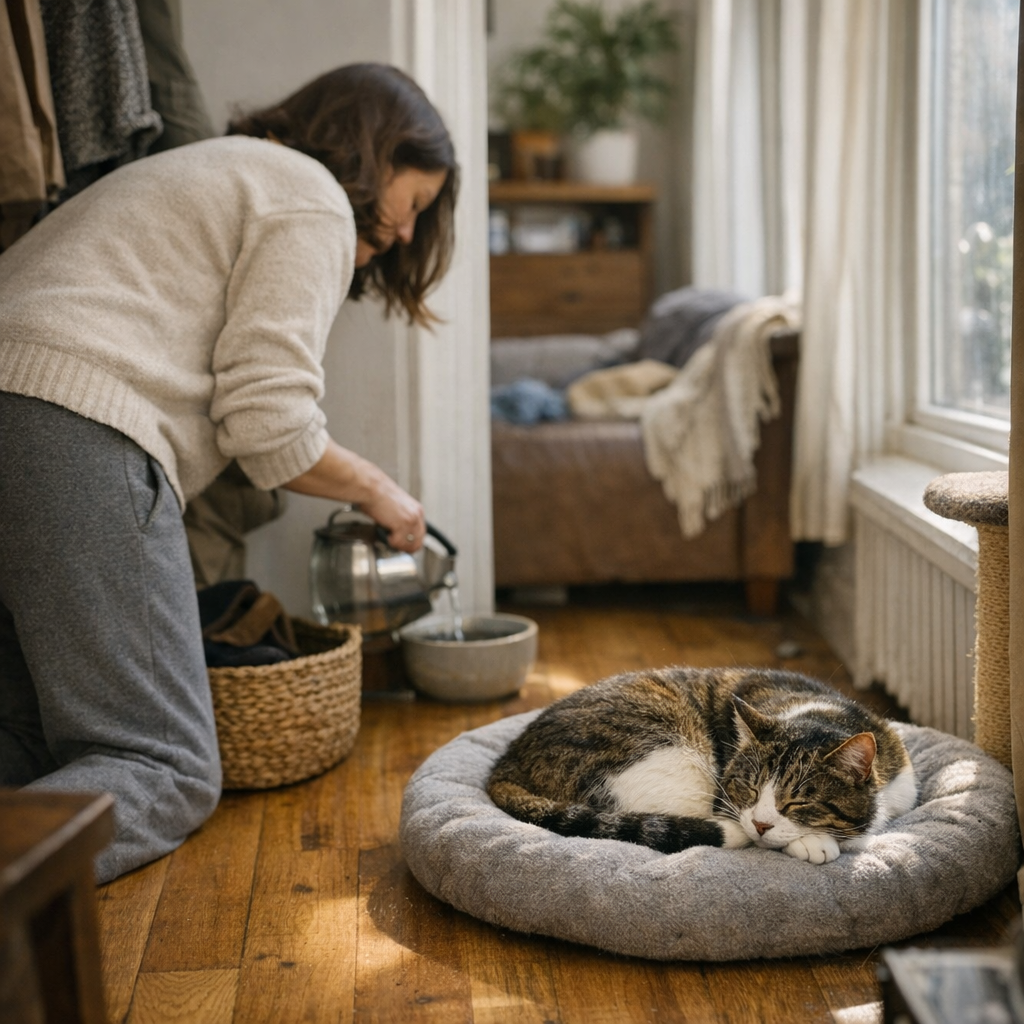
    Everyday pet care rarely falls apart in one dramatic moment. It happens in smaller, repeatable ways: last night’s water bowl sits half-full on the floor, the feeding scoop isn’t by the dry food, and the towel meant for a “quick wipe” is nowhere near the bowls. Instead of a fresh start, your morning means scanning for missing items, rinsing a used bowl, or clearing half the counter before you even reach for the food bin. The smallest skipped resets quietly multiply. This is the difference between a pet care setup that works for you—and one you end up working around. CalmPetSupply centers practical routines that keep your next reset from snowballing into tomorrow’s mess.

    When Little Things Become Tomorrow’s Chore

    Imagine walking into the kitchen, ready to feed your pet, and seeing a not-quite-clean surface, yesterday’s scoop out of place, towels stacked somewhere else, and the brush nowhere obvious. Instead of a single motion, you shuffle aside takeout containers, chase down the missing scoop, and wipe up dried food only to realize the towel you need was left drying in the bathroom. After a few days of these missed handovers, clutter starts seeping past the feeding zone—onto the dining table, under chairs, and into shared counters, making each step a backtrack rather than a quick routine.

    The Real Cost of Skipped Evening Resets

    A missed evening reset rarely seems urgent—but its cost shows up fast when repeated. Each time bowls go unwashed, or basic tools drift out of reach, you lose a clean launch point for the next day. What could be two minutes of feeding becomes five or more, picking up yesterday’s slack: scrubbing bowls you meant to soak, pulling out cleaning supplies stashed in another room, or refilling water you overlooked. Each missing item becomes an obstacle at the exact wrong time—like running late, or right before bed, when the last thing you want is added work. “Out of sight, out of mind” doesn’t pay off by morning; it builds up as friction that drags every routine.

    How Clutter Grows (and Spreads)

    Pet care clutter doesn’t wait for an invitation. One left-behind bowl becomes a magnet for treat bags, scattered toys, grubby towels, or the brush the cat just sent flying. These items drift onto prep surfaces and edge out the space needed for simple tasks. Most people end up reshuffling the same small pile—returning things to their “spot” only to see them migrate again one night later. The result: more bending, more reaching, and more time spent rerouting around the same crowding mess, regardless of how neat the rest of your home looks. Each out-of-place tool isn’t just visual clutter—it turns the easiest part of daily care into a chore that never quite resets.

    This cycle isn’t broken by appearances alone. Each missed step at night plants a new round of cleanup, pause, or search for the next day. Routine drag sets in not because you’re careless, but because pieces keep slipping just out of place, again and again.

    What a Reliable Evening Reset Looks Like

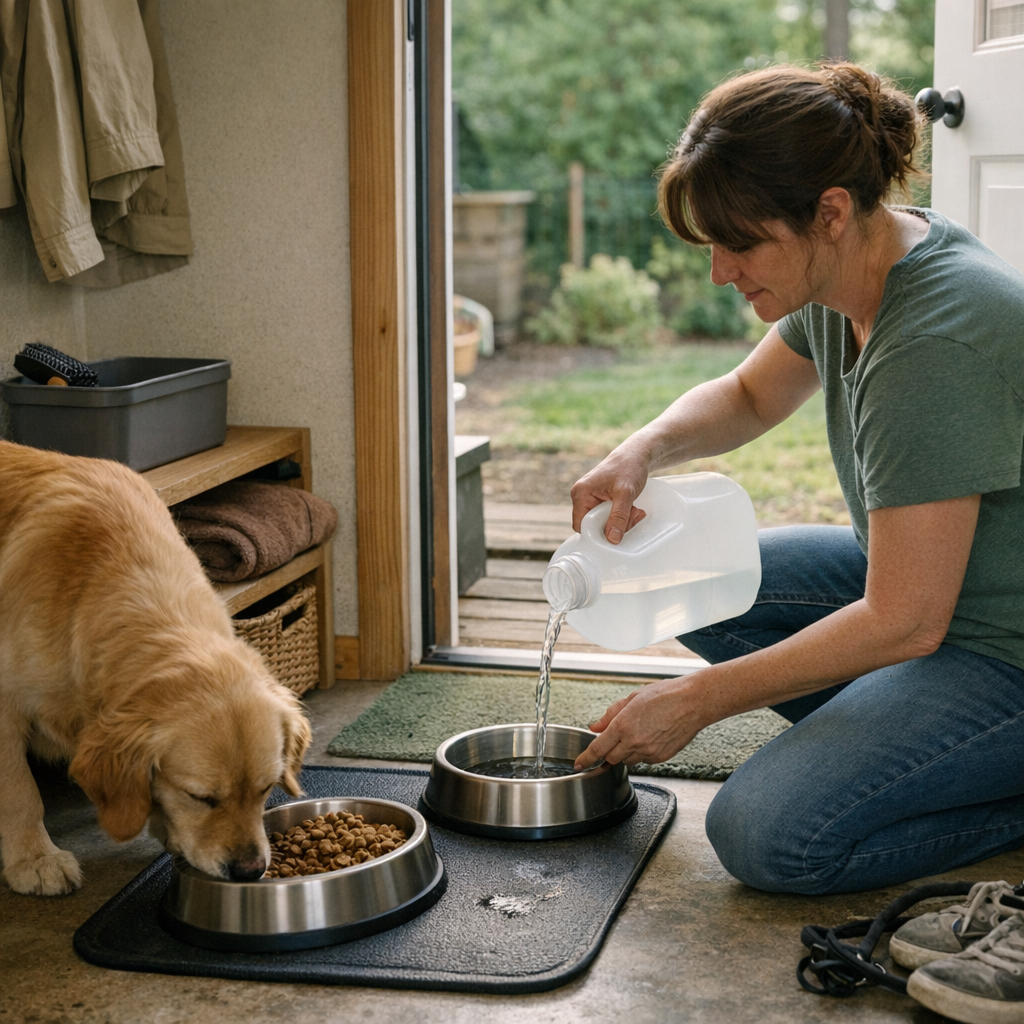
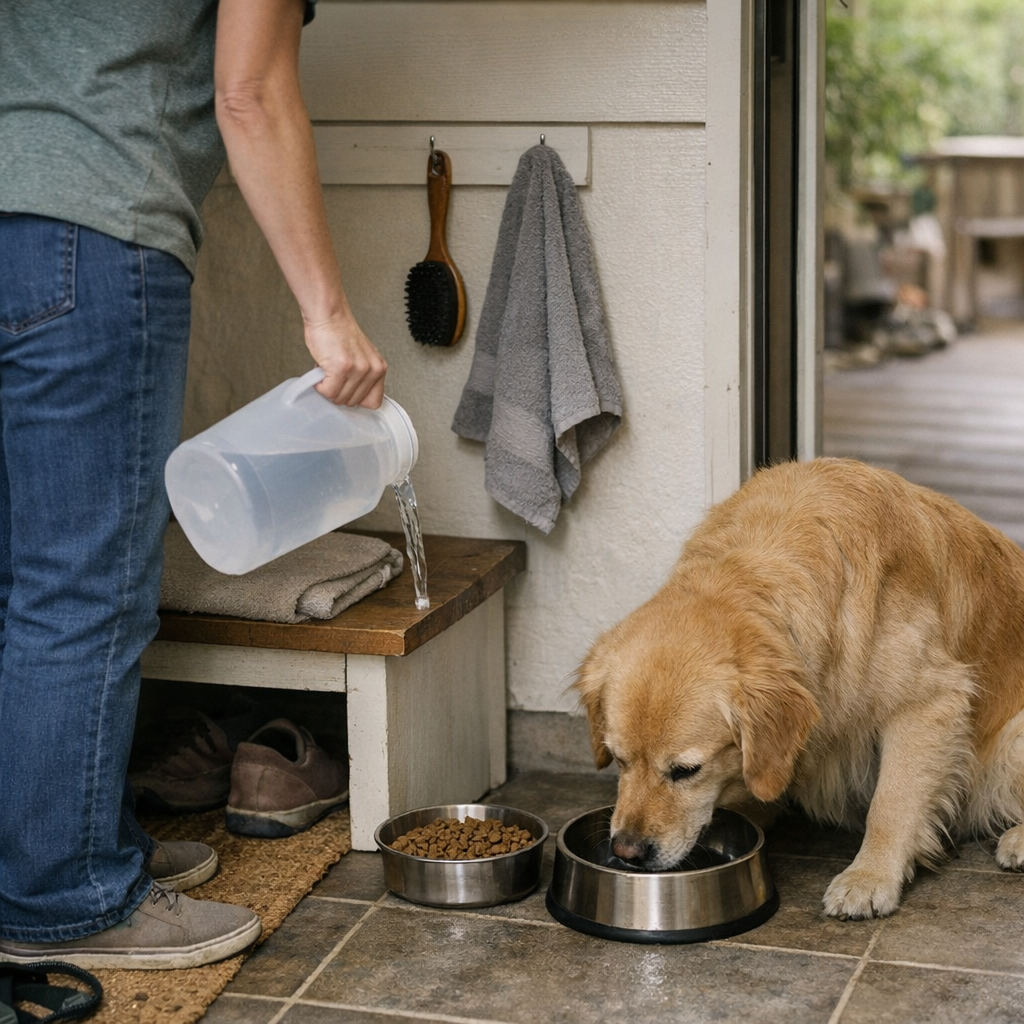
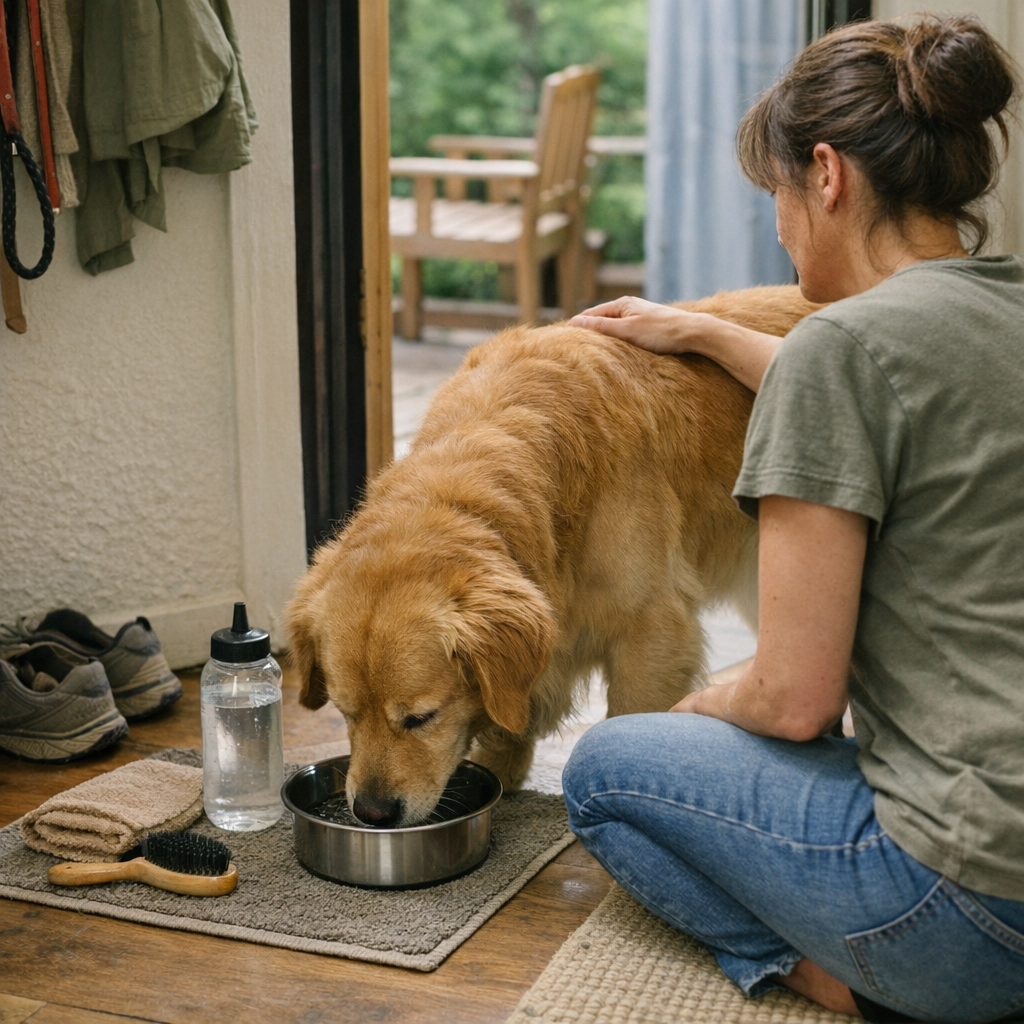
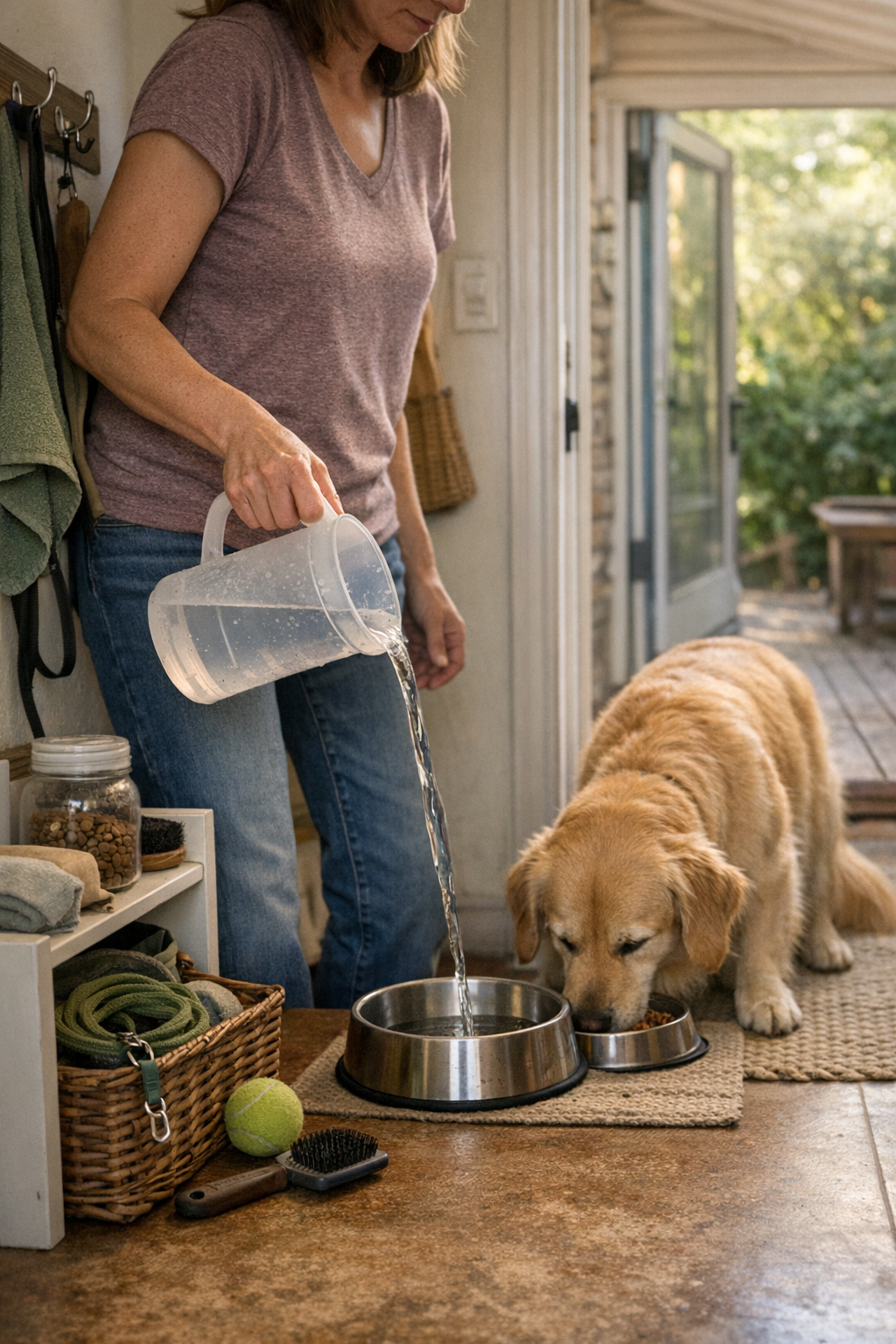
    Breaking this loop doesn’t mean doubling your cleaning effort; it means making resets automatic and consistent. Effective setups have bowls washed and dried before bed, towels parked at reach (not buried), and feeding scoops always returned to the same spot. Even one wall hook by your prep zone can hold towels you’ll actually grab, while a small open bin keeps leashes and brushes from wandering. With these details set, nothing is left to chance overnight—by morning, everything needed sits within arm’s reach, so the entire care routine kicks off without detours or missed steps.

    Practical Use Scenes and Common Friction Points

    Most friction in pet care is born out of tiny, repeating failures. Every pet household recognizes these moments:

    • You reach toward the food bin and bump into mail, last night’s mug, or lids you forgot to store.
    • The refill bottle sits empty, but the cleaner you need is still under the laundry sink.
    • Wiping up gets skipped because the towel is always behind a cabinet door, never next to the bowls.
    • Grooming tools hang out on the counter edge—until someone’s elbow sends them to the floor, making “quick brushing” a full reset.
    • Extra dishes and supplies drift from the kitchen into living spaces, crowding out your own meal prep or spotless counter, so simple tasks now mean constant reshuffling.

    Each missed step doesn’t look big alone. But strung together, they steal the ease from every feeding or cleanup, leaving your routines feeling like sets of half-finished chores instead of easy daily flows.

    More Than Appearance: The Value of a True Reset

    Pushing pet gear aside for a cleaner look helps only on the surface. Resets that last are resets that put every item—bowl, scoop, towel—right where you’ll need them, not simply out of direct sight. Stacking items in the corner or hiding tools under a cutting board is a short-lived fix; tomorrow will still bring a frustrating search and repeat work. The real benefit of a reset is reducing the steps between you and your next action. Predictability—knowing every item is exactly where you expect it—shrinks hassle and leaves less room for routine drag to creep in.

    In practice, the improvement is immediate. You prep breakfast without detouring for missing bowls, spend less time rehunting tools, and let your morning run without a leftover cleaning domino effect. The actual reset rarely takes longer—the secret is in repeating the right small habits so your effort pays off each time, not just for one tidy moment.

    Simple Habits for Smoother Daily Care

    Smoother pet care stems from small, automatic resets that put essentials in predictable, reachable places—trays at the feeding area, towels on a hook by the door, bins for leashes and brushes by their point of use. Even when you’re tired and tempted to skip, two extra minutes to clear and reset spare you the irritation of a crowded or interrupted routine the next day. The real payoff is not just a tidier home, but a lighter load in the parts of the day when anything extra tips into frustration. The routine that’s ready before you need it keeps your care light and your shared spaces yours.

    For more ideas on practical pet care setups that keep your daily flow friction-free, visit CalmPetSupply.
  • Transform Your Dog’s Chaotic Door Routine Into Calm Transitions

    The real test of any dog setup isn’t how tidy it looks, but the moment you step back inside with your hands full and your dog pulling ahead. Straight away, the leash handle brushes against the bag looped over your wrist, keys slip sideways, and the towel you meant to grab sits just out of reach. The front door isn’t just the entrance—it’s the flashpoint where everyday gear, restless paws, and repeated friction collide. Small delays—leash tangles, missed wipes, bowls nudging underfoot—don’t feel like a problem until you see how every return home keeps running into the same pile-up and leaves you a step behind your own routine. If your setup only solves mess on the surface, DogPile territory is where pattern friction really shows itself.

    When the Door Is More Than Just a Door: Seeing Routine Friction in Action

    Most dog owners chalk up front-door chaos to “just how it goes.” But after a few weeks, the interruptions repeat: you squeeze in with wet gloves, a half-torn poop bag, and a dog bouncing against your shins. You reach for a towel or wipes, but the excitement window snaps shut—your hands are juggling keys while your dog’s leash coils around your ankle. The first moments are a blur of negotiating movement and attention. The ordinary return has turned into a scrappy traffic jam, every object crowding for space at once.

    This isn’t a crisis. It’s routine friction. Step inside after a walk, and even with a supposedly “organized” entryway, you’re still untangling a leash, sidestepping a water bowl, and catching a dog body-slamming the crate before you’ve reset the mood. The actual test comes in those first twenty seconds—the time when a smooth transition is either recovered or completely lost.

    It Always “Works”—Until Time Is Short

    Most days, the mess is manageable. But run late, hear the phone ring, or find someone waiting at the door and those small snags add up fast. The leash blocks your step just when you mean to grab your phone. A bowl placed “out of the way” slides exactly into your path as your dog races past. Cleanup supplies are in view, but your arms are too loaded to actually reach them. Each thing is minor, but together, it all slows down your whole flow and makes every return a hassle you fight repeatedly instead of a routine you trust.

    Managing the Front-Door Rush: Why Small Resets Matter

    “Off!” turns into background noise. Shoes become obstacles. A towel “within reach” feels like a setup only until you try grappling one-handed with a muddy, bouncing dog. Small skipped resets harden into permanent friction. Each unaddressed leap, missed wipe, or half-managed bag becomes the new baseline for “normal,” making the next entry not smoother, just more work to manage.

    The first few seconds at the door set the tempo for everything that follows: feeding, crate entry, post-walk cleanup, and even bedtime reset. Let excitement win at the threshold, and every next step steals more of your focus. Instead of fading, that tension compounds—turning expected relief into yet another interval of restless movement and delayed calm.

    Repeated Routines, Repeated Friction

    Whether it’s a long walk or a two-minute mail run, the cycle returns: leash underfoot, bags blocking the hall, paws skipping across the mat before you can wipe them. “We’ll settle later” becomes wishful thinking, because every rushed, crowded entry resets the mood for distraction instead of calm. Hands full and brain elsewhere, you feel the drag of slow reset every single time—never dramatic, but always there, quietly stealing time and adding stress you only notice after the fact.

    Common Weak Spots in the Entry Routine

    Hooks, bins, and bowls can make an entryway look perfect. But tidy is not the same as usable. A leash on its hook only helps if you aren’t gripping groceries. The towel’s “right there” until you’re blocking yourself with your own dog. All looks fine until speed, cold hands, or a bouncing dog reveal which part of your setup isn’t actually working. What interrupts you isn’t clutter, but how easily—under pressure—you can move, grab, and reset. “Organized” setups stall out when actual routines keep producing the same stumbles, because visual order isn’t built for repeated motion under real conditions.

    When Items Interfere With Flow

    Dog gear constantly invades human pathways. Mats slip, wipes vanish under jackets, leashes snag on boot trays, bowls inch closer to where you actually want to walk. It’s fine for five minutes, but by evening, you’re dancing around the same misplaced items and wiping paws in a half-crouch with the wipes now lurked behind the mail. A bowl that saves the floor can block cleanup; a clever towel hook can require an awkward pivot at exactly the wrong time. Most setups look better for a day, but the weak point returns—where gear spread, access, or dog excitement interrupts every transition you’re hoping to smooth out.

    The Real Reset: Turning the Door Into a Pause, Not a Pass-Through

    The true shift comes when you use the doorway as an intentional reset zone instead of a rush-through bottleneck. Instead of letting energy spill in—bags dropped, leash off mid-spin, bowls nudged aside—you build in a pause: everyone stops, every single time, before anything else moves.

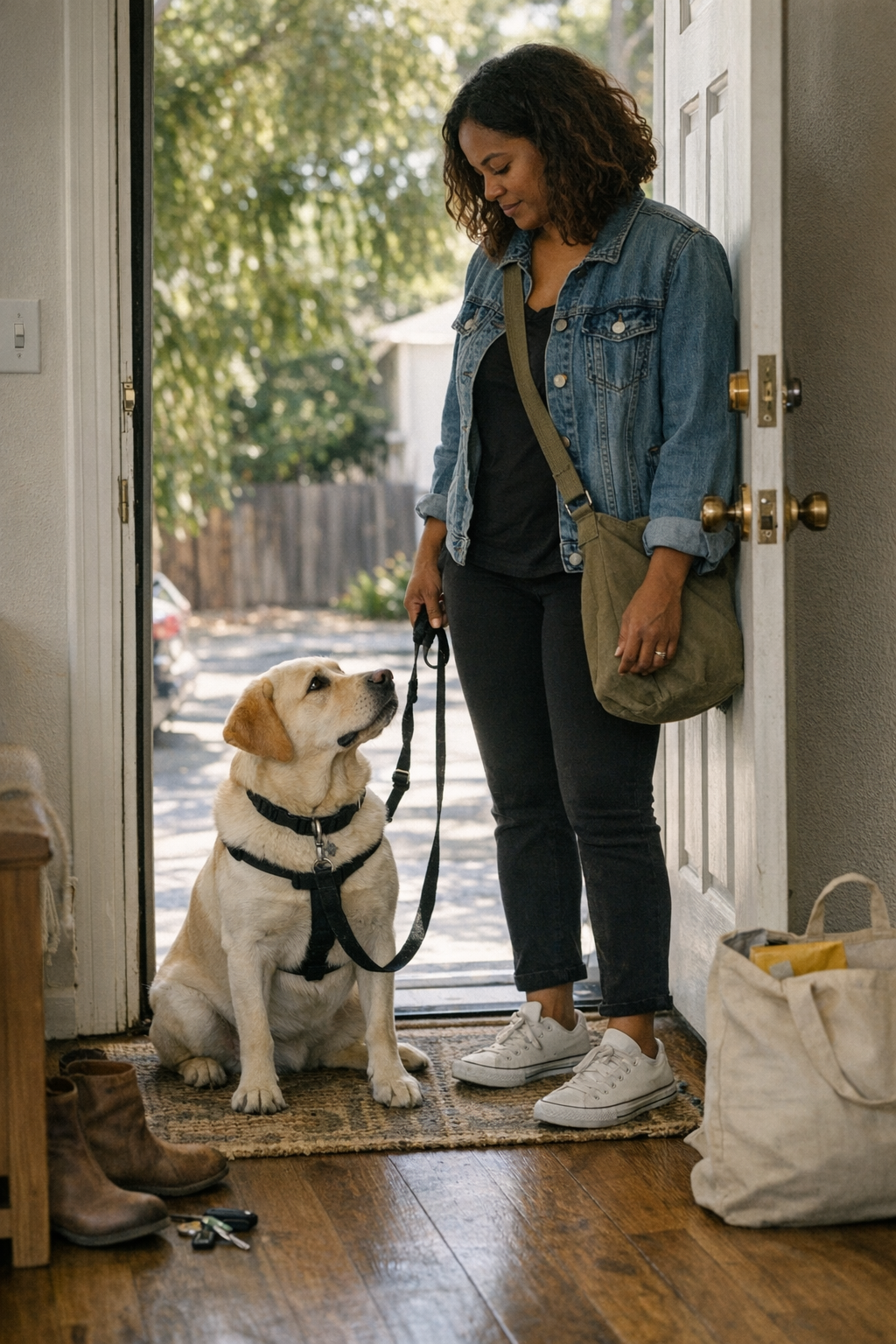
    In practice: you step in, no gear dropped, no shoes kicked. Your dog halts beside you—leash slack, two paws anchored, attention turning back for a split second. You reclaim control of the space before it turns chaotic. There’s no correction, no bustle—just visible quiet until both of you are steady enough to finish the return. This small stop is what flips the entry from a scramble to a transition you can actually trust.

    Breaking the Excitement Loop

    Most entry routines teach dogs (and people) to rush through the chaos. Every hasty squeeze past the door, every “off!” or urgent redirect is part of the same feedback loop—attention fuels excitement, and the scramble repeats. Breaking the pattern means doing less, not more: requiring a real pause first, so the body language and tension reset before the next move. Over repeated returns, you’ll find fewer corrections needed, calmer entries, and routines that start to feel possible instead of chronic hurdles.

    Results You Actually Notice (and Why the Routine Lasts)

    The effect is measurable in small physical ways: you don’t trip over tangled leashes as often, supplies that looked “useless” become reachable, and your dog learns to pause in the entry zone—even before you say anything. Suddenly, the time from door to “everyone’s calm” is shorter; the stress you used to accept just fades out of the routine.

    How It Feels After a Month of Use

    • Leash tangles and bowl collisions drop, replaced by quick, predictable movements
    • Dogs start pausing in the entry, often before you ask
    • Cleanup and feeding zones remain functional, not buried under bags and shoes
    • Returning home feels less like staging a rescue, more like reclaiming a useful transition
    • Pausing at the door becomes a reset you can count on, not a fleeting correction

    There are still weather days, late arrivals, and multiple pets to juggle. Routine doesn’t mean perfection—but now the scramble is an exception, not the baseline.

    Real-World Tweaks to Support the Pause

    No single product fixes flow, but setup decisions sharpen or soften every return. Useful improvements include:

    • Sturdy entry mats: Big enough to claim “pause” territory, grippy enough not to slide under paws or rushed feet.
    • Leash hooks and wipe bins within arm’s reach: Set so you can use them while still outside or with the door open, not after you’re boxed in.
    • Bowls kept clear from crossing zones: Placed past that initial flurry, so quick returns don’t mean stepping directly into the water bowl.
    • Bag drop spots that claim their own zone: Prevent packages and groceries from overflowing into leash-and-dog space.

    But the real change happens when these spots are tied to the same habit every return—stop, reset, then move. Decorative mats won’t fix friction. Only setups used as intentional pause zones really clear the bottleneck.

    From Tidy to Trustworthy: Why Visual Order Isn’t Enough

    A neat setup isn’t a functional one until it can handle repeated movement, hasty returns, and out-of-sight moments. If your entryway only looks organized, you’ll keep wrestling the same invisible delay: towels out of reach when you need them fast, bowls that clean the floor but block the hallway, toys that roll back into the path you just cleared. A trustworthy setup isn’t just arranged—it’s used, adapted, and tested against the friction of real returns.

    Ready for fewer entryway stumbles and smoother returns?

  • Adjusting Evening Lighting to Reduce Indoor Cat Nighttime Activity

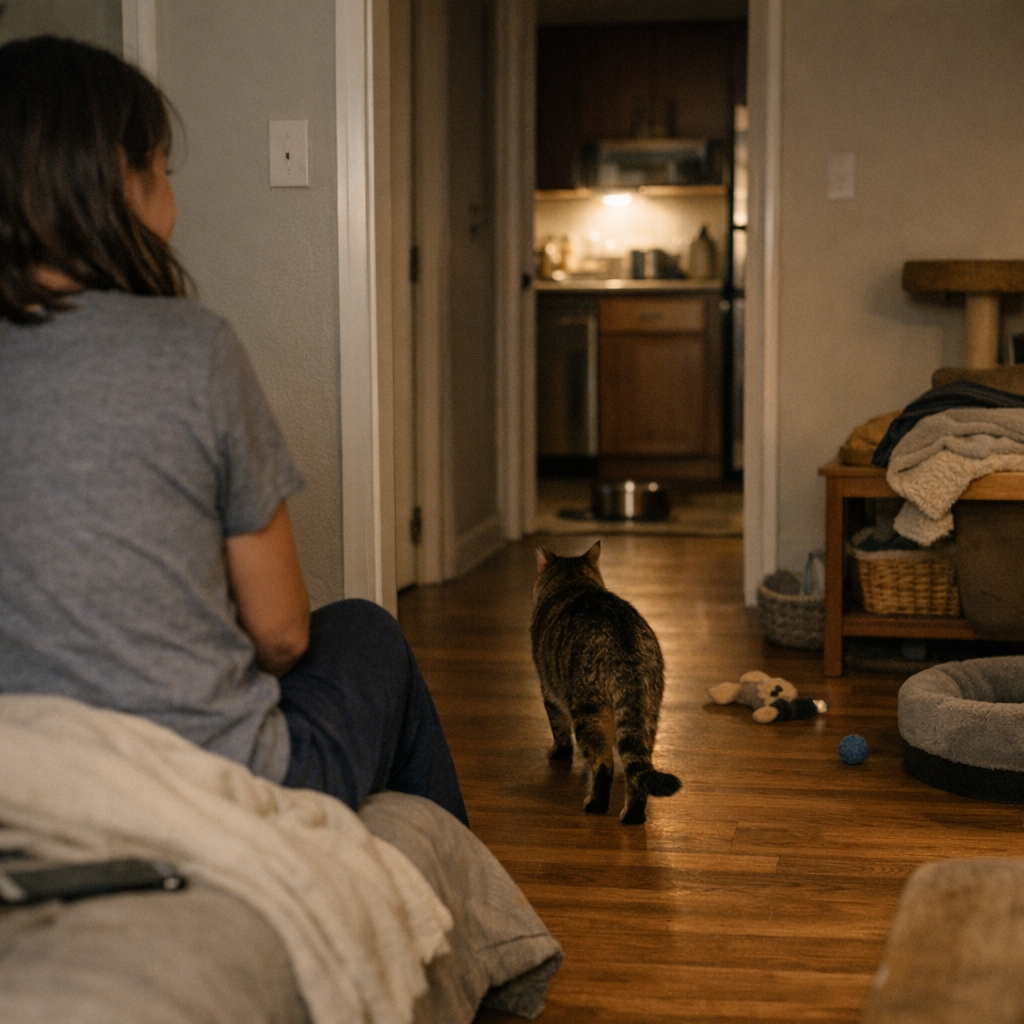
    Late at night, just after you shut off most of the lights and try to pull the house into quiet, your cat is already pacing half the rooms. Not a one-off—this is the same routine that keeps popping up: bowl clinks, water just out of reach, a folded blanket nudged apart, toys scattered where you thought they’d all been put away. The evening was supposed to be done, but instead, you’re circling back to half-fixed cat setups, resetting spots you handled an hour ago, and breaking the wind-down rhythm that was almost holding. Every time an area looks finished but fails to hold up overnight, the whole space—kitchen, hallway, couch, mat—feels just a little less settled. This is the kind of nightly friction the right StillWhisker arrangement is built to reduce, if not remove.

    The Unseen Cost of Nighttime Cat Pacing

    At first, your cat’s nightly wanderings seem minor. But the small interruptions stack up fast—a half-empty bowl means one more detour, a blanket edge tugged loose means it’s never ready for you, a toy finds its way underfoot where you almost step on it in the dark. Nights that should wind down quietly now stretch, with unplanned resets and cleanup creeping into what was supposed to be rest time. The cost isn’t in one big mess; it’s in the rhythm that keeps breaking because one cue after another doesn’t land when you need it.

    Every evening becomes a cycle of missed signals. The cat patrols the same paths, pauses by doorways, tests each “done” spot for unfinished business. Each trip is a test—spill, nudge, or rummage upends any fragile sense that the space is done for the night. What looked ready ten minutes ago now feels open-ended, and your own downtime keeps getting nudged further away.

    When a Tidy Evening Hides a Repeated Problem

    Maybe you straightened blankets, topped up bowls, dimmed lights, and put away tonight’s toys. But for indoor cats, these setups don’t always signal “the end.” If one piece is off—water barely enough, a toy rolling back out, a rest spot not quite right—cat routines fill the gap with another lap, another inspection. That “nearly finished” feeling only guarantees extra interruptions. You catch yourself, again, refilling water you just checked or fixing bedding you thought was settled. The surface looks tidy, but each overlooked gap creates another round of minor fixes—often after you’ve already started to relax.

    This isn’t a problem you see in the moment, but one you feel as you’re pulled from a book or sidetracked on your way to bed because the setup “didn’t hold.” The home stays visibly neat, but the effort to keep it that way drags on longer and feels less satisfying each cycle.

    Evening Routines That Keep Falling Short

    Mistimed resets are all it takes for the friction to return: toys left in the wrong place, water bowls not double-checked before lights-out, litter that gets handled just a little late. Cats notice—and respond—with more searching and movement. Next thing, you’re tripping over a ball you meant to store, kneeling for a water splash on the tile, or grabbing a blanket already bunched up before midnight. The easy calm of the room gets chipped away by these small, repeated breakdowns—burying your downtime under a layer of small, necessary course corrections.

    If every reset finishes out of order, or the tools to handle it aren’t where you need, your evening gets stretched thin. Even good organization loses its grip, and small failures show up in the slow drag of routines that never quite click into place.

    The Light Shift That Quietly Alters Nighttime Pacing

    One detail makes a difference fast: dimming lights 30 to 40 minutes before your cat’s usual pacing window, not after. Start early and the shift sends a clear, physical signal—“night is closing.” It isn’t instant, but after a few nights of preemptive dimming, patterns shift:

    • Almost no pawing at water after 10pm—bowl checking drops off
    • Blankets stay folded and used, not restlessly poked and left in piles
    • Cats settle—actually settle—on beds or mats instead of fidgeting
    • Cleanup for water, toys, or mess outside the “cat area” drops noticeably

    It’s not a theory. If the signal comes early and every cue lines up (water, toys, blanket, light), you stop scrambling to “jump ahead” of your cat’s pacing. The new routine slides in with much less pushback, and late-evening work shrinks down to a few easy steps.

    Why Syncing Cues Works—And Where Gaps Still Show

    Lighting alone isn’t magic if the rest of your setup is stuttered or out of order. Miss a refill, or leave a toy behind, and the cat’s expectation for one more round stays alive. Repetition matters as much as timing. The smoother setups are the ones where everything clicks in at the same notch every night:

    • Consistent feeding time—without nightfall drift
    • Water bowl topped before the room goes dark
    • Toys rotated and binned in the same order, not left for chance cleanup
    • Litter handled in sequence, never lagging behind the rest of the flow

    Cats don’t settle for dimness alone—they settle when the sequence closes down fully. Half-done resets, missed tools, or a piece forgotten at the edge all break the illusion of “night finished.” If everything aligns, the signal is clear; if not, the friction restarts.

    Scenes from Real Use: Where Friction Builds Up

    • Reaching for the water bowl, you have to move yesterday’s mug and a single stray toy, breaking rhythm. The cat lingers—a signal clearly missed.
    • You straightened a blanket after dinner, but your cat circles, waiting for a better spot. By the time settling happens, you’re pulled into another room to wipe a corner missed during late cleaning.
    • A toy bounces from bin to hallway—step on it at midnight, and the cat’s chasing behind. The “tidy” look lasted for six hours, and now it’s back to reset.
    • Wipes or cleanup tools are kept nearby, but never within reach at spill time—the delay lets paws track water further than you intended, or the rug edge picks up what should’ve been avoided.

    None of these scenes are dramatic—they’re just the drag of an almost, but not quite, finished setup. Gaps add up, minor corrections pile on, and the routine’s extra fatigue shows up long before you notice it in the general mess.

    The Difference Between Looking Done and Feeling Finished

    Give it a week with new cues: the room that’s held up well isn’t the one that just looks clean when you walk through—it’s the one that needs no double-checking by midnight. Bowls don’t need inspection later, blankets hold their shape, toys quit returning to shared space, and doors go closed for the night. The point isn’t perfection (cats will still pull a toy out of nowhere or nudge at a mat), but fewer interruptions, easier resets, and a routine that stops eating into relaxation time. What matters is that “done” now holds up through repeated, nightly use—not just for the first half hour but all the way to morning.

    Adapting Routines When Lighting Isn’t Enough

    If dimming lights before pacing isn’t possible—maybe you share space, maybe schedules collide—then success lives in predictability, not ambiance. What actually shrinks cat pacing and owner interruptions is a locked sequence:

    • Feeding, play, and cleanup always in the same order, every night—no improvising, no last-minute switches
    • Litter handled before the final feeding or play, not left for an afterthought reset
    • Cleanup gear (wipes, vac, scoop) never in a bin “nearby,” but out and ready by the right surface and at the right moment—the seconds matter when you’re losing momentum

    Even without early lighting, a reliable system trims down the cat’s drive to revisit “almost finished” corners, lowering your late work and interruptions that keep you from bed.

    Small, Steady Changes That Don’t Quietly Unravel

    No giant hacks needed—just routines that survive real repetition. Early cues, set order, tools where you actually need them. Every night your cat gets the same sequence—feeding, water, cleanup, close-down—means less roaming, less testing, and fewer surprise resets. When that one toy finally stops camping under the kitchen cabinet and blankets don’t pull up after midnight, you’ll see: the routines you keep are the ones that last, not the ones that simply look good the first time through.

    March 18, 2026

  • How Returning One Pet Item Can Transform Your Daily Routine

    Daily pet care seems simple at first: scoop the food, refill the water, wipe up, move on. It’s only after a week or two that a pattern appears—key items vanish just when you reach for them, or simple routines take longer than they should. If you’ve found yourself balancing a stacked bowl to access the water dish, or searching for the brush at grooming time because it wasn’t put back, you’re seeing the quiet drag that starts when setups in feeding, water, and routine cleanup don’t actually stay ready. These aren’t one-off hassles—they’re the small, repeated slowdowns that show a pet care area isn’t really working. In the CalmPetSupply world, these moments define what needs fixing: not just scattered clutter, but the practical faults in how dog and cat basics are stored, reached for, and put back after every use.

    Why Do Pet Care Routines Slow Down?

    Surfaces can appear tidy—supplies lined up, kitchen counter clear. But real pet routines aren’t static. Yesterday’s towel ends up buried under groceries, the treat bin lands in the wrong cupboard, and the scoop gets moved far from the station where you need it. These minor slips don’t spark chaos; they just stretch the next task. Suddenly, refilling a bowl means hunting through two cabinets, and cleaning up spilled food requires a trip down the hall for the right towel.

    The real cost is in the wasted motion and lost attention. No one grabs the towel immediately because “it’s only a little mess.” But skip a reset here and there, and your whole setup grows harder to use. Sharing the routine with a partner? That growing disorder turns a two-minute handoff into a five-minute clarification, since the basics can’t be trusted to be where they belong.

    Everyday Examples: Where Routine Friction Begins

    Picture a rushed morning: you’re ready to feed before leaving, but the scoop wasn’t returned last night. You substitute a spoon—now you’re guessing at portions and picking up stray kibbles around the mat. The cleaning spray is tucked behind laundry supplies, so you postpone the wipe-down. Next, you attempt a quick grooming but the brush has migrated to the living room. These aren’t failures of organization—they’re the real-life breaks that snap the flow of pet care, even when shelves appear organized on paper.

    The effect builds: a tidy space offers zero help if the brush or bowl isn’t right when you reach for it. Order means nothing if your hand lands on an empty spot, forcing a shuffle through drawers or detour around cluttered hallways.

    The Risks of “I’ll Put This Back Later”

    Most routines slide because of the easy shortcut: leaving things for “later.” You mean to return the bowl after feeding or fetch the refill bottle after work—but these pauses add up. The next dog walk, the water jug waits near the door, towel on a chair, treats on the kitchen counter. It doesn’t feel messy, but each missing item multiplies the effort for every handoff or shift in task, breaking up flow at every basic step.

    By morning, routines sprawl. Feeding means an extra loop for each item. After-walk cleanups take three trips instead of one. These costs aren’t dramatic, but they’re real—especially in shared homes, or when routines rely on someone else to fill in.

    Looking Tidy vs. Actually Running Smoothly

    A pet area can look swept and neat after a cleanup. But when your brush gets buried behind mail, or you need to move baskets to access the wipes, organization becomes performance—it’s visual, not functional. Resets stay half-finished. And the second someone else takes over, the illusion vanishes: a partner searches for the refill bottle or can’t find the treat bin just when needed. Even a calm-looking space exposes its weak points the first time routines speed up or get shared.

    A routine that depends on moving a stack, opening two bins, or explaining where the “real” supplies are—this isn’t a ready zone. Tidy doesn’t count if it jams up again with each round of feeding, refilling, or cleaning.

    Scenes from Daily Care: Small Interruptions Add Up

    • You go to feed, but the dish is behind cookware, so dinner drags out.
    • Wiping the mat is delayed because the towel’s with bathroom linens, not at arm’s reach by the food area.
    • Toys and brushes keep reappearing in walkways—so every transition means another step or reach-down.
    • During busy spells, one blocked shelf turns grab-and-go care into a mini detour.
    • The area seems organized, but if you’re hunting supplies or stacking things mid-task, the routine is losing ground.

    How Immediate Return Restores Flow

    The simplest, strongest shift comes from restoring each item to its one spot every time, no exceptions. Refill bottles return to their hook, towels back to their own hook or bin, scoops never drift from the feeding zone, and treat lids get snapped shut before you walk away. The result is visible: bowls line up, tools stay within arm’s reach, and no part of the routine gets bogged down by a missing tool. Messes shrink before they require a cleanup.

    Over a week, cycles speed up. Cleanup never piles up, water refills don’t stall, every essential is exactly where logic says. Anyone can jump in—there’s no recitation of “the real spot,” just a smooth, obvious system. The area looks calm because the flow is real, not just cleaned up.

    Bottom Line: Organizing for Life, Not Just for Show

    It’s easy to race for a tidy look or clear countertop and declare the space “finished.” But a truly practical pet care zone—feeding, water, grooming, cleanup—stays ready because every tool snaps back to its spot with no delay. You’re not organizing for appearances; you’re building a routine that doesn’t fall apart after the third reset. The test is simple: if feeding, refilling, or cleanup gets slower or more stressful as days go by, the visible calm hasn’t translated to true ease. A system that’s always ready means every daily care job—no matter how rushed or shared—just works.

    See everyday-ready routines and practical pet care setups at CalmPetSupply.

  • Why Your Dog Hesitates at the Door After Walks and How to Fix It

    The weak spot in most dog homes isn’t always obvious—until it happens for the third, fourth, tenth time: You come back from a walk ready to reset. The leash should drop, you should step in, your dog should settle. Instead: keys twist under a clump of leashes, your dog paces at the door, you need wipes but they’re on the far counter, and the water bowl is dry—or worse, hard to reach behind the clutter. The reset stalls, and you’re left juggling gear, blocking the hallway, or hoping your dog stays patient. These aren’t one-off annoyances. Over days and weeks, the end of every walk starts to drag, turning “home” into a repeat friction zone instead of a relief point. If this loop feels familiar, you’re in the real, practical world DogPile is built for—where how you set up small things shapes the entire routine.

    Why That Post-Walk Pause Keeps Coming Back

    The textbook version: a walk ends, both of you slide back inside, calm returns. What actually happens? At the entry, your dog sniffs, stalls, hovers at the line between out and in—sometimes nearly refusing to cross it. You end up half-in, half-out, leash hand caught on the knob, awkwardly stretching for wipes while your dog circles your feet. It’s easy to blame an “independent streak,” but the friction isn’t random. Every missed handoff—dog waiting while you wrestle with gear, a bowl you can’t refill quickly, towels out of sequence—locks the routine in limbo. Instead of winding down, you both get stuck negotiating that gap, making everything after slower and less certain. The real problem isn’t your dog—it’s a transition point your setup keeps failing to solve.

    Spot Where the Reset Actually Stalls

    At first, you tweak everything except the real source: longer walks, faster pace, new routes—yet the same pause returns. The weak point shows up in small, repeated ways: hesitating at the last patch of grass, circling the doorway, re-entering only to double back out. It’s not a mood; it’s an unresolved routine break. You can see it in how often you find yourself stopped in the entry, keys half-put away, dog hovering behind you, supplies out of reach. Over time, these little stalls define the rhythm (or lack of one) every time you try to reset after a walk.

    Why “Tidy” Setups Still Cause Routine Slowdowns

    Many entryways look organized—everything on a rack, nothing on the floor, gear hung out of sight. Yet function keeps lagging behind form: After a walk, you try to grab the leash, but you’re reaching past umbrellas. Wipes for muddy paws are in a drawer across the kitchen. The water bowl looks fine until you realize filling it means shifting a pile of toys aside with your foot. The area is neat, but every piece is in the wrong order for how you actually move. Tidy doesn’t automatically solve for function. If it doesn’t match your real routine flow—where your hands are full, your dog’s still moving, and your patience is low—it falls apart at exactly the moment you need it most.

    The setups that really work aren’t just attractive—they’re built around the real, repeated handoffs: leash off, paws wiped, bowl refilled, dog redirected before gear hits the ground. When any link is out of reach, the transition sags, no matter how clean it looks.

    Small Friction, Big Disruption: How Routine Weak Points Add Up

    No single snag is dramatic, but together they define the quality of your evenings:

    • Leash loop tangles around a door handle as the dog pulls toward the kitchen.
    • Cleanup wipes are there, but grabbing them means crossing back over a muddy entry floor.
    • Your dog circles the same spot, waiting for a cue you haven’t figured out how to give—stuck until you reset the order.

    Individually, these are tiny. Stack them up and the damage is real: feeding off-schedule, water left empty, the dog still restless long after the walk. The friction piles up until the whole routine feels like one long unfinished handoff. Over time, even something as basic as coming home turns into a series of small avoidable stalls that interrupt your evening and increase the odds of skipping what comes next—grooming, play, even rest.

    What Keeps Triggering the End-of-Walk Hold-Up?

    Most owners eventually spot what’s wrong: their dog isn’t just dawdling; the routine itself is out of sync. Even if you shorten the route or change your timing, your dog struggles to switch off “walk mode” because nothing signals a real transition. If the leash only comes off after you’re already blocking the hallway, or if the reset steps are scattered and awkward to reach, the boundary stays fuzzy. For your dog, that means lingering, stalling, restarting; for you, it means a reset that never really resets. It’s not about willpower—it’s a structure problem that visible “fixes” rarely touch unless they match the reality of your space and habits.

    When Routine Jams, It Drags Everything Else With It

    Weekdays are tight: you walk in with arms full, expecting a quick turnover. Instead, you’re balancing keys, leash, a dog that won’t step clear, and maybe a bag of groceries. Each awkward shuffle—leash twisting underfoot, bowls not where you need them, supplies out of reach—amplifies the bottleneck. Water refill gets skipped, paws go unwiped, feeding is delayed. Enough rounds of this and you start dreading the one part of the routine that should be automatic: returning home. When the handoff breaks, nothing feels as easy as it should, and the cost becomes a normal part of the cycle.

    Smoother Homecomings: Adjustments That Work With Real Life

    This isn’t a training problem—it’s a system design issue. Don’t reach for a new gadget first. Instead, trace where your routine catches. What gets blocked, tangled, or delayed every single time? The answer is nearly always in the setup.

    The Mini-Activity Reset: Drawing a Clean Line

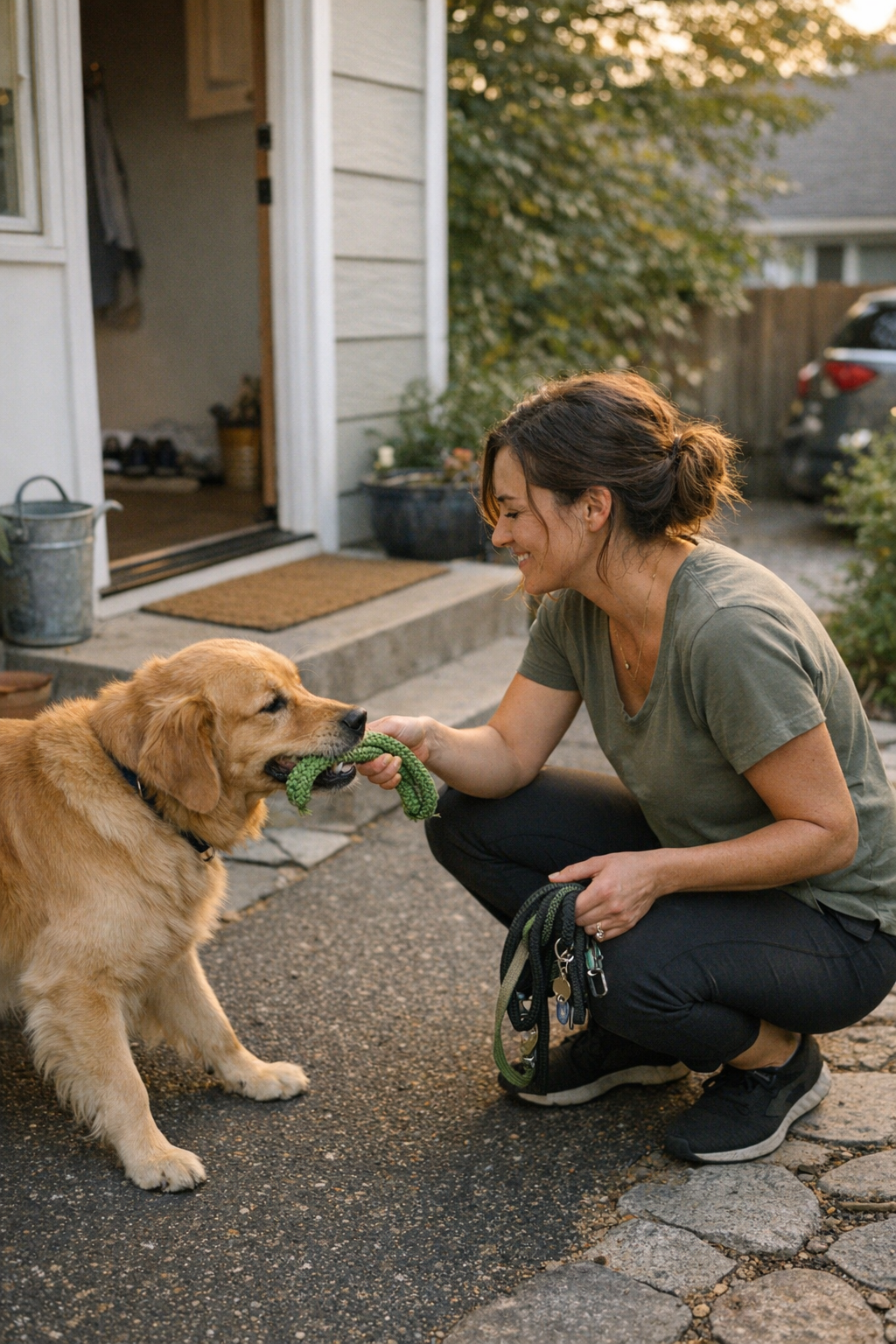
    One of the simplest shifts: add a tiny transition ritual—three minutes of fetch, two rounds of tug, or a familiar sit-and-wait cue—right at the threshold, before you walk in. This isn’t about extra exercise; it’s a marker both of you recognize as “walk is over, inside starts now.”

    • Your dog gets a mental anchor to stop looping outside the door or racing ahead unchecked.
    • You get a window to get the leash off, corral keys and gear, and grab wipes—before you pile into the line of fire in a muddy hallway.
    • The post-walk reset—water, food, cleanup—can happen with less drama, since your dog isn’t stuck on “maybe we’re still on a walk.”

    A small, clear pause like this turns chaos into an actual sequence, not a scramble for control every single evening.

    Make Boundaries Obvious—How Small Changes Alter Repeated Flow

    A single habit like removing the leash outside instead of inside can recode the entire handoff. To a dog, that gesture is the difference between “maybe we’re going back out” and “we’re officially done.” When that transition links to a quick, repeatable activity and immediate access to towels or toys, you cut down on gear pile-up, dog hesitation, and owner-side interruption. The goal isn’t a new trick, but a routine you and your dog can both read, even after a rushed or messy walk.

    How Everyday Setups Turn Repeat Friction Into Routine Flow

    Looks can deceive: organized hooks and caddies don’t solve anything if they fight your real movement. If wipes are out of reach or bowls block your only route through the door, you either backtrack or skip steps. Toy bins on the wrong side of the room mean dropping gear mid-motion, and a leash rack too high or too far makes reaching awkward with a squirming dog. The same friction comes back every time—the only thing that shifts is where you notice it. Real solutions let you move through each step in order, without unnecessary doubling back, stalling, or reshuffling.

    Test your setup in real time: after a real-world walk, can you unclip, wipe paws, swap gear for toys, and refill water without breaking stride, scolding, or bending around a dog in the way? If not, the system is costing you more than you realize—over and over, every single day.

    Red Flags Your Routine Isn’t Resetting Smoothly

    • Leash always piles up somewhere inconvenient, never the right hook.
    • You have towels and bowls, but their placement always forces an extra trip across the entry—muddy paws included.
    • Your dog hovers or doubles back by the door instead of moving on to food or water
  • Creating a Calm Home: Effective Nightly Routines for Indoor Cat Owners

    If you share your home with indoor cats, it doesn’t take long for the difference between a room that “looks” clean and one that actually works for daily life to hit hard. What seems like a tidy feeding corner or a contained play zone at breakfast has already come undone by late afternoon: bowls migrate just far enough to block a quick refill, toys wedge themselves under the chair right where your foot should go, and water puddles slide just past the edge of your mat, pooling by the baseboards. By day’s end, you’re not just eyeing old mess—you’re contending with dozens of small, unsolved friction points that pile up, slow down resets, and make tomorrow’s routine harder before you’ve even started. StillWhisker knows that what traps cat owners isn’t the big mess—it’s the repeat interruptions and small design flaws baked into daily living.

    Where Tidy Looks Don’t Hold Up: The Reality of Indoor Cat Maintenance

    Most indoor-cat setups are divided into familiar zones: feeding and water in one corner, a scratcher by the wall, a scattering of toys, maybe a rest blanket in the sun. But these lines only last in theory. The real stress is how quickly the space drifts—how a felt mouse ends up jammed next to the food bowl, or how water always finds new routes off the mat and onto the floorboards. You notice the difference not during a deep clean, but in daily shortcuts or slowdowns: stubbing your finger grabbing at a blocked water bowl, pausing to spot-clean a “mystery smear” while trying to pour food, or nudging a ball from under the couch with your foot mid-task.

    The pressure point isn’t the mess you see—it’s the weight of friction you stop noticing until upkeep becomes a drag. The more you depend on setups that only “look” finished, the more your routines turn into a cycle of uneven resets: toys push further beyond reach, bowls slide further out of position, and a rest blanket ends up twisted and unusable by morning. The gap between visual calm and actual function widens every night.

    Why End-of-Day Upkeep Matters More Than It Seems

    A pre-bed sweep may seem optional—a bonus if you remember. In real use, missing it lets small messes snowball fast: a pair of toys vanish deeper under furniture, crumbs and water marks spread into shared space, and the blanket that could’ve been shaken out now demands a bigger reset next day. These aren’t cosmetic issues; they’re invitations for next morning’s routine to grind or double in effort. One missed reset, and suddenly “tidy” unravels, right when you’re half-awake and toeing cat toys out of the hallway, scrambling to clear a spot for your work bag, or having to wash your hands before you’ve made it to coffee.

    Patterns That Signal Deeper Setup Problems

    Most homes repeat the same slip-ups once the rhythm sets in. Track which pain points keep coming back, and they’re almost always the same few: one or two toys that always end up under the TV stand, a food mat that never sits tight against the wall, litter tracked just past the point you planned to vacuum, a blanket needing an extra shake but never lying flat for long. These details matter—they’re signs your layout quietly works against itself, forcing you into late, fragmented resets instead of quick, reliable cleanup. Feeding, play, and rest are supposed to support each other; without the right containment or separation, each overlaps and compounds the next problem.

    The Late-Night Scramble: Common Real-Use Scenes

    Most cat owners end their day improvising: hauling a toy basket out from behind the sofa, blotting a widening water patch despite putting the mat “back” earlier, smoothing a blanket again only to see it bunch back up as soon as the cat jumps down. Each move seems minor in the moment—but they add up, reshaping bedtime from a wind-down routine into a series of maintenance steps you can’t avoid. The real culprit isn’t a sudden mess—it’s a setup that allows little errors to build, like a bowl mat sliding just enough to leak food off the edge or a storage bin that quietly overflows so nothing goes all the way back. Instead of supporting your nightly reset, the space quietly multiplies small failures that need fixing again tomorrow.

    Containment and Placement: Structuring for Fewer Surprises

    The turning point isn’t working harder; it’s choosing structures that actually do their job. Containment and placement are the difference between a space you chase after and one that holds steady on its own. Once you assign a clear, stable home for each major zone—feeding, water, play, and rest—routine friction starts to fade.

    A Practical Reset: What Actually Shifts the Routine

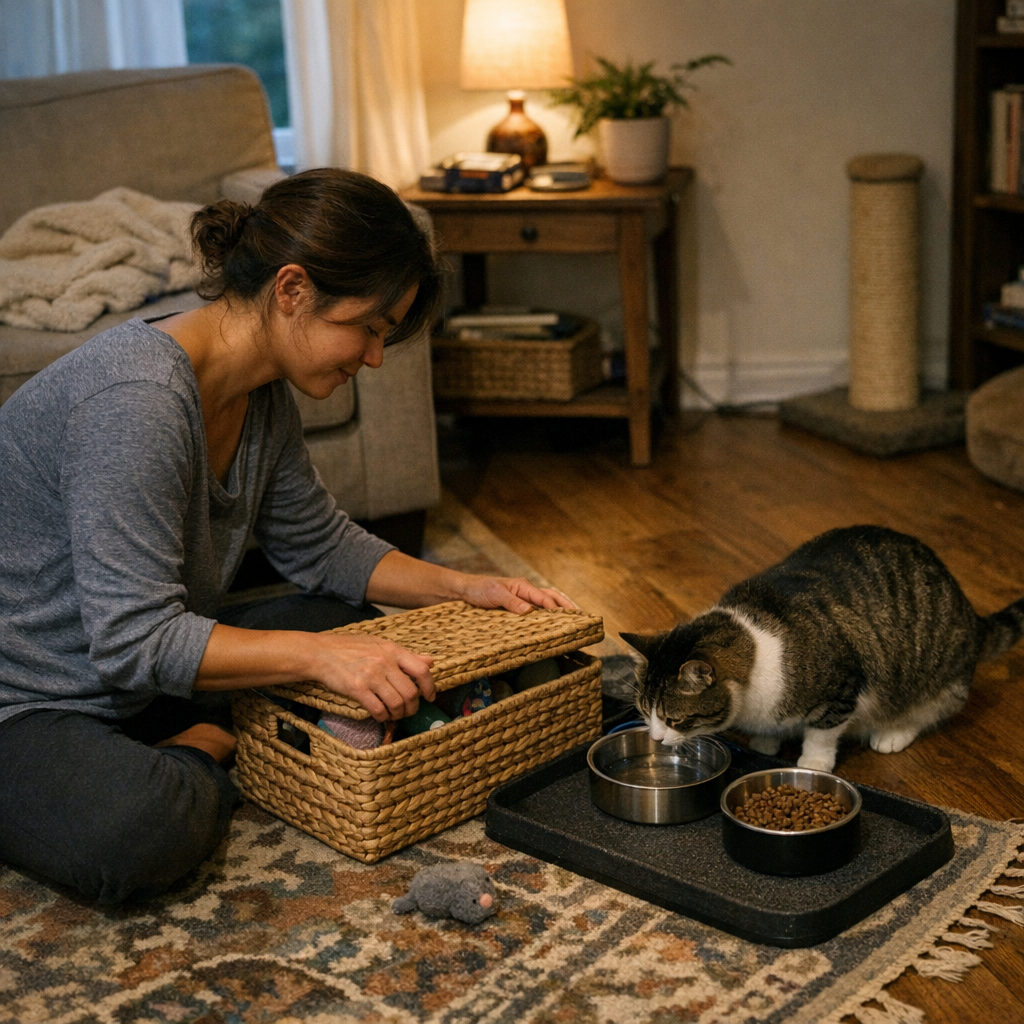
    Set a single, low-profile lidded basket in the path between living room and hallway: toys now get collected in one obvious spot, recovered quickly, and less likely to go missing under larger furniture. The basket acts as a checkpoint—cleaning becomes a one-step action, not a search party. For feeding and water, swap out a prone-to-slide mat for a washable mat with just enough raised, grippy edge to hold crumbs and trap splashes quickly. The small rim keeps pooled water contained but doesn’t catch cat paws, letting you lift the whole thing in seconds and clean the underlying floor less. With structure in place, the nightly reset stops feeling like improv. That “just-in-case” towel can finally disappear from your daily landscape.

    The Real-World Impact: Routine Improvements You Can Feel

    After a week of living with new containment, the start of your day changes: fewer surprise toys in walkways, feeding areas need a one-minute pickup rather than a full scrub, and cleaning spray stays upright under the sink instead of in your hand every morning. The blanket on the ledge still needs a shake, but it stays ready for use—no constant rearrangement necessary. The visible difference isn’t that cat mess disappears; it’s that the routine becomes repeatable and quick, and each zone “holds” better between resets. The nightly sweep now feels like returning to baseline, not fighting drift from three directions at once.

    Recognizing Weak Points Before They Grow

    No setup prevents all mess. But certain signals demand early action before they sink into your routine as “normal”:

    • Shifting mats or pads: If food or litter mats continuously slide or curl, move to a heavier, textured, or raised-edge mat that grips harder and stays put under paw pressure.
    • Multiplying toy spread: If the same toys always end up out of bounds, tighten play areas to sit within arm’s reach of storage or use subtle barriers to limit how far they can bounce.
    • Slow resets in high-traffic zones: If rest corners or window-sill blankets come undone daily, swap for a pad or fleece that folds or shakes out fast, not one that needs constant reshaping.
    • Cleanup supplies out of sync: If wipes or spot sprays are never where you need them, dedicate a slim, reachable caddy to each main zone, saving the walk to another room and speeding each reset.

    Ignore these points, and you guarantee yourself more work, not less, by next morning.

    How Small Tweaks Maintain Momentum Across the Week

    Getting ahead of cat-life maintenance doesn’t mean zero mess—it means your setup contains problems and makes recovery fast. Shifting energy from chasing disorder to supporting order is the real win. A basket positioned in the right place, a mat that anchors itself, cleaning wipes where you reach first: these changes mean the room stops needing constant guidance, and your routines stop running late or backing up behind new obstacles.

    More Than Looks: The Feel of a Room That Works For You

    A visually clean space isn’t the same as one you can reliably live in. The right home structure absorbs mess, separates cat zones, and keeps essentials within reach, so every reset is lighter and less frequent. If returning to “tidy” gets harder with each night, it’s almost never a discipline problem—it’s a setup that just can’t hold the load. Reliable order depends on better structures, not more effort. Shift

    See what makes StillWhisker setups different for real indoor-cat routines.

  • Creating a Pet Care Corner That Simplifies Daily Routines Without Clutter

    When Pet Care Corners Stop Helping Daily Routines

    A pet care corner can look like the answer: everything in one spot—bowls lined up, refill bottle within reach, towel draped, brush tucked in. Yet, by the third or fourth day, what seemed streamlined now slows you down. Reaching for the water bowl means nudging clutter, a towel slips onto the floor, the backup jug blocks what you need next, and “organization” turns into repeated shuffling just to refill, wipe down, or store the basics. CalmPetSupply knows: what looks organized on setup day often doesn’t survive real, repeated use.

    Everyday Friction Shows Up Fast

    The reality is obvious on a busy morning—your dog weaving between your legs, cat hovering underfoot, and you have to edge the water bowl out because another dish sits too close. The towel that started on a hook has slumped over the toy bin, half on the floor. Just grabbing the water jug turns into a shuffle: move the towel, avoid the backup bottle, squeeze past a forgotten brush. One off-placement doesn’t stay small—it crowds every quick step, multiplying hassle at each routine check-in.

    And it compounds: a “just in case” jug gets wedged in for the week, but most days, it blocks the primary refill. The extra brush always waits but never gets used; your hand bumps it daily, but it does nothing except take up space. Each supply meant to save time ends up demanding more of it.

    Looking Tidy Isn’t Always Working Well

    When setups focus on visual neatness, they miss where routines actually break down. Those tidy lines of bowls and stacked bins suggest readiness—until feeding time arrives. Cat food just inches from the water bowl, towel perfectly folded on a storage bin: it all looks calm at night. By morning, a pacing dog and darting cat mean bumped edges, the bin handle jams the bowl, and the towel drops to the floor or gets trapped out of reach. Refills start happening late, wipes get skipped, and the “tidy corner” quietly builds up sticky surfaces and pet fur.

    Nothing truly stays in place: the storage bin can’t lift without moving something else first. That one extra wipe now feels like a chore because the towel’s missing or under another supply. Instead of speeding up care, these setups generate an invisible drag line—routine steps that always snag.

    Small Interruptions Become Routine Headaches

    The first sign of a failing care corner is the daily block: the refill bottle that sits in the way, the brush no one uses, the towel that sinks into the pile. After a late walk, toys scatter, but the storage spot is buried behind supplies and not worth the extra reach. The pattern returns—slow bottlenecks, items stacked out of sight, a pet corner that gets slower after each reset. Some friction always returns, no matter how well you re-stack bowls or hang towels.

    The cost isn’t just minutes lost, but a routine stretched thin—what should be a simple sweep turns into five minutes of rearranging, bumping, restacking, or promising to “sort it later.” A tidy-looking corner isn’t the same as one that’s ready to work when you actually need it, over and over.

    Less Can Mean Actually Easier

    The real improvement doesn’t come from adding more options—it comes from clear subtraction. One refill jug out instead of two. The main brush on a plain hook, not buried in a bin. A single towel in reach without competition. A setup where each item out is the one you use, not just another thing to move or step around.

    With only daily-use gear left visible, routines stop getting tripped up. The bowl lifts without shifting bins. The towel hangs open, ready for a surface wipe, never buried or tangled. After multiple days, clutter stays in check; cleanup doesn’t snowball. There’s little urge to reset everything because the structure actually holds—even after a week.

    These corners don’t rely on visual perfection but on routines that keep moving. Every supply that stays out has to justify its place by making daily care noticeably easier—not just filling the space.

    Practical Takeaways for Real-World Pet Corners

    The best way to judge your care setup? Watch where routines snag in the middle—not just how things look before the day starts. If you’re moving an item every single time to reach another, or if night refills and wipedowns always get postponed because something blocks the way, it’s a signal: too much is getting in the way of actual care.

    The strongest arrangement is easy to spot: after seven days of feeding, refills, cleanups, and returns, everything’s still within reach, nothing’s blocking a bowl, and the extra shuffling is gone. Your setup isn’t measured by how tidy it looks, but by how little you notice it during the rush of daily routines.

    For most homes, a care corner works best when fewer, well-positioned basics win out over extra organizing pieces. The fewer times you need to reach past, unstack, or move something “just in case,” the less likely routines stall. Real function beats first impressions—and makes daily care smoother than any new shelf ever will.

    See practical pet-care setups and simple gear at CalmPetSupply.

  • Why Short Familiar Loops Improve Dog Walks and Reduce Stress

    Everyday dog-walk routines stumble right at the front door. You reach for the leash—except it’s tucked beneath yesterday’s damp towel, or wedged behind an avalanche of scattered gear. Your dog bounces or circles, impatient, while you untangle leashes and dig for the right collar, the simplest outing already slowed. Before your hand even finds the doorknob, a minor bottleneck has started a chain reaction: routines turn messy, tempers shorten, and the urge to just “get outside” collides with gear that never seems ready when you need it.

    The Quiet Trouble Spots Before You Even Leave

    Those “two-minute leash-and-go” plans evaporate the moment your setup starts working against you. Even with neat hooks or labeled bins, daily pressure points keep returning: the towel never dries right, bags spill from their basket, and the dog keeps weaving underfoot while you reshuffle keys, wipes, or treats. The first five minutes become half scavenger hunt, half dodgeball. Small delays stack up, already stretching everyone thin before the walk begins—leaving you tense and your dog overexcited.

    Each missed cue or scramble for the right gear doesn’t just cost seconds; it erodes that sense of calm you want the walk to create. Instead of leaving stress at the door, you drag it out with you, woven into the routine itself.

    Why Longer Walks Don’t Always Bring Peace

    The common fix—walking farther in hopes of wearing your dog out—often works against you if the setup back home keeps buckling. Rather than calm, a high-energy loop through unfamiliar blocks tends to spiral:

    • Leashes knot in tight corners as you fumble mid-traffic or dodge new distractions.
    • Dogs jolt at sudden bikes or barking from open windows, testing your grip and patience.
    • Every hydrant or mailbox turns into a negotiation while the routine unravels.
    • Back at home, your dog paces or stares by the door, unsettled instead of satisfied.

    The friction isn’t just out on the sidewalk. Unpredictable routines build unpredictable energy. Instead of draining tension, a disorganized walk keeps adding micro-frustrations—reset after reset, both before and after the outing—leaving both of you more wound up than when you started.

    The Surprising Value of a Short, Predictable Loop

    Run the same short route a few days in a row and the effect is immediate: frayed interactions smooth out, and repeated locations start acting like signals instead of trouble zones. Leash hangs loose at the familiar curb, your dog waits by the same bush, and both of you move with less hesitation. Knowing what’s next drains away the drama.

    By day three, the change is clear—even when walks stay short:

    • Exiting becomes automatic instead of a tug-of-war at the threshold.
    • Homecomings lose their chaos—your dog heads to the mat or towel spot, not into another lap around the entryway.
    • The interruptions shrink—less scrambling for supplies, less leash fumble at corners.

    Predictability—not distance—anchors calm. A fixed route maps out signals for both dog and human, shrinking the gap between intention and actual routine. Structure beats novelty when friction is high and time is short.

    What a Repeated Route Looks Like in Daily Life

    This isn’t about perfection. It’s about building visible anchors: pausing at the same tree, holding the leash loose for a breath, entering and exiting the house with a single reset action. Suddenly, you’re not improvising with one hand on your dog and the other rooting for wipes buried behind old mail. Instead:

    • Your dog heads for the towel before mud hits the hallway rug, sometimes even waiting in the exact spot you expect.
    • Cleanup supplies are in arm’s reach—because repetition taught you where to keep them, not just where they fit on a shelf.
    • The walk ends with a direct move to calm—not another hop and spin at the door.

    The dog picks up on these signals as quickly as you do. Routine curbs the leash snarl, the threshold dance, and the supply scavenger hunt because both of you anticipate what comes next—and friction has a harder time finding a foothold.

    • Sticking spots clear up: leashes aren’t tangled, towels are where they need to be, and your movement in the entryway actually flows instead of colliding with yesterday’s mess.
    • Cleanup is faster, less intrusive: you wipe paws as soon as you cross in, before your coat’s even off.
    • Dog items stop spilling into your path: the walk’s end spot gathers what’s needed, not what was left from the last five outings.

    Repeated Friction: Why Organization Isn’t the Only Answer

    It’s the difference between a neat entryway that photographs well and one that works in motion. Labelled bins, matching hooks, and tidy towel racks are easy to assemble, but hard to live with if cleanup and prep always get jammed at the same step. If every “improved” setup still leaves you rerouting around scattered toys, blocked wipes, or leashes that never hang right, you’re just managing surface clutter, not cutting routine drag.

    Functional routines show their worth only when tested: Not when everything’s in its place once, but when nothing interrupts your reach on day five.

    • You grab the same leash without looking—because it hasn’t moved since the last walk.
    • Your dog waits at the precise reset spot, not in the middle of your exit path.
    • Wipes and bags sit at hand, not under a coat pile or behind the recycling bin.

    When You Know the Routine Is Working—And When It Isn’t

    Watch for proof in transitions—not in tidy spaces. Clear signals of a friction-free routine look like:

    • Quick exits and entries—no clusters at the door, no gear reshuffle to get everyone outside.
    • Dog flows ahead instead of freezing, darting, or hesitating at key points.
    • Calm, predictable resets—not restless circling or new messes after you return.
    • Supplies always right where routine needs them, not wherever they landed last.

    When a routine falters—even after an “upgrade”—the warning signs return quickly: hesitation at the door, pacing after walks, a hunt for towels or a missing bag just as the mess starts. Longer or more exciting walks won’t solve it; sometimes, just keeping a familiar route and stubbornly simple gear order does more to cut chaos than any new product or corner rearrangement.

    Route Boredom: When to Tweak the Pattern

    Not every dog settles for strict sameness forever. If you see a dog digging in, stalling, or veering toward novelty, restore a touch of variety by swapping blocks or mixing the order of a familiar route. The test: does the tweak restore focus or break the flow? For most dogs and most days, a sturdy routine wins, but small pivots keep it from buckling under predictability’s weight.

    Small Routine Anchors That Change the Whole Experience

    Tiny pivots matter. One reliable anchor—a deliberate pre-door pause, a gear order that never changes, the same quick wipe at the same mat—dissolves days of scrambling. Over time, these routine points reshape:

    • Pre-walk hassle turns into a rhythm—no more backward shuffling for the right leash or last-minute gear swaps.
    • Walks flow smoother—navigating corners, crossing streets, or bypassing triggers with practiced confidence instead of jerking correction.
    • Cleanup stops feeling like a setback—paws wiped and leashes dropped in one pass, not as a trailing chore.

    Repeating these anchors doesn’t guarantee a mess-free routine, but it shrinks the gap between what you hope the walk will be and what happens most days.

    Where the Routine Keeps Buckling—And Why That Matters

    Identify the sticking point: a leash that always gets caught on the stair rail, a towel forever half-buried, a rest mat that drifts out of place, or supplies “almost” in reach but never truly accessible. Each small breakdown shapes how you feel about the dog routine as a whole—turning a single minor failure into a recurring frustration that crowds out any benefit the “organizer” look was supposed to provide.

    The upgrade is never just new gear or prettier bins. Improvement lives in a repeated, pressure-tested routine: one that survives the Monday rush, the muddy-paw Wednesday, or the late

  • Why Multiple Cat Beds Ease Indoor Maintenance and Boost Comfort

    Setting up for an indoor cat usually starts with the idea of keeping things simple—one bed, one corner, neatly out of the way. But in real daily use, that “tidy solution” becomes the setup you step around every time you top off the water bowl or refill kibble, dodging a sleeping cat who’s always landed right where you need to reach. What looked organized quickly turns into a friction zone: fur concentrates, routine wipe-downs get skipped, and the “low-maintenance” spot becomes the place you resent having to handle again and again. This is where the quiet trade-off of indoor-cat comfort collides with actual home upkeep—the fault lines that StillWhisker aims to expose and solve.

    When “Simple” Setups Start Feeling Complicated

    A single cat bed seems like it should keep things streamlined. Fewer pet items, less clutter. But practical friction stacks up fast: try scooping litter and you’ll nudge a tail blocking the walkway, or step over that same patch of fur for the fourth refill in a week. The neat corner advertised as “easy” quietly steals more minutes than you notice:

    • Bed edges trap stray litter dust with every box trip.
    • Blanket corners rumple and fold, demanding smoothing well before the weekend.
    • Hair builds back within hours of vacuuming—always in the zone you walk most.

    None of these are disasters, but they add up, turning a “controlled” area into a silent repeat chore.

    The Routine Resets That Stack Up

    Minor inconveniences snowball: you put off wiping surfaces because you have to move your cat first, or let cleaning tools drift away from the spot they’re truly needed. Sunlight shifts and the “quiet” rest zone turns busy, pushing your cat—and your feet—into tighter overlap. Suddenly, your well-planned layout creates as many reroutes and resets as it solves.

    Picture a weekday morning. The path to the kitchen winds around a thick patch of fur and a dozing cat, pausing your flow every time you refill food or water. On cleanup days, a catch of stuck blanket delays laundry. By Friday, it’s not just the cat’s comfort that’s on your mind—it’s how much time and energy that out-of-the-way zone demands just to stay functional for everyone in the house.

    Why Fur and Foot Traffic Always Find Each Other

    Cats follow warmth, sunlight, and shifting activity. That means today’s sleepy spot might be tomorrow’s walkway obstacle, especially if there’s only one place to settle. Fur, foot traffic, and daily chores collide in a single area. Each pass kicks up more hair. Shoes and slippers bump bed corners. The “cat zone” starts leaking into the family zone, and keeping both looking guest-ready and usable at once becomes a chore—no matter how tidy the bed was on day one.

    This is the real tension: a setup that looks settled, but in practice interrupts human flow again and again. A calm-looking corner doesn’t erase the need to shake out dust, redirect your walk, or slow down for the same handful of cat hair every day.

    The Impact of Adding a Second or Third Rest Zone

    A new rest spot doesn’t need to be fancy—a simple washable mat by the window, or a small pad in a quiet nook, is enough to break up the pattern. Cats naturally rotate: morning stretches in the sun, afternoon naps farther from family bustle. This “rotation” means:

    • Fur spreads thinner—no more single spot matted with hair.
    • Each zone needs only light maintenance, not drastic cleanup.
    • Bed resets get faster—one quick shake or vacuum rather than a full overhaul.

    Instead of deep-cleaning the same problem area, you keep shifting tiny maintenance into your routine—it stops feeling like an extra job.

    Example: Quiet Window Pad vs. Hallway Pinch Point

    Take a layout where the primary bed sits right off the main entry. Every school run, grocery drop, or after-dinner clean funnels across that line. You’re dodging the cat and her fur daily. Now, add a lightweight pad beneath a sunny window. The cat divides her time: snoozing out of the way in the morning, returning to busier spots only when she wants company. Suddenly, fur no longer piles up at the pinch point. The “please move so I can work” routine is down to maybe once a week, not every morning. Even blanket resets shrink from multi-minute scrambles to a one-minute fix.

    Placement Matters: Mind the Overlap

    It’s not just about number, but where beds and mats sit. Avoid setups blocking human walkways, crowding entryways, or clustering beside feeding and litter spots. Beds jammed against food bowls or litter trays blend crumbs, fur, and dust—tripling cleanup without warning. Instead, position rest areas in sun patches, beside but not in front of windows, or tucked into quieter corners off routine traffic lines. Cats rotate naturally; your routine stops colliding with theirs.

    Combining nap space with feeding or litter areas rarely works long term—maintenance explodes as fur, crumbs, and dust cross-contaminate. The bigger the overlap, the more the “one tidy zone” turns into three separate headaches.

    The Real Routine: Minor Upkeep, Major Difference

    Two or three zones, spaced where both you and the cat tend to go, mean maintenance shifts from crisis resets to quick tidying. Shake or vacuum as you walk by, reroute yourself less, and if one corner becomes a fur-magnet, it’s easy to rotate pads, not rearrange the whole house. Compare to a solo bed: every major cleaning cycle includes it, and it’s nearly always in the way of something you need to do next—fetch a toy, mop a spill, reload a feeder. The difference shows up not in how a setup looks, but where your actual labor goes once routines stack up.

    Avoiding the “Looks Good, Works Bad” Trap

    Owners assume one neat bed keeps things contained. What happens instead: unplanned reroutes, fur drifting into high-traffic paths, more time spent nudging a cat or cleaning up than simply living alongside. “Simplicity” becomes the source of silent irritation.

    The goal isn’t piling on cat furniture—it’s creating enough variety that fur, comfort, and routine conflict all land in lighter cycles. A couple of light, low-profile rest bases in separated edges give your cat rotation, and your own upkeep stops feeling like a repeat obstacle course.

    Practical Setup Tweaks for Smoother Days

    Use repeat-use logic, not just décor:

    • Opt for pads and beds that shake out or toss in the wash easily—avoid thick, immovable cushions.
    • Place at least one rest area in a sunlit, away-from-foot-traffic spot, drawing your cat during your high-activity windows.
    • Keep several feet of “buffer” between nap, feed, and litter spots to prevent cleanup overlap.
    • If a spot becomes a fur-magnet or disrupts your routine, swap it—don’t wait for frustration to build before adjusting.

    Treat every time you shuffle a cat, wipe up surprise fur, or hesitate to clean as a prompt to reevaluate—not an inevitable part of cat life. Small directional tweaks nearly always cut accumulated annoyance and upkeep.

    The Practical Payoff: Less Cleanup, Fewer Interruptions

    A single bed gives the illusion of control, but overlaps with human routines become clear within a few weeks: blocked reach, slow resets, and dual-use areas that add cleanup instead of reducing effort. Rotating between a couple of rest zones interrupts these pressure points, lightens routine resets, and shrinks the conflict between your cat’s comfort and your own daily flow.

    The best indoor-cat setup isn’t the one that looks the calmest; it’s the one that keeps your cleanup fast, your access open, and your routine friction down, round after round.

    Visit StillWhisker for practical indoor-cat setup solutions.

  • How One Small Change Simplified My Daily Pet Care Routine

    Daily pet care rarely collapses from one major mistake—it wears you down with dozens of routine chokepoints that pile up in plain sight. A setup that seems fine in the morning turns clumsy by lunch: reaching for a water bowl wedged behind a bag, doubling back to fetch a refill bottle left in another room, hunting down the missing towel you meant to keep near the feeding spot. Every step looks simple on its own, but each small disruption adds more friction until the entire day feels scrambled by repeat detours. Left unchecked, these everyday interruptions turn the supposed basics—feed, water, quick clean—into recurring stutters that pull attention from everything else.

    When Small Steps Keep Interrupting the Day

    Picture a typical friction point: your dog’s water bowl sits by the kitchen entrance, but the top-up jug waits across the hall in the laundry. The urgency is low, so the extra movement becomes background noise. But each time you pause your work, walk the length of the house, and dodge yesterday’s laundry or your cat sprawled in the path, a ten-second refill becomes a mini obstacle course. The true cost isn’t the chore itself but the repeated micro-delays: lost momentum, tasks left half-done, the sense of the routine dragging at your afternoon.

    Then comes the quick sweep-up after feeding, only to discover the hand broom isn’t where you left it—it migrated to the entry during last night’s muddy-paw scramble. With the tool out of reach, stray hair drifts under cabinets or scatters from rushed “next time” promises, forcing extra cleanup passes just to get back to baseline.

    Basic Supplies: There, but Never Right When Needed

    Having the right tools but never at hand is a hidden drag on daily care. Cabinets and bins look organized for guests, but when cleanup means unstacking a food bag to grab a towel or squeezing your hand past other supplies just to get a wipe, fast resets stall. Instead of a quick towel for a water ring, you’re kneeling on a damp floor fishing through secondary storage—meanwhile, the spill seeps under the cabinets or into walkways.

    Even well-placed items can undermine themselves: a feeding mat that keeps splashes in check is less helpful if the bowl slides under a lip or drifts behind a table. Now, the contained mess hides inconveniently, meaning you’ll miss a spill or have to reach further later, turning a supposed fix into just another item to manage.

    How Placement Shapes Pet Care—Function Over Appearance

    Clean setups aren’t always functional. Hooks for leashes by the door mean after-walk gear is accessible, but if the wipes for muddy paws sit in the bathroom, you’re tracking grime farther inside for cleanup. Half the care flow is simplified, but the other half adds extra steps, undercutting the intent of the system.

    “Temporary” placements—grooming brushes on a window ledge, food scoops lost on a counter, wipes abandoned by the stairs—become repeat barriers. Every return to these items requires a fresh reset, and background clutter quietly spreads while you juggle other tasks. Resetting once never means reset for the day.

    Patterns That Quietly Slow Down Your Flow

    Over days, one pattern emerges: certain items always missing at the wrong time, or the same spot requiring double work. The water bowl runs empty before noon—again—because the refill bottle lives a room away. The brush for a quick fur sweep spends more time in the hallway than near feeding. You find yourself stepping over the same towel or detouring around a tangle of toys, all because there’s no stable, in-place “home” for resets.

    These friction points stay invisible in an area that looks tidy—or freshly “organized” for visitors—but a single recurring weak spot (bottle too far, towel never close, brush missing yet again) keeps the whole care process off-balance. Cleanup gets delayed; wipe-downs happen late or not at all; the space never quite stays as clear as it should.

    Simple Placement Changes, Real-Life Results

    Changing the location of a single supply—parking the water refill bottle next to the bowl or mounting a cleaning towel on a hook by the feeding mat—breaks the repeat-delay loop. Now a refill is a three-second detour, not a housewide shuffle. Water gets wiped before it spreads, not when it’s already soaked the path. Cleanup tools stored exactly where the mess appears turn resets into a single-step habit, instead of another pileup of extra movement and half-done fixes.

    After feeding, you sweep up crumbs because the broom lives within reach—not in another room, not under something else. When supplies match the real flow of care, you don’t leave routines “almost finished.” Instead, the area is actually in reset condition, genuinely ready for the next round rather than stuck in endless catch-up.

    Care That Feels Finished, Not On-Repeat

    The underlying gain isn’t the time “saved” on a chore—it’s freeing the entire daily flow from repetitive drag. When care steps are handled once, not revisited due to missing or misplaced basics, those routines stop interrupting your day. You’re no longer derailed by hunting for a brush or reacting late to a hidden spill. Pets get what they need, you keep your momentum, and the background effort required to maintain order finally drops.

    The line between surfaces that look managed and routines that actually run smooth? It starts with setups that keep every basic in true reach—not just “nearby,” but unmistakably ready mid-flow. Shifting placements to fit real-world usage—not just storage for show—cuts down the hidden friction that accumulates when ordinary pet care drags on repeat. Small changes matter most before the routine grinds, not after. Care stays on schedule, and every part of the job gets done—without the day’s pace being held hostage by misplaced gear or half-finished resets.

    For practical ways to simplify your setup, visit calmpetsupply.myshopify.com.