Why your bathroom feels dim—even when the bulb is new
You walk into a freshly lit bathroom or laundry room and everything looks right: bright at first, lens clean, shadows controlled. But within a month—especially after daily showers or laundry cycles—you notice corners darken, mirrors grow patchy, and the “clean” fixture refuses to cast even light where it matters most. The problem almost never starts with the bulb itself. It’s the enclosed ceiling cover, sealed tight against glare, that quietly traps humidity and steam. As these moisture cycles repeat, they cloud the lens from within, blunting clarity and spreading a haze that no routine wipe-down fixes.
The hidden cost of sealed ceiling covers
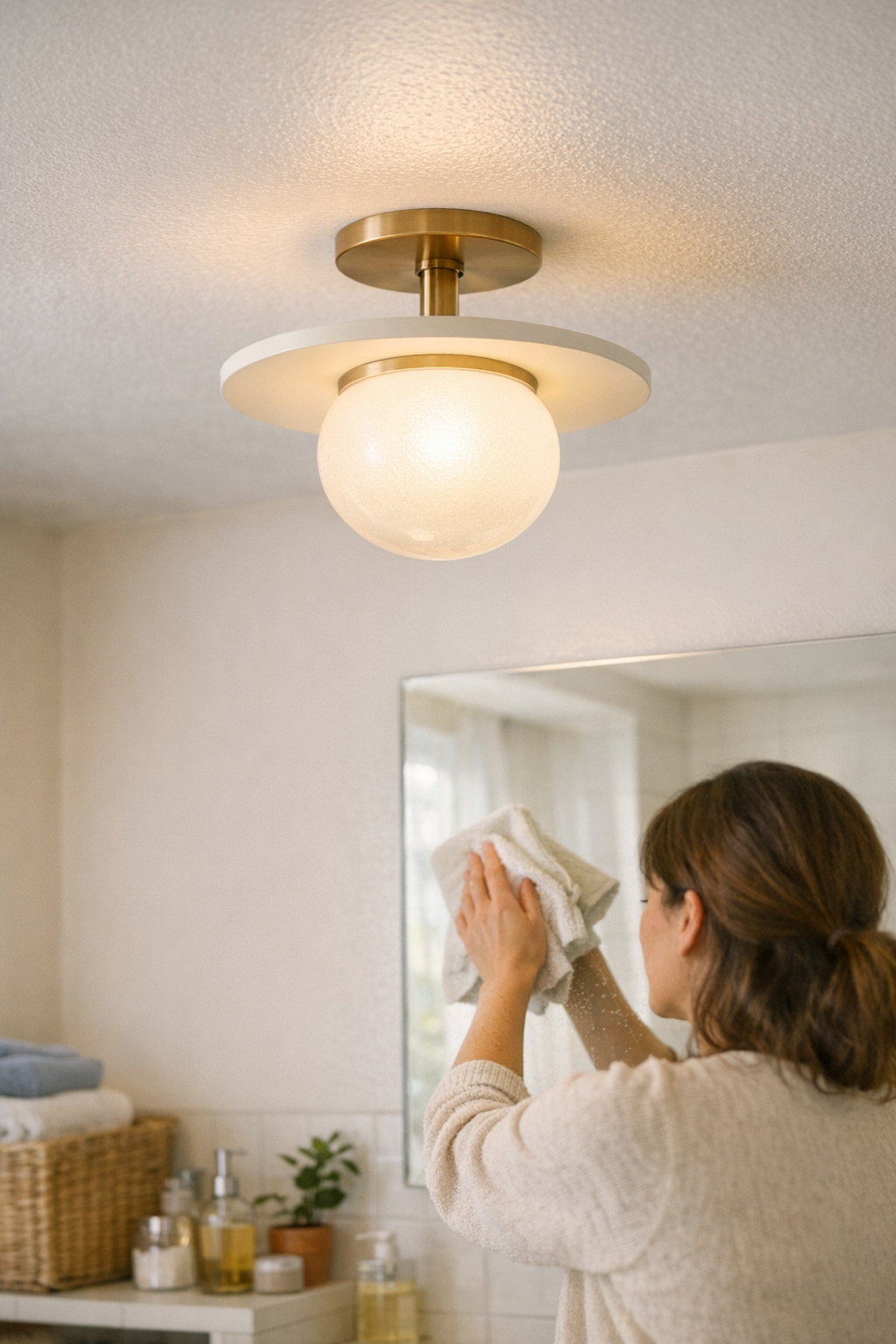
Enclosed ceiling lights look perfect out of the box: flush, minimalist, hiding the bulb, and softening the glare that open fixtures sometimes throw right in your eyes. For a compact bathroom, laundry alcove, or busy utility room, they seem like a safe choice. But real use tells a different story. Run three hot showers in a morning, or power through a couple of laundry loads, and the invisible build-up begins. Instead of crisp, even light, you’re left with shadows creeping into sink areas and murky bands along the mirror’s edge—often just weeks after install.
The signals are subtle but persistent: You notice a dull zone exactly where you check your hairline, or a corner of the mirror turns nearly gray after dusk. The shadow patch lurking over the sink won’t scrub off. The problem grows with every chore, until the old “bright enough” illusion turns into squinting or shifting position just to see your own face clearly.
Ventilation’s real-world effect—beyond first impressions
Ceiling fixtures without venting aren’t just a style tradeoff—they’re a daily-use compromise. Moisture and heat sneak inside the sealed cover every time you run a hot tap or drop a new load in the washer. After a week of repeated steam, the lens dulls from within: no amount of gentle glass cleaner from outside restores the original crispness. Even if the center beam survives, light on the edges weakens, and shadows expand, making morning routines less precise and movement around the room less natural.
- Shaving at the mirror: The middle is lit, but jawlines or the upper lip vanish into half-shadow. The flaw isn’t dramatic—just enough to make accuracy feel like guesswork.
- Laundry counter sorting: Colors blur and piles blend together as the cover fogs internally, leaving you shifting between shadowed corners that used to be clearly visible under “new” lighting.
This isn’t a flaw you notice from across the threshold. It’s the day-to-day nuisance—wiping at a lens that stays smeared, tilting your head to use the light, or pausing repeatedly just to confirm you didn’t miss a spot shaving or sorting. You only see the real loss once you’re using the space, not just admiring the fixture.
The “neat” fixture myth: why performance fades
What looks spotless at install gradually erodes with real moisture. Enclosed domes may keep their shape for weeks, but the beam they cast becomes unreliable—edges dim, center zones lose their sharpness, and mirror reflection dulls. In high-traffic rooms, cleaning becomes constant and satisfaction rare: the more you polish, the less difference it makes. That persistent haze isn’t just grime—it’s a structural limitation that maintenance can’t fully solve.
Vented covers: not perfect, but noticeably better where it counts
Most people avoid vented covers to dodge the sight of a bulb and keep lines tidy. But after just a few real-life shower cycles or laundry sessions, the benefit is obvious. Vented or open covers let steam and heat escape, so haze and internal condensation don’t accumulate—and the daily obstacles vanish. The lens stays transparent, shadow zones shrink, and the annoyance of cleaning the uncleanable fades. You might get a speck of dust inside over time, but it’s no contest compared to fighting perpetual cloudiness and fading light.
The difference is immediate: that stretch of mirror that always looked off? Evenly lit. Reaching for a shirt on the laundry counter? No more squinting at lost edges. The daily irritation doesn’t just lessen—it’s cut off at the source.
How to spot poor ventilation before light quality collapses
If your enclosed fixture isn’t up for the room, the clues stack up fast after repeated use:
- The lens fogs within minutes of a hot shower, wiping helps little, and it never feels truly clear again.
- Yellowing or dull spots creep in around the cover’s rim, especially noticeable on cloudy mornings or at dusk—regardless of bulb strength.
- Persistent patches of shadow appear around mirrors or vanity zones no matter how freshly cleaned the fixture is.
Unlike a burnt-out bulb, there’s no dramatic turning point. Instead, clarity recedes in slow motion, hidden until frustration or habit forces you to stop tolerating it.
When enclosed fixtures work—and when they quietly don’t
An enclosed ceiling light isn’t always doomed in a bathroom or laundry. If a space gets plenty of airflow—think a real exhaust fan that actually gets used, or windows cracked after showers—the hazard of foggy buildup drops. But seal up a compact room, pile on daily steam, and add in multiple users, and enclosed covers fall behind fast. If you find yourself circling the room with a cloth, wiping yet still fighting gloom around the mirror, the flaw is likely in the air movement—not the lamp itself.
Choosing fixtures that outlast the honeymoon
Don’t just look for a “damp-rated” fixture—prioritize models that mention venting, airflow, or anti-condensation design. Damp-rating alone only means the components won’t shorten out; it says nothing about light quality months after repeated steamy use. Fixtures that exchange air inside the cover, or allow residue to escape, protect the clarity that made the room look good to begin with. Always judge them by what happens after dozens of showers and loads of laundry, not in the dry air of a showroom.
One practical habit: pair light-care with an existing routine
Even vented covers hold up best with regular attention. Work a quick, non-scratching wipe into your established routine—mirrors, counters, and covers together. This small step blocks haze before it creeps up, avoiding the escalating cycle of cleaning frustration and half-lit surfaces.
Lighting quality: a real-world difference, not a luxury
The way your fixture handles moisture and air isn’t cosmetic—it directly shapes your daily visibility and comfort. If the light works, you get through routines without pause; if it slowly dims and spreads shadow, the space steals back your time and focus, one inconvenience at a time. Clear, persistent lighting means fewer cleaning battles, less squinting, and a room that keeps earning its keep week after week.