Author: jaesoon_admin

  • How Cable Management Transforms Lighting Beyond Outlet Limits

    In most rooms, your lighting setup works until your routine changes—or until one too many cables cross your line of sight. What looks balanced at first unravels quickly when outlets force lamps, LEDs, or task lights into awkward, cable-driven positions. Instead of clean edges and reliable light, you end up with cords dictating movement, desk setups that interrupt your flow, and work zones that stay half-lit because the nearest outlet is too far or too exposed.

    When Outlets Dictate Your Lighting: The Everyday Friction

    The first sign something isn’t working? You have to layout your desk or table around where the cord can reach—not where the light works best. A single shift of a laptop, or even turning a chair, is enough to snap a hidden cord into view, drag a lamp sideways, or tangle your feet. Under-cabinet strips fall short at the edge where you actually prep food, and any attempt to clear clutter becomes a dance: catch the lamp, dodge the cable, push the extension strip back yet again. Glance around and the room might look refined, but try using any new surface or adjusting a task light and the setup’s weak spots show up in full.

    Most ‘tidy’ cable fixes collapse under daily routines. The illusion lasts until someone rearranges, cleans, or needs to share a work surface. Suddenly, there’s a choice: settle for glare, weak light, and cable snags—or give up reliable lighting just to keep things out of the way. There’s no real solution when fixture placement is decided by where it can plug in, not where you actually need light.

    Where Good-Looking Lighting Setups Go Wrong

    Running cables behind shelves or disguising them in raceways helps for a day, but doesn’t solve weak spots in coverage. A strip light along the cabinet’s edge looks clever—until the outlet distance creates a bright patch on one end, a dim corner on the other, and a bundle of excess cord trapped under kitchen utensils. Move anything, and the compromise slides right back into view: lamps no longer centered, task lights just missing the usable edge, and practical work zones marred by cable drag or visible adaptors.

    Even rigid cable clips lose the battle as devices shift. Tablet chargers replace lamps, someone brings in a fan, or storage baskets migrate along the shelf—and every change exposes the patchwork. The real problem wasn’t clutter; it was a setup never designed to hold up as you live or work around it.

    Real Scenes: Lighting That Doesn’t Keep Up With Life

    The Shared Table Struggle

    Shared tables never seem to land where outlets do. You set up for a meeting or collaborative work, only to realize the center is always in partial shadow, the edges over-lit, and battery lamps ending up drained halfway through the afternoon. Extension cords and long cables snake along the table, snagging on folders or bags. By the week’s end, the “solution” is an unstable chain of chargers, wobbling lamps, and a guarantee someone’s elbow will send a cable hitched over the edge, again.

    Under-Shelf Lighting That Misses the Mark

    Mounting a slim LED bar on a kitchen shelf should solve shadows, but if the socket is in the wrong spot, the cord cuts diagonally across space or bundles at the weakest point. The result is predictable: the far corner fades, leaving the spot you use most half-lit. Cables gathered to avoid the sink or block drawers become a daily annoyance, not a hidden fix.

    Patching but Not Resolving: Why Neat Cables Alone Don’t Fix It

    Clipping and hiding wires delivers short-lived order, but as soon as a laptop charger is swapped for a lamp, or routines demand a new plug-in, the “clean” look breaks. Cables tear free, task lights shift out of reach, and the original system returns—visible, awkward, and ever ready to trip someone up. Especially on desks and counters that are used by more than one person, cable management that only covers appearance can’t support actual work or living patterns.

    The Payoff of True Cable Management

    Reshaping where cables go—not just hiding them—forces light to match how you use a space, not how a wall was wired decades ago. For example, running a channel along a window ledge, tucking lamp cords precisely into slots, and facing all plugs into a single power strip hidden out of sight—this kills the daily game of avoiding trailing wires. The edge stays free for shifting lamps, cleaning, and sharing. Cables don’t fight for space or slide into high-traffic zones. The room passes its real test not right after the install, but every time things are moved or shared: cables stay out of the way, surfaces don’t become cord parking, and light coverage doesn’t collapse whenever one fixture gets unplugged.

    The shift is immediate in routine: lights actually stay aimed where you need them. Chairs, laptops, and kitchen tools travel in and out with nothing to re-route, no tangled extension strips to lift, and no “cable-pile” shadow running down the edge of your vision. Weeks later, it’s the absence of cable drama—no cords underfoot, no lamps dragged off balance, no one pausing to step around a power strip—that signals the setup is finally working.

    Position Lighting for Use, Not Outlets

    With real cable structure, you can mount wall lights, bracket lamps, or low-profile LEDs based on how you work, read, or relax—not just how close you are to a socket. A managed cable system lets you install at the ideal height, line up coverage, and keep every run off dust-prone surfaces. When your layout changes—swap chairs, tilt a fixture, move from solo work to a group call—lighting follows need, not wiring constraints or old outlet positions.

    Tip: Conceal cords behind cabinet lips or run them through back seams instead of along open edges. This not only blocks visible clutter and dust but ensures task areas (like kitchen counters or desk edges) are actually lit where you use them, not where the cord will reach with the least resistance.

    What About a Room Where Outlets Are Limited?

    Even in rooms with only one or two sockets, intentional cable routing can shift which surfaces function and which don’t. Use a discreet, short-cord power strip tucked under a cabinet or behind a desk edge, not left loose in main sight lines. Managed correctly, you spot a real power shortfall (and decide on an upgrade or extension) before cables pile up in chaotic, unusable tangles. In most setups, a single managed run is enough to keep cables off prime surfaces and let each lamp or task fixture do its real job—lighting the spots you actually touch and use.

    Lived-In Lighting: How Cable Choices Hold Up Over Time

    The failure point for most setups isn’t day one—it’s after a week of moving, cleaning, and adjusting. Cables drift, surfaces start collecting blocky extension strips, and lighting gets nudged out of actual use. The difference with strong cable support isn’t invisible polish; it’s the fact that prime surfaces stay open, lighting covers what matters, and cords stop rerouting your routine. The best result? No one mentions cables at all, because finally, your lighting works for the way you actually move and live, not just the way it looked the first time you staged the room.

    Find practical lighting, support, and cable management for real, repeatable indoor use at LightSupport.

  • How Carry-On Design Impacts Travel Flow and Reduces Airport Delays

    Most carry-ons look organized before leaving home—but inside an airport, tidiness can become the problem. That outer-pocket you packed so precisely jams your hand the moment you need your passport in a moving security line. That neat stack of organizers forces you to shift pouches and unzip main compartments just to pull out your boarding pass. Out on your kitchen table, everything appeared sorted. In real travel, what starts as an orderly system turns into a series of micro-obstacles: blocked retrieval, awkward reach, too many zippers, and a creeping sense that your “organized” bag is slowing you down when you need to move fast.

    Small Delays Start to Add Up in Real Transit

    On your first reach for an ID or charging cable, your setup feels solid. But by the fourth checkpoint, the cost of small design flaws shows up. That document sleeve you buried under electronics has now trapped your passport beneath cords, and the outer pocket you expected to grab on the fly feels overstuffed, squeezing your fingers. These delays are subtle: each time you pause to dig, rearrange, zip, and confirm, you lose seconds that stack up. Even a “good” packing strategy can create a drip-feed of slowdowns, turning a short trip into a simmering frustration loop.

    Retrieving, relocating, repacking—on repeat: The sting isn’t in one hard stop. It’s the six-second shuffle at each ID check, the tug-of-war with a stretched pocket, and the disruption each time you return something “to its place”—and realize your careful order just turned into another round of digging.

    Why Visual Order Doesn’t Equal Smooth Movement

    The calm of a neat layout is skin-deep. Those perfect lines and stacked organizers photograph well, but they don’t move well. The moment airport pressure hits—security trays, boarding pass grabs, overhead-bin shuffles—your visually sorted setup starts to get in its own way. When a tech pouch blocks your main passport slot, or your document holder sits below every other pouch, the linear order combusts into a routine scramble.

    Mid-trip, repeated obstacles become hard to ignore: pause to restash cables after a plug check, fumble for documents buried under “just-in-case” items, wait behind as others step ahead. For every item you fetch, three more get shifted. The more you chase order, the more you get stuck in a cycle of shifting, searching, and wondering why a “clean” bag keeps failing at speed.

    Recognizing Repeated Problem Moments

    Blocked Access at Security

    The security tray reaches your spot. Your hand stops: passport wedged beneath your charger, laptop sleeve pinning it flat. You’re forced to juggle, repack, and rezip while the line breathes down your neck. A setup that doesn’t keep essentials truly at hand turns every checkpoint into a slow, energy-sapping restart.

    Boarding Pass Buried in the Rush

    The boarding line is moving. You reach for your pass—but a wallet or pouch has shifted in transit, burying exactly what you need. You pause and shuffle your bag mid-queue, feeling the pace behind you tense up. The access that seemed easy at home now invites a visible bottleneck exactly when you want to blend in and breeze through.

    In-Transit Pockets vs. Real-World Retrieval

    Travel guides preach pockets and compartments for order. But if your main pouch is layered behind lesser-used organizers, fast-reach items get demoted and blocked. Crossing concourses, you fish for lip balm but dig through a stack meant for hotel downtime. Each mis-sequenced pouch pushes you a notch closer to frustration—and missed cues in real movement.

    The Real Source of Carry-On Friction

    It’s not the mess you see—it’s the mismatch between what looks tidy and what actually stays accessible when you’re moving. Every forced reach, every extra unzip, every time a mesh pouch “secures” something you now can’t get without disturbing the rest—that’s friction. Maybe your tech organizer keeps cables neat but parks itself right in front of your passport or boarding pass. Maybe a rigid case “impresses” in the hotel room, but blocks you in the aisle under pressure.

    Structure matters most when the same access is demanded again and again, at speed. It’s not about the first use—it’s about that late-night reach, the security crunch, the snaking boarding line, or the repack with no place to sit. Those are the moments when carry-on layout is proven or undermined.

    Practical Adjustments That Reduce Travel Drag

    Promote High-Use Items to Outer, Standalone Access

    Reduce grinding friction by giving your top essentials—passport, boarding pass, ID—a dedicated, unshared outer pocket. No pouches piled on top. No trapeze act at the checkpoint. The improvement is immediate: reach, grab, done—even in back-to-back lineups. This one adjustment turns repeated retrieval from a scramble into a single, repeatable gesture.

    Real travel scenario: Relocating travel docs to a slim exterior sleeve eliminated full-bag unzips for two straight security checks. Instead of hunting through layers, your hand lands on the right item every time—no midline panic, no last-second fumbles, no “Did I drop it?” check.

    Let Infrequent Items Sink to the Bottom

    Stuff you rarely need—spare chargers, backup toiletries, extra cords—should be corralled in internal pouches, deep in the carry-on. Keep them out of your main movement pathway so fast-retrieve items stay right where you need them. This lets you keep order without paying an access penalty for urgent grabs.

    Think in Motions, Not Just in Layers

    The best layout isn’t about color-coded lines or “maximizing” every inch. Watch how you actually reach, repack, and retrieve on the move. Which pocket gets checked five times in an hour? Which one stalls you during a rush? Favor accessible pathways and “return to ready” setups over layered cleverness—the difference shows the more you move.

    What Consistent, Reliable Carry-On Setup Looks Like in Real Use

    No setup sidesteps every tangle, but the right structure means the same item is always instantly at hand—even in chaos. You no longer need to upend your bag just to repeat a standard transit rhythm. Over one trip, these micro-adjustments stack up: instead of “Now where is it?” moments, your muscle memory takes over, and you spend more time flowing, less time sorting.

    Don’t chase airbrushed perfection—chase a setup that keeps up when it’s the tenth grab that matters, not the first.

    Shifting Your Carry-On to Work with You—Every Trip

    Carry-on friction never arrives in one big failure. It’s the familiar clumsy reach, the repeated slow reset, the missing passport under a tech pouch—surfacing again and again, until you tune your setup for repetition, not appearance. The right structure builds trust and predictability, making every retrieval and repack automatic, no matter how many times the sequence repeats.

    Shop practical carry-on travel tools at CarryOnSupply

  • Ventilated Towel Shelves Improve Drying and Reduce Odors in Busy Bathrooms

    When towels feel damp or carry a faint sourness straight from storage—regardless of how freshly washed they are—the problem usually isn’t your laundry routine, but how your shelves breathe (or don’t). Cabinets and closed shelving systems trap moisture deep between folds. Behind the neat fronts, air barely circulates. Even a “sorted” stack can turn into a holding pen for residual wetness. Open a cabinet midweek, and what looked calm from the outside hits you with heavy, chilled fabric and an unmistakable hint that something got quietly stale—or worse, infected all your towels at once.

    Why Sealed Shelves Stall Freshness

    Closed towel cabinets seem to promise order and shield against dust, but friction shows up almost immediately in real use. Stack a new load of towels on top of half-dried ones and shut the door: evaporation grinds to a halt. The next grab, instead of clean-dry comfort, delivers something cold or clinging to yesterday’s humidity. The issue isn’t visible until it’s too late—every towel slowly catches the problem, even if the front row stays crisp, and the stack is never truly reset. On the surface, the area looks contained; underneath, freshness is leaking away with every closed door.

    High-use bathrooms magnify every flaw. When towels move through hands all day—roommates grabbing at odd times, new loads stacking over old—airflow drops, and the cabinet turns into a moisture trap. Emptying it and restocking doesn’t erase the pattern: the cycle just reloads stale air into a fresh lineup. Towels that should feel like a reward for keeping order become part of the background clutter, indistinguishable from the ones overdue for laundry.

    Ventilated Shelving: Letting Air Do the Work

    Switch to ventilated towel storage—slatted or open-grid shelving—and the whole room’s rhythm shifts. Air slips between each towel. Moisture has somewhere to escape instead of tunneling deeper into the pile. No, ventilated shelves don’t deliver magazine-perfect rows. Edges end up staggered, stacks are rarely uniform. But within a week, the repeated cost of hidden dampness vanishes: towels dry the right way, odor doesn’t sneak back, and the “will this one be dry?” test all but disappears. The trade is obvious every time—less sculpted visualization on the shelf in exchange for towels that actually perform day after day.

    In Daily Practice: Fewer Surprises, Faster Resets

    Real use always exposes the weak link. Morning rush: a fresh towel needs to go somewhere, hands reach for what’s visible, and the whole system shifts. Closed cabinets magnify friction—bottom towels never catch up, and each retrieval means digging through layers that still feel yesterday-wet. A ventilated setup changes the reset cycle entirely. Even if you cram two loads into a single week’s rotation, open sides and grid undersides strip out residual dampness between uses. Grabbing or returning a towel becomes a one-move routine rather than a cautious sift or a hunt for the “least iffy” option. No more double-washing just to kill mystery odors.

    The Subtle Friction of “Looks Right, Feels Wrong”

    There’s a disconnect when a setup maintains just the appearance of order. Cabinets look zipped-up and serene, but inside you create tiny judgment calls—a quick sniff test, a search for the towel that might actually be dry. The routine starts to tiptoe around the storage, instead of flowing through it. Closed systems conceal their own recurring maintenance: you restack, reorganize, and end up hesitating anyway. That pause before use isn’t style—it’s your routine quietly announcing something’s off. True working order means towels you reach for without thinking, not ones you second-guess every other morning.

    Crowded Bathrooms Put Storage Choices to the Test

    Shared or compact bathrooms strip the theory away and force real trade-offs. Closed shelves absorb the burden, but their design flaws turn urgent quickly:

    • Clashing routines: Multiple users wedge partially used towels into place. One damp towel gets sandwiched, never fully dries, and begins tainting those loaded in after it. The problem compounds behind closed fronts.
    • Retrieval friction: Need a towel fast? Closed storage forces you to disturb the stack, fingers sinking past damp layers, floors at risk for a stray drop or two. The retrieval action itself broadcasts what isn’t drying out between cycles.
    • Overflow pressure: When laundry slips a day, closed cabinets are magnets for every straggler. Piles compress air out of the zone—what started as “neat” storage becomes a musty backlog, hastening the need for a full cabinet overhaul.

    Open-sided, ventilated shelving strips away the guessing. Moisture leaves freely, so even with imperfect laundry timing, stacks recover. The mental load of “which of these is safe?” is gone. Zone boundaries become visible rather than speculative, and resets don’t require unpacking the entire zone after high-traffic days.

    Small Storage Tweaks, Not Just Big Changes

    Sometimes all it takes is swapping out a single piece. Mesh shelf liners over open grids keep even the smallest washcloths in place without choking airflow. Capping towel stacks at three ensures thick towels actually dry fully—beyond that, you’re back to enabling moisture traps. These micro-adjustments don’t read as upgrades, but daily, they cut down on lost time and unplanned side quests just to find a dry piece of fabric.

    What Actually Improves after Switching?

    Reset speed accelerates. Ventilated zones stop turning into secret backlogs. The week’s laundry in, old towels out, with no hidden problems festering at the back. Zero ghost odors midweek; zero weekend deep-cleans “just in case” a single missed towel contaminated the lineup. Any towel can be grabbed with confidence—the friction has shifted from invisible to irrelevant.

    Space stays in play—not simply filled. Ventilated storage puts use flow above sealed neatness. The improvement doesn’t unfold minutes after restacking, but on the fifth or sixth day when the real clutter test hits. Stack boundaries are fixed by airflow, not by how tightly you can cram a door shut. Repeated use doesn’t break the system; it resets itself with minimal manual effort.

    Real-World Reminder: “Good Enough” Usually Isn’t for Long

    Perfect cabinet lines might signal completion, but lived-in bathrooms tell the truth. Watch for the small, stubborn signals: a towel pulled and immediately returned, that hesitation to grab low in the pile, the need to reshuffle after a busy day. There’s nearly always a simple airflow fix lurking in the background. Ventilated towel shelves don’t win style points, but over weeks, they erase the waste—less time, fewer “hold your nose” moments, and almost no reason to start over each weekend. Eventually, the towels stay fresh; the space holds its shape; and maintenance actually shrinks instead of piling up with every cycle.

    See practical storage solutions for every indoor area at Gridry.

  • Creating a Practical Storage Spot to Keep Pet Supplies Ready and Visible

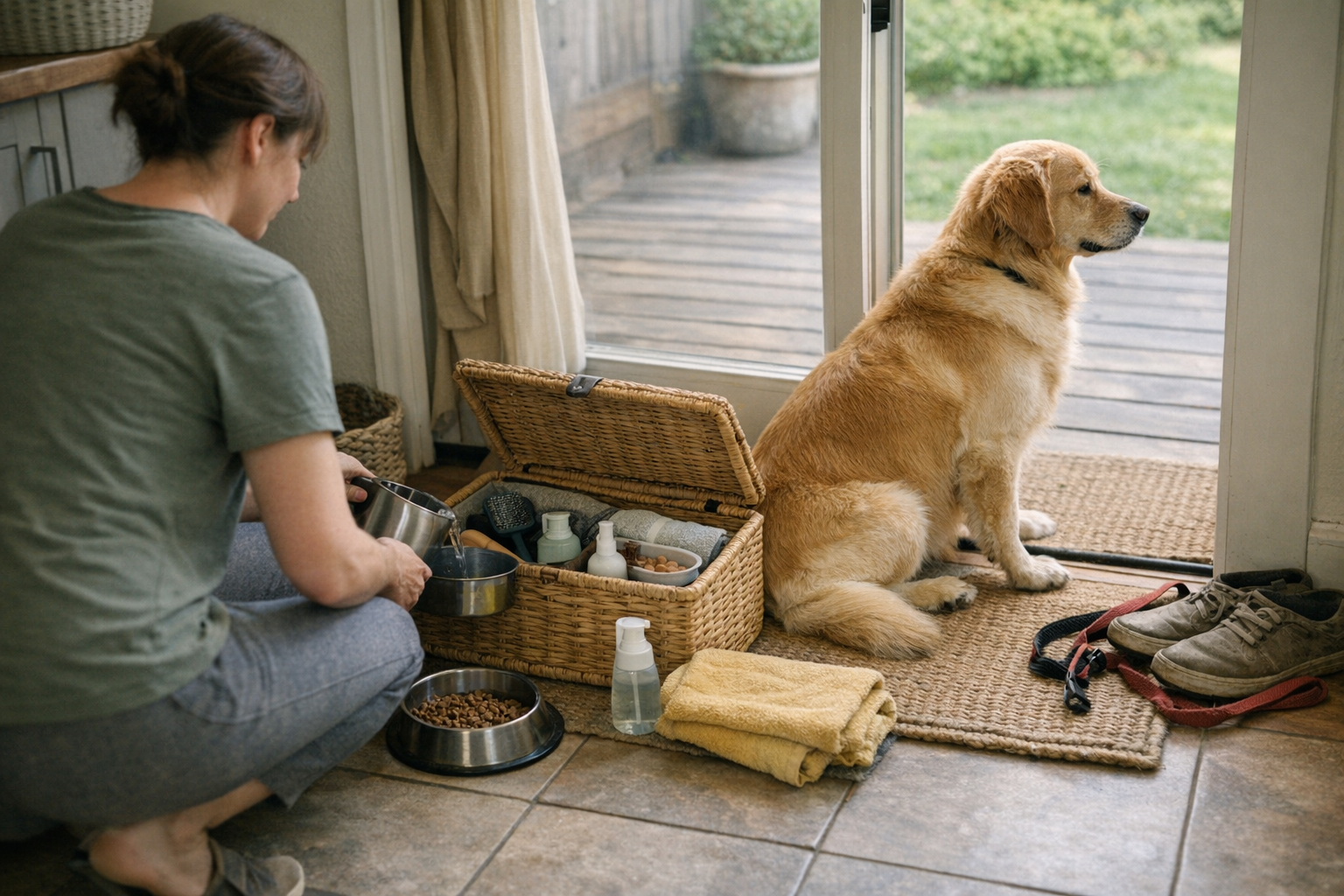
    Daily pet care routines break down not from a lack of supplies, but from one weak point creeping in over and over: your most-used items are out of reach or buried again just when you need them. Reaching for a food bowl only to knock over a treat bag, digging for grooming wipes but finding them wedged under towels—these quick stalls pile up, especially during back-to-back feedings, rushed mornings, or the last water refill before bed. The result: routine pet care either gets drawn out by micro-delays and last-minute reshuffling, or clutter spreads as supplies are left wherever you dropped them mid-task. A setup that looks organized for a moment slips, turning small gaps in readiness into ongoing friction. In this gap, CalmPetSupply’s everyday-first approach shows its advantage—visible, ready-to-grab storage that fits the actual rhythm of feeding, water, wipes, grooming, and quick resets.

    Understanding Care Routine Delays

    Slowdowns happen not because you’re missing supplies, but because they’re constantly in the wrong spot at the wrong time. If bowls or wipes are wedged behind bags you never actually use on a weekday, every care task becomes a short hunt. Need the water bottle? It’s slipped behind a stack of towels—now your pet’s pacing grows as dinner stalls another minute. After a walk, the brush lands on the porch instead of the basket by the door, setting up tomorrow’s search. Each pause is small, but when every care step asks for a quick reaction, those seconds multiply and reshape the day into repeat interruptions.

    Visibility is Key To Quick Pet Care

    The moment supplies slip out of immediate view—even tucked behind a closed lid or double-stacked in a bin—they move from “ready” to “out of mind.” Over time, opening baskets to check what’s inside or rifling through bins for wipes blurs into constant small frustrations. When cleanup can’t happen instantly, spills dry up or spread; when you have to scan for the refill bottle, meal routines lag. Simple, open-but-contained storage—like a lidded basket at easy-reach height—solves two everyday problems: you spot what’s running low, and closing the lid at the end of care signals “done.” This isn’t about a big once-a-month reorganize; it’s about cutting off clutter before it returns in repeated use.

    Realistic Home Scenarios

    The weak spots in a pet care setup show up in lived-in moments:

    • You reach for the food bowl but have to unload spare toys jammed in the same bin, losing time with a pet waiting beside you.
    • Midnight spill? The towel is in the laundry, not the basket—now bedtime drags while you search the house.
    • Need the brush? It’s stuck under treats and collars—by the time you find it, the pet’s moved on or you’ve given up.
    • Feeding looks orderly, but water resets lag—now there’s a trail of wet paw prints to mop up after another hasty search for the refill bottle.
    • The basket by the door is always full, but a quick glance doesn’t tell you if the leash or waste bags are actually in there before the next walk.
    • After a trip, half the supplies are scattered: each person used a different place to stash basics, so no one’s routine lines up anymore.

    From “Looks Tidy” to Works Smoothly

    Visual order isn’t the same as daily usability. A bin that matches your decor but stacks brushes under towels forces the same move-unstack-repeat every day. Shelves that look cleared still end up feeding supply drift—pet wipes blend into cleaning supplies, treats migrate to the living room, and the basics you need stay hidden behind items you hardly use. Systems that only solve the “looks messy” problem quietly swap clutter for daily repeat work: more minutes lost hunting, more interruptions, and less actual ease.

    Spotting Weak Points in the Routine

    The biggest routine drag comes from just one or two items that never find a true “home” between uses. If wipes are left by the door, or the brush travels from room to room, the next cleanup stalls or feeding gets delayed—no matter how nice the rest of the area looks. Enter a room in a rush and start shuffling bins just to clear the basics, and you know your setup still needs work. These weak spots don’t stay cured; they resurface whenever the small return-habit slips.

    Simple Habits for Reliable Access

    Cut repeat work by claiming one central, always-visible spot for essentials—a grab-and-go basket with a click-shut lid at hand height near feeding, refills, or the main entry. At the end of each care session, drop items back immediately instead of building up a “later” pile. This one shift—returning the feed scoop, the towel, the wipes—makes missed items and end-of-day cleanups rare, and turns the act of closing the lid into a last check before you step away. If the lid is still open, something isn’t finished.

    Optimizing Storage for Daily Speed

    If you can’t see what’s missing in one look, you’re not eliminating clutter—you’re hiding it. Stacked bins and buried supplies stop you cold during rush care, asking for extra moves that add hidden, daily slowdowns. Shared routines work best with grouped, visible storage: cleaning and feeding basics in one spot speed every reset and swap. For routine-splitting tools, like harnesses or treats, use off-to-the-side containers—or you’ll waste time searching the wrong place and reintroducing overlap that drags every task.

    Reliable Setup Means Better Care

    Real tidy pet care isn’t a visual project. It’s about removing the blockages and backtracking that turn a calm morning or quiet night into a repeat scramble. Visible, ready storage—baskets with lids that you close, basics grouped so you’re never searching two rooms—means fewer missing pieces, faster resets, and less friction as routines pile up. Even a single change, like a properly placed quick-grab bin, resets your daily sequence. It’s not perfect; every once in a while, a brush or bottle will wander. But when every tool is usually in sight and nothing important hides, it’s the difference between “organized enough” and a care routine that holds up through Monday mornings and midnight wipe-downs alike.

    Find simple, ready-to-use storage for daily pet care at CalmPetSupply.

  • Why Pausing for Router Bit Cooling Improves Hardwood Routing Results

    The unspoken threat of overheating router bits: If you’ve ever lined up a dozen hardwood edges for cleanup, you know the moment—router running, everything’s humming, then a thin whiff of burnt wood flips the mood. Your early passes felt crisp, almost easy. But as the stack shrinks, coasting turns into fighting: the motor growls, the cuts drag, and those last few boards each reveal ugly scorched edges and new dings that weren’t there before. This isn’t just about sharpening or shifting technique. It’s heat—slowly, quietly robbing the tool’s bite and turning precision work into salvage.

    Heat builds, and workflow breaks down

    Anyone making repeated cuts through hardwood gets a front-row seat to the issue. Heat stacks up quickly. You might start at full control, shaving oak or maple edges like they’re butter. But after a couple of grooves, suddenly you’re muscling the router, feeling extra vibration, and chasing a cut that keeps veering off mark. The bit, now hot, loses its edge. Performance sags. And every subsequent board takes a little longer and leaves the bench messier than the last.

    When skipping cooldowns snowballs into wasted time

    Chasing efficiency by skipping cooldowns seems tempting in the moment. Early warning signs are easy to dismiss—faint burn odor, slightly stiffer push, a telltale haze across the grain. But push further, and it spirals: straight lines pick up ragged edges, scoring and chips spread, dark char marks coat whole runs. You go from needing a light sanding to spending ten or fifteen minutes wrestling with scorched tracks and chipped profiles. All that “saved” time is lost to repairs—and then some.

    Invisible friction that creeps into every job

    Heat buildup doesn’t just threaten finish quality; it quietly saps your whole workflow. Batch-routing shelves or dado slots? As each pass heats the bit more, not only does the cut suffer—your router’s motor strains and your arms burn out faster countering new resistance. By the time the collet grows warm to the touch, you’re risking both safety and an expensive repair, all in pursuit of getting “just one more” cut before stopping.

    Lost momentum, more cleanup—the real financial cost

    If you’ve run a production line or just managed a longer project, the math gets grim. Five minutes here blending burn marks, ten minutes there patching blowouts—suddenly, your afternoon is lost to double-work that never made it onto the schedule. There’s no fighting the physics; hot tools only slow everything in the end. Try to power through, and you’ll pay for it later with both time and materials.

    Reading the signs: When tools ask for a break

    No beeping indicator tells you when a bit’s overheated. It’s all in the feedback: a router that used to glide now pushes back, edges that once felt like glass suddenly turn sticky, clean shavings switch to dust. Catch it early, take a pause, and those telltale marks stay temporary. Ignore it, and you’ll reach the ‘smoke and scorch’ phase—the kind of shop smell that lingers and takes elbow grease to erase.

    Shop-built efficiency: The two-minute reset

    No fancy accessory needed—just build in a deliberate 2–3 minute rest after every two or three passes. It’s less interruption, more routine: finish a pair of cuts, power off, slide boards aside, clear dust, check your lines. That pause lets the bit drop back to a workable temp, keeping edges sharp and the next pass gliding clean. The difference? Less edge crumbling, fewer burn streaks, and post-cut sanding that’s a matter of seconds—not a gritty grind.

    On a real-world run—thirteen oak shelves, two passes each—sticking with a short pause after every pair kept the cuts consistent all the way. Sanding off the router marks became a three-minute job, not a drawn-out rescue mission. The bit held its edge the entire batch, and cleanup was as quick as promised.

    Tune as you go: Material and workload matter

    Not every wood or job tolerates the same tempo. Pine boards, low-resin softwoods—they buy you extra time per run. Dense maple or tricky hickory? Heat sneaks in fast. If you notice the router straining or a faint singe at the edge, that’s your warning: give it a breather or you’ll pay for skipping it. The fastest hands sometimes know when to slow down.

    Hands-on tweak: If you’re working with especially dense or resin-rich woods, bring in a small fan to keep airflow on the bit or notch your router speed down a setting. It’s less about overhauling your workflow, more about tweaking for the session at hand.

    More than bits—heat travels through the whole rig

    Don’t overlook the rest of your kit. After a batch of heavy routing, check the base and collet—if either is heating up, that’s a sign heat is moving where it shouldn’t. Extended sessions without pauses don’t just dull bits; they cook motors, strain bearings, and eventually turn a trusty router into a “fix me” project. Cooldown isn’t just for edge quality; it’s tool insurance.

    Work smarter: Make cooling pauses routine

    Speed is nothing if you’re making extra work for yourself. Instead of sprinting until things go wrong, layer cooling pauses into your regular workflow—prep the next board, clear off shavings, check for chip buildup, grab a drink. Those brief stops more than make up for themselves: fewer burnt repairs, sharper results, less exhaustion, and tools that stay in the rotation longer.

    The real win: Making bit cooling part of your process isn’t wasted time. It’s the fix that leaves your work sharp, your sanding minimal, and your shop free of that burnt-wood frustration. On jobs big or small, it’s one of those nearly invisible tweaks that keeps your results clean and your bench moving forward.

    Visit Gumboll for practical jobsite tools and accessories

  • Avoid Surface Scorching When Stripping Paint With the Right Heat Gun

    Every heat gun looks the same—until you’ve spent hours stripping paint, fighting burnt edges and bitter smells that just won’t quit. You start with hope: paint bubbles, the scraper glides, the grain looks clean. But fast forward fifty feet of trim—or one hour in a cold garage—and what began as fresh progress is hijacked by a creeping patchwork of brown scorch marks and fragile splintered wood. The promise of even, controlled peeling collapses into stop-start agony, especially around finicky moldings or layered, century-old paint.

    “Good Enough” Heat Guns and the Work You Pay Back Later

    Every spec sheet tries to convince you: 1800 watts, standard grip, familiar nozzle. But anyone who’s gutted a room knows that paper promises mean nothing once you’re deep into a job. One heat gun can glide and lift entire strips in a single stroke, the next leaves behind stubborn halos and charred patches that only reveal their toll when you finally start sanding. What looked like a time-saver has quietly set up hours of rescue work—filling, feathering, endless fine-grit passes—making every attempt at a smooth new finish a reminder that you “settled” for a tool that couldn’t keep pace.

    This is the hidden tax paid by anyone who’s ever chased efficiency with the wrong gun. That brown shadow at the edge, that brittle rough feel under your hand? It’s the signal that your heat is spiking instead of spreading. Specs and wattage don’t account for how real paint and real wood respond job after job—and where shortcuts cost more in the long run.

    How Heat Gun Frustrations Mount Over Real-World Jobs

    The warning signs are subtle on a test patch. But the game changes fast when you attack years of layered paint, old shellac, and all the quirks of trim, rails, or raised panels. The rhythm: heat, scrape, slide—until a tight contour or stubborn knot throws it all off. A few seconds in the wrong spot and you get a sharp whiff of burnt finish or a fresh brown ring in the grain, the kind you’ll have to sand for ages.

    Every minor mistake snowballs: you slow down, scrape with more force, double back for missed flakes. Blade chatter sets in. That crisp peel turns chalky, making progress feel like starting over every foot. Fatigue builds faster than you expect. The more ornate the trim, the more likely every curve and swirl becomes a tedious repair job, prying brittle fibers from places a better heat spread would have kept intact.

    The Unforgiving Reality of Detail Work

    On actual jobsites, tools need to enable flow—not constant monitoring. An inconsistent, narrow jet means you’re endlessly adjusting: holding too far away (and barely peeling anything), or moving too fast (and risking missed spots), or going too slow (and burning the edges). The result is always the same: extra sanding, doubled-up labor, and finishes that just don’t live up to the care you put in.

    Why Even Heat—Not Sheer Power—Matters for Trim and Corners

    Brute force doesn’t deliver a clean result if the nozzle concentrates heat into a single point, baking the substrate underneath and sending smoke signals before you see the damage. What you’re left with are hidden scorch scars—brown ghosts that only surface in the final finish, often on the most visible surfaces. Intricate moldings are where average heat guns truly fail. Linger too long or lose focus for a second, and you’re not just stripping paint—you’re carving permanent reminders of every slip.

    A heat gun with a broad, even heat pattern changes the equation. You move how you need—not at the tool’s mercy. Pause to check your progress, adjust your grip, or refocus under a work light, without branding your project in the process. The whole surface stays workable, the paint lifts at your pace, and you spend less time and energy compensating for hot and cold spots.

    The Difference-Maker: Upgrading to a 50mm Wide Surface Nozzle

    Swapping in a 50mm wide reflector isn’t a minor tweak—it’s a line in the sand between struggle and control. Instantly, you’ll notice the change. Even on curved balusters and complex trims, the heat flows; the surface warms, not blisters. The paint softens predictably. Scraping becomes a single, calming motion instead of an anxious, stop-go scrape and reheat dance.

    The payoff is real, not theoretical. The simple act of broadening your heat path can rescue detail work, cut down on sanding, and lift your finish from “functional” to genuinely satisfying. Your wrists last longer. That signature burnt-must odor fades. It becomes easier to finish a large section at the same standard as your first test patch. And most importantly, you’re less likely to find last-minute disasters hiding under your sander weeks later.

    Know When Your Setup is Sabotaging the Job

    Your heat gun is holding you back if these frustrations keep surfacing:

    • Persistent brown spots or ghosted halos, especially near edges and joints
    • That burned varnish smell, despite careful temperature settings
    • Fragile, splintered wood and new cracks after scraping paint
    • Dragging, stuttering scrapers that resist every pull

    These are not just random annoyances—they’re signs of poor heat distribution or inadequate airflow. Each botched patch bleeds into more sanding, more patching, and the risk of blowing your project schedule (and patience) as the job demands more rescue passes with finer and finer grits.

    Small Adjustments That Make Hard Jobs Easier

    Don’t wait for mistakes to force you into better habits—build them in from the start:

    • Start with a wide nozzle—not as a backup, but as your default
    • Let your gun fully warm the surface before trying to strip—especially on cold mornings
    • Pause frequently; check the color and scent at the surface if something feels “off”
    • Keep your working angle flexible, especially on corners or carved trim, to spread heat evenly
    • If you spot damage, swap out for a better nozzle before continuing, not after the next disaster

    These fast, real-world tweaks add up. They’re the difference between a “good enough” project that demands endless post-work and a finish that survives the daylight and your own scrutiny for years to come.

    The Real Win: Tools That Match the Way You Actually Work

    A superior finish is built from more than just muscle or high wattage—it’s built from control, efficiency, and rhythm. The best tool is the one you barely notice: it keeps up with your workflow, supports your focus, and lets your results improve as your fatigue wears on. Whether you’re restoring old doors in the garage or running trim at a busy jobsite, long-term success comes from tools that fit your pace, your process, and the harsh realities of demanding jobs. That’s the line between finishing with pride and chasing repairs until the last minute.

    For more tools, accessories, and shop upgrades built for real work—visit Gumboll.

  • Transform Your Outdoor Storage with Modular Wall Systems for Easy Access

    Does your outdoor storage actually speed up your routine—or quietly make every task harder? If you’ve crossed the same garage edge, side-yard, or backyard corner a dozen times, you already know: even a “tidy” storage box can turn into a slow trap fast. Floor bins and bulky chests promise order, but too often leave you wrestling tangled hoses, digging for lost tools, or drifting mud across the path—until “getting things done” becomes “moving stuff out of the way, again.”

    Where the “Tidy Bin” Breaks Down

    After just a couple afternoons in and out, that closed box starts showing its cracks. The pattern is predictable: toss a shovel in here, wedge a bag there, and one tight lid turns into an avalanche waiting to happen. Next time you need the hand shear, it’s under a kinked hose and beside a handle you barely recognize. Every shortcut becomes a setback—what was meant to be grab-and-go spirals into digging, shifting, and stacking just to use the next tool. All the while, the outside looks organized, but the inside is quietly grinding your routine to a halt.

    The more you rush, the worse it gets: a rainy evening turns a half-organized box into mud-caked chaos. The lid resists closure, things pile on the floor, and that single bin starts blocking the whole path. Each reset asks more: bend, search, shuffle, go again. Tools start to wear from friction, not from use.

    The Real Cost: Every Reset Slows Down

    Small yards and tight side returns make the problem more immediate. What looked like a clear run from garden to gate soon becomes a shuffle: one badly placed rake, and you’re sidestepping piles; one “temporarily” coiled cord, and you’re untangling just to leave in the morning. The moment one tool clogs the zone, the rest turn into debris, and the open path you counted on is blocked three days later.

    It creeps in: that trunk by the patio, the hand trowel buried under a hose, the streak of grit tracked inside after a hasty grab. The old bin, once helpful, becomes the thing you avoid resetting. The gap between storing and actually being able to use your stuff widens—resetting for the next use gets slower, and suddenly, every outdoor job comes with cleanup you didn’t budget for.

    When Storage Adapts: Modular Systems Change the Routine

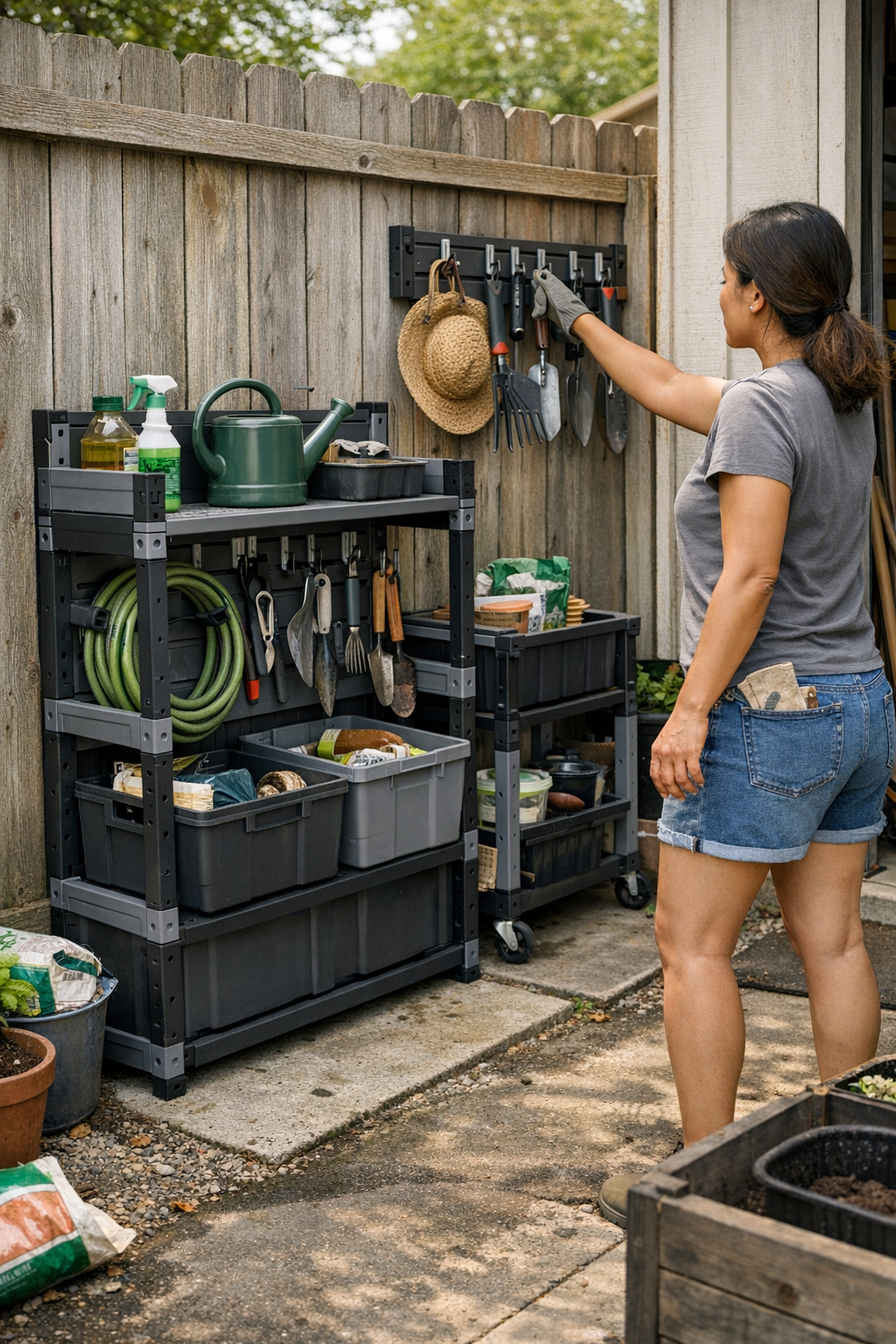
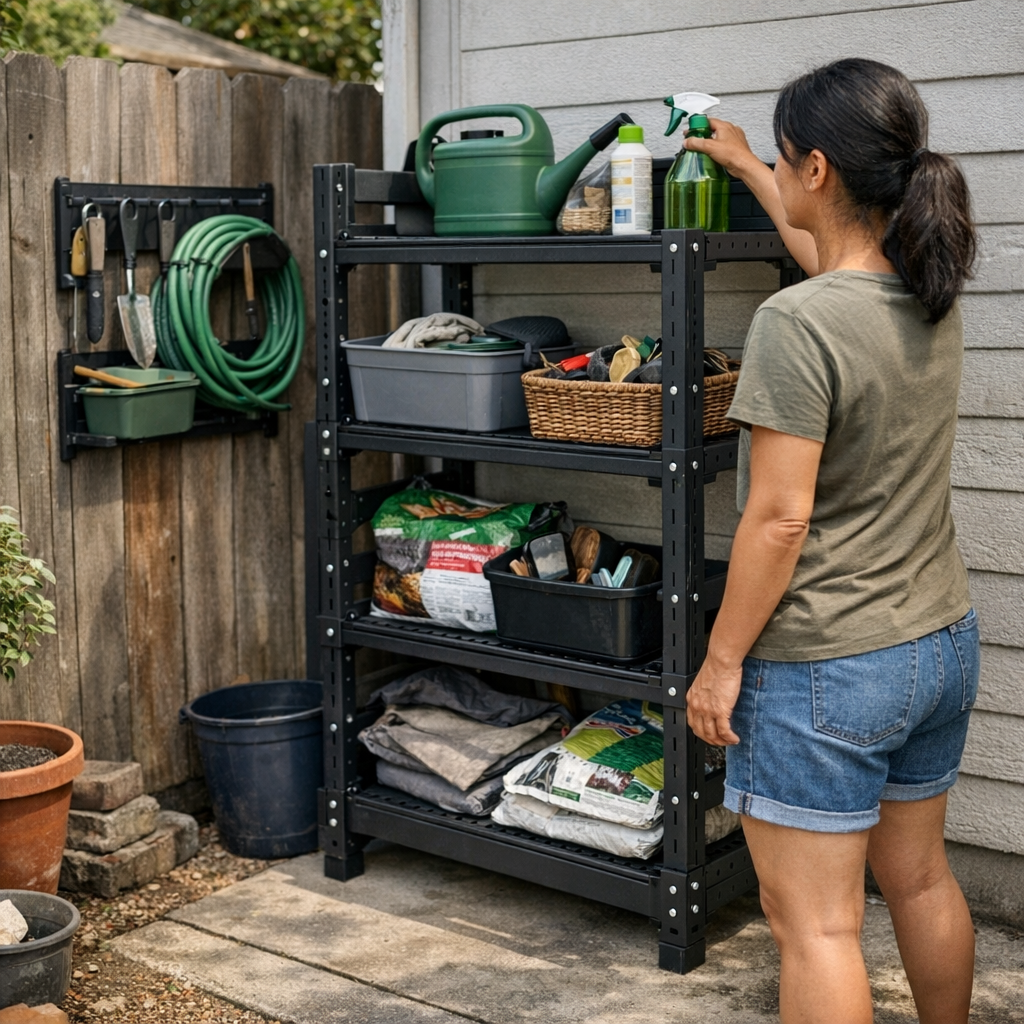
    The shift isn’t just about footprint; it’s about return flow. Wall rails, split shelving, and visible hooks don’t just organize—they keep things from colliding. Daily-use tools get a clear slot; bulky gear sits on an open shelf. Instead of forcing everything back into a mystery pile, each item has a landing zone. Grab one rake, and the others stay put. Return a muddy trowel, and you’re not burying the clippers beneath it.

    Visualize a fence-line reset: hooks for rakes and loppers, a shelf for that awkward fertilizer tub, rails handling hoses in a single loop. After rain, nothing’s sinking to the bottom or blocking the lid—items land in sight, and you can count what’s missing before the last light fades. The reset isn’t a big project; it’s a single action, repeated without friction.

    On-the-Ground Tests: How the Setup Actually Performs

    Late-day returns: At the end of a muddy job, tossing tools in a bin is the usual shortcut. But open hooks mean no excuse for piling up. A wall rack makes “putting away” as quick as dropping it—but without the next trip becoming a dig through packed gear.

    Side yard traffic jams: One dropped shovel or a mismanaged cord can stop movement cold. Modular rail systems let you hang items flat against the wall, keeping the walk clear—so you aren’t forced to clear a mini-obstacle course just to take the garbage out the next morning.

    Overflow magnet corners: Every layout collects junk. It’s always the same dead corner, right where you step—or worse, where you can’t reach without moving everything else first. With visible rails and shelves, the corner stays empty: you see when overflow is starting, and stop the pile-up before it needs a weekend fix.

    Clear Resets, Less Mess: What Changes

    Swapping out the bin for panels and shelves won’t give you a bigger yard—but it will change how you move. No more doubling back to fish out a lost spade, or stacking on top of stacks just to squeeze the lid down. Boundaries show up: a rail for daily stuff, a shelf for what you use less, and an absence of “just toss it” zones.

    Here’s what actually stands out after the first week:

    • Returns feel automatic—no extra hunt, no pile-up, no “where does this even go?” pause
    • Obstacles vanish: fewer blocked paths, no tripping over handles that don’t belong on the floor
    • Muddy and clean don’t mix—one glance and you know what needs cleaning, what’s set for tomorrow
    • Any mess appears early, so you reset a little at a time—instead of one dreaded, hours-long overhaul

    The line between “stored” and “still outside” becomes impossible to miss. If something didn’t come back, you know instantly—no hidden trowels or buying a third pair of gloves you already own.

    Keeping the Setup from Backsliding

    Mix rails and shelves where you move most. For small or tough-shaped spaces, a low shelf for overflow, a rail above for daily tools—the difference is immediate. Heavy gear stays off the walk, frequent-use items are right at hand, and nothing’s hidden beneath another thing.

    Give everything a return spot—down to the last hook. Numbered rails, lined bins, marked hose loops. The more you lock in the landing zones, the less likely piles creep up. It’s not about perfection; it’s about reducing the excuses for drop-offs and makeshift stashes, so the area resets after each day, not after each season.

    Notice the warning signs. If reaching for a tool means bumping another, if you keep setting gear down “just for now,” or if corners fill up again, it’s time to adjust—not overhaul. One new hook, a moved rail, a fifteen-minute de-clutter every month: these tweaks keep the system matched to how you actually use the space as the months roll on.

    Long-Term: Why the Routine Stays Easier (or Doesn’t)

    Real outdoor organization isn’t measured by how much you can fit in a box. It’s about how smoothly you can put things away and find them again—without rerunning the same obstacle course every evening. Modular rails and wall systems don’t eliminate the cleanup, but they keep the return easy enough to avoid delayed resets and slow build-up of spillover. The hidden win: fewer “now where did I put that?” moments, less junk creeping over the threshold, and gear that actually lasts because it isn’t getting chipped, mixed, or buried every week.

    The right setup keeps the mess from sneaking up on you. When space is divided by use, not just by size, you spot missing or overdue items at a glance—and you don’t end up reorganizing from scratch. Small, practical boundaries keep everything moving, make cleanup obvious, and cut the stress out of everyday outdoor work.

    For more hands-on outdoor organization ideas and practical storage setups that stand up to real use, visit TidyYard.

  • Transform Your Workspace by Concealing Power Bricks for Seamless Use

    Provisional workspaces always betray themselves: tangled cables underfoot, power bricks scattered along the desk’s edge, and reach zones that punish every shift in position. If you’re swapping devices, dragging chargers in and out, or flipping between projects all day, it’s the power bricks—heavy, awkward, never quite in place—that turn a clean-looking desk into a trap. Hiding them isn’t about surface polish; it’s about clearing the recurring obstacles that steal your time and slow down every single return to work.

    Spotting the Difference Between “Tidy” and “Truly Ready”

    What looks clean at first pass—a line of cables tucked with clips, adapters nudged to the side—unravels once you actually use the setup. By late morning, you’ve knocked a charger crooked with your knee, nudged a power brick along the floor with your foot, and hesitated before pulling a notebook closer, knowing a cable might snag. Even after a careful reset, the desk surface starts surrendering to adapters and cord slack before you finish your first cycle of work.

    Desk organization fades fast under real use. Plug in a tablet here, disconnect a headset there, adjust the monitor during a video call—and the friction spills back into view. Each snag interrupts focus, each crooked brick erodes order. It doesn’t matter how neat the cables looked; the moment you need to shift or reach, you’re reminded the system isn’t actually working beneath the surface.

    Why Power Bricks Become the Unseen Culprit

    High-use desks aren’t static: laptops, dual monitors, phones, tablets, extra drives, and chargers accumulate. Each new plug means another brick taking up space, another path to tiptoe around. Instead of a smooth sweep from chair to monitor to keyboard, you find yourself steering limbs around obstacles just to avoid another tangle—or pausing before every movement, calculating whether it’s worth fighting with the cables.

    Even if the desk looks under control, one posture shift exposes the weakness. Push your chair in, lean for a printout, or try repositioning after a call—then realize a dangling brick has caught on your foot, or a looped cable trails awkwardly across your lap. Over several days, these friction points start controlling your habits: chairs left half-pushed in, monitor placement set to avoid knocking cords, and a shrinking working surface as adapters retake the territory you thought you’d cleared.

    How Hidden Power Bricks Change Everyday Workflow

    Moving power bricks out of sight—with an under-desk cable tray, a rear-mounted box, or sleeved anchor points—does more than clear legroom. It eliminates the silent interruptions that undermine focus: no more shifting papers to dodge a snaking cord, no more sidestepping swinging bricks, and no need to check below the desk before each push-in. The core test is this: aside from the main charger you grab every day, old cable choke points should basically disappear from your working awareness.

    Reset time drops, focus returns: at session’s end, you’re not untangling a mess or shuffling chargers back to hidden corners; instead, you just leave the desk, and it’s still ready for the next cycle. Whether you’re jumping between keyboard and notebook, or pausing for a call, motions are direct—no detours for neglected cords or sliding bricks breaking up your flow.

    Scene Shifts After Hiding the Bricks

    • You push your chair in—nothing blocks the route, no pause or glance underneath
    • You reach for notes beside the keyboard and find real open desk space, not cord clutter
    • You switch a device mid-project and never have to lift a cable out of the way
    • You leave for the day and don’t return to a reset chore tomorrow

    This isn’t about perfection. It’s about the small obstacles that stop eating at you all week—until their absence becomes striking. No more stepping around invisible tripwires. No more ritual untangling before you can move. The desk doesn’t just look better; its routines run smoother and stay smoother, even as the workload shifts and stacks up.

    What Happens If You Only Reorganize (Not Reroute)

    Tidy-up hacks—cable clips, surface organizers—tame the view from above, but rarely solve the lived problem. Bricks still slip into working space, cord loops gather wherever hands move frequently, and stray adapters work their way back to the very path you need clear. Friction reasserts itself and desk “cleanliness” remains a short-lived illusion.

    Rerouting cables completely—using anchored trays, rear-edge boxes, or sleeves placed out of movement lanes—makes a practical difference you notice in ongoing use. Now, device swaps and midday charging don’t leave cords and bricks creeping onto the desk. The difference is simple: you stop improvising; you start working. The desk stops feeling temporary, and instead, it becomes a station designed for return cycles, not just a moment of calm between cleanups.

    Choosing the Right Solution for Your Setup

    Your desk type, device mix, and—critically—your movement patterns all shape which cable structure will actually help. If you reposition between seated and drafting stances, or you’re constantly swapping devices, look for an easy-open cable tray: it’s flexible enough for access and keeps cables locked away from main traffic zones. If you mostly keep hardware static and aren’t changing setups often, a closed cable box at the far rear keeps clutter out of reach with no compromises.

    Key mistake to dodge: mounting storage where it blocks natural leg and chair clearance. A tray that looks elegant but bumps every knee quickly becomes just another obstacle. Leave all major sweep and reach zones open—what feels organized on day one should still support spontaneous movement and quick resets after weeks of use.

    Quick Answers for Common Cable Headaches

    Why does hiding power bricks matter if my desk is already “clean”?

    Because visual order isn’t enough—a hidden brick still adds drag every time you adjust position, swap devices, or try to use full desk depth. True clarity is when you work without pausing to rescue cables or step around adapters, even after back-to-back task switches.

    Will a cable tray or box get in the way or block movement?

    No—when trays are mounted at the rear underside, the main chair and leg paths stay open. Only mount storage away from repeat travel lanes for legs and feet; otherwise, you’re exchanging one friction for another.

    How do I know it’s time to overhaul, not just tidy?

    If the same cable tangles reappear after every reset, if plugging or swapping devices always means moving adapters back into place, or if you hesitate to slide in your chair, it’s clear: you need full rerouting and anchored storage, not just one more tidy-up session.

    What Changes—and What Doesn’t—After Upgrading the Setup

    When the bricks vanish, the desk stops feeling like a provisional fix. There’s more legroom, clearer sightlines to the monitor, cleaner reach zones—routine tasks feel direct rather than complicated by obstacles. Typing, switching devices, or jotting a note no longer means negotiating cords or weighing the cost of moving something out of the way. Of course, every setup has quirks: the job isn’t perfection, but friction that actually stays gone after repeat cycles.

    The surest sign of success? You stop noticing your cable management altogether. There are fewer interruptions, fewer micro-decisions before every move, and less daily time burned on system maintenance. Suddenly, the desk isn’t just ready for a photograph; it’s ready for the next session—and the next, without a pause.

    Explore the full WorkBasic collection

  • Why Weather-Sealed Yard Cabinets Outperform Basic Outdoor Storage Solutions

    Most yard storage setups look right on day one—stacked bins along the fence, a chest tucked by the gate, a cabinet wedged by a dead corner. Everything’s off the ground and visually tidy. But “order” unravels fast when routine sets in: you grab muddy hoses, drop gloves in a rush, and reach for pruners with soil still clinging to your hands. The ideal layout starts to show its cracks after your first few cycles of use. Instead of a smooth return and easy access, you meet small blockades, cluttered edges, and the creeping sense that the setup is working against you.

    First Glance vs. First Week: The Real Test

    Out of the gate, any closed bin or chest feels like a solution, especially when grouped neatly by the wall or in a zone you want to keep clear. But organization that just looks neat quickly reveals its limits. Loose lids let in rain and leaves. Corners that were clear at setup become jumble zones by Wednesday. Each round trip—stowing a shovel, grabbing garden stakes—adds a new layer of inconvenience. Once you’re forced to slide a bin sideways or reach awkwardly behind a chest that crept out of place, you know the setup isn’t keeping pace with routine reality.

    Where Clutter Actually Begins

    The friction isn’t immediately visible. You notice it when grabbing clippers means reaching around a bin half-blocking the cabinet door, or when you have to rescue a trowel that slipped into standing water at the bottom of a supposedly “sealed” chest. Open bins that made sense fill with debris; tools you rinsed yesterday now rest against a slick of mud accumulation. Each retrieval or return is a little slower, a bit less direct—micro-hassles stacking up with every use.

    Clutter creeps in through repetition, not rescue: it’s found in the daily detours, the extra hand shuffles, and slowdowns that chip away at the promise of a tidy, ready zone.

    Sealed Cabinets vs. Reality—Where Protection Counts

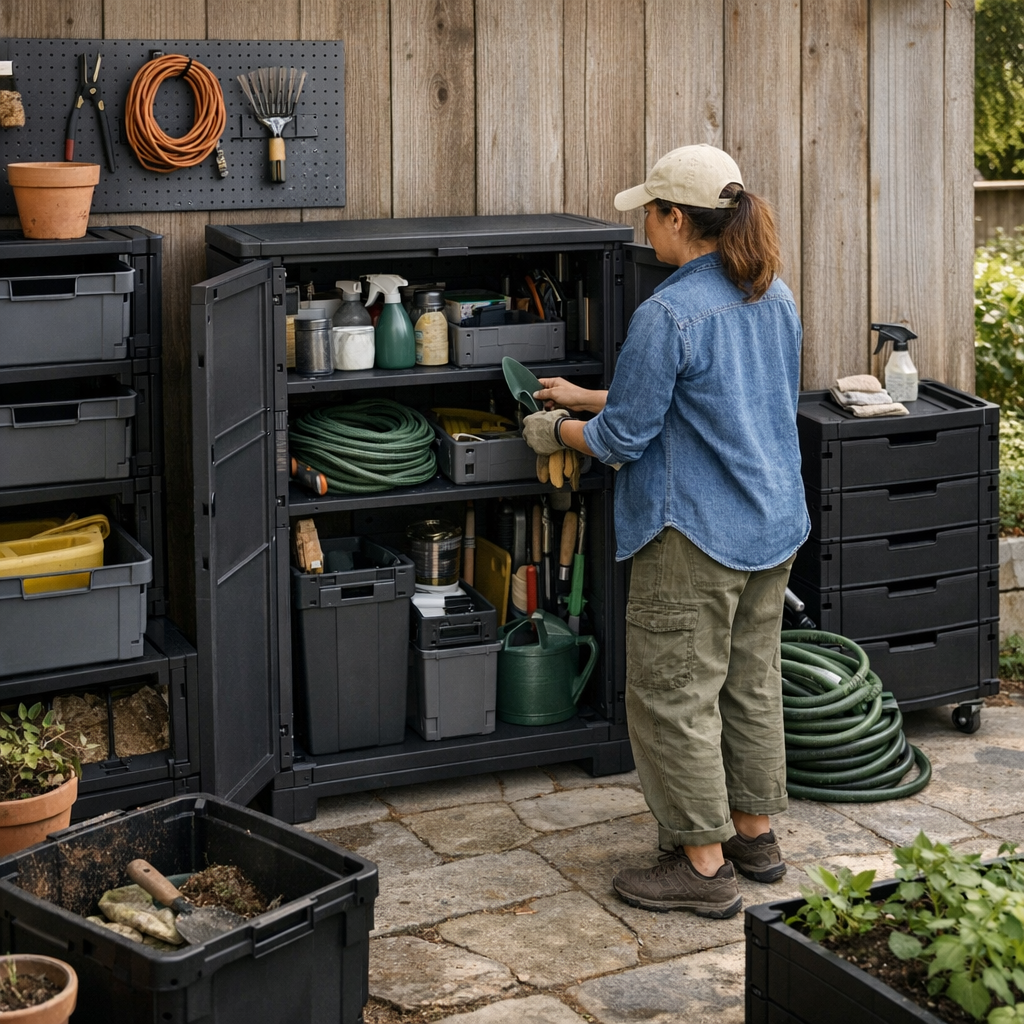
    The real difference surfaces on the third or fourth cycle of use. True weather-sealed outdoor cabinets, with their fit-tight doors and elevated shelves, protect against outdoor chaos. No corners turned into puddles, no tools blending in a debris-filled heap. When you finish watering or pruning, the action is quick: cabinet opens smoothly, everything lands in a defined slot or on a shelf, and you’re done. You don’t need a towel to reclaim your hand spade, and you skip the “sort, shake, and hope nothing’s ruined” ritual every time it rains.

    Scenes That Spell Out the Gap

    Think of this: late afternoon clean-up, a little tired, ready to wind down. The open bin? A single glove slides into a pool at the bottom, the pruner sticks on gritty residue, and you lose time trying to wedge tools around standing clutter. With a proper outdoor cabinet, you swing open the door, slot each item onto a clean, dry shelf, and close up—no improvising, no retracing your steps. The next morning, you start fresh instead of re-sorting. The cabinet isn’t just holding the gear—it’s holding the line for your whole routine.

    Reset Friction: Why “Almost-Right” Setups Stall Out

    It’s easy to cheat space with exposed bins or mobile chests, nudging them for a better fit. But these movable clusters almost always drift—blocking walkways, stacking in corners, and collecting a mess right by the entry. A bin rolls an inch too far and suddenly you’re sidestepping every pass-through. Overflow jams up a corner that’s supposed to be functional. The space that once looked so efficient on paper devolves into a slow-motion shuffle, especially as the weeks go by.

    When you swap a balancing act of loose bins for a proper weather-sealed cabinet—especially one at waist height and with the right shelf—you stop sacrificing floor space and flow. Wet days no longer spawn puddles under your gear. Dead corners aren’t clogged by makeshift stacks. That single upgrade cuts the invisible friction: fewer detours, no more blocking your own path, and less frustration on every lap around your yard.

    Spotting Genuine Friction in Your Storage Zone

    Most organization mishaps aren’t headline moments—they hide in patterns. If you shake water off gloves before starting, dodge a mobile cart you never meant to park there, or find a shelf dusted in windblown grit every week, your system is signaling trouble. Rust patches on hand tools, sluggish resets after rain, and needlessly repeated reshuffling are not minor annoyances—they’re signs that superficial order is masking deeper clutter.

    When Shelving Isn’t Enough: Racks vs. Cabinets

    It’s appealing to keep gear visible on wall racks or rails, but unless the spot is dry and protected, you’re just swapping floor mess for wall mess. Damp tools dry slowly, and visible “order” becomes an illusion when you’re still pausing to clean before use. Fully sealed storage—whether low cabinets or upright chests—not only keeps tools dry and categories distinct, but sidesteps the trap of maintaining a wall of almost-right organization that requires constant tweaking.

    Small Improvements, Big Difference: Why Protection Matters

    The benefits aren’t dramatic at first. No big reveal—just the slow, satisfying lack of clutter, hassle, and backtracking that chips away at your patience in lesser setups. Over the weeks, this streamlined routine shows its value: you walk a clear path, return items in one step, and skip the busywork of draining bins or clearing sidetracked piles. The setup becomes an invisible ally, not another round of work after the work.

    The true test for outdoor storage isn’t a tidy photo—it’s how the space handles a wet Saturday, a quick morning rush, a messy return: staying ready, not just looking ready.

    What to Fix (and What to Abandon)

    If your zone demands constant reshuffling, leaves puddles in supposedly “sealed” bins, or turns every return into an obstacle course, it’s time to rethink—not just tweak. The real gains come from direct-access flow: sealed storage raised off damp ground, routes that don’t force detours or repeated reshuffling, and layouts that match how you actually move and return gear, not just how much fits at rest.

    Quality setup means the area feels easier every week, not harder. That means fewer blocked pathways, actual wall utility (not just filled wall space), zones that aren’t collecting overflow by Friday, and cabinets that stay put—holding the line for both order and speed. True storage solutions do more than look tidy on day one—they work with your real routine, week after week.

    You can browse practical storage solutions at StackNest.

  • Prevent Sticky Stains with a Drip Tray in Utility Cabinets

    A single missed drip in your entryway cabinet is all it takes for a clean zone to unravel fast. You’ve done the reset—the bottles are lined up, the shelf wiped down, everything looks ready to handle the daily shuffle. But entry and drop zones are built for repeated crossings, not just looking controlled after a big clean. Without a drip tray, every detergent bottle, spray, or muddy container leaves you playing catch-up: thin films, crusted residue, and sticky edges start spreading almost invisibly along the spots you touch and pass through the most. The setup might pass for organized, but under steady use, even a tight routine breaks down—one leaky cap or missed wipe is all it takes for the mess to mark a return path through your threshold space.

    A Hidden Mess That Builds Up Fast

    At a glance, the problem doesn’t even look like a problem. The shelf is spotless on Monday; by the next Saturday, after shoes grind past, bags jostle bottles, and someone tosses in gloves, a dull film quietly inches across the surface. Every time a bottle’s not capped straight, drips trail outward. Shoelaces snag at the edge, cuffs drag through unseen stickiness, and backpacks travel through the “clean” zone only to pick up a stripe of grit. The moment you sling a bag, hear it thud, and later notice it carried out the smear—that’s when you know the reset didn’t hold.

    When Resetting Becomes Real Chore Work

    Ignore the slow leaks, and cleanup turns from a quick swipe into real scrubbing—hardened lines that claw onto anything brushing past. The cabinet looks composed from a distance, but up close, every detail reminds you what got missed. Resetting stalls out as you pick at streaks and run down gray build-up, the original order fading far sooner than you planned. This isn’t a fix-and-forget zone; it’s a stress loop—mess returns because movement through the space never really stops.

    How a Simple Drip Tray Shifts the Routine

    Positioning a drip tray right under bottles and detergents forces the zone to behave differently. The tray doesn’t just catch big spills. It quietly absorbs those slow, creeping leaks that always seem to beat the wipe-down. Suddenly, after a week or two, the surface around your storage stays dry to the touch—no more sticky shelf edge, no more crusted smears at the seam. Cleanup resets shrink: grab the tray, rinse it, put it back. Instead of dragging out the reset, the process collapses into a simple lift-and-wash–no scouring along awkward seams or chasing stains under bottles that never really get moved in daily use.

    The Real-World Difference After Repeated Use

    Set two entry setups side by side: a tall cabinet clustering bottles low, or a bench drop spot crowded with wipes and gear. Both reset fine, but after a few days, the setup without a drip tray shows its weakness: sticky ridges fan outward, finger-width and hard to spot until a shoe edge finds them. Bottles set back crooked, containers jostled out of line—all it takes is normal movement to start mess creeping past the intended boundary. Neighbors get marked; gloves, bags, and sleeves show stripes you didn’t notice leaving. The tray version contains all that behind a single edge, holding back spread, and making the mess simple to intercept before it becomes routine cleanup drama.

    Entryway Scenes: How Mess Moves Without a Tray

    It’s raining, boots come off, coats pile on hooks, and someone tosses a half-closed cleaner bottle onto a shelf edge. By morning, a ghostly ring has formed—a visual cue right where you grab for the next item. The ring thickens as bags, sleeves, and hands graze it. The mess goes mobile: a bag corner absorbs the residue and carries it to the next room. That dirt isn’t just limited to the shelf—it spreads to the bag, the jacket, the hallway floor. Cleaning up now means extra steps, chasing tracks away from the entry instead of wrapping up at the source. Every missed intercept expands the reset chore past the transition space.

    Working Against the Daily Drift

    Transition zones either reinforce your routine or break it down. Without real containment, clutter and mess expand faster than you notice. Drop a glove, rush a bottle back at a slant, and the cycle begins again. In a high-use entryway without a tray, quick fixes pile up: extra mats that slide, wipes that bunch and clog, shelves doubled up and reshuffled until the original reset is buried under patches. None of these actually holds the line against the drift—they just delay the next full reset.

    Replacing Shelf Mats with a Shaped Drip Tray

    Mats seem practical, but flat mats migrate, fold, or bleed moisture over the very edges they’re meant to protect. Over time, drips sneak underneath or around, forcing you to clean what’s supposed to be covered. A real tray—shaped slightly wider than the bottles, with a subtle raised lip—blocks those leaks from ever getting to the wood or metal beneath. With enough room for a quick lift, you’re not wrestling the tray out or spilling its load back into the cabinet. Reset time drops from a tedious ten-minute wipe-and-scrape to a two-minute rinse—no hunting in corners, no old spots under forgotten bottles.

    What to Look for When Choosing a Tray

    For high-turnover storage, the ideal tray is shallow but firm, edged just enough for containment, and sized to slide in and out without pinching. Too deep, and you jam every reset; too shallow, and seepage wins. Most entry setups only need a weekly rinse—unless you’re deep in gardening season or cycling heavy outdoor gear, in which case, quick lifts catch the worst before it hardens. One everyday test: if grabbing the tray feels awkward or blocks item flow, it’s wrong for the spot. Fast resets and open movement matter as much as leak control.

    Beyond Bottles: Trays for Planters, Boots, and Mixed-Use Corners

    Drip trays aren’t only for cleaners. Under a watering can, beside sprays, or at the base of a bench where boots drip and plant gear rests, a fitted tray prevents pooling water or streaked soil from creeping outward. In zones meant for both indoor and outdoor traffic, anything set down wet or muddy becomes a candidate for containment. The trick is making the tray flush and free-moving—any delay or friction and the tray becomes a setup you avoid, which means the leaks return and the cycle restarts.

    From Stubborn Stains to Simple Resets

    Boil it down: a drip tray transforms the reset into a single action. No more scrubbing layered residue, no more guessing what’s growing under a bottle pushed to the side. The edge stays cleaner, clutter stops jumping zones, and your threshold isn’t a hidden mess waiting to appear next week. Not every drop-spot leaks equally, but the difference between an exposed shelf and a removable tray is felt after a few cycles. Each re-entry takes less effort, and the area works for your routine—instead of you working around its weak point.

    Shop Betweenry transition-space storage solutions