Author: jaesoon_admin

  • How Small Storage Adjustments Prevent Clutter in Busy Garages

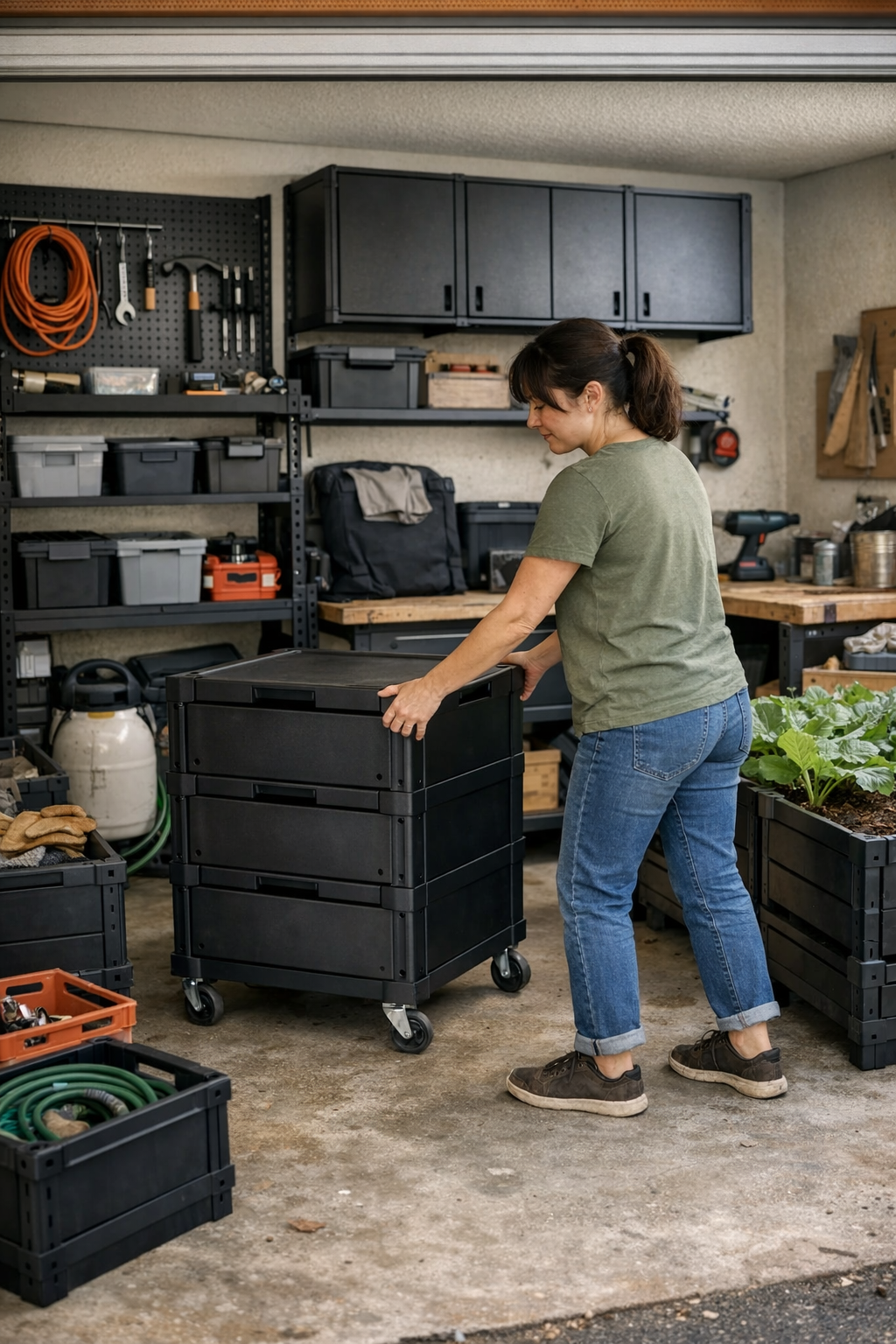
    A garage or workshop always starts out with promise. On setup day, every tool has a resting place, the wall racks line up in perfect rows, and you almost want to leave the space untouched. Fast-forward one week: you’ve sprinted in for the socket wrench, dumped a muddy rake after yardwork, or juggled a box of winter gear with nowhere obvious to drop it. Reality intrudes quickly, and the illusion of “done” fades. In daily life, a tidy setup is only as strong as its weakest return path or most awkwardly parked cart. Every shortcut, every not-quite-right reset adds up—until what looked organized proves anything but intuitive under real, repeated use.

    Where Real Friction Surfaces: The Trap of the Perfect Layout

    You invest in adjustable shelves, anchor the heavy cabinet to the wall, and wheel in a modular chest—trying to wring every inch from your square footage. But the first day you’re in a rush, that careful order hits a snag: the roll-out cart blocks the wall rack, the corner bins demand a sideways shuffle, the deep cabinet is useless with the doors jammed half-shut by overflow. The problem isn’t that you lack storage space or that things look disorganized—it’s that the setup fights you in motion. What begins as a crisp layout can, by Wednesday, feel like a maze of micro-obstacles and routines that require too much thought.

    Static layouts—fixed shelving wedged into corners, wall racks that seemed smart until you tried working around them—turn every small change into a big one. One stray bin forces you to move two others. The cart you rolled out for one project becomes the permanent gatekeeper for half your supplies. Rigidity isn’t just a style issue; it locks you into patterns where “returning things” becomes a negotiation, not a habit.

    Dead Corners and Overflow: Subtle Drifts into Disorder

    The breakdown doesn’t happen suddenly. It creeps in, right where movement gets pinched. You reach for the blower—except the rolling chest, never quite stored right, blocks half the shelf. Or the pile of bins at the back needs moving just to grab a cord that barely gets used. Your wall space is “maximized,” but certain essentials are semi-buried. Soon, the least intuitive returns keep bubbling up: a tote on the floor, gloves stashed wherever there’s a flat surface, hoses draping over what was meant to be a clean bench.

    It’s the midweek scene that tells the real story: Saturday you orchestrate a reset—mobile chest squared off, walkways open, wall rack immaculate. By Monday, the new tote lands blocking access. By Tuesday, you’re tossing garden gloves on top “for just a second.” By Thursday, an awkward box of hardware hovers in the reset zone, always about to be put away. The main path slowly disappears, routines get clumsy, and the next time you want the air hose, you’re sidestepping half a chore’s worth of confusion. No one monumentally failed to “keep up”—the system simply never flowed with the everyday pulse.

    Clutter doesn’t shout; it leaks in where the return path feels like a puzzle. Systems that look crisp at rest falter when packed days force improvisation, and routines break down not at the edge, but right through the heart of the space.

    Reset Fatigue: Why Permanent Order Is a Myth

    Every so-called “optimized” setup, as any homeowner knows, becomes an obstacle course under pressure. Park a mobile drawer too near the workbench, and you’re opening it halfway, nudging it just to squeeze through. Fix a sliding door cabinet in tight, and a single out-of-place bag can block the whole thing. When overflow zones absorb one too many “for now” items, your workflow grinds. It starts with a single trouble spot—maybe the power tools corner, maybe the gardening zone—but soon enough, you’re negotiating every movement: where can I actually step, what do I need to move next?

    These aren’t dramatic disasters. They’re the slow grind of increased friction—return routines that drag, resets that loom larger, and a lingering feeling that order is always one big clean-up away. The supposed efficiency ends up stealing more of your Saturday than you’d ever planned.

    Movement First: Regaining Control Over Your Space

    The real difference comes from setups that clear paths, not just maximize storage. It’s a shift you feel the first time you roll a modular chest two feet out of the collision zone and watch a “dead” wall rack become useful again. Suddenly, you grab gear without wading through obstacles; you return items without orchestrating a mini-move every single time.

    That single shift produced outsized results:

    • Corner shelves finally accessible for daily items instead of emergency overflow storage.
    • Cabinet doors opening wide, not snagged on a wandering cart’s wheels.
    • Resetting became an end-of-day scan—a minute or two of genuine order—instead of a twenty-minute shuffle just to see the floor again.

    There are still long weeks where a project leaves clutter trailing behind. But here’s the difference: pathways stay open, resets don’t require heavy lifting, and returning things no longer teeters on frustration. When the movement flows, the whole system flexes to match your actual routine—not just the plan on a blueprint.

    Sniffing Out Subtle Warning Signs

    Where does your system quietly fail? Bins creep toward the door; caster wheels edge into walkways; carts hover in front of what you actually use. These aren’t signs that you’re lazy; they’re the setup revealing its blind spots. If putting things back feels like a chore, the layout itself is resisting your rhythm—not the other way around.

    Watch for these silent tripwires:

    • Units packed too close to main paths, shrinking usable floor—especially after a busy afternoon.
    • Zones squeezed so tight that a single open drawer or door transforms into an instant hazard or catchall for overflow.
    • Wall sections lost behind car bumpers, open doors, or always-parked tools—turning “accessible” storage into dead space.

    Spotting these patterns early can be the difference between an easy tweak and yet another dreaded all-day reset. The sooner you move the friction, the easier it is to stay ahead of the slow boil toward chaos.

    Building a Setup That Stays Flexible—and Useful

    The goal isn’t more shelves—it’s more freedom to move, return, and reset without thinking twice. If your neatly staged zones gradually erode into “just close enough” returns and haphazard drop spots, it’s time to get ruthless: shift a cart, redraw where overflow lives, slim down the zone footprint to what actually makes sense for your hands-on habits. The most usable spaces aren’t gallery-ready; they simply let you pass through, grab what you need, and put things back with zero resistance, even after a busy week.

    Real improvement is messy, incremental—a far cry from showroom illusion. It’s the small, believable wins: not needing to move a pile every time you want your drill; not getting boxed in by wheels you meant to make things easier; not dreading the Sunday reset. Every solved pinch-point, every reclaimed corner, every streamlined return path moves your garage or workshop from looking organized to actually making sense in use—and that, over time, is what keeps the clutter from creeping back in.

    Find more practical solutions for real spaces at StackNest.

  • Why Fewer Closet Sections Improve Daily Organization and Access

    The over-organized closet looks perfect for a day—until real life takes over. Maybe you’ve stood back and admired your color-coded rows and crisp dividers, only to have the order unravel by Thursday. It’s a setup that looks promising, all sleek segments, until the laundry piles up, you run late, or you try to stash one new jacket. Suddenly, every small section works against you. The closet feels more like a rigid puzzle than a space that flexes for your actual routine.

    When Dividers Start to Get in the Way

    On day one: everything sorted, everything “in its place.” Shirts in one slot, sweaters in another, bags boxed in tight cubbies. But the first time you put away a fresh stack of shirts, reality sets in. You’re forced to wedge, refold, and slide piles just to squeeze in basics. What began as tidy quickly becomes a juggling act—reaching past one stack to grab another, shuffling bins or toppling folded clothes to find a single tee.

    Within a week, categories start to blur. Overflowing stacks lean over divider edges. You want one pair of jeans, but grabbing it means lifting a sagging pile or taking down a basket just to get access. The more segmented the shelf, the more steps each on-the-go change demands.

    Too Many Sections, Too Much Work

    It’s easy to think extra divisions mean extra order. But in practice, every rigid section shapes how you use—or fight—your space. Narrow slots cap how high you can stack, and bins corralled by too many walls lose their original use. Instead of a broad shelf where categories can flex, you’re trapped reshuffling and re-stacking daily.

    Once you bring in a load of laundry, friction ramps up. Jeans bulge over the partition meant to contain them. Socks migrate into the T-shirt stack. Move one pile, and two more lose shape. The closet shifts from “organized” to “always in progress”—a daily struggle to keep up, rather than a space that works with you.

    Scene: The Shelf Reshuffle You Live With

    Imagine three vertical sections at eye level. In theory: socks, jeans, T-shirts in perfect rows. But the minute you’re rushing or short on time? Jeans invade the shirt space. You dig for gym shorts and send two folded piles sliding. Every morning reset gets slower. Even digging out a single scarf means nudging a dozen things out of the way—and a single busy day can leave those divides meaningless.

    Why Wider, Fewer Sections Feel Different

    It feels risky at first—removing dividers, going with one broad shelf. But fewer, wider sections make your space responsive instead of rigid. Without barriers, baskets shift easily, piles adjust, and stacks are reachable without contortion. You can grab what you need without triggering an avalanche. Resetting after laundry is as simple as sliding things sideways, not balancing items one by one through a maze of dividers.

    Think of it this way: combine those three cramped 12-inch slots into one open 36-inch run. Suddenly, you can spread out, shift stacks with both hands, and reset your closet in a minute, not ten. No more tight grab-and-pull routines, no more “where will this go?” puzzles.

    Is Your Closet Picking Fights?

    Notice where the routine gets clumsy. Does pulling one tee topple another stack? Do you dodge bins and boxes to reach the back? Do shelves feel too full, too fast—even though you’re not storing more? If grabbing a single item means moving two others, your sections are probably slowing you down instead of helping.

    The Hidden Problem: When Dividers Make More Clutter

    Every added partition means lost breathing room. Vertical dividers eat shelf area, trapping air above and beside stacks—space you can’t use for storage. Instead of neat stacks, you get compressed piles and bins that get messy faster. A “sock section” fills up and spills over, so socks wander into the shirt pile. The original boundaries blur, and the “organized” look fades under a real week’s worth of use.

    Baskets meant for belts or scarves end up hiding anything that wouldn’t fit elsewhere. What started as categorization turns into a catch-all. Suddenly, you’re hunting for simple things and bumping into invisible storage “rules” made by all those extra walls.

    Troubleshoot: Spot and Fix the Over-Divided Closet

    If a quick reset now takes half your afternoon, or you dread putting away laundry, the signs are clear. Watch for:

    • Piles that collapse when you reach for one item
    • Sections where contents routinely spill or blend together
    • Baskets you stop using for their original purpose
    • That exhausted feeling after every closet “reset”

    One fix: Take out or combine a couple of the tightest dividers. Push bins together and see how much faster you can retrieve, stack, or reset. You want clear categories, but also the freedom to adjust your system for real life—not slow it down with artificial barriers.

    When Storage Flows With Life—Not Against It

    A closet that keeps up with your routine isn’t flawless, but it absorbs the mess. Fewer, broader zones mean you can drop in extra laundry, stash tomorrow’s gym bag, or make space for new finds—without crowding or constant shuffling. Stacks stay upright, not teetering. Shelves feel roomy even as needs shift. And resets take seconds, not stretches of your morning.

    Storage that really works doesn’t just look good on day one—it flexes for your real habits, over and over, so you spend less time fighting your closet and more time moving through your day.

    Shop ClosetWorks storage solutions here.

  • Why Fall Protection Anchor Points Perform Differently Over Time on Job Sites

    The separation between what’s claimed on spec sheets and what plays out day after day at the bench isn’t academic—it’s lived. Nowhere does that divide bite harder than with fall protection anchor points. You install a “rated” anchor, read the clean instructions, trust the paperwork. But fast-forward a week of real work—rotating between wood, steel, or chipped concrete—fatigue sets in, the surface isn’t pristine, and the anchors begin telling their true story.

    Reality Check: Anchors Don’t Age Gracefully

    Out of the box, anchors feel reliable—bolts spin in with honest resistance, tie-offs stay drum-tight, everything behaves. But the shine fades. That satisfying thread gives way to stickiness as dust, paint, and old finish collect. Classic scene: you’re mid-project, glove smudged with concrete fines, and that anchor you trusted yesterday now needs a forced grip just to bite in. Suddenly, what was supposed to be a five-minute reset becomes a wrestling match with stubborn hardware and creeping doubt.

    These daily resets grind down more than just the finish. Minute movements, a half-turn here, an odd vibration there—tiny losses in tightness build up. Under the collar: flecks of metal, dull grooves, an aura of wear. Not disaster, but distraction. You sweep away accumulated shavings, knowing every cycle steals a little security—and adds a little frustration.

    Spec Sheets vs. Jobsite Survival

    Specs look identical until the real work starts. Every anchor in the lineup shows similar load ratings. Instructions copy each other. But in the constant churn—install, load, move, reset—anchors reveal their differences:

    • That “meets code” model? It chews through soft wood after five installs.
    • The one with the nice coating? It grinds against steel, leaving metal confetti at your feet by lunch.

    What matters isn’t how an anchor sounds on paper, but how it survives dozens of cycles in mixed terrain—aged joists one moment, fresh paint the next, and always a crust of shop dust to throw off the fit. A good anchor keeps that confident resistance each time, while bad ones grind, slip, or slowly erode right under your hands.

    Shop Floor Reality: Swapping Between Surfaces

    Picture the pace: first task, you’re fastening into weathered rafters; after break, you’re on a steel I-beam that’s gone through five winters. Drop in your trusted anchor—solid, quick, clean. Next rotation, you borrow an “identical” anchor from backup stock. It snags, jams, and you’re forced to stop to wipe out shavings after every cycle. Not only are you losing time—your confidence dips. Now you’re checking your harness twice, asking yourself if a shortcut is worth the risk. Friction multiplies, both in routine and in the back of your mind.

    Small Problems Stack Up Quickly

    On a spotless test bench, flaws hide. But field anchors go gritty fast. Grind through five panels of concrete—one anchor still bites, the other slips, leaving debris on every reset. Suddenly, you’re spending ten extra minutes an hour just on cleanup. That’s fatigue the manual never warned about: grout dust on every thread, scored finishes, the edge of real-world tool performance, where “good enough” quietly downgrades into “maybe not today.”

    This is where trust erodes: anchor play at the collar, visual debris piling up, lock-down checks performed twice. Nerves fray, especially high up or around crowded conduit runs. Anyone who’s spent a season at height knows the moment a tool stops feeling like an ally and becomes a liability.

    When Quality Matters: What Actually Changes?

    True shop-tested anchors do more than simply resist rust. Anti-corrosion coatings earn their keep spanning paint, rust, steel, and rough wood, shift after shift. Replaceable sleeves mean every fresh install feels like the first. The best anchors maintain a snug, confident “bite” and a steady torque—no surprises, no sudden drag or give—even as you run through a month of mixed surfaces and rushed resets.

    The Payoff: Less Fatigue, Steadier Focus

    A reliable anchor doesn’t just save a minute—it saves your energy and conviction. When the hardware behaves, routines settle. No overthinking, no drawn-out inspections, just the quiet confidence that every tie-off is going to lock in the way you expect. That’s more focus for actual work, less for second-guessing safety equipment.

    After my crews switched to anchors with proven anti-corrosion finish and easily swapped sleeves, the fatigue curve changed. Less edge wear, barely any metal dust, and installs that kept their tightness through every PPE check—day in, day out. After thirty cycles, collar wiggle still below 0.8mm. On real jobsites, that imperceptible difference shows up in everything from faster turnarounds to fewer late-day mistakes.

    Field-Tested Tips: How to Keep Your Edge

    • Put your best anchor through the hardest work first: Save reliable hardware for mixed, dirty, or difficult surfaces—let budget copies handle the clean, stationary installs.
    • Always clean before resetting: A fast wipe at every anchor point clears invisible debris that, left alone, accelerates wear and throws off critical surfaces.
    • Pay attention to metal shavings or stubborn threading: These signals come before major slippage—don’t ignore them just because you’re on a roll.

    Good Hardware Lowers the Friction—Not the Stakes

    The difference between a solid anchor and a “good enough” anchor isn’t just paperwork. It’s found in the hundred small moments: the tool that resists every slip, the anchor that checks out perfectly even with dirty gloves, the gear that stays predictable across long shifts and three battery changes. Tools can’t eliminate friction, but the right ones lower it enough that you stay in control—job after job—when the pressure’s on.

    See gear built for the realities of your work at Gumboll.

  • Why Daily Pet Messes Return and How to Fix Your Routine

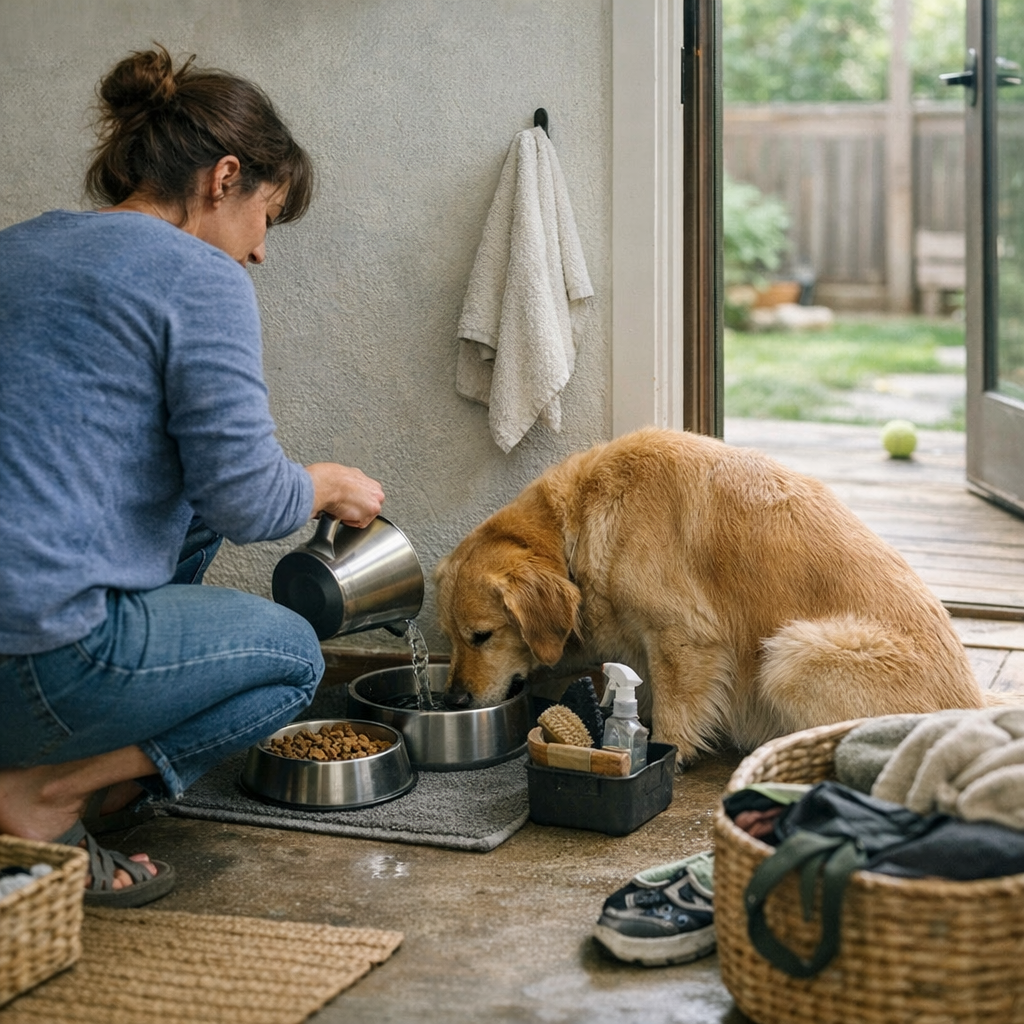
    If the floor under your pet’s bowl is never quite clean, the same water spots reappear overnight, or a line of fur sneaks back along the edge of the play mat—these aren’t just random messes. They’re signs that your daily pet-care setup is forcing you to redo the same work, over and over. Every extra trip to fetch a wipe, every pause to look for the right brush, every bit of cleanup that won’t stay done signals a pattern: when care routines are set up around what looks organized, not around what’s actually easiest in motion, the friction piles up fast. The CalmPetSupply world is built around breaking these low-level cycles—not just hiding daily mess, but clearing the blocks that slow you down day after day.

    Why the Same Messes Keep Returning

    These messes show up in sync with your routine—right after meals, as you close out the night, or each time you walk in from outside. If the cloth for wiping bowls wanders, the grooming brush lands two rooms away, or the water drip isn’t wiped instantly, the same spots and clutter reappear each day. You think you’ve cleaned, but because the weak point was never solved, cleanup becomes a permanent fixture. Background mess spreads; what should feel refreshed ends up as recurring static in your living space.

    Common Pain Points in Daily Care Routines

    Most pet-care effort vanishes in the gaps: water on the floor because the mop is always stored out of reach; fur drifting because the brush can’t be grabbed on the way past; towels buried under laundry instead of ready near the door. Tools migrate, go missing, or get blocked by lids and bins. These aren’t big failures—they’re constant small delays that build up, making your routines heavier and your patience shorter every week.

    Real-World Example: The Missing Wipe-Down

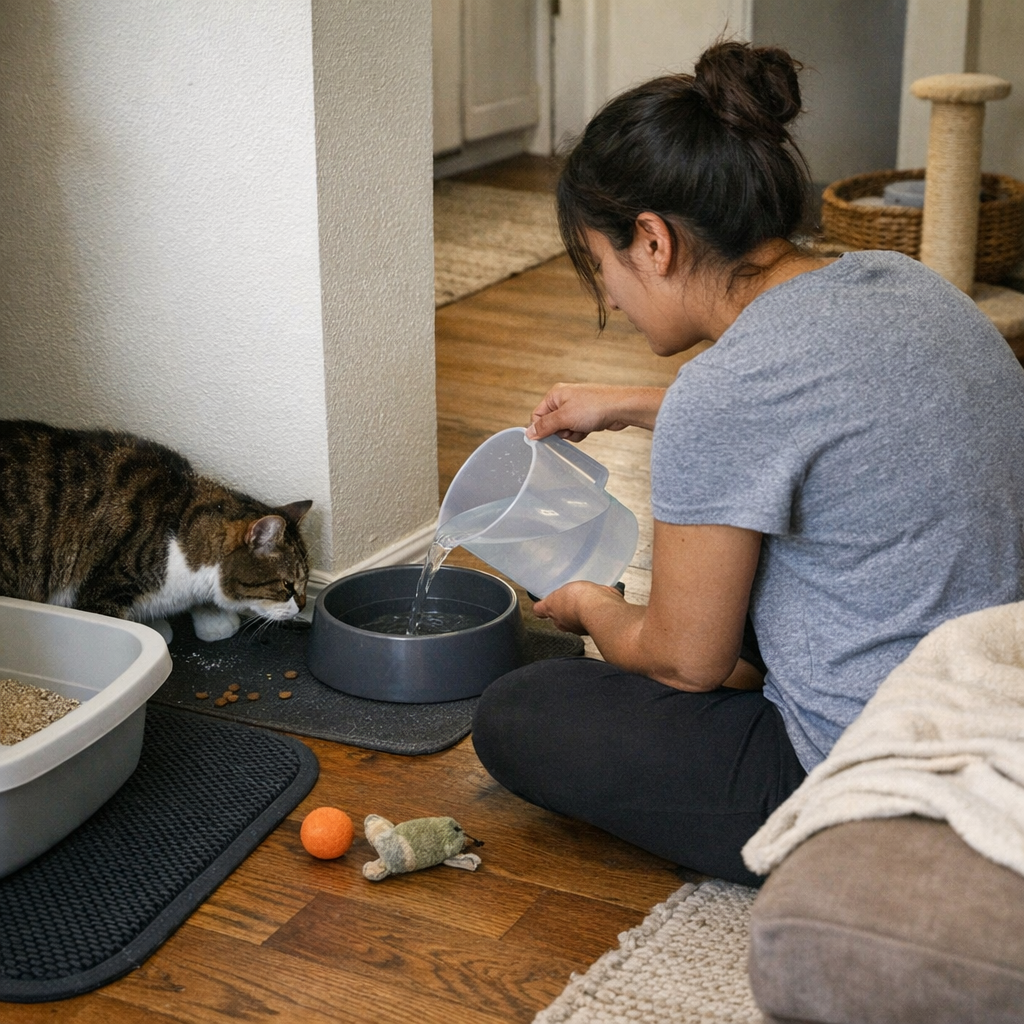
    Consider a cat’s feeding station wedged into a busy kitchen. The mat starts out clean, but stray food bits land just outside the rim. The cloth meant for bowl wipe-downs floats around: one day at the sink, another day missing entirely. You go to wipe, can’t find it, skip the step, and by the end of the week that rim is sticky—turning a tiny job into a harder, more annoying one. The mess isn’t a surprise; it’s the result of not having the simplest tool in the right place, every day.

    When “Neat Enough” Isn’t Enough

    You might line up the bowls, corral supplies into a tidy bin, or make the area look organized from a distance. But the test is what happens under daily pressure: needing the nail clippers, but the bin’s lid jams or slows you down; the brush strays to another room; the pet bed keeps creeping into the hallway, where stray hair starts collecting in shared spaces. “Looking organized” falls apart when the system doesn’t match the way you really use it—forcing you to reset, shuffle, and redo, instead of just moving on.

    The Problem with Split Attention

    Every time you bend for a bottle that’s not there, pause to hunt for a missing towel, or detour to grab a brush from across the house, your routine takes another hit. Resetting after each interruption wastes more time than the mess itself. Five seconds extra, every time, across meals, walks, and bedtime, slowly adds up—turning basic housekeeping into a steady chain of overlooked clutter, missed wipes, and, eventually, skipped steps.

    One Small Change, Big Difference

    Sometimes the difference is one minor placement. In one routine, the never-ending sticky bowl rim vanished after mounting a towel hook right under the feeding shelf: the cloth was always there and never forgotten. Suddenly, wipe-downs happened automatically, surfaces stayed clean, mental drag dropped off—for good. The relief wasn’t in buying something new, but in spotting the setup’s weakest link and correcting it where the problem kept resurfacing.

    Making Daily Cleanup Blend Into Your Day

    A lasting setup doesn’t just look good for inspection—it flows with you. Keep tools where the friction appears, not where they “should” go. Store wipes within real arm’s reach of every bowl and mat. Place the grooming brush where it naturally lands after use. Use bins that open without two hands. If supplies wander, adjust until they stick with your actual pattern. Each spot that becomes second nature to reach is one repeat mess that quietly disappears from the loop.

    Closing the Loop on Repeated Mess

    A pet-care system succeeds when daily resets are so natural you barely notice them. If you keep getting stuck on old messes, lost tools, or routines that never feel smooth, the actual problem is a missing link or misplaced supply—hidden in plain sight. Even a single fix, like a towel that doesn’t drift, can clear a whole string of micro-frustrations and give you back the time and focus for what you actually want to do with your pet.

    For more practical tips or to see tools that close the daily-care loop, visit calmpetsupply.myshopify.com.

  • Adjusting Playtime Before Dinner Calms Indoor Cats and Reduces Mess

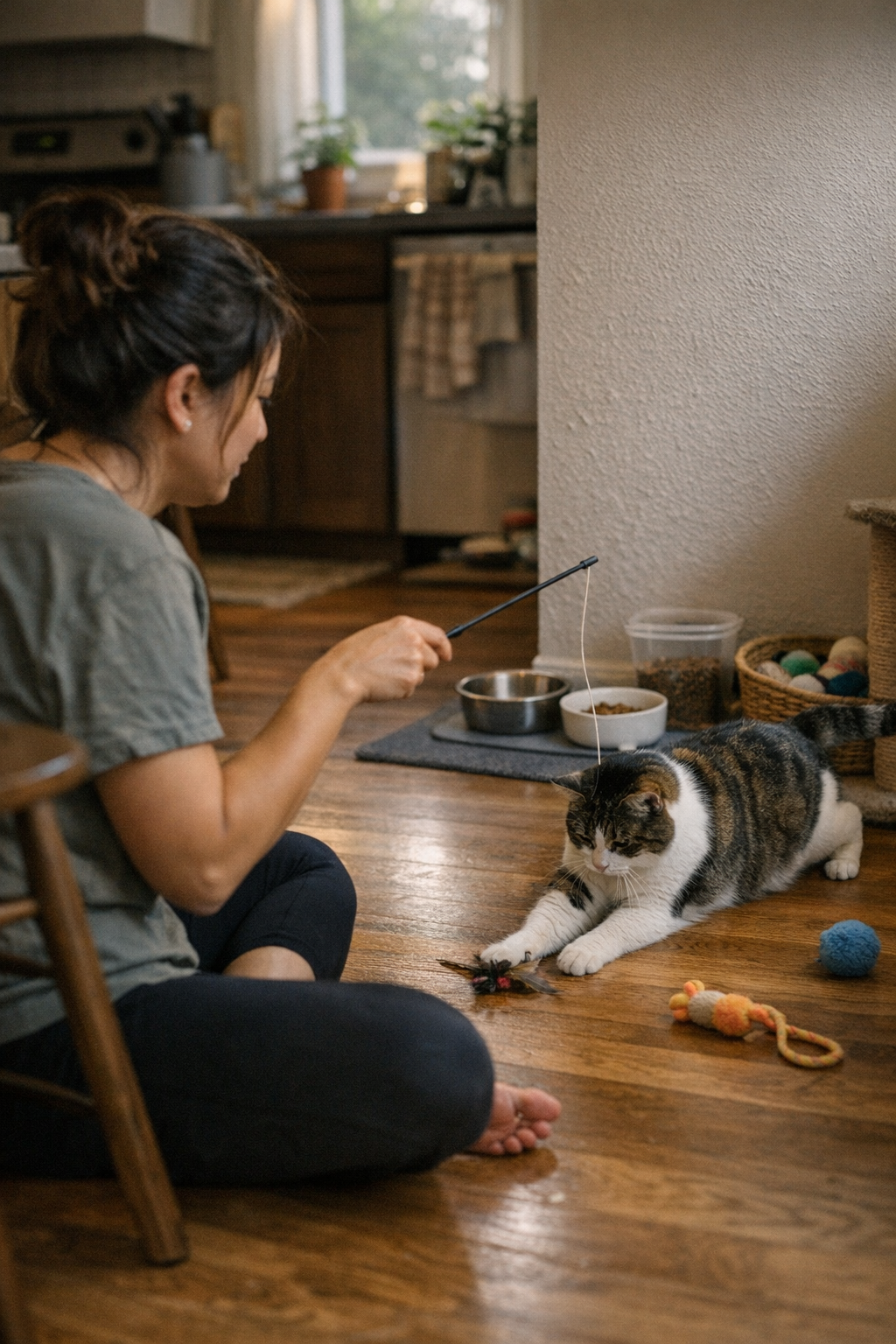
    Indoor cat life promises order—until late afternoon proves otherwise. You’ve stacked the food bowls, lined up water dishes, and corralled the toys into a basket, but one off-schedule refill or an early dinner whine and it all unravels. Suddenly, you’re stepping over a plush mouse blocking the pantry door, wiping up water before you can even reach the mat, and realizing the “tidy” setup just forces you to repeat the same cycle: clear, reset, repeat, while your cat surges through the feeding corner with more energy than the setup can actually handle. The real frustration isn’t a messy look—it’s that your carefully organized space rarely survives the overlap of playtime, mealtime, and evening cleanup as the hours stack up.

    When Setup Doesn’t Survive the Rush: Overlapping Cat Routines Exposed

    Most home systems don’t collapse all at once—they slip under the pressure of timing. In theory, mats fit, bins nestle under shelves, and toys have a basket. But every evening, friction builds where routines collide.

    • Your hand goes for the scoop but finds a rubber ball blocking it behind the food container.
    • Counters meant to be clear for a quick wipe are crowded again, with the cat zigzagging underfoot before you even finish one pass.
    • Lunch wipe-downs, once delayed, pile into the busy end of the day—paw prints layered with yesterday’s crumbs and stray litter showing up just in time for dinner.

    Feeding, play, and reset no longer line up—they tangle. Cat pacing and meows fill the kitchen, toys resurface in the high-traffic walkway, and your “neat” arrangement demands new attention just as you’re ready to relax.

    How Play Timing Can Spill Mess Beyond the Setup

    A space that looks under control at noon falls apart once dinner energy crests. When playtime gets pushed to the end—after feeding or as a bedtime afterthought—cats build up energy that explodes into the feeding area and surrounding rooms. The visible pattern: circling in front of bowls, pawing at mat edges, loud calls for attention, and toys migrated dangerously into walking paths right as you prep food or try to move cleanup supplies.

    Control fades fast: meowing ramps up, feeding corners clutter, and midnight “order” dissolves as cats push for attention the setup never actually contains.

    It’s not just mess—it’s friction: dinner routines stall as you shuffle bins, re-capture toys, and watch the kitchen morph from a cleared zone to a source of nightly interruptions, all before you even reach the finish line of bedtime.

    Late-Day Pressure Points: The Setup’s Real Test

    The difference between an organized look and a manageable system becomes obvious after 5 p.m. By midday: bowls full, litter brushed, toys in their spot. By early evening, flaws show instantly.

    • A cat stationing itself near the bowl—meowing, pawing, or bumping the mat just as the kitchen sees the most through-traffic.
    • Water splashed well beyond the mat’s edge, forcing a full kitchen wipe instead of a quick one-spot fix.
    • Toys escaping their “zone,” showing up under dining chairs or in walkways once the evening surge arrives.
    • Cleanup gear is visible, but never quite within arm’s reach when a sudden spill hits—turning minor resets into stop-and-start routines.

    By bedtime, you’re not just picking up stray toys—you’re backtracking to catch crumbs and water trails, sidestepping cleanup tools you left out earlier, and realizing the “reset” is never really final. The organization collapses at the busiest stretch, demanding one more round of fixes every single night.

    Rewiring the Routine: The Case for Moving Play Before Meals

    One real shift—moving interactive play before the evening meal—breaks this cycle. When cats burn off energy in a set block of play, chaos doesn’t explode just as you’re preparing food. The science is simple: play channels nervous energy, leaving cats less primed to race through the feeding zone, call out for attention, or turn every mat and bowl into their own post-dinner playground.

    What stands out after 15–20 minutes of pre-meal play isn’t just a calmer cat. It’s immediate, visible change:

    • Persistent pacing and meal-time meowing shrinks—the kitchen transforms from a pressure spot into a quieter prep area.
    • Toys stay closer to their play mat, rather than scattering into every open space as soon as the bowl hits the floor.
    • Cleanup is streamlined: a quick mat wipe is usually enough, replacing the full sweep or frantic toy hunt that once closed every day.

    Instead of a rush at the bowl, you notice a smoother handoff: play ends, feeding happens without crowding, and the rest area actually signals “wind-down” instead of “let’s do it all again.” The room can finally move through meal, play, and rest without each stage permanently undoing the one before it.

    Containing Play—and The Cleanup That Follows

    Timing isn’t enough if play spreads through the whole house. Deliberately anchoring play to a mat, one corner, or a single room keeps the mess—and the reset—tight. Instead of springing toys across multiple rooms, play objects land where play happens. When mealtime arrives, rounding up those toys is part of a single loop: clear the mat, prep bowls, wipe down. No extended search, no scoop wedged under a chair, no extra cleanup gear dragged from another room.

    When both the energy and the objects are contained, the after-dinner transition goes from a drawn-out process to a practical reset you can rely on—without layering in interruptions or drift from feeding area to shared living space.

    What Actually Changes: Real Adjustments That Matter

    Feeding Setups That Hold Up Under Real Pressure

    Mats and bins look like solutions, but they only deliver if the pattern behind them works. Making play part of the pre-dinner routine flips the usual order: water’s less likely to spill because cats approach the station less keyed-up, bowls stay where they’re set instead of launching into the corner, and toys stop trailing into meal prep paths. Resets that once meant repeat scrubbing or chasing loose pieces shrink to one quick swipe and refill—because energy and mess don’t peak at the same time.

    Cleanup Supplies Actually Within Reach

    Organization rarely breaks down because of what you own—it fails when reach and timing don’t match real use. With routines tightened, cleanup cloths or the right brush stay in their intended spot, not shuffled away by crowding or a spill outside the feeding area. The fix: a single reset round, with tools that are where your hands actually need them, when you need them—ending the constant scavenger hunt for what should be right there.

    Shared Spaces That Stay Open Instead of Clogged

    When the overflow between play and feeding is controlled, walkways and communal corners clear up. Instead of dodging a wired cat that’s rushing between food and forgotten toys—or tripping on a ball nestled beside the fridge—human spaces stay passable. Even the visual difference is real: the room may look only slightly different, but functions more easily when tasks don’t leak into each other’s zones.

    Why Timing Changes More Than Bins or Mats Ever Could

    Better storage helps, but alone it rarely solves the actual stress point: repeated friction during resets. Routines that match the real arc of the day do more. When cats expend energy before mealtime, the feeding station isn’t a magnet for pent-up energy and chaos, and your reset finishes in targeted minutes—not endless second passes.

    The improvement isn’t instantly dramatic, but two days in, the trouble becomes obvious in its absence. Evening resets need less effort, cleanup stays localized, and items return to their spots instead of floating into hallways or turning up at bedtime. Setup supports the day’s actual flow—instead of holding out for a final “fix” that rarely stays fixed.

    Summary: Small Shifts, Tangible Relief in the Everyday

    A home that feels truly livable with cats isn’t won by organizing alone—it’s built on minor but powerful tweaks that show up in repeated use. Playing with your cat before dinner catches energy before it spills into stress, keeps feeding and shared zones calmer, and reduces repetitive mess that turns end-of-day into a restart. With faster resets and fewer aftershocks, your setup finally starts working for you—especially in the moments most setups quietly fall apart.

    Explore more tools for practical, real-life indoor cat setups at StillWhisker.

  • How Repeated Use Reveals the True Comfort of Your Cat’s Routine

    The real difference between a tidy cat corner and a livable one isn’t visible until your routine breaks down. The bowls look set, the water’s filled, and toys are tucked away—until you actually use the space for a day or two. Suddenly, that “organized” feeding area blocks your kitchen rush, the mat meant to catch litter only redirects it, and last night’s stashed toys spill out into your walking path by noon. Most setups look finished until you’re forced to dodge, reset, or wipe down the same weak point for the third time before lunch. The StillWhisker world lives in that gap: the space between nice-once and tolerable-every-day.

    When “Neat Enough” Starts Demanding Too Much

    A surface-level tidy setup gives a false sense of simplicity. Bowls have their place, your cat finds their spot, and the space looks ready—but real friction shows up once your schedule tightens. Try refilling water during a late morning or grabbing breakfast alongside the food bowls, and the order collapses. You nudge the bowl to get around it. You move the mat just so you can open a cabinet. You slide a toy but know it’s headed back underfoot within the hour.

    The frustration isn’t about chaos; it’s about maintenance that creeps into your day. Mats slow—but don’t stop—litter trails. Water dishes against the wall turn into minor hazards when you’re rushing. Blankets nestled in cat corners never quite stay flat, so each nap cycle means another crease or trip back to smooth things out. “Tidy” loses its edge when you realize you’re cleaning or adjusting more than resting.

    Routine vs. Variety: What Actually Holds Up?

    Advice often splits cat setups into two camps: keep everything constant for comfort, or mix things up to keep your cat interested. But when you’re the one cleaning, refilling, and resetting under time pressure, aesthetics and novelty fade. What matters is a setup that doesn’t turn every meal, water refill, or cleanup into a fresh opportunity for interruption.

    Routine is supposed to settle stress, for everyone in the home. But if the only thing consistent about your setup is how quickly it slides out of order, it’s not working. Micro-adjustments—pushing bowls back, drying spill spots, re-placing a mat—signal a flawed system, not just normal pet care. If you’re redoing yesterday’s cleanup before you’ve finished breakfast, friction has replaced function.

    The tipping point: When you’re doubling cleanup, running out of water between refills, or fixing the same mess every day, your “routine” has become your burden.

    Real-Life Examples: Where Friction Creeps In

    A Feeding Area That Spreads Too Far

    The classic corner setup: two bowls, one mat, food and water side by side. It only works until crumbs start sticking outside the mat, and morning spills push the bowls into your path to the fridge. If you routinely step around or over the setup, or have to shift it to use your own kitchen, that compact corner has outgrown itself. You’re now living around the cat zone, not with it.

    The Rest Corner That Never Sits Still

    You make a nest with a mat, a blanket, and a couple of toys. But daily reality: blankets bunched from every nap, toys roll under the couch, and you’re tasked with a reset each time you pass by. The supposed comfort zone starts to feel like another chore, not a stable spot for either of you.

    Litter-Adjacent Trails That Don’t Stay Contained

    A mat by the box is supposed to contain mess, but the trail of granules always stretches further by the weekend. Litter sneaks past the edge into the hallway. By the time you see dull tracks on your floor, the “quick” brush-up has multiplied into an unplanned clean.

    Toy Sprawl in Shared Spaces

    Baskets hold toys at the start, but by afternoon, two or three have migrated to main walkways, under chairs, or between couch cushions. You scoop them up, only to repeat the same circuit later. Each stray toy is a small interruption—a reminder that shared spaces never truly stay clear unless the structure is built for return, not just appearance.

    Small Adjustments That Quietly Cut Down the Work

    The fixes that actually work don’t overhaul your entire space. It’s about making the high-friction points less constant:

    Moving the Mat Out of the Path

    Even a six-inch nudge away from a busy walkway cuts out the daily ritual of bumping or stepping over bowls. The relief isn’t dramatic—it’s that you stop thinking about the inconvenience entirely.

    Upgrading to a Deeper, Sturdier Bowl

    Shallow bowls vanish fast, especially for multi-cat homes or warm rooms. A deeper, heavier bowl reduces urgency around refills and means it stays in place when you’re rushing around it. Every “fix” saved is a minute kept for yourself.

    Heavier Mats at the Litter Box

    The leap from a basic mat to a denser, edge-weighted one is what finally stops granules mid-escape. Suddenly you’re not vacuuming trails between the box and the hallway—you’re wiping up an actual defined area. More mat isn’t the answer; the right mat in the right place is.

    Easy-Grab Cleanup Supplies Nearby

    A dustpan or pack of wipes within reach—not hidden under a sink—means you can tackle little messes as they happen. A 20-second swipe beats a weekly hour hunt for every last granule or streak.

    What to Shift—and What to Leave Consistent

    Consistency builds comfort—but only if it stays friction-free. Move feeding, water, or rest zones only when persistent problems appear: blocked walkways, spilled water, litter trails, or comfort setups that turn into daily maintenance chores. Changing locations for fun usually unsettles your cat; most just want things to feel predictable.

    Instead, tweak what hurts most: sub in denser mats, swap for heavier bowls, and pull everything off the main thoroughfare. Don’t create change for novelty—adjust to fix patterns that keep stealing time or energy from your routine. If your cat’s environment anchors them, your upgrade goal is to anchor yourself, too.

    How to Spot a Structure That’s Slowly Failing

    Look for these signs: the same crumbs build up before noon, you’re topping off water more often, you have to nudge items just to cook or clean, or the mess repeats in the exact same spots even after redesign. These are proof that your setup is fighting the daily cycle, not flowing with it. Each interruption costs attention, time, or both—and the “solution” shouldn’t add another layer of work.

    If your every routine—kitchen, cleaning, or cat care—stalls at the same obstacle, you’re living with a structure that’s quietly failing in the background. It’s a signal you should stop resetting and start rethinking.

    When Looks Don’t Equal Long-Term Ease

    A neat-looking area is only a win if it holds up by midday—most don’t. Feeding zones may look perfect at dawn but demand a mop and re-arrange before lunch. Water bowls “fit” under the window but dry early or get kicked out of place by afternoon. Each visual calm hides the true test: can you handle the space on autopilot, or does it cost you two cleanups for every one your cat enjoys?

    The setups that work aren’t just easy on the eyes—they ask less from you, reset in seconds, and don’t spill into your main living area with every cycle. Real improvements land in places you stop thinking about—not because you don’t care, but because you finally don’t have to.

    Real Setup Changes That Stand Up to Daily Cycles

    Over time, you learn quickly which setups disappear into the background, and which ones keep yelling for attention. These differences are rarely huge at first—but they show up every single day:

    • A litter mat that stops scatter means hallway floors stay clean without constant sweeping.
    • A bowl that resists toppling or straying doesn’t need twice-a-day repositioning.
    • A feeding station nudged out of foot traffic ends bowl-bumping battles every time you pass through.

    The setups that hold up aren’t the ones that look the most finished at first—they’re the ones that stop costing you minutes, energy, and attention as days go by. For practical, repeatable indoor-cat arrangements that actually reduce your cleanup, block less of your shared space, and rarely ask for a reset mid-routine, see what StillWhisker has ready for the real-life pattern you’re already living through: StillWhisker.

  • How Small Changes in Dog Bed Placement Improve Rest and Routine

    Night after night, the friction shows up the same way: your dog circles, pauses, abandons their bed, or camps by the hallway instead of settling down. What looks like a mild quirk or a brief delay isn’t just costing you minutes—it keeps replaying, quietly reshaping the whole evening’s rhythm. When the rest zone never quite fits, bedtime stops being a smooth handoff and turns into a pattern of interruptions, false starts, and small resets—for you and your dog.

    The Hidden Snags of a “Pretty Good” Rest Zone

    Most beds seem fine at first glance: soft surface, tucked away from the main walkway, maybe a quick wipe clean after walks. But friction lives in the details—especially when the rest area just barely works under real, repeated routines. If you notice your dog circling, getting up again, or ending up stretched out on the hard floor near the door, that’s not just stubbornness. It’s a signal the setup’s missing something critical. Rest-zone trouble rarely looks dramatic; it’s a series of minor breakdowns, resurfacing right at the edge of daily flow—pulling your evening off track every time the pattern repeats.

    Unlike spilled bowls or visible toy sprawl, rest-area friction piles up as micro-delays and repeated owner interventions. You end up nudging the bed, shifting your own plans, and quietly accepting every small restart as part of the deal. The cost isn’t obvious at first, but soon the bedtime “reset” is so routine you forget how smooth it could be.

    Scene in Motion: Calm, Then Stalled

    The cycle is familiar: after a long day, you guide your dog toward their bed in the main room. At a glance, nothing’s wrong. But as you try to power down—book, phone, or just a moment to breathe—out comes the pacing: sniff, spin, unfinished rest. You reason it’s just a fluke, but three nights in a row, your dog ends up curled awkwardly in the hall or underfoot instead of using the actual bed. Next, you’re moving the bed, bringing over a blanket, or calling your dog back. Each tweak buys you a minute, but the reset cycle always returns. Bedtime isn’t calm—it’s an ongoing adjustment.

    Why “Looks Comfortable” Can Still Fail

    The most common mistake: mistaking softness or a tidy corner for true comfort. If a bed floats in the middle of traffic, camps under an air vent, or sits adrift in open space, it sends the wrong signal to your dog every time. Where you notice hesitations, fidgeting, or constant restarts, setup is usually the hidden culprit:

    • Circling for ages before lying down
    • Short-lived rests ending in pacing or floor flops
    • Bed abandoned for cooler/warm/harder/closer ground

    This isn’t just a cushion issue. When dogs don’t trust the setup—placement, coverage, safety edge—they’ll keep searching for a “right” spot. Instead of blaming the dog or the weather, look for the physical arrangement running counter to your actual routine.

    Comfort vs. Routine Flow: Everyday Tradeoffs

    Some setups seem practical because they’re out of the main walkway or make the room look neater. But if the bed blocks a quick path in the morning, needs to be pushed aside before coffee, or becomes an obstacle when you head for the leash, the tradeoff’s real. The dilemma keeps popping up: comfort for the dog versus smoother movement for everyone else. You sacrifice one for the other, and each shortcut—staging, tucking away, or constant shuffling—makes itself known the next time your routine is interrupted or slowed down.

    The Overlooked Barriers: Exposure, Air, and Anchoring

    A rest area that fails under pressure often comes down to what’s missing—subtle but crucial signals in the environment:

    • Overly open: A bed in plain sight, with nothing to lean against, leaves most dogs on edge—too exposed to fully relax, especially at transition times.
    • Drafty or variable temperature: Vents, doors, or window edges create invisible “cold spots” that drive dogs away, even from a favorite cushion.
    • Lack of anchoring: Beds with no side against a wall or furniture deny dogs an instinctive safe edge. Most dogs press against something—they can’t do that if the bed floats solo.

    Repeated use magnifies these misses. You start seeing a consistent drift—bed empty again, dog resting in the nearest nook, routine back to square one. Every failed reset is a signal that what looks logical in the daytime breaks down where friction lives: quick transitions, end-of-day fatigue, and any moment you need less hassle, not more.

    Failed Fixes: Where Swapping Gear Misses the Point

    People try blankets, treats, nicer covers—sometimes it works once, never twice. The real culprit? Placement and experience, not softness or price. Move the bed to clear a pathway and suddenly your dog ignores it. Place it by your chair and now drafts make the spot unusable. Each well-intentioned move solves one problem and creates another—if you’re constantly troubleshooting, the structure itself hasn’t lined up with daily reality.

    If you’re nudging the bed for the third night this week, or switching between corners and still seeing restless routines, it isn’t a random quirk. It’s feedback from the living system—yours and your dog’s—asking for a better fit, not another soft layer.

    Placement Tweaks That Stop the Back-and-Forth

    The highest-leverage move is often the simplest: set a bed so one side anchors firmly against a wall—close but not isolated from real-life movement. This adjustment flips the experience: now the spot feels protected, not boxed in, and no longer sits in the “dead zone” of a room. Dogs settle sooner; owner routines stop stuttering. Instead of circling, the dog picks a spot, turns once, and stays. And instead of crossing the room at night and finding your path blocked or the bed empty, things just flow.

    Small shifts like this work because they acknowledge how both species actually move: the dog’s need for enclosures, your need for clear walkways and fast resets. You aren’t hiding the bed or putting it in the way—you’re trading surface neatness for functional ease, and it shows up instantly in both of your routines.

    Real Change: What a Week Looks Like After a Proper Move

    After shifting a bed so it touched a support wall and didn’t block any main pathway, the restless cycle broke. Where pacing and hallway naps happened nightly, now the transition to bed happened without fuss. Ten minutes of nighttime circling disappeared. Owner-side? Less coaxing, less dragging the bed around, fewer detours or small frustration spikes. That tiny fix freed up the entire bedtime window—no hidden buildup, no leftover tension carrying into the morning reset.

    Spotting the “Needs Fixing” Pattern

    The clearest signal is behavior on repeat: bed-empty mornings, restless shifting, or the exact same “leave and circle” at the same time each night. Is the bed dragged to a new angle by breakfast? Does your dog avoid their bed after walks or late play? These real-life flags outrank appearance. If you keep requesting your dog to settle, keep repairing the setup, or quietly accept bedtime as a chore, it’s a sign the root issue hasn’t budged. Placement tweaks beat gear upgrades almost every time—a faster reset, easier flow, and a rest area that actually works when you need it.

    Looking Good vs. Really Working: The Living Test

    A rest setup that “looks right” only during the day doesn’t mean it passes the late-night test. Floors stay tidier, but if you’re dodging gear or watching your dog bail for a cold spot, the function isn’t matching the appearance. The real standard: fewer interruptions—not just cleaner surfaces. If you’re still reaching for a leash and hitting a stacked bowl, or detouring around a dog bed to grab the morning coffee, those are friction points you shouldn’t have to live with.

    Smoother routines, less friction: When the rest area fits both the dog’s instincts and the home’s flow, your mind is freed for the next thing—upstairs for the night, wiping paws after a muddy walk, or getting through morning prep without dodging obstacles. Each winning setup trades a little neatness for a lot of daily sanity.

    Troubleshoot the Routine—Reset the Setup

    Don’t settle for a routine that always hiccups after walks, mealtimes, or lights-out. If the same delay keeps reappearing—circling, abandoned beds, or last-minute reshuffles—start with the basics. Is the rest space anchored, free of draft spots, out of traffic but not isolated? Start with these adjustments and work with the rhythm you live every day. If a setup works just once, it isn’t working. When it works every night without hidden resistance, both of you move smoother together.

  • How Smart Pet Travel Bag Setup Reduces Stop-and-Go Frustration

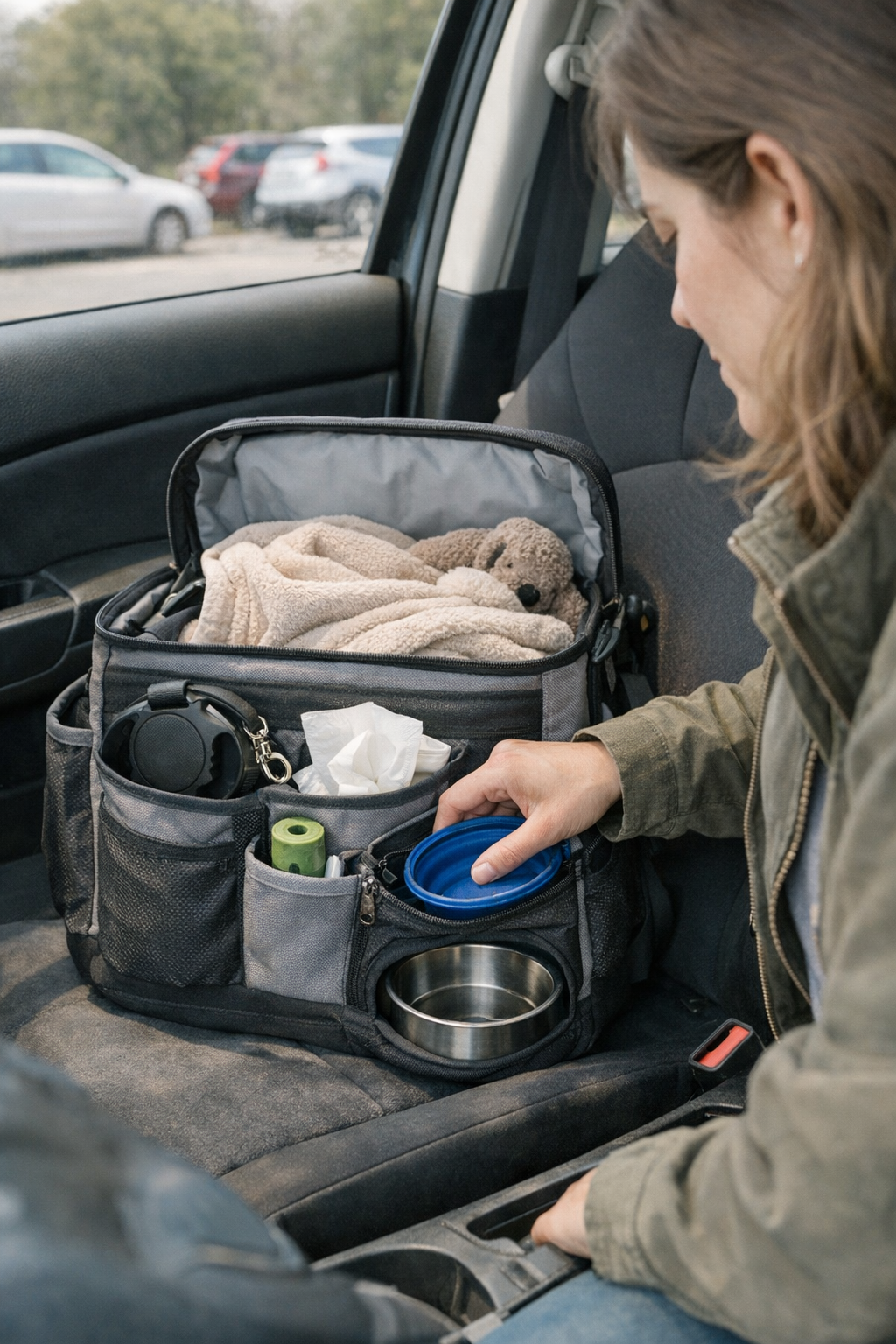
    Your pet travel bag can look like it’s ready for anything—right up until your second or third stop, when the real flaws show up. The first drive out feels smooth. But then comes the next pause: you grab for the leash, fumble for a waste bag, or realize the wipes you need are trapped under your own keys. What looked “organized” on the seat suddenly feels rigid, tangled, or just plain wrong for the way your trip actually unfolds. If a bag’s pockets make sense only while motionless, they don’t survive real pet travel—every minute spent untangling or digging is a stop your pet gets restless, and a trip you’re repeating the awkwardness that never showed up in the mirror at home. This isn’t about neatness. It’s about how setup structure fails—or saves you—once you’re actually on the move and fumbling for the essentials mid-routine, not just admiring the kit fully packed.

    When Pet Travel ‘Looks Ready’ But Doesn’t Work

    Anyone who travels with a pet knows the pattern: you stack the bag, double-check the carrier, sort the treats, leash, wipes, and bowls. Everything looks in place—until the leash gets buried under the blanket, wipes vanish beneath a bowl, or you fish out treats along with your phone. The illusion of order collapses as soon as you need speed. Instead of a quick reach, you’re shuffling, pulling at velcro, or repacking on the sidewalk, all while your pet starts circling or whining in the backseat. The problem isn’t mess, it’s that the order never holds up once the trip becomes stop-and-go.

    Even with supposedly “smart” layouts—labeled sections, upright carriers, extra zippers—the real trouble comes when you have to grab one thing fast. Owner items and pet gear get tangled. Reaching for the leash yanks out a toy or sends a bowl flying into the footwell. That one “clever” pocket, instead of helping, turns into a bottleneck. Under repeated access, everything you thought was separated blurs together, forcing you into a silent reshuffle after every stop.

    Small Delays That Stack with Each Stop

    One stop? Not a crisis. Stop number two or three and you notice the difference. Pulling out a leash means moving two comfort toys. Your dog stares while the waste bag hides under the snacks. Every pause becomes a reset—returning each item to a slot, wishing you didn’t have to. It’s not just time lost. It’s the low-level annoyance that adds up, both for you and your pet. A tidy-looking setup becomes a source of micro-delays, interruptions that erode the flow you thought you had under control.

    The Repeat Flaw: Where Structure Breaks Down

    The most common flaw isn’t a lack of sections—it’s organizing by looks, not actual stop-by-stop needs. Packing everything on one side creates a perfect surface, but in practice, items you need first and most often fight for the same pocket. The symmetrical bag with mirrored pockets looks ready, but at the rest area, those “identical” spaces want to be used at the same time—and don’t. Dragging the leash free dislodges comfort items. Getting to wipes means unburying them from under your own snack stash. One movement starts a cascade of others, and repeated friction builds with every return-to-car moment.

    Each Restart Reveals Where It Breaks

    The structure rarely fails at the first stop. It’s the second, third, or—on busy travel days—the fourth time you pause that the overlap and spillover become unavoidable. You’re holding a leash, wipes are under two other things, the bowl slips sideways every time you drive off. Your hands fill up, your pet gets livelier, and every attempt at a quick grab stretches into a minor reset. When the cleanup pouch or waste bags live in the same compartment as the rest, even finding a single item leaves your setup less organized than when you started.

    Segment, Don’t Stack: Real Separation Means Real Ease

    So what actually changes this experience? Not more pockets, but true separation—dedicated zones for the grab-and-go essentials. That means a leash, a bowl, wipes, and waste bags each with their own path to your hand, never blocked by comfort toys or wedged with treats. It’s the feel of opening a single side pocket and getting exactly what you need the first time, not sifting through a top layer of items you don’t.

    Smart setup options—vertical pouches, separate side-access pockets, or modular panel layouts—show their worth during messier travel moments. Bathroom break at a busy gas station? Wipes and waste bags are right where you reach, not behind a blanket. Muddy paws and impatient dog? The bowl isn’t trapped by last night’s toy; it’s in its sleeve, ready in one motion. There’s no hidden repacking. There’s no “dig, return, and hope it makes sense later.” The whole routine gets lighter because it’s finally built for movement, not just parking-lot show-and-tell.

    Single-Motion Grab vs. Forced Repacking

    When essentials live in their own zones—a waste bag and wipes pocket, a dedicated leash holder—resetting becomes one motion, not a full cycle of shifting and re-tucking. Comfort items and human snacks find a true “elsewhere.” You stop carrying chaos forward at every stop. Instead of your organization decaying, the kit holds up. There’s less memory work, less fidgeting, less stop-time tension. The bag “works” because it’s no longer fighting the routine you actually use.

    Everyday Travel Scenes: When Structure Fails or Holds

    • Coffee stop mess: You plan for a fast pickup. Instead, the leash is pinned by snack packs, and freeing it tips over the bowl. You fix it, but at the next stop the whole stack shifts again.
    • Rest area scramble: Dog paws are muddy. The wipes, supposedly “easy to grab,” are buried under a bulky blanket. Cleanup becomes a slow, juggling act.
    • Reload routine stalls: Pockets line up evenly, but they clash in real use. Putting things away while keeping a hand on the pet just means more overlap, more mixing, more chance of missing the next quick grab.
    • Blanket-bowl standoff: The comfort throw sits on top all morning. When you reach for the water bowl, you dig a path through unrelated items. Quick access becomes a repeated, clumsy detour.

    Each scene, minor on its own, points to the invisible drag: a structure pretending at readiness, but always just about to trip you up. Tiny delays collect, and the bag that once seemed like the solution starts to feel like a process that barely holds together.

    Shifting to a Flow-First Pet Travel Setup

    It’s not about adding more. It’s about separating by use-pattern, not just by sight. Stack your true everyday essentials at the top or place them in a side pocket that never hosts anything else. Comfort extras, toys, and treats follow—never overlapping or living above the items you touch after every stop. The best bags let you define these boundaries: vertical waste bag sleeve, a wipe-dedicated panel, a leash-clip spot, a sealed bowl pocket. When comfort gear goes in its own secured area, routine stops lose their drag. The experience improves—not by perfect packing, but by building a flow that holds when travel gets choppy.

    How Does Real Structure Change Travel?

    Two or three stops in a single day—one at a muggy park, one on the way home—tell you fast if your setup strategy holds. When you can reach, return, and reset in seconds, the static disappears. Your pet doesn’t fidget, you don’t second-guess, and tiny interferences vanish. The nagging sense of “almost organized” gets replaced by one-handed, actually-ready access—the sort you notice more by its lack of friction than any new look. The weak points are quieter, and travel feels lighter, not because the bag is fancier, but because it was built for how you actually use it under real, imperfect conditions.

    Final Fix: Make “Ready” Mean Ready—Every Time

    The most useful pet travel setup isn’t the tidiest-looking. It’s the one that stays out of your way on every pause, every reach, every return. Swapping visual order for true separation and reach, you cut repeated interruptions and remove the constant temptation to give up and repack. The perfect bag doesn’t exist—but the workable one keeps up with you, leaving ordinary travel lighter, movement clearer, and rest stops simply easier to restart.

    Browse practical travel bag and setup solutions at PawGoTravel.

  • Optimizing Carry-On Organization for Comfortable Long Flights

    Your carry-on looks sharp when you zip it shut at home—but on the plane, that “order” faces a real test. The real trouble waits until you’re halfway through a flight: knuckles jammed under the seat hunting for your charging cable, a snack wedged in the wrong pouch, or your passport nowhere near reach when you actually need it. The bag that felt streamline in the boarding line quickly reveals its weak points—awkward reaches, layered cubes, and lost seconds every time you dig for the wrong item. A setup that was “perfectly packed” in your hallway becomes a clumsy obstacle course during routine retrievals or when you need to slide into your seat mid-boarding.

    When “Organized” Still Isn’t Easy: The Cabin Reality

    Surface order fools you—until you’re boxed in and pressed for space. In the security line or gate area, it all looks under control. Cubes and pouches stacked tight, zippers closed, everything in its square. But as soon as you’re crammed in the cabin, knees colliding with the next row, your setup’s real nature surfaces.

    Simple requests—reaching for a pen, headphones, or snack—turn into half-unpacking jobs. You’re pulling at one cube to reach another, stacking pouches on your lap, and shuffling loose charging wires or spilled lip balm, all while trying not to elbow your neighbor. Each retrieval adds a little more disorder. Instead of quick grabs, you’re working around your own organization—forced to reverse your packing logic every single time you need one small thing.

    Why Functional Access Matters More Than First Impressions

    Packing discipline hides structural mistakes. Plenty of travelers obsess over how their bags look in the queue—no clutter, all sections flush. But the moment you have to reach for anything after takeoff, the flaw is obvious: visual order is meaningless if every access interrupts your row, shakes your tray, or requires a noisy full-bag unzip.

    After four or five reaches, finger fatigue and cramped knees make minor inefficiencies feel major. If your charger lives beneath three “neat” layers, even the cleanest pack layout becomes a liability. The true test is rapid, silent, one-hand retrieval—without dismantling your seat ecosystem or holding up the aisle. Not just “packed well,” but functionally set up for repeated use when headspace and elbow room vanish.

    Spotting the Carry-On Pain Points In Real Time

    That One Item Always Buried

    Every routine exposes the flaw you designed in. On every flight, one essential always ends up trapped: the ID lost beneath pouches, the snack morphed into a scavenger hunt, or a cord wedged into the tightest cube. Not a big deal once, but across a trip or two, the small irritation compounds, making your bag feel more like a blockade than a toolkit. That’s when setups with no true quick-access section start breaking down.

    The Accordion Effect: Repeated Repacking in Tight Spaces

    Aisle bottlenecks and limited seat width leave no space for re-sorting. Grab a book and your toiletries come along too; try replacing a pouch quietly, and you end up restacking your “order” from scratch. By the arrival gate, the carry-on that was packed to perfection now carries the subtle chaos of a rushed repack—items lurk in the wrong spot, and you’re already dreading the next retrieval.

    Anatomy of an Interrupted Rest

    On overnight flights, even small retrieval jobs feel disruptive. The sleep mask you packed “neatly” now means sliding a hand beneath trays or footwells, risking spills or waking your neighbor. Often, it’s not worth the hassle—so you do without, trading comfort for the false promise of initial order. The cost: missed rest and a setup that resists your real needs.

    Fast-Access: The Quick Win That Changes Everything

    Simple structure beats clever stacking every time: move essentials—passport, charger, snack, pen—into a top-zip or slim exterior pocket. The real shift is clear when the aisle crowds or the seat in front reclines. Suddenly you reach what you need with one discreet motion, staying settled and not unraveling your core pack job. The more you travel, the more you notice: every effective carry-on has a visible, reachable “high frequency” section that’s never blocked by cubes, pouches, or compression straps.

    Compartment Choices: Stacks Aren’t Always Smarter

    Everyone tries to maximize inside dimensions with vertical stacks, but deep-layered cubes mean a full mini-unpack each time you want something from the bottom. With exterior-access layouts, you cut the friction—repeat retrieval is a quick grab, not a production. That’s worth more than a few square inches saved inside. The lesson: if you need it more than once in flight, it doesn’t belong under cubes or inside your “arrival only” zones.

    Lessons From Repeat Travel: What Actually Reduces In-Transit Friction?

    On repeat trips, you spot patterns. Packing for looks means fatigue down the line: every extra unzip, every cube toppled, every missed zip path adds up. The real wins go to setups that let you move only once per needed item—not setups that look perfect on the baggage scanner. A single, intentionally designed quick-access pocket is more valuable than double the packing cubes for mid-trip convenience.

    If you keep fishing out the same item mid-air, give it front-row access. If you avoid opening your main compartment because it feels like opening a mini suitcase each time, you’re ready for an outer-pocket reset. When one quick retrieval turns into three movements and two repacks, it’s not organization—it’s just delay in disguise.

    How to Reorganize for Real Comfort: Simple Adjustments That Last

    Shift your most-used items—snacks, travel docs, earbuds—into exterior pouches or flat-access pockets meant for flight, not just for packing show. Keep “in-seat” essentials spread flat, so nothing gets buried beneath a layered stack. Treat outer pockets as mission-critical space; the fewer steps between you and your everyday items, the less friction you’ll feel as time and tiredness stack up.

    Your main compartment still holds its place: stash your “arrival only” gear deep and out of mind. But for everything else you need again and again, trade that perfect, dense stack for honest, instant access. You’ll feel the improvement before the flight even lands—and every time you sidestep the urge to reorder your entire bag just to find what you need in transit.

    Shop CarryOnSupply for travel organizers, quick-access pouches, and other carry-on essentials

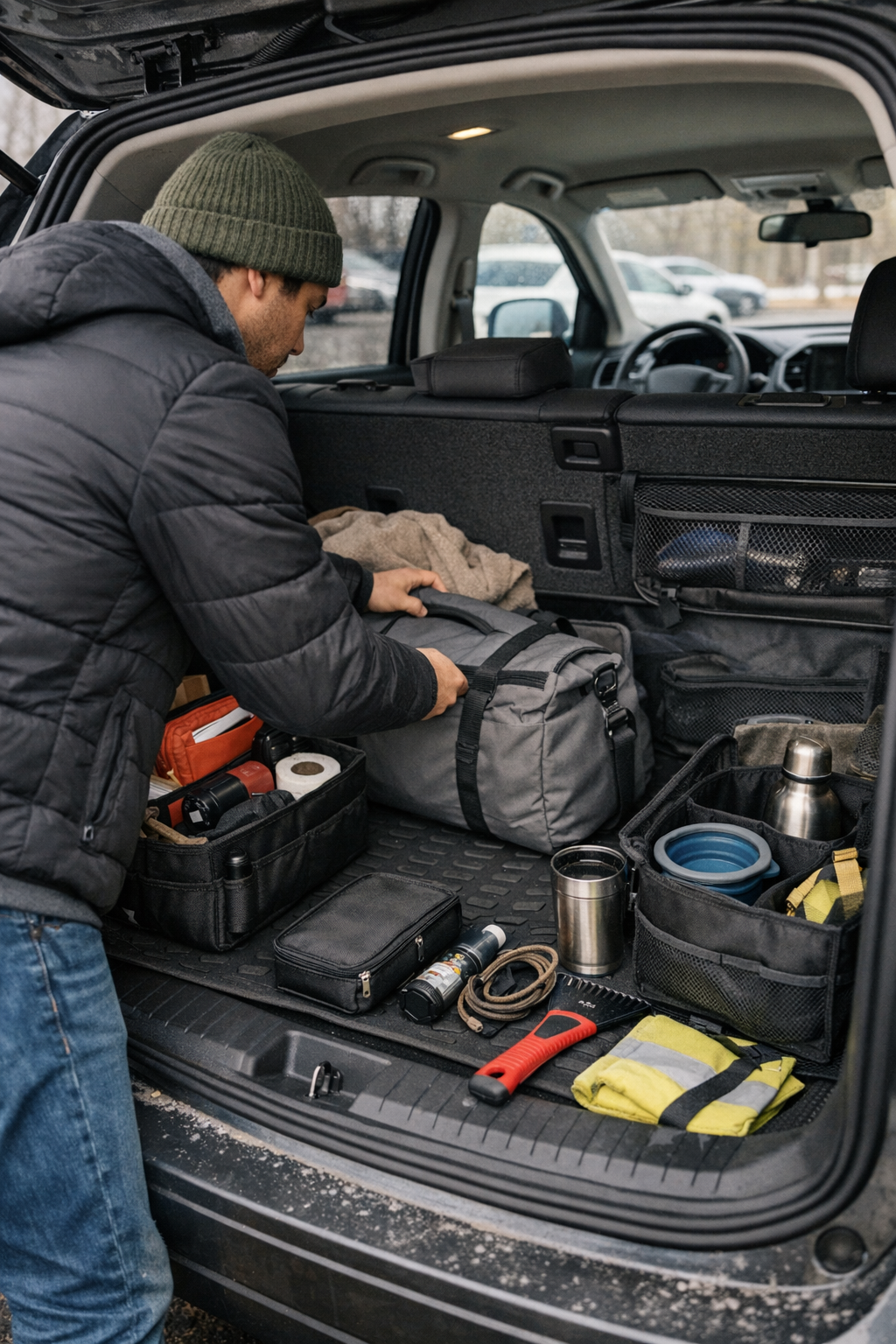
  • Keep Winter Driving Tools Within Easy Reach to Avoid Morning Frustration

    A car that looks organized can still fight you every winter morning. Slide into your supposedly neat cabin—floormats clean, dash wiped, bins “in place”—but the real setback comes the second you try to grab what you need and come up empty. You’re running late, fingers stiff from the cold, and instead of scooping up your scraper or charger, you’re contorting around seat corners, prying open gloveboxes, or digging through a tangled under-seat bin. “Clean” means nothing when reaching for a tool hijacks your routine—especially when it’s freezing or dark and every slow second costs you more than convenience.

    When “Organized” Isn’t Quick Enough

    It’s easy to think your interior is set up—everything with a spot. But try actually accessing what you use weekly and the illusion breaks. Getting a de-icer means sliding a tote aside or wrestling past a tangle of USB cables just to free a charger that always manages to snake under your bag. Sometimes you’re stretching from the driver’s seat for something shoved in a footwell or leaning awkwardly over the passenger seat when all you want is a flashlight before another icy commute.

    This problem doesn’t just show up in bad weather. Any routine—quick errands, back-to-back stops, sharing the car with someone else—turns “hidden clutter” into real friction. When you always have to unbuckle, lean, or empty a bin to get one tool, the neat look just exaggerates how inconvenient things really are. That slow drag of small delays repeats, eating into tight mornings or rushed afternoons and building a kind of low-grade frustration that resets every drive.

    The Trap of Tidy But Inaccessible

    Most “organization” hacks fail because they hide mess at the price of real access. Throw essentials deep into consoles or floor bins and you’re forced to break everyday flow just to reach what you need. On a frosty morning, you might find yourself down on one knee, coat picking up last week’s salt, stretching for a scraper wedged beneath a seat or blocked by a tote that was supposed to “streamline” the space. A neat trunk liner means nothing if it’s covering up the only tool you can’t drive off without.

    If you share your car, it gets worse: someone else’s idea of tidying bins means your most-used gear shifts spots—stacked deeper or switched to the other door. In one week, your “system” is suddenly guesswork, and you add another search-and-rearrange step to every morning—or skip using that tool altogether, until the next time it’s a hassle all over again.

    Cold Reality: Where Weak Setups Fail Fastest

    Cold weather exposes every small compromise. Head out after a hard frost, hop in, and instantly notice the scraper that was supposed to live in the door has migrated (again)—now stuck under a tangled charging cable or slid to the far side of the passenger footwell. One hurried reach means you’re pulling things loose, brushing grime onto your coat, untangling the charger, and realizing, once again, you’ll be late. Organized appearance can’t compete with setups that actually keep your hands moving, not hunting.

    This isn’t occasional; it’s a routine breakdown every time your setup breaks the rhythm of daily use. The longer you live with it, the more obvious the gap between “looks fixed” and “feels right” grows. Multiply that hassle by each cold start, dark return, or busy handoff, and the cost is undeniable—neatness on the surface, but a grind underneath.

    The Shift: Prioritize Instant Access, Not Just Storage

    Real improvement starts by cutting your “everyday access” down to the one or two items you truly reach for every drive. Forget about taping down every loose cable or building trunk bins for dozens of gadgets. The core is brutally specific: the single charger cable you actually use, the one scraper you always need, the flashlight you reach for in the dark. These belong within direct, seat-side reach—either in a shallow door pocket, a slim seat-edge tray, or a no-guess cubby at arm’s length. If you have to change posture, you’ve already lost seconds you can’t get back in a rush.

    Make this the non-negotiable “home zone”—items are always reset there after use, the way you automatically return the keys. Instantly, setup stops being a visual trick and starts working on the level you actually use it: drive, reach, grab, go. No shifting, no digging, no excuses in cold or rain. You save not just time, but focus—redirecting energy from hunting for a cord or scraping tool to actually getting on the road.

    Restrict Reach—Do Less, Need Less

    Squeezing everything within easy reach only brings back clutter. Narrow it to what really belongs: in winter, that might mean just a scraper and one key cable. Anything else—emergency flares you haven’t touched in a year, or a backup dog leash—lives elsewhere. If you only use an item once a month, it shouldn’t claim premium territory by your seat or door. Let “used weekly” decide what earns your closest spot.

    Sort By How You Use, Not What Category Calls For

    It’s habit, not label, that should shape your setup. Think through an average week: which tools do you actually grab, and when? Don’t fall for the instinct to build up “emergency kits” in the cabin if those items never come out until a rare breakdown. Instead, keep daily drivers—scraper, charger, maybe wipes or sanitizer—ready without digging. Let the rarely used stuff slide back into trunks, under seats, or gloveboxes, freeing the main zone for what keeps you moving.

    Use Organizers That Speed You Up, Not Slow You Down

    Visibility isn’t the fix if it just means a mess on display. Stick to slim, easy-access bins and door organizers, but keep them shallow enough that nothing stacks or buries your essentials. The right system stays open enough for a blind grab but keeps gear from drifting, spilling, or blocking the way. Don’t overfill—each added slot is just another way to hold up your reach or tempt you to store too much right where it doesn’t belong.

    Every Day, Less Friction—Even on Repeat

    The best setups earn their keep on repeat: cold mornings, late nights, quick errand runs, and shared-car chaos. Slide behind the wheel and, without thinking, grab your scraper or charger—every item has an automatic “home” in reach. No delayed departures, no kneeling on cold concrete, no wrestling a spaghetti of cables loose just to top up your phone. Over time, you notice the difference not by how clean your cabin looks in photos, but by how rarely you cuss at the clutter or stop to rearrange things before you can actually drive.

    The setups that only look under control leave you slowed and annoyed after every ordinary trip, especially as winter drags on. A tidy bin or covered tray is no win if it buries the gear you actually need when you’re rushed, frozen, or halfway into the next commute. Each time you skip a hassle—no digging, no untangling, no awkward reach—it adds up, building a routine that just works. That’s not about neatness for its own sake; it’s about structure that finally lines up with the way you really use your car, every single day.

    Organize your car to serve the routine, not just the photo. Find more practical solutions at DriveWellSupply.