Author: jaesoon_admin

  • Improving Stair Safety with Strategic Lighting Placement and Shadow Control

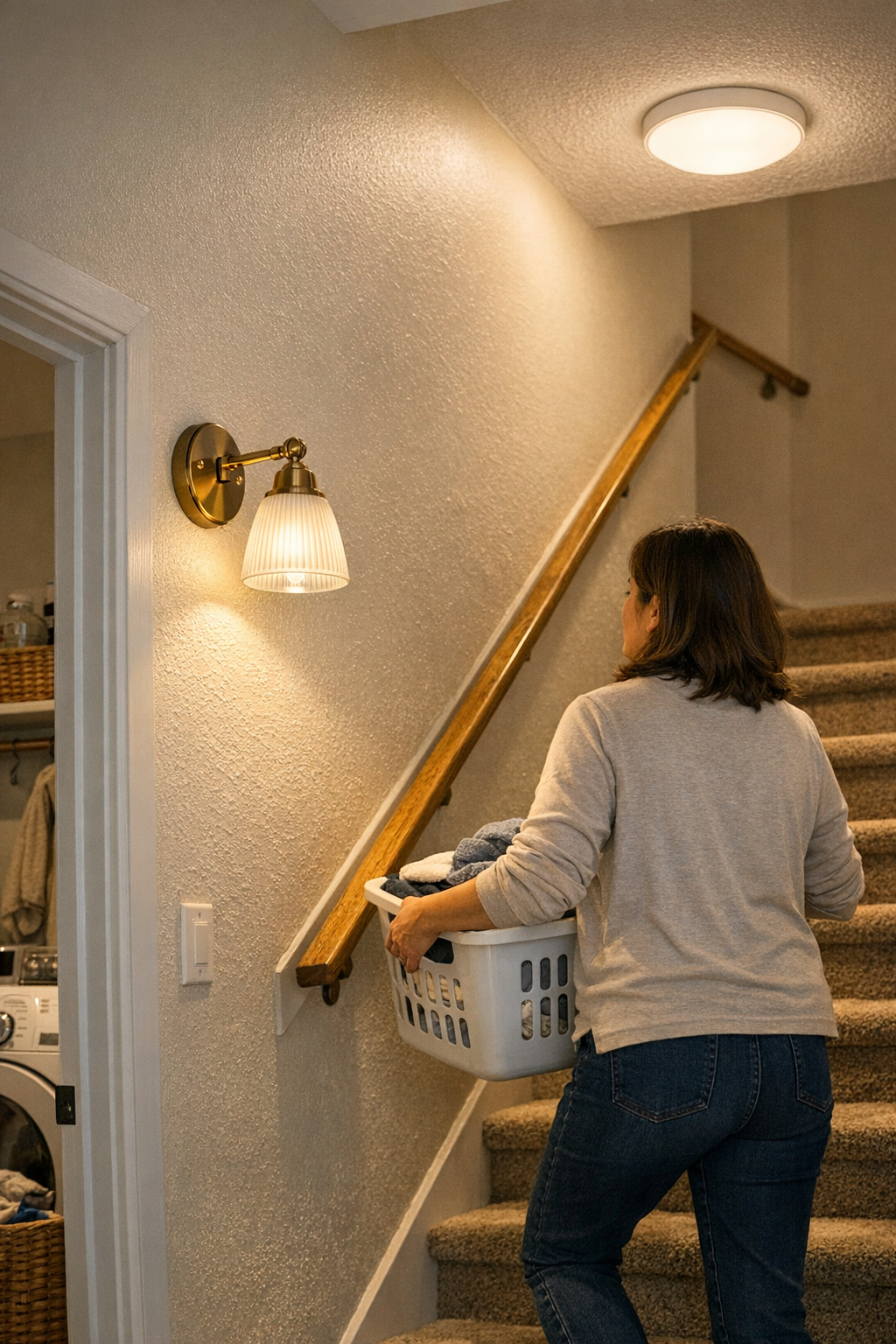
    Stairways that look “well-lit” on paper can still trip you up—literally. It only takes one off-angle shadow or washed-out tread for a safe staircase to become a daily hazard. You think you’ve solved lighting by installing a bright ceiling fixture, but halfway up with a laundry basket, your own shadow erases the step edge right when you need it most. The difference between looking illuminated and actually moving confidently comes into focus fast, especially in spaces where safe footing isn’t optional.

    Where Lighting Looks Fine—but Fails in Use

    Lighting that seems balanced at rest falls apart during real movement. You notice it on stairs, landings, and corners: any time the layout, humidity, or what you’re carrying shifts, so do the shadows. Take the routine of hauling laundry upstairs. Arms lifted, basket in hand, your own load blocks what ceiling light was doing. Steps that looked clear vanish under your elbow, and steam from damp fabric scatters reflection into odd, harsh lines. It isn’t a crisis; it’s a slow, constant friction—hesitation, feeling for the rail, moving slower because visibility is suddenly unreliable.

    The weakness isn’t just theoretical. A single ceiling light creates a false sense of completion, but leaves pockets of uncertainty where shadows pile up on the tread’s leading edge, or glare bounces from glossy paint. You have to aim your next step, not just take it. Every trip becomes a negotiation with the space, not a routine part of your day.

    Layering Fixtures: The Practical Case

    Flush-mount and semi-flush ceiling lights offer wide coverage but almost always miss problem zones—around stair turns, under low ceilings, or in oddly angled runs. On damp, busy days, their light scatters, but still doesn’t fill in the zones where movement happens. The problem becomes clearest when condensation or everyday chaos throws shadows into the exact places you rely on.

    Wall sconces and directional wall-mounted lights bypass this limitation: Placing a sconce along the ascend or next to the landing cuts through shadowed “dead zones.” Side-light along the stair and rail restores contrast right where feet and hands move. Now, when you pass with a load, shadows can’t erase the step’s outline; visibility stays reliable from both above and beside. The intensity isn’t higher, but the usefulness is. Instead of a broad, overhead wash, you get targeted clarity that doesn’t collapse the second your routine changes.

    Real-World Friction: The Laundry Room Stairs

    Picture the stairway just off the laundry area. A flush-mount ceiling fixture casts plenty of light until you, a basket, and humid air enter the scene. Suddenly, every upward step is half in shadow, half faded by steam—perfect conditions for a misplaced foot. You slow down, feel for the rail, and check every tread. Week after week, it doesn’t get easier. This isn’t rare or dramatic; it’s how an “adequately lit” space sneaks risk into ordinary routines, turning what should be automatic into a mild obstacle course.

    How a Small Change Makes a Big Difference

    Add a wall sconce at stair-rail height—set about 70 centimeters above the run—and the game changes. Tread edges stay outlined, even when arms and loads get in the way. What used to turn foggy under damp air and awkward shadows now shows crisp, predictable step shapes every time. That constant second-guessing at the stair edge? Fades out. Movement becomes smooth again—three points of contact aren’t a feat of caution but a true habit, restored by light that fits the space’s real demands.

    Blended Lighting: Addressing Everyday Movement

    Layered lighting isn’t about overkill or ornament—it’s about control and confidence where you use it most. Combining wall sconces with carefully placed ceiling lights covers what wide ambient fixtures inevitably miss. Short stair runs, cramped ceilings, or odd geometry all amplify the flaws of single-source lighting. But place a directional wall fixture to highlight treads, or shift a ceiling panel toward a darkened sidewall, and the whole movement path changes. You stop compensating for the light’s limits, and the space starts supporting you instead.

    This approach isn’t visible in style photos, but it’s obvious every time you carry groceries upstairs after a shower, or cross the hall with full arms. Small shifts in fixture type and placement decide whether “enough” light really means safe, fluid movement—or if confidence quietly drains away, trip by trip, until you’re always pausing or favoring one side.

    When to Rethink Your Fixture Layout

    Notice yourself pausing on a stair landing, leaning into corners, or checking the sweep of a handrail under your palm? Those aren’t quirks—they’re signs your lighting isn’t keeping up. Shadows that crawl over the edge of a step, rails that drift in and out of sight, or corners that stay murky after upgrades: all mean the fixture mix isn’t matching real movement. Swapping in a higher wattage ceiling bulb only blunts the problem. True improvement comes from added direction and coverage, not simply more brightness.

    Look for these friction points:

    • Dark bands and shadow traps at tread edges or along railings
    • Lopsided light that only works from one direction (usually overhead)
    • Pathways that get “dimmer” while hands are full or after a shower
    • Harsh glare from reflective paint or awkward fixture angle

    Addressing these means your movements become automatic again, not calculated. Often, just one or two added fixtures—a stair-side sconce or a shifted ceiling panel—quietly erase the obstacles, making every trip less tense and more predictable.

    The Value of Lighting That Adapts to Real Life

    Reliable indoor lighting is judged by daily routines, not just first impressions. It has to deliver during humidity from showers, arms full of laundry, crossings when your hands can’t probe for the next step. Decorative fixtures and bigger bulbs rarely solve the problem zones—they just hide them behind a gloss of general brightness. Lighting that layers sources, controls shadows, and matches the space’s real pattern of use keeps confidence high and routines brisk. It’s the change you only notice when trips up and down the stairs finally go back to being forgettable again—in the best way.

    Find practical solutions for every critical indoor space at LightHelper.
  • How Reliable Outdoor Storage Transforms Everyday Backyard Routines

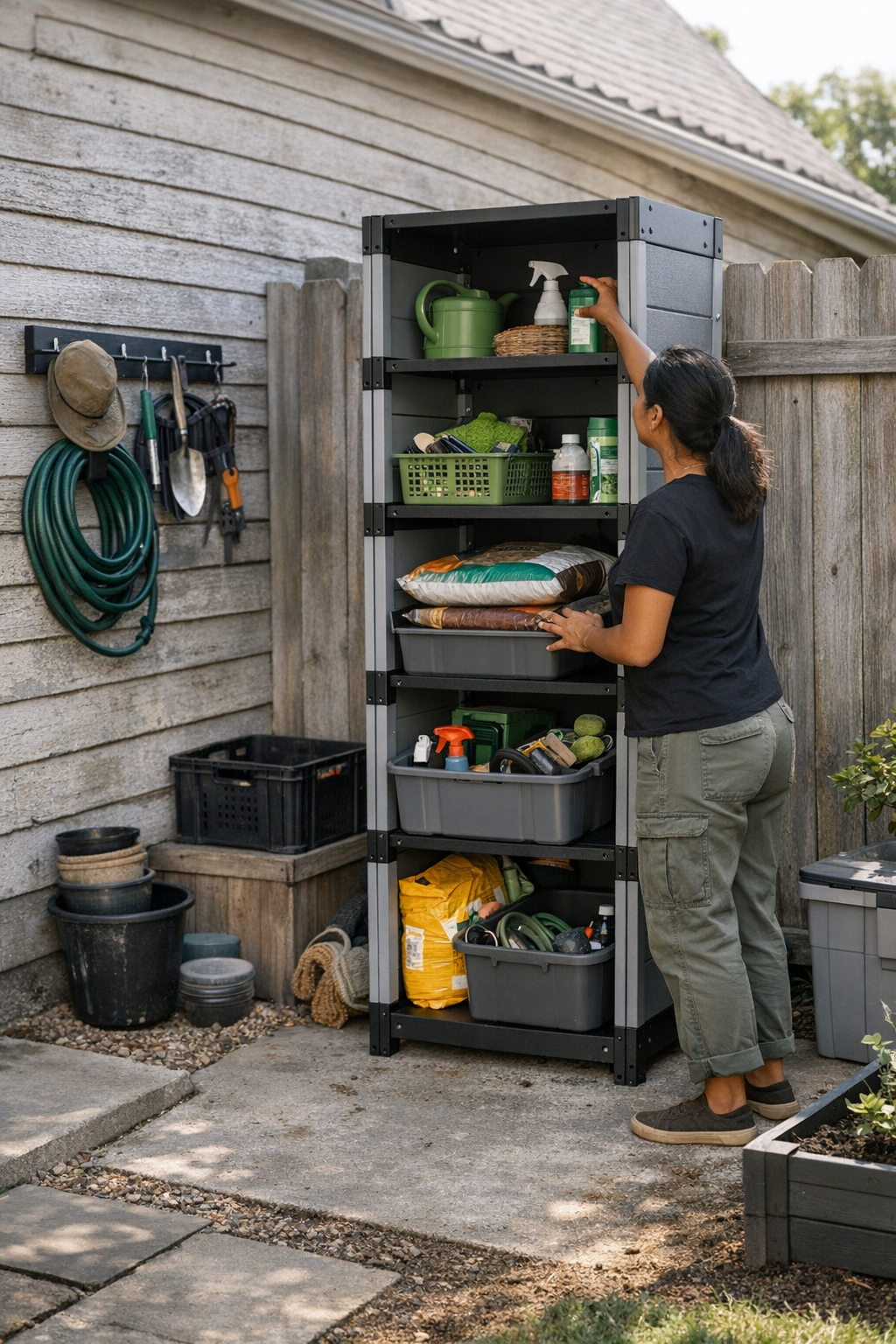
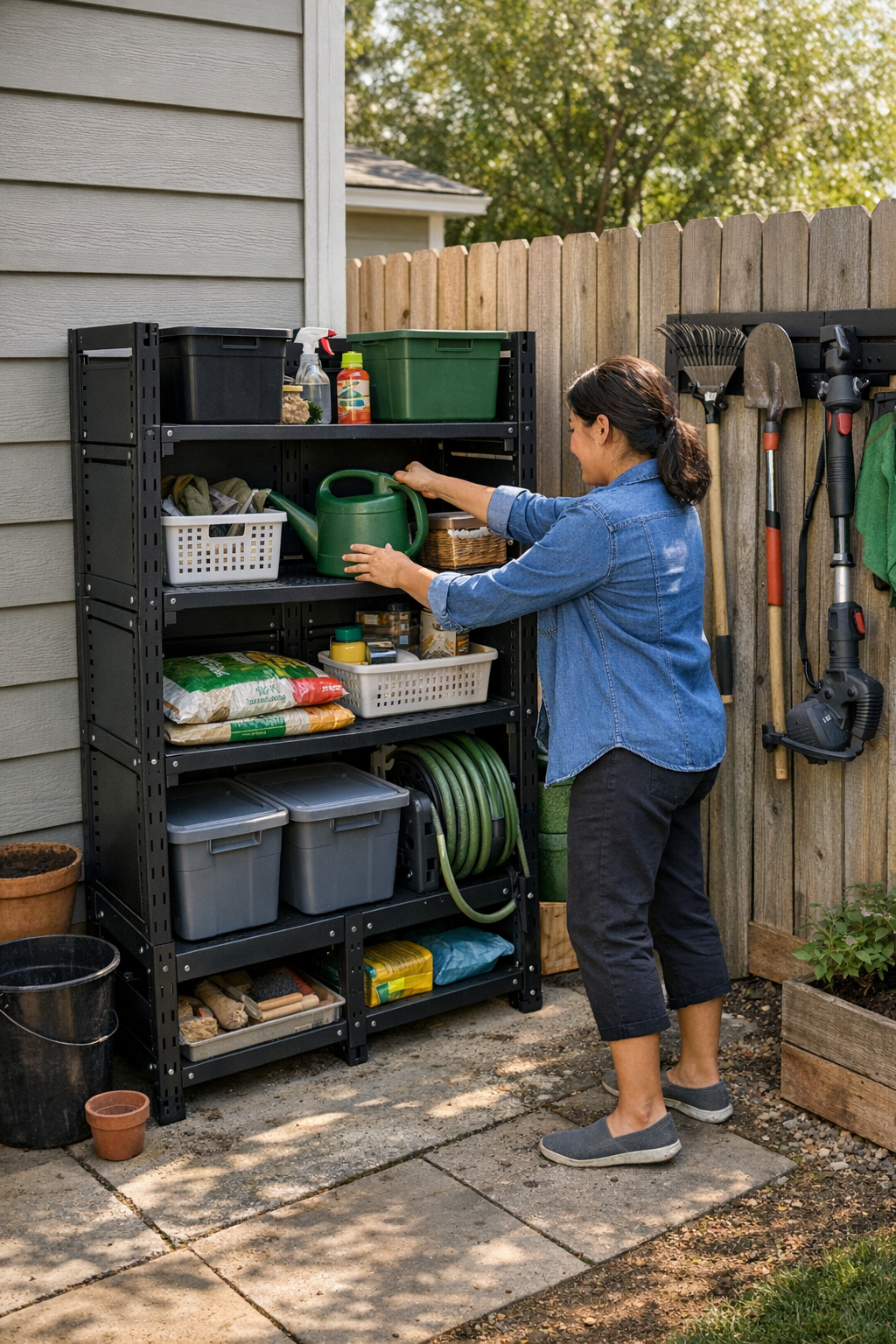
    In backyard corners and side-yard strips, order can look flawless for a moment—but the illusion rarely lasts long. You mount a new rack, stack crisp bins, maybe line up tools along a shed wall. For a day or two, the setup feels sharp: every shovel, trimmer, and half-empty fertilizer bag finally has a home. But the real test comes fast. By the next weekend, a wheelbarrow blocks the narrow walkway, the mower handle juts out further than planned, and the “quick grab” shelf is overflowing with stray trowels and gloves left in a hurry.

    How Outdoor Organization Unravels—One Small Friction at a Time

    Storage in real outdoor spaces rarely fails dramatically. It erodes, day by day, as minor obstacles stack up. You nudge a stray planter just to reach the seed spreader. You shuffle a pile of rakes to unhook one broom. Even sliding a bin from a corner can turn into a struggle if its neighbors shift midweek. When the hose caddy swings loose and bumps your shin every time you reach beside it, you notice: the friction is small but relentless. None of these make you abandon the system at once. Instead, they wear down your willingness to reset, one annoying moment at a time.

    Photographs catch the moment before complexity wins. In real use, organized looks become slow routines: reach for a tool, then pause to untangle its handle; replace a bag of soil, but first shift those “temporaries” someone tossed on top. The area designed to give you time quietly takes it back. The longer you delay a full reset, the more anything you move causes a chain reaction.

    Real Use Glitches: The System That Can’t Keep Up

    The Return Blockade

    Picture a narrow utility strip: wall rack, long-handled tools, storage bin beneath. On setup day, it feels efficient—each item sorted by type, smaller handhelds clipped at the edge. Soon the flaw emerges. That post-hole digger catches you every time you reach for the shears. To put one thing back, you have to move another. Once you’re rushing, tools end up jammed wherever there’s space. The next person struggles with the tangle, and the wall that looked “organized” starts acting like a barricade.

    The Patio-Edge Creep

    Floor plans lie when lived-in. A mower that slid snugly against the wall ends up parked halfway across the walking path after a rushed return. The bin for small garden gear—pruners, seed packets, twine—turns into a catchall for everything you’ll “sort later.” You start stepping around piles. The path narrows. You dodge and curse, recognizing that the “layout” works until you actually use it during a busy weekend or after a surprise rainstorm.

    When “Fits the Space” Isn’t Enough

    A setup that swallows your tools doesn’t always support your habits. The gap reveals itself at the most inconvenient moments—needing that tarp right before it rains, hustling to reset the yard before guests arrive, realizing you need to correct three things just to return one. Time pressure exposes the system’s design flaw: storage that interrupts your routine instead of following it.

    Hidden overflow zones never vanish on their own. That “temporary” bag in the dead corner becomes a permanent fixture. In a few weeks, you forget what the corner looked like before the drift set in. Resetting these areas quickly goes from “simple cleanup” to “where do I even start?”

    Small Adjustments, Huge Payoff

    Sometimes a single tweak—like moving a rack a few studs aside—opens a crucial foot of space for walking or returning things in one motion. Separating high-use from almost-never-use tools removes the daily crossover that leads to jams. When there’s always space for the most-used items—free and clear, in line with your movement—the battle to keep the area working tilts your way. Resetting stops feeling like solving a puzzle every time.

    Real Tip: Modularity for Shared Spaces

    In any household with more than one set of hands in the storage zone, confusion snowballs fast. If every return or grab can happen without disturbing the rest, routines get smoother. That’s what modular bins do: they turn “whose stuff is this, and where does it go?” into easy parallel flows. Each person’s clutter stays contained. Traditional racks, as needs shift with the season or guests, clog with cross-purpose objects—and the reset cycle grows longer the busier everyone gets.

    Overflow Is More Than Mess

    Watch for piles at the foot of any rack or the edge of a setup. Once these “temporaries” start showing up in the same spot week after week, your system is signaling: normal use is demanding too much friction for a reset. Let it run too long, and every routine reset becomes a full rescramble. Small inefficiencies quietly accumulate, slowing every return and sapping your motivation to clean up at all.

    Lasting outdoor storage is about control over chaos, not about a frozen “after” photo. Clarity matters: open walking paths and easy drop points give you breathing room, even when things slip a bit. An efficient setup feels invisible—things just go back easily, even after a wet, busy month. The friction never disappears, but you stop feeling ambushed by it every time you need the next tool or want to tidy up on your way inside.

    The setups that work aren’t always glamorous. But by keeping the routine simple—clear spots for top-use items, no awkward reshuffling, overflow contained before it takes hold—you end up with a yard that genuinely works for you, not just for the first round of photos.

    Shop TidyYard’s real-world outdoor storage solutions

  • Why Regular Impact Wrench Calibration Prevents Costly Assembly Errors

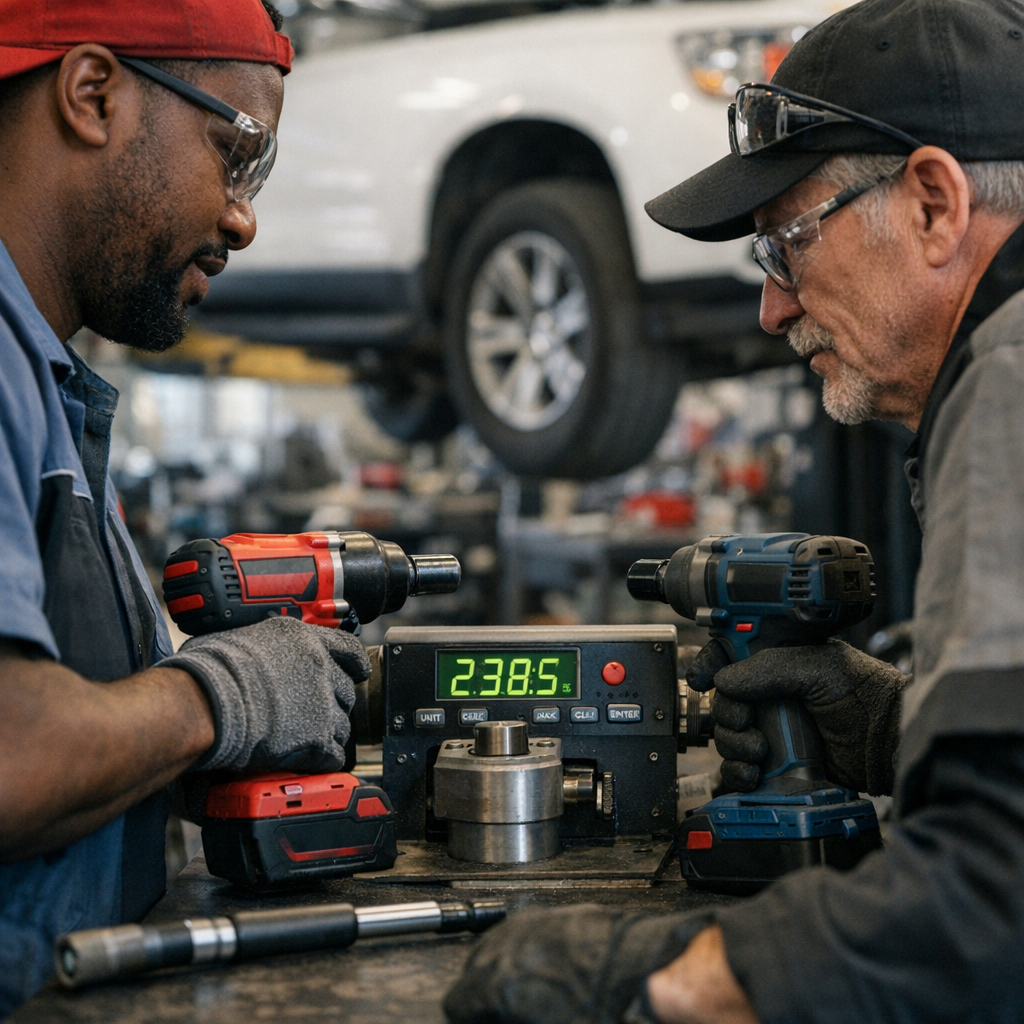
    There’s a unique kind of aggravation in finishing an assembly—only to watch bolts edge loose, seams gap, or complaints return within days. If you’ve ever had to drop tools to re-torque a stubborn seam or track down an annoying rattle, you know those invisible problems that start with your most relied-on wrenches. Tool spec sheets might look almost identical, but day after day—through cut, drill, and fastening runs—the gap between a truly dialed tool and a drifter only grows. You can’t spot calibration drift with bare eyes, but you’ll feel it when your “finished” job circles back with trouble.

    Where The Slippage Starts: Calibration Drift on Real Jobs

    First days with a freshly tuned wrench usually go smooth—aluminum brackets cinch tight, new steel plates align without fuss, and fasteners come up to torque predictably. But real shop time creeps in: painted frame steel fights back, threads hit with corrosion, assemblies happen in cramped, uneven corners. Suddenly, the wrench feels a tad softer, or that final turn of the bolt starts to lack the stop you expect. On a quiet line you might shrug and keep moving—until, days later, the seam reveals a telltale gap or bolts demand a full force retighten.

    This is where the cost gets real. Missing spec by a few ft-lbs might seem minor, but that slip spreads: vibration control gets weaker, fit goes off, and the domino effect rolls on. Instead of pushing your project forward, you’re backtracking—cutting in new edges, sanding down bad joins, and cleaning up the avoidable mess one loose bolt started.

    Where Tool Weakness Hides—And When It Finally Shows

    Run through a rack of plastic anchors or softer alloys and the wrench might seem flawless; you won’t notice calibration fade through routine repetition. But shift to tougher scenes—fastening into painted flanges, overhead bracing, or popping decades-old rusted bolts—and that missing edge becomes obvious. The little things start dragging: bits that don’t bite, screws that spin just shy of flush, or blades that veer off true, forcing correction passes or “just good enough” fixes nobody likes to admit.

    Drift Doesn’t Announce Itself: Recognize the Tells

    An out-of-calibration wrench doesn’t scream for help. It’ll sound nearly the same, vibrate just a touch off rhythm—you might only catch it in the fatigue of late shifts or when the consistency in your work drops. Real warning signs show up after the job: seams that don’t sit right, bolts that back off after a first shake, or recurring calls for rework. If you hear your crew mutter “didn’t hold like last time,” invisible drift is already hurting your workflow.

    Scenes from the Floor: How Drift Eats Into Your Day

    Imagine pushing through a series of wheel swaps. By lug number twenty, a sliver of looseness sneaks in—not enough to halt you, but enough to question. A torque stick reveals you’re almost a dozen ft-lbs under. That slip is all it takes for bolts to walk out and for callbacks to pile up over the week. It’s not just the fix; it’s shuffling schedules, doubling back on jobs you already crossed off, and the fatigue that stacks when you’re chasing mistake after mistake down dusty shop aisles.

    The Fatigue Factor: How Calibration Drift Wears You Down

    No one uses tools in showroom conditions. Grease gums up trigger pulls, old paint chips work into moving parts, vibration bleeds output, and awkward jobs—up ladders, in cramped bays, across battered benches—take a toll. Over time, performance slips quietly; a drill grinds a little slower, a sander leaves uneven scratch patterns, a once-precise cut now frays at the edge. Each small miss compounds, swapping control and efficiency for extra labor and mounting mistakes.

    Make Calibration Routine, Not a Panic Response

    If you’ve been burned by mysterious loose bolts or shifty joints, calibration isn’t a formal box to check—it’s survival. Setting a calibration schedule—every six to eight weeks for tools in constant rotation—re-centers your workflow. Tightness in assembly, dust reduction from fewer sanding fixes, and smooth, predictable blade and bit performance show up fast when wrenches hit true spec every time.

    • Bolts hold tension even after machines run hot and vibrate for hours.
    • Seams stay true, saving re-torque headaches and last-minute sanding fixes.
    • Torque readings hover where they should, not scattered across a dozen ft-lbs—making every follow-up check a formality, not a scramble.

    Whether it’s an assembly line or a scattered home garage, keeping calibration routine translates into fewer surprise callbacks, smoother builds, and less time choking out fires set by fading precision.

    Don’t Wait for Warning Lights—When to Calibrate in Real Work

    Lock in calibration checks every six to eight weeks whenever a tool is in daily grind. Don’t let a stubborn job or tool “just feeling off” slide—run a check immediately if anything seems wrong. Pay attention to not just loose bolts and gapped seams, but also the subtler hits: fasteners that don’t bite first time, cuts that wander, or a wrench that needs more squeeze for every output. If a tool drops more than 10 ft-lbs from baseline, recalibration jumps to the top of the action list. Otherwise, those lost hours and do-overs keep stacking—stealing progress from even the best crew.

    Real Payoff: Consistency That Saves Your Energy

    Routine calibration isn’t a box-tick—it’s the backbone of reliable work. Sharper torque, surer control, and fewer repeat jobs mean faster builds and fewer afternoons lost to avoidable fixes. From fast repairs to weeklong builds in noisy, debris-choked garages, it’s that small, consistent advantage that prevents the spiral of touch-ups and fatigue. Make calibration a habit: keep your tools trustworthy, your output tight, and your projects finished—once, not twice.

    Gumboll: For the tools that make the difference

  • Transform Your Pet Care Routine to Reduce Daily Household Interruptions

    Why a “Calm-Looking” Home Isn’t Always an Easy One

    A pet area can look calm and orderly, but the test comes during actual care—especially at feeding time, late-night check-ins, or the tenth quick cleanup of the week. A setup that looks under control from a distance often breaks down in the essentials: the bowl edge is blocked by a stray towel, the water refill bottle is somewhere you didn’t expect, and the brush that’s “easy to grab” ends up buried under yesterday’s supplies. Outward tidiness hides a more stubborn friction—the routine drag of reaching for what you need and finding something in your way or not there at all. It’s the difference between a home that appears untroubled and one where daily pet care actually flows with less interruption. The CalmPetSupply world starts here: not with immaculate appearances, but with setups that hold up through every feeding, refill, and shared-space reset.

    The Real Weight of Pet-Care Friction Points

    Anyone who’s tried to keep a shared area pet-friendly recognizes the problem. The countertop holds together for a day or so, but by the third feeding, tools have drifted: the towel is stretched over a chair back, the refill bottle is halfway across the kitchen, and the brush lingers “just for now” by the sink. Try prepping your meal after the dog eats and you’re pushing aside drool-streaked bowls to reach your coffee. You reach for the wipes, realize they’re missing, and end up stalling, hunting, or just skipping the clean-up until later. These aren’t dramatic failures. They’re tiny, repeat annoyances—a towel left hanging, a scoop never returned, a slow pile of pet gear creeping back into shared space. Each one alone is small, but stacked together, they turn the practical flow of daily care into reshuffling and distraction.

    Comfort Can Fail if There’s No Real System

    The shortcut mindset—“I’ll just keep the towel nearby,” “the brush goes here for now”—feels efficient until objects crowd out actual ease of use. A shelf brimming with cleaning tools is only helpful when none of them block the quick reach to the bowl before work or the wipes after a muddy walk. Pet care gear left for “easy access” begins to wander farther from its place with each rushed moment. Suddenly, cleanup means clearing a path just to get started. In real kitchens and entryways, these comfort-driven setups lead to more pausing, backtracking, and frustration than actual convenience.

    The Turnaround: Reliable Drop Zones Change the Pattern

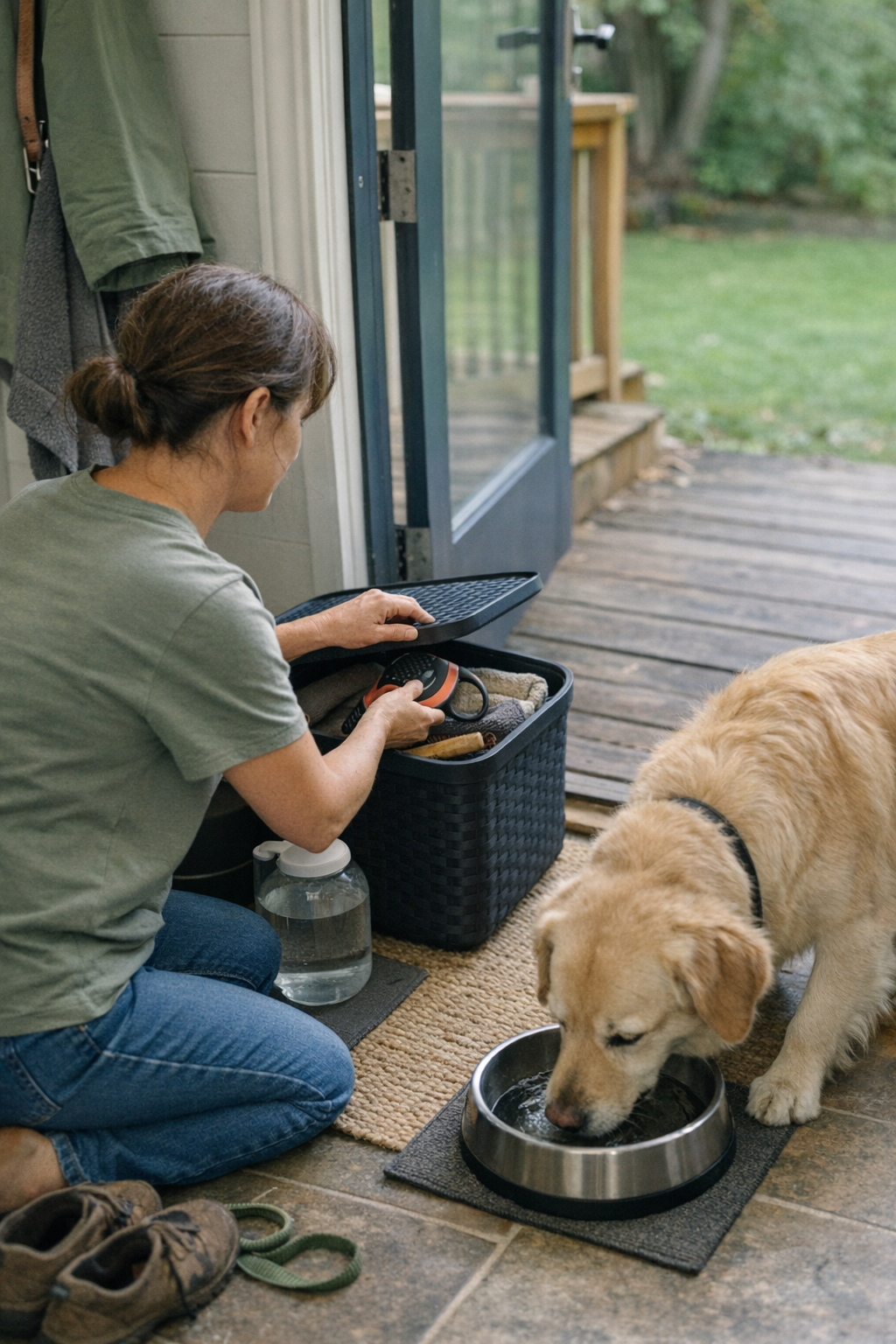
    Improvement rarely comes from buying the fanciest organizer. Instead, one physical change makes the whole routine lighter: a closed bin, basket, or box exactly where the feeding, wipe-down, or after-walk care actually finishes each time. Now—all towels and cleaning bottles drop inside as part of the routine, not after everything else. The difference is immediate: tools don’t spill into the open or block the bowl edge; the brush isn’t lost under a pile after late-night touch-ups. One small lidded basket near the main feeding spot or entrance keeps every loose item contained and out of daily flow. Reaching for a refill, nothing is in the way. After feeding, the reset means one short action, not chasing all the out-of-place tools across the kitchen. The “I’ll do it later” drift fades because the spot is right there, ready for a quick reset.

    Within several days, the entire routine shifts. You stop asking, “Where did the wipes go?” and stop repeating, “I’ll put that away eventually.” Cross-room search time and morning interruptions drop, meals flow through without a scramble for supplies, and the return to order becomes nearly automatic. Even when days are busy or guests are coming, the routine holds—each piece of gear has a drop zone and makes its way back without effort. Less clutter surfaces, less momentum is lost, and everyday care picks up a smoother, genuinely easier rhythm.

    When Routine Becomes Functional Calm

    Unplanned messes still happen—a muddy return after a walk, food spilled just before friends arrive, a water bowl knocked sideways. But when every tool and supply has a true home that matches daily use, recovery is a single step, not a search. The difference isn’t just cosmetic: what would have triggered a round of reshuffling or delays instead means a simple grab and reset. Care routines become less about compensating for missing basics, and more about moving through the day without extra resistance. The space looks calm, but more importantly, it feels easier after a week or a month of real use.

    One Small Step That Changes Everything

    Placing a closed bin or covered basket right where you usually finish feeding, cleaning, or walks is no design overhaul—it’s a real-world fix that trims away the worst repeat disruptions: blocked kitchen flow, stray towels in the dining area, wipes never quite where they should be. What seemed “good enough” gets replaced by a habit that keeps things genuinely manageable, day after day. Less searching, less second-guessing, and less slow leak of energy into non-stop resets.

    True calm in pet care isn’t about spotless looks. It’s about making every daily reset so simple that you notice the ease, not the interruption. A physical home for every tool and supply—set up for how real routines unfold—quietly upgrades your daily life, again and again.

    Explore practical daily pet-care tools at CalmPetSupply.

  • How Interlocking Panels Transform Entryway Clutter Into Lasting Order

    Entryway order isn’t lost in one moment—it leaks away, week by week, through the same repeated points of failure. That clean threshold you set up on Sunday is already fighting back by Wednesday: shoes slip past their “line,” bags slouch across the last open seat, and jackets land wherever mail was meant to be sorted. In busy homes, the difference between a kept-up entry zone and a daily obstacle course isn’t about how well things store when still—it’s about how quickly the area drowns in overflow when everyone is actually moving through at once.

    Where “Simple” Storage Breaks When Life Speeds Up

    The classic setup—a bench, a tray, a couple of hooks—looks crisp in a photo or after a deliberate reset. But in daily use, it’s not the tidy version you live with. As routines turn frantic, small breakdowns add up: the single shoe tray becomes a shoe horizon; one bag, hastily dropped, dominates the bench edge; and the “catch-all” basket becomes a melting pot of hats, keys, and outgoing bills. The difference between visual order and real control isn’t about a system’s potential, but its survival under repeated pressure. Most entryway ideas look “organized” for two days—then default back to blend-and-shove by midweek.

    Interlocking Panels: Disrupting the Drift

    Standard setups encourage drift: the hope is things will land close enough to their zones to work. Interlocking panel systems break that drift with physical boundaries—every time, for every item. Instead of a shared drop zone, each shoe, bag, or coat has to claim its bay or slot or not fit at all. No one’s “extra” shoves into common space unnoticed. These divisions can seem rigid at first, but once actual routines hit, the benefit isn’t theoretical—it’s instantly visible in the way overflow is caught early and obvious, not quietly swept off until the weekend.

    Real-World Crunch: Where Weak Storage Fails

    When everyone piles in—school bags thudding down, muddy boots side by side, wet jackets seeking the least-bad landing—the bench-and-basket combo folds almost immediately. The first wet coat ends up on top of the mail, shoes expand into traffic lanes, and anyone aiming to sit down finds themselves clearing someone else’s heap. You’re not resetting; you’re detangling. By the second round-trip of the day, the boundaries collapse. Every system “works” when it isn’t being tested. In a high-use threshold, the cracks appear at full speed.

    By contrast, with interlocking panels, every item stops at its assigned line. Shoes hit the physical end of their slots—no shuffling outwards. Bags drop straight into their bays, not onto shared seats. When something spills over, it’s not hidden; it’s blatantly out of place and pushes an instant fix. Resetting becomes a habit measured in moments, not minutes of sorting and stacking.

    Pressure Points: How Clutter Sneaks In—and How Panels Push Back

    • Bag drop, clean zone lost: One off-aim backpack on an open bench creates a new magnet for gloves, papers, and headphones—turning a small slip into a full spread. Slot-based panels block this drift by refusing to let random drop-offs blend in.
    • Shoe lines collapsing into piles: Every shoe mat starts as a single-file lineup. By Friday, it’s a multi-width scatter unless each pair has a walled or slotted boundary, forcing the row to restrain itself.
    • Bench becomes “storage” again: The seat’s there to sit—until it’s needed in a rush, and every overflow item claims the available space. Panels hold chaos aside, keeping the bench truly usable—no reshuffling required just to take a seat.
    • Blocked path, slow recovery: Undefined storage means one bulky jacket blocks a hook, shutting off access for everything else. With vertical separation, restoring order means moving one piece, not unjamming the entire rack.

    Panels Don’t Prevent All Mess—But They Expose the Problem, Fast

    Panel systems don’t make clutter impossible; they make it visible and blunt. Assigning a bay to each household member and allowing just a single shoe row—notably, 90cm can cover the basics for one person in a compact entry—means every overflow is a signal, not something that fades into background mess. When categories start to blend, you see it before the pile grows. The goal isn’t a magazine-shoot entry: it’s a setup where disorder stands out early, so resets return to frictionless faster—no hidden heaps, no multi-day buildup under bags or behind the door.

    Structure here delivers on its promise only under pressure. Clear, enforced boundaries mean every re-entry and exit takes less time and negotiation. Even in the weeks when schedules get chaotic, the reset cost stays small—you’re not dreading the threshold or banking a full hour on the weekend just to restore usability.

    Vertical Boundaries: Keeping Categories Separate—When It Counts

    The vertical separation effect is practical: a wet jacket never lands on the mail; muddy boots never topple into a basket of scarves or hats. Panels insulate the mess, so even in a tight entry any misplaced item stays isolated. That’s the difference between a controlled system and an ever-tightening threshold, where one wrong drop gums up the whole flow for everyone.

    The Real Value: A System That Resets Without Drama

    Open baskets, shelves, and flat benches promise flexible storage, but every shared surface eventually turns into a generic pile. That means every pass-through gets clumsier, and every “tidy” becomes a full-blown reorganization. Panels lock down categories—overflow doesn’t sneak by, and movement stays unblocked. Without constant shuffling, just getting out the door becomes smooth—no forced resets, no lost minutes searching for what was hidden by the last rush.

    The real shift for small, high-traffic entryways isn’t just a clean look—it’s breaking the cycle of quiet buildup and costly resets. Investing in more structure is about reclaiming speed and sanity, not achieving perfection, especially when life routinely blows past best intentions and every minute at the door actually counts.

    Browse transition-space storage solutions at Betweenry

  • How Smart Pet Travel Gear Eases Crowded Sidewalk Challenges

    Your pet travel bag looks ready on the counter—but out on the street, every stop and restart tells the real story. What seemed organized at home quickly turns slow and awkward after just a few city blocks, with every pause exposing some friction: missed reach, blocked pockets, cleanup gear hidden too deep, items overlapping so you fumble at just the wrong moment. The real difference isn’t in how neat things look before you leave, but in how well your setup recovers—again and again—when you’re back in motion, seat-side, or squeezed into the crowd with essentials just out of reach. PawGoTravel designs for that repeated reality: less stalled searching, more on-the-move access.

    Every Restart Tests the Setup: Organized Isn’t Always Easy

    The first block always feels fine. Everything’s packed, your pet trotting along, and your bag looks tidy, maybe even over-organized. But five or six stops later—waiting at a light, skirting a construction zone, pulling aside for a quick cleanup—small flaws show up fast. The first time you need a waste bag, you realize it’s stuck under wipes. The next pause, your water bowl is somewhere below a crumpled blanket. Leash clips that seemed “secure” now demand both hands to unclip, just to cross the street. It isn’t about gross mess, but about every workaround that costs you a step or adds a second of confusion with a distracted dog at your knees and pedestrians squeezing by.

    Each block, annoyance multiplies: you reach for a pouch, but it’s blocked by something else. You unzip, shuffle, think you have the right pocket—then hit snacks first, wipes next. The irritation isn’t huge, but it repeats fast. The simple act of grabbing what you need becomes a slow-motion juggling act, never quite smooth enough to keep your stride.

    Repeated Stops, Repeated Annoyance: When Access Becomes the Real Challenge

    City walks don’t just test your dog; they test your setup’s ability to recover. Crosswalks, surprise detours, waiting for crowds to move—the core items (waste bags, wipes, bowl) are always needed at exactly those awkward, stop-start moments. If any of them gets buried, that’s where a quick cleanup or drink break turns into a minor scene for everyone around. You reach for the kit, open one zip: not it. The next: wrong again. The pet yanks, traffic grows, and now you’re publicly fumbling because quick-access was only a theory, not a reality.

    When cleanup or comfort gear isn’t physically ready—right pocket, right slot, right away—each small delay stresses both pet and owner. That delay might only be five or ten seconds, but on a city block with impatient foot traffic or while managing an excited pet, those seconds cut deeper. Multiply that cycle across a typical walk: the pain isn’t in one big failure, but in the way little annoyances stack up and break whatever flow you had.

    Looks Ready, Works Slow: When Visual Neatness Masks Travel Flaws

    The most common trap? Thinking an organized bag is the same as a ready bag. You pat yourself on the back for clean compartments and labeled pockets, but under real pressure the structure folds. A zipped main section keeps things tidy—until you need wipes with one hand while the leash is twisting in the other and the dog is nosing into a fence. If your set-up demands a three-step shuffle for every cleanup, or if water means digging under seat covers, your “preparation” is actually working against you.

    Even a travel bag that visibly reduces clutter can become a repeat interruption machine. Essentials layered beneath less-used items—or owner gear stacked over pet items—only trade one kind of mess for a different friction. In those moments where you need fast access, you’re stuck negotiating with your own system, losing time for every stop, every sudden pet swerve, every mid-walk re-pack.

    Snapshot: The Cost of Carry Flow Slowdown

    The real cost is breakdown in movement, not just a few lost seconds. When you’re at a seat edge, parked at a curb, or in a coffee shop with your dog curled at your feet, the hassle doubles. Hauling up an entire bag, unzipping, sorting, then re-packing around a restless pup is instant stress. If your travel setup forces you to unload half the contents for one leash or waste bag, you face an ongoing cost: forced manual resets, and the temptation to skip steps just to avoid more slowdowns. Sooner or later, you start leaving out comfort items, or skip a cleanup, because access feels like a hassle every single time.

    The overlap between your own items and your pet’s creates a different brand of trouble. The water bottle meant for both of you bumps into wipes; your keys tangling with waste bags leads to subtle, constant reshuffling. Each overlap is a built-in delay, slowly sapping confidence and forcing you to second-guess your own setup, right when you need to act quick and move on.

    Fixing the Pattern: Moving to Genuine Quick-Access Zones

    The fix isn’t more compartments—it’s protecting true quick-access for high-repeat items. After enough walks with awkward, buried essentials, the logic gets brutal: every core travel item (cleanup, hydration, leash clip) gets a single dedicated side or outer pocket, never blocked by blankets or owner gear. The reset is physical, not just mental. When you reach standing outside a bus or in rush-hour crosswalks, the needed pouch lands in your fingers without fishing, flipping, or doubting.

    From the first day with this rewrite, the payoff is obvious: faster every time, no hesitation. Leash, bag, or bowl is always a single reach away, even as the rhythm of your walk shifts or the crowd closes in. After a week, the quick-access ritual takes hold—those items never drift, never get absorbed by clutter, and never slow the next restart. The visible order never comes at the price of real travel flexibility.

    The Real Test: Does Your Setup Keep Up, Not Just Keep Order?

    If you catch yourself pausing, fishing around, or having to reset your travel bag after every basic stop, the weak link isn’t your packing skill—it’s a layout that fails as soon as movement restarts. Visual neatness has no rescue value if your essentials are still buried where they can’t be reached in two seconds or with one hand, seat-side or street-side.

    In real city walks or seat-through trips, what counts is structure—quick-access always protected, repeated-use items always exactly where you left them, no matter how often you pause or reshuffle. A pet-travel setup that can’t handle recovery after interruption will wear you down even if it looks perfect at the start.

    Practical pet travel isn’t about starting organized—it’s about how fast you’re ready to go again, and how little friction stands in your way each time. If you need setups that reward real-world movement, not just pre-trip appearances, the solution is closer than it looks.

    See practical solutions at PawGoTravel

  • How Hidden Cable Management Transforms Your Workspace Efficiency

    Desk chaos doesn’t start big. It seeps in—one cable at a time. Even when a workspace looks clean, the clutter finds a way back: cords snaking across the keyboard zone just as you reach for a notebook, a power brick blocking your foot path, or a charger unexpectedly trailing past your mouse. The early promise of a tidy desk never survives the second or third device swap. Within hours, you’re dodging cables to clear space, untangling adapters from the sides of drawers, or lifting your chair wheels over yet another fallen wire. What looked “ready to work” in the morning quickly turns into a desk that resists every reset, demanding little corrections again and again. The real issue isn’t visual mess—it’s the slow leak of attention that unchecked cables cause, breaking flow just when you need to stay locked in.

    Why cable clutter always returns (even if you think it’s handled)

    The battle with cables is usually lost in the patterns you repeat: shifting your laptop for a call, dragging a mouse outward, plugging in one adapter while bumping another loose. Clean-desk setups last until real work begins. As soon as routines restart—switching monitor inputs, recharging devices, or moving a desk lamp to chase a shadow—cords slip back into view or tangle themselves into every reach path. A single keyboard shift can send a cable sliding off the back, or a casual chair turn catches a charger underfoot. What was smooth for show becomes a series of friction points you can’t ignore. Over the day, each moment spent untangling or repositioning adds up—a steady drag that erodes both focus and pace.

    The visible order vs. actual usability problem: Bundling cables or slapping on a few clips might make the desk camera-ready or neat enough for guests, but most work cycles don’t allow everything to stay untouched. The minute you replug, slide a notebook over, or adjust your chair, unanchored cables work loose and block your path. It’s not one obvious disaster; it’s a cascade of small resets: a charger hanging down, a pulled headphone wire, the return of desktop mess after every new task. Keeping up takes constant, unnecessary effort—and after a few cycles, what started as a fix becomes a new routine of minor interruptions.

    Open access setups: easy today, awkward tomorrow

    A setup that keeps cables “open” and flexible—dangling from the desk edge or loosely trailing beneath—feels like freedom at first. Swapping laptops or plugging in a tablet is fast. But the cost shows up in real use: each extra cable is another risk for getting snagged by a chair leg or knocked down mid-move. Routine actions—pulling in your chair, shifting a monitor with a mounted arm, replacing a notebook—are all new chances to drag a charger across the surface, knock a power brick onto the floor, or have adapter lines interrupt your reach. The result is a desk that never really settles, where “clean enough” slides back toward chaos with every reset. Even in a polished setup shot, the system feels brittle once you’re in motion.

    Desk activity shows what works—and what creates friction

    Consider a normal midday workflow. Slide your laptop closer for typing, nudge the mouse to the right, and plug a charger in to keep the monitor powered. Each movement tugs at a line. Now a charging brick slips off the back corner—lodged under your chair wheel or waiting to catch your foot. A quick reach for a pen finds your hand threading around a dangling USB cable. The desk “system” turns into a maze of micro-obstacles. By late afternoon, before you even get to focused work, you’re clearing the surface just to reset everything that drifted. The setup may start out organized, but it acts like a booby trap when put through the pace of real work cycles.

    The under-desk cable strategy: one simple shift, fewer repeat problems

    Most surface-level fixes—random clips, decorative ties, or stash boxes—only delay the inevitable. The change that actually lasts comes from pulling the main tangle under the desk, anchored out of daily reach. Using a fixed under-desk cable tray with a single, deliberate exit point means cables stay in place: they emerge at one planned spot, instead of erupting anywhere on the surface or falling into foot space. In practice, this stops the daily fight. You stop catching wires as you roll in or adjust posture. The reset you do after closing your laptop is now quick, not a sequence of re-routing, untangling, and rerunning cables.

    The difference shows up in everyday moves: The mouse zone stays clear. Notebook reach is never blocked by a surprise charger. No more kicking fallen adapters, no more steady drag of cables slipping into the “just cleaned” workspace. Even with frequent device changes or a habit of standing up and sitting back down, leg space stays open and the routine doesn’t demand extra fixing. Every connector has a route, every wire stays where it belongs, and you get the surface reset in seconds—not minutes.

    • No cable drift between mouse and keyboard during quick note-taking
    • No snagged chair wheels from dangling power bricks
    • Both surface and under-desk footwell stay clear—even after three or four full work cycles
    • Device swaps don’t require pausing for a new round of detangling

    Cable management in the real world: common questions, quick answers

    How do I keep cables from making the desk look messy no matter what I try?

    Mount an under-desk cable tray and keep all exits to a single, reachable spot (usually back corner or rear edge). This removes cables from eye level and stops the creeping return of surface clutter, letting you reset faster after each session.

    Will hiding cables make it a pain to connect new devices?

    Not if you plan enough slack and keep the exit point flexible. Avoid tying everything so tightly you can’t move. Leave extra length at the tray’s opening, and connections will stay easy without a full system overhaul every time you add a new device.

    How do I keep my power strip or large adapters from slipping to the floor?

    Secure the power strip inside the tray or use adhesive brackets under the worksurface, above the main cable route. That way, heavy adapters stay anchored, out of the way, and protected from the constant nudge of sliding chairs or shifting bags.

    Small changes, steady impact: what actually improves workflow

    Whether your setup is a slim home desk or a large workstation with dual monitors and side drawers, real usability isn’t about keeping up appearances—it’s about how the space reacts every time you work. Visual order means little if every session starts by clearing tangled cables from the keyboard zone or maneuvering around a blocked drawer. The real shift happens when cables and adapters are kept out of high-traffic reach, device swaps can happen freely, and no routine action returns the mess. The desk then becomes a surface that supports your next task without slowdowns or repeated adjustment breaks.

    Perfect organization isn’t necessary, but strategic setup is. Anchor cables out of sight. Limit exit points to where you need them. Don’t be fooled by a tidy desk that collapses at the first day’s use. Instead, look for a repeatable fix—one you’ll feel every time the work zone is clear, the cable mess stays gone, and the next reset is just a motion, not a chore.

    Explore the full WorkBasic collection

  • Why Defining Home Spots Stops Clutter Drift in Your Workspace

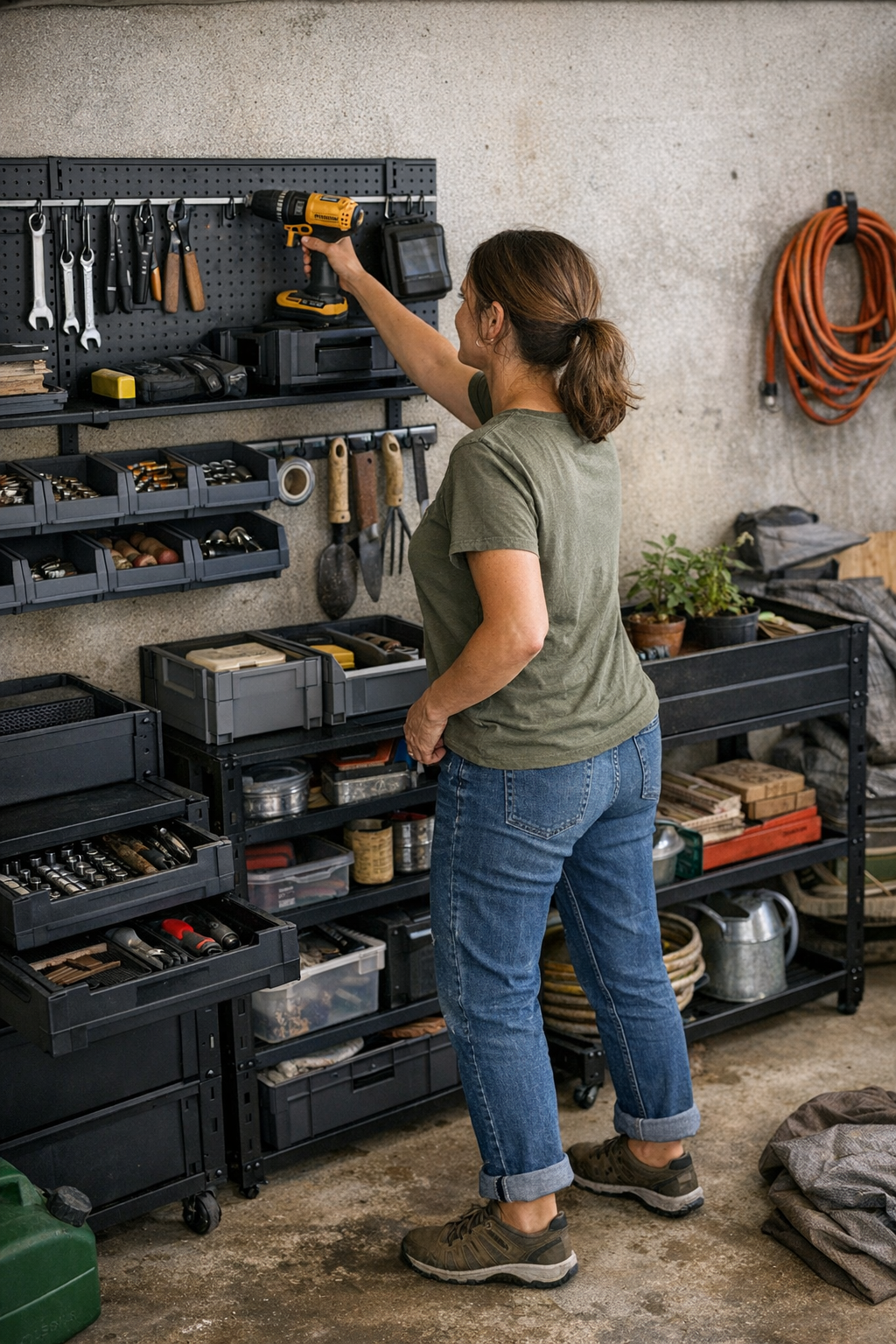
    The first week after installing modular shelving and wall rails, it feels like you’ve finally cracked the garage. Everything has its row, the bins are still crisp with labels, all that old clutter cleared away. But anyone who actually uses their workspace—day after day—knows this honeymoon vanishes fast. By month’s end, the bins drift, the daily tools land on any available surface, overflow collects at the edges, and the generous aisle you planned for becomes a one-foot squeeze. Resetting the space is less clean-up, more rearranging the same obstacles. The hidden failing isn’t broken hardware—it’s missing “home spots” for the staples you handle every single day.

    When “Looking Organized” Stops Being Enough

    It’s easy to mistake shelf symmetry for a real solution. Freshly organized cubes and wall grids promise an end to hunting for gear. In practice, those tidy rows start slipping apart with each round of projects. Daily friction builds almost invisibly: a tape measure always left teetering on the edge, garden shears propped on the freezer, extension cords tangling with tools in the catch-all bin.

    The real trouble creeps in: Without firm, intuitive landing spots tied to your actual routines, even premium modular setups quietly unravel. The things you grab most never get a dedicated home—so they pile up, circulate, or squat “temporarily” in the nearest open spot. Gradually, your shiny setup turns into an obstacle course of half-empty bins and crowded corners.

    How the System Blinds You to the Actual Problem

    Consider the real flow: every week, you find yourself shifting a rolling cart yet again, just to get at the saw you actually need. You reach behind a stack of bins—meant to be accessible, now blocking their own shelf. Hooks and cubbies look neat until their layout doesn’t match the way you move. Suddenly those wall rails start collecting “just for now” piles instead of organizing your tools.

    Rigid sorting (all hand tools here, all garden gear there) barely survives real life. The cordless drill never sits quite right beside the long-handled rake. Heavy loppers bend the bin meant for light clippers. Overflow containers, meant as backup, wedge their way to the door—forcing you to loop around every time you carry supplies in or out. You start noticing “dead corners” that only exist to collect what doesn’t fit anywhere else.

    Why Real “Home Spots” Change Everything

    More bins won’t solve it. The fix is logic that fits your routine: give every high-rotation tool or supply a specific, visible landing place. Don’t over-complicate and label everything—zero in on the gear that travels between hand and shelf almost daily. The ratchet set, the utility knife, those gloves that never stay put—each needs a dedicated, clearly marked home instead of a vague shelf or generic bin.

    One example: a garage owner quit chasing screwdrivers by blocking out a corner of the top shelf, labeling it with tape and color, and making it the only legal landing zone. Now screwdrivers actually return to their spot, not the paint shelf, not the counter, not lost to the clutter-jungle. Another win: mounting a small rail at eye level—just for two kinds of gardening shears—meant resets became automatic. They never vanished into the bin of spare cords. End-of-day cleanup got faster because you stopped hunting and stopped moving bins just to carve out space.

    What Makes a “Home Spot” Stick

    • Visibility: You see it without digging or guessing.
    • Access: Nothing else blocks or hides it—not even the easy stuff.
    • Precision: It’s sized for the item—enough space, not sprawling empty space.
    • Personal marker: Tape, label, color—whatever jumps out so there’s no pause.

    When high-touch items land in their exact place every time, your hands remember. Resetting becomes automatic. Search and shuffle disappear.

    What Modular Shelving Nails—and What It Misses

    Modular means flexibility—a rolling cart that actually moves to your work zone, rails that can go up or down when spring projects replace winter ones. That’s real-world advantage over fixed systems. But “flexible” isn’t enough without intention: you need to decide which tool lands where, and see those decisions reinforced in the layout. If you keep hesitating or double-checking where an item belongs, something’s off.

    If one wall is bursting and the other is always empty, or if certain spots always collect “floaters”—stray drills, bags of screws, always-out battery packs—you’re seeing clues. The organized look fades the moment your daily flow (grab, move, return) doesn’t match your storage map. You start sidestepping carts, reaching around bins, stepping over backup crates that block your path out the door.

    Why Clutter Sneaks Back

    No matter how clean you make it, spaces without true home spots revert. A level perches on the garden bench for a week. Zip ties scatter into whatever bin is closest. Even right after a major reset, by Friday you find yourself moving two boxes to reach your drill—again. Blocked aisles, out-of-place tools, awkward piles: these aren’t rare accidents, they’re signals the system isn’t working with your actual behaviors.

    Is Your Storage System Actually Working?

    • Is your “mobile” cart mostly blocking your only walkway?
    • Do you reach past bins constantly just to get what you need?
    • Does one zone always fill up, while shelves elsewhere gather dust?
    • Is there a corner that quietly becomes overflow central, week after week?
    • Do resets take longer with each round—more shuffling, less true cleanup?

    These are your cues. Not that you need more storage, but that you need clearer, smarter home spots for the tools and supplies you use every cycle.

    Real Clarity Isn’t More Bins—It’s Better Flow

    Here’s the test: At the end of a day, can you reset the core zone in under a minute, without stopping to think? Or are you still negotiating with your setup—babysitting bins, making awkward Tetris moves?

    Spaces that work in reality make resets second nature. Every go-to tool or supply returns to a familiar, easy spot. Walkways don’t disappear behind backup boxes. Daily motion is clear and unblocked. The storage expands when the project changes, without turning every clean-up into a mini-move. You forget about your system—because it fits your habits.

    The payoff isn’t a showroom. It’s that on a random weekday, you can step in, grab what you need, and put it back without breaking stride. Setup stops being a project of its own and just works—the way you actually work.

    Find modular storage that adapts as your real habits shift at StackNest.

  • How Thoughtful Closet Design Reduces Daily Clutter and Saves Time

    Every closet has that brief, hopeful moment—right after the big clean—when folded piles stand straight, baskets line up, and hangers point the same direction. It looks organized. You feel in control. But then, regular life sneaks back in. You dig out shoes hidden behind sweaters. A basket gets dragged out just to reach your work bag. By Thursday morning, the shirt stack collapses after one hurried grab, and that tidy feeling dissolves into quiet frustration. What looked organized doesn’t stay easy. In just a week, it’s obvious: the difference between “put away” and “works every day” is all in the design.

    Where Storage Starts Failing—Subtle, Repeated Frictions

    Real-use storage isn’t about perfect stacks—it’s about avoiding the need to touch, nudge, and restack just to get to something routine. When shelves hold more than one type of item, or family members share the same closet, friction multiplies fast. If you reach for a scarf and send two hats tumbling, or you have to drag out a bin and sift through mismatched socks, the system is wearing thin. These moments slow you down more than you realize—and signal what isn’t working.

    Clutter on the shelf’s edge, corners that always seem “busy,” and piles that melt into each other aren’t just daily annoyances. They’re proof the setup needs a rethink, not just another round of tidying.

    How Disorder Grows, One Grab at a Time

    Mess rarely erupts in a single afternoon. Take a hallway closet doing double-duty: towels folded on one side, boots and gloves jammed on the other. Week one, it’s fine. By week two, the boots have muscled towels into corners, stacks slide inward, and midday grabs leave mittens on the floor. That shelf isn’t “messy”—it just demands fixing itself, constantly, for basic use.

    Bedroom closets fall apart the same way. First, shelves fill too fast. Then, grabbing a T-shirt sends sweaters slumping forward. Suddenly, bins are mystery boxes—one mix of slippers, scarves, and last year’s pool float. The change is slow, but the friction is daily. These aren’t failures; they’re the lived-in proof that looks fade under real habits.

    Resetting Shouldn’t Be a Project

    If you need a two-step process to get to what you want—slide this, re-stack that—or find yourself folding towels just to make boots fit again, something’s wrong. The true red flag: when each “quick tidy-up” turns into a mini chore, and every grab requires a workaround. That’s not a sustainable system; that’s barely controlled chaos.

    Every Category Needs Its Own Track

    The most resilient closets don’t rely on stacks staying perfect. They rely on categories staying separate—with boundaries that survive through dozens of busy mornings. A system works when a quick toss or a single pull doesn’t blur the lines or tip the balance. But when shoes migrate into towel territory, or that “winter bin” absorbs whatever won’t fit elsewhere, the closet’s letting you down.

    Sometimes, one divider makes the difference. Install a vertical panel between towels and boots: suddenly, pushing shoes in doesn’t squash folded linens, and towels stay upright through daily grabs. No more reshuffling. Resetting drops from five steps to one. The space stops asking for attention and just works—even when you’re in a hurry.

    Spotting Warning Signs Before It All Collapses

    Most storage headaches announce themselves early:

    • Stacks toppling or oozing across shelf edges
    • Categories blending every week until it’s just “stuff”
    • Digging or reshuffling just to grab a single thing
    • Baskets or bins filling up but not clarifying what’s inside
    • Shelves running out of space, faster than the actual volume of your stuff

    These aren’t personal defeats—they’re signals you need clearer inner boundaries or better-fitted tools. Often all it takes is a right-sized bin or a simple shelf divider to reroute chaos into a routine that sticks.

    Small Adjustments, Big Improvement

    There’s no one-size fix, but a few targeted changes overhaul most closets:

    • Simple Dividers: Stop boots from bulldozing towels, keep bags from toppling sweaters. A vertical panel keeps items in their zone—even after a clumsy grab.
    • Purpose-Built Bins: Assign bins to a single item type and keep them that way. If a bin eats shoes, hats, and old receipts, it won’t sort anything—it’ll just hide the mess.
    • Hooks for Habitual Grabs: Scarves, handbags, and jackets tossed on hooks are instantly accessible—and don’t topple anything else when you reach for them.

    Even a minor shift—raising a shelf to use dead vertical space, or designating a defined drop-zone for shoes—can deliver a smoother morning. You shouldn’t have to “prepare” your closet every week for it to work; when categories keep their lane and daily use runs smoothly, the storage pays you back every time.

    The Real Test: Living with the System

    Looking organized isn’t the same as living organized. Closets prove their worth by surviving daily habits—not just surviving the first cleanup photo. The space that lets you reach, return, and reset with one motion is a keeper. The system that asks for constant correction isn’t offering clarity; it’s just performing order.

    Don’t settle for storage that holds, but doesn’t help. A closet that makes you adjust, re-stack, or search with every use falls short—no matter how tidy it once looked. The real upgrade is when fixes fade into the background and routines get faster, even on the busiest mornings.

    For storage solutions designed to work with how you actually live—dividers, fitted bins, smarter shelves, and simple hooks—find options at ClosetWorks.

  • How Tall Linen Tower Cabinets Control Bathroom Clutter and Overflow

    The gap between a tidy bathroom and a truly functional one always shows up under stress. A shelf loaded with folded towels looks fine—until a morning rush turns neat stacks chaotic and knocks a bottle into the sink. Shared space amplifies the weak points: towels end up half-fallen, toothbrushes play musical chairs between baskets and counters, and every “quick fix” seems to slide the system further off-track. Suddenly, surfaces built to organize are overrun with the same items they’re meant to contain, and every reset cycle feels slower and more annoying. That’s not just a clutter problem—it’s a setup failing to keep up with lived reality.

    Why Open Shelving Struggles Under Pressure

    The idea of open shelving in a bathroom makes sense—instant access, easy to see, hard to forget what you own. But it quickly becomes a weak link once normal use sets in. Every unsteady grab or lost cap is instantly public: one rushed reach, and an entire row collapses like dominos, towels buckling and bottles rolling to the edge. Worse, in a shared bathroom, each hand introduces new disorder. Stacks get yanked from the middle, shaving cream nudges deodorant into your soap’s territory, and small items squeeze themselves between categories. Counters and floors pick up the overflow, and the cleanup isn’t shared—just the aftermath.

    Return flow gets jammed. When it takes two moves to reach anything, or you’re reshuffling containers just to make room, open shelves shift from “organized” to catch-all almost overnight. Items with no fixed place migrate: hairbrushes go missing in folded towels, cotton pads end up perched on the bath mat, and nobody can remember the original plan.

    Closed Cabinets: A Buffer Against the Everyday Mess

    A linen tower cabinet—especially one that adds vertical closed storage—works by creating friction in the right place. It sets real boundaries: towels, bottles, and supplies each get assigned zones, with a door sealing in minor lapses. The fallout from a crooked towel or tossed-in backup shampoo is contained, not broadcast across the room. Overflow stays invisible behind the door instead of leaking onto surfaces everyone uses for something else.

    The everyday advantage: Even if someone returns a towel out of order, only the inside gets messy—there’s no public invitation to pile on or give up. Crowded mornings and unpredictable routines can’t turn one slip into a day-long mess. The space outside the cabinet holds up even when the inside isn’t perfect, giving everyone more margin for error and less daily reset work.

    How Category Drift Quietly Resets the Room

    Real storage stress isn’t always about volume—it’s about “category drift.” The toothpaste slides into the bath toy bin, guest towels collect stray hair accessories, and the basket meant for backup shampoo is suddenly ground zero for forgotten razors. Open shelves make drift obvious but do nothing to stop it. A linen tower acts as both visual boundary and physical constraint: one section for towels, one for products, another for cleaning supplies—and the habit of returning items creates a mini-reset every time the cabinet opens. Zones slow the migration and make new clutter stand out before it spreads.

    One overlooked control: match shelf height to their contents. A shelf sized for a single folded towel or a specific bottle makes overloading impossible to ignore. When there’s nowhere to hide a stray bottle or stack backup supplies, overflow calls attention to itself—forcing a decision, not just slow chaos.

    When Routine Breaks Down—What Holds Up?

    A bathroom is tested hardest during high-pressure moments: two people scrambling before work, kids fighting for space, one person hunting for a missing item. Open shelving can unravel in a single flurry. A linen cabinet’s door covers rough spots and buys time—piles can get messy behind the door, but at least the rest of the space isn’t drafted into chaos. Problems don’t disappear, but they’re contained until you can handle them—one messy return is a minor blip, not a domino effect across the whole room.

    Practical example: You reach for a towel in a hurry and find the previous user left it off-center. You adjust with one hand—done. If it were on an open shelf, the lopsided stack would have invited more mess, and now the effort to “tidy up” snowballs with each look.

    Lean Setups for Tight Spaces

    Not every bathroom can host a wide cabinet or broad shelving system. Slim linen towers—think under 18 inches wide—are tall enough to offer real zones without eating up path space. Placement is tactical: too deep or awkwardly located, and it blocks access to the sink or crowd the toilet. The best setups use vertical space to keep floor pressure low while fitting next to a tub or behind a door. Wall-attached systems or shallow cabinets usually eat less daily movement space than open shelves sprawling outward.

    Inside the Setup: Making Cabinets Work for You

    Give every shelf a job and a limit to block drift before it starts. Add shallow bins or wire dividers to split zones if you’re sharing space—one for towels, one for products, another low shelf for cleaning or backup refills. Small, regular corrections keep cabinets from turning into hidden junk drawers. Resist the urge to ignore problems just because the door is closed; tackle little resets every few days to maintain the gains and keep invisible pileup from turning into an eventual overhaul.

    With daily stress contained, you spend less time bailing out the system. An open shelf puts every slip on display, multiplying the reset pressure. A well-zoned linen tower absorbs small failures, shielding the rest of the space—and your routine—from constant interruption.

    Better Boundaries, Fewer Resets

    Every shared bathroom is a laboratory for clutter, where even “organized” setups gradually surrender to real use. Choosing a tall linen tower isn’t about hiding mess for appearances—it’s about setting boundaries that block the slide: towels hold their spot, toiletries can’t invade, and walls absorb overflow instead of the counter or floor. The payoff isn’t just a calmer look—it’s a room that resists turning every minor lapse into a reset project. In crowded, repeated use, the right cabinet quietly holds the line.

    Find storage that doesn’t just look sorted, but actually stays that way in repeated, imperfect use—at Gridry.