Author: jaesoon_admin

  • How Smart Mat Storage Transforms Pet Travel Comfort and Flow

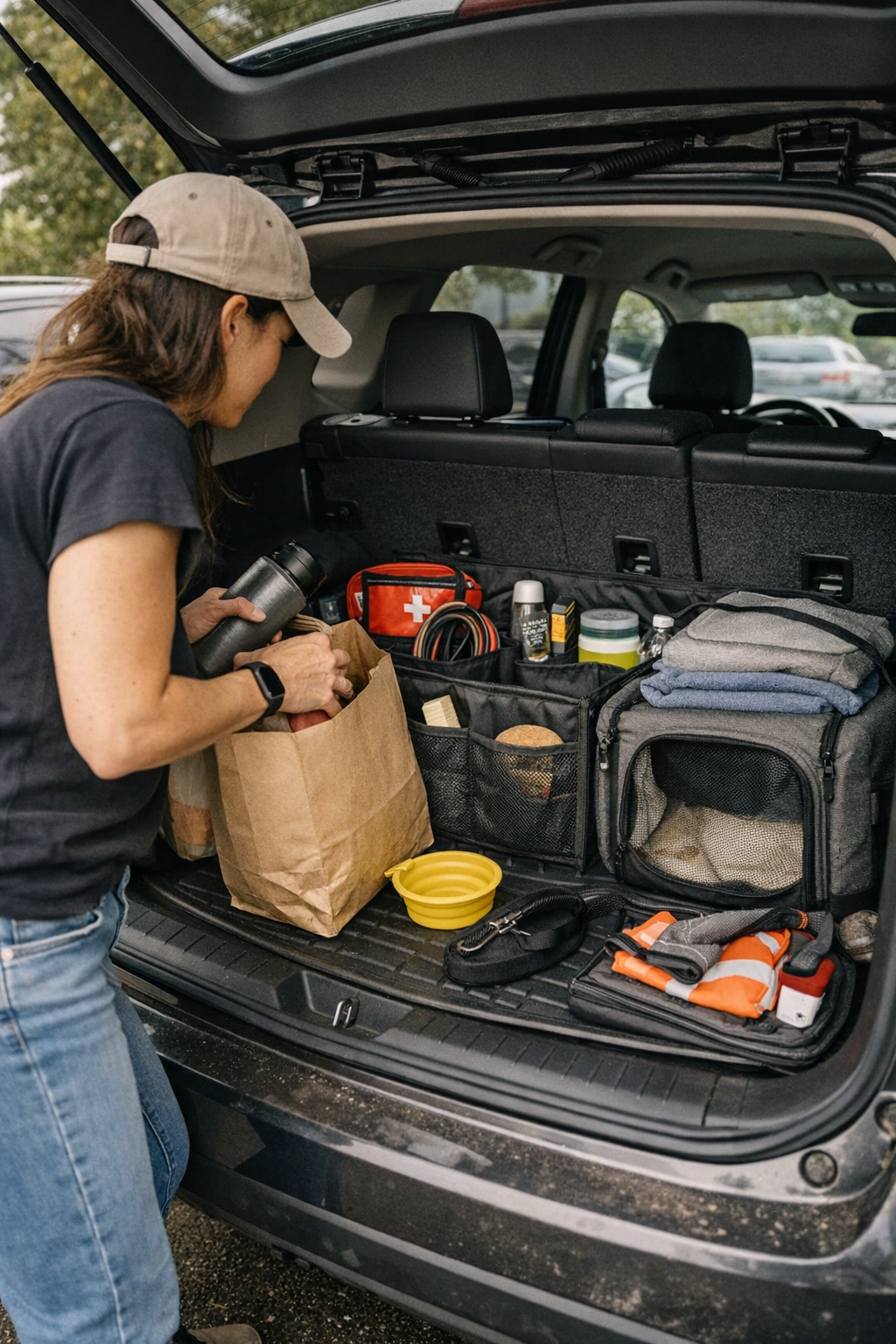
    A pet travel bag can look perfectly organized until you actually move with it—then the friction shows up fast. Step out for a quick trip with your dog, and every stop turns “neat compartments” into a test of reach and patience. The first setup flaw doesn’t appear parked in your driveway; it surfaces when you reach curbside, your dog shifting on cold or uneven pavement, and you’re stuck scrambling for that buried comfort mat, blocked by stray treats or tangled wipes. One overlooked pocket turns every transition into another physical shuffle—while your dog’s paws remind you every second that you’re still not ready to go.

    Where the Setup Breaks Down: The Exit-and-Entry Grind

    Leaving the house, everything looks sharp: leash clipped, bottles stashed, carrier zipped tight. But the smooth start shreds as soon as you hit the first stop, then the second, then a third. Each pause is a repeated snag—digging past a bowl to reach the mat, yanking wipes that caught on a zipper, juggling leash and gear in one hand while your dog waits. Suddenly, even a well-packed bag becomes a source of mounting interruption, not relief. This is not a rare annoyance—it’s built in, and it repeats. The pet is waiting, you’re fumbling, and the flow of every errand gets a little more ragged with each new stop.

    One Small Change, Noticeable Difference: The Instantly Reachable Mat

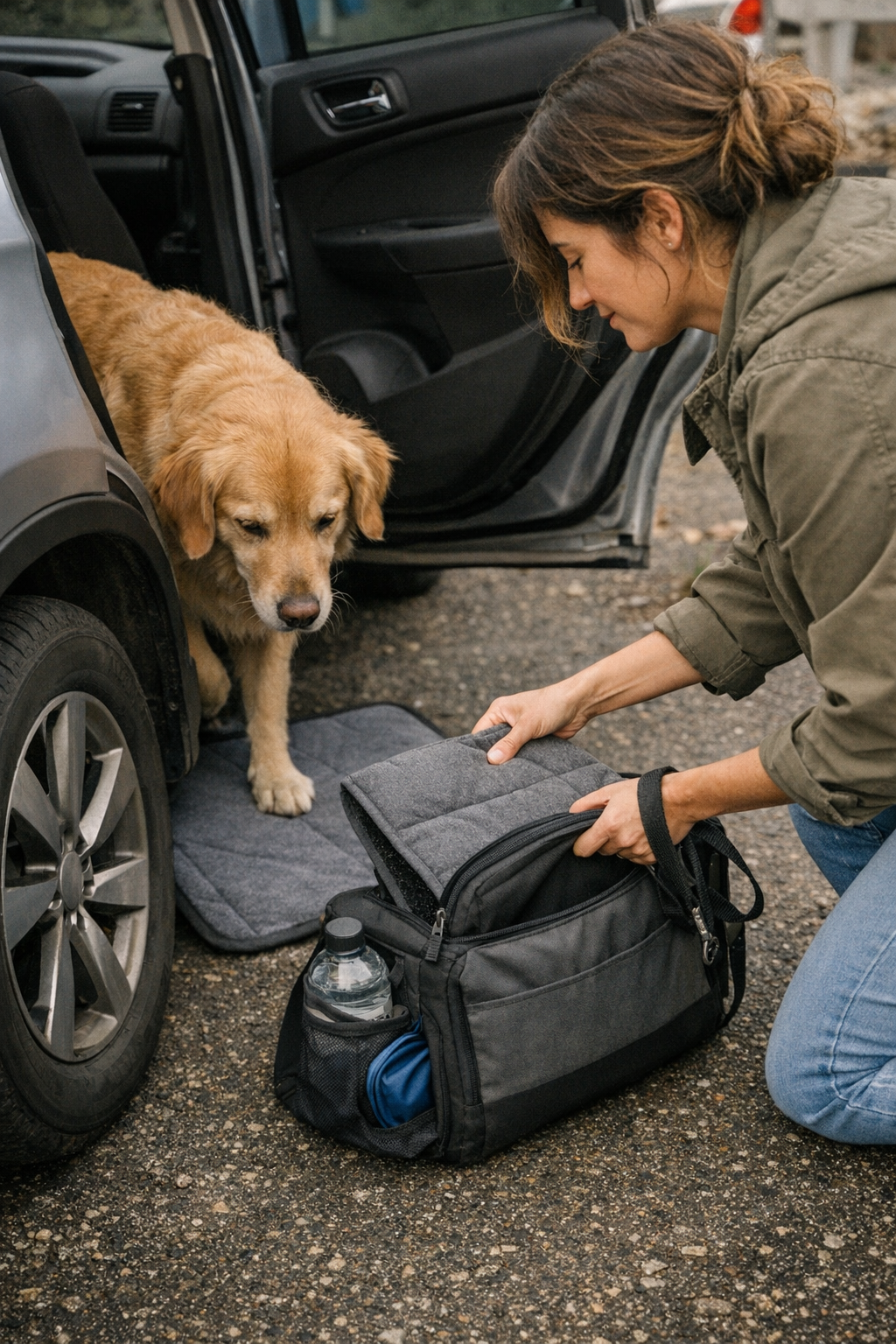
    Nearly every carrier includes some soft lining, but travel demands more: instant, seat-side access to a real ground buffer. Stowing the mat “somewhere in the bag” means you’ll always fumble for it while your dog paws at the edge of the car, restless on cold concrete. The specific fix: use a carrier or organizer with a dedicated, side-access pocket for the mat, right at seat height. One quick zipper, one-handed, and the mat’s down before your dog moves. There’s no juggling—no mix-up with bowls or wipes, no re-sorting required as your pet waits. The difference is immediate: transition is cleaner, the pace resets, and neither you nor your dog has to get tense at each stop.

    Real Travel Scenes: When Preparation Meets Reality

    Think routine: Saturday errands, a breakfast pickup, then swinging by the post office, and maybe quick pet store stop. First exit? Calm—everything ready, your dog steps down and settles. By the second stop, the mat’s jammed under water bottles you already fumbled last trip. Next, your pet sees gravel and hesitates. Now you’re juggling a leash, keys, partial zipper, and wondering why “organized” never feels ready when you actually need it. That readiness drains; the rhythm of quick errands breaks, one keep-finding-the-mat moment at a time.

    These are not big disasters, but repeating them shapes the entire outing—for your dog and for you. With every pause, the trip feels less about moving forward and more about dodging small, preventable slowdowns—usually because access, not just organization, is missing.

    Why Item Placement Outweighs Visual Neatness

    Neat isn’t enough if it hides the one thing you need most often. Real pain points:

    • Comfort mats buried behind stacked bowls or poop bags—always needing a full re-order to grab what matters first.
    • Wipes and hydration gear sit with the comfort kit; one spill turns pet cleanup into a reach-and-swap ordeal.
    • Section after section feels tidy, but these slow, repeated swaps erode the “prepared” feeling until even fast errands drag.

    Solve for separation: give comfort items their own, quick-reach space—never stacked with food, water, or cleanup gear. Fast transition drops the friction; you stop dreading the next fumble. Your pet doesn’t have to brace for cold or sharp or wet surfaces while you sort out stray gear.

    Comfort and Speed: The Essential Ground Buffer Test

    Not all mats work. A mat that soaks up rain creates new cleanup work; a too-thick one won’t fit a side pocket for quick grab. What works best: non-slip underside, enough cushion for paws, tailored folding to slip out seat-side, quick-dry fabric that you’re not afraid to put away while damp. There’s no sense adding a mat if grabbing it still means emptying half the bag each time.

    Keep comfort separate—one mat, one pocket. If you’re swapping sections or risk cross-contaminating with spilled treats or cleanup wipes, the stop slows and your routine gets messy. When each category—hydration, comfort, treat, cleanup—lives in its own section, neither you nor your pet repeat avoidable mistakes twice in a row.

    “Looks Prepared” Isn’t the Same as “Works Smoothly”

    The real lesson? Almost every “organized” setup shows strong on day one, but only a few survive three stops without exposing a weak flank. Most repeat-use failures show up here:

    • Digging the same section open twice trying to find a mat tucked behind other supplies.
    • Pausing to untangle wipes or wipes after a spill, holding up your pet and everyone else.
    • Routines that restart slower, with tidy gear that still blocks flow under normal movement—not just at the messy stops.

    The mat is a real-world filter: easy to ignore, until it’s the pinch point every cycle. Fast, seat-side mat access is the difference between tension stacking up and errands running quiet, with less gear-in-the-way drama every trip.

    Repeat-Use Wins: Less Stress with Every Pause

    No travel setup is invincible—routine will reveal every blind spot. But a bag set up for repeated, seat-side mat access eliminates one of the most common and persistent friction points: the gap between “looks ready” and “really lets you move.” With the right pocket layout, your outing stays simpler, not just neater—one less reason for your pet to wait and you to lose rhythm after every short stop.

    See practical pet-travel setups and gear at PawGoTravel

  • Choosing the Right Monitor Riser to Balance Desk Clutter and Ergonomics

    The hidden slowdown of an “organized” desk

    Your desk looks clean—paper stashed out of sight, cables routed behind stands, a monitor riser tidying the surface. But that “organized” upgrade, chosen for its storage or style, might quietly drag down your workflow in ways you don’t see until later. Extra reach to the monitor. Slow, creeping tension in your shoulders by midday. That awkward gap under the riser where documents disappear but never quite fit—forcing a shuffle every time you switch tasks. For workstyles built on frequent paper checks, fast keyboard-to-notebook transitions, and a screen that stays properly centered, an ill-suited riser can turn visible order into a new layer of daily hassle—one that repeats every hour, not just at reset.

    Small-clearance risers vs. tall risers: Where the difference lives

    Height is not a small detail—it’s the difference between use and interruption. The typical logic is tempting: a tall riser opens up more space, so you can park a laptop or stash bigger trays underneath. But after a week or two, even a half-inch of extra elevation pushes your monitor just above a natural sightline. You start re-adjusting your chair to compensate, sliding lower in your seat, or craning your neck late in the day. The desk looks organized, but feels subtly harder to use—each new item placed under the riser is another reason to reach, stretch, or recalibrate your screen or posture.

    By contrast, slim risers enforce a desk discipline that pays off every day. With just enough clearance for a paper stack or slim notebook, you gain a home for active documents—no juggling, no arc over tall piles. The motion becomes automatic: slide a sheet in; grab a page out. No stack growing so high you have to tilt your monitor to see over it. It’s the difference between a setup that resets cleanly and one that quietly reintroduces clutter under another name.

    How friction appears in daily routines

    What gets missed in desk makeovers is how minor friction, multiplied, wrecks daily flow. Early days with a new riser, that extra bit of monitor lift is invisible. But by the fourth or fifth work session, symptoms emerge: reaching out farther for a notebook wedged under the screen, wrestling a cable that doesn’t fit cleanly under the riser lip, or hesitating every time you want to drop a note in your main work zone.

    The daily signals are subtle but clear:

    • Your eyes tilt up, not glide naturally to the monitor
    • Charging cables catch when you move devices or shift your keyboard after lunch—one more tug, one more adjustment
    • Papers meant to be “at hand” vanish into semi-hidden trays, breaking your focus just to bring them back

    Individually, these are small slowdowns. But together, they add up: a desk that looks reset in the morning slowly turns into a series of micro-barriers by the afternoon. What starts as efficiency becomes an invisible tax—on posture, speed, and attention.

    What improved when I changed setups

    Dropping the tall riser for a thin, low one made effects show up right away. Any document I needed could slide beneath the screen without lifting it out of view. No more hiked-up monitor, no low-key neck ache during lengthy calls, no pause searching for a place to toss pages beside the keyboard. Crucially, workflow snapped back: active papers lived front and center, ready to move in one hand, not locked in trays off to the side.

    The bigger reveal came midweek—the day when a new device and extra cable needed a spot. With a thinner riser, threading adapters took seconds; no scraping on the riser underside, no bending plug housings, no re-routing power cords just to avoid knocking over a mug. Clearing the desk to reset for a new round of work stopped being a project and became a three-step move. By the end of the week, I noticed I’d gone days without sliding monitor arms, restacking trays, or correcting a hunched posture mid-session.

    Common setup questions, answered

    Why not rely on classic desk trays?

    Desk trays collect loose papers, but always off to the edge. Each time you grab from a tray, you rotate or stretch, breaking your workflow rhythm. Sliding two hands sideways, shifting your chair, searching for yesterday’s note—all while your shoulders drift forward. A riser with the right under-clearance keeps current pages squarely in your main zone—centered, within natural reach, protected from spills. The real point isn’t hiding documents, but ensuring active materials move in and out of your workflow without thought or delay.

    What’s the optimal clearance under a riser?

    Half an inch to one inch. That space fits a tight paper stack, a single notebook, or a thin planner—everything instantly accessible. Anything thicker belongs in a drawer, not inside your core reach area. Tall risers, meant for storing large piles, tend to create more clutter and block comfortable monitor height. Narrow it down: only what you reach for every session should be within the monitor zone.

    How do I avoid a cable jumble under the riser?

    Even compact risers can squeeze cable runs, especially with multiple devices. The trick is mapping cable paths before loading up the desk—plan where charging lines exit, and use adhesive cable clips or sleeves under the desk’s back edge to guide cords before they tangle beneath the monitor. Don’t overfill the space: a little open zone around cables means less drag, cleaner resets, and fewer knocks against loose plugs each time a device moves. Cramming every gap with storage only reintroduces cable mess in disguise.

    Real scenes from an improved workstation

    Three days with the low-rise stand, and reaching for pens, switching from laptop to notebook, and puling reference documents forward all happened in a single, straight motion—no pause to clear space, no sidestep around a stray tray, no paper jammed under a riser’s lip. My posture held up through longer stints at the desk; the need to adjust the screen or chair barely cropped up. The active workspace stopped feeling like a balancing act, and started working as muscle memory.

    Even reset routines improved: end-of-day meant closing the laptop, sliding a small document stack under the monitor, and finding every cable still where it belonged. No combing through trays or managing cables that had snuck into the wrong gap. The desk itself signaled what to do next—a setup supporting repeated flow instead of demanding another cleanup.

    When “looks organized” does not mean “works well”

    It’s common to finish a deep clean, add new organizers, and still find that your process hasn’t changed—you still reach awkwardly, still lose momentum shuffling between tasks. The key distinction with the right monitor riser isn’t just that things look tidy, but that work switches from one mode to another without hesitation. Documents move in line with your typing. Cables remain untangled after multiple resets. Eyes land right on the screen, not slightly above or below after each session.

    Small frictions add up fast. A desk upgrade isn’t proven by its morning appearance, but by whether you stop fighting it in the middle of your actual work. For most, a slim riser is just enough to keep necessary papers and accessories within reach—without raising your field of view too far or inviting another round of reset friction. Less attention to the setup, and more time where the workflow just happens.

    The best desk setups aren’t the ones that disappear—they’re the ones that keep your process clear, natural, and predictable, even after a dozen switches and resets in one day. Make each improvement earn its place through repeated, real use—anything else just puts friction out of sight, not out of reach.

    Explore the full WorkBasic collection

  • Why Modular Storage Systems Often Fail Under Real-World Use

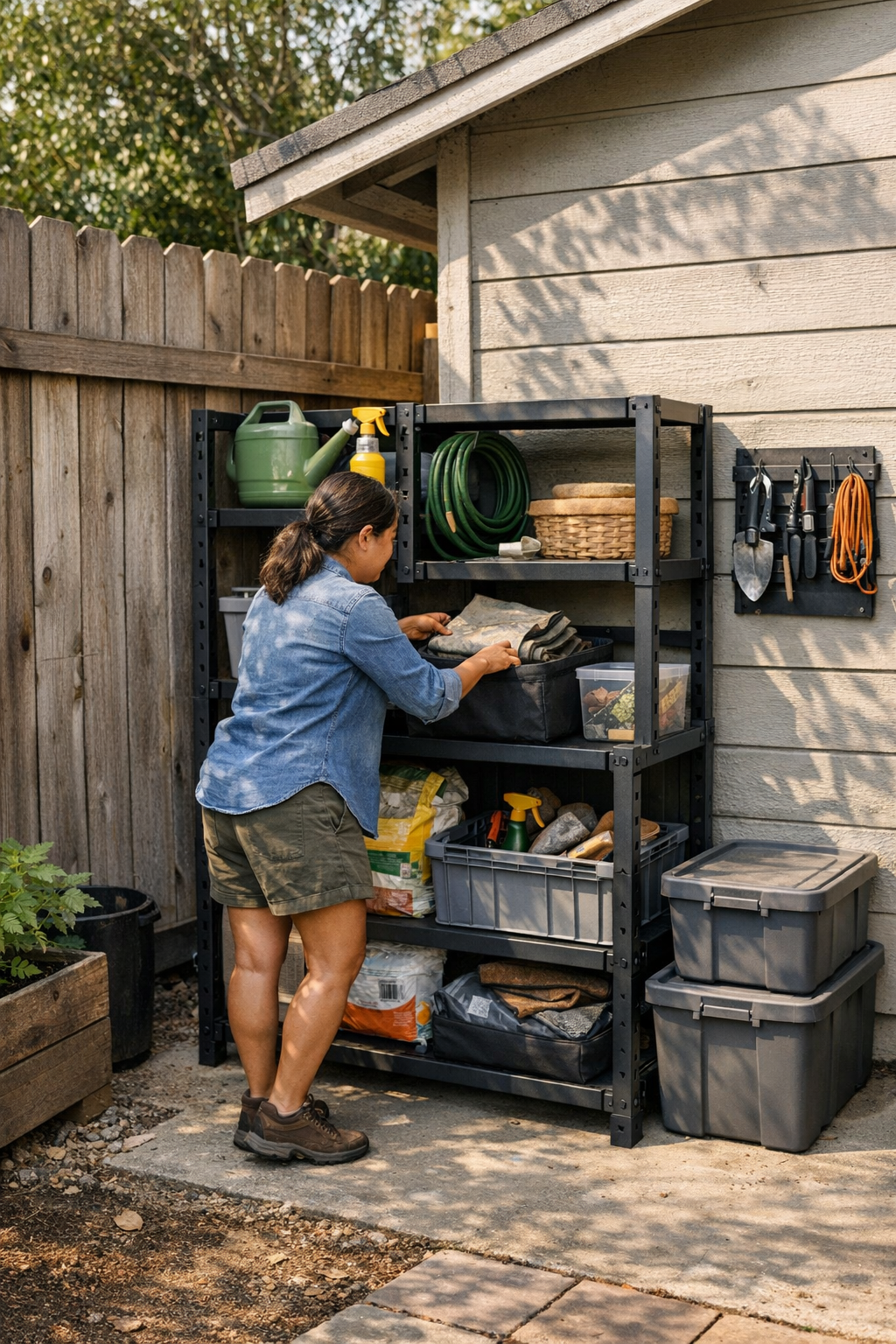
    At the start, garage organization feels like a big win. The shelves are lined up just right, bins have labels, every tool claims a slot. But give it a few days—a few busy afternoons, a handful of trips in and out—and the cracks start showing. The modular rack you planned so carefully is blocked by a rolling cart you had to nudge sideways. That open walkway is now pinched by a pile of odds and ends waiting for “later.” Bins don’t line up. A dead zone is forming. What felt efficient on paper becomes a daily source of little frustrations, all stacking up the more you actually use your setup.

    Where “Looks Organized” Stops Working

    At a glance, it’s still neat: bins in rows, no obvious chaos. But open one, and you’re reminded why it’s rarely used—a heavier bin is always sitting on top, so accessing anything means a drawn-out game of Jenga. Return a rake to its bracket and it instantly tips into the wheel path because another tool didn’t get fully returned last time. The cart rolls—but always needs to be pulled out again just to open a lower shelf.

    This is the hidden friction: Every movement is a workaround. A corner you planned on being flexible is already clogged. That “perfectly filled” wall rack now demands a sidestep or a shuffle every other time you reach for something. Small, repeated interruptions eat away at the feeling of order you started with.

    When Wall Space Isn’t Really Useful

    There’s a difference between filling the walls and actually clearing your movement. Mounting racks edge-to-edge may look efficient, but if getting to what you use most means squeezing past unmovable bins, your daily routines get slower, not smoother. The real test isn’t how many cubic feet you use—it’s how quickly you can put your hand on what you need and reset the zone after.

    Daily Reality: Efficiency Slips, Slowdowns Stack Up

    Fast-forward to midweek. That open zone by the door has picked up overflow. Projects-in-progress are perched wherever there’s a flat surface. To pull out one power tool, you need to drag the cart away from the shelf, detour past a stack of tubs, and edge sideways through a narrow gap—hoping not to catch a handle or send a pile cascading. Resetting the space after a project now takes as long as the work itself. The “system” stores things, but actually breaks up the flow you need to move.

    When Setup Meets Real Movement

    Initial plans don’t stand up to surprise runs for supplies—or a project that turns out messier than expected. Rigid layouts, with every slot filled and all bins stacked high, have nowhere to flex. Suddenly an empty shelf becomes priceless, and the absence of slack is the main thing slowing you down. Instead of returning quickly, you circle around, searching for a place where new overflow won’t block the next routine.

    Obstacles That Keep Returning

    Pay attention to where you keep getting stuck:

    • Shifting the same cart or rack over and over, just to open a path.
    • A dead corner collects bags, boxes, or tools that never seem to get re-homed.
    • Wall panels technically store more—but reaching what you need is never simple.
    • You rarely return each tool to its “slot” because it’s too much work after a long session.
    • The floor claims new piles every week—inevitably in the way.

    These aren’t quirks; they’re the system revealing its weak points. If it feels like you’re always resetting things two or three times, the setup fits your area—but not the way you actually work and move through it.

    Don’t Just Clear Space—Make Setup Support the Way You Work

    It’s tempting to squeeze storage into every available inch, but the best setups are honest about movement. Real efficiency is built in the gaps: a place to park a cart without blocking a main thoroughfare, a shelf that’s purposefully left clear for project fallout, a bin that’s always open for fast drop-offs. Fill every wall and you lose the adaptability you need at peak mess. Sometimes it’s the small slack—a cart that actually docks at the edge, or a shelf that’s never overstuffed—that keeps the whole zone moving.

    Simple, Real-World Tweaks to Cut Friction

    1. Always-open overflow: Designate a shelf or bin that’s never filled with permanent storage. It catches all the in-progress tools and avoids the pile on the floor.

    2. Nudge for breathing room: Even moving a main rack a few inches off a corner or away from a walkway can eliminate an awkward turn-around—so you aren’t body-blocked by your own system.

    Let Use, Not Just Looks, Guide Your Garage

    Order isn’t about how packed or pristine your setup seems after a weekend re-org. Long-term, it comes down to how easily you reset the space after real, repeated use. The best systems don’t just store more—they reduce backtracking, stop piles from returning, and let you move as directly as possible. That’s the difference between “organized” and usable. When you stop fighting clutter and start flowing through your garage, you know the setup is actually working.

    Find modular solutions and practical setup ideas at StackNest.

  • How Clear Categories Transform Closet Storage for Daily Ease

    The closet that looks crisp on setup day rarely stays that way. It’s not the first photo-ready glance that matters—it’s the rough-and-tumble of busy mornings, rushed changes, and last-minute gear grabs that truly test a closet system. You start with sleek shelves and matching bins, but by Wednesday, your best intentions unravel: piles tip, bins become hiding spots, and what passed for “organized” starts to blur under the real pressure of daily life.

    The Illusion of Order: When Neatness Fades Fast

    The first days after you organize a closet feel satisfying. Everything lines up. But real use exposes the cracks. You need a shirt—it’s under two others. Grabbing it unravels the stack, sleeves tangle, you refold on autopilot. Scarves look tidy in that deep bin, until you’re fishing past hats and belt buckles for the one you need, making a mess along the way.

    Visual order can mislead the moment you live with your choices. Categories quietly collapse: pants drift into shirt space, baskets blend wool socks with gloves, ties vanish under running gear. Suddenly, you find yourself digging, shuffling, re-sorting—often just for one simple thing.

    Everyday Habits Break Weak Systems

    Frustration Hiding in the Daily Grab

    Your real closet test comes at rush hour. If finding a belt means shifting two bins and pinching your finger, that’s a fail. Pulling a single pair of socks shouldn’t cascade half a pile onto the closet floor. It’s not one dramatic moment—just repeated little hassles: wasted seconds, lost visibility, piles that grow lopsided, or favorite items swallowed up in the wrong spot.

    These aren’t just annoyances. They build up, undermining even the best-looking setups. A shelf that eats up vertical space but holds only one reliable stack, or a basket so deep you forget what’s at the bottom, quickly turns organization into a constant, low-level project instead of a support in your routine.

    Strained Shelves, Slumped Stacks, and Blended Bins

    How long do your folded sweaters hold their shape before the whole pile shifts? Deep shelves offer volume, but at a cost: grab one item, others tumble or sprawl. You’re fixing two messes just to get dressed. The pattern repeats at the entry: a “catch-all” basket by the door turns grab-and-go into dig-and-delay as gloves, hats, and keys mix within days.

    The more often you need to reset a shelf or sort through overflow, the less your system is working for you. If your closet feels like a recurring do-over, the pain points are dictating your habits, not the other way around.

    Why Some Organization Sticks (and Some Falls Apart)

    The difference between fleeting neatness and real function is how quickly you can access, return, and reset what you use—without triggering chaos elsewhere. This often comes down to a handful of game-changing tweaks:

    • Shelf dividers that keep stacks defined—no more merging jeans and shirts, no more piles bleeding into each other.
    • Baskets sized just right for the category: large enough for winter gloves, but not so oversized that everything swirls together or disappears. Seeing the bottom at a glance is key.
    • Adjustable shelves or racks that match stack height to reality. Three or four sweaters per stack—never ten. This means less toppling and fewer rescue missions for items buried beneath.

    One shift makes a telling difference: replacing an all-purpose bin with a row of smaller, clearly labeled baskets. No more mixed-up accessories, no more hidden scarves, and no more “I’ll deal with it later.” Resets shrink from hour-long projects to two-minute touch-ups.

    Is Your Closet System Failing the Daily Test?

    The warning signs are clear if you look beyond appearances. Do you:

    • Move stacks or baskets just to reach an everyday piece?
    • Watch folded piles collapse and sprawl by midweek, no matter how you fold?
    • Find unrelated things mixing in “organized” bins or on shelves?
    • Chase rogue shoes, tangled belts, or stray bags that keep escaping their assigned spot?

    If any of these feel familiar, your setup isn’t keeping pace with the way you live. The struggle isn’t a lack of effort—it’s a lack of structure that reflects real patterns and pressures.

    Reset Speed: The True Test of a Closet That Works

    How long does it take to put your closet back in order after an average week? If simple resets—scarf back in place, shoes on the rack, shirts lined up—take five minutes or less, your system is quietly working. If the job grows or you start dreading the tidy-up, that’s a clear signal: something in the setup is creating friction instead of reducing it.

    Tip: Try a reset at the end of the week, timer in hand. If you’re fussing, digging, or shuffling more than you’d like, focus on making categories clearer, reducing stack height, or swapping dark, deep bins for open, visible baskets. Sometimes one small fix is enough to change the rhythm of the whole routine.

    When Storage Stops Being a Chore

    The best closet arrangement quietly disappears into your day. Categories hold steady. Stacks stay sharp. Your route—socks, shirt, sweater, shoes—flows without stall or second thought. You stop “organizing” and just use the space, never worrying about a small item sparking a bigger mess or a pile collapsing by Thursday. The system has faded into the background, holding its structure even as your habits flex and shift.

    True, lasting organization proves itself not in how perfect it looks after one big tidy-up, but in the weeks that follow. When resets are fast, blends don’t happen, and your closet works as hard as you do, the system is doing its real job—quietly, reliably, and without drawing attention to itself.

    closetworks.myshopify.com

  • How Small Storage Frictions Lead to Clutter in Shared Spaces

    Every time a storage system asks you for an extra move—lifting, sliding, bending, detouring—another item gets left out. You notice it not as sudden chaos but as an everyday stutter: a shoe lands next to the underbed drawer, not inside; a work bag sits perched atop the hallway bench, avoided for the third day running. It isn’t laziness. Real storage friction shows up as tiny delays that slowly shift a “put back” from automatic to almost never. This is where well-organized spaces fail—not from lack of effort, but from setups that quietly work against the routines they’re meant to serve. When daily return flow breaks down, you end up with overflow piles, drifting categories, and a room that still looks decent but forces you to work around it, not with it. Swap in the wrong cabinet, drawer, or shelf, and the difference is clear by the end of week one.

    Where Storage Friction Hides in Daily Routines

    Your storage looked perfect on install day: lined-up shelves, crisp wall units, clean drawers without a thing out of place. But routines don’t pause for design. That hallway closet with tidy glove shelves now chokes with hats and scarves because no one wants to fuss with tight cubbies. Bags stack on benches when the drawers below need a second hand and a deep breath to open. Underbed bins meant for winter bedding catch on the frame, so duvets pile up outside or get half-stuffed and forgotten. These setups promise order, but small resistances—the ones you feel only under weekday pressure—turn “just for now” into lingering clutter.

    Obvious snags like jammed drawers and stiff doors signal trouble, but subtle friction matters, too. Digging blind in a basket that’s one inch too deep, or splitting attention across modular units where favorite items hide, sabotages the whole “easy access” pitch. Suddenly, getting something out—or putting it back—requires more searching, more reshuffling, and more “temporary” decisions that stick.

    Spotting the Real Problem: Weak Return Flow

    Storage collapse rarely shouts; it creeps. The breakdown comes in the “return” phase. In a pantry, bins meant for snacks start leaking granola bars onto the open shelf, then onto the counter by noon. A linen closet meant for towels starts housing T-shirts and random linens mashed into any available gap, especially after rushed mornings. Delay the reset just a couple of times, and a clear system becomes a patchwork—categories smudged, corners crowded, and nothing quite where you need it next time.

    How “Just Enough” Resistance Adds Up

    Storage resistance is almost always revealed in rush hour, not planning mode. Family closets, shared kitchen pantries, underbed drawers in guest rooms—these pressure points multiply the challenge. A drawer with tolerable friction for one person becomes a daily speedbump when five hands cycle through in the morning. The extra nudge needed, the lid that sticks, the shelf that forces a shuffle—all it takes is a single weak link in the reset chain for overflow to become routine. Categories blur. Shoes and bags roam. The most-used items abandon their home base first, and the drift at the edges spreads until the whole setup slows you down instead of speeding you up.

    This breakdown isn’t dramatic. It’s a slow, steady leak: shoes collecting outside benches, towels sprawling beyond a shelf, the same snack reappearing on the counter. If you find yourself reaching once for an item, then again to get something behind or beneath it, the resistance is already costing you more than it seems.

    Real-World Scenes: When Storage Slows the Routine

    • You open the closet for your jacket but first dodge two bags on the floor. Putting them away means fighting a sticky drawer, so you let them pile up—again.
    • Last night the underbed bin’s runner jammed; now blankets crowd the foot of the bed. One snag and the reset step gets skipped more than finished.
    • Spices meant for a narrow shelf end up scattered because sliding the section is just annoying enough to do “later.” Weeks pile on, and overflow becomes a fixture.
    • A modular shelf looks streamlined, but digging for the right basket means shuffling others aside. Return steps get postponed, and backflow overtakes the neat lines you started with.

    Too Many Steps? Watch for Overflow Zones

    Overflow zones don’t announce themselves. You’ll see them as gradual mounds: items stacked at the bedroom door, a row of cereal boxes exiled from the pantry, a growing pile on the hallway bench, the extra towel always drying on the bathroom floor instead of inside the linen drawer. When “putting away” is more than a one-move operation, temporary piles linger until they threaten to outnumber storage itself. Overflow in real homes almost always points to a closing, sliding, or reach-in step that takes just enough effort to get skipped. Stiff drawer runners, a shelf placed a little too high, clearances that leave you twisting a basket out sideways—all are quiet reset killers.

    Category Drift and the Disappearing System

    The more return steps get skipped, the more categories start to blend. Snack bins collect mail and headphones. A towel shelf absorbs pajamas. Every shortcut a user invents nudges the system closer to entropy—especially in any space used by more than one person. The loss isn’t obvious overnight, but give it a week and even the best-organized system starts to drift, edge out, and blur into improvisation. Eventually, the storage you set up “just right” becomes another source of sorting instead of relief.

    Reworking the Stress Point: Small Shifts, Big Difference

    The biggest storage resets rarely require a full makeover. Often, removing one friction point unlocks the whole zone. Replacing a cabinet door with a slide-open shelf, adding a spring-loaded drawer, or rethinking the height and depth of your most-used bins changes the flow. In a busy hallway, swapping a sticky two-hand drawer for a soft-close slide let everyone drop off bags with half the effort. Corners stayed clear, overflow spots dried up, and items rediscovered their categories—even mid-rush. The change didn’t erase the need for order; it made that order easy enough to survive real life.

    In practical terms: moving everyday snacks to open, low shelves means kids (and grownups) reset more naturally; storing “occasional use” items higher moves the struggle out of the core routine. For underbed storage, units with smooth, solid runners preserve the intention—hidden, low-friction stow, minus the jammed track and underbed pile-up. It’s not about maximizing hardware—it’s about matching the storage mechanism to the actual pressure points you live with.

    Small Practical Changes

    • Keep high-frequency zones a single step from reset. If a door or drawer slows you, try open shelves or exposed baskets for your fastest use items. Cramped? Slim cabinets or shallow benches often outlast deeper, fussier pieces.
    • Track your worst drift and overflow zones. If stuff always piles up on the same bench or shelf, it’s time to troubleshoot: lighten drawer motion, widen clearances, or move the reset spot closer. Chasing new containers solves nothing if the bottleneck stays.

    The Line Between Ease and Extra Work

    Any storage that slots into your routine without extra steps fades into the background; the moment you notice resistance, the system starts leaking. A setup only earns its keep if returning items is as natural as grabbing them—no extra dig, no backup plan, no delayed reset. Door latches, odd heights, overloaded baskets aren’t superficial complaints; they’re warning signs: every small strain today equals overflow, drift, or a backup zone tomorrow.

    Lasting order doesn’t begin with perfect lines or grid photos—it’s sustained by storage that survives the cycle: grab, use, return, repeat. If “organization” feels like a chore or leaves visible spillover, shift your focus to friction at the final move. The right adjustment at the stress point means less daily effort and a setup that holds, not just impresses, from week to week.

    Explore storage solutions built for daily routines at Gridry.

  • How Adjusting Cat Play and Feeding Order Cuts Daily Mess and Stress

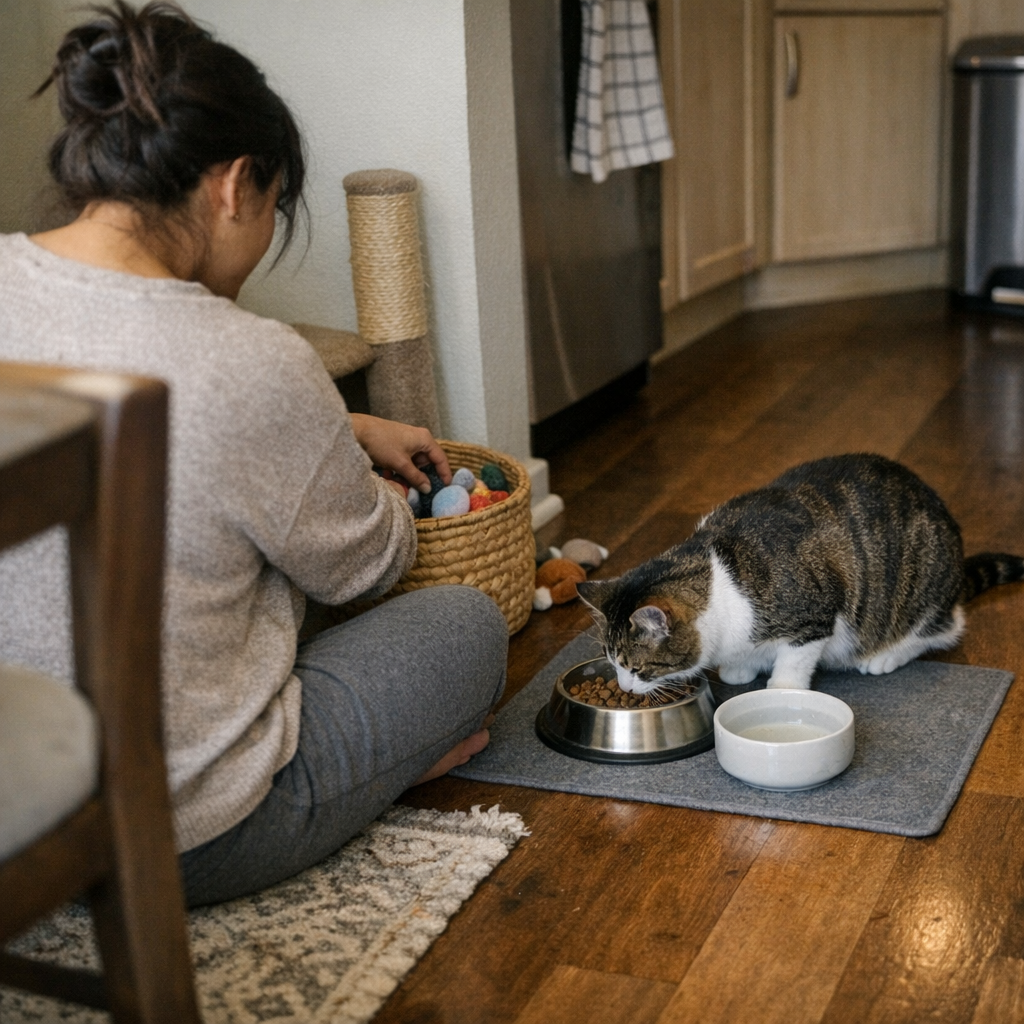
    Set up, tidy up, then get blocked at the worst moment. In most indoor cat homes, a feeding mat can look settled in its corner, toys stashed tidily, and supplies lined up—yet the same everyday friction keeps coming back. Bowls end up blocked by stray toys, water edges spill just where you’ve wiped, and crumbs or fluff return between resets. It’s not simply mess; it’s repeated reset work: hunting for the scoop under a pile of toys, shifting a mat to mop up after every meal, dodging scattered chews or a misplaced rest cushion just to refill the bowl. For StillWhisker homes, the struggle isn’t lack of gear—it’s the momentum of daily routines exposing weak points you thought you’d fixed.

    Why Feeding and Play Sequence Shapes the Daily Mess

    Even a careful cat setup starts to break down when routines ignore the order of play and feeding. The shift from “play, then eat” to “eat, then play” rewires how often you need to clean, what objects stray into walk paths, and whether the feeding area stays usable between resets. Change the order, and it changes where the work shows up. Most owners notice the hidden cost only when toys migrate to feeding mats, crumbs travel out of the bowl zone, and cleanup quietly drags on. Every shift in energy leaves a visible trail—on the floor, around the mat, across the shared room.

    When the Routine Backfires (Even in a Tidy Room)

    Feed first, and you often pay twice: the cat barrels toward the bowl at full speed, spills kibble across the nearest walkway, then grabs the first toy in sight to launch back into the same cleared zone you just wiped down. The effect is cumulative—random fluff by the mat edge, streaks from water splashes, a path you cleaned this morning lined with tiny grit before noon. No new mess-maker needed; the routine itself keeps undoing your work, and reset cycles stretch out.

    Play Before Food: The Hidden Reset Button

    Play first—then feed—and the whole setup holds up longer. Cats that burn energy in play before meals settle for quieter, less messy feeding. Food tends to stay near the bowl instead of skating across the mat. Water splashes retreat, and toys go back to their zone instead of crowding feeding time. Even after several days, that difference is real: the same floor space holds up with lighter sweeps, fewer surprises, and less chasing after out-of-place objects. The change isn’t theoretical—you see it in how much less you need to move, lift, or return with each cycle.

    The Cumulative Cost of Ignoring Sequence

    Ignore routine order, and the consequences pile up everywhere: the spot you mop gets wet again, you wipe crumbs that weren’t there ten minutes ago, and toy migration restarts before you’ve finished cleanup. It’s not about “cat training”—it’s the work that repeats. If cleanup supplies aren’t grab-and-go, or if you spot yourself moving the mat, toys, and bowl just to clear a corner, the real friction isn’t the cat—it’s routine structure pushing the same flaw forward, day after day.

    Spotting Repeat Problem Zones

    Most setups fool you at first. Mats look generous, baskets start out full, and everything lines up—until a week in, when certain islands of trouble refuse to go away:

    • Crumby corridors: Food dust migrates from bowl to walkway even when mats fit tight, giving that unmistakable crunch underfoot midweek.
    • Toy spillover: Balls, small plushies, and chew sticks wedge under chairs or against the water dish, always returning to the same mess-prone strip.
    • Water edge drama: The bowl itself may not leak, but one quick lap sends water inches past the mat boundary, demanding another wipe-down.
    • Resets chained together: You reach for a single crumb, but end up shuffling three other objects—mat, toy, rest cushion—just for basic access.

    The pattern amplifies fastest when feeding and play overlap or happen out of order—showing up as persistent mess exactly where you want clean, open access. If evening always means retrieving the same toy from the bowl path or seeing water spots reappear in that one spot, it’s the sequence, not the stuff, dragging your effort down.

    Separate Zones, Smoother Mornings

    The simplest fix isn’t more gear—it’s space. Put toys and feeding several feet apart and keep cleanup tools where your hand naturally reaches. Even shifting a bowl mat one hand’s width from the wall gives you a physical buffer. Toys become less likely to ricochet into bowl zones. Water, food, and play debris hit their own areas and stay there. Cleanup shrinks from a round of rearranging back to a ten-second sweep and a single pass with the cloth.

    Why “Looking Tidy” Isn’t Enough

    Judging a setup by last night’s reset is a classic trap. The corner can look perfect for hours and still break down the instant routines collide—like a ball knocking over a food dish or a cushion drift that always blocks the next refill. The real test? How long the order lasts, and whether you keep moving objects out of the way just to do ordinary tasks. If you’re still zigzagging around piles to reach the bowl or the toy basket always needs a mini-tidy, “tidy” isn’t translating to “easy.”

    The right setup doesn’t just look cleared—it feels easier to pass, reset, and maintain. When familiar friction keeps coming back (toys crowding the refill zone, bowls surrounded by relocated fluff, or cleanup dragging into a shuffle of accessories), the structure—not the stuff—needs the change.

    What a Functional Setup Looks Like in Real Use

    Picture a kitchen area where the feeding mat doesn’t hug tight to the wall, but sits with built-in buffer; toy storage is past the walk path, and the feeding zone’s edge doesn’t overlap with play or rest corners. After breakfast, your reset is actually fast: one pass for crumbs, a check of the mat, done. No search under cabinets, no repeated water mop-up, no play detour clustering around the food. You don’t get perfect order—some days, toys stray or a water splash finds a new tile seam—but the routine isn’t constantly stacking new work into your path.

    With one deliberate play-before-food cycle and clearly split zones, the mess becomes a one-off, not a rerun. That’s what makes maintenance lighter: you stop repeating the same clumsy shuffle and start noticing that your space holds up for real, not just for photos.

    Small Adjustments, Big Payoff

    Rethink order, tweak spacing, and the difference stays visible. The biggest home-life shifts don’t require new bowls or extra storage—they rely on breaking repeated patterns. For example:

    • Bowl refills take seconds when no toys crowd the reach angle.
    • Mat placement matters—a spot that keeps scatter from spilling past the wall saves another round of sweeps.
    • Toy return drops to weekly, not daily because the play zone’s now well away from feeding reset points.
    • Shared walk spaces clear—no weaving around resting pads or scratchers mid-chore.
    • Litter drift slows when the post-play dash never crosses through every other zone right after meals.

    These differences are what actually shrink the daily load: you end up restocking, cleaning, and straightening in seconds, not full sessions. The quiet friction goes away.

    If You Keep Finding the Same Mess, Give Rhythm a Second Look

    If the same toy, water streak, or crumb zone keeps showing up, the fault isn’t usually with the equipment. It’s the rhythm and structure handing you repeat work. If resets stretch out or you feel blocked every time you use the space, ask which routine happened first and which zone kept overlap alive.

    Test a “play first, feed second” cycle and pull toys an extra few feet from the bowl for a week. Even after three days, you’ll spot whether the reset shortens, the mess travels less, and the same blocked point finally disappears.

    The endgame isn’t spotless—it’s a setup that works with your routines, not against them. That’s when shared spaces actually become livable, not just organized for a moment.

    Find practical, field-tested setups designed for real indoor-cat routines at StillWhisker.

  • Streamlining Carry-On Organization for Faster Airport Navigation

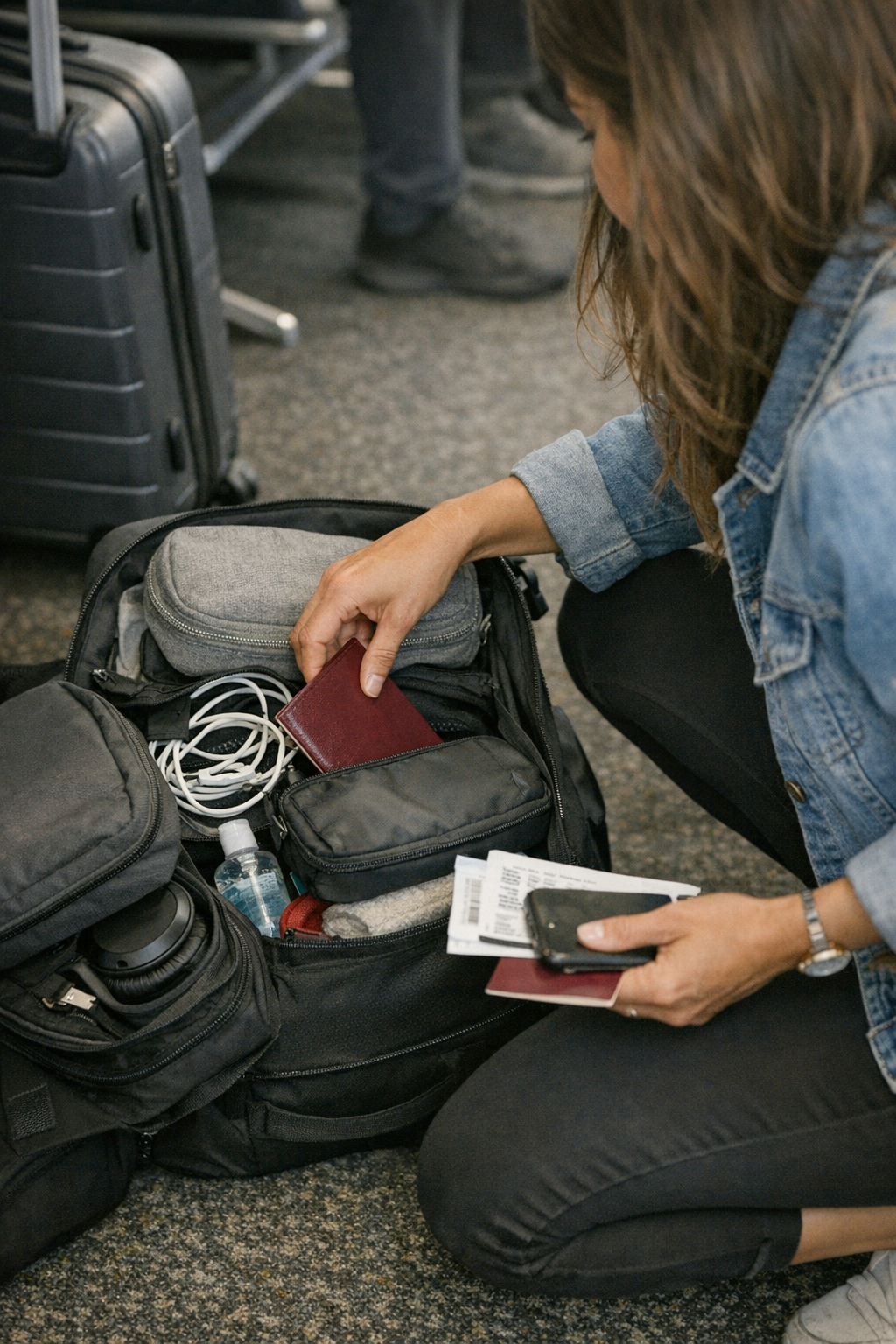
    The carry-on that looks pristine on your living room floor can break down fast—right when real travel hits. The moment you hit the security line, tray in hand, and start reaching for your passport or charger, the “perfect” packing system starts to falter. Items shift, pouches block other pouches, and that reliable organization dissolves into a slow crawl at the worst possible time: security checks, boarding queues, and jammed airplane aisles. The more you try to keep order, the more each routine reach turns into a small setback—and the more you notice where your setup really fails under real airport pressure. This is where the rigid packing logic of home clashes with the snagged, in-motion reality recognized by anyone who travels more than once a year.

    Why Neat Packing Fails Under Repeated Pressure

    The illusion: everything in its place, a lineup of pouches and zippered pockets, cables wrapped and filed away. Reality: that careful setup cracks the moment pressure builds—at the first ID check, at the next repack, at the third time you reach for your boarding pass. Suddenly, the cable you tucked in is coiled around your passport, sanitizer is pinned under headphones, and the “just one more zip” routine drags longer with each round.

    This isn’t a messy-bag problem—it’s a repeated-access problem. Each movement you make exposes a new snag: your flow is interrupted, tiny frictions stacking up until even ordinary retrieval feels like a hassle. The complexity isn’t visible at first—it only becomes obvious after the same annoyance repeats three, four, five times before you land.

    Real Carry-On Scenarios: When Visual Order Slows You Down

    The Security Checkpoint Stumble

    Security lines aren’t just about patience; they spotlight every flaw in your packing structure. You reach for your document pouch, but another organizer blocks it. Or you dig for your boarding pass and end up dragging out an entire tech pouch you haven’t touched since last night. Your supposed “order” just forced an audience to wait while you fumbled with zippers—what worked at home just slowed the TSA line and spiked your irritation.

    The Overhead Bin Access Dance

    As you stand in the tight aisle, ready to stow your bag, the pressure doubles. You think you can grab headphones or sanitizer quickly—but both are buried under layered organizers. The bag you zipped to perfection is now a barricade of pouches and fabric. With a growing line behind you, you unstack, search, restack, all before even reaching your seat. The cost: extra seconds, side glances, and a feeling that your “system” is working against you in front of a live audience.

    Seat-Side Repacking Hassles

    Sitting down should be relief, not another round of fumbled unpacking. Need headphones? Another pouch layer. Need tissues? Unzip the next pocket. Every time you try to return items—after the snack cart, after plugging in a charger—a small shuffle breaks the order you built at home. Over a long flight, these repeated, miniature repacking drills pile up, leaving your carry-on less usable and your patience thinner with every cycle.

    Hidden Friction: The Cost of “Double-Layered” Packing Tactics

    There’s a reason these headaches repeat. Nesting organizers look satisfying in your luggage photo, but repeated use turns them into speed bumps. Stacking pouches in the name of neatness means every retrieval becomes a chore: unzip, search, stack, return. The more you try to impress with clean lines, the more you slow yourself at every high-pressure moment—especially between gate calls and snap security checks. By your third dig for the same item, it’s not just a visual problem; it’s lost time, lost flow, and mounting frustration where the friction only increases with real use.

    When Routine Interrupts Reveal Weak Spots

    It’s easy to spot the real failure points: that mental tally of moments when you thought, “This again?”—passport two pouches deep, sanitizer never where you need it, headphones stuck under yesterday’s power bank. Your carry-on isn’t chaos, but every everyday access is a step slower than it should be. Visual order returns after you repack, but the underlying drag stays put.

    • Passports and ID buried two layers down—leading to slowdowns not just once, but at every checkpoint and gate.
    • Chargers, headphones, and tech in a puzzle pile—good luck getting one without spilling three others.
    • Quick-use items like sanitizer stuck for neatness, but unreachable when you spot a line forming behind you.
    • Pretty pocket stacking killing fast returns—you end up re-zipping, re-ordering, just to put one thing back.
    • Every “visual reset” trick restoring order without fixing slow repeated access.

    Designing for Access: What Actually Moves With You

    The real upgrade isn’t a prettier setup—it’s one that breaks the repeated-interruption cycle where it starts. The structure that works is the one you trust to deliver in three or four real pressure moments, not just to pass a pre-trip photo test. Diagnosis is simple:

    • How many times do you need instant access to your phone, documents, or charger between home and gate—and does your bag make that one move, or several?
    • Are you still shifting entire pouch stacks for sanitizer or headphones every time?
    • Do “neat” placements force you to unpack for one item, just to recap and reorder again before you move on?
    • If a real pressure point exposes a friction—boardings, security, crowded aisle—does your carry-on fix it or compound it?

    The setups that survive repeated use aren’t as strict visually. Those who travel often quietly break the symmetry: moving must-grab items into outer pockets, keeping tech loose in a top flap, accepting a slightly “broken” look in return for true access when it counts. The price is a little less tidy, but each friction point gets shorter, and your trip feels lighter, not heavier, with every step and every repeated reach.

    Small Shifts That Add Up: Real-World Improvements

    Watch a frequent traveler who’s stopped losing time: their boarding pass sits in a front pocket, not trapped in a zip system. Sanitizer and phone live loose in outside sleeves, not buried under a toiletries cube. Headphones and charger share a thin quick-grab spot, so in-seat reorganizing shrinks to one zip and out. The look isn’t as staged, but there’s less fumbling, less reordering, and noticeably less stress by the time you reach your seat.

    None of this sacrifices basic organization—it shifts priority from “one glance, all tidy” to “one move, item in hand.” The ordinary daily flow—grab, use, return—finally matches up with how travel really unfolds: unpredictable, repetitive, crowded, and always pushing your setup to deliver under pressure, not just at rest.

    When to Rework Your Carry-On Routine

    If you finish a trip and can list two or three repeated sticking points—document pauses, slow sanitizer access, repacking after every tray—your current setup isn’t working for transit. It might mean breaking your home logic: moving the most-used items to the least symmetric spot, choosing outer access over inner perfection. But the tradeoff? Fewer micro-stalls, fewer frustrated digs, and a setup you don’t second-guess every time a checkpoint, gate, or seat-side search interrupts your flow.

    The better carry-on isn’t the one that stays perfect on the floor—it’s the one that keeps you moving every time reality interrupts your plan. When that happens, the trip gets smoother—not because you packed more, but because you finally packed for actual movement, not just for looks.

    See real access-focused carry-on solutions at CarryOnSupply.

  • Choosing Warm Color Temperature for Comfortable Entryway Lighting

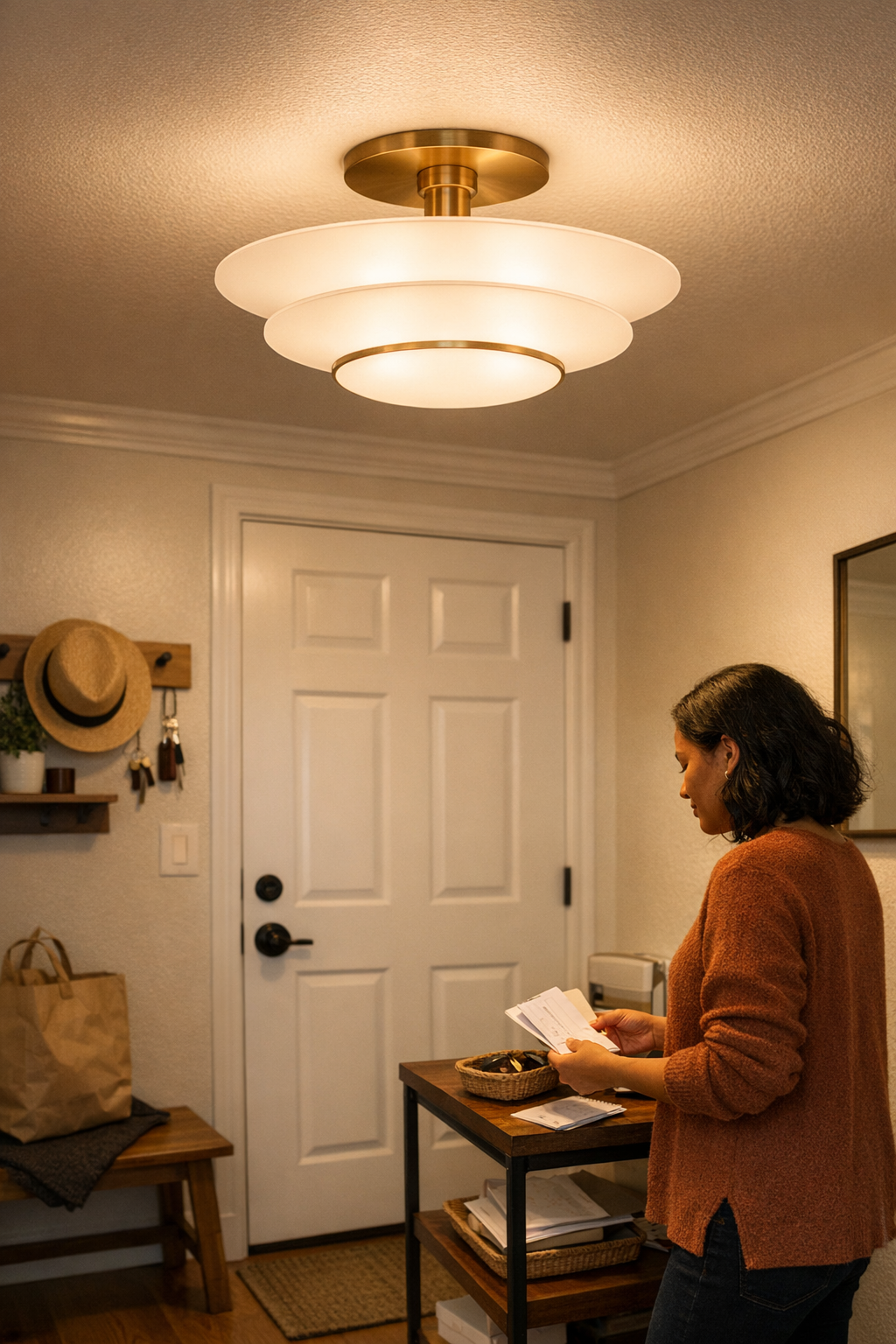
    The wrong bulb makes itself known every time you enter. The entryway appears crisp at first: cool light, hidden cables, shelf edges that look sharp—almost professional. But after a week, you start feeling the real drag: glare when you reach for keys, the mirror shows tired shadows, and dropping a package means half-turning away from light that’s too bright and too cold. It’s not the fixture’s fault. It’s the color temperature—impossible to ignore once you live with it.

    Cold Light Looks Clean, Then Turns Against You

    Flip the switch on a new 3500K or higher LED: entry lines snap into focus, surfaces gleam, and cables seem to disappear. The setup passes the “just installed” test. But after a few days, daily use breaks the illusion. The blue-white glow exaggerates marks on the floor, casts hard-edged shadows over the shelf, and makes metal supports reflect in ways you can’t unsee. Pause to sort mail and your eyes squint against the glare, every label dulled and your own face washed out in the wall mirror. The supposed “finished” look begins to highlight what doesn’t work instead of what does.

    This is friction you can’t clean away. Rushed exits get sharper and less comfortable. Pausing to untangle headphones or check a bag leaves you with a metallic glare off every hook. Shelves that once vanished into the background now demand energy to ignore, and every tangle of wire beneath looks newly exposed. The modern look doesn’t change—the lived-in drag is what you feel.

    Unseen Problems Build Up in Everyday Details

    Even slim LED panels and flush ceiling mounts amplify the issue if their color temperature stays too cold. Shelves look tidied in catalog photos, but in use, cool light throws out long, blue shadows where you actually need to find things. On a normal weekday, as you drop groceries or hunt for keys, small annoyances gather:

    • Glare bouncing off hooks and hardware interrupts your focus
    • Blue, sharp shadow lines break up work surfaces and hide the objects you actually touch
    • Every cable, plug, or support bracket stands out in relief, no longer hidden by lighting design
    • Notes and deliveries look oddly colorless, losing visibility when you need it

    You start adjusting habits—standing differently, shading your eyes, shifting packages out of the direct light—just to avoid the strain. The hardware isn’t failing. The light just isn’t tuned for routine use.

    The Routine Gets Clumsier—and Doesn’t Stop

    Most entryways aren’t pure pass-throughs. You pause: dropping a jacket, reading a note, or searching for headphones at the worst moment. Under cold lighting, every routine stop feels exposed and hard-edged. Fine details get lost in glare—the doormat’s texture disappears, keys blend into the background, and cables or brackets that once felt hidden now stand out. Each pause comes with a visual penalty.

    The strain spreads. Bring in guests at night and they glance away or hurry past, dodging the overlit feeling. Try to read a label while standing in the edge shadow—now you’re angling items or physically moving to find a spot where the light isn’t working against you. Minimal fixtures and flush supports create a tidy silhouette, but if the light’s temperature is off, your entryway becomes a series of interruptions, not a landing zone.

    Warm Light Restores Comfort at Every Station

    Switch to a soft white bulb—around 2700K—and the difference is immediate. Edges soften, glare drops, and the spaces you actually use lose their visual harshness. Swap out a “daylight” bulb for a warm one, and you’ll find shelf details reappear, doormat texture stands out, and keys become obvious without effort. You stop repositioning yourself just to avoid the sharpest line of sight.

    Warm light clarifies what matters: notes stay readable, packages are easy to inspect, and cable runs fade into the background instead of drawing the eye. Wall brackets lose their blue-shadowed outlines and become visual afterthoughts, not daily irritants. The background looks resolved, and the friction points step back where they belong.

    Real-World Use Decides If Lighting Works

    The value of a 2700K-3000K bulb shows up because you use your entryway again and again: there’s less glare, softer transitions, and fewer visual interruptions. The right color temperature doesn’t draw attention to itself—it lets routines run smoother. When you’re not forced to notice cables, squint at shadows, or adjust to avoid eye strain, the space finally fits its role: a working, welcoming passage.

    Most people don’t blame lighting at first—they blame clutter, support hardware, or floor mess. But if you’re constantly catching visual distractions or dodging glare, the color temperature is almost always the real issue. Even the best bracket, cable manager, or fixture style can only do so much if the light itself keeps throwing obstacles into daily use.

    Simple Fix, Noticeable Shift

    The most effective adjustment: switch to a bulb marked “soft white” (2700K), or install adjustable color-temp fixtures and dial down the coldness before calling it done. In entryways with metal, gloss, or any line of exposed cable, warmth wins over sterile brightness every time. The improvement isn’t just visible—it’s immediate: less shifting for comfort, less glare, and fewer small irritations. The space stops feeling like a collection of problems and starts working as an actual entry zone.

    Prioritize the comfort of real use over the cleanest first impression. A minimal profile can look perfect, but only the right light temperature will make your entryway feel—and work—right with your daily routines.

    Find smart indoor lighting, support parts, and practical accessories that make every everyday setup easier at LightSupport.

  • How Thoughtful Dog Space Layouts Improve Relaxation and Routine Flow

    The most common dog-home setups fail for reasons that only show up after the third or fourth walk, when you’re juggling a leash, coffee, and suddenly can’t grab the towel fast enough. At the start, it all seems simple: bed in a corner, bowls somewhere out of the way, toys lined up by the wall. But after a few days, friction creeps in. The bowl keeps blocking your path to the fridge. Toys migrate right where you step coming in. The bed sits in a quiet-looking corner—until every grocery run, laundry trip, or after-work crash lands right on top of it. The space looks organized, yet you find yourself sidestepping, stepping over, or resetting the same tangled spot, while your dog circles, hesitates, or abandons “their” corner for a colder, emptier patch of floor. A setup that looks tidy in photos turns into a slow-motion obstacle course the moment daily routines repeat. The “invisible drag” isn’t a one-time hassle—it’s the everyday slowdown you only really see when comfort, access, and cleanup keep tripping over the same arrangement.

    Where Dog Spaces Start to Unravel

    Most setups are made for first impressions—bed here, bowl there, toys in a basket. The trouble starts after enough repetition. You put the bed near the kitchen for easier hanging out; the bowl close to the door for fast post-walk water. At first, no problem. Then morning routines stack up: someone crosses the bed to get coffee, the fridge door thuds inches from the bowl, a leash gets snagged behind a crate, or your dog dodges the laundry basket on their way to rest. There’s rarely a single bad incident—just the slow realization that every step now means a detour or quick shuffle. Helpers like towels or wipes are within reach…until you need them fast, and find yourself stretching awkwardly or dealing with muddy paws a minute too late. Each day’s cycle adds another micro-delay; “good enough” placement becomes a source of low-grade tension.

    Invisible Friction in Daily Flow

    A dog-friendly space isn’t about what looks neat on paper; it’s about whether the same motion—grab leash, dry paws, refill bowl—flows or stalls. Repeated friction shows not as piles of toys or mess, but as longer hesitations: the extra circling before lying down, the pause before drinking, or the interrupted nap each time someone passes. Many owners shrug it off (“He’s just restless,” or “She always wants to supervise”), but most of the time it’s the setup quietly demanding your dog—and you—keep working around the layout instead of letting routines settle in.

    When the Routine Keeps Hitting the Same Snag

    Picture an ordinary evening: you pass through with groceries, someone else reaches for a snack, the TV kicks up. If the bed is right next to your footpath or if the bowl is jammed by a door that constantly swings, your dog’s rest is always on standby. The dog hops up when feet pass too close. Or abandons their bed for a tile patch. Or stands waiting—again—for you to clear a blocked walkway before water or dinner. There’s rarely one glaring failure; just the constant, repeated disruption that makes “settle time” a moving target. You “fixed” the spot once already, but the same jams keep happening—with just enough friction to drain both your patience and your dog’s routine comfort.

    It Looks Tidy—So Why Isn’t It Working?

    The difference between a setup that holds together and one that keeps falling apart shows up in the details: the bowl tucked “out of the way” under the coat hooks becomes a morning bottleneck when three people and one dog all need that space at once; the plush bed fills a corner perfectly—except that corner’s a crosswalk for laundry, groceries, and gym bags. Toys collected in a basket look neat until playtime reloads the floor with underfoot hazards, and you find yourself picking up the same items three times a day. Visual order doesn’t guarantee smooth function—the daily reset just covers up how many steps, sidesteps, and short tempers the dog area actually causes. You start to recognize the “weak point” as the spot you keep cleaning, stepping over, or reshuffling, no matter how often you straighten up.

    Spotting the Weak Point: Patterns You Can See (and Fix)

    The surest signal is repetition—your dog pauses at the same spot, at the same time, every day. After walks, you’re both searching: towel hidden or too high, water bowl dangerously close to the doorway, feeding time always means sidestepping a crate or tripping over a toy. These aren’t “training” moments—they’re the daily signals that the structure isn’t supporting the flow. Delayed wipe access means muddy prints wander inside. Bowl placement means your dog watches and waits for you to finish using the fridge before eating. Each time, both of you end up doubling back, losing seconds, breaking the rhythm. The best setups aren’t about static tidiness—they’re about how well the structure clears a path each time routine passes through.

    “One Meter Matters”: Small Shifts, Big Difference

    Fixing the weak point is rarely about a dramatic overhaul. Simply pulling the bed a meter out of the walkway, or rotating it so it’s shielded by a chair or table leg, can take it from interruption zone to actual resting place. One shift—a bed tucked behind the sofa arm instead of beside the main walk—lets the dog drop in and stay asleep even when people pass close by. Moving the water bowl from a crowded threshold into a sheltered niche means no more accidental spills, no hesitation about whether to drink, and no more wet paw mess at every entrance. Towel hooks moved to the point you actually stand after coming inside means paws get wiped, not ignored. The test of the setup? The background stress—pacing, circling, abandoning the “nice” spot—just disappears. Transitions get faster, cleanups take half the effort, and the day’s routine flows instead of stalling at the same old friction points.

    Setup Friction in Real Moments

    Doorway Traffic and Walk-Interruptions

    Thresholds reveal the weak spots quickest. You reach for the leash only to wrestle it off a crate handle. Your coffee needs a safe place but every surface is buried under gear. The dog waits by the door, but there’s no safe patch to sit—just toys or baskets blocking the landing zone. After the walk, you need the towel but it’s stashed too high, or you’re one hand short. The result: muddy paw prints and a slow, awkward entry every single day, adding up to frustration and extra cleaning that never quite goes away.

    Toy Zones and Home Movement

    Toy bins and baskets make for good pictures but rarely stand up to daily play. Balls, ropes, plush toys roll and scatter right through your movement routes, turning basic paths into daily obstacle courses. The “tidy” zone reloads itself with clutter each time play ramps up, and both you and your dog end up dodging or resetting the same hazards. Each extra pickup, blocked route, or closed-off play area adds up to a routine that keeps working against itself, even when you try to design for order.

    Rest Zones, Resets, and the “Almost Fine” Trap

    Consistency is what most setups lack. The bed looks inviting until family activity spills into the same space—then it’s a nightly cycle of fluff, reset, and restless settling as your dog hunts for quiet just out of reach. You expect your dog to adapt; instead, you find the “problem” never quite goes away. Every evening you reset the area, refill bowls, restock toys—yet the next day, the same sticky spot slows everything down. It’s not a major failure, just a setup that eats time and comfort in quiet, repeated ways.

    Choosing and Adjusting: Making Your Setup Work for You

    You don’t need a perfect show-home; you need a routine that moves naturally—leash where you grab it, wipes where you actually need them, bed where feet don’t trample through. The trick: watch for the friction that never quite leaves, and move just one thing until it disappears. Low-traffic, draft-free corners outside busy lines work better than side-of-door placements that look out of the way but jam up when life happens. Avoid placing beds next to walkways, bowls by swinging doors, or toy bins that dump every play session into the hallway. Spaces tucked behind furniture, inside kitchen alcoves, or at the end of quiet paths take less work and fewer resets in the long run.

    Routine comfort is an act, not an arrangement. The most effective setups don’t just look tidy at noon—they let

    DogPile prove itself in the details, every walk, every reset, every routine friction that finally disappears for good.

  • Why Car Organization That Works Matters More Than Just Looking Neat

    The car looks organized, but as soon as you get in and actually start driving, the cracks show. The charging cable is tucked away, yet within minutes it loops across the shifter, tangling with your bag or pressing against your leg. Your phone rests in its “spot,” but every brake or turn sends it sliding, and by your second stop it’s wedged against the door again. What worked in a parked, photo-ready interior falls apart under daily movement. The “organized” look can’t keep up—even basic routines reveal friction points that never really left.

    When “Tidy” Doesn’t Survive Real Driving

    No detail job or quick clean-up erases what daily driving actually does to your setup. The first errand run or back-to-back stops force the truth: a hidden cable shifts into the footwell, that bottle slips free, and wipes ease out of reach after just a few trips. The issue isn’t clutter; it’s chasing things that won’t stay put, repeatedly adjusting for trays, organizers, and covers that fought one problem but introduce three new ones. Visible neatness has to survive bumps, stretch-reaches, and gear that moves when you do—otherwise, it’s just decoration that breaks down in use.

    The Disappearing Act—And Its Return

    Take the center console. You clear it, you add a tray, everything looks set. But on an ordinary week, the tray you counted on blocks your elbow when you reach for a water bottle, or means bending your wrist at an odd angle to charge a phone. Monday starts smooth—Thursday ends with elbow bruises and a growing annoyance at the very setup meant to simplify things. The surface solution just shifts the chaos around, turning hidden clutter into new, awkward bottlenecks.

    The Real Friction Is Where You Move the Most

    Repeated frustration doesn’t start as a pile of stuff. It starts at the points of contact. That’s where most setups prove themselves—or fail by Wednesday.

    • Footwells: Cables slide underfoot, chargers jostle near pedals, and every bag you set down risks knocking something loose or causing a quick distraction.
    • Seat sides: An organizer or phone mount blocks a seatbelt—now every re-entry is a lunge and an arm twist just to buckle up.
    • Content migration: Wipes, sunglasses, sanitizer, all lined up after cleaning—by midweek, they’re scattered in door pockets or crammed under armrests, never where you remember placing them.

    You see it with protection products, too—a seat cover helps, but after three days of climbing in and out, it’s bunched by the door, exposing the exact patch you originally wanted to save. A cargo bin stops bottles from rolling, but now every quick unload means digging past other stuff, costing real time when you’re in a hurry.

    Repeated Use: Where Setups Actually Break Down

    If your setup stays together only when no one’s using the car, it isn’t built for real life. Rapid-fire errands, work commute circles, shared rides—these don’t just shake loose your neat layout; they show which solutions genuinely reduce friction. Here’s what holds up under pressure:

    • Charging cables routed so they stay put, even after bags slide and feet shuffle during rough stops.
    • Phone mounts placed to reach naturally—never requiring a risky stretch past the gear selector or console edge.
    • Organizers that open from the angle you actually use, so stashing receipts and sanitizer takes one motion—no blocked view, no retracing your steps to find what’s missing.
    • Seat covers anchored to resist sliding, not just draped for effect, so repeated climbing-in doesn’t leave fabric jammed beneath you.

    Return-to-Car Friction: The Routine Reset That Fails

    Come back from the grocery store, arms full, juggling your phone and keys. The plan: dump everything in its place and get on the move. What really happens? A charging cable loops around your wrist, the seat cover’s shifted to the door edge, you have to pause—again—to unhook the console tray before you can grab gum or sanitizer. Each step is slower. You’re improvising against your own system in the hope it holds together through one more trip. These aren’t just hassles—they steal focus at the exact moments your attention is stretched thin and the stress compounds.

    When Fixing One Problem Makes Another Worse

    No single organizer solves every problem straight away. Slim trays end bottle roll but steal legroom. Trash bins hide debris, but now you’re bending further to toss wipes—so stains linger until end-of-week dread-cleanup. The typical setup works as long as everything is predictable, but normal life isn’t: you pick up takeout, your kid jumps in with muddy shoes, or your dog’s travel mat shifts midturn, littering more hair into a zone you just vacuumed.

    Small interruptions multiply. An “organized” space isn’t enough when repeatedly used gear fails—bags catch on new bins, dog barriers shift out of place, and instead of streamlining, you pile up new micro-delays. The logic behind the old mess recycles itself, this time from a slightly neater—but still obstructive—launch point.

    Small Tweaks—Big Difference in Everyday Movement

    No car setup is “one and done.” Low-profile, divided organizers make reaching quicker—less collision between gear and knees. Emergency wipes move to the door pocket instead of living in the up-front debris zone. Mount the phone closer to where you buckle up and you save a small reach and three seconds every trip—meaning the disorganization never has a chance to rebuild. Good setups match your flow: one motion puts items away, chargers stay in position, essentials are always in arm’s reach, and cleanup shrinks from a chore into background maintenance.

    The routines that really last anticipate these failures. They keep you from improvising after every return to the car, reduce how often you adjust a cover or tray, and make it easier to spot what’s drifting before it derails your week.

    The Right Setup Isn’t About Looking Tidy—It’s About Staying Functional

    There’s a vast difference between “organized” and actually functional car setups. The difference is visible in your movement: not pausing midroutine, not shifting clutter repeatedly, not searching for the same phone cord daily. A reliable setup means keys land by the seat without sliding, the charger is easy to plug in with one hand, wipes or sanitizer are ready right where your messes happen—and sudden re-entry doesn’t threaten to undo it all. Smooth daily rhythm beats showroom surface, especially when your real proof is less fatigue, fresher focus, and fewer little accidents.

    How to Spot a Failing Setup

    • Are you improvising on the fly after almost every drive—shoving items aside, untangling a cord, or reaching for something that’s wandered?
    • Do organizers, cables, or mats shift out of place after a few re-entries, forcing repeat fixes?
    • Are your essentials truly in reach, or do you stretch, duck, and hunt every time you need them?
    • Does a “clean” interior still leave you with last-minute cleanup chores before or after regular drives?

    Most setups fade fast in the cycle of real-world use. Organization that interrupts your rhythm is just disguised clutter, not a solution. Sharper setups—real tweaks, not just tidy surfaces—remove repeated stress right where it creeps in. One friction point reduced is one more step toward safer, easier, less distracted driving—no showroom ever made that difference obvious.

    For more tools and clever solutions that make daily car use genuinely easier—not just tidier—visit DriveWellSupply.