Author: jaesoon_admin

  • Improving Entryway Functionality with Targeted Surface Lighting Solutions

    There’s a catch to a tidy entryway under a new ceiling light: the room looks finished, but every morning, shoes vanish under a shadowed shelf, keys get hunted by feel, and the one cable you tried to route cleanly is still the first thing you notice. The main fixture handles “at a glance” neatness, yet the routines—dropping bags, reaching for bins, glancing for essentials—start to grind. If the space feels ready but keeps slowing you down, you’re not missing brightness. You’re missing the kind of lighting and support that actually gets used.

    When Overhead Lighting Leaves You in the Dark

    Flush-mounts and pendants promise a streamlined look, but by the second week, you’re side-stepping glare, tripping over bag straps left in blind spots, and realizing the corners where you drop things feel invisible after dusk. Overhead lighting almost never lands where hands, feet, and shelves actually operate. A clean glow across the general zone does nothing for the bench’s dim edge, the shelf’s run of shadow, or the mail slot that’s bright at noon but useless at night.

    Everyday friction builds in the same places: missed sneakers in a shadow pocket, keys somewhere on the shelf but out of sight, bags tangled at the bench’s dark end. In busy entryways—high traffic, quick departures—the wrong light isn’t just “less perfect.” It makes routines clumsy. The more you ask of a cramped zone, the faster a single overhead source fails.

    Shadowed Surfaces: Where Friction Builds

    A room can measure bright—but if drop spots are dim, the illusion is short-lived. Picture a narrow hall, shallow shelf, and hooks meant for fast exits. Central light smooths out photos, but by night two, you’re dropping mail into partial darkness, losing keys at the shelf lip, and nudging bags toward the only bright sliver. The minimalist setup stays “undisturbed” until repeated use makes the inconvenience hard to ignore.

    Why Key Surfaces Stay Difficult

    Benches end up striped in shadow. Wall hooks—perfect on paper—fall into the dark. Move through this space and the patterns surface fast: someone fishes for shoes under the bench with a phone flashlight, someone else pauses because the bag hook is just past the glow. The one spot near full brightness becomes the traffic jam. The rest turns from “organizing solution” to friction factory.

    The Real Difference: Direct, Low-Profile Lighting

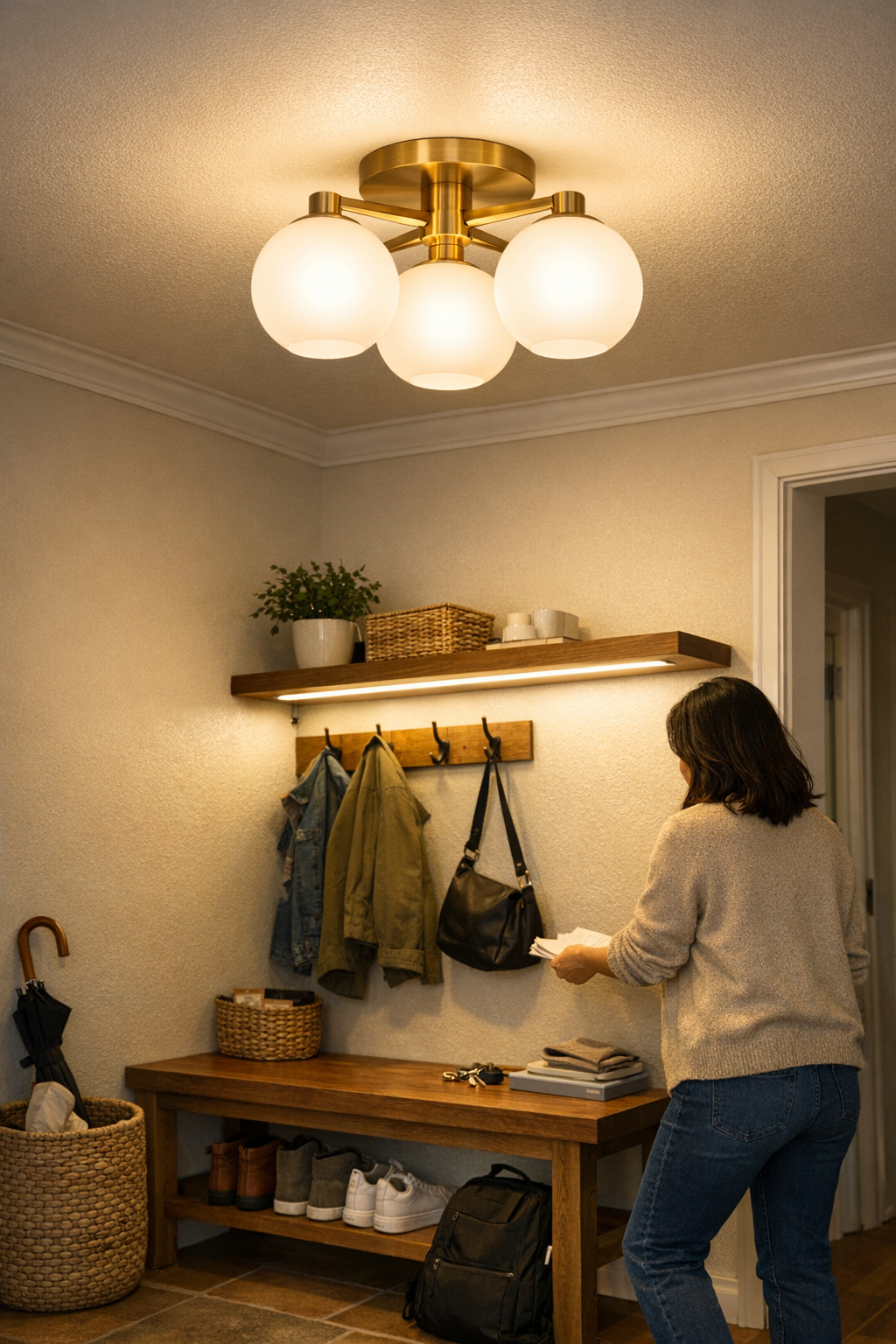
    What’s usually missing isn’t total lumen count, but usable, reachable light right where it’s needed. Surface-focused lighting—slim LED bars under shelves, compact wall fixtures on support brackets, adhesive-mounted mini strips—creates a direct improvement you notice mid-motion. Instead of adding another dose of harsh ceiling glare, these setups target the edge of the shelf, under the bench, over the key tray. Suddenly, finding what you need means looking—not guessing.

    Real change kicked in with one slim under-shelf bar: the key pile stayed visible, drop-offs got snappier, and nobody even noticed the cable because it was clipped snugly along the wall, out of the step path. No more groping for sunglasses, no more overlooked bins. The main shift wasn’t extra “brightness”—it was the end of minor, annoying detours in the morning rush.

    Glare, Cables, and the Setup That Stays Stable

    Adding surface lighting should solve, not swap, problems. Cables left exposed, sloppy support brackets, or loose routing just replace one nagging distraction with another—even launching new hazards if cords drift near feet. Lasting setups use thin brackets pinned out of sight, adhesive channels to guide cords behind shelves, and wall lines to keep wiring invisible but accessible. If any support or cable reroute makes the zone feel messier, setup stability wasn’t solved—it just moved.

    Recognizing When the Setup Actually Works

    A usable upgrade shows as less pausing, less fiddling, fewer “Where did I put that?” moments at the threshold. Shelves don’t blot out stretches of cable at night. Bins and hooks snap into clear view, not half-glare. The difference is the flow: people make fewer adjustments, bins get used as intended, and the sensation of the routine falling apart vanishes. Light that helps the action, not just the photo, is what settles the entryway down.

    Avoiding the Ceiling Fixture Trap

    It’s a common assumption: if the main space feels dull, just swap in a brighter bulb or flashier pendant. But the only thing that ramps up is glare and shadow contrast—surface and support lighting fixes half-used corners much faster. The first sign of failure is always the same: glare bomb at the ceiling, shadows under shelves, and cabinet corners left unused. Replacing one fixture after another never touches the real cause—active surfaces stay out of the beam.

    This is why the next step often means shuffling furniture around the light, re-angling benches, or giving up on symmetry to make the spot actually work. The “best looking” entry rarely survives the first month of real use; the most livable one fades into the background because it keeps hands, bags, and keys moving—no readjustment needed.

    Setups That Support Repeated Use

    Light where people handle things, not just where a fixture lands. Entryways that work keep illumination anchored at the drop-off, bin, or hook, not floating overhead. A well-placed under-shelf bar, wall bracket light, or shelf-run strip may draw a bit more attention than a perfect ceiling-matched look, but it’s the setup that stops daily micro-irritation cold. If you find that everyone stops mentioning the lighting after a week, that’s the real win: nothing is lost, no routine is interrupted, and every morning feels slightly—quietly—easier.

    LightSupport: Solutions for Everyday Entryway Friction

    Effective entryway lighting isn’t about more bulb power. It’s about making every shelf, drop point, and grab zone visible, safe, and frustration-free—especially after dark. Put usable light where it’s needed, hug cords out of sight, and choose mounts and supports that don’t draw attention for the wrong reasons. A small adjustment—one surface fixture, one clean support, one invisible cable—can be the difference between missing a step and moving through the door without a second thought.

    For more ideas and solutions that focus on real, repeated indoor use—without trading clarity for superficial neatness—visit LightSupport.
  • How Smart Carry-On Organization Eases Airport Stress and Saves Time

    A carry-on bag that looks organized in your bedroom can turn into a series of stop-and-go hassles by the time you reach your fourth airport checkpoint. The real weakness in most so-called “organized” setups isn’t visible until you’re actually moving: lines forming behind you, a zip that snags, a boarding pass hiding under your snacks. At home, stacking cubes and lined-up pouches feel satisfying. On the ground—when you need to grab documents, shift trays at security, or pull out headphones with one hand—those same setups become slow, awkward, and frustrating. The gap between looking neat and moving smoothly costs real time, especially as pressure builds at boarding, security, or forced repack moments. This is where most “organized” bags start breaking down, no matter how carefully you packed.

    When an Organized Layout Breaks Under Pressure

    Order falls apart fast when your bag’s structure creates hidden jams. You know the pattern: you set every item in its place, cables looped, pockets zipped, convinced you’re ready. Then the first tray at security sends you pawing through a jumble of “organized” pouches, because your toiletries are behind chargers or a hard-to-move jacket. You planned ahead, but now your boarding pass is bent between tissues and granola bars, sliding further out of reach each time you drop your bag to the floor. Suddenly, what felt efficient at home shows its real friction at every small retrieval on the move.

    Every access becomes a mini-reset, not a quick action. When the only way to grab your passport or a charger is to shift cubes or reroute a zipper path, the hidden drag builds rapidly. It’s not the first or second reach that exposes the flaw—it’s after you’ve walked half the terminal, when repacking for the third time becomes a slow-motion scramble. A visually “perfect” structure rarely survives five cycles of real airport flow without costing you time, attention, or both.

    The Real Slowdown: Repetition That Wears You Down

    Airport routines don’t reward decorative neatness—they punish access friction. No one times you repacking at home. But at security, at a crowded boarding gate, or after a red-eye, you start to see which decisions hold up. Most carry-on slowdowns aren’t about messy bags; they come from setups that force you to repeat the same clumsy sequence—unzipping, shifting, reshuffling—each time you need something that should be simple to grab.

    True-to-Life Carry-On Headaches

    • Security tray, round one: Your tablet is under a jacket and snaked cables. Dismantle half the stack, try not to drop loose items, reload while others stare—repeat on the return side a few moments later.
    • Boarding bottleneck: Scan for your pass, find it wedged with wet wipes and a snack bar. One-hand shuffle, lose your spot, get rushed before you even clear the threshold.
    • Seat squeeze: Go to grab noise-cancelling headphones for takeoff; realize they’re hemmed in by yesterday’s snack pouch and a roll of chargers. Everything comes out, aisle traffic waiting, order must be rebuilt just to sit down.
    • Mid-flight drift: Reach for a charger: it’s buried bottom layer, requires moving toiletries, then repacking, then squeezing the pouch back into a now-misaligned pocket. Each repeat drags out longer, no matter how well you packed the first time.

    Why “Looking Organized” Doesn’t Mean “Moves Smoothly”

    The biggest drag isn’t visual—it’s functional. Packing cubes and color-coordinated pouches might hide the disorder, but they can quietly encourage overlap. When your sanitizer and passport compete for the same cramped pocket or your cables live with high-turnover snacks, you’re forced to perform a mini-excavation every time you need a single item. Neat lines at home become a slow cascade of rearrangements at every point of use.

    This drag isn’t just about seconds lost; it’s a compounding series of tiny slowdowns that chip away at your focus. The carry-on that needs constant reshuffling, or makes every retrieval a multi-step interruption, becomes a silent stress source—especially when you’re already navigating crowds, tray transfers, or tight seat changes. If your layout breaks the airport rhythm, your “order” is costing more than it saves.

    What Actually Changes Repeated Use: Direct Access Structure

    The biggest improvement comes not from carrying fewer things, but from building direct, repeated access into your bag’s structure. Instead of stacking everything to look tidy, reshape your layout around how—and how often—you reach for certain items. Priority goes to the high-frequency, high-pressure needs: fast document checks, electronics at security, grab-and-go snacks, and quick sanitizer pulls.

    How Real, Use-First Structure Shows Up

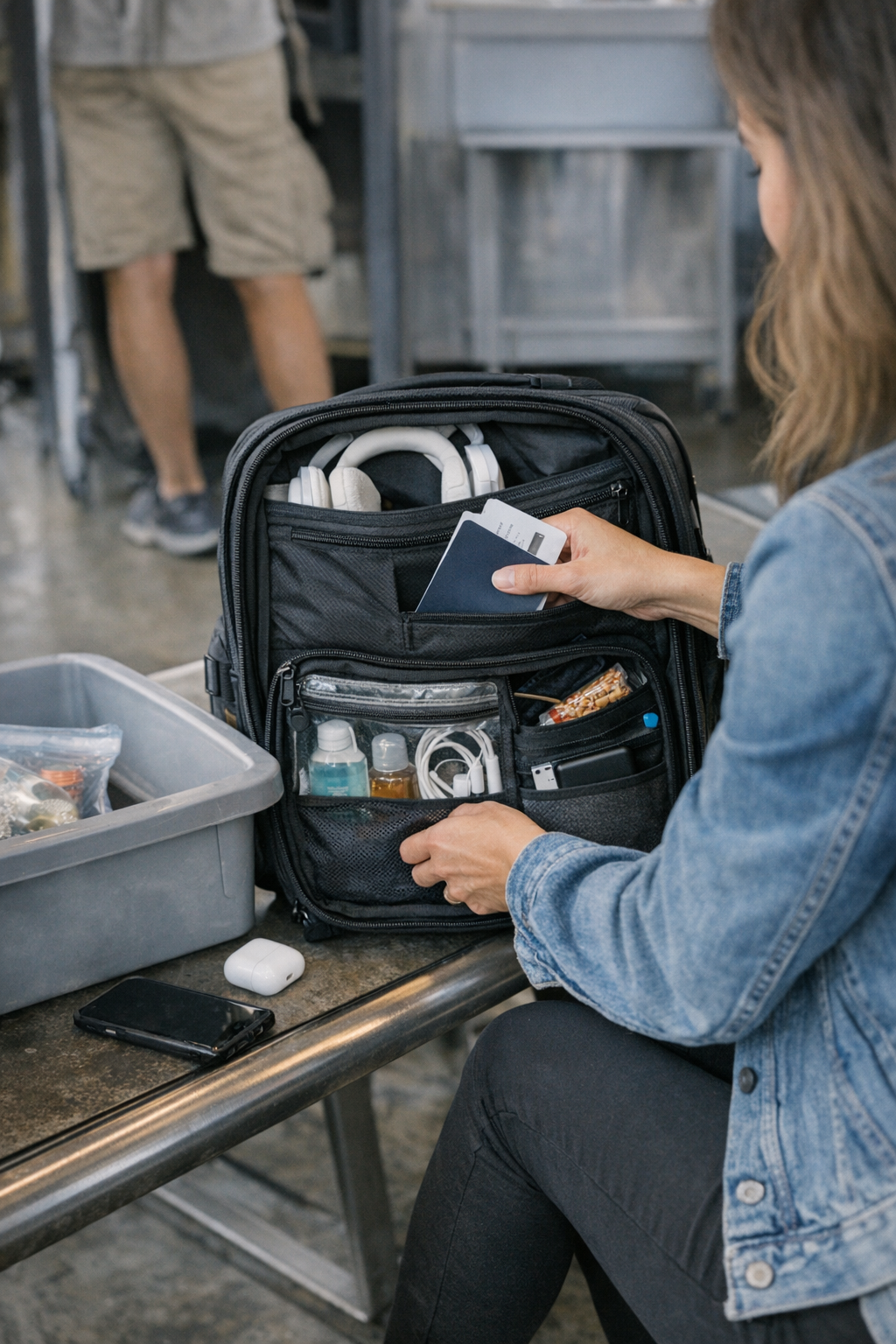
    • Boarding pass & ID: Alone, slotted in an outer or side-access pocket—never buried or pressed in with “occasionally needed” extras.
    • Chargers & headphones: Top-layered in a dedicated zone or travel tech pouch, with a single, frictionless zipper path—not squeezed under a book or double-packed behind clothing.
    • Clear-view toiletries: In their own grab-and-slide case, sitting directly inside the main opening; ready for instant X-ray tray transfer, with nothing to move first.
    • Snacks & sanitizer: Isolated in flippable pockets or side sleeves—never bundled with cables or deep within storage cubes.

    This setup eliminates forced interruptions. The crucial detail: “one move, one item.” No stopping to repack or reshuffle because high-use things stay separated from low-frequency bulk. The speed difference is real: instead of adding hesitation at every gate or tray, the structure vanishes from your attention—the ultimate test in repeated use.

    The Subtle Trap: Overlap Creeps Back In

    The friction returns when boundaries blur again. You tell yourself it’s fine to toss boarding documents alongside cables for speed—or that stacking chargers and snacks conserves space. But once you’re en route, the same pouch gets emptied, dumped, re-zipped, and repositioned with every reach. Overlap pulls you back into the loop: one use, many moves, and a mounting risk of leaving something half-unpacked or out of place.

    The real sign of a functional carry-on? You can retrieve anything after five or ten cycles without disrupting the rest of your layout. In daily practice, this means:

    • No pocket-rummaging for the same docs throughout the day
    • No cascade of items to reload after a simple access
    • No digging at the overhead bin for tech, or stalling the aisle because of a buried water bottle

    If you’re repeatedly resetting the bag after simple, routine moments, “home neatness” has failed to translate to in-transit usability. Durable order is shown by how little you have to think about your bag when your attention is elsewhere—or when time is tight.

    Security vs. Speed: Access That Matches the Real World

    Should outer pockets hold valuables? Only if you’re absolutely tracking every access point. In real travel movement, outer-access pockets work best for low-risk, constant-use items—tissues, snack bars, wipes—while your passport, wallet, and key electronics demand zipped, less-obvious but still rapid access. Create a setup where you lose less time at every checkpoint but don’t tempt a quick grab by a passerby. The sweet spot: speed for the replaceable, better-sealed layers for what you can’t risk losing.

    Subtle Upgrades: The Fastest Payoff

    You don’t need a packing overhaul—just one structural shift can make every checkpoint and aisle squeeze smoother. For most travelers, switching from all-in-cubes or flat-pouch stacks to distinct vertical or slot-based sections instantly cuts down on overlap. This isn’t only about a crisper-looking bag; it’s about fewer repacks, faster “hand-to-item” outcomes, and less low-level stress. The physical sensation of not having to search builds relief into the routine—you stop thinking about the bag and start actually moving through the airport as if the setup is finally working with you, not against you.

    That’s the hidden difference: a carry-on that seems perfect on the floor doesn’t matter if it crumbles in line. The proof comes from quick retrieval, silent access at clutch moments, and a flow that holds up after every repeated-use stretch. Structure beats neatness—especially once travel rhythm takes over.

    For realistic tools and clever solutions designed to make repeated carry-on travel easier, visit CarryOnSupply.

  • How One Simple Play Cue Transforms Indoor Cat Toy Management

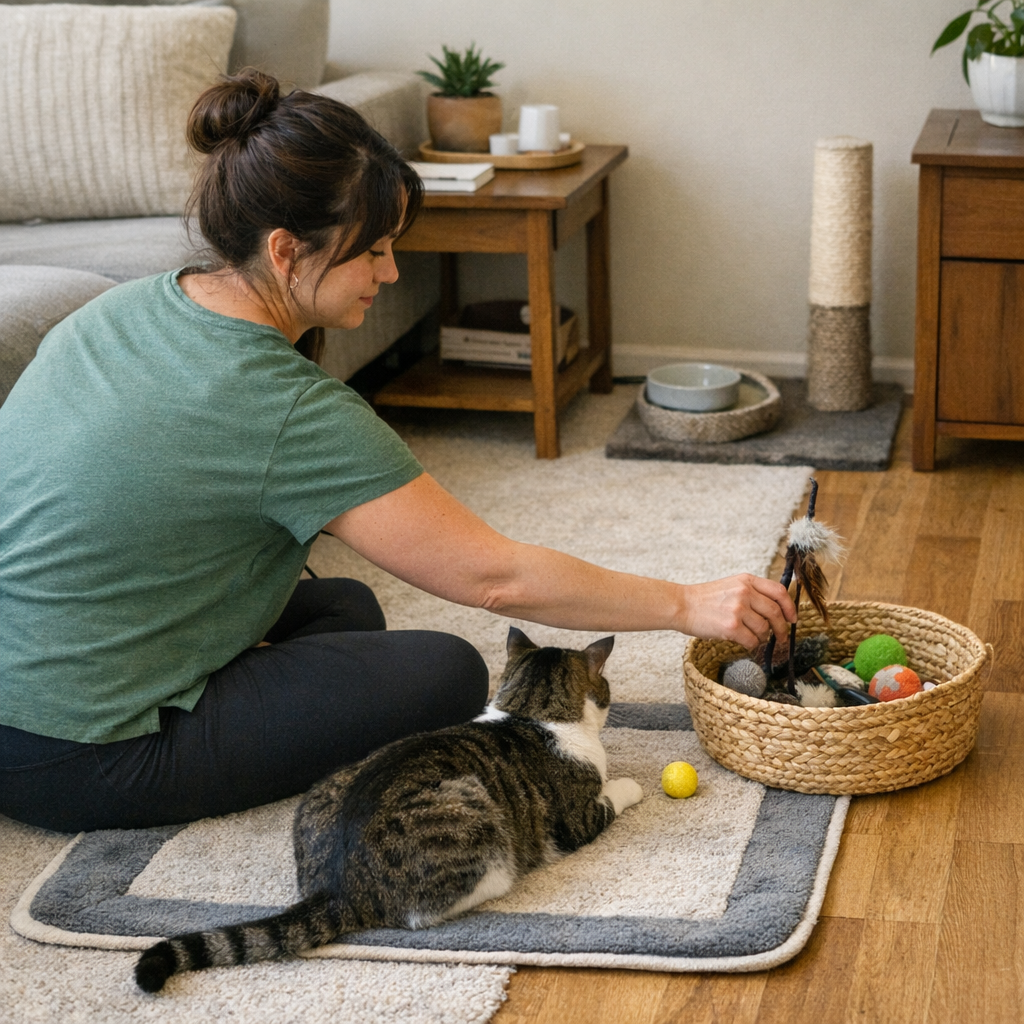
    Every indoor-cat home has one thing in common: toys don’t stay put, they invade your routine. You clear the living room, but hours later there’s a crinkly ball floating beside the food mat, a plush mouse wedged at the edge of the litter box, or a feathered wand you’ll only find after moving half the furniture. Even when you’re organized, cat toys seem to ignore boundaries—showing up in the path between shared rooms, rolling underfoot as you reach to fill a water bowl, or interrupting evening prep with yet another “where did this come from?” pause. What feels like a tidy setup at 9 a.m. quietly unravels under the weight of daily play, forcing you to repeat the same small, annoying resets—this is the main friction of indoor-cat life you can’t ignore.

    How Toy Drift Turns “Tidy” Into a Frustration Loop

    It’s easy to think sweeping stray toys into a bin ends the problem. But with nothing anchoring toys to one spot, every cleanup resets the clock, not the room. The real friction isn’t just visual mess—it’s the persistent, unnoticed labor. Every wandering toy creates a new moving target: a hallway blockage, stuttered footsteps in the dark, and lost minutes playing “find the wand” when all you wanted was a quick break before dinner. Instead of feeling organized, you’re left patching the same inconvenience, session after session.

    One Day Looks Fine—A Week Tells the Real Story

    A freshly picked-up room only tells half the truth. By midweek, the cracks appear—one toy you left on the couch now blocks the kitchen doorway, another has drifted into the walkway between the bed and bathroom, and you’re spending scattered minutes hunting through corners you just swept the day before. Each time you toss a toy back in the bin, two more have drifted out, making your reset routine stretch longer and wear thin after multiple rounds. Clean in the morning, cluttered by night—if you track where time gets lost, it’s here.

    The Real Cost: Time, Hassle, and Interrupted Routines

    The exhaustion isn’t the pile of toys, it’s reaching for the water dish and finding a jingle ball blocking the mat, or pausing mid-grocery-carry to scoop a forgotten plush before stepping on it. Every unwanted pick-up adds seconds—or minutes—to ordinary routines you expect to be quick. Over a week, this stealth “reset tax” piles up, slowing down every feeding reset, wipe-down, or shared-space crossing, making the entire room feel slightly less yours.

    Small Setbacks Multiply: How Ordinary Routines Slip

    In a single week, watch how disorganization creeps in: the play mat stays in place, but the wand migrates far from reach. Litter area gets a stray ball mixed in, tracking debris into new corners. Stepping around half-hidden toys with full hands risks a spill, and escalating frustration follows as quick resets stop feeling quick. It’s not chaos—it’s a low-level, ongoing grind that eats away at how easy your space is to use, clean, and enjoy without warning.

    Why Most Cleanup Approaches Quietly Fail

    The fallback move—periodically stuffing toys into baskets—always seems logical until it isn’t. The moment a toy vanishes under the sofa or your cleanup bin sits out of reach, the friction starts over. The cycle remains: toys “disappear” into the wrong room, show up out of place, and your setup only works if you’re willing to repeat the same hidden chore, every day, forever. Because the system isn’t built for how you and your cat actually use the room, tidy is never lasting—it’s a mirage that needs constant chasing.

    The Reality of Shared Home Space

    This friction multiplies with each extra person—partners, kids, or guests—using the same space. Toy scatter turns the hallway into an obstacle course, kitchen walkways into sidestep drills, and most tellingly, the human urge to “just move it later” turns into full-blown clutter by day three. Even if others don’t complain, you see the difference—there is always something to pick up, shift, or work around, and the mental drag isn’t imaginary.

    The Structural Shift: One Consistent Play Cue, One Zone

    Adding bins or multiplying toy choices doesn’t fix the loop. The real change is structural: tie every play session to a single play cue—a sound, a spot, and a (preferably favorite) toy—anchored in one recognizable area, every time. Use a dedicated mat as the visible border. Bringing play back to this reset zone cues your cat and your own routine, and toys no longer orbit the house on their own schedule. You flip the pattern: toys stay anchored, resets shrink, and random clutter drops away.

    The First Days: Visible Change, Easier Reset

    Give this routine a genuine week. Ditch the multi-room scavenger hunt: leave toys by the mat, signal play from the same place, and finish each session by returning everything to arm’s reach storage. In days, most owners notice the difference—cleanup is a handful of seconds, not a full sweep. Even better, your walking paths and shared spaces stay clear, so routines feel less interrupted and more predictable, no matter when play happens.

    When Toy Storage Helps—And When It Actually Gets in the Way

    The right storage isn’t about more space—it’s about instant access and anchored habits. Open baskets or trays always kept next to your reset mat keep toys in view, grabbing them as easy as starting play. Tucking bins behind doors or in other rooms quietly kills the system: you forget, your cat loses interest, and toys freely wander. The only solutions that hold up make the return-to-zone habit automatic for you, not another step you have to remind yourself to do.

    What About Rotating Toys or Spreading Play Around?

    It’s tempting to scatter toys or rotate them for novelty, but this quickly turns “enrichment” into extra work. In lived practice, limiting toys and anchoring play to a single space actually makes the session more focused and anticipation higher; it’s the play ritual—not the raw toy count—that keeps your cat engaged, and your reset friction low.

    The Visible Rewards: Less Reset, More Flow

    Stick to a single play cue, a single zone, and clutter shrinks fast. The mat border becomes a visual anchor: toys stay where cleanup is easy, storage bins don’t overflow, and background mess doesn’t seep into every living area. You’ll notice the benefits most during transitions—no last-minute hunt before guests arrive, no bending down halfway to the door, no pause to clear stray toys before a litter or water reset. “Tidy” becomes repeatable, not another box to check off.

    Resetting Becomes a Moment, Not a Project

    What used to mean prowling from room to room, gathering wayward toys, now finishes in a ten-second pickup. Play ends, storage is right there, and nothing lingers to interrupt the rest of your routines. The method holds because it fits normal life—no alarms, no elaborate system, no dependency on perfect memory. Even when everything else is hectic, this corner stays under control.

    Don’t Settle for “Tidy” That Still Interrupts Your Day

    More containers or extra organizing won’t close the loop if toys still drift and daily resets stretch out. The reality is, only an anchored play zone and cue—integrated right into where you and your cat already use the space—eliminate the invisible reset tax that comes from weak structure. What looks clean in a snapshot may still cost you extra minutes and mental energy all week—fixing it at the root gives real, daily relief.

    See practical indoor-cat setup ideas and solutions at StillWhisker.

  • How Steady Walking Pace Transforms Daily Dog Walks and Owner Control

    The difference between a calm walk and a tangled, rushed one often shows up in the first ten seconds at the door. You reach for the leash, but the harness is stuffed under a bag. Your dog noses ahead before you even find your keys. The walk already feels half-lost—not because of your dog’s manners, but because a single awkward moment at the threshold sets off a cascade: more pulling, more stops, and a routine that keeps tripping over itself. For most dog owners, this friction is the default, and the space right by the door—no matter how tidy it looks—keeps exposing the same weak spot. DogPile’s world is shaped around these repeated, practical bottlenecks, where routine falls apart not in theory but in actual, daily-use pressure points.

    Where Walk Flow Breaks Down—And Where It Starts

    No one plans for their walk to degrade, but it rarely begins with a dramatic tug. Instead, minor stumbles start the slide—a harness buried under yesterday’s bag, a leash that won’t unclip fast, your dog feeling the lull and surging forward as you try to untangle yourself at the door. Even before your first step outside, your timing is hijacked. These barely-noticed moments—pausing for keys, leash slightly tight as you fumble, your dog inching ahead—signal the real issue: the routine lets the dog set the pace before you’ve left the house. Each time you cave to a small rush, control fades a little more.

    Small surrenders compound fast. Your walking rhythm shifts. Now, every pause on the sidewalk or stop at a crossing becomes an awkward shuffle instead of a steady wait. You grab for a bag or coat, and your dog pulls further ahead. Even clipping the leash sometimes feels like negotiating with a moving target. The walk you meant to set, you now scramble to manage—reacting, not leading, as the routine unravels block by block.

    How Escalation Creeps In Without Warning

    The friction isn’t in any single slip—it’s in the repetition. An imperfect setup at the door, a leash you can’t grab cleanly, or a wipedown kit just out of reach: these details get repeated day after day until the chaos feels normal. Your walk looks organized—a designated hook, shelf, treat pouch by the door—yet the feeling is tense. The problem keeps creeping in:

    • Leash tension building sooner each session, turning short waits into contests
    • Stops at intersections chopped up by restlessness—no real pause, just tangled steps
    • Your dog anticipating motion instead of watching for your cue—ownership of the routine slipping

    Each “just this once” shortcut—letting the dog edge forward at the threshold, stepping in time with their hurry—cements the habit. By week’s end, your walk isn’t a routine but a string of quick, compensating moves. The true cost: the routine quietly exhausts you instead of structuring the day.

    The Unseen Costs of Losing Walk Pace

    Once you slip out of control, it doesn’t stay outside. The after-effects spill into the next hour: a dog who stays wound up, a leash that’s hard to hook back for a second trip, or getting flustered picking up keys and bags at the door. Even after, feeding and rest are rougher—your dog is still wired, not winding down. The pinch point—by the entryway, where everything should just flow—becomes a site of repeated, subtle failure. Supplies are there, but you can’t grab them fast. You end up kneeling on the mat, redoing cleanup or grabbing towels with your free hand, while your dog paces circles. “Tidy” isn’t smooth if the right gear keeps being out of reach when you actually need it.

    Why Early Correction Makes All the Difference

    Stopping the slide requires actively resetting walk pace before a single step outside. The real shift happens not after you lose the pace, but in the moment you stand still at the threshold, leash set, making your dog wait and align beside you. No edge-out, no pressure—movement starts on your word, not theirs. Even one pause, right after latching the leash, interrupts the old routine. This minor, visible reset—every walk, not just once—pushes calm forward into the rest of your day. Suddenly, those common pitfalls—reaching for wipes, grabbing a second leash, cleaning muddy paws—start happening in order, not in a scramble. The difference: less time chasing your routine, more time actually living it.

    Small Frictions That Add Up

    • Reaching for the leash—but it’s tangled, or the harness is under a coat. By the time you fumble it out, your dog has surged forward and the routine’s already scrambled.
    • Returning from a walk—wipes and towels are nearby, but not where you can reach them while holding the leash, so you’re forced to juggle, drop, or stretch.
    • Pausing for a crossing—your dog circles back, leash tightens, and you lose your window to scan for cars without getting twisted up.
    • Doorway waiting—the rest area looks comfortable, but it’s not placed so you can slide your dog into it as you re-enter and reset your shoes or coat.
    • Cleanup zone—towels exist, but never in your hand at the exact moment muddy paws race in, forcing a delayed, extra-messy cleanup.

    Each moment feels minor. But the pattern—supplies present but not useful, order on the surface but chaos in the process—drags down every part of the routine. Over time, calm gives way to friction, and what pretends at organization proves unreliable when tested by real, repeated use.

    Changing the Everyday Walk Rhythm

    When a dog learns that movement always starts when they say so—door cracks open, they bolt—every outing becomes a contest. The fix isn’t rigidity; it’s insisting on your pace, especially during the critical minutes at the start. Pause, align, proceed. If you don’t interrupt your dog’s default urgency, you start each walk behind. Build this minor reset into your rhythm: every walk, every day. It isn’t about perfection; it’s about handing yourself back a little more margin for error—so you don’t end up tangled, rushed, or fighting for control at every crosswalk or greeting on the block.

    Small, repeated pauses beat one big correction. Make your baseline the norm, not your reaction to chaos. Dogs adapt fast: when walks start with your timing, they hold that rhythm through slowdowns, crossings, and returns—even through the expected interruptions of life in a real home.

    The Reset Pattern in Action

    Change starts, sometimes, with just a pause: leash clipped, you stand still, dog beside you, movement on your cue. A week of this, and real signs surface:

    • Your dog starts looking up for movement, rather than lunging on the click—timing shifts to match you
    • Fewer leash tangles at the door; pushing through together, not against each other
    • Supplies—treats, wipes, bags—deployed where a hand can reach without acrobatics; less frantic grabbing
    • Easier settle after the walk; dog chills in their corner, instead of bouncing through the next task

    The benefit runs through the routine—transitions that flow, resets that don’t demand two hands and an extra five minutes, fewer places where dog gear spills into your movement space.

    Balancing Calm and Real Life

    No setup erases real-world chaos: sometimes you drop the bag, or the harness is hiding under the couch, or you’re already five minutes late. Still, a walk that begins on your pace softens the downstream mess. Small failures no longer rip up the routine—they just slow things, briefly. What changes isn’t the end of interruption, but how quickly you catch and reset after it. Less arm strain, fewer awkward pauses at the door, less sense that your dog’s walk energy is spilling into every bite and nap after.

    Letting your dog pull for one block isn’t the end of the world—but letting it become normal leaves you working against your own setup every day. Control the starting pace, and you don’t have to overcorrect just to survive the rest of the week.

    What Actually Changes After the Walk?

    The biggest improvement often comes after the walk: does your setup let your dog settle, or does the threshold chaos drag on? When walk pace is managed at the start, ending transitions are simpler—paw wiping, leash re-clipping, dropping gear by the door are no longer a relay of tiny struggles. Your entryway clears, your dog resets quicker, and movement from walk to home stops being a stumbling point. You notice calm because the old friction—retracing steps to grab towels, stepping around scattered gear, delayed rest—simply doesn’t happen as often. Even busy mornings run closer to

  • How Back Seat Zones Transform Car Organization and Ease Daily Routines

    Most car back seats are a trap—organized for five minutes, inconvenient by day two. You climb in thinking a recent cleanup means less work ahead. But what looks under control quickly turns useless in actual use: phone chargers snake across seat gaps, water bottles wedge under the driver’s feet, and gym bags or jackets migrate into corners and block seat buckles. The “tidy” appearance fools you—for a while. By midweek, every stop means shifting something, untangling cables, and digging for whatever’s slid out of reach. What seemed fine after cleaning spirals into a chore you’re repeating every drive.

    Appearing Tidy Isn’t the Same as Working Smoothly

    If you shuttle kids, run carpools, or just have a busy week, the cycle shows itself fast. After a quick reset the back seat looks ready, but your routine never matches the clean slate: by the third or fourth drive, friction returns. A cable loops over the seat edge, making even a quick phone grab awkward. Bottles tuck themselves next to buckles so seatbelts become a two-handed job. A backup hoodie you tossed in is suddenly buried under a backpack and a half-empty snack bag. These aren’t dramatic messes—they’re interruptions that add seconds and stress, until you’re hunting for lost items every re-entry.

    The Real Problem: No Assigned Zones

    The issue isn’t just clutter—it’s the absence of assigned zones. No pocket for chargers, no upright holder for bottles, nothing for snack packs or spare masks. Without dividers, every item migrates, turning the cleanest seat into a jumble when real life hits. You can drive carefully, keep your crew on alert, and still end up untangling a cable from under the seat in the rain, or scrambling for your keys while bags fight for floor space. The visual “reset” has zero staying power when there’s nothing stopping gear from slipping, bunching, or blocking access in a moving car.

    Repeated-Use Friction—Why Setup Matters More Than Ever

    The cost of a weak setup isn’t about looks—it’s about everything that requires extra effort after multiple uses. Real routines stress-test your back seat: reaching for charging cables while parked, dropping a gym bag after work, keeping space for a passenger or kid in a hurry. Patterns show up fast:

    • Cables loop, tangle, and cross seat spaces, dragging hands off routine actions just to fix them again.
    • Bottles and cups roll into footwells, requiring blind sweeps under the seat for simple hydration.
    • Seat access gets blocked by last-trip leftovers, forcing shifting—and sometimes frustration—before you can even sit down.
    • Cleanup becomes a running task: each drive, you reset the same mess, feeling a little more annoyed every time.

    These aren’t one-time hassles. What really wears on you is the repetition—the moment you reach for something and realize the system broke again after a single turn or brake tap.

    False Sense of Order: Why Resets Only Work Once

    A fresh clean might feel like a fix: bags lined up, cables coiled, drinks stowed. But the first unscheduled turn or braking in traffic, and the order goes sideways. Every drive without real zones is just clutter on a timer. Nothing stays put, and you find yourself pulling items from under seats or re-buckling seatbelts around gear that shouldn’t be there. The cost isn’t in the size of the mess—it’s in breaking your own routine each time something slides, wedges, or hides again.

    Hidden Chaos vs. True Order

    If you’ve fished a bottle from under the seat more than once this week, or if your charger’s been trapped between cushions mid-errand, you know: clean visuals don’t survive repeated use. The difference is simple boundaries—a pocket that holds, a groove that keeps bottles upright, a divider that stops a gym bag from creeping across the seat. Without these, every drive means repeat: stash, slide, search, reset. The frustration isn’t dramatic, but the time-loss is real.

    When Routines Stack Up: The Real Cost of Unzoned Interiors

    Busy weeks stress-test any setup. A sudden rainstorm, a bag of groceries dumped in the back, extra passengers—these expose every gap in structure. Picture it: you jump in, arms full, and a cable catches your boot, your work backpack slides down, and seat access is blocked until you reshuffle everything. No one’s pausing to re-sort after each errand. So by week’s end, improvised piles fill every pocket and corner. “Orderly” becomes a joke—now every stop means re-clearing space just to move.

    Why Repeated Friction Stays Under the Radar

    Most people dismiss these as minor annoyances. But when every quick trip steals another minute to reset, the system itself drags you down. The pain isn’t just finding a mess—it’s having to play cleanup crew after each ordinary drive. The wrong setup multiplies micro-annoyances. Only a system with real, stable zones keeps up.

    How Simple Zones Restore Car Usability

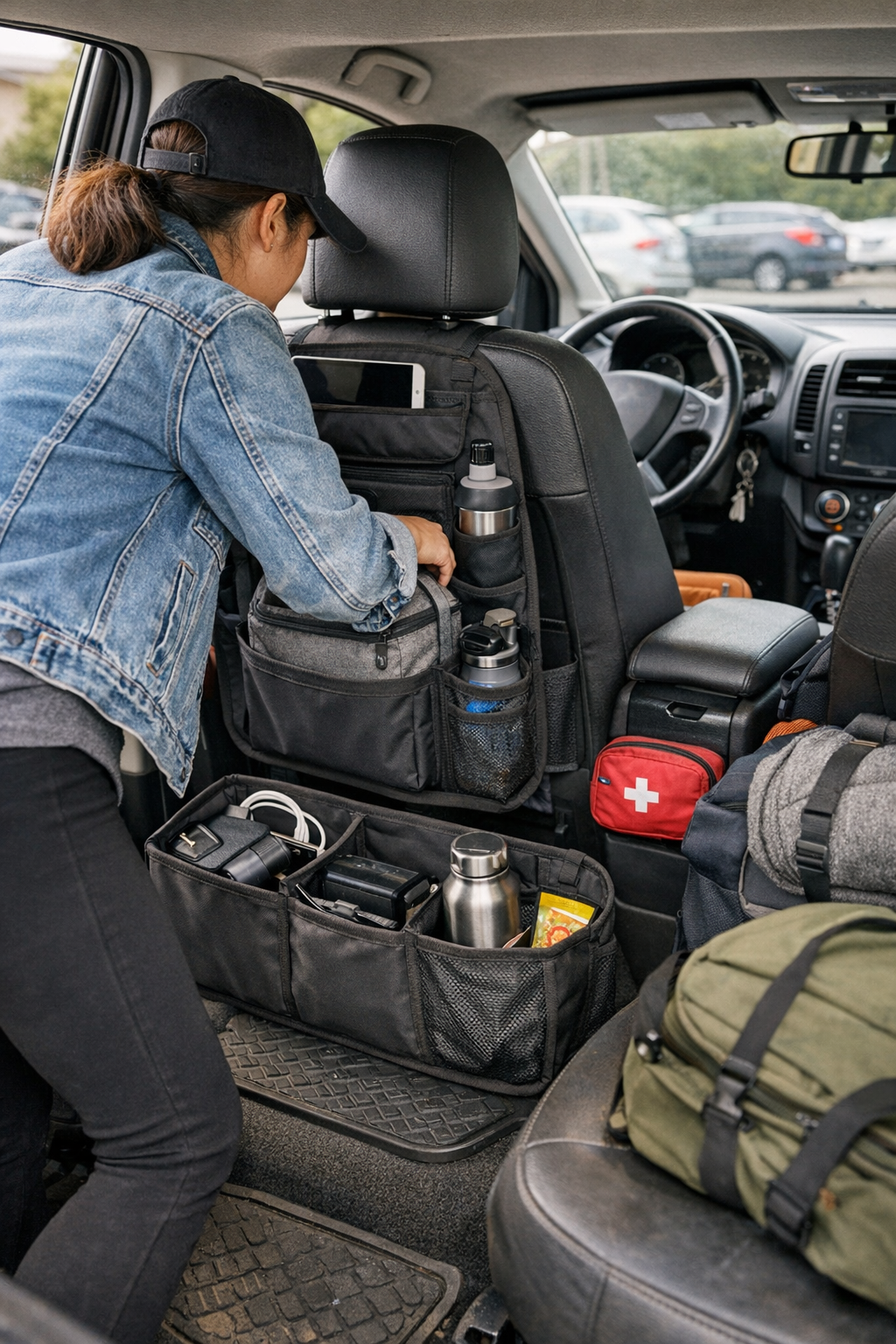
    Add basic order—split seatback organizers, upright bottle pockets, bag hooks—and the grind changes fast. A week with real zones, and you notice it: less energy lost on cleanup, less time untangling, more reach-and-go flow. The lost bottle now lands in a fixed slot. Chargers stay coiled, not tangled around bags or under feet. With each drive, you spend less time fighting the interior and more time moving ahead. The car doesn’t have to look “showroom ready”—it finally works the way you thought it would.

    Noticeable Change After the First Few Drives

    The payoff isn’t in pristine surfaces—it’s in not having to think about what’s drifting, blocking, or missing. Fewer “where did I put that?” moments. Fewer pause-and-shift routines before dropping in groceries or grabbing a charger. The car interior finally matches your daily rhythm, making access quicker and return-to-car smoother. Cleanup is lighter, almost automatic, instead of a recurring task list.

    Choosing Zones Over “Just Tidy” – What Actually Changes?

    • Access beats appearances: Items with a set “home” don’t wander. You reach, you find, you go.
    • Cleanup becomes a snap: Less untangling, less lost time, because everything has a place—and stays there drive after drive.
    • Routine feels less interrupted: Every trip is more predictable, with fewer last-second scrambles or blocked seats.
    • Shared rides stop the cycle of chaos: Passengers actually know where to put things, and the gear you need remains findable after they leave.

    Recognizing and Fixing a Common Mistake

    Most drivers repeat the same error: thinking a tidy reset is enough for real life. If there’s no solid boundary—no pocket, hook, or slot—whatever order you impose in the morning will unravel by afternoon. Keeping things separated, stable, and reachable is what breaks the cycle of always restoring order. A seat pocket here, a cable holder there, an upright bottle slot—that’s what stops the drain from small, repeated blockages. The result isn’t perfection; it’s that your setup actually helps you, instead of fighting you, as car use stacks up.

    Find practical, real-world back seat organization solutions at DriveWellSupply.

  • How Proper Lighting Placement Transforms Everyday Bathroom and Laundry Tasks

    The room looks bright—until your hand hovers over the soap or your foot hesitates at the stair turn. Most homes are filled with fixtures that promise visibility but carve out shadows right where you need to see. The typical ceiling light makes a floor shine, yet lets the edge of the counter vanish, or throws a wash of glare across the bathroom mirror. You pause at the sink, feeling blindly for the faucet; you slow your step, guessing where the shadow breaks as you cross from hallway into a dimmer stairwell. If your lighting leaves you working by memory instead of by sight, the interruption isn’t occasional. It’s structural—and it repeats, every single day.

    Why Glare and Shadows Become Repeated Problems

    Friction creeps in not because the room is “dark,” but because task zones go half-lit at the worst moments. Every standard flush-mount or panel ceiling fixture pushes brightness downward and outward, but does little for sink lips, counter edges, cabinet undersides, or the detail lines of a mirror’s frame. Step into a new angle or open a cupboard, and the overlooked recess turns into a guessing zone. The cost isn’t just a one-time adjustment: you lean, squint, slow down—exposing how little confidence you actually have in your space’s layout. Over a week, those subtle hesitations fracture your routines and make surfaces you should trust feel unreliable beneath your hands.

    Glare on mirrors is another trap. Ceiling fixtures bounce harsh white light into your eyes, obscuring face and hand detail when you need to see most clearly—shaving, fixing hair, touching up a spot at dawn or before bed. At the same time, overhead light behind you casts your own shadow onto every counter, turning each small task into a question of angle and adaptation. In laundry corners, one arm or a basket throws a shadow right across the stain you’re hunting for, and you find yourself hunched, nudging, or shifting the light source just to make sure.

    Recognizing the Lighting Patterns that Trip You Up

    It’s easy to be fooled by brightness at first glance—a “renovated” bulb doesn’t guarantee practical clarity. The mismatch only appears after repeated use. Common mistakes unfold in zones like:

    • Mirror zones: Step close and your face halves in shadow; lean back and the glare hides all detail. Grooming turns into trial and error, not smooth routine.
    • Under-cabinet counters: You see a spotless counter from the doorway. Stand to chop or clean and your hands suddenly disappear into uneven shadow along the working edge. You fumble more, grabbing at items by shape, not sight.
    • Stairways and landings: Open staircase above and below, but every mid-turn the closest step softens into shadow—your stride instinctively slows as you test for the riser’s edge.
    • Laundry and utility areas: Overhead lighting creates bright rectangles, but your own body blocks the spread as you move. Sorting or cleaning requires constant side-stepping to keep stains or spills visible.

    The Confidence Gap: When Lighting Slows You Down

    Confidence in movement is built—or undercut—by how reliably light covers the places you put hands and feet. When you have to lean close to check a spot, double-back on a dark stair, or squint for detail at the mirror, routines devolve into small compensations. Each act becomes slower, less precise, and less certain. The “bright” fixture overhead, for all its watts, lets these friction points persist—turning a workspace or passageway into something you have to adapt around, repeat after repeat.

    Shadow at the Work Edge

    Bathroom and laundry counters highlight this most clearly. Overhead fixtures appear to light the whole zone, but as soon as you reach forward—scrubbing cloth, sorting clothes, or looking for keys—your own arm throws darkness onto the work surface. This isn’t a one-off; the same pause happens every time. The result is a string of half-blind, tentative movements rather than seamless flow.

    Glare at the Mirror

    Direct overhead light on bathroom mirrors blinds rather than reveals. Instead of seeing blemishes, stray hairs, or makeup accuracy, your vision splits between squinting through reflection and searching for shadowed detail. The strain shows up especially in morning and evening routines: what should take a confident second becomes a drawn-out, error-prone pause.

    Simple Placement Shifts Create Reliable Visibility

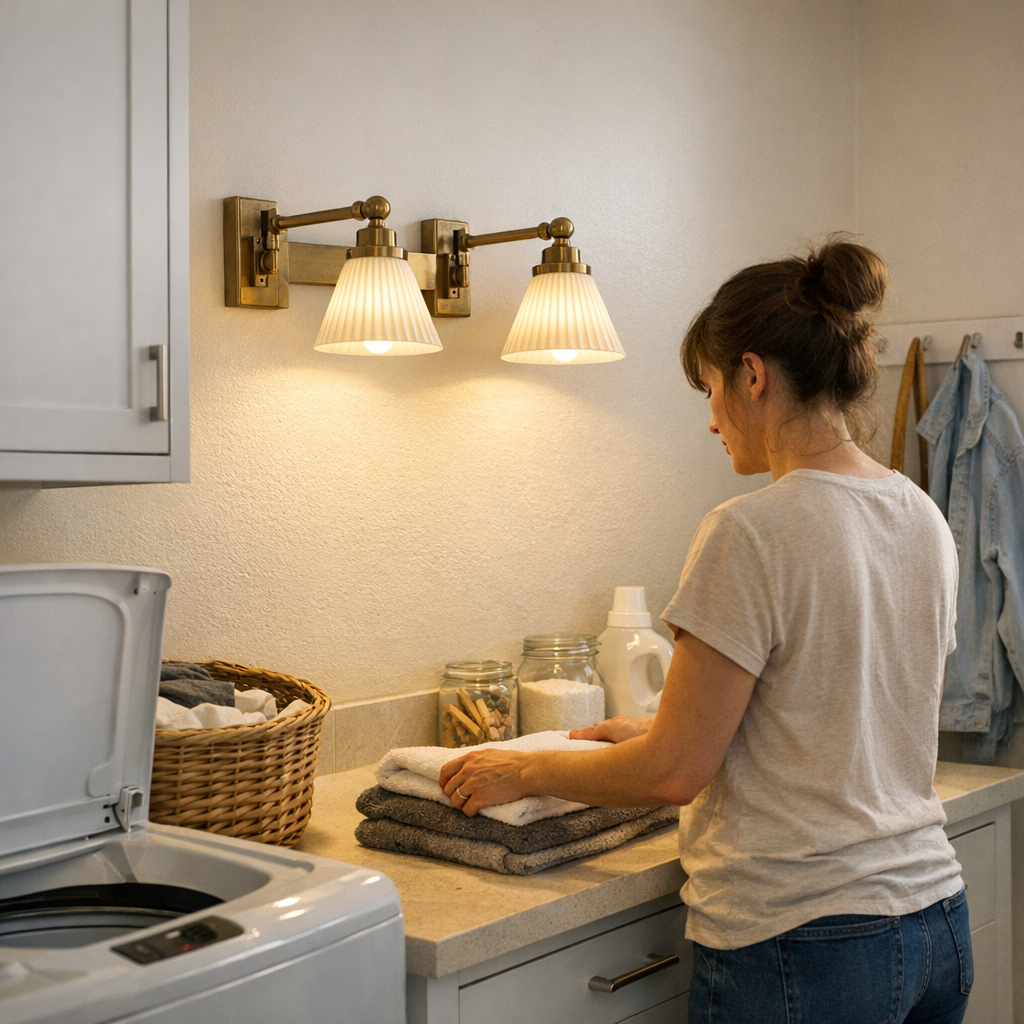
    Improvement doesn’t mean raw brightness. It means dropping the light source to the level of eyes and hands, placing illumination right where interaction happens. A wall sconce or hardwired side light above laundry counters, for example, erases persistent murky strips so stains, lost buttons, or detergent spills can’t hide. Set flank lights on both sides of a mirror—not just above—and the facial shadow breaks, making grooming straightforward and balanced. Under-cabinet strips in kitchens put usable light directly onto chopping or cleaning zones; a hallway or stair run lit with panel fixtures near turns rather than in the center keeps every tread or pivot clearly marked by direct light, not guesswork.

    • Install wall or sconce fixtures at the level hands and eyes engage—beside mirrors, anchored above work tables, along stair midpoints.
    • Mount under-cabinet strips so work areas stay even and readable, not interrupted by a hand’s own shadow.
    • For hallways and stairs, shift ceiling fixtures toward corners, pivots, or bends where movement tension actually collects in the dark.

    Task-focused placement solves the hidden gap: you no longer twist, lean, or double-inspect what should be obvious. Daily paths smooth out; simple motions—reaching, stepping, glancing—regain their speed and ease. The room works as instinct promised, not as old lighting trapped you into expecting.

    When to Upgrade: Recognizing It’s Not Enough

    The tipping point is repetition. If you catch yourself constantly adjusting—checking the counter twice, shifting position at mirrors, slowing before a stair—your space is signaling that surface-based, targeted lighting is overdue. When “illuminated” never equals “usable,” or when shadows and glare become routine obstacles, it isn’t an aesthetic shortfall. It’s a fixable boundary in your everyday movement—an interruption you only stop noticing when you finally address it head-on.

    Lighting That Quietly Improves Daily Movement

    Effective indoor lighting barely calls attention to itself, but rewires every routine it touches. When the position, height, and focus of fixtures finally match the way you actually use your space—again and again throughout the day—the grinding hesitation fades. You stop making adjustments, stop second-guessing, and start trusting each step, reach, and task. Lighting does its quiet work. The difference is visible in the routines that no longer slow you down.

    See how practical indoor lighting setups can simplify the routines that matter most at LightHelper.

  • Transform Your Outdoor Storage with Smart Wall-Mounted Systems

    Outdoor storage reveals its real story only after you’ve wrestled with it for a few weeks. The first day, everything looks right: a clear path between the trash bins, boots lined up by the shed, nothing in the walkway. But give it some time—a few wet days, a weekend of sports gear, or a rush to beat the rain. Suddenly, that clear route is blocked by a half-tipped wheelbarrow, and the storage box intended for boots is now surrounded by the same muddy pile you meant to avoid. What’s in your way isn’t just clutter. It’s the invisible friction: the lid that jams when your hands are full, the awkwardly placed bin that demands you shuffle other things just to squeeze it back in. This is where “good enough” outdoor setups quietly unravel.

    Where Clutter Creeps Back: Floor Pressure and Blocked Movement

    The warning sign comes small but steady. Maybe it’s a pile of kids’ shoes outside the bin—because lifting the lid is one step too many when you’re on your way inside. Or it’s a garden rake left angled across the entry, blocking the door from opening fully. Each “drop it here for now” moment adds up, until you’re moving something out of the way every time you cross the yard. The more you notice yourself sidestepping bags or inching past makeshift stacks, the clearer it gets: your setup isn’t carrying its weight. The piles aren’t the problem; it’s the daily resistance to returning things that keeps the cycle spinning.

    Floor Space That Disappears Fast

    Small yards and utility strips don’t offer spare inches. Line the fence with bins or block the back gate with a “temporary” storage chest, and your paths vanish. What seemed clever on day one quickly becomes a blockade. Wall-mounted racks look like a fix, but unless each tool or ball actually fits where it’s hung—even when you’re muddy, rushed, or carrying groceries—the spillover hits the floor again. Doors that can’t swing open without first moving a hose reel, lids that demand a free hand—all of it quietly teaches you to pile things wherever is easiest, not necessarily where they belong.

    Real Use: The Gap Between Looking Organized and Actually Working

    Outdoor storage lives or dies in the busy hours between resets—not in the “after” shot, but in the churn. Imagine a garage-edge wall with hooks for long tools. The first week, everything finds a home. But quickly the system gets overwhelmed; there’s always one shovel too many, a stray glove never returning. Or picture the tall cabinet in the side yard, meant to tuck bikes and rakes neatly away. By the second week, with school pick-ups and projects, the cabinet doors hardly open—the bikes sit in front, the rakes lean against the outside, and every trip down the path is slowed by detours and sidesteps.

    The Side Yard Trap

    Nothing uncovers a setup’s weaknesses faster than a side yard forced to play double duty—as both storage and main walkway. That tall, narrow cabinet? It eats less floor on paper, but the doors are always hemmed in by something: a bike tipped sideways after a rushed morning, a mower half-parked in front, a plant that migrated just enough to jam the swing. Eventually, what started organized becomes a tightly wound obstacle course. Wheeling the recycling bin out now means shifting two stacks and nudging a forgotten soccer ball just to reopen the passage. The whole flow of using your own yard changes not for the better, but for the more awkward.

    Shifting the Reset With Wall Systems

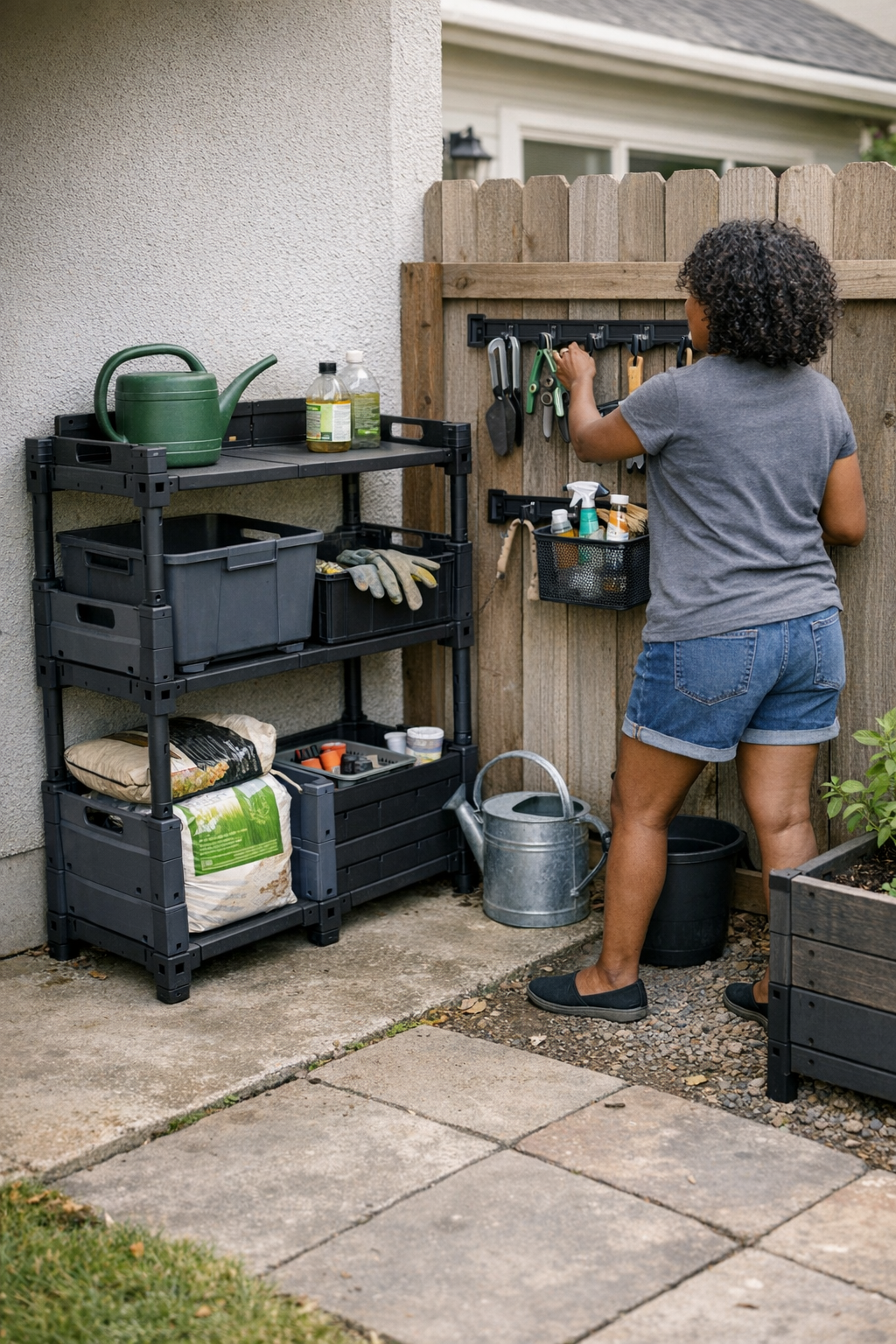
    Everything changes the moment you stop relying on lids and cabinets for high-use items. Modular wall systems, open rails, and quick hooks fill the gap between theory and daily habit. Hang tools at arm’s reach—no opening or lifting required. Face gloves on a front rail, stack a single open bin for things that always cycle in and out. Even spacing—separating hooks by just a few inches—can mean the difference between a wall that collects clutter and one that actually empties pockets and hands on the way in. Slowly, the “just drop it here” mentality fades, replaced by a visible, reachable spot for everything. The best sign: resets don’t take a full afternoon, and the urge to pile fades because returning things actually feels easier than skipping the step.

    Overflow Zones and the Trouble With Dead Corners

    Every outdoor setup has at least one spot that absorbs overflow—a fenced nook that quietly turns into the dumping ground, or that triangle behind the grill where abandoned gear goes to linger. Even with well-built storage, these corners attract clutter if the main system jams up. The result? You circle through the same reshuffling routine: clear the floor, move the pile, open a path, block it again. It’s not a system; it’s a cycle of temporary fixes—and the proof is in how often you find yourself returning to the same dead corner with armfuls that don’t really belong.

    When Mobility Turns Into Stagnation

    Rolling cabinets and portable racks sound ideal—until they lock up from weight or the wheels snag against uneven stone. Intended flexibility can breed its own kind of gridlock: the instant a mobile unit is too heavy to shift, overflow comes back, now clustered in an even tighter spot. For mobility to actually help, the storage must still work everywhere it lands and be light enough to move even when loaded. If not, it quietly becomes yet another blockade hiding in plain sight.

    Making Return Flow Effortless

    The real payoff for any outdoor setup is obvious return flow after real use—not just clean lines, but easy resets when there’s actual mess. Ask yourself: how many steps does it take for each daily item to get put away? Does one simple move bring things back, or are you nudging bins, fighting lids, and tricking open cabinets crammed too full? The best quick fix: add open, easy-access storage at the highest-friction points. Wall racks within arm’s reach for daily tools, a single large bin by the door for quick-dump items, hooks or rails at the entry for gloves and bags. The more the setup matches honest use, the less chance stray piles have to sneak back in.

    Honest Structure Makes Maintenance Nearly Invisible

    Every item needs its spot in plain sight. Wall-mounted systems don’t just keep the walkways open—they shift the habit for everyone under your roof. Forget nagging or mental checklists: the visible structure makes out-of-place items obvious, so resets become second nature instead of a dreaded task. The result: less thinking, less shuffling, and a setup that can actually keep pace with the churn of an ordinary outdoor week.

    Order That Outlasts the Weekend Sweep

    The real test isn’t how neat a yard looks right after a deep clean—it’s what happens after five days of normal life. A setup that blocks paths, smothers corners, or demands daily reshuffling is just another layer of hassle. But a system that clarifies and simplifies where things go—especially as routines change, seasons shift, and hands stay full—keeps chaos from creeping back. Walls carry the turnover, open zones absorb the rush, and floors stay clearer longer. In the end, the win is less time spent reclaiming the same square footage, and more time moving through an outdoor space that actually works the way you hoped it would.

    TidyYard Outdoor Organization

  • Choosing Impact Sockets That Withstand High-Torque Workloads Reliably

    Most days in the shop, you don’t think twice about your impact sockets—until one suddenly holds you up. On a brake job where every bolt seems welded in place, or a wheel rotation turning into a battle with salt-locked lugs, the difference between a “decent” socket and one built for real abuse isn’t theoretical. It’s right there in your workflow: slipping, rounding, or that sickening snap that leaves you reaching for an extractor before you’ve even finished your coffee. In those moments, the right socket isn’t a luxury—it’s the difference between moving fast and losing an afternoon.

    How Trouble Starts: The Subtle Signs Your Socket’s Failing

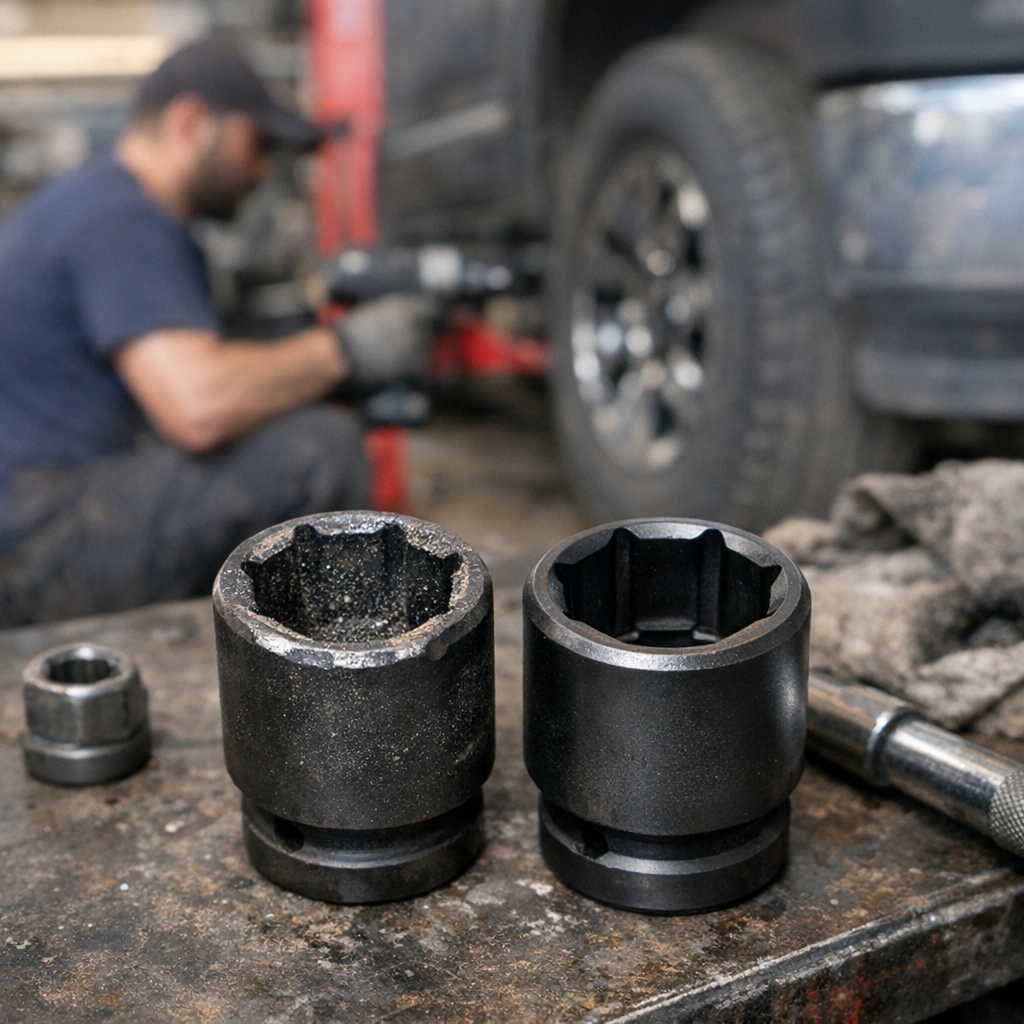
    The warning signals rarely arrive as dramatic failures. Instead, it’s the everyday annoyances: trace amounts of metal dust in the palm of your glove, tiny steel splinters falling from the socket right onto your workbench, or a growing slackness as you wrench u-joints or hammer seized fasteners. One minute the tool fits; the next, you’re fighting to keep it aligned under torque, feeling the slop creep in as the edges start to lose their bite.

    By the time you notice heat radiating from the socket or hear the changed pitch in your impact driver, you’re already riding past the socket’s best days. Cycle after cycle, things get gritty—biting down harder just to break loose another bolt, cleaning up flakes off your work surface, and spending more time fussing over fit than finishing the job. The progression is slow—until suddenly, it isn’t.

    Socket Materials: Why Shortcuts Cost You in the Long Run

    From a distance, most impact sockets look interchangeable. Identical finishes, similar heft. But take a pile of “budget” sockets through back-to-back jobs—be it an engine tear-down or a day of frame restoration—and shortcuts start bleeding out in the worst ways. Softer steel and lazy heat treating don’t just dent; they transmit punishing vibration right up your wrist and start shedding metal dust with every stubborn fastener.

    On high-resistance tasks—rusted suspension bolts, caliper hardware that’s seen a dozen winters—low-quality sockets will telegraph their limits. Edges go blunt in the middle of a job, alignment suffers, and you spend more minutes backtracking, digging out leftovers from rounded heads, and vacuuming steel shavings before you can even swap wheels. All that fatigue adds up—on you, your tools, and your patience.

    Day Two Headaches: What You Really Pay For

    If you’ve ever powered through a fleet tire change only to realize half your sockets now spin loose or wedge tight, you know the true price wasn’t on the packaging. “Good enough” sockets lead to stop-start progress—a pulsing rhythm of re-seating, cursing, and searching for your last good size. Debris piles up. Your hands grow sore from vibration. By the second or third project, the inconvenience shifts from background noise to workflow-killer.

    Swap in a top-tier impact socket for just one rotation, and the difference shows up immediately. Clean seating, crisp engagement, and less time cleaning up after metallic carnage. That means steadier progress, less uncertainty, and a smoother finish when your shift is already running long. It’s not tool snobbery—it’s the difference between cycling through wheels or bits without dread and dreading when the next jam is coming.

    Hardness Ratings—And Why They Matter Only When They’re Right

    On paper, that Rockwell HRC range (42–48) is just a number. Under actual use, it’s a shield against the pile of half-usable sockets in your drawer. Too soft and the socket mushrooms out under stress. Too hard, and you’ll chip it on a gnarly exhaust clamp. The right hardness doesn’t just survive round after round of impact blows—it keeps its edges, seats predictably, and lets you focus on the job instead of the next tool failure.

    Even a microscopic difference matters. If your socket is just a hair oversized, or if hardness is off by a single rating, you’ll notice bolt heads start to round off and vibration rebound straight into your grip. Over time, that extra wear translates into unpredictable breakdowns and more hours lost on mid-job fixes. Consistent fit equals fewer tools trashed, fewer fasteners ruined, and just plain less stress with every rotation.

    Real-World Red Flags: When to Swap, Not Push Through

    It doesn’t take a catastrophic break to tell you a socket’s shot. Watch for gritty dust collecting in your toolbox, rounded edges, that telltale looseness when you drive into a head, or that subtle grind as you push to break a bolt free. Extra flakes on your bench? More resistance with every pass? Those are your cues to retire it. Ignore them and you’re burning both time and your next paycheck on replacements.

    The Cost of Using the Wrong Socket

    Grab a regular chrome socket for a high-torque job and you can almost predict how it’ll play out. One hesitation, and it shatters—leaving you with a cracked mess locked on the fastener. If you’ve ever fought to drill or chisel a broken socket out of a transmission housing or a cramped wheel hub, you know how quickly productivity grinds to a halt. It isn’t just an inconvenience. It’s time lost, parts at risk, and the creeping hassle of undoing mistakes you could have avoided by grabbing the right tool from the start.

    Finding Sockets That Earn Their Place—Not Just Their Price

    Choosing the right impact socket doesn’t suddenly make shop life easy. But consistently reaching for quality saves you from compounding mistakes and punishing detours. Look for real, field-proven materials—ones with heat treatment that stands up over hundreds of cycles and reviews that talk about months or years of steady use, not just first-day shine. Before every demanding session, do a quick fit check. That small habit means catching drift before your day turns rough. And for the key sizes—ones you hammer every week—keep a backup ready. One failed socket shouldn’t sideline your entire schedule.

    The best socket hardly gets noticed: it does the job, doesn’t slow you down, and won’t have you scrubbing steel dust off your knuckles after close. Real toughness is measured in the rhythm of your work—when you can lock in, stay focused, and actually finish without your tools turning against you.

    Browse Gumboll’s full range of impact sockets and accessories

  • Why a Crowded Pet-Care Shelf Drains Energy and Slows Your Routine

    A crowded pet-care shelf isn’t just an eyesore—it’s a daily speed bump. The moment you’re rushing, a buried food scoop or misplaced towel means shifting bottles, dodging falling brushes, and losing precious minutes you don’t have. That setup you called “ready” on Sunday now jams up your week: morning feeds get slower, after-walk wipe-downs stall, and “organized” turns into repeated shuffling just to reach the basics. If each day includes sliding one container to get to another or dropping a stack while you’re half-awake, you’re not just losing time—you’re building constant friction into your pet care routine. This is where nearly every “well-stocked” setup falters, and why a smooth routine depends more on reach and reset than on appearance.

    Everyday Friction Adds Up

    The slowdowns don’t announce themselves. You notice them when you’re tired or in a hurry—after a muddy walk when you reach for the cleaning towel and have to nudge bottles aside, or refilling the water bowl with one hand while holding a leash in the other. Shelves look neat, but care supplies end up blocked in practice. The brush you need is behind last week’s unopened shampoo, the only towel you trust now squashed under random bottles. Each micro-shuffle delays what should be simple, pushing you to leave things out “for later,” which then spreads clutter onto counters and other parts of your home.

    Surface Order, Hidden Inefficiency

    Even when a shelf looks organized—everything upright, no obvious mess—friction builds underneath. A kibble scoop winds up trapped behind bulky treat bags, or your main bowls bounce from place to place because their spot is blocked with wipes or bottles. Wipe packs stack up, backing into each other. The quickest task turns awkward: a refill or cleanup that was meant to be automatic now means juggling supplies and mentally tracking where things landed. Shared spaces like kitchens are especially vulnerable—tools go back in the wrong spot, backups stay on counters, and whatever system you had on Monday is unraveling by Thursday.

    Repeated Small Barriers

    Real routine drag shows up when small barriers repeat. You step in from outside with a muddy-pawed dog—every second counts, but the towel is pinned behind a row of bottles. You steady one with your elbow and finally claim the towel, but now there’s no place to hang it back after use, so it lands on the counter. By the end of the day, the “temporary” pile grows and the shelf looks fine from afar but is frustrating in the moment. The next quick cleanup is already slower before you’ve even started.

    When Setup Looks Good, But Slows You Down

    Shifting clutter out of sight or stacking non-essentials behind pretty bins only hides the blockage. If the brush you use twice a week gets buried, or you have to move two things for a simple refill, nothing is really easier. Daily frictions keep returning: the carefully arranged wipes block the food container, quick-access bins require repeated balancing acts, and sometimes you end up searching the pantry for that one thing you use every single night. It isn’t obvious mess that wears you down—it’s the pointless background effort embedded in every care step.

    Making Daily Basics Instantly Usable

    The strongest fix? Strip your shelf to only the essentials you grab every single day. Place main food, a single water refill bottle, the one brush or towel you actually use, and just one pack of wipes within arm’s reach. All extras—refills, seldom-used tools, seasonal stuff—leave the daily zone entirely. If you notice you’re hesitating because you’ll have to restack things, or you often leave supplies out instead of putting them back, your routine is already getting crowded. The CalmPetSupply approach is simple: if it’s not part of your daily grab, don’t let it block the path.

    Spotting Repeat Trouble Points

    There’s usually one spot that gives itself away—a lid that never sits flat because too much is stuffed in the bin, a brush that lives on the counter because it’s a pain to put away, or a crowded hook that won’t hold one more towel. These micro-failures prove that the system fails the “rush test.” If grabbing or returning an essential turns into its own task, your setup is creating more work. Each slight pause sneaks into your day, leaving a shelf that looks managed but functions as another hidden chore.

    The Difference Between Appearing Tidy and Operating Smoothly

    The real test? When daily resets are nearly automatic. Bowls slide back into place, wipes stay easy to grab, refills aren’t buried, and even on your most hectic days, nothing migrates onto kitchen counters or piles up in walking paths. The relief isn’t obvious right away, but after a few days, your background effort drops—you stop double-handling supplies, your brain doesn’t get snagged on, “Where does this go?” and cleanup fades into routine instead of lingering work. Appearance tricked you once; actual order is friction shrinking every time you move.

    Practical Shift for Smoother Days

    Try this: make only your must-used items visible and reachable. Example: one refill bottle at the front, the towel you actually use hanging on a hook—never buried in a drawer—one brush that’s within single-reach in the cabinet. Closed bins mean “end of feeding,” not “stash everything at random.” Proof shows up in little ways: bin lids close cleanly, counters remain clear of stray supplies, you touch every essential only as often as needed. When you stop having to reshuffle for quick tasks, your after-walk resets and late cleanups stop dragging you down.

    Daily Routine, Uninterrupted

    Each unnecessary shuffle quietly steals time and focus from the rest of your day. Keep only daily must-haves accessible—extras go elsewhere—and your entire care flow improves. The win isn’t just less visible mess. It’s the shift back to dependable routines, less mental drag, and a setup that finally supports—not sabotages—your real daily care rhythm.

    For more practical organization tips and better daily pet care, visit our store at CalmPetSupply.

  • Why Textured Trays Outperform Smooth Ones in High-Traffic Entryways

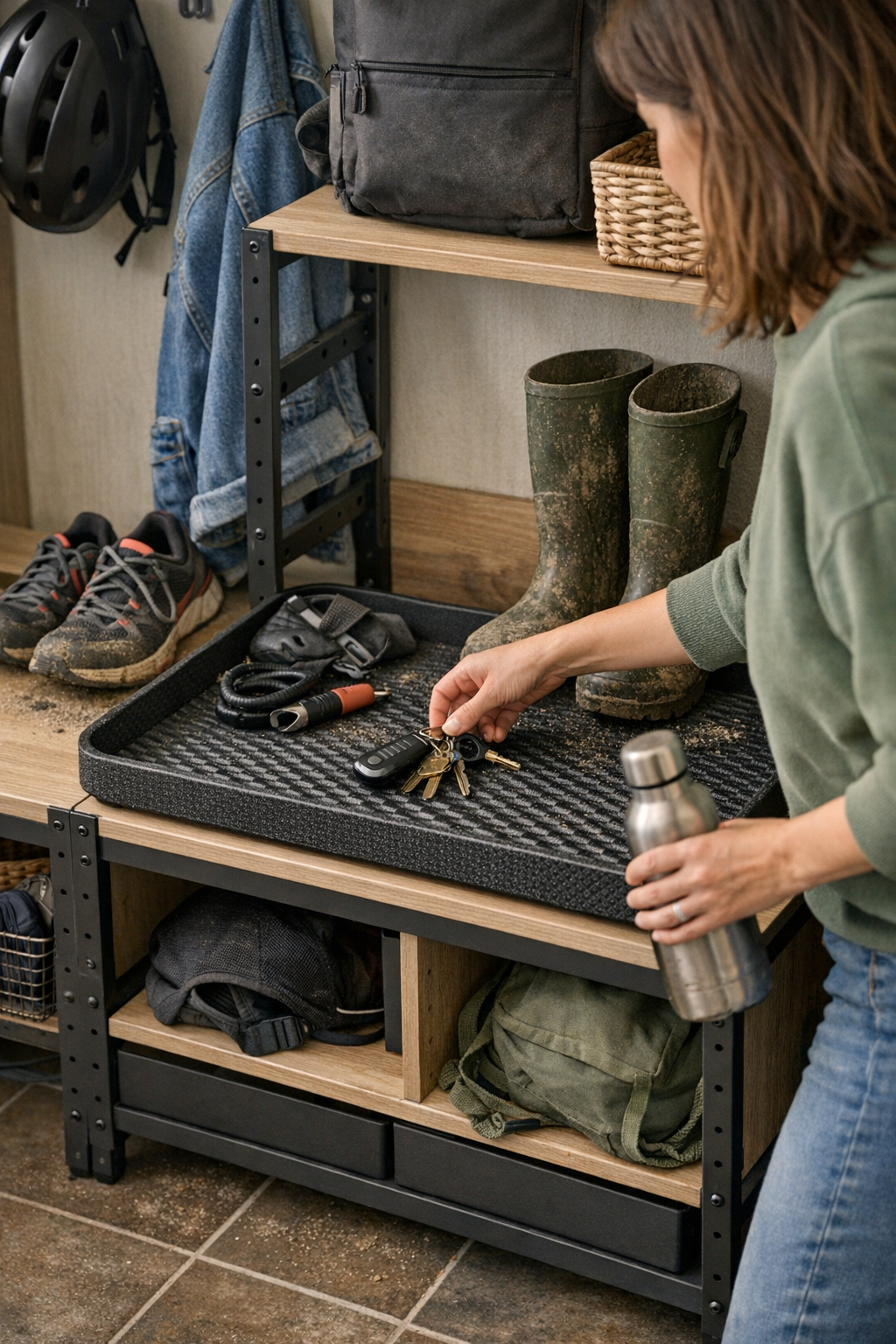
    The wrong entryway tray doesn’t just disappoint—it creates a constant, low-level problem that gets harder to ignore with every round of use. If your tray looks sharp on day one but quickly turns into a scuffed, blotchy mess, you’ve seen the setup unravel: bag straps drag, damp shoes mark up the surface, grit and keyrings cut thin lines that no quick wipe really erases. At first, the space holds together—a controlled zone for the day’s drop-offs. But the second week in, the tray looks bruised and tired, making even a “clean” entryway feel unsettlingly out of control. Instead of anchoring the flow, the wrong tray drags attention to every flaw, doubling the mental reset after a normal pass-through. Trays should corral clutter—not advertise every new scratch and spot as an ongoing reminder that the system’s already slipping.

    Why Surface Texture Sets the Tone in Busy Entry Spaces

    Entryways aren’t quiet museums—they’re collision points for shoes, bags, and whatever’s on your shoulder or in your hands. Every crossing tests the setup: bags drop hard, boots scrape, umbrellas spin water everywhere. On a smooth tray, every one of those moves leaves behind a fresh visual hit. A week in, and you see a gray ribbon where a week’s garden boots cut back and forth, a gouge from a backpack buckle, blurred circles where water never quite dries clean. Even after wiping, the surface holds faint traces—just enough disorder to remind you it’s never truly reset.

    Every shared threshold—partners, families, even roommates—amplifies the effect. Small disruptions spiral: one dropped hockey bag or muddy paw print, and suddenly the tray is less landing pad, more billboard for last week’s chaos. Eventually, people bypass the tray to avoid making it worse, or return shoes to the wall instead—chipping away at the point of having a drop zone at all.

    Textured Trays: Hiding Everyday Friction

    Texture isn’t just a style—it’s practical camouflage against ongoing pressure. Subtle grooves or raised patterns blur new scuffs and water marks into the tray’s surface, blocking the steady march of visible wear that smooth trays always reveal. In a busy entry, where reset expectation is already high, this one detail quietly shifts how the whole threshold behaves.

    Picture the weekday stampede: wet boots clatter down, backpacks slide, car keys bounce and scrape. On a glossy tray, each new blemish sticks out, adding another micro-task—wipe now or face the next reminder. On a textured tray, those signs mostly fade, the visual field stays stable, and the demand to tidy up after every round eases. If your drop zone sees muddy gear, pet leashes, or grocery bags in constant rotation, you’ll hit this dividing line fast: smooth trays turn small usage into a maintenance loop—textures let the space absorb and keep moving.

    From “Showroom Clean” to “Lived-In Calm”

    That brand-new shine on a smooth tray looks great until the first real day: one detour for mud-caked sneakers or a neighbor’s umbrella, and you’re already losing the fight for order. Every mark sets up a choice—drop what you’re carrying and clean up now, or get used to seeing the entry’s decline. Even minor streaks show up and stick in your mind, pushing the urge to reset.

    A textured tray is built to absorb the storm. Scratches, mud stains, stray water lines—they break up against the pattern and disappear into the background. Instead of policing the surface, you can focus on keeping the actual pile contained. The result: the tray remains functional and calm, not because nothing happens, but because what happens doesn’t show up so loud. This shift makes the difference between a zone that needs constant vigilance and one that routinely holds up under stress.

    How Trays Shape the Life of the Threshold

    Real entryways aren’t static—they flex, crowd, and reset a dozen ways per week. Imagine a rainy afternoon: three people barrel through, school bags tumble, a garden tool lands with a clatter, damp shoes angle out half-off the tray, coats pile on the bench. On a smooth tray, the aftermath is immediate: a streak where a soccer bag dragged, a divot from keys, sticky water outlines that survive every drying. Everything looks marked—reset feels like another job, even though most of it is just surface splatter, not new clutter.

    Switch in a textured tray, and the picture changes. The surface looks steady, disorder muted: light scatters, blemishes blend, shoe treads and bag bottoms land without consequence. No one hesitates to park muddy boots or a heavy tote—there’s no subconscious “don’t mess it up” pause that leads to shoes splaying into the traffic path or bags leaning against the wall. This isn’t just less visible mess; it means less threshold congestion and fewer routines getting rerouted around a fragile setup.

    Reducing Reset Stress, Day After Day

    No threshold system stays neat for long. Kids miss the target, bags tip shoes off their row, dog leashes get tossed almost at random. With a smooth tray, that means cleaning, straightening, and bracing for the next round—resetting the surface, not just the piles. Even at its best, a perfectly smooth tray sets you up for disappointment if you can’t keep pace.

    A textured tray lowers the basic demand. When the morning scramble leaves behind sand, scuffs, and print marks, they filter into the pattern—you straighten the row and brush out real debris occasionally, but the visual “reset” standard relaxes. You don’t carry the constant pressure to hide evidence of life’s routine mess, because the tray keeps most of it unseen. Cleanup shifts from a chore triggered by anxiety to one triggered by actual buildup, making the whole entryway simpler to keep in motion.

    Comparing Cleaning and Upkeep: What Really Lasts?

    Smooth trays sell the idea of easy wiping but demand it constantly. Every streak, scuff, or sticky patch pulls your eye until you clean. Textured trays might need a quick brush to clear out grooves occasionally, but the routine feels lighter—because most marks don’t read as “mess” at all. For a threshold already pressured by muddy weather or quick turnarounds, being able to go days between serious resets is more than a convenience—it’s the difference between a functional entry and one that always feels on the verge of disorder.

    Take a drop: when a metal water bottle lands edge-down, a textured tray hides nearly all trace; on a smooth tray, the dent lingers, adding to a slow pile-up of small, permanent flaws. These tiny differences decide whether your entry feels at risk of tipping into chaos, or whether it quietly absorbs the routine shocks of daily flow.

    Choosing Trays for Real Entryways, Not Just for Show

    A drop zone lives or dies by how it handles the real pressure of repeated, imperfect use. The tray that looks pristine the moment you set it down means little if it can’t stand up to the cycle of shoes, bags, and gear. Texture, in this context, is less about appearance and more about how the whole setup behaves at its limits—especially for tight thresholds, shared routines, or entryways that double as gear stations. Textured trays consistently outlast smooth ones by diffusing marks, lowering the urge to resettle, and making the entry’s order visible but unstressed.

    If your current tray keeps you tense—racing to catch new scuffs, rearranging bags to hide dings, dreading every muddy day—it isn’t just an annoyance. Over weeks, that system quietly erodes the efficiency you actually want. Textured trays deliver a real, durable order: not picture-perfect, but stable and ready, so the threshold works as a transition, not a bottleneck. For more practical entryway and drop zone solutions tuned for real, everyday routines, visit Betweenry.