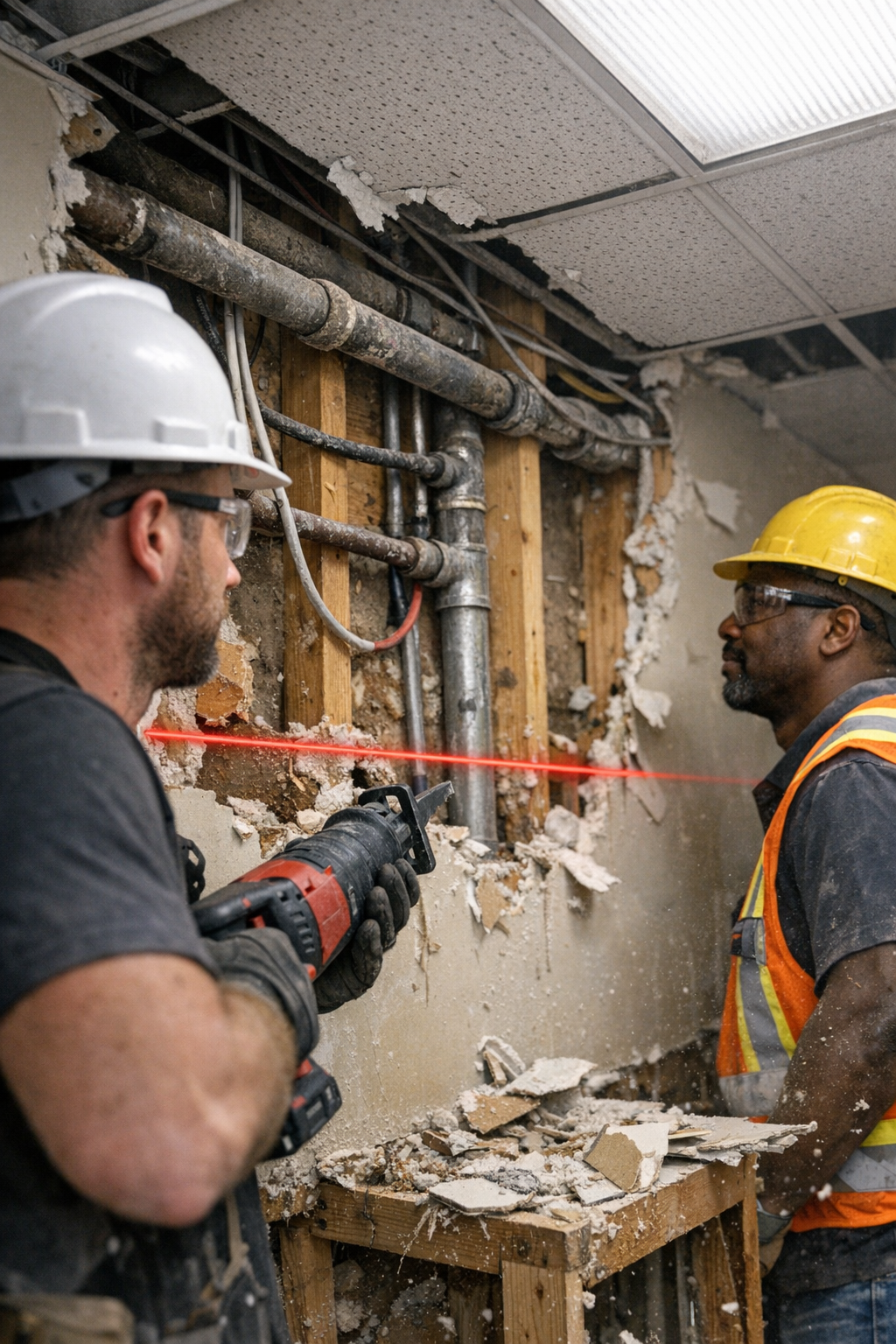
Ask anyone who’s lost rhythm on a job: demolition isn’t about swinging harder—it’s about making the right cut, at the right moment, every single time. But there’s nothing like that sudden stall: your reciprocating saw lurches and jams in mid-swing, all because you chased what was fastest, not what was smartest. Miss the correct sequence and it snowballs—blades dulled early, wires clipped blind, extra trips for fresh batteries. That ripple of slowdowns is the real drag on every shift.
Cut Order Mistakes: Where the Day Starts to Unravel
You feel the friction right away. The saw chatters, your blade binds against unseen metal, visibility disappears under piles of insulation fluff. Dive into framing out of impatience, hit a hidden flex line, and suddenly you’re mopping up leaks or swapping out blades while the rest of the crew waits. Get the sequence wrong, and demolition turns into a stop-start slog—always five minutes behind, always reaching for another tool.
It’s a familiar pattern: the temptation is real—tackle the exposed pipe, buzz through that loose framing. But five minutes in, the saw kicks sideways as it snags something unseen. You squint through dust to find what you missed: a twisted wire, a hidden run of conduit, or insulation blown straight into your face. There’s always an easier way, but you have to set it up from the start.
Reading the Wall: Why One Layer Hides a Dozen Surprises
Walls are never as straightforward as they look. That tidy diagram in your head? Forget it—real walls are a mess of crisscrossed lines, oddball repairs, and layered materials dating back decades. Rushing to attack the “biggest” piece first—whether it’s framing or plumbing—usually means dealing with headaches you can’t see:
- Hidden wiring may slip behind framing, looping where you’d least expect.
- Stacked materials throw off your blade, turning a clean cut into a battle with embedded grit, stubborn metal, and unpredictable resistance.
- Skipping drywall removal means guessing what’s behind—and when your blade finds something it shouldn’t, you’re left retracing steps, clearing debris before you can continue.
How Experienced Crews Choose Their First Cut
The rule you hear onsite again and again: don’t go for the meat until you clear the skin. That means outer panels and drywall come off first—always. Why?
- Actual visibility: Removing the surface lets you spot the real hazards: abandoned BX runs, rogue Romex, or that trickle of water from a line nobody mapped.
- Controlled progress: With hidden risks flagged, the saw runs smoother, vibration drops, and blade life stretches. You’re not fighting to control a saw bouncing off mystery metal.
- Cleaner workflow: Debris drops where you expect—never clogging an outlet or soaking the floor below the cut.
This isn’t just tradition. It keeps the work steady—cuts stay deliberate, tool fatigue is lower, and you aren’t stuck improvising fixes after surprise messes. On churn-and-burn jobs where every wall is different, this sequence is pure insurance.
Onsite: Uncovering Trouble Before It Finds You
You’re in a cramped shop, demoing the old drop ceiling. Framing is patched, pipes swerve between every stud, and the wiring is any year but recent. Instead of chasing the jumble behind, you start by slicing the drywall—carefully, not rushed. As the board drops, you reach for the laser and run a line at 48 inches; suddenly two electrical cables jump into view, running a course that would’ve intersected your first cut if you’d gone for the pipe.
That’s the moment you remember why you don’t cut blind. If you’d gone for speed, metal and drywall dust would be showering down onto hot wires—and you’d be hoping nothing shorts before break. Because you exposed the layers first, you sidestep the hidden hazards entirely. It’s not just about safety; it means you stay in control, adjusting your plan as soon as new lines pop up. Workflow smooths out. You actually get ahead instead of constantly pausing to play detective.
What Blind Cuts Actually Cost
Ignore the sequence, and you pay for it. Not just in ruined blades—though you’ll burn through a box—but in the way fatigue creeps into your hands, in wasted trips back for new bits or batteries, in sudden slowdowns as every cut turns into a gamble:
- Blades wear out at triple speed scraping unseen nails or hissing through sand-caked wood.
- Precision collapses; the saw kicks, lines wander, and you spend more time making “fix-up” cuts than actual progress.
- Risk ramps up fast—a wrong slice into a live wire or wet pipe, and everyone’s off task again patching problems that could’ve been predicted.
Smarter Habits: Laser, Mark, Sequence
If there’s a single habit that saves time and sweat: Before going structural, grab the laser level. Snap it at 48 inches—a line everyone knows, nobody forgets. Use that baseline to flag wires, pipes, and mystery lines. From there, you always peel back outer layers first, working inward, never skipping steps. That minute spent paying attention means your blade sees a full shift, and you set the job’s pace instead of rushing through avoidable jams.
Hazards marked, sequence locked in, you don’t just cut—you glide. The mess is routine, the saw feels lighter, and the workspace stays manageable instead of spiraling into chaos. End of day, clean-up is a breeze instead of another long chore.
The Most Frequent Pitfalls—And How Pros Bypass Them
Under the gun, even experienced crews can slip. The biggest fumbles?
- Cutting blind into concealed pipes or wires—water damage and lost breakers as the all-too-common prize.
- Skipping visual checks—ignoring the laser line, letting hidden lines creep into your demo zone and costing hours later in patchwork.
- Forcing a worn blade—because “just one more cut” can’t hurt, until it jams, shreds, or chews a ragged edge you’ll have to recut and re-clean.
If the saw kicks harder or emits that scorched-smell warning, don’t muscle through. Swap blades, reset, and stay ahead of trouble—it’s faster than pretending the problem will fix itself.
Kit That Keeps the Pace
Fresh blades, a sensible laser, and a trusty marker—these aren’t nice-to-haves, they’re how you actually make progress. The real secret? Building a work rhythm: mark, check, sequence, then cut. Bring the crew in on that formula and the wall comes down faster, cleaner, and with less fatigue at the end of every day.
Find jobsite-tested power tools, blade packs, laser levels, and more at Gumboll.