
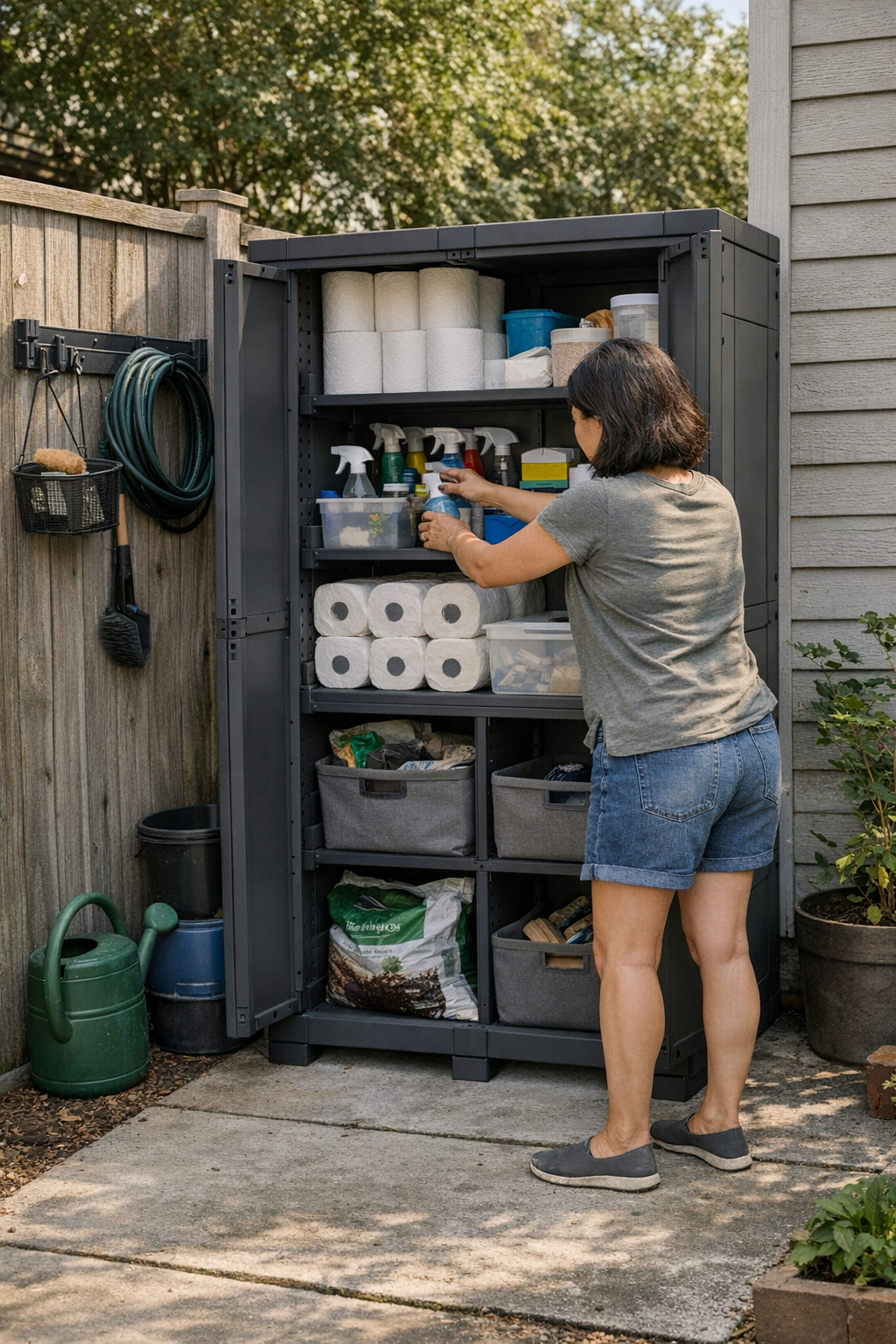
The trouble with most linen cupboards isn’t mess—it’s the hidden blockages and slowdowns once daily use kicks in. Closed doors and a tidy row of shelves trick you into thinking the problem is solved, but the real issues reveal themselves after a week: toilet rolls vanish behind towels, paper towels slip under unused sheets, and what looked organized becomes a repeated hunt through piles. The outside calms the eye, but inside, every grab turns into a search party, especially in a shared home where everyone’s “just putting things back” means new hiding spots appear overnight.
When Order on the Outside Hides Trouble on the Inside
It’s the classic trap: clean, shut doors and a room that looks calm. In reality, the slow hassle builds quietly behind those doors. You go to grab a new pack—maybe in the middle of cleaning or with guests already waiting—and realize it’s wedged out of reach, under towels not even meant for this room. Pull one thing, three more tumble. The system that looked sorted on day one starts slowing you down exactly when you don’t have time to deal with it. The fix is always the same: close the door and forget the problem. But the next person walks straight into the same shuffle, with even less idea where to look.
The Hidden Cost of Too Much Depth
Deep shelves in closed cupboards often hide the real problem: lost access and daily bottlenecks. A shelf that stretches too far back is not more useful—it’s just more space for paper towels, toilet rolls, and tissue packs to vanish behind compressible linens. Towels adapt and fill available space; paper goods do not. You find one box flattened out of sight, another package jammed at the back, and suddenly the main reason for the shelf—quick backup supplies—runs in reverse: you reach in, can’t spot what you need, and end up lifting and shifting half the contents just to reach a basic item. In shared homes, this snowballs. One person pushes tissue boxes deeper to stuff in a towel, the next returns half a six-pack on top, and before long, it’s a category mix-up with buried supplies and no signal of what’s running low.
Category Drift and “Treasure Hunt” Retrievals
Category boundaries inside a linen cupboard only hold as long as real-life use lets them. Even careful initial sorting fades when daily routines take over. Linens spread into zones meant for paper, packages edge between stacks, and the lines between categories dissolve. What starts as “paper on the left, towels on the right” ends up as random returns to any open space. Now, grabbing a tissue can mean fishing below pillowcases, or unloading the front row to reach a crushed pack at the back—each retrieval is slower, and each reset feels heavier. The system that promised efficiency turns routine restocks into multi-step searches. Sometimes you have to open another shelf just to reach behind, or make two trips when the first path is blocked. Slow, friction-heavy routines replace quick, reliable access.
What Turns a Closed Cupboard Into Real Everyday Help?
Lasting order has nothing to do with what you see when the doors close. It’s about systems that actually fit the way you retrieve, restock, and return items—especially when you’re in a rush. Effective linen cupboard setups do at least three things:
- Put paper goods at waist height. No more kneeling, stretching, or shifting piles to grab basics in a hurry. Tissue, toilet paper, and napkins live within your natural reach path.
- Use shallow storage zones—never more than two packs deep. Every item is viewable and accessible. Nothing is hidden behind compressible stacks or lost in the shadows at the back.
- Employ horizontal separation, not just vertical stacking. Paper isn’t crammed above towels or stuffed under sheets. Each category gets its own accessible lane, allowing direct, unblocked retrieval and clearer return flow for the next use.
- Limit shelf depth to what you can actually reach—around 14–16 inches. This single boundary is often the difference between a system you trust and one that quietly fails during busy weeks.
How Small Fixes Help Day After Day
With these changes, the shift is immediate and visible. You reach for a roll—no search, no shifting piles, just a direct grab. Restocks don’t mean lifting half the shelf. Guests and family no longer ask “where did you put the tissue?” because the system itself signals what goes where, reducing day-to-day friction and cutting down on misplaced returns. A glance is enough to see what’s low, stopping the panic run to restock in the middle of a hectic week. The difference isn’t a prettier cupboard—it’s a setup that supports your real routine, not just the day you first organized it.
Recognizing and Avoiding the Trap of “Looks Organized”
Looking neat is not the same as staying usable. A shelf that simply closes over the mess does nothing for your routine if you’re always reaching, shifting, or blocking others from using it efficiently. The only systems that hold up are those built for your actual flow—shallow shelves, clear lanes, and boundaries that last beyond the first tidy-up. Don’t be fooled by calm surfaces; the best closed-door linen cupboards are the ones that reduce friction when you need them most, not just when you’re showing off your storage to visitors.
For shelving, modular storage, and linen cupboard systems that fit real routines and hold up after the doors close, visit Gridry.