
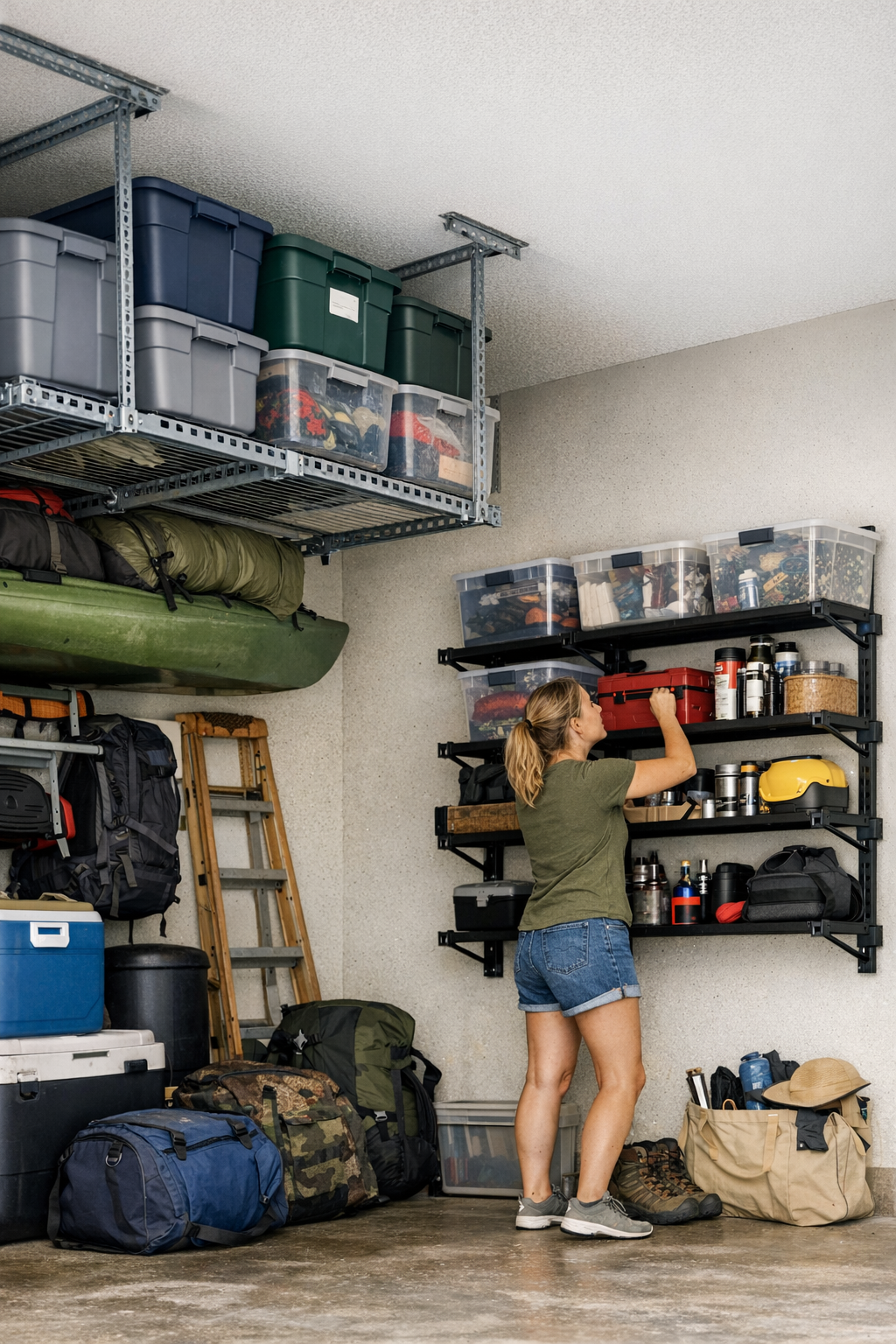
Garage shelving isn’t just about cramming more bins onto new racks. It’s about whether you can actually find the extension cord or ball pump on a frantic Saturday, or whether every “quick trip to the garage” becomes a small obstacle course. The real gap between overhead and wall-mounted shelving isn’t obvious during installation—it creeps in, week after week, as daily use exposes which choices keep your life moving and which quietly gum up the works.
Garage Organization That Breaks Down in Real Life
Everyone loves that first look at a reorganized garage: bins tucked above the car, shelves gleaming, every tool supposedly in its place. It feels like victory. But the first time you have to dig out the tire pump or hunt down holiday lights, the glow fades. Overhead racks make the garage feel enormous—until you’re dragging out the stepladder just to reach one carefully buried box. Half the time, shifting one tote means three others wobble dangerously or teeter over the hood of the car.
Wall-mounted shelves start strong. Sports equipment, useful tools, and seasonal boots line up neatly—at first. Until you add one more soccer ball, then another, and suddenly you’re sifting behind ski goggles just to find the flashlight. Items you intended to keep separate bleed into each other’s space. A shelf that started as “paint supplies only” mutates into a jumble of lightbulbs, sandpaper, and garden gloves. The more you use the shelves, the blurrier the categories become, and the more things migrate to the floor “just for now.”
Overhead Storage: The Highs and the Hassles
Overhead racks win at reclaiming floor space, especially for stuff you rarely touch. Seasonal decorations, camping stuff, keepsake bins—these belong up high, clearing paths for your car or workbench and making the garage look open for once.
But real-life retrieval quickly gets clunky. Need the cooler, but it’s wedged behind winter coats and old electronics? Out comes the ladder. You juggle stacks—trying not to drop the wreath bin—just to grab that one box you actually need. Start hurrying, and it’s easy to lose track of which bin is which, especially with faded labels or mismatched containers. Each trip up and down the stepladder adds minutes, and soon you’re avoiding the entire overhead zone unless you truly have to dig in. That floor space you reclaimed? It’s all too easy to “temporarily” drop overflow items down below, creating new clutter as you dread the effort of hauling things back up.
Keep Overhead Zones Hassle-Free
Use giant, unmistakable labels facing downward—a scribbled Post-It isn’t enough. And if a container is so heavy or unwieldy you can’t lift it easily alone, it doesn’t deserve a spot over your head. The goal: overhead storage serves you—not forces you to risk a bad back or pile clutter on the floor for “later” resets.
Wall-Mounted Shelving: Convenience with a Catch
Nothing matches the speed of grabbing what you need off a wall-mounted shelf. Battery charger? Garden shears? The soccer cleats your kid swears are missing? With a shelf at chest height, you’re in and out in seconds—no stacking, no stepladder, no searching through bins.
But as weeks pass, even the most logical categories break down. Start by adding just one item that doesn’t belong—maybe a set of bike lights onto the tool shelf. Soon, space is tight, and you’re nudging one thing aside to fit another. Once you double-stack on a shelf, things fall out of visibility. Grabbing the dog shampoo means moving a tub of nails and a flashlight. The floor beneath the shelves becomes a catch-all for stuff that doesn’t have a real home, and before you know it, your “grab-and-go” system turns sluggish again.
Keeping Wall Shelves Working (Instead of Caving In)
Set firm categories—and respect them. When you find yourself stacking above eye level for everyday stuff, it’s a red flag. The moment two categories share a shelf, stop. Take five minutes to reset, before “just for now” becomes the new normal. The difference between a shelf that works year-round and one that turns into another messy pile is the discipline to reset before chaos finds a foothold.
Using Both: The Hybrid Reality of Garage Storage
Most garages wind up with some overhead storage and a wall of shelves. In theory, it’s perfect—seasonal and archive bins overhead, daily-use gear within reach. In practice, it’s messy: the toolbox gets tucked into the wrong overhead bin; bikes lean against shelves, and a pile of out-of-place bags accumulates on the floor. Overflow from wall shelves gets shoved onto overhead racks, and vice versa. The clarity of your system slips away with every hurried weekend or seasonal swap.
Over time, resets get longer and more frustrating. Separation between zones blurs, routines lose rhythm, and the garage starts feeling like a project to avoid—just when it was supposed to save you time.
Resetting the System—One Simple Rule
After a month of tripping over bags and staring down a ladder, one rule cut the clutter: Only weekly-use items stay on wall shelves. Everything else—provided you can safely lift it—moves overhead. No more “just for now” drop zones. No more heavy bins teetering above. Drawing this hard line put the routine back in routine maintenance—and made clearing the garage less of a chore and more of a simple, automatic reset.
Clues Your Garage Shelving Needs Tweaking
- Stacked bins bow or tip, and it takes two tries to close a lid without something bulging out.
- Shelves are packed end to end, forcing overflow into corners or onto the floor.
- Labels get ignored or mismatched—suddenly, you’re guessing where anything is stored.
- You have to move other gear just to get what you use most often.
- Every reset starts with a hunt: “Where did I shove that last time?”
You don’t need flawless, catalog-perfect storage. What you need is functional, stress-reducing organization—a system that keeps up with your real habits. When categories are enforced, access lines stay clear, and shelving fits the rhythm of your actual garage life, daily routines run faster and clutter stops spreading. It’s not about how great it looks when you’re done. It’s about how little effort it takes to keep it working as days and seasons change.
Before you buy or install anything new, match shelves to reality: what you reach for constantly, what can truly live out-of-sight, and which items always end up in your hand anyway. Your future self (and your Saturday mornings) will notice the difference.
Find garage shelving options that support real daily routines at ClosetWorks.