
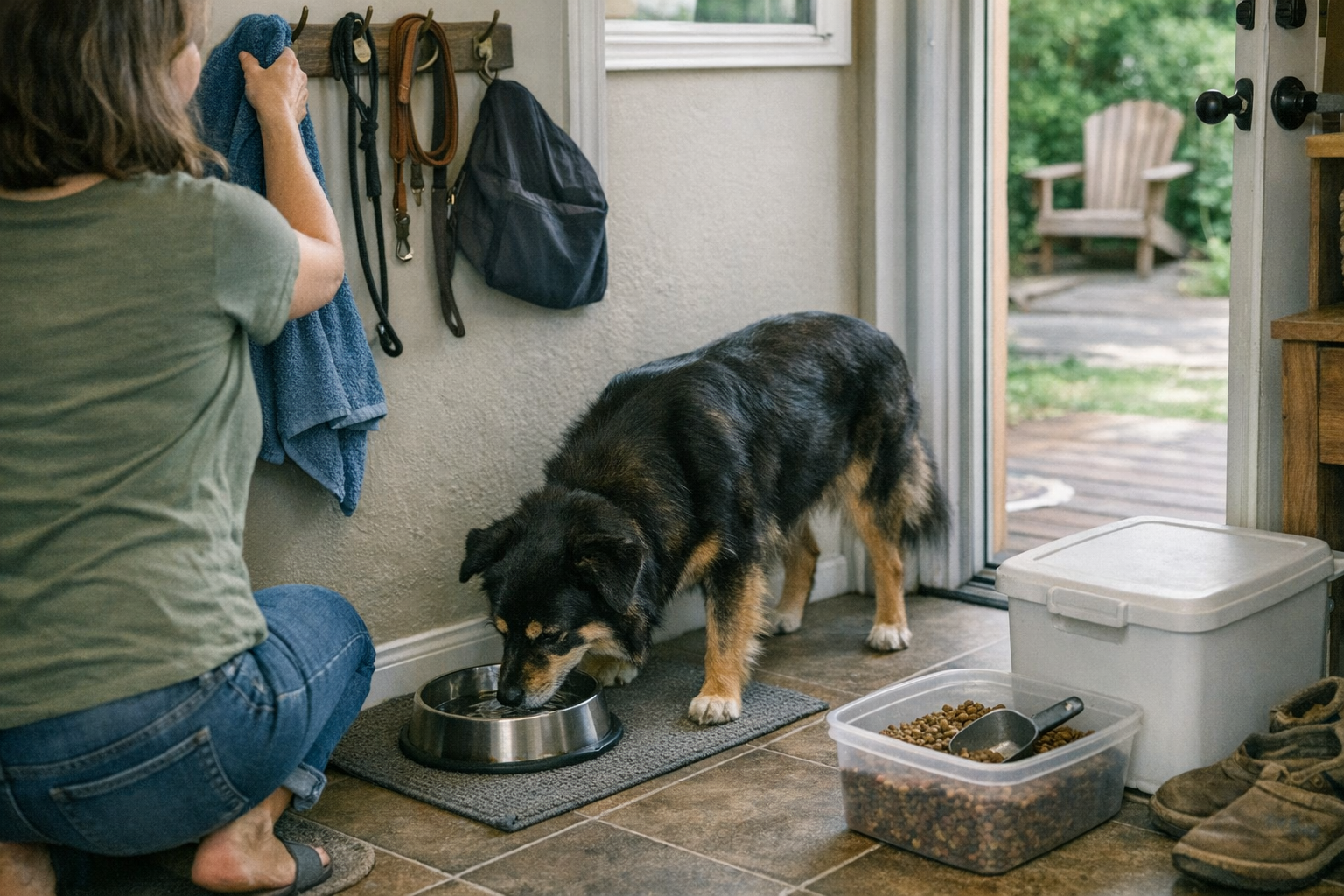
Doorway barking might be gone, but daily pet care doesn’t get quieter—it just moves. A water bowl left rim-deep in foot traffic, gnaw marks on a misplaced scoop, or towels living three steps from the latest drip—these silent hiccups start stacking up. Pet supplies that look organized in the morning can turn into afterthoughts by night: a water area that wipes down too late, scattered kibble where you walk, a missing towel when your hands are actually wet. CalmPetSupply’s world isn’t about eliminating chaos; it’s about noticing where ordinary routines keep veering off track, even when things look calm on the surface.
When Pet Routines Quiet Down, Friction Just Relocates
Calmer entrances don’t end daily work—they shift the target. Instead of dragging a barking pup away, you’re suddenly dealing with a water bowl that has wandered halfway into the hall, or picking up a storage bin lid left askew from a rushed refill. Crumbs migrate under chairs; bunched towels for emergency wipe-ups end up just out of arm’s reach. Instead of one noisy interruption, you get a patchwork of small, avoidable delays: reaching for a leash tangled with a grooming brush, nudging supplies that have drifted, or realizing the food scoop is buried under everything except food.
These aren’t big obstacles, but they chip away at routine flow. The mess shrinks and goes quiet, but it reappears as a circuit of minor interruptions. Resetting after every feeding, wiping, refill, or grooming becomes slower—not harder, just more scattered and easier to ignore, until the pressure adds up.
Repeated Interruptions Are Easy to Miss Until They Repeat
Picture what actually piles up: the water dish now sits in the way every time you pass, damp patches seem random but stubborn, and food bits reach further out past pet mats with every distracted pour. Entryway drips don’t get wiped because the towel’s across the room, not on a hook by the door. By late afternoon, yesterday’s brush is still hogging shelf space, shoving the leash aside one more time.
These aren’t unusual moments; they’re signs a setup that seems tidy keeps lagging behind how you really use the space. A scoop leaning out from an opened bin is a small but growing signal: if your gear is always “almost put away,” your routine is quietly doubling back on itself. Each unnoticed micro-mess is routine drag that compounds by week’s end—never dramatic, but never quite out of the way either.
The Gap Between Looking Tidy and Flowing Smoothly
A neat home can still create workarounds. That water refill is now a nuisance: nudge the bowl from a walkway, wipe twice instead of once, reset after the fact. Surfaces look nearly set, but you keep reshuffling tools—brushing past a food container, displacing a towel to grab the scoop, stalling each next step. Feeding, grooming, and cleanup all bleed together—not because they’re hard, but because the setup keeps rerouting your process.
“Looks organized” isn’t the same as “works without friction.” A towel across the kitchen does nothing as drips form at the porch entry. Storage items sneak back into shared walkways, bowls migrate to wherever the last refill left them, and tools that help today wind up as tomorrow’s new obstacles. These small, repeated motions erode the supposed calm. If you’re always moving one thing to reach another, the calm is cosmetic.
Adjustments that Break the Cycle
The shift comes from setups that match your repeated use—not just the first tidy-up. Move water bowls back from walkways, hook towels directly where water lands, not “nearby.” Supplies that work aren’t just in the room; they’re in the right hand’s reach at the right time, not hiding among clutter or across the floor. Tools like closed-lid bins, wall hooks, and leash racks only help if they actually put each item where you’ll grab it—today and tomorrow.
Every time a cleanup supply sits almost in place but not quite, or a scoop is blocked by something else, the routine slows. Pet care setups that ignore these details just create quieter friction. If the feeding path is clear and storage closes easily, the day moves. If a brush’s “convenient” spot gets loaded down or a bin lid never closes all the way, that micro-routine needs an update—not new products, just better fit to real habits.
For most people, the solution isn’t dramatic—it’s a shift in how you position the basics. Each item needs to work at speed, from bowl to bin to towel, without blocking the next reset or stacking up more micro delays.
Making Calm Last: The Role of Micro-Correction
The most persistent obstacle is the difference between what looks calm and what actually delivers calm. Bowls out of traffic but hard to refill simply move the pause, not remove it. Towel hooks too far from where drips appear lead to skipped wipes. Supplies that migrate into shared home space end up being nudged, moved, or bypassed in each round of care.
Lasting relief means setting up each supply for the way it’s really needed: keeping the bowl in one predictable place (and easy to reach), anchoring cleanup right where the first spill forms, and keeping storage lids and grooming supplies clear of each other. If small annoyances reappear after a few days, it’s a sign the routine is fighting the setup—not your effort.
Most pet care routines won’t stay photograph-ready. The goal is simple: reset, feed, refill, wipe, and put away in one round, without doubling back for what’s not where you need it. Calm doors are good—but the real shift happens in the micro-corrections you make between feeding, cleanup, and quick care. Routine calm isn’t about perfection. It’s about a setup that’s always slightly ahead of the next interruption, not scrambling to keep up.
Find the setups that keep your next cleanup, refill, or feeding from turning into another repeat hassle: CalmPetSupply