
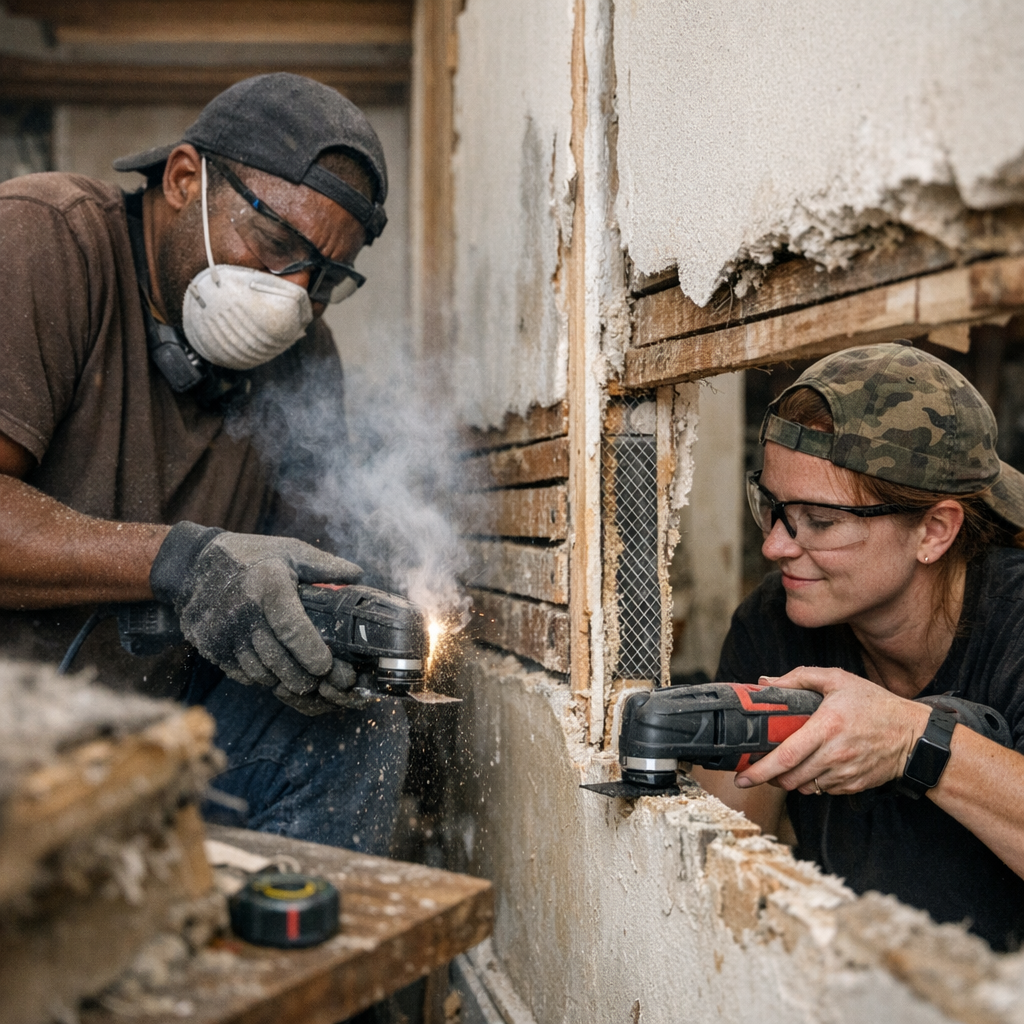
The right blade proves itself when everything gets tough. There’s a moment every tradesperson or ambitious DIYer recognizes: you’re zipping through drywall with a fresh oscillating blade, thinking, “Maybe all these blades really are the same.” Then the job changes—old pine stud with nails, a crusty length of PVC glued tight, or lath buried in ancient plaster. That’s when the friction arrives: resistance suddenly stiffens, the tool’s vibration sneaks up your arm, and steering the blade starts feeling like wrestling a live wire. The job you thought would stay clean turns personal—edges burn, cuts wander, and you’re left sanding and reworking spots that should have been done hours ago. The difference? The wrong blade goes dull fast—and once that happens, every pass gets harder and every fix gets messier.
When “Good Enough” Blades Give Out Early
A fresh blade almost always looks sharp on the first soft material. But predictable jobs end fast. Dense wood, mystery nails, or tilebacker that crumbles like concrete—that’s where the shortcuts reveal themselves. With a lesser blade, progress starts to die by degrees: the tool shakes, the cutline drifts, and every push leaves more ragged fiber or scorched plastic behind.
Real-world fatigue sneaks in fast. You notice it in small ways: more sawdust clings to a chattering blade, your grip tightens every time the tool bogs, and battery packs drain faster because dull teeth make every pass a power struggle. When you find yourself sanding burn marks or compensating with force instead of control, you’re not saving time—you’re stacking up lost minutes with every slip.
Why “Universal” Rarely Means Equal
Package claims don’t sweat on the jobsite. What matters isn’t the label—it’s how the edge survives real punishment. Two blades might look the same out of the clamshell, but add a floor stud with an unseen nail or a batch of cement board scraps, and the true colors show. One blade stays sharp, tracking straight through surprises; the other grabs, stalls, and starts to smoke at the halfway point. That’s not just a small difference—that’s the margin between smooth progress and an afternoon of fixing mangled edges. In real workshops, there’s no pause button: when a blade starts failing, your timeline unravels one jagged cut at a time.
Real Jobsite Moments That Change Your Mind
Picture a retrofit: cutting conduit slots in a wall built before WWII. First two passes glide, but on the third, the blade grinds into wire mesh hidden in old plaster—next moment, the tool shrieks, progress halts, and your nose stings from scorched metal. Popping in a carbide-tipped alternative, you’re back in control—mark stays true, progress restarts, and you cut out without risking the tool or your patience.
Or you’re under a crawlspace, notching joists overhead. The economy blade makes a single heroic cut before sputtering out. Progress slows to a crawl—you’re forced to muscle each pass, risking a slip or worse, a busted blade. Meanwhile, someone with the right blade is finishing up, already packing tools while you’re still scraping splinters out with a chisel.
Blade Wear Signals—Spotting Them Before Control Slips
Fatigue isn’t announced, but it’s easy to feel if you know when to check. Tool vibration spikes, edges start to wander, and that faint scorched smell means your precision (and energy) are seeping away. If you’re pushing the tool into every cut, chasing a once-straight line, or compensating for chatter with muscle, the blade’s already spent. These early signals are warnings: ignore them and you’re guaranteed longer cleanup, more sanding, and the risk of damaging your tool—or the work itself.
Material Is the Real Blade Test
No two jobs are gentle. Old growth lumber studded with steel, layered wall assemblies packed with mystery debris, fiber cement board that chews up teeth—these are what separate blades built for display cases from blades made for daily work. Even the best edge gets tired eventually, but strong composition and sharper tooth patterns buy you those crucial extra passes where control, speed, and finish hold up. Carbide teeth consistently outlast standard bi-metal for wood-with-nail and abrasive applications, buying you fewer swaps and smoother finishing where the job doesn’t slow down.
Quick Habit: Swap Blades Before They Fail
Don’t be sentimental with a dull blade. The number one productivity play isn’t pushing through until the blade is smoking—it’s swapping as soon as you feel the work change. If the tool strains, vibration spikes, or the blade feels hot to the touch, change gears and switch blades. That handful of seconds saves hours lost to sanding, patching, or retracing missed lines. Especially on repeat tasks—like notching every bottom plate in a row—staying ahead of blade fatigue keeps the project moving and your hands out of the red zone.
This habit pays off beyond tools—smooth cuts keep your workflow intact, precision saves touch-ups, and your arms don’t end the day shot from overcompensating.
The Compound Effect: Every Cut Adds Up
Blade choice isn’t just an up-front call. Every stroke either keeps you in the flow or drags the job down. Stronger, longer-lasting blades keep you ahead—on unpredictable jobs, in tight corners, and over the long haul. Don’t tune out the small signals: listen for vibration, watch for wandering lines, notice when the tool feels “off.” That split-second swap between dull and sharp is the simplest productivity upgrade available—keeping your outcomes neater, your fatigue lower, and your day on track, whether you’re cutting, drilling, sanding, or fastening the last piece in place.
Find blades and accessories built for real workspaces at Gumboll.