
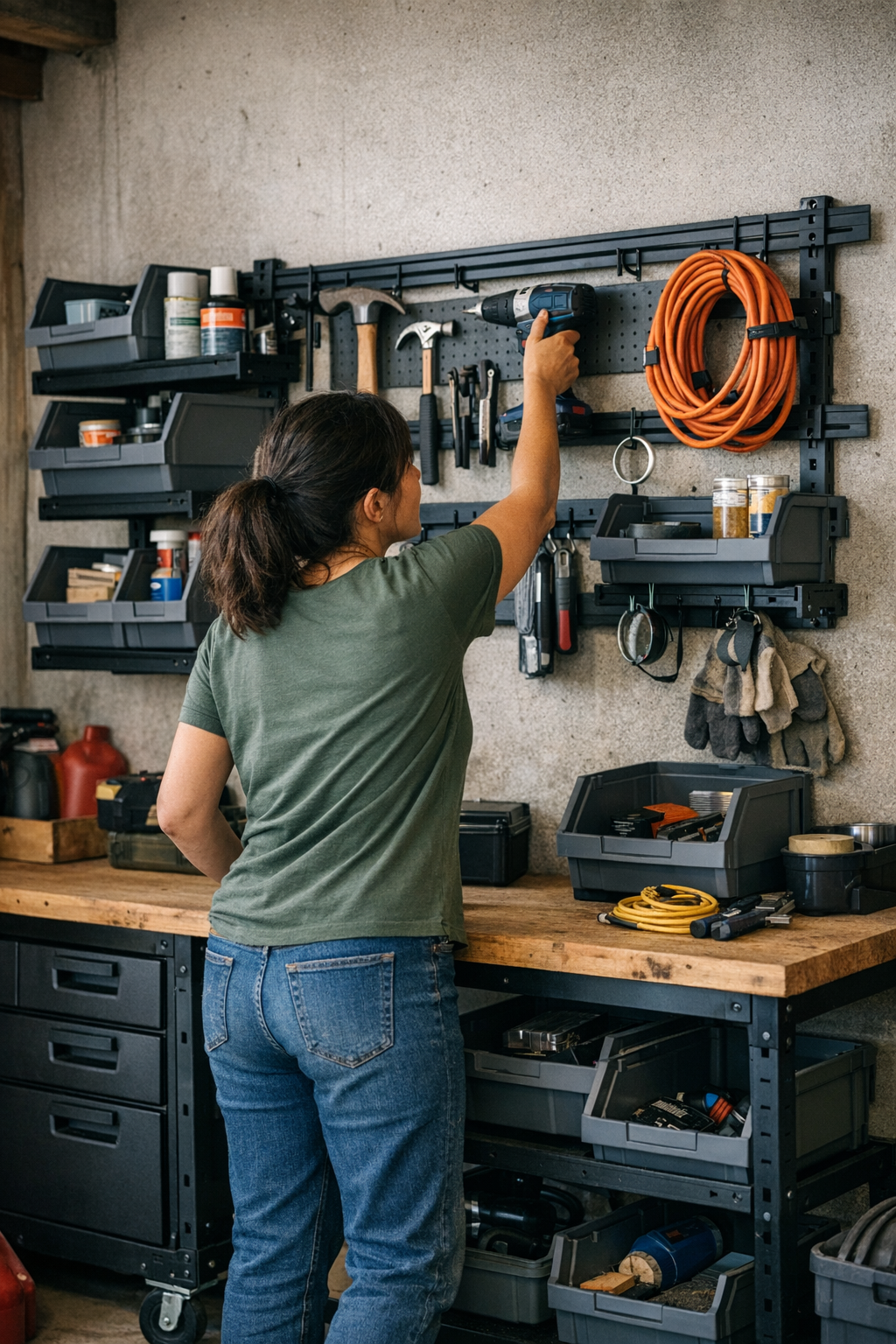
Hang up the last basket, step back, and savor that clean, modular wall of storage—until real life sneaks in. By the third hectic Saturday in your garage or workshop, that perfectly lined-up wall starts to resist you: the system that was meant to clear space now forces you to pause, shift, and sidestep. Order wasn’t supposed to slow you down, but now every return trip or new project exposes the friction. Welcome to the gap between a storage setup that looks organized and one that actually works for you.
When “Organized” Turns into Ongoing Friction
There’s an urge to fill every possible slot, hook, and basket—especially when you finally get tools off the floor. It’s tempting to cover every inch, convinced this is maximum efficiency. But as the weeks go by, the wall you were proud of slowly builds hidden obstacles. The tools you reach for every session are blocked by bins you only touch twice a year. That stretch to hook up the drill becomes a delicate dance around bags or boxes stacked for “just in case.”
Real Use Snapshot: The Blocked Bench Zone
The scene’s familiar: you start a few routine projects on a weekend. By mid-afternoon, your bench is busy, and at the end, you try to hang everything up—except now you have to set down a rolling cart “just for a second” to make room. An extension cord is squeezed behind a shelf, and the return of the hammer means shifting three other items into awkward new territory. Row upon row of tightly packed organizers look ordered, but each gets in the way of the next step. It’s only when you’re trying to reset—while tired, late, and ready to be done—that the setup reveals just how unhelpful too much “organization” can be.
More Storage, Less Flow: Where the Promise Breaks Down
Packing in more doesn’t guarantee better access. When every rail or shelf is claimed, there’s no room for decisions on the fly. You lose:
- Quick grabs for everyday tools—because first you hunt under or behind less-used items
- Flexibility to shift gear mid-project, since every platform is already spoken for
- Uncluttered returns at the end of the day; instead, you’re forced into a game of “where can this even go?”
- Clear movement through the zone—every pass means squeezing past overflow or avoiding that one bin jutting out
What started as a visual solution quietly becomes a recurring speed bump. The space isn’t working for the way you actually move through it. Hidden dead corners don’t get better—they just collect more overflow.
Streamlining the Wall: Subtract First, Then Adjust
The secret isn’t more accessories, but less clutter in prime spots. The first time I took a hard look at my main wall, I noticed half the lineup went untouched between seasonal projects. Moving anything not in constant rotation to a lower shelf, an out-of-the-way bin, or even a side cabinet, made the zone above my bench instantly lighter to use. My favorite wrench could finally hang on its hook without bumping into a row of clamps I only use once in spring, and the rail that used to snag cords stayed open for tools I actually put back each week.
The High-Use Zone: Reserve It for Your True Essentials
The biggest breakthrough comes here: Save wall space for gear you grab or store weekly—nothing else. Track your routines for a few busy weeks. You’ll see: there are things you instinctively reach for each time, and others that linger, untouched, just out of habit. Clearing the latter out doesn’t make the wall sparse—it makes movement clean and predictable, especially at crowded moments above your main bench or work surface. No more bumping into seasonal gear; your flow is no longer interrupted by tools you barely remember adding.
Practical Drill: Audit After Real Routine, Not Just Setup
Don’t decide what gets wall space just by the first night’s arrangement. Run the space through normal, even messy use—multiple sessions, real resets, full clutter. Which bins or tools never move? That’s your cue: shift those off the wall. Give prime placement only to what’s proven to demand it. When the wall breathes, resets happen quickly. Overstuffed zones no longer become the bottleneck at the end of a long day.
What Happens When You Clear Too Much?
Balance matters. Clearing the wall doesn’t mean creating a vacuum. If only two screwdrivers remain, you’re likely to start hunting for essentials buried somewhere else. The trick is to set up rails and hooks for daily (or nearly daily) tools, then stage occasional or oversized gear on a side shelf or in a mobile organizer—always within reach, never crowding out core flow. The goal isn’t empty space, but a layout that feels intentional, not overstuffed or makeshift.
How the Right Setup Changes the Zone
Suddenly, movement isn’t blocked. Cleaning up after work doesn’t require constant reshuffling. You lose the habit of propping carts in walkways just to unload the bench. Heavy-use tools have a home you don’t have to think about—returns become automatic. Overflow stops piling up in awkward corners or creeping back onto the floor. The visual calm matches the ease of movement. Your wall is finally tuned for your routine—not just for show.
End on Real Use, Not Just the Look
Let repetition guide you: You’ll know which setup works by how often you have to break your own flow. If the wall demands you pause, reposition, or makes you second-guess what belongs, it’s worth another adjustment. Choose clarity in your routes, not just tidy lines on the wall. When your space matches the way you actually use it—through mess, rush, and reset—it feels right week after week.