
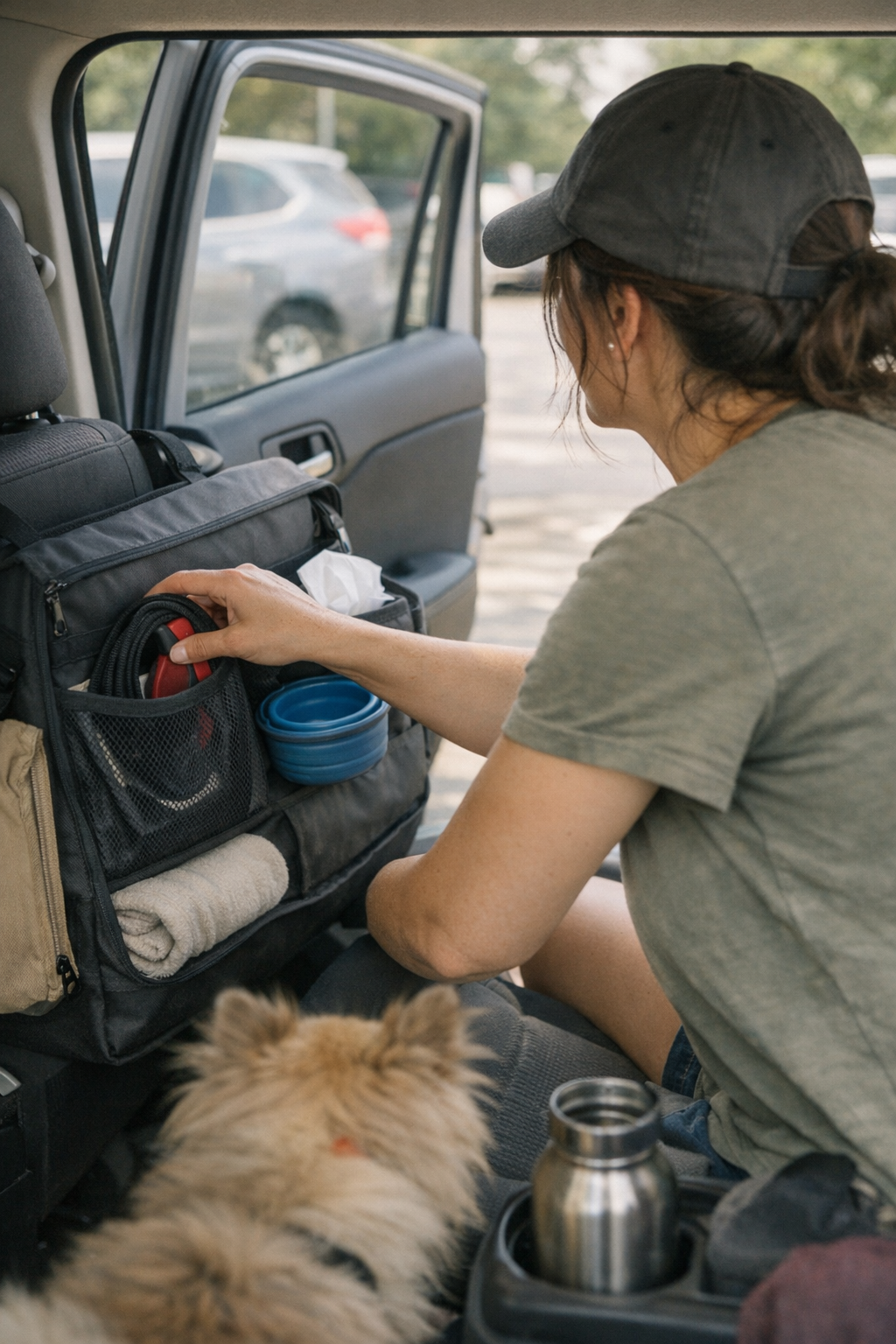
The reality of pet travel usually breaks through at the first real stop—not in your living room, where your travel bag looks sorted, but curbside, when one essential hides under another, wipes can’t be reached without a search, and the “organized” setup stalls the moment you need speed. At home, your carrier or seat-side bag looks calm and compartmentalized. Pull up at the café, park, or vet and the same tidy setup starts costing extra seconds—awkward reach, shifting layers, and sudden scramble as your pet pulls forward and your patience staggers. Any sense of readiness gets tested fast, especially when your trip is just a series of smaller, stop-and-go moments.
When Visual Order Hides Practical Friction
A travel bag that looks ready can still break down the minute you start moving between stops. Freshly packed, a carrier or organizer seems logical—everything zipped, each item in its place. But after just two or three in-and-outs, that logic frays. Instead of single-handed access, you’re unzipping the wrong pocket or sliding blankets out of the way just to reach a leash, all while your pet tugs or shifts beside you. Suddenly, what seemed under control at home now slows every pause, and the good intentions of compartmentalization turn into a buried-toy scavenger hunt.
Every snag matters more when you repeat the same awkward reach. Fumble for wipes twice in one hour and the initial “everything has a place” confidence starts to wear thin. Your dog picks up on your tension. Even compact, modern bags can trap you into reshuffling rather than actually moving—wasting time, draining energy, and sharpening the divide between organized looks and working travel structure.
Recognizing the Repeated-Use Problem
Much pet travel gear is built to contain, not to flow. Presentation takes priority over the actual returning and restarting that every errand, park run, or city walk brings. But after your second or third stop, it’s obvious: access always wins over appearance. Structure that worked on the driveway falls apart at the curb.
Buried Items, Burdened Movement
Picture the real moment: You reach the dog park, leash still packed. Unbuckle the carrier, push back a comfort pad, open the wrong slip—your pet already leaning out for the first sniff. A buried leash means an interrupted routine. Or maybe the wipes migrate under the snacks and spare toy—leaving you one mess behind, right when you need a fast cleanup. Instead of feeling lighter with each stop, the trip starts getting heavier, one small blockage at a time.
The issue isn’t forgetting the gear—it’s being unable to use it on time. Good-looking order can mask physical overlap: blanket over leash, wipes swapped to the bottom, water bowl out of reach. Every grab interrupts something else. The more you dig, the less prepared you feel—no matter how pristine the setup looked an hour ago.
Why Fast, One-Handed Access Matters
Pet travel problems show up in seconds, not at the packing table. The real test is half a minute at a busy curb or commuter lot: can you grab a leash, wipes, water, or toy with one hand while handling your pet—without tipping the entire routine into disruption? Every second lost isn’t just inconvenience; it becomes visible tension, for both pet and owner, in small, repeated ways.
Every Stop Reveals the Weak Point
Back-to-back stops pull focus onto a single flaw: blocked essentials. Layers of zipped pockets or overpacked sections mean you reset and reshuffle, sometimes dropping items or triggering a spill. It’s not the clutter—it’s the blocked flow that quietly kills the benefit of “organization.” While your travel kit still looks neat to anyone peeking in, under real pressure, the system doesn’t deliver quick returns to movement—or calm handling when things get busy around you.
The Seat-Side Organizer Switch
The turning point for most pet owners comes after enough restarts: choosing an open, seat-edge organizer with fixed, visible pouches. Instead of hiding everything out of sight, essentials like the leash, wipes, and water bowl get their own accessible spots. No more digging; no more apologizing to your pet for fresh delays. One reach, one motion, everything where your hand expects it—movement resumes without friction, and your pet stays settled instead of caught in another shuffling pause.
Old Habits That Creep Back During Repeated Travel
The urge to overpack or combine “just to save space” almost always builds the next problem. Cramming wipes and leashes under toys or blankets collapses practical access into another tangled pocket. The tradeoff isn’t obvious at home, but by the third stop, you’re pulling out more items just to touch what you actually need—undoing every early space-saving gain in slow motion.
The Overlap Dilemma: Pet and Owner Items Collide
Running repeated errands, you learn—painfully—that bag space blends quickly. When your sunglasses, keys, and wallet float atop pet gear, every stop becomes a shared search party. Phone cords snag on leash clips; snacks shift under paperwork or a phone. Each overlap forces another pause, resetting your pace and leaving both you and your pet waiting for the bag to keep up. These small collisions chip away at travel rhythm, and after enough rounds, you’ll notice which item always gets buried at the worst moment.
Comfort Items: Help or Hindrance?
Plush pads, favorite blankets, heated liners: they buy calm for your pet, but cost retrieval speed. When comfort soaks up the top layer, grabbing wipes or bowls means breaking that physical barrier—pulling, rolling, or lifting fabric with each reach. It’s a subtle block that turns something intended to soothe into another source of awkwardness. Ideal setups keep comfort close without trapping essentials below, blending calm placement with access that doesn’t break the flow of the trip.
Recognizing When Your Setup Needs Adjusting
There’s one telling signal your pet travel structure needs a rethink: you end up digging for the same item at every stop, despite best efforts to pack smart. If each return to the car means untangling, restacking, or side-stepping an overlap just to get a needed item, your layout’s visual order is beating out practical flow. Lived routine beats packing theory—every time.
Open Access Setups: The Real Time Saver
Fixed outer slots and visible pouches almost always cut down lost seconds over zipped, layered “systems.” When you can reach for a leash, wipes, or treats without breaking stride—or your own rhythm—you keep movement clean, the pet secure, and the trip less prone to fluster or pause. No more frequent rummaging or silent irritation when essentials are visible and their retrieval never sets off a chain reaction.
Putting It All Together: Designed for the Next Stop, Not Just the Start
The best travel bag isn’t judged on how neat it looks at home, but how quickly it rebounds after every errand, park arrival, or city stop. It should put every high-frequency item in predictable reach, cutting out unnecessary resets, blocked access, and slow starts. The right setup makes five stops smoother than one—and you’ll notice the payoff not after packing, but in the tiny, silent victories of every routine return to the car.
For repeated-stop travel—errands, curbside breaks, quick walks—the payoff isn’t the first impression. It’s snag-free access, less overlap, and a routine that matches the pace of a busy day with a pet. When your system finally fits the way you actually move, both you and your pet feel the difference—trip after trip.
Explore practical pet travel setups, seat-side organizers, and repeated-use solutions at PawGoTravel.