
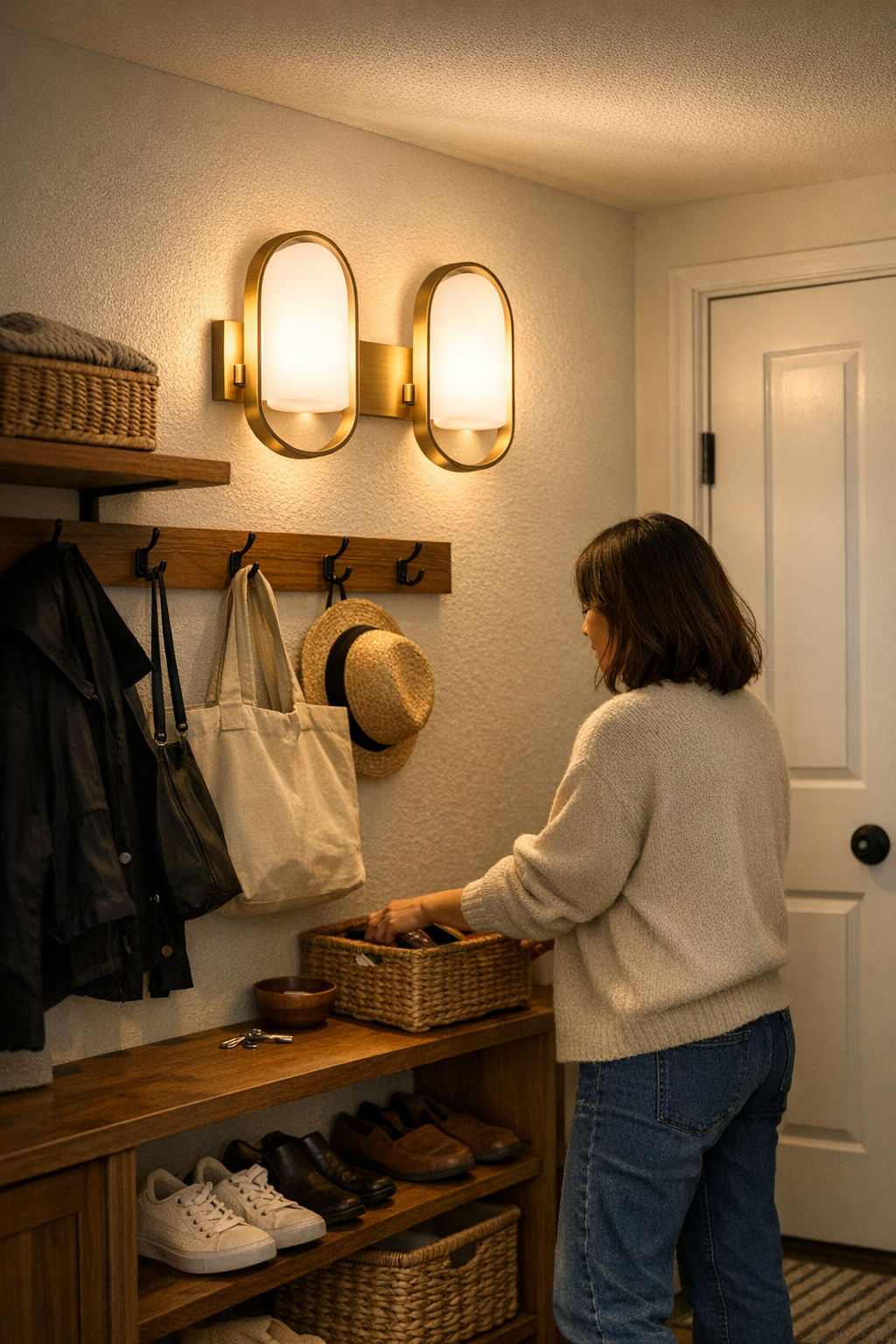
Entryway lighting never fails in the first hour—it fails during the week’s routines. The cables you thought were out of sight start catching dust and shoes. A fixture that looked perfect washes the mat in glare or leaves you hunching to avoid direct light, turning a neat installation into a source of daily friction. Anyone who’s spent a few mornings dodging shadows, stepping over cords, or missing a bag in the dim knows there’s a sharp difference between lighting that simply looks ordered and lighting that actually stays out of your way in real use. What works on day one often becomes a fresh problem by day three.
When Neat Installations Turn Into Daily Friction
Install a ceiling light or sconce, clean up your cables, clear the entry floor—everything seems resolved for a moment. By the end of the first week, patterns emerge: a bracket blocks easy access, a cable that hugged the wall now attracts lint and drags against shoes, or a panel casts an awkward pool of shadow you never noticed at installation. Narrow, high-traffic entryways—especially those with shared hooks or benches—expose these irritations fastest.
Friction builds where you notice it least at first: Ceiling panels that shone brightly during setup now dump glare straight into your eyes every time you walk in. The area behind the bench, once visible, turns murky at dusk; the mat edge blends into shadow, making small objects easy to miss and entryway dirt harder to spot. Each nagging visual interruption slows you down and makes cleaning clumsier, especially when the household is busy.
The Real Cost of Ignoring Cable Runs and Supports
Cables rarely bother you until they start shaping how you move. Exposed cords, clumsy covers, mismatched brackets—each becomes a snare for dust and an obstacle for feet and bags. Tight entryways give you little margin for error; what looks “fine” during installation becomes an obstruction within days, making the whole zone tighter and busier than it should be.
Even premium hardware doesn’t solve the lived problem if cords cross open walls or cut in front of benches. A clean setup can go bad overnight: arrive home in a hurry, tangle a toe, sweep the floor, nudge a cable loose, and the supposedly tidy install becomes yet another thing to fix again. What looked like long-term neatness turns into a cycle of small practical disruptions.
Looks “Done,” Acts Like a Distraction
The satisfaction of “finishing” a lighting update fades fast if details go ignored. Fixtures aimed straight down burn bright spots onto the floor, revealing every missed streak and casting unnecessary shadows. Soft panels left with their edges exposed startle and distract. Even a cord suppressed by a quick trick—forced behind a basket edge or kinked at the base of a bracket—eventually wriggles free and needs fiddling. True threshold comfort isn’t about that first satisfied look. It’s about whether the entry fades out of consciousness and stops inserting new annoyances every day you use it.
Scene: The Narrow Shared Entryway
Think of a compact apartment entry: one wall fitted with hooks, a shelf stacked with shoes, and three people competing for hanger space. An overhead ceiling light promises full coverage but quickly shows its limits. Instead of clarity, you get shadows reaching behind coats, brightness flaring into your eyes, and a dim edge at the mat just where you need to see dirt on arrival or find keys by habit.
Cable issues don’t stay hidden: A tidy cable run, pressed along the baseboard or shelf, works for a few days—then the pressure of cleaning, feet, and bags has it creeping loose. The cable cover that once blended in starts collecting debris. The moment you think, “I’ll have to fix that again,” you know the setup’s logic didn’t account for repeated use.
Small Practical Changes: Indirect Wall-Mounted Lighting
The real shift rarely comes from brighter fixtures—it comes from changing how and where the light hits, and how the setup lets you forget about it in use. In that entry above, swapping the bright ceiling panel for low-profile wall sconces—mounted in line with the shelf, with swivel adjustment—quietly changed everything after a week. One sconce aimed across the hooks made every bag easier to spot; the other focused on the mat’s edge, highlighting dirt but never forcing you to squint. All wires vanished: routed behind the shelf, dropping into a hidden basket. No stuck-on cable covers, no need to reach or reset after every sweep.
Visible Difference After Routine Use
- That irritating glare at the doorway vanished—no more ducking under a “hot spot.”
- Cables quit tripping you up, so you could sweep or dash through without obstruction.
- The edge of the mat stayed visible, helping intercept dirt right at the door and making quick drops less risky.
- Brackets never crossed high-traffic paths or snagged sleeves, so movement stayed fluid and cleaning stayed simple.
Over weeks, the improvements stuck. No more hunting for keys in the dark. No ritual of straightening cables before visitors arrive. The entry felt done—not because it was flawless, but because the lighting and supports stopped being factors you had to manage every day.
Building Entryways That Stay Comfortable to Use
Entry lighting that holds up after installation isn’t just neat—it actually keeps the threshold clear of new annoyances. Real-world setups that work longer share a few practical patterns:
- Keep fixtures outside direct sightlines. Sconces with indirect spread or ceiling panels set off-angle reduce strain and glare, making the area navigable even in a rush.
- Route cables behind furniture, under shelves, or through storage components. Hiding the cable run prevents snags, keeps shoes and bins from shifting the wire, and cuts down on dust collection along open paths.
- Use accent or directional lighting to outline the exact hooks, shelves, or surfaces you grab most. You don’t need total brightness—you need clarity in the handful of zones that matter, without amplifying clutter elsewhere.
- Mount supports—invisible brackets or wall hardware—out of foot and hand paths. It’s not enough to look sleek; regular movement exposes any hardware that strays into active zones.
One Practical Cable Management Fix
Use the bulk of your existing furniture—shelves, shoe racks, storage bins—to conceal and secure cable runs. When cables stay tucked against the solid, rarely-moved edge of a bench or routed tightly behind storage, they avoid being jostled or dislodged, even with frequent cleaning. This single change often does more for long-term neatness than switching the light itself.
Why Most Quick Fixes Don’t Hold Up
Many entryway lighting setups fade from “fine” to frustrating not through catastrophic failure, but through accumulations: glare you notice while juggling bags, lost visibility where you actually need it, and cables that migrate back into view with every cleaning. Fixing appearance is easy—making something function invisibly week after week takes more structural judgment. Where cables travel, where brackets frame or block, and where the light actually lands are the details that separate a setup you trust from one you’re forever tidying or tolerating.
The silent test for an entryway that works: After a full week, are you still fiddling with cords, re-aiming the light, or does the setup finally let you come and go without thinking about it? The best entry lighting blends away, staying practical and invisible beneath the routines it quietly supports.