
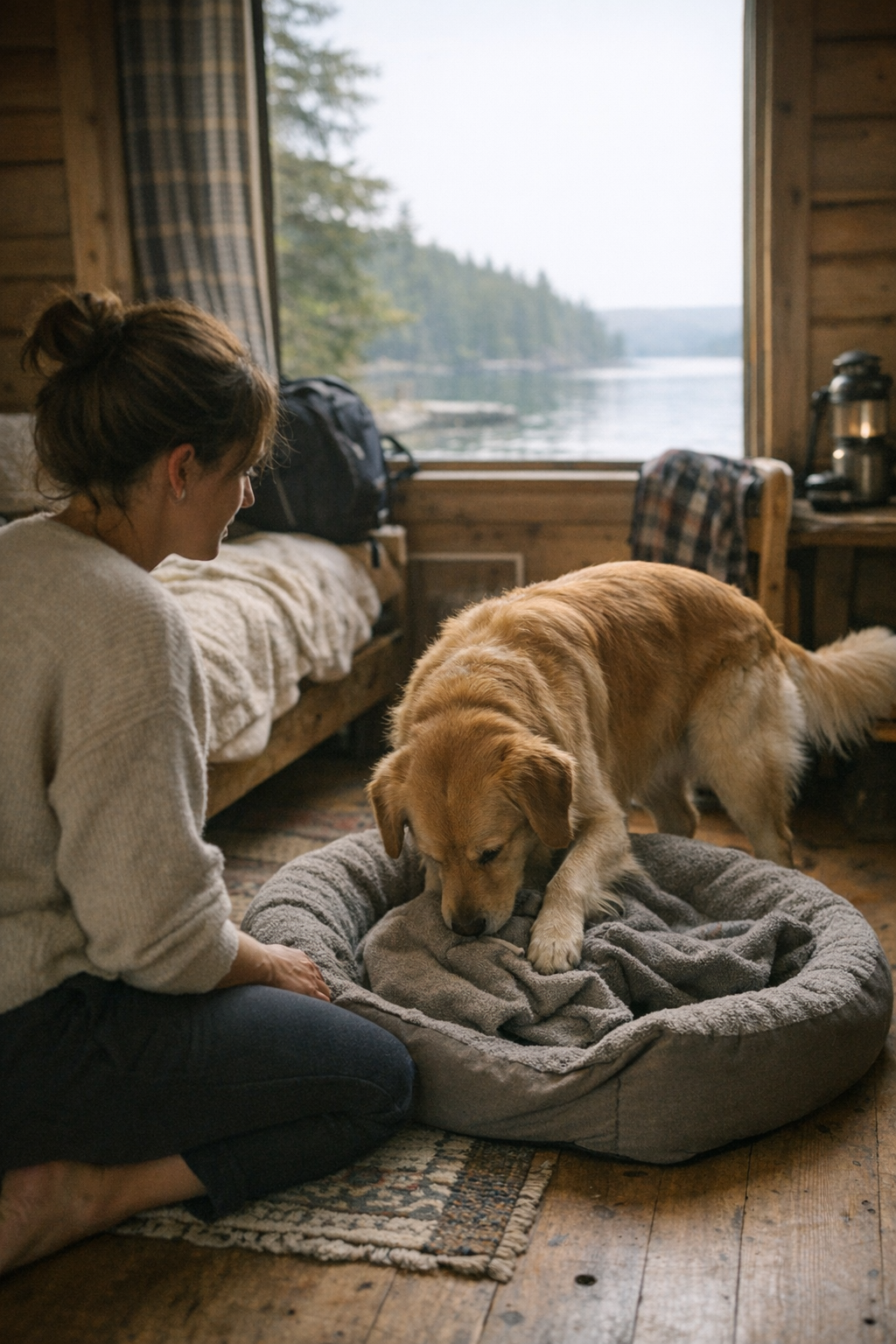
Night after night, you watch the same stall unfold: your dog circles their bed, noses blankets, paws at a corner that should be familiar. Instead of curling up, they hesitate—spending just a little too long trying to make sense of their “spot.” What looked like a small quirk starts to reroute your own routine, stretching out bedtime, leaking minutes you can’t get back, and leaving everyone more restless than rested. The setup seems fine, but something about the arrangement keeps breaking the flow. This is a classic DogPile moment—a tidy scene that hides a slow, repeated snag in real daily use.
When “Restlessness” Isn’t Random: Recognizing Repeated Pre-Bed Friction
Ending the day with your dog should be easy: last walk, fresh water, lights low, a calm switch into sleep. But real dog-life routines often stall long before that switch. Instead of settling, your dog lingers at their bed, repositions a blanket, or circles while the rest of the house waits. What feels like a harmless pause is really a clear signal: for your dog, something in the setup is off. The culprit? It’s usually not softness or size—it’s scent, placement, or a shifted detail that only shows itself at the very moment you expect the routine to work.
How Small Bedding Changes Disrupt the Whole Nighttime Flow
Swap a familiar blanket for a freshly washed one after laundry—maybe flip it by accident or line things up slightly differently—and suddenly, your dog’s habit short-circuits. That night, your dog sniffs, circles again, and stalls; finally dropping into a partial, restless sleep. It’s a subtle interruption, easy to ignore on a busy day. But break the familiar pattern and the friction keeps repeating. Beds look organized, rooms look ready, but your dog’s sense of home is buttoned out by just a shift in scent or spot. The difference between “looks done” and actually smooth, on-the-ground flow is sharpest right when you need the routine to behave.
Routine Nighttime Interruption: What It Looks Like, Night After Night
You see the pattern: after a hectic evening, you call your dog to bed—only to watch them sidestep, drag their blanket, or pick another spot completely. Maybe they pause at the edge, paw a corner, sniff for an old marker, then turn away, making you repeat the whole coaxing cycle. These aren’t just quirks. Each disruption grabs a few more minutes from the part of the day meant to power down. Over time, the hassle compounds, and bedtime stops feeling like release, instead taking on the dull ache of repeated mediation between “organized” and “usable.”
Why Scent Matters More Than Softness
Beds and blankets may all look equally plush once cleaned—but your dog reads them by scent and trust, not appearance. Every wash, every slight realignment, every swapped-out layer, wipes part of the scent-map they use to mark comfort and territory. Change the lineup, and your dog circles, pauses, and reestablishes their place, night after night. The real trade-off isn’t just a moment of fuss—it’s measurable: lost minutes, broken transitions, less restorative sleep. And because you only notice when fatigue and routine pressure add up, the fix is easily overlooked.
Settling Delays Aren’t Just Quirks—They’re Feedback Loops
Ignore these signals, and the consequences multiply. The more irregular the scent or placement, the more the sleep cycle erodes. What starts as a few extra laps around the bed ends with mornings that begin off-kilter—your dog slow to rise, less focused, and you chasing after a schedule already undermined before coffee’s made. The real tension is this: a setup that looks freshly reset can block the very routine it’s meant to streamline, turning the simplest comfort point into a repeated sticking point.
Examples From Real-Life Routines
Post-Laundry: Clean, but Less Comfortable
You do a full bedding reset, return blankets to their “place”—but your dog stalls at the threshold, unsure. A main blanket shifted an inch, or an unfamiliar “fresh” layer, and suddenly the wind-down becomes drawn-out negotiation. The more you swap or rotate, the more each night veers off course, often until you cave and restore the old scent cue. Efficiency in cleaning turns into drag during actual use.
During the Busy Week: Convenience vs. Familiarity
Maybe you move the dog bed to vacuum, then forget to return it. The next bedtime, your dog hesitates, noses the new location, and claws at bedding—trying to recapture whatever reference point made sleep feel automatic. One night’s disruption ripples over several days, stealing energy and time from everyone, all because the routine “looked” in order but wasn’t restored where it mattered.
Visible Order, Hidden Complications
Beds can look crisp, toys and blankets aligned—but if the core scent cue is missing, your dog’s memory of restful sleep collides with a setup that now feels off. That is the gap: a home that visually signals “settled” but interrupts the routine every night in small, accumulating ways. The cost is quiet but relentless: more resets, more owner-side interruption, and less flow during the very routine that should restore it.
How Tiny Changes Accumulate Into Bigger Nighttime Friction
No one piece feels like a big deal—until the pattern repeats. A slight shift, a washed-off scent, or a bed moved midweek adds friction night after night. By day three, you’re both more sluggish; settling is slower, and the “quick” bedtime routine is gone. When the setup breaks, the inefficiency shows in small delays that repeat until you adjust—or stop pretending the tidy look is enough.
The drag extends into mornings: a dog that clings to the wrong spot, a routine that fights back instead of helping you move forward. In homes where tight schedules, before-work walks, and evening fatigue stack up, these repeated frictions steal focus you need elsewhere.
Restoring Flow: Consistency as an Everyday Fix
Usually, the solution isn’t more gear or a bigger bed—it’s discipline: keep the same core blanket, replace it the same way every time, and leave beds where your dog expects them, not just where they look best. Don’t rotate bedding between rooms unless it’s essential, and resist swapping familiar layers for the sake of the “freshest” look. Let scent, not just tidiness, anchor your dog’s sense of routine.
- Choose one core comfort layer and stick to it.
- Return bedding to the same orientation—even after cleaning—every time.
- Avoid shifting the dog’s rest spot or cycling items just for appearance.
When you hold the line, your dog’s willingness to settle returns. The circling fades, the pre-bed pawing stops, and you win back the flow that always seems just out of reach on disorganized nights. In practical DogPile terms, this is the difference between a rest area that only looks ready and one that actually resets your daily cycle on the first try.
Routine Improvements You Can See (and Feel)
After a few nights of sticking with one reliable setup, your dog stops hesitating—approaches their bed, curls up, and the whole routine accelerates. Settling happens in seconds, not a drawn-out stalemate. You recover several minutes each night, and the improvement shows in mornings that let you move on schedule, not start by untangling another leftover delay. The “fix” wasn’t another accessory—just an end to invisible, repeated resets.
When the Smallest Details Shape the Whole Routine
The routines that look organized don’t always work when you need them most. True dog-life setups hold up to actual repetition: busy evenings, tired mornings, shuffled cleaning, and the errand-pull that makes shortcuts tempting. Every routine that falls apart—even when things look neat—usually carries the same flaw: what’s tidy isn’t always what works with real, repeated use. The quiet improvement is visible when your dog returns to the same spot and settles on the first try—not just because it’s clean, but because it’s familiar, unshifted, and truly theirs.
See the setups that keep your routine moving at DogPile.