
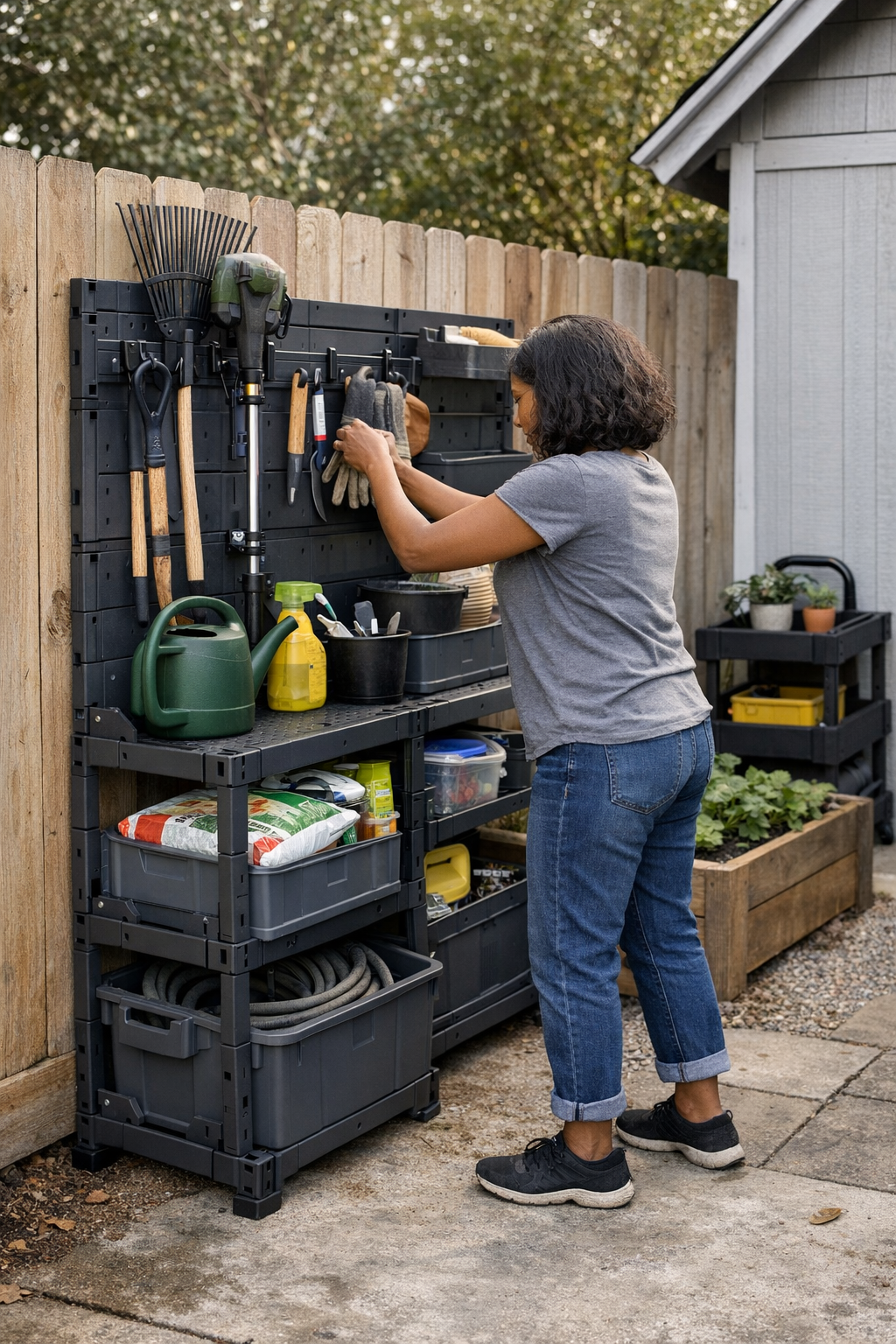
In a shared backyard, tool storage rarely stays invisible for long. The fix always sounds simple—just toss everything in bins or behind closed doors—but within a week the “neat” solution quietly turns into small, daily messes. Gloves disappear under hoses, bikes get trapped behind bins, and someone is always kneeling in cactus mulch just to dig out the hand trowel. What promises to keep the yard looking tidy quickly becomes the daily circuit of shifting, unstacking, and searching—while actual yard work waits its turn.
Why Shared Yard Storage Slides Into Clutter
Even the most organized shed or patio box refuses to stay neat under routine, shared use. One person crams clippers between pool toys, another stuffs gloves behind a seed bag, and after just a few days the inside of the storage bench is a game of memory no one wants to play. Closed storage hides each shortcut, saving appearances for neighbors while quietly making every return harder the next time.
It’s the endless reset loop: rush to grab a rake, wedge it back wherever it fits, and tell yourself you’ll re-stack it “later.” Later never comes. By Friday, the setup looks fine from the fence but is primed for frustration—each shortcut lays a trap for the next person, and every “quick tidy-up” turns into another reshuffle that slows everyone down.
Closed Storage: Tidy Façade, Tangled Reality
Closed bins, benches, and sheds seem like the path to order, but inside they create hidden chokepoints that build pressure all week. One oversized lopper sticks out of a bench that won’t close. Children shove soccer balls until hand tools vanish. The closed lid blocks returns—“do I really want to wrestle everything out, just to drop in this one trowel?” Most days, the answer is no, and things get propped or wedged wherever they land.
These setups clog up fast. A storage bench sits flush against the patio, but after a weekend, long-handled tools lean at odd angles, smaller pieces disappear under bags, and soon the overflow creeps onto the walkway. To grab a hose, you wind up emptying half the unit or dragging stray bins out of the way—performance never matches the clean plan. Every inch of storage is used, but that just means more items blocking your path next time someone uses the space.
Side Yard Interruptions: The Real Blockages
Pictured: a narrow side yard behind a gate, with bikes mounted to a fence, hoses looping around a sagging bin, and a growing pile of lost tools. Monday, it looks under control. By Wednesday, a rake blocks the path because no one bothered with the bin. A helper “puts away” smaller tools behind heavy bags. Eventually, an overflow cluster forms around the bench, and just walking through now means scooting buckets and balancing tools along the fence. Resetting means fixing someone else’s shortcuts—and still not getting that feeling of a space finally “ready” for use. The clogs creep back days after each clean-up.
Visible Wall Storage: Choosing Useful Over “Hidden”
The moment you swap bins for open wall racks, the dynamic changes—because every shortcut gets called out in public view. When a shovel is missing, its slot signals it loud and clear; when tools pile up, you notice before they bury the space. Instead of letting messes accumulate inside a box, the open setup quietly polices itself. Each item has a place, and the visual reminder creates just enough pressure for returns—even from the least organized member of the crew.
A single week with a wall rack system: every tool—hoe, rake, loppers—gets its own obvious hook. Floor clutter vanishes. Bins are no longer blocking bikes or the gate. Tools out of place stand out instantly, meaning fewer “where did you put it?” headaches and less wasted time sifting through a mystery pile. Even kids are more likely to return gear when the answer is “hook it there” instead of “find a gap in that stacked bin.”
Turning Point: Open Rack, Open Path
One simple change—hanging a six-foot wall bracket on the fence—can flip the entire setup. Bikes roll straight through instead of weaving between bins. Hoses uncoil without being trapped beneath overflow. Resetting means five minutes replacing tools on hooks, instead of a half-hour rescue from the bottom of a storage bench. Side-yard corners stop collecting what won’t fit elsewhere. The system doesn’t need perfection; it just resists the slide back into daily chaos, no matter who’s on return duty that week.
The Honest Tradeoff: Visibility Isn’t Perfect, but It’s Lighter
Open wall storage isn’t a magic fix. Exposed tools wear faster unless they’re under eaves or covered with a tarp. And yes, when someone skips a return, the slip is obvious—no hiding a missing rake in a bin. Still, these minor hassles are no match for the daily gains: quick checks instead of long hunts, returns that fit the real rhythm of outdoor life, and—critically—a path that stays open for the next round of use instead of becoming a staging zone for the last ten jobs.
Improvements don’t require perfection. A basic rain cover or awning keeps gear protected. Breaking up wall space into clear categories—long tools, garden hand tools, gloves or bags—shrinks the return decision to a few seconds. Corners that used to trap overflow can finally be reclaimed for things that actually move in and out every week.
The Setup That Actually Changes Routine
The best system doesn’t just look organized in a photo—it fits real movement and real outdoor behavior, so fewer things get blocked or lost. The aim isn’t spotless order; it’s the difference between fighting the setup every week and having resets fall into place almost automatically. When every hook signals what’s missing, order is harder to avoid. No setup stops every shortcut, but the good ones make it easier to do the right thing and harder for clutter to hide. Shared yards need simple visual rules, not hope that closed boxes will work out better next time.
If your fence line still bottlenecks, if floor space keeps filling with awkward spillover, or if every “quick reset” spirals into another mini-project, it’s time to admit the problem isn’t you—it’s your storage flow. Wall systems, open racks, and real categorization shift daily use from a mess in waiting to a path that finally keeps pace with real habits.
Explore more practical outdoor organization options at TidyYard.