
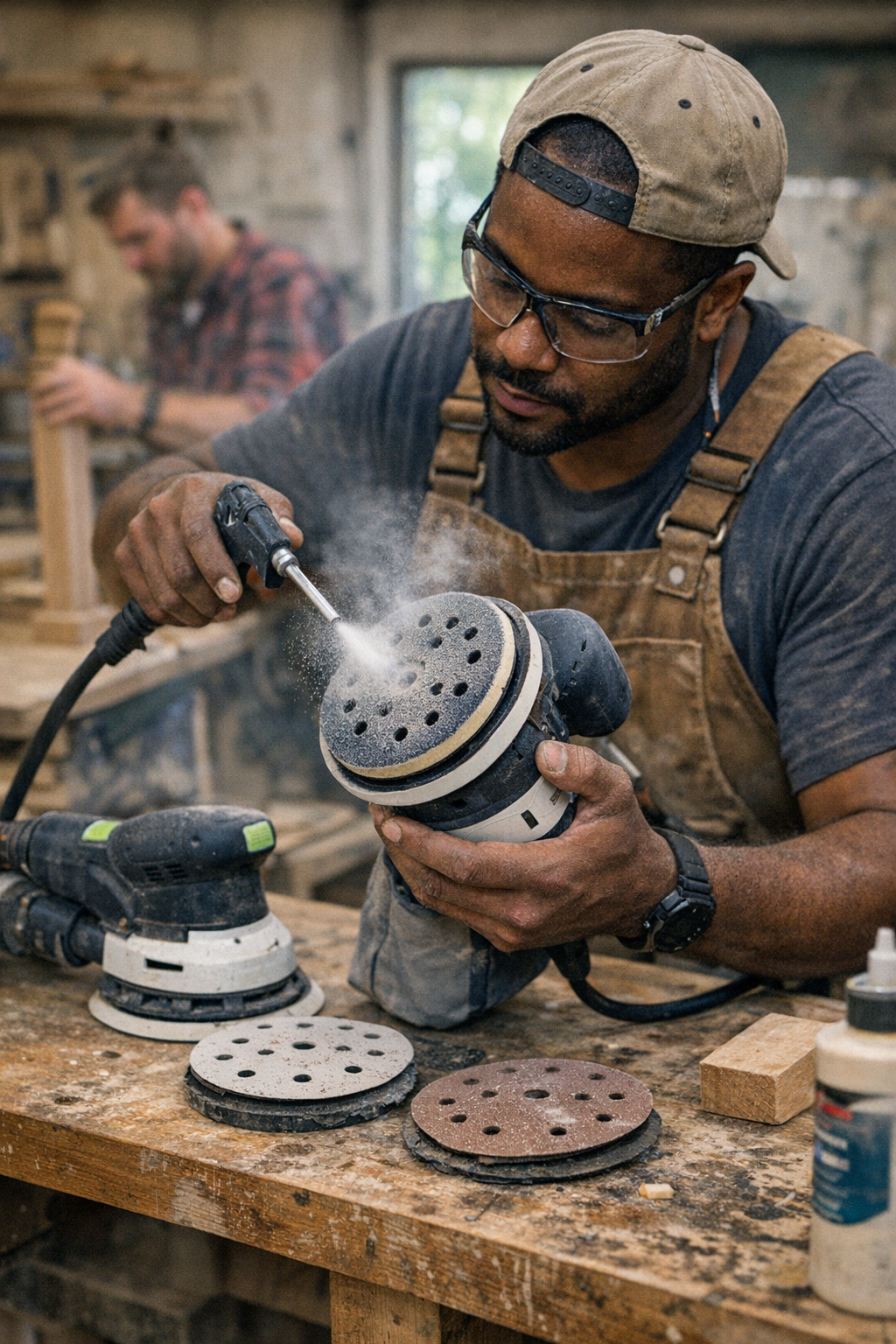
On a real shop day, surface prep starts with optimism and usually ends with a reminder: shortcuts never stay hidden for long. The first hour, you’re running on routine—just a quick pad slap, dust can half-emptied, sander whirring clean over test scraps. The wood tells a different story by late afternoon. Batch work—those eight identical panels lined up or a stack of chair rails—has a way of exposing every skipped detail. What felt like a minor shortcut at 9 a.m. becomes the reason you’re hand-sanding out swirl tracks at 4 p.m., breathing through a clogged mask and wishing for yesterday’s patience.
When Small Issues Become Big Friction
The shift hits somewhere between “fresh pad, let’s go” and “why is this taking so long?” Pad grips loosen, dust holes clog, and suddenly you’re muscling the tool over spots that should glide. The feedback is real: uneven scratch patterns around knot lines, heat building through the handle, and the surface sheen turning dull where dust’s been riding the pad. Ignore the early warning signs—drag, vibration, or slow dust pickup—and small mistakes stack into repair hours fast.
Side by Side: The Outcome Test
It’s clear on the bench: two sanders, one tuned in, the other neglected. The first floats from board to board—pad aligned, channels blown out, grip tight. The second, same model, starts to chatter, catch, and drop in finish consistency. It makes a low, grinding sound or leaves ghostly swirl patches that don’t buff out. This isn’t tool age. It’s pure care—the quick 10-second actions that either feed your momentum or drain your patience later on.
Batch Runs Amplify Everything
Batch jobs magnify even the smallest lapses—a missed pad check or a crust of dust that goes ignored. By the fifth leg or tenth drawer front, every skipped reset feels like a physical drag. You interrupt flow to scrape away debris, press the pad back down, or guess if the sanding marks trace back to yesterday’s dulled grit. Each delay feels longer, and each fix less satisfying than if you’d paused for a maintenance check between boards.
The time saved by skipping details evaporates twice over when you’re forced to fix deep scuffs by hand. It doesn’t matter if you’re seasoned or just learning—the cost of shortcuts always comes back, usually right when you want it least.
Locked-In Habits: Small Fixes, Big Results
The honest upgrade isn’t a new tool—it’s what you do, every single board swap. Six seconds to blow out the channels, check pad fit, and move on. It’s the easiest discipline in the shop: maintenance on repeat, less disruption, more control. The sander feels lighter, less heat builds in your grip, and the batch moves forward instead of circling back to fix avoidable flaws. The finish? It holds up across every board, not just the first two.
Quick field tip: Make that micro-maintenance step non-negotiable. Reset after every board. No drama, just a rhythm that pays dividends in saved time and steadier results, especially when the clock is running and the afternoon heat’s climbing.
Delayed Maintenance—Real-World Cost
Skip this just a few times and watch the feedback change. Your sander starts veering, running hotter, losing its neutral feel. You’ll hear more friction, see cloudy, uneven surfaces, and feel it in your forearm as the tool resists smooth motion. Missed maintenance throws off everything—precision, control, the quality of your final finish.
Over a full run, those “small” delays snowball into stubborn problem spots. It’s almost never tool failure—it’s the details that compound. Just a misaligned pad or stubborn dust turns an easy run into damage control for the rest of the job.
Finish Strong: Routine Makes the Difference
Consistent results don’t just ride on tool choice or grit—they’re built in the everyday habit of pad checks and dust clearing, board after board. Ignore them, and you start running tabs in hidden labor—touch-up sanding, wasted sheets, uneven stain. The field doesn’t lie: Small, steady resets between boards keep your workflow smooth and make interruptions rare, not routine.
If you care about reliable finish and less wasted motion, this quiet in-between work is what saves your wrists—and your deadlines—every time mass production meets real grit.
Visit Gumboll for practical tools and accessories that hold up on the job.