
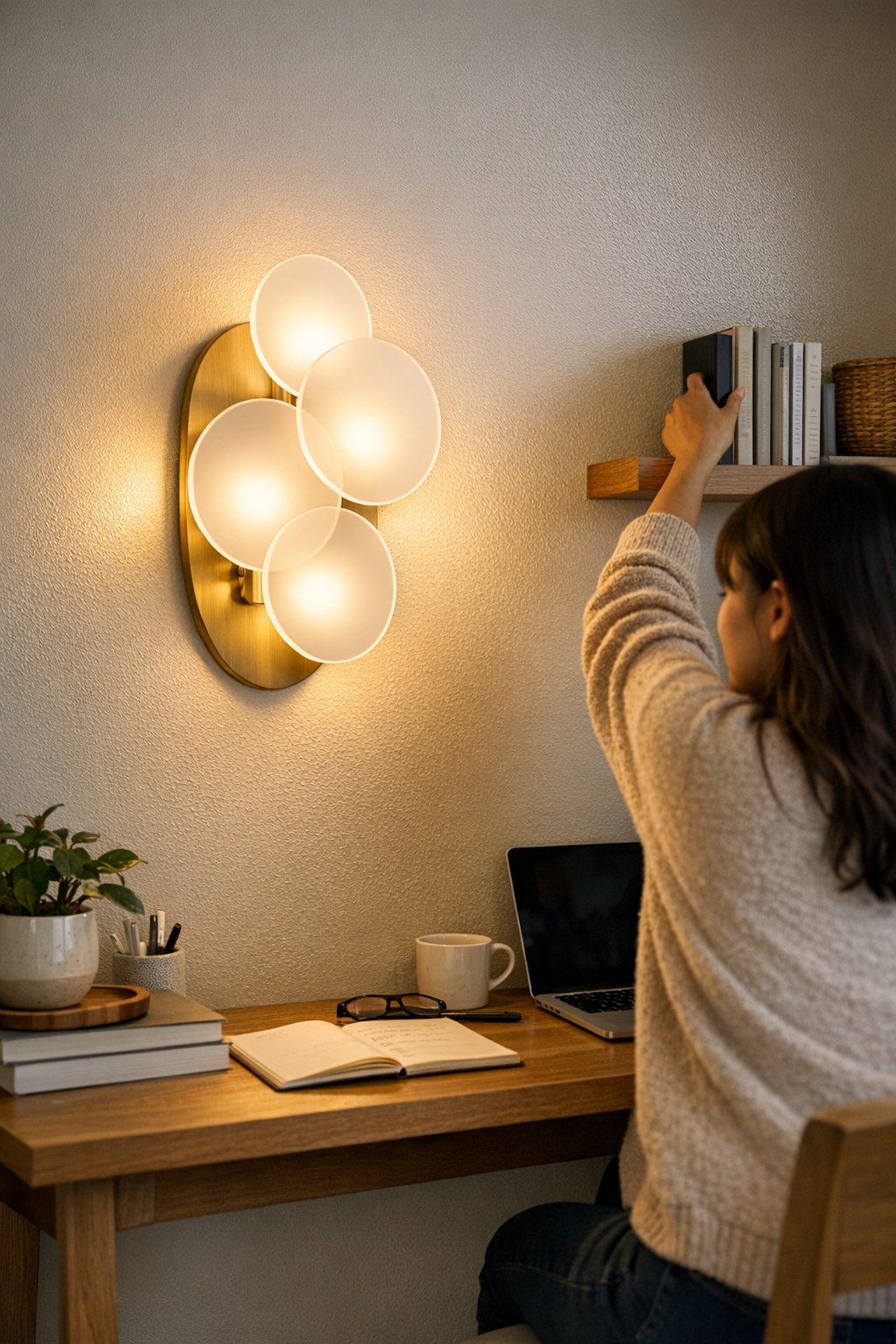
The difference between “done” and “frustrating” in indoor lighting doesn’t show up in the showroom—it shows up on day five, at your own desk, when the cables you tucked out of sight droop into view, a lamp leans just off-target, and the edge of your work surface never seems evenly lit. Most room lighting failures aren’t about light output or finish; they’re about supports and mounting details giving way under normal, repeated use. Every adjustment—pulling a chair in, nudging a lamp, searching under a shelf—exposes which setups don’t actually stay put when routines start piling up. What looked clean and minimal on installation can turn disruptive just three days into your real work week.
When Lighting Surfaces Start to Drift—And Why It Matters
The first days after install can fool you: cables are hidden, fixtures hug the wall, and nothing seems out of place. But start living in the space—slide your laptop over, reach for a notebook, bump that shelf edge—and the weak points show fast. Desk lamps swing out wider with every nudge, cable paths loosen, and mounting pieces that seemed “solid” reveal just how temporary neatness can be. Instead of even coverage, you catch uneven blotches of glare and shadow. The inconvenience builds quietly—a light beam now skimming your hand instead of your notepad, a cable sagging into sight just as you settle in, a surface edge permanently in dimness unless you manually recalibrate the fixture, again.
Routine exposes what appearances can’t hide. Sleek desk lights on thin brackets, stable-looking LED strips, adhesive-backed under-shelf bars: all functionally drift with use. Each person who tweaks the angle or tugs a plug-in cable adds more offset. Shared surfaces are worst: the fixture that used to light the full span now leaves one side dim, the other washed in glare, and nobody quite knows where to put their books or devices to avoid fighting with the lighting itself.
Small Movements Become Big Problems in Shared Spaces
The bigger the turnover, the faster weak lighting support shows up. Shared work tables, home office side counters, kitchen shelves—anywhere people move in and out—make unstable setups painfully obvious. That flush LED stick-on seemed perfect until the third device charge or the fifth time someone stacked a book under it. With every little bump, adhesive gives, and the lighting zone edges away from where you actually sit or work. Most quick-mount lights can’t handle this wear: the brightest area starts floating off-center, and cables that were “hidden” dangle across sightlines before the week’s out.
Every shortcut in support structure eventually costs you: Soft adhesives start to let go, stick-on trays shift, lightweight task lights creep. A single cable snag—sometimes from a passing chair, sometimes from a quick unplug-replug—knocks the whole path off. The real result isn’t just visual disorder; it’s a work area where lighting becomes another small, ongoing hassle instead of a background support system. You’re left hunting for the right spot, dodging cable shadows, never quite landing on a setup that lasts through normal daily patterns.
Desk Edges and Drooping Cables—A Common Source of Clutter
If there’s a surface you use every day, it’s probably also the one where lighting support gets tested first and hardest. Desks where laptops slide in and out, notepads migrate, and paperwork shifts force cables and lamps into motion. The moment cables are routed loosely or bases left unstable, the “minimal” setup fails: you end up pushing a charger aside before you can write, or sliding a lamp back into place before every call. Plug-in desk lamps are notorious here. Cables left unclipped and unsecured trail across the workspace, magnets slip off thin metal brackets, and glare angles change at every adjustment, requiring extra fiddling that interrupts your workflow—not just once, but over and over.
- Trailing wires tangled at the desk edge after the first few days
- Lamp beams drifting sideways, making you crane or shuffle papers just to find even light
- “Clean” setups devolving into clutter after minor, repeated contact
It’s not just visual aggravation. A once-organized desk becomes busy and awkward, less usable by the hour if the underlying support logic isn’t right.
“Good Enough” Mounting Rarely Survives Real Routine
Picture an under-shelf LED strip in a family study or a kitchen corner—initially, it feels invisible and helpful, keeping the counter below clear. But the minute someone grabs a stack of folders, the bar tilts, just slightly. By the end of the first week, the center droops, the light pulls back from the shelf edge, and your best work zone sits half-shadowed. Roll a chair too far and the cable gets snagged, shoving the whole fixture off axis. These aren’t dramatic failures, but a steady creep of minor annoyances that ultimately make you question whether the install was worth it at all. Clean lines only matter if the system endures your actual pattern of use.
A Small Fix With Real Impact
There’s no magic—just better support choices. Swapping out a soft adhesive mount for a bracket anchored with a hidden screw completely stopped the under-shelf sag: now, no matter how the shelf gets loaded or jostled, the LED stays even. Running a compact cable channel just below hid and protected the wiring, ending days of snags and surprises when rolling chairs passed by. For the first time, the surface edge was dependably lit and stayed that way, day in and day out. This brought an actual change in use—the lighting didn’t just look aligned, it stopped demanding attention and adjustment, letting the workspace finally feel settled and reliably bright.
Solving for Anchored Setup: Practical Questions Answered
How can I stop wall lamps from working loose in drywall?
Skip basic screws—use wall anchors that distribute force more widely. Good anchors reduce sag even if the lamp is bumped or repositioned repeatedly, keeping fixtures level and steady with normal handling.
What about under-cabinet cable mess in active rooms?
Soft adhesives won’t hold up in a high-traffic kitchen or a shared study. Enclose cables in secure channels or slim raceways, fixed to the surface, then clip cables in place at intervals—the run stays put even after multiple plugs/unplugs or accidental tugs.
Does it matter if my setup is plug-in or hardwired?
It does. Plug-in gear is more prone to drift—bases wander, cables loop out of control—unless the cable path and anchoring points are given real attention. Hardwired lighting often feels more rooted, but both setups fail if installed with casual supports or no thought to cable tension.
What Lasts Beyond the First Week? Setup That Holds Up
The bottom line: Lighting that only “looks” built-in on install won’t survive a week of normal activity if the supports behind it are weak or temporary. Too many setups collapse into chronic tweaks—lamps drifting, cables popping into view, shadows stretching across the spot you need clear. Reliable brackets, channel-guided cables, proper fasteners—these are what keep a room’s lighting truly functional long after the first day. You’ll quickly notice which details make your space feel quietly finished, and which ones just add another small job to your morning routine.
Choose supports that put order on autopilot—so your lighting isn’t another source of interruption. The spaces where lights, cables, and brackets disappear into the background are the same places that stay functional, flexible, and calmly bright as your days change shape.