
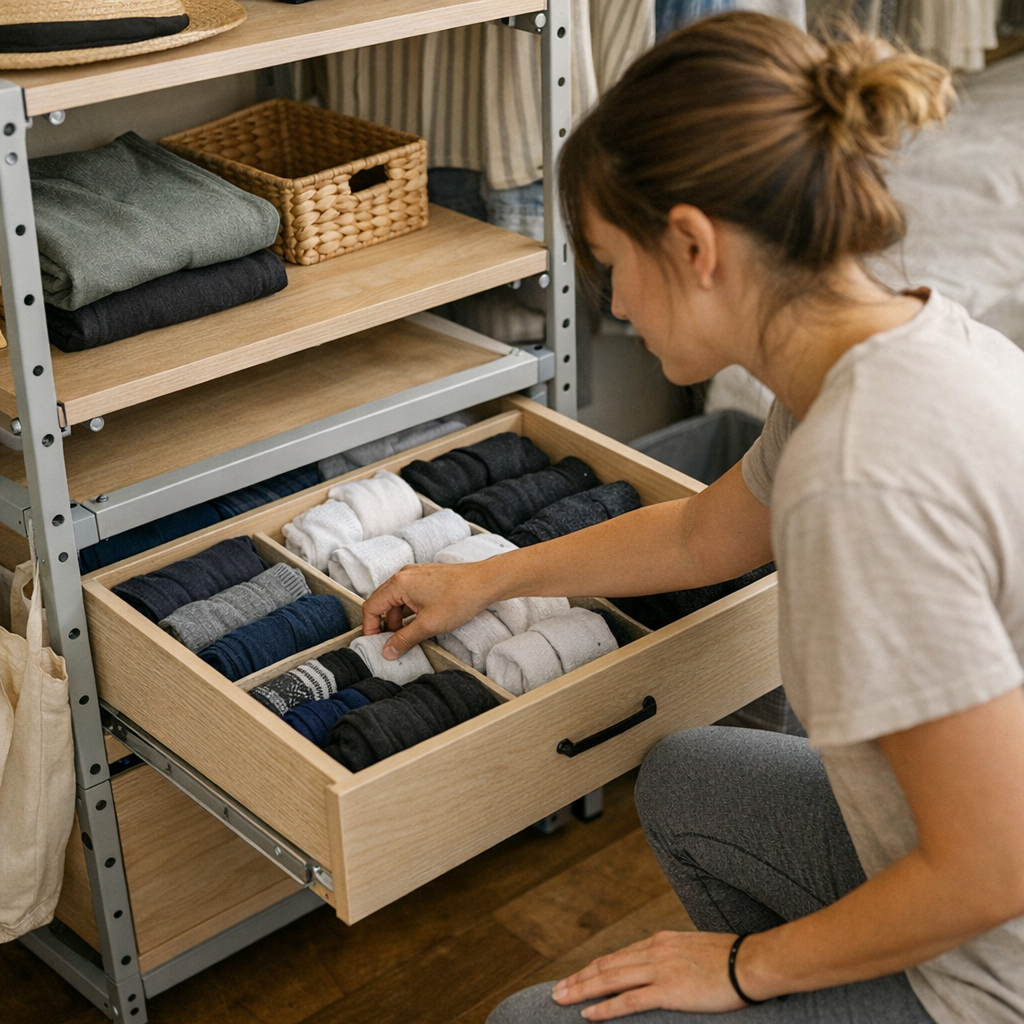
We all want our storage to do more—especially in the closet. But filling every inch, every drawer, every shelf to the edge? That’s how order gives way to everyday frustration. What looks perfectly arranged on Sunday turns into a slow-drip mess by Thursday: stacks won’t stay put, categories blur, and what should be one quick grab becomes digging, jostling, and reshuffling just to find a simple pair of socks.
When a “Perfect” Drawer Fights Back
Picture that freshly organized drawer—every T-shirt wedged upright, socks nestled in rows, no empty space in sight. It’s impressive, until it isn’t. A couple of mornings in, you’re already struggling to pull a shirt from the back without toppling the rest. Socks that started in their own zone now wander, slipping under the next stack. The tighter the fit, the more it resists you: each tug and grab knocks something else out of place. Before you know it, the once-crisp order collapses into a jumble, and you’re forced into a mini-reset after almost every laundry cycle.
Slack Space: Your Secret Weapon Against Storage Chaos
Leave room to move—literally. That little bit of empty space between stacks is what stops your system from unraveling the moment real life intrudes. With a gap—a clear thumb’s width—each item has freedom to slide in and out without dragging neighbors along for the ride. You don’t have to sweep aside a pile to reach the bottom, or squeeze your hand past a wobbly tower just to pull a tee. Instead of sprawling sideways, categories stay defined. Vertical stacks stand tall days after folding—not because of a rigid system, but because nothing is crammed to the limit.
Real-World Example: Why Breathing Room Matters
Think about your busiest drawer, maybe underwear or workout shirts—high-traffic zones that see action every single day. When you overfill it, grabbing anything from the middle means nudging piles around, unplanned mixing, and shirts or socks sneaking into the wrong section. Leave a sliver of space between groups and suddenly it’s different: you lift a pair from the back, nothing topples. Shirts on the left don’t swallow the socks from the right. After laundry, instead of wrestling items into an already-strained drawer, you’re sliding each stack right where it belongs, no reshuffling needed.
This isn’t showroom perfection. It’s practical, sustainable order that survives the week—no matter how many hands or hurried mornings hit that drawer.
The Real Cost of Maximum Fill: Clutter that Spreads
Stuffing every square inch isn’t just a closet problem—it creeps into the rest of your life. In the bathroom, overcrowded bins lose their borders until random toiletries start blending together. Entryway shoe racks become chaos as one pair of boots nudges sneakers across boundaries. Stacks on shelves buckle, and “organization” turns into a constant cycle of pushing things back into place. The few extra items you managed to squeeze in now cost you minutes—and aggravation—every single day.
Routines That Don’t Fall Apart: The True Value of Slack
The beauty of slack space isn’t what it looks like at first—it’s how usable it stays. Grab what you need, put it away, and trust that the setup will hold all week. No more sorting piles just to make things fit, no more resetting drawers because last night’s shirt sweep knocked everything loose. Each section retains its role. You aren’t scrambling to find missing socks or restack toppled jeans on a Wednesday morning. Routine maintenance becomes a five-second tweak, not a chore that steals half your afternoon.
How Much Slack Is Worth It?
A little margin goes a long way. Aim for a thumb’s width gap between each stack or bin—a space wide enough to reach in and move something without disturbing the neighbors. It doesn’t shrink your storage, it protects it: you’re not wasting room, you’re earning back time. Forget squeezing in the last T-shirt if it means you’ll spend five minutes—every day—fixing the fallout. The right system isn’t just organized when it’s untouched. It’s organized after the rush, after laundry, after another busy week.
Less Is More: A Change You Actually Notice
Resist the urge to fill every inch. That small shift—from maximum capacity to maintainable breathing room—transforms not just how your closet looks, but how it works. Suddenly, you’re not wrestling with overfilled drawers, restacking after every reach, or letting clean laundry stall out in a basket because nothing fits “just right.” Instead, you get easy access, smarter resets, and an organization system that feels calm—even when life isn’t.