
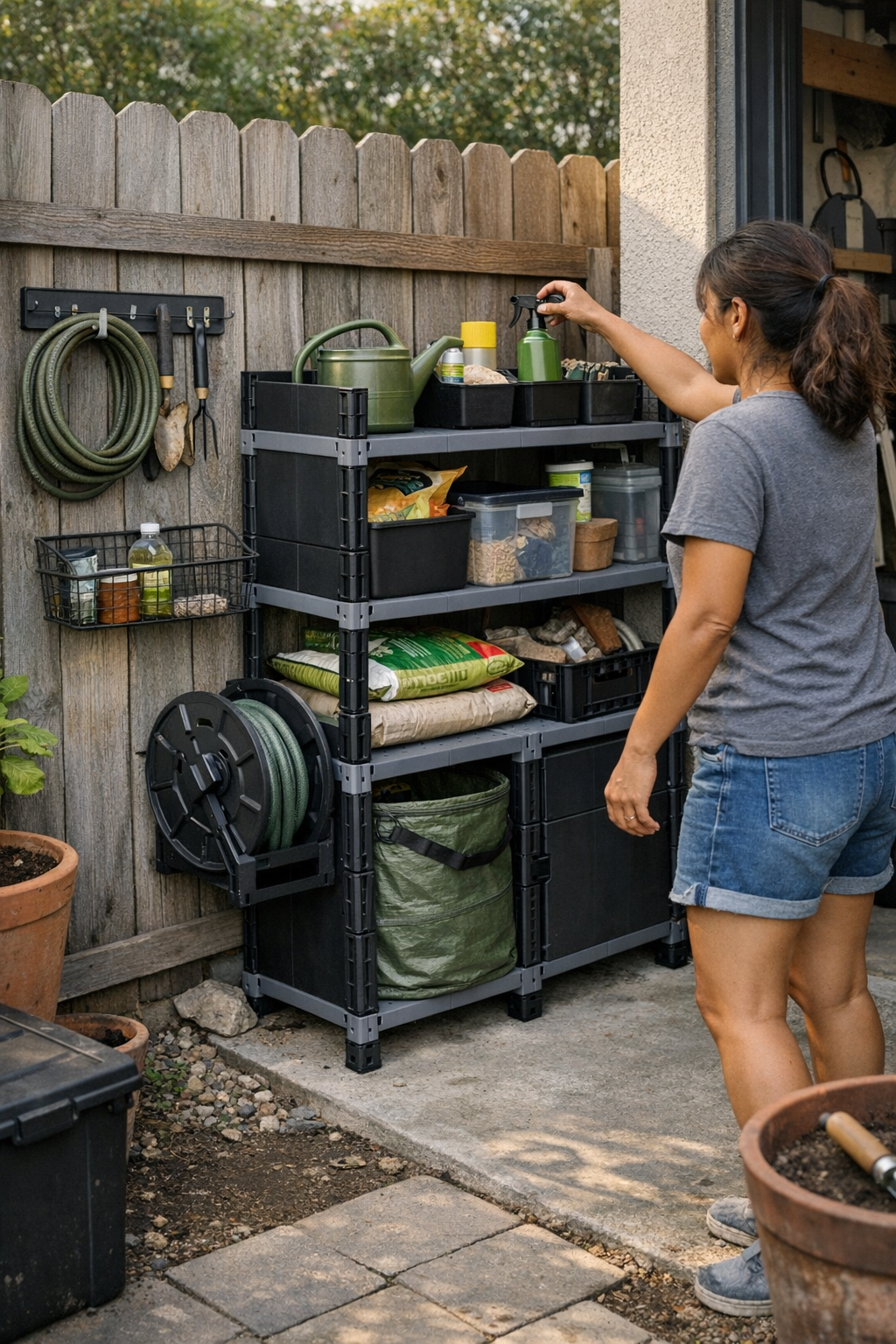
Outdoor storage sounds simple until you’re living with it week after week. That first day, any new rack or utility box makes the backyard feel well-managed—but give it a month and the reality seeps in: movement gets blocked, side lanes crowd up, and the clean surface hides a routine reset burden you never signed up for. What looks ‘organized’ too often means “constantly in the way,” forcing you to drag, shuffle, and nudge every time someone needs to pass through or put just one thing back.
Where Outdoor Storage Friction Really Starts
The classic trouble spot? That narrow side yard lane or the patio edge that turns into the unofficial collection zone. Shoes, hoses, soccer balls, and worn garden gloves never quite find their way back into a bin—especially when the box itself crowds the path or getting the lid open means moving half the stuff around it. You might think there’s still floor space, but every return becomes a low-key obstacle course: step, lift, sidestep, squeeze a shed door fully open, then find out what you needed is still buried under something else.
The drag isn’t always obvious until it’s routine. A dusty bin sitting just inside the gate, a freestanding chest that nudges its way outward, and soon you’re dodging items that are supposed to be stored, not sidestepped. If putting a shovel away means blocking the rake, or you notice outdoor gear drifting further out over time, it’s not about storage size. It’s about storage friction slowing every return and reset.
Wall-Mounted Systems: Winning Back Movement Lanes
For real-world yards—side strips, tight patio spaces, fence-lined runs—wall-mounted storage changes the whole traffic pattern in ways you notice after just a few weekends. Brooms, hoses, and tools finally have a place that doesn’t eat into the walking lane or force a pile-up against the garden gate. You end up spending less time reshuffling, less time barking about “clutter at the entrance” because each piece gets a clear return spot—always visible, always up off the ground.
What actually improves is the flow: hang up a shovel, and you’re done. The patio edge stays walkable. Kids’ balls and tools aren’t lost in a bottomless bin—they’re hanging, easy to find, impossible to ignore. Even in shared entry points, wall-mounted layouts lower the silent tension about “who left the gear here” because everything has a visible return path. Nobody needs to drag a bin just to get in the gate, and resetting the zone after a cookout or workday happens fast, almost automatically.
Freestanding Units: Early Promise, Long-Term Drift
Freestanding boxes and lockers seem like the dream—until you’re pushing them back in place every Saturday, re-clearing the same footpath for the third time in a row. Their greatest strength—a roomy footprint, easy repositioning—becomes the core problem: they migrate. Maybe the deck box leans into your main lane, maybe the tall locker keeps edging further from the wall. Either way, the “easy access” turns into an ongoing relocation project that never quite resets right.
The pattern repeats: you drop off a garden trowel, and now the boot tray won’t fit. A rake catches on the locker base, so it gets left out “just this once.” Blocked paths, trail of overflow gear, and the silent timer ticking up on every reset. You might not notice until you’re already shuffling items for the umpteenth time just to get the path back—or start plotting how to do all your outdoor tasks in one miserable session, just to avoid the reshuffling dance the rest of the week.
Modular and Mobile Setups: Flexible but Fussy
Those slick, rolling racks and adjustable storage cubes are tempting—especially for multi-use yards where the patio turns into a planting station, then a play zone, then dinner seating. Being able to roll a rack up to the project at hand is useful, right up until real use exposes the cracks. Mobile racks drift into your best walking lane, get heavy and slow to move, or end up “temporarily” blocking the back gate, shrinking usable space with every new activity.
Frequently, bins start multiplying. Some stay mobile, others stop moving entirely, turning the outdoor path into a zigzag of obstacles. By month’s end, you’re going around bins instead of through them. Overflow piles land wherever there’s room, not necessarily back in the proper slot, and everything that once felt customizable just feels loose—and slow to reset. Flexibility doesn’t matter if items never make it all the way back, or the shift from “active” to “stored” takes more steps than it’s worth.
Overflow Zones and the Return of Edge Clutter
Every backyard has an overflow zone: the patch under the spigot, a muddy corner by the side gate, one wall just beyond the garage. These corners soak up what the official system can’t hold—or what’s too irritating to put away properly because the setup fights your routine. Shoes stack up by the hose, stray balls fill the patio edge, and containers on the ground slowly trap rainwater, dirt, and whatever doesn’t quite fit anywhere else.
Wall-mounted systems play defense here: they keep floors clearer, make edges usable, and give every item a chance to actually go back. But as soon as storage boxes or modular racks land in these transition spaces and jut out, blockages return. You end up moving two things just to clear a lane, or decide not to bother at all. The reset becomes a slog, and those “temporary” piles harden into permanent fixture status until you finally admit the system stopped working weeks ago.
Shared Zones and the Problem with “Enough Room”
In homes where “shed space” means skinny side yards or fence-line strips, the main pain isn’t storage capacity, but how storage breaks up movement and flow. Bins that looked slim enough on setup day somehow narrow the path every week. Chest lids can’t open all the way; doors get blocked, forcing awkward sideways slips just to get past. Shared zones mean multiple people with different routines—family, friends, even neighbors grabbing shared tools—each adding to the slow build-up of friction.
Every bit more awkward to step over means more stuff gets left out. Over time, even a box filled to the brim becomes a bottleneck, with everyone reluctant to deal with the effort it takes just to get things put away. The cycle is familiar: bigger storage brings more overflow, not more ease—until “just enough” room is never quite enough.
Recognizing Early Signs of Setup Breakdown
Creeping clutter is the first red flag. Bins that never fully close, bikes parked awkwardly against a fence instead of stowed away, gloves tucked wherever there’s open air instead of on a hook. If you notice yourself sidestepping overflow, putting one thing away only to dig through three others, or wincing at how long it actually takes to reset after a busy weekend, that’s your signal: the storage isn’t keeping up.
The real giveaway: reshuffling. If routines stall out because something’s blocking the lane, or you start “temporarily” storing gear elsewhere, the original plan has drifted. What started as flexible turns rigid, and what looked tidy starts feeling slow. Every little trade-off—extra steps, awkward angles, blocked movement—adds up over time.
Tip: Audit Your Reset Speed
Time yourself after a weekend: how many trips, lifts, and detours does a standard reset actually take? If a quick five-minute tidy-up stretches into half an hour, or you find paths choked in the same places, the setup needs more than extra bins—it needs a flow fix.
Choosing for Real Use: What Consistently Works
In small yards, shared corner spaces, or any utility zone you have to cross daily, wall-mounted systems and tight-profile storage units routinely outperform. They free walking lanes, give tools and shoes a visible place, and stop the slow creep of blocked pathways. When movement is preserved, return flow is obvious: gear lands back where it belongs without a debate or reset marathon. Keep bigger freestanding and modular pieces for spots with true perimeter room—where moving them won’t bottleneck movement or block a natural shortcut.
Mobility can be a perk—if you’re ready to actively shuffle every week. Otherwise, those bins settle and end up as new obstacles, especially as contents grow or the ground isn’t perfectly level. The best setups are the ones that vanish from your mental checklist after daily use—not the ones that ask for more effort as soon as the weather shifts or your routine changes.
More Than Looks: Does Your Storage Really Serve the Routine?
On setup day, every system looks sharp—precisely as organized as the last “after” photo. Fast-forward to the end of the season and the difference is clear: did reorganizing get faster or slower as you used it? Does everything have a visible, reachable return spot—or are you back to stepping over bins, arguing about whose turn it is to clean up the patio, and watching edge zones fill up on repeat? The best setups make outdoor resets easy even when life gets busy, routines change, and overflow inevitably returns