
It’s easy to be fooled by that first rush of order: fresh shelves mounted on the wall, racks lined up, everything swept off the floor. But the real test of any garage, workshop, or mudroom isn’t how sharp it looks on day one—it’s what happens after a messy month of daily use. That’s when hidden friction points start appearing. Setups that seemed perfect quickly reveal their limitations as routines, heavy gear, and clutter patterns take over.
Wall Storage: The Disappearing Illusion of Control
Wall-mounted systems always look impressive at the start. Rails run straight, each shelf artfully spaced, floor space suddenly wide open. It’s a temporary feeling of freedom—until you’re forced to use the space as it’s actually meant to be lived in. Hanging bins and tools on the wall solves surface-level clutter but leaves a subtle layer of inconvenience lurking behind the clean lines.
Stack anything with real weight—heavy totes, power tools, a pair of car batteries—on floating shelves and you begin to sense the give. Studs bow, brackets lean. Even with good installation, the difference between setup day and week three shows itself in tiny, growing shifts: the most-used bins always end up on the lowest shelves, making overhead sections awkward to reach and risky to unload. Carefully labeled containers start stacking out of order. Before you realize it, the “easy access” is gone, replaced by cautious one-handed retrievals and shuffling maneuvers just to get what you need without knocking something loose.
The Floor-Based Payoff: Reliable, Predictable Movement
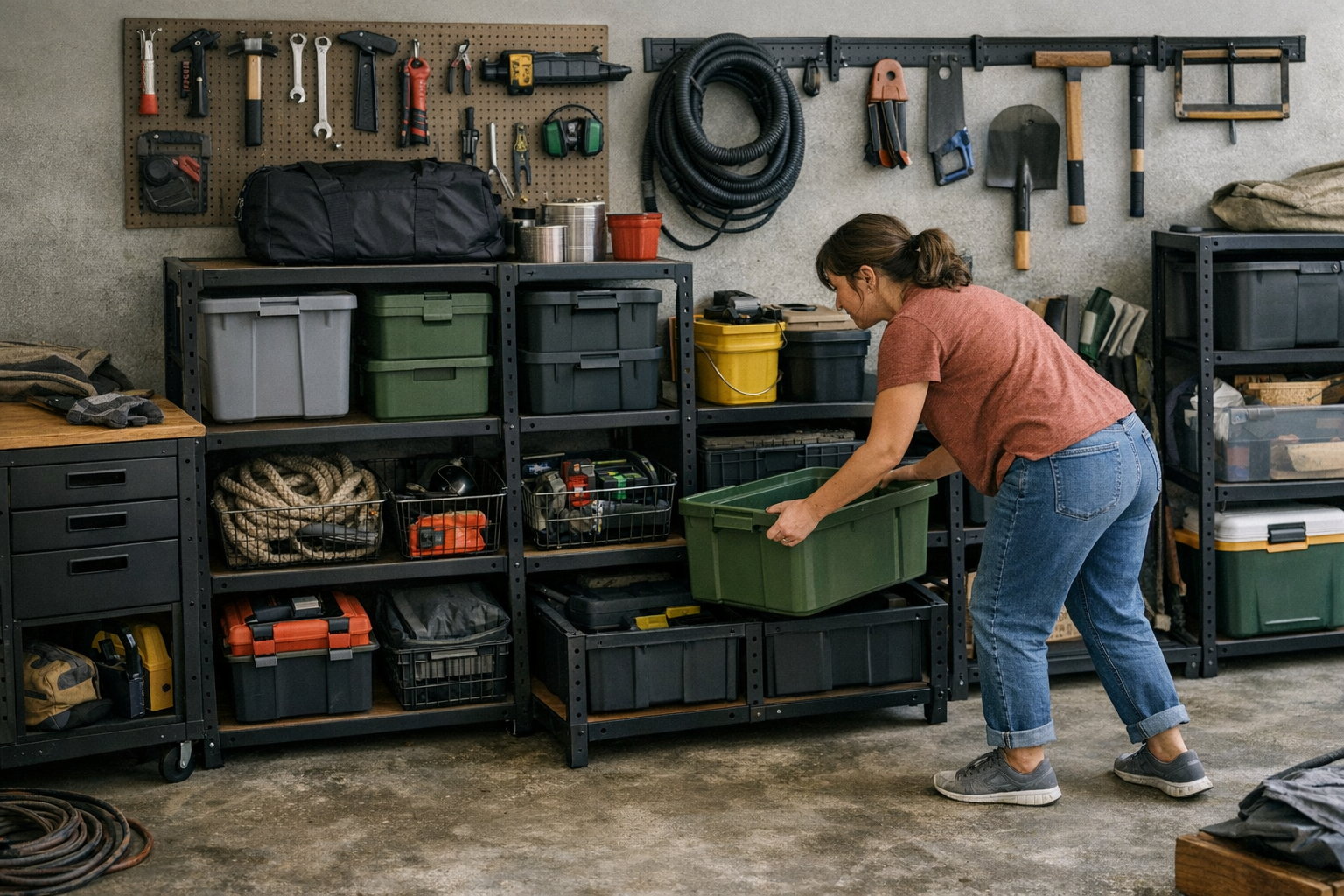
You don’t notice how tense wall storage makes you until you switch to floor-based shelving and feel it lift. When I swapped my strained overhead system for a modular bench and heavy-duty base shelves, the daily pattern changed immediately. Each bin landed with a solid thud. No forced balancing act to get a toolbox down. No checking whether the brackets were still tight. Every chore—moving parts bins, switching out seasonal gear, fetching an awkward bin of cables—happened in one clean motion.
This stability is what turns space into something you can actually use. If you’re hauling in muddy tools, moving sports gear in and out for the weekend, or stocking up for a month of projects, you want storage that absorbs the load from the ground up. Instead of letting gravity drag everything downward and crowd out the floor zone, floor-based storage expects the weight and makes it accessible. There’s no hesitation or need to brace a hand against the wall before removing a box. The clarity isn’t just visual; it’s in how you move through the area without thinking.
The Quiet Breakdown of Wall Storage Over Time
On paper, wall shelves and cabinets seem like a fix-all. In reality, their weaknesses add up quietly. Pulling down a heavy bin at shoulder height gets harder every week. Old studs and drywall anchors loosen; a loaded shelf sways, or starts to sag so that the sides don’t quite line up. Relying on overhead or wall-only setups invites a slow accumulation of awkward workarounds—sidestepping around overhanging corners, finding one zone that always collects overflow, or realizing you’re moving carts just to keep the path clear.
“Dead corners” appear: sections of wall that look available but are always blocked by stacked items on the floor below. Reaching around one shelving edge becomes a daily ritual. Resetting after a big project means endless shifting, as bins migrate down and living clutter spills into walkways. The once-tidy array is now a series of little choke points, and restoring order starts to feel like wrestling the layout itself.
One Month In: How Habits Expose the Weak Spots
Think through a typical four-week cycle: the initial setup looks great; bins lined up, gear in its place. By week two, you’ve started shuffling heavy items downward, assigning the overhead shelves to lighter, rarely moved things out of self-preservation. Smaller tools and loose pieces fill in cracks, and something almost always ends up in front of a cabinet you use the most. By week four, walkways are pinched. The rolling cart you need is blocked by a stack that migrated from a top shelf. A cabinet door is sticky from a slight lean. Returning items to their place often means detouring around a stumble spot or bracing a sagging rail before pulling something down. Familiar order has turned into a series of little interruptions.
Why Modular Floor Storage Changes the Routine
The main advantage of modular, grounded storage isn’t just the space—it’s the disappearance of hesitation in your movements. My own swap to a deep, floor-based system instantly freed an entire foot of usable walkway. There was no more squeezing past jutting shelving legs, no dodging a unit that had shifted or leaving items perpetually out “just for now.” Cleanup became direct: every bin slid back where it belonged, and the grab-and-return routine ran smoothly. Overflow didn’t collect in dead corners; the major zones stayed defined after every use.
Routine reset speed improves. You stop cycling the same boxes from place to place just to reclaim floor space. Instead, the system flexes to hold the load day after day. Small changes—spinning one unit sideways for better reach, using open vs. closed shelving to handle quick swaps—actually stick, because you’re not battling instability or awkward reach. The space starts to work with you, not against you, and the temptation to let clutter pile up fades naturally.
Recognizing When Your Setup Is Failing
If moving through your workspace means shifting a cart out of the way, sidestepping a sagging rail, or repeatedly stacking and unstacking the same bins, your setup isn’t suiting your real habits. Storage that demands constant vigilance—bracing, tightening, or reshuffling—signals a mismatch between what’s stored and how it needs to be used. Overflow piles and blocked movement tracks are silent alarms that the layout is slowing you down, not speeding you up.
Designing Storage Around Actual Routines
Wall-mounted solutions make sense for light, infrequently used items, or where wall height is all you have. But if your daily routine involves heavy, awkward, or often-in-motion gear, a grounded, modular setup keeps pace with real use—not just first impressions. Stable floor units absorb weight without drama, hold zones steady, and let routines run friction-free. Everything stays easier to reach, return, and reset—without a slow drift toward chaos.
A truly effective storage system isn’t about how clean it looks the day you install it—it’s about how much less it gets in your way after a month of real, repeated use. When you shift to solid, adaptable storage you reclaim not just floor space, but a workflow that survives the messiest stretches and the heaviest weeks. Routine tasks become smoother, resets are faster, and you don’t spend time dodging your own setup just to get work done.
Find more practical modular solutions at StackNest.