
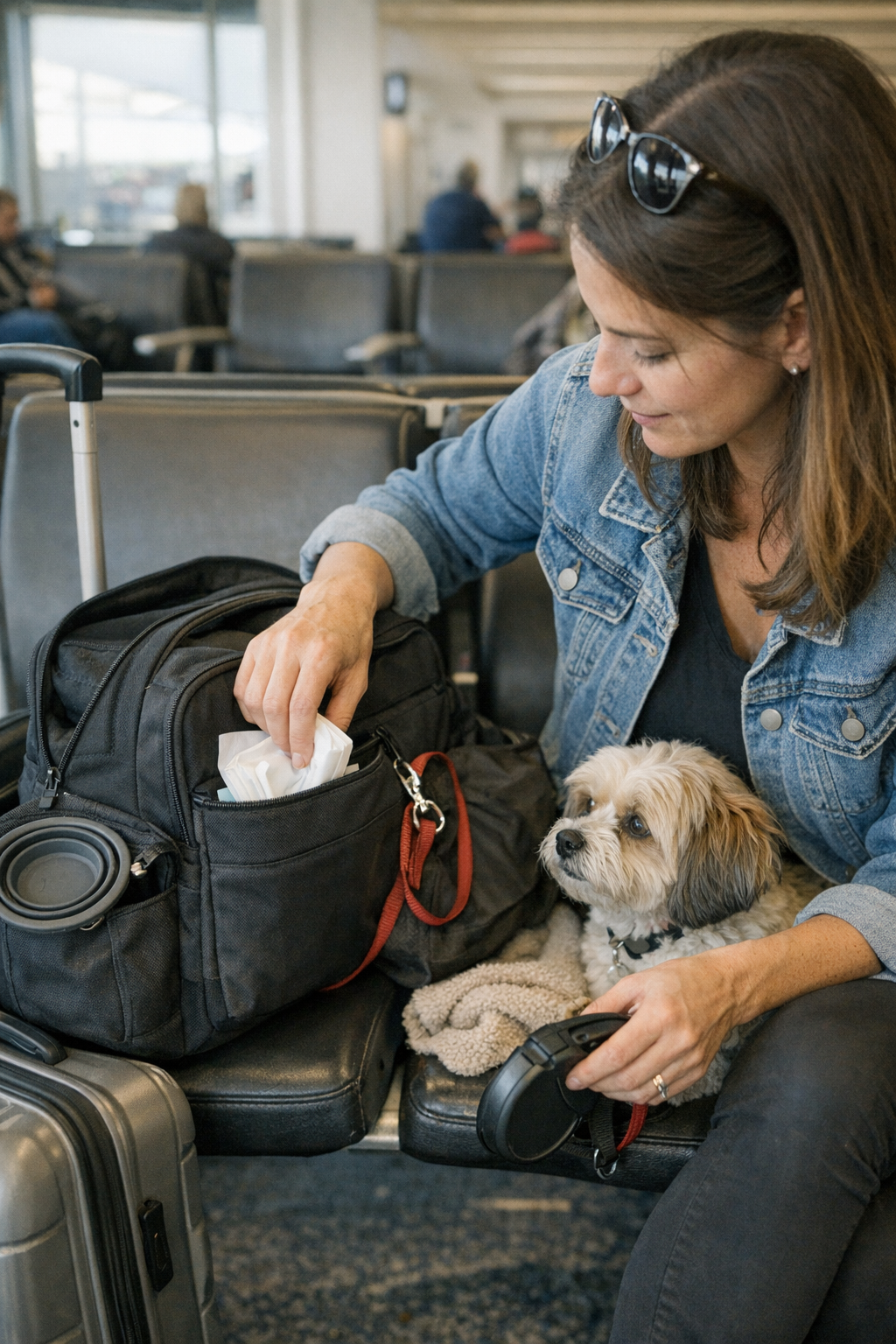
Here’s the truth every pet traveler runs into, usually before boarding: A pet travel bag that looked perfectly sorted at home can become a snag in your trip the second you land after security. That sense of “ordered and ready” shatters the first time you have one hand on your pet and one hunting blindly through a pocket, blocking the line or fumbling while your animal squirms. The difference isn’t how neat your bag looks—it’s whether you can actually reach what matters fast, again and again, in that looping rhythm of stop, dig, move, repeat. The experience reveals: for real travel, “organized” isn’t enough. It’s the structure that predicts friction or flow—a lesson you relearn every time you return to movement. This gap is where PawGoTravel gear quietly proves its value or exposes what needs to change next.
The Hidden Friction Inside Pet Travel Bags
The biggest mistake in pet travel packing: assuming that a tightly organized bag will naturally mean smooth use. Maybe it looked flawless lined up on your hallway table—leash zipped beneath a neat flap, wipes slotted deep, bowls packed at the bottom. But when you actually travel, organization is stress-tested through repeated moments of disruption: getting through security, shifting in a boarding queue, fielding small messes at an awkward gate seat. Suddenly, you notice you’re clawing past the same three flaps to grab wipes or leash, always at the worst possible time. The “well-packed” bag feels like a slow-motion trap.
A routine unfolds: You’re balancing your carry-on, your pet carrier twisting on your arm, and now you need a wipe fast. The wipes are under two zippers and a clipped flap. You release the leash—after fishing for the right metal clip—while your pet squirms impatiently at your feet. With every reach, every dig, your setup quietly drains your focus (and your pet’s patience) just when you need both steady. This friction doesn’t show in a photo but defines how stressful the trip feels by the third or fourth stop.
When a “Prepared” Setup Becomes a Bottleneck
This flaw in most “prepared” pet travel bags never announces itself at home, but travel exposes it fast. After the third line, the first unexpected clean-up, or simply another leash release for a jittery walk outside, the pattern is obvious: critical items are always buried. The wipes are under keyed compartments you forget. You’re guessing the right pocket for disposal bags—which always means opening the wrong one first. Even after you re-sort for the next stretch, the cycle repeats. You start every interaction slightly slower, slightly more frustrated.
The painful truth: Bags that hide essentials make every response slower at exactly the worst moments. The difference between items “in a place” and items “in the right place” becomes the main story of travel interruptions—especially with a restless or anxious pet.
Seat-Side Access: Where Real Comfort Is Won or Lost
Airport reality isn’t tidy. There’s rarely room at a terminal seat to reorganize or unpack. What you need: to grab top-use items instantly, without breaking your flow or spilling everything else into the aisle. One well-placed seat-side pocket (even a basic one) can outdo the fanciest interior arrangement—every single time the day derails slightly, every time you have to reset on the fly.
Picture a standard layover: your pet starts shifting, you realize there’s a cleanup brewing, you grab—and get snagged on three poorly placed zippers before finding wipes tangled with leash hardware. By the moment you’re ready, the window for a gracious, fast reset is gone. Each blocked reach doesn’t just waste time; it starts adding stress to you and agitation to your pet. The bag stops being a tool and turns into a recurring weak point in your routine.
The Subtle Cost of Every Delay
Speed isn’t the real win in pet travel. It’s about shedding all the extra, stressful decision points caused by poorly nested setups. Every forced dig—each moment hunting for a buried item—shows up not only in your posture but in how much mental drag you haul into the next stop. Your pet can sense it: tension rises, patience drops, and neither of you want to restock because you know you’ll be clawing at the same pockets again. That “friction” isn’t just annoyance; it’s a real, accumulating penalty on each travel segment.
Reshaping Your Setup: The Value of Predictable Reach
A small but decisive fix: assign one external pocket for your highest-frequency, highest-disruption items. The change is instant and recognizable. Instead of dancing through pockets each time things get tense, you reach for a spot you know by muscle memory—zip, grab, reset—no matter your position or hurry level.
The shift that matters: Place wipes, disposal bags, and a leash in this pocket—ignore symmetry, ignore how it looks when zipped up. That “imperfect” outside pouch will save you at every interruption, letting you handle messes or quick exits without fumbling or exposing your whole travel kit. Function trumps visual order here—it’s not about looking nice, but about shaving real strain off every single restart and stop.
What Should Stay Deeper in the Bag?
Not everything needs top billing. Reserve interior pockets for anything you’ll access only once: backup food, medical records, spare toys. The outer sections are strictly for what you’ll grab three or more times before your trip’s done. Get this division right, and you won’t be repacking mid-journey just because you needed one wipe or that leash—your most critical items live where repeated use demands them, not where a home organizer thinks they “fit.”
Recognizing Persistent Weak Points
No travel bag design is immune to repeated-use flaws. The same awkward zipper, the one item that keeps shifting, a comfort item falling out at the wrong stop—these problems resurface. Expecting perfection guarantees nothing but frustration. What matters is reducing the number of situations that force you to slow down, stall, or unpack just to get a simple job done.
Experienced pet travelers spot these sticking points: where the solution they packed only repeats old headaches. Sometimes it’s wipes still buried by habit, or a leash doubled up for speed instead of losing it under food. Adjusting even one thing—a swap from deep slot to outside pouch—translates not only to faster access but to a steadier, less cluttered routine across your entire trip.
Relief That Lasts Beyond the First Stop
A pet travel setup that works doesn’t just separate items—it holds up to repeated, stressful moments and lets you move on fast, whether you’re crouched in a crowded row or hustling to make a connection. The “best” bag isn’t what photographs best before you leave. It’s the setup you still trust after the third clean-up, the fourth boarding call, the fifth quick reset. That’s the moment where real travel relief appears—and your chosen organization starts feeling like freedom, not another hidden obstacle.
For real pet travel setups that are made for movement, visit PawGoTravel.