
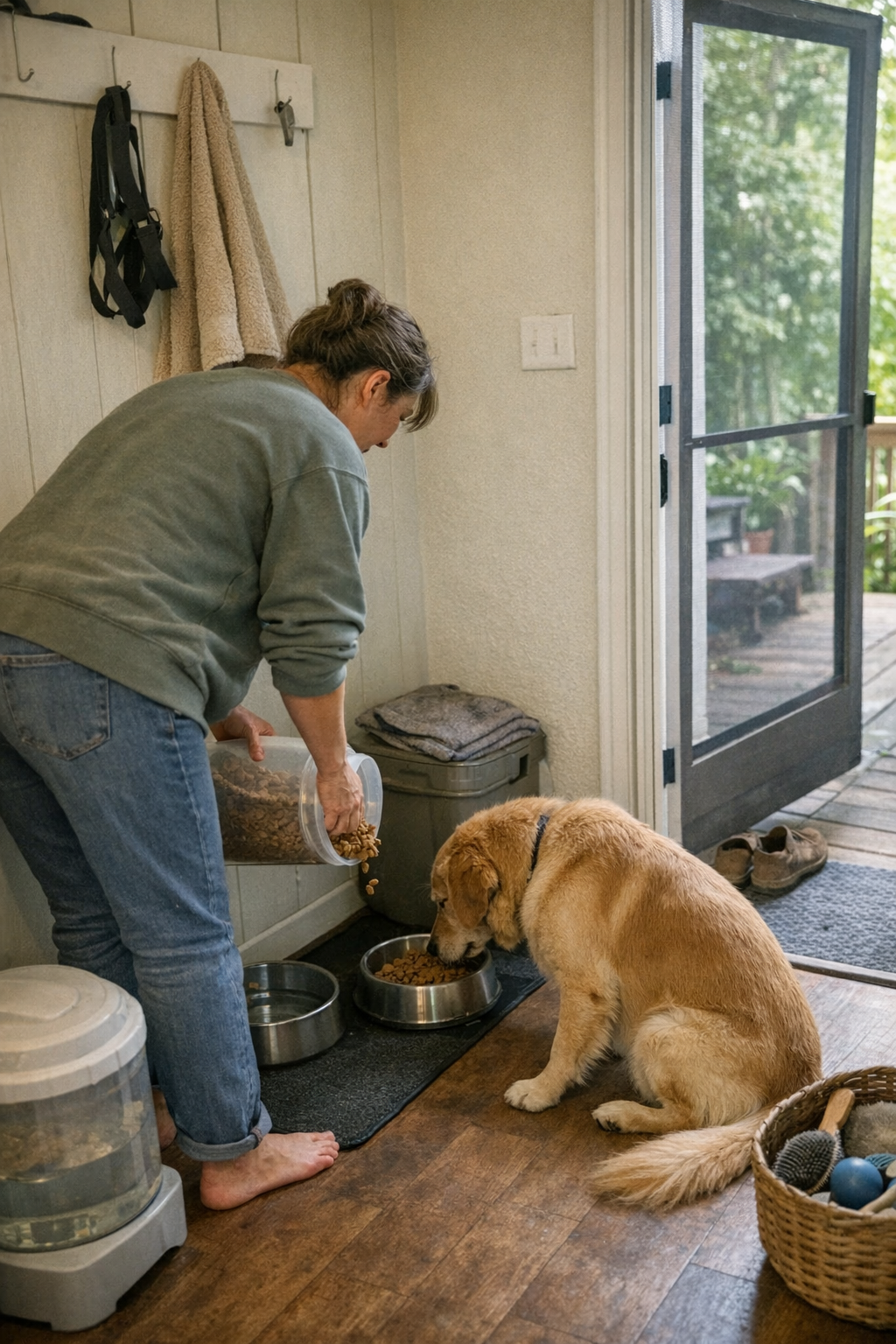
Daily pet care breaks down faster than you think. Bowls start out lined up and towels seem easy to grab, but it only takes a week before the water bowl sits blocked by stray bags or a brush ends up lost behind stacked bins. Ever realized you’re rooting through a kitchen shelf just to find the one scoop you need while your dog waits, eyes tracking every delay? These aren’t accidents—they’re signs that your feeding, cleanup, and storage setup is quietly working against you. Miss one routine reset, and what used to take ten seconds suddenly drags into a mini scavenger hunt, eating up time, testing patience—both yours and your pet’s—and leaving routines less calm than you planned. CalmPetSupply is built around this practical reality: a setup that works is one that survives daily repetition, not just photo day.
How Slow-Building Friction Interrupts Daily Pet Care
Friction in pet-care routines shows up as a string of missed beats—not dramatic, but wearing. Your food scoop ends up wedged behind cleaner bottles. The towel for muddy paws is tossed into the laundry and never returned. Your dog might hover near the door longer, uncertain whether the next step means a pause or a wait. After just a few days, routines that felt automatic get stickier, forcing small but steady interruptions that multiply as the week goes on. The reset you didn’t do yesterday becomes the snag you deal with today.
Repeated Use Scenes: Where Care Stalls
The weak points show up when you’re short on time—grabbing for the food bin, only to push aside storage boxes and kitchen odds to get to the scoop buried at the back. You notice crust around the water bowl because yesterday’s wipe-down got postponed, so today’s cleaning takes more effort. After a muddy walk, the towel’s missing from its hook, so your dog stands, paws on the threshold, shifting weight while you track it down. If daily-use gear is tucked away “neatly” but not within reach, each step of care spawns more reshuffling, more retracing—slowing routines, adding friction you don’t want.
Fixing one mess sometimes creates a fresh snag. That mat under the water bowl? Great for catching drips, useless if placed where it blocks the brush you need after feeding. Storing toys in a basket keeps the floor clear, but if it invades the corner used for late-night check-ins, you trade visible clutter for a bottleneck at bedtime. Arranging pet supplies to keep things looking clean can hide new interruptions just waiting for the next rush.
Acceptable Today, Tiring Tomorrow: How Routines Slip
A misplaced refill bottle goes unnoticed at first. A treat jar hidden behind bulk food feels like “no big deal.” But after a few cycles, you’re double-handling everything—clearing, fetching, re-shelving—just to get through basic feeding or after-walk wipes. Clutter shifts from visible mess to invisible slow-downs: one stubborn towel repeatedly vanishing for laundry, one scoop never put away where you expect it. These small lapses grind down what should be simple flow, turning care into a repeating drag.
Every time you refill, clean, or go to grab a core item and end up making an extra trip, you reinforce tiny barriers your setup should’ve erased. Seconds lost to searching add up. Calm routines turn choppy, less predictable, and both you and your pet notice—the energy difference creeps in long before anything looks truly out of order.
The Difference Between Tidy Looks and True Flow
A pet area can look spotless and still stall you out. That row of brushes by the door? Not much comfort when you’re carrying groceries, juggling a leash, and forced to dig for the right one with your elbow. The kitchen may look neat, but if the food bin is tucked in the lowest, furthest cabinet, you spend each meal fishing for basics while your dog circles, nose to the floor. Real smoothness isn’t about clean lines; it’s about grabbing what you need, where you need it, without a stop-and-search routine.
The warning signs are clear if you notice them—pauses at mealtime, slow walks to the water bowl, little detours made on autopilot just to complete one “easy” chore. These are your system waving a flag: what looks managed isn’t actually working smoothly when tested for the fourth, tenth, or thirtieth time.
Practical Fixes: Adjusting Your Setup for Daily Ease
The most effective changes target the spots where friction starts. A towel hook installed on the path from outside to in saves you the step of searching and gets muddy paws handled before they ever land on your rug. Keeping refill bottles and food bins grouped together—right where you prep, not wherever they fit—eliminates the detours that drain energy on busy days. Wiping the water bowl as you refill cuts down on the heavier scrub needed after days of buildup.
Make sure towels, bowls, treats, and basic grooming tools are within arm’s reach of their action spot. Don’t let essentials migrate behind seasonal clutter or “backup” gear you barely use. When you adjust these small details, daily routines speed up, reset work drops off, and your dog or cat responds—faster, steadier, more predictably. You notice fewer snags at feeding, after walks, during late-night checks; what’s supposed to be quick actually stays quick, instead of stacking small setbacks.
Signs You Need a Pet Care Reset
If you catch yourself pausing to search, rerouting between kitchen, closet, and door, or watching your pet hesitate at the same spot every morning, pay attention. These are hints your system is slipping—pet routines testing weak links that get worse with each cycle. You don’t need a disaster for friction to pull energy out of both you and your pet.
Even organized routines unravel when hidden gaps pile up. Consistent setups eliminate these slow leaks—less by looking perfect, more by delivering a repeatable, low-effort reset every time. When the basics are actually easy to reach and return, daily care holds together with less grind and more calm across the day.
The trick: View your setup honestly, the way it works under pressure, not just on a freshly cleaned Saturday. Adjust sooner, not just when something finally breaks down. A home that stays calm in both appearance and action is one you and your pet actually want to come back to, again and again.
Find practical tools and everyday fixes for these routine gaps at CalmPetSupply.