
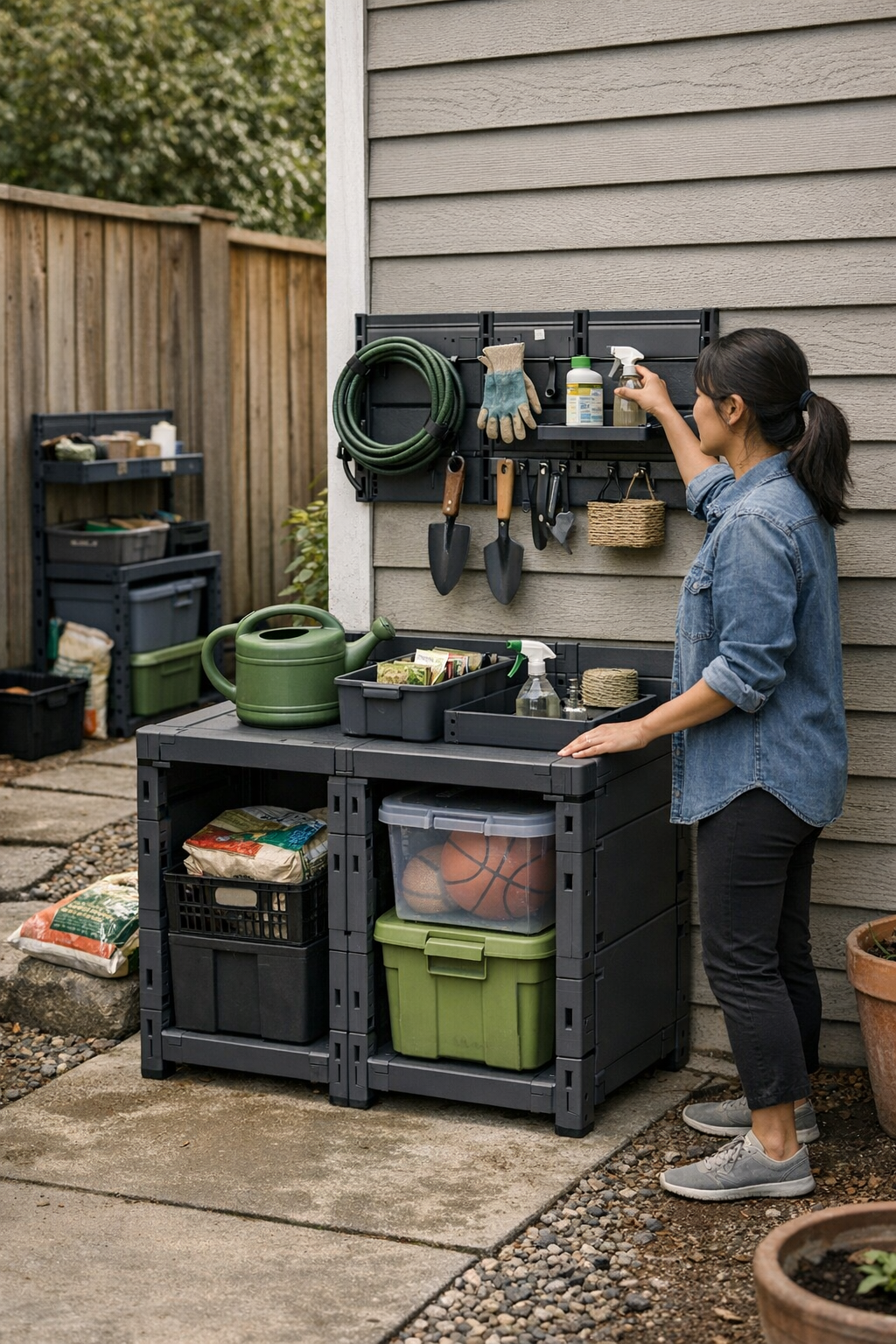
Most outdoor storage holds up for exactly one day—right up until you start actually living with it. The problem isn’t size; it’s the churn. Small yards, garage thresholds, and side-yard strips see tools out, gear in, kids darting by, another day’s stuff crowding the path. Neatly packed bins and wall hooks seem organized at first, but after a week of normal routines, walkways close up, corners fill with overflow, and returning a single thing means shifting two others just to squeeze by. “Organized” turns into “obstacle” fast, and the space meant to free up your yard becomes an unpredictable, barely navigable zone you’re stuck resetting again and again.
Why That One Big Storage Unit Always Bogs Down
The appeal is obvious: one large shed or bench, floor clear, everything tucked behind doors—no visible clutter. But as soon as real use hits, the cracks show. The gear you need often—soccer balls, hand tools, watering cans—shifts toward the front or piles onto the floor. Meanwhile, bins of last season’s pool toys or camping chairs settle in and refuse to budge, clogging anything behind. Suddenly, the route from patio to storage shrinks from an open path to a squeeze and shuffle.
Grab a tool? You’re hauling out half the wrong items just to reach it. Returning a garden stake or backyard frisbee means wedging it above tall bins, hoping nothing comes tumbling down. One dead corner quietly collects the overflow—now you’re blocking yourself in just to get what you actually use. Every reset becomes a clumsy shuffle: moving one stack, re-tucking another, and losing patience before you can even shut the door. Instead of making things easier, the setup works against your routines.
The Two-Zone Split: How Real Yard Storage Actually Survives
There’s a reason most tidy setups fall apart: single-zone storage ignores real-life flow. What fixes it is physical or visual separation—one clear zone for everyday gear, another for the stuff you won’t need until next month. This isn’t about expensive cabinets or complicated modular tricks; it’s about moving essentials forward, pushing long-term gear out of the main lane, and keeping return flow fast, especially when you’re just grabbing or dropping something on a busy day.
Daily-use pieces—hose ends, gloves, favorite balls—go right where your arm naturally lands: open hooks, shallow bins, easy shelves in the direct movement path. Bulky or off-season gear gets pushed down, to the back, or into a low box—out of walkways, out of mind until the weather changes. Without this split, out-of-season stuff creeps up and takes over. Soon your fastest route to that one tool is blocked—sometimes permanently—by a loose bag of mulch or a cover for a pool that’s in storage for good.
Typical Trouble: Corners That Keep Getting Jammed
Think of a fence-line corridor or that sliver between the house and driveway. The initial setup looks smart: bins on the ground, hooks overhead. For the first week, all good. Then rain hits, kids rummage, and suddenly, small items drift everywhere—ball pump lost behind bags, gardening gloves shoved onto any free hook. Getting the mower out becomes a puzzle, with tarps and buckets forming a barricade. Each day, non-essential clutter pushes farther into the path, until a shortcut becomes a slow detour. The problem isn’t how much fits, but how easily things move through and get returned—awkward movement, blocked access, and clutter always seem to sneak back in.
The Simple Fix That Changes the Routine for Good
The breakthrough comes with a clear, usable split. Imagine a slim wall rack mounted right at arm height above a low box along your main outdoor wall. No extra footprints, just a smarter vertical sequence. Everyday gear—balls, sprayers, hand tools—live on the rack and hooks, always in sight and easy to drop back in seconds. The box below becomes the slower lane: stash the folding chairs, extra hose, winter covers out of the way, ready but invisible in regular traffic.
The result isn’t just tidy—it’s less reset and more return. The path stays open, no matter how disorganized that box gets inside. Drop-offs never block the entry, and spontaneous backyard games or quick project grabs don’t trigger a stack collapse. Even at peak season, flooded with new gear or muddy shoes after a storm, the split prevents spillover from hijacking your walkway. Resets shrink from a 15-minute chore to a handful of seconds: a quick scan, a small nudge, done.
How to Actually Decide What Stays Up Front
Rely on a living rule: If you touch it every week, it gets a prime spot. Wall hooks and the front of open racks are for daily reach. If something’s cold since last season, down, back, or into storage it goes—downward, deeper, stashed. During busy stretches or summer rotations, this keeps high-use things fast to find, while seasonal bulk just sits out of the way, not silently coiling into new obstacles.
The Untold Cost of Single-Box Thinking
Nothing slows a backyard routine like trying to cram daily and rarely used gear into a single bin or entry. Each rush through for a rope or basketball means “excavating” three things you barely remember storing. Wall space gets used, but racks overflow with random stuff that’s months from relevant. Before you know it, the center of the area is a pile, the path narrows, and the effort to tidy up grows every day. Square footage stays the same, but movement feels tighter, blocks pile, and actual use drops. “Storage” becomes a synonym for reset fatigue.
What’s Different When It Just Works
The right setup doesn’t just look tidy—it moves with you, day in and day out. After twenty backyard shakeups, sudden rain, or a string of family visits, things still make their way back without drama. The two-zone split keeps essentials flowing and clutter contained, even as routines change or gear multiplies. The walkway stays open. The wall space finally makes sense. No more full-scale reorganization just to find a trowel after a long week. It’s a daily improvement you can see: resets shrinking from dreaded chores to reflex habits, the frustration of blocked paths replaced by real ease. The setup works—not because it stores more, but because it stores smart, and you can finally trust it to handle real life as it actually happens.
For practical outdoor storage that fits real routines, explore more at TidyYard.