
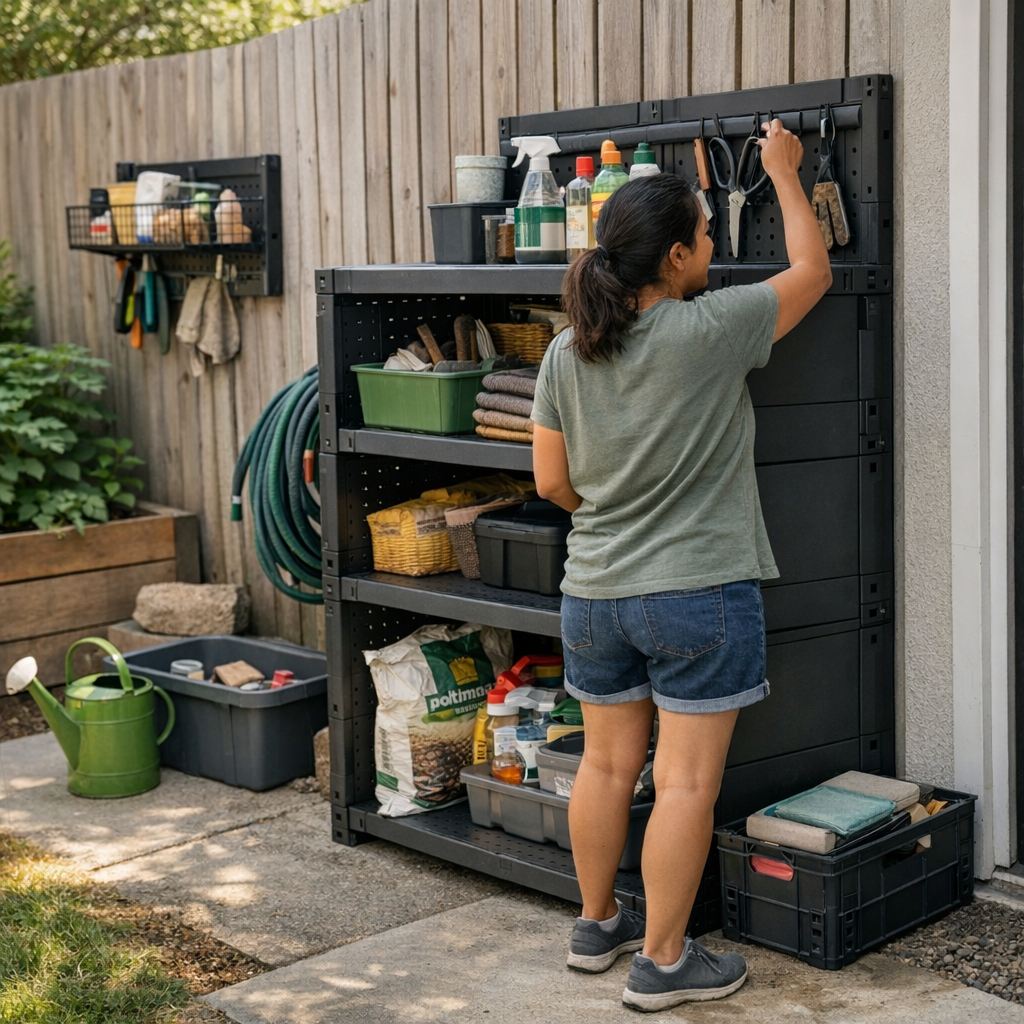
Anyone who uses a backyard, side path, or patio knows the drill: things look organized at noon, but by sundown, the order slips. You sweep, reset, and tuck gear away, only to watch stray tools, garden shoes, and kid toys wander back into your walkways. It’s not that you don’t have enough storage—it’s that every return trip is just awkward enough, every bin just far enough out of the way, that clutter reclaims the space between resets. A patio can look perfect for a minute, but the constant flow of drop-offs, shortcuts, and “I’ll get it later” piles keep blocking your movement and stretching each reset into a minor battle. If your outdoor setup falls apart as soon as people get moving, this isn’t a storage problem—it’s a flow problem, and it shows up most clearly where your routine keeps getting interrupted.
Why Setup Placement Decides If You Stay Organized
It’s easy to celebrate the arrival of any new outdoor cabinet, bench, or box as “the solution.” But after the first week, the real test is visible: does junk still stack up where you step out, or does it finally make it to a proper home? Placement wins over size almost every time. Durable bins and wall racks mean nothing if they’re past a barrier, wedged behind something heavy, or out of direct line with your path. Watch what happens at the end of a task. If tools and toys land on steps or get parked in corners anyway, that’s your signal—your storage spot doesn’t match where your routine ends.
Picture this: you toss your mower gloves onto whatever’s nearest after you’re done, even if you bought a special weatherproof box for them. Maybe the storage bin “fits” on the far side of the patio, but are you really going to detour past a row of chairs? Or do the gloves end up on the door handle again, until the pile quietly grows into a mess no storage bin ever seems to fix?
How Overlapping Outdoor Zones Turn Convenience into Chaos
Real outdoor spaces ignore single-use logic. The hose sits by the play area, the garden trowel follows you up and down the fence, and the gate’s both a shortcut and a traffic jam. Where these zones jostle together, small frictions multiply. A wall hook that’s right by the exit? Used every time. A shelving unit tucked behind your grill? It turns invisible. A storage bin hidden behind a planter becomes another thing to move—so the stuff that should live inside it just stops nearby, again and again.
Good intentions fall flat the moment your setup blocks your own movements. Shuffle around a bulky pot just to reach the bin; squeeze behind folding chairs to get to the boot rack; slide a trash can out of the way just to hang up a rake. The longer the route, the more stuff collects “for now”—at the back door, on the step, along the fence—and the more each area becomes a holding zone for things that never quite make it home until your next full reset. Eventually, the “organized” corner is always almost full, but never actually clear.
Real Scenes: Where Things Fall Apart (Or Finally Fall into Place)
The Almost-There Storage Drop Spot
Imagine Saturday afternoon: you’ve cleaned out the beds, tools in hand, sweat on your brow. Your heavy-duty storage box is three patio stones beyond the table. But with your hands full and the grill blocking the route, you drop your trowel and gloves onto the nearest open chair. Later, garden twine, bags, and shears join them. By the end of the week, the seat is a clutter monument, and the real storage stays empty—again. The chair isn’t “storage,” but that’s where your routine actually lands.
One Good Setup Shift Changes Everything
Then comes the shift: after too many resets and too much lost porch space, you move your rack from its “out of the way” spot behind the mower to right beside the patio exit. Now, the routine meets the storage, not the other way around. There’s no need to sidestep, shift, or backtrack. Suddenly, tools land on hooks, gloves don’t migrate, and clutter shrinks without an extra thought. It looks less curated, maybe, but the yard actually works the way real people move through it.
Spotlight: Efficiency Is About Movement, Not Just Space
Photos of “organized” patios miss the mess after one actual weekend. The true test isn’t how it looks once—it’s what happens right after any day of use. If keeping things tidy means stepping over a hose, pushing aside a planter, or opening a sticky cabinet, you’ll end up with catchall corners that just recycle the clutter each week. Movement matters much more than capacity.
This isn’t about fewer possessions or fancy new models. It’s about matching your return path to your storage location. If your route to the trash bins becomes the natural place to drop off gloves or tools, set up there—even if it throws off “the look.” Routines always beat intentions. The right setup shortens every reset, keeps things off the floor, and prevents the hidden overflow from circling right back to your main walkways.
Simple, Real Tips for Reducing Setup Friction Outdoors
Test with your actual routine—don’t guess. Walk the path from yard to step with your hands full. What do you drop, and where? Place storage right there, not just where it’s hidden or pretty.
Put grab-and-go basics where you always walk. If a tool or shoe gets carried through the side yard every time, store it on that path—even if it means a hook on the fence or a small caddy on the gate post. Convenience always wins over appearance in daily use.
Don’t count on awkward corners to cure clutter. Gaps behind trash bins or the squeezed space between the shed and the fence will suck in overflow that you never want to return to. If you wouldn’t go out of your way to use that nook, don’t expect anyone else to either. Target the natural pause points instead, even if they aren’t where you wanted your “nice” setup to land.
Matching Structure to Your Real Routine Keeps Clutter Away
Forget the fantasy of one huge wall unit or an engineered system that never gets in your way. The best setup is the one you’ll actually use without thinking. This matters every week: less reshuffling, fewer items stranded where you trip over them, and a clear exit path even after a busy weekend. A good outdoor organization system shouldn’t ask you to work around it—it should fade into the background, reducing effort and shortening every reset, not stretching them out.
For outdoor storage, wall systems, and practical modular setups built for move-through, not just move-around, see what fits your real habits at TidyYard.