
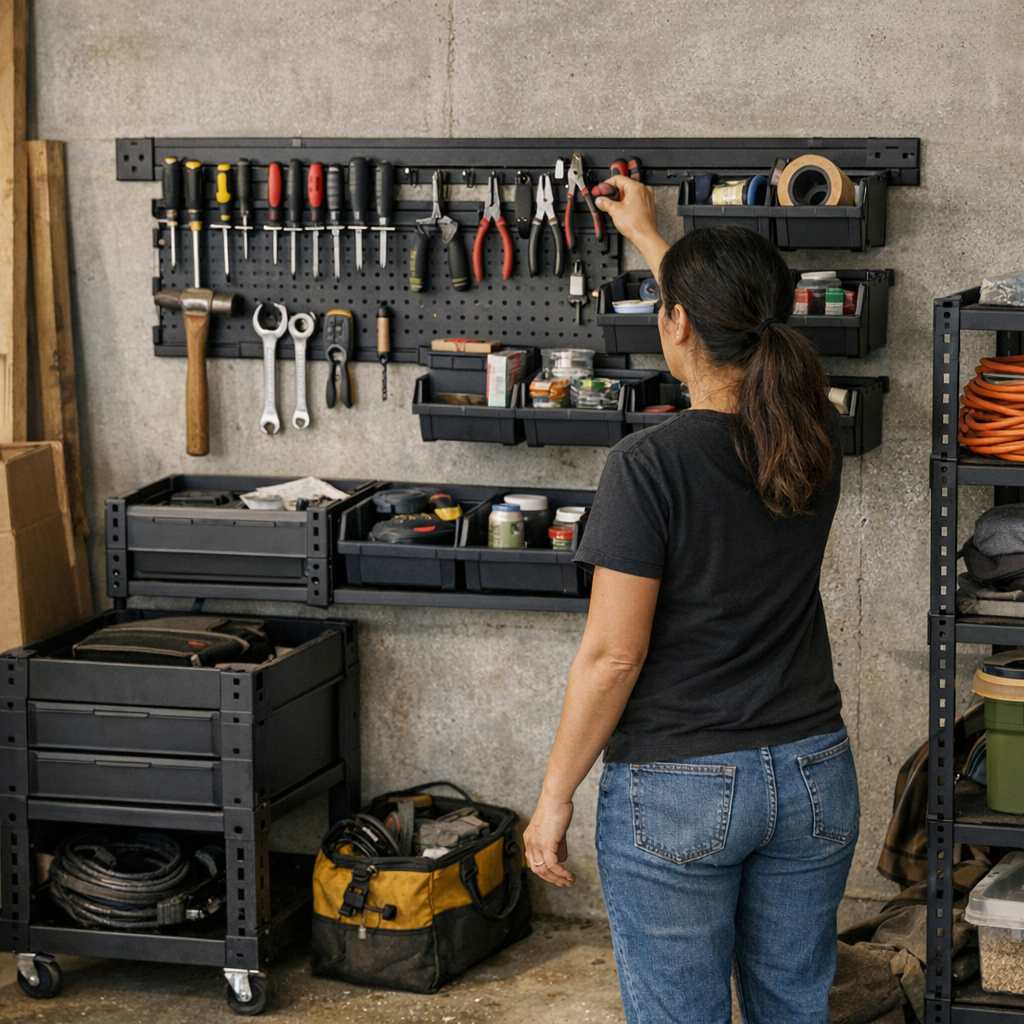
The day you install a modular wall storage system, everything feels possible. The chaos of random piles and misplaced tools gives way—at least briefly—to crisp lines and clear floors. You rake in that first rush of satisfaction, walking a path that didn’t exist before. But what the new setup looks like on day one and how it works by week two? That’s where the real test begins. What feels orderly now can quietly slide back into friction: a bin that blocks your reach, a cart that always seems parked in the way, corners that become dumping grounds just out of habit.
That “Fresh Setup” Feeling—And How It Fades
The first day, you admire how the rails align, how every hook and bin looks like it was made for the wall. You stand back, floor clear, the bench visible for the first time in months. But daily use quickly chips away at the honeymoon. You find yourself swinging wide around a cart that used to sit neatly out of the way—or contorting to reach past a cabinet edge, again. That last rail, full of hope and space, morphs into a landing pad for odds and ends you can’t be bothered to sort.
It’s never one big issue—just a steady return of small workarounds: awkward reaches, bins with no true home, shuffling gear from spot to spot just to get through the day. The “order” isn’t gone, but it’s leaking at the seams.
When the System Begins to Resist
You start a project, hauling out parts and tools, and suddenly find yourself detouring around a floor cart that’s wandered into your main route. A corner section designed to keep gear up and out of the way slowly turns into a blocked zone, or worse, a no-go zone. Those cleverly mapped wall rails sometimes force you to stretch or sidestep, making you realize: fitting everything on the wall is not the same as making the room work.
This is where even “modular” becomes misleading. Storage that looks good standing still can oppose your habits in motion.
Everyday Friction Has a Cost
A scattered moment here, a pause there—these add up fast. A container set a bit too high becomes a chore every time you need that tool. Old paintbrushes and zip ties crowd a corner you meant to keep clear. Meanwhile, the hand tools you use daily start creeping back onto the bench because it’s faster than crossing the room to fetch them. You find yourself losing seconds—then minutes—to needless shifting and repeated shuffling. The real drain isn’t dramatic, but it’s permanent: resets take longer, and your “organized” system starts feeling like just another thing to manage.
The Invisible System—Storage That Stops Being Work
What separates a setup that lasts from one that just looks good for a photo? The best storage nearly vanishes in practice. You grab the wrench off the wall without pause. The floor stays open, not because you’re guarding it, but because your flows naturally keep it clear. After a day at the bench, reset means a handful of movements, not a full-scale re-sort. Everything you actually use lives in arms’ reach, not exiled to a rail across the shop because that’s where space was left.
True modular efficiency comes from listening to use, not measuring shelf space. Choke points, awkward clusters, and overflow zones stand out fast if you pay attention. The real test isn’t day one’s tidy look—it’s whether your space stays easy weeks later, even as projects change and routines get messy.
Real Friction: Scenes You’ll Recognize
When Mobility Becomes Inertia
Picture this: A rolling cart, meant to make things easier, sits next to your main workspace. It’s loaded with drills and cables, maybe half a toolbox perched on top. For a few days, the arrangement works—until you notice you’re always nudging the cart aside just to get by. Sometimes, you return from the other end of the bench and the only path is blockaded. What was a “flexible zone” is now an obstacle, demanding extra steps every single time. Movement through the room breaks down—slowly but always at the worst moment.
Dead Corners: Where Good Intentions Go to Die
That corner section you installed “just in case”—far enough from the daily action—soon becomes the exile for gear with no clear home. It’s where masking tape, leftover hardware, paint roller sleeves, and the odd single-use clamps wind up. At first, you ignore it. Give it a month, though, and that overflow eats up prime wall real estate and muddies the system. Even disciplined setups bleed efficiency here. The tell: you find yourself reshuffling the same pile, over and over, to free up barely a hand’s width more space elsewhere.
How Small Tweaks Unlock Big Improvements
The fix rarely means tearing up your whole system. Spot the recurring friction—where motion stalls, where bins stay empty or useless, where carts keep getting in the way. In one real shift, simply moving daily-use drivers and pliers off a mobile cart and onto a mid-wall rail cut several minutes from setup and shutdown. The “problem cart” was sent to a utility corner for long-term storage, restoring clear access to half the workshop and ending the ritual of reshuffling. As a result, cleaning up at the end of the day turned from a 15-minute sweep into a two-minute glide.
Here’s a simple rule: Your layout should respond to your routine—not the other way around. Spend a week noticing the actions that feel clumsy. Shift the bin, swap the hanger, drop the shelf to a more comfortable height. These adjustments rarely require more than a screwdriver or a level, but the payoff keeps growing—less clutter returned, more flow gained.
The Real Mark of a Working System
An organized space means nothing if you keep tripping over “solutions.” The true win isn’t in pictures or diagrams—it’s a space you stop thinking about because it simply works: flows remain open, access is clear, nobody’s bottlenecked by a rolling cart with nowhere to park. Every time a reset is quick and you don’t have to reshuffle or rethink, your system has proven itself in real use.
Every space reveals its own flaws and fixes only after repeated use. Instead of chasing the perfect layout, aim for one that quietly fits your actual habits. Tune, nudge, shift—until order feels lived-in, not just installed.
Visit StackNest for practical modular storage solutions that fit real work, not just the plan.