
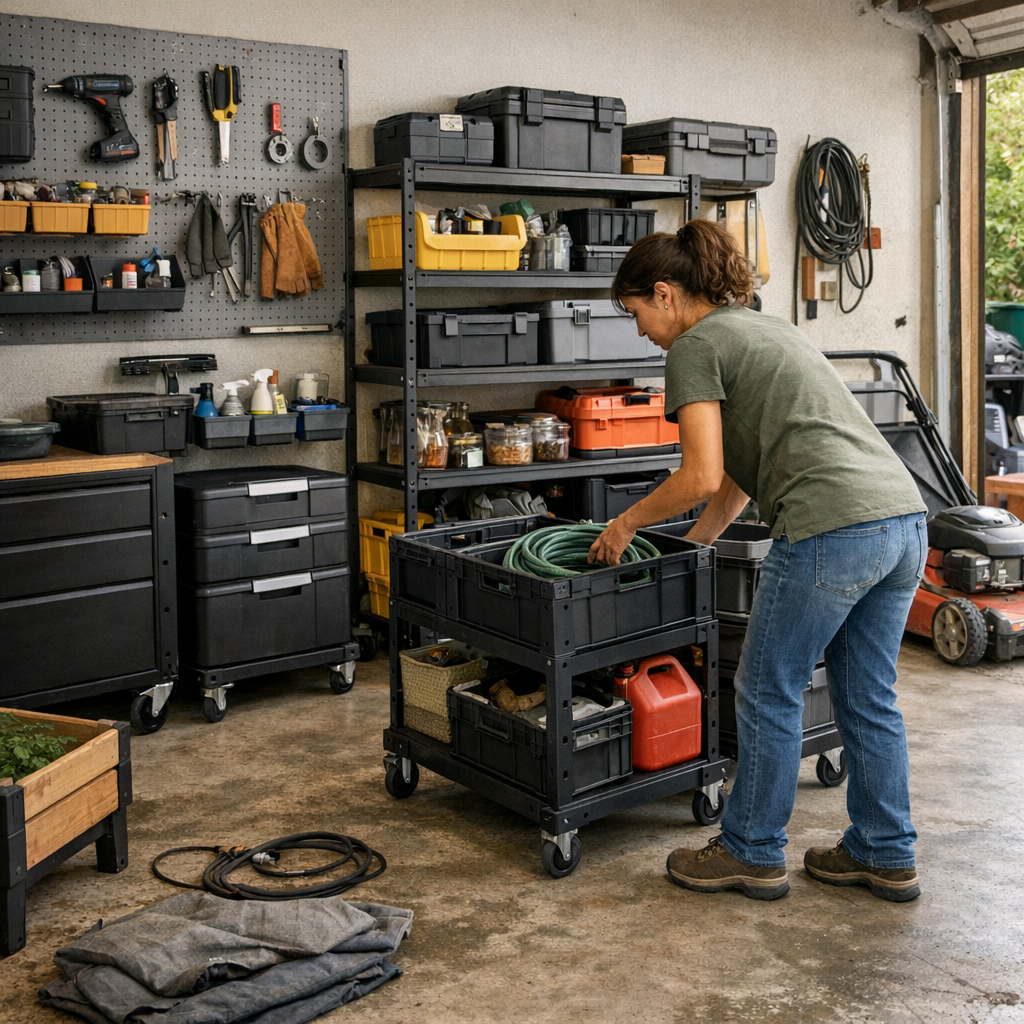
The illusion of a perfectly organized garage, backyard, or workshop doesn’t last long. On setup day, it all looks immaculate: cabinets pressed to the wall, shelves aligned like a showroom, bins snapped flush into every corner. But the moment real life kicks in—hauling out heavy tools, dropping garden bags after a muddy job, or searching for that lost socket—the cracks show. Gear piles up in odd corners, paths get cluttered, and “organized” starts to feel like just another obstacle. Storage meant to make things easier turns into the main source of friction: blocked movement, constant reshuffling, and frustrating dead zones you never planned for.
When Form Collides With Function
The difference between “looks organized” and “actually works” sharpens with every use. Tightly packed cabinets are satisfying on day one—until you need to grab a leaf blower from behind two stacked bins, or squeeze into a corner to plug in the shop vac. The next day, you’re tiptoeing past a row of unmoving cabinets just to mop up a spill or retrieve hose fittings for the backyard. Searching for one rarely-used tool becomes a minor excavation; putting away a single item means shuffling three others first. The so-called finished system quickly exposes its weak spots once routine sets in and the space stops flexing to fit each job.
It doesn’t take a major project to highlight the problem. Rolling out a mower from behind a fixed shelf, untangling an extension cord wedged between wall and bin, or trying to sweep up sawdust trapped behind a heavy cabinet—these “minor” frustrations add up. By week three, the friction of accessing what you need can undo the hours you spent getting organized in the first place.
Fixed Storage: Why “Set and Forget” Doesn’t Work
Walk into any garage with a wall of built-in cabinets, and you’ll spot it: the overflow. Stacks of odd-shaped boxes on top, seasonal gear squeezed into gaps, cords draping awkwardly over closed doors. Those static units become permanent blockers. Outlet hidden? Prepare to awkwardly reach around a cabinet edge—again. Need the pruning shears behind a stack of pool floaties? Move one thing, then another, then another. Returning items starts to feel like an extra chore rather than a reset, and every tidy-up after a project drags out as you negotiate cabinet footprints you can’t shift.
The contrast with flexible storage is immediate. Need a clear route to the back wall? You simply roll the cart aside. Want the hose reel for an unplanned garden job? You can swing the shelving unit out of the way, no heavy lifting required. Adapting the zone for new equipment or rearranging for a seasonal change doesn’t mean tearing down your setup—just a quick adjustment. That means resetting after a long session is actually doable, not another hour lost to pushing heavy cabinets or repacking tight shelves.
The Trouble with Dead Zones and Overflow
Nearly every real-world garage or workshop hides at least one “catch-all” corner—a spot where items accumulate and never seem to migrate back. Look closely and you’ll see the pattern: these dead zones almost always form in the shadow of static, hefty storage pieces. That solid wall of cabinets creates awkward gaps along the floor and in corners that turn into unofficial dumping grounds for overflow—bags of mulch, last season’s decorations, extra hoses, or half-used paint trays. These are the opposite of high-use spaces; you end up bending awkwardly, shifting two things to reach another, or abandoning the cleanup entirely because it’s just too much work to unearth the bottom layer.
The problem isn’t laziness—it’s the fixed footprint. When every storage unit feels bolted down, routine shifts become hassles. Bringing in a new tool means stacking it wherever it fits, not where it belongs. Sweeping up means working around everything instead of just clearing a lane. Over time, the thoughtful “layout” gets clogged, and you lose track of both space and stuff.
Real Reset Speed: The Five-Minute Versus Fifty-Minute Cleanup
A workshop owner once swapped a long wall of anchored cabinets for just a few sturdy rolling shelves and a fixed corner unit. Suddenly, the end-of-day reset went from a dreaded marathon to a breezy sprint. Paths could be cleared in moments; the back wall was within reach without a massive unload. Returning stray hand tools didn’t mean shuffling bins; zone swaps for the changing season became a matter of minutes. That small change—mobility over permanence—cut cleanup time in half, and made the space feel accessible again instead of hostile.
Mobility and Modularity: The Routine Changer
Too many people imagine mobility is just for light gear or small spaces. In reality, it’s the release valve that keeps busy zones from locking up. Wheels on a cart mean you can slide supplies to whatever project needs them today—and bring them back without a full reshuffle. Modular shelves let you squeeze in a last-minute plant haul or adapt for outdoor gear when the weather turns, without rearranging your whole setup. That ability to move things on your terms—without heavy lifting or frustration—is what makes a space workable in real life.
Take the practical route: don’t fill every corner with something you’ll dread moving. Keep a lane open. Deploy carts and movable bins in “traffic” spots, not just off to the side. Notice which zones collect the most overflow, and swap those pieces for something on wheels or with handles. A handful of modular elements can clear persistent clogs and give you the flex to actually enjoy the space you worked hard to organize.
Usable Organization Beats “Perfect” Organization
Spaces with a pulse—garages, workshops, mudrooms—are never spotless for long. A smart storage system isn’t the one that stays photo-ready; it’s the one you can actually reset after a Saturday project or a storm-driven pile of gear. The true win isn’t about untouched surfaces, but about clearing your path quickly, keeping zones flexible, and avoiding the slow creep of permanent mess.
Mobility and modularity might look unimpressive on setup day, but over time they keep your storage working instead of just sitting. The difference is obvious: less blocked space, less overflow, a layout where you can actually get stuff done. That’s not showroom-perfect, but it’s unmistakably better—and it’s a setup you’ll want to use, week after unpredictable week.
Find practical, adaptable storage for garages, workshops, and backyards at StackNest.