
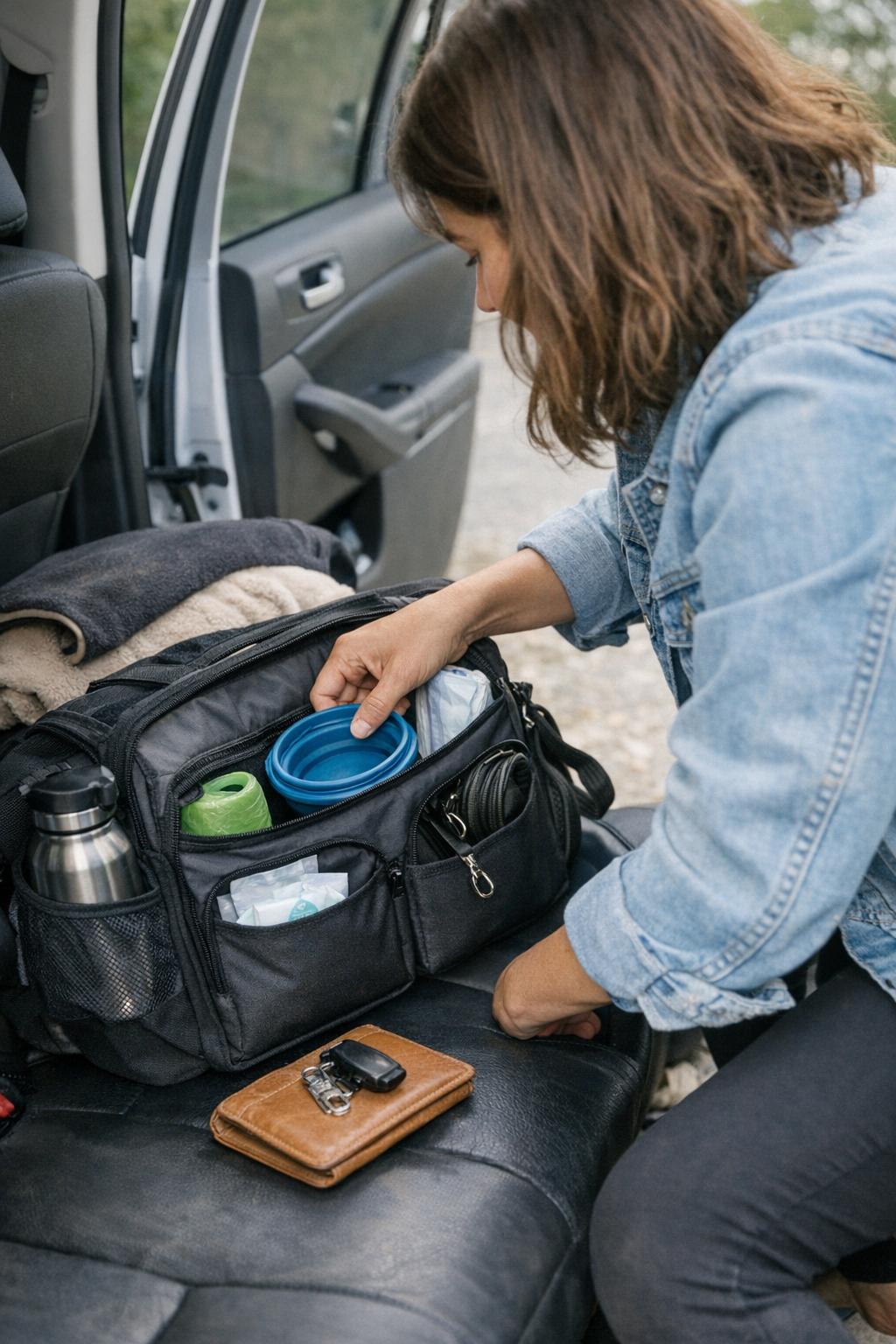
The illusion lasts until the second stop. You set out with a travel bag that seems perfectly arranged—every leash, treat, and wipe in its own space. But the moment you reach for a waste bag while holding a leash at a busy curb, organization cracks: the wipes shift, the snack pouch spills into the comfort mat, your keys wedge under a folded bowl. What felt “ready” at home quickly mutates into blocked pockets and clumsy reshuffling. Real pet travel exposes these weak spots, not at the first stop, but over every repeated grab, dig, and quick restart—and the right structure makes all the difference in whether you’re stalled or moving.
Where Pet Travel Setups Start to Fail
Organization at home is easy—each accessory has a spot and nothing feels out of reach. But start moving, and the neat pack loses its logic. The leash goes in and out. Treats disappear between layers. One rushed stop and your wallet or phone is suddenly impossible to reach under a tangle of dog gear. Packing thoroughly only helps until the first real-world stop—after that, each new reach, return, or tuck makes the original layout less workable.
The breakdown starts subtle. You dig for a waste bag and end up dragging out a leash. Grab a snack and a bowl catches on the zipper, holding everything else hostage. Even before anything’s truly missing, friction sneaks in—forcing you to reshuffle for every routine pause.
The Repetition Problem: How Overlap Sneaks In
Most travel setups don’t fail on the first use—they quietly unravel by the third. An outer pocket meant for wipes ends up stuffed with loose treats, collapsed bowls, or owner essentials you added in a hurry. The next time you’re in motion, grabbing one urgent item means clumsily nudging past several others—never the smooth, one-move access you expected.
This overlap isn’t fixed by repacking: After each stop, you tell yourself you’ll reset the layout, but items slide together either way. Waste bags mingle with treat crumbs. The leash handle tangles with your phone cord. Suddenly, every restart includes a pit stop to dig for something basic—slowing things down even though everything technically “fits.”
Real Travel Scenes: Where Organization Isn’t Enough
Picture an ordinary day: a quick bathroom break, a city sidewalk pause, one coffee run. With each stop, your travel setup faces new pressure—wipes must be instantly at hand, snacks leap to the top, comfort gear shifts to make way for a last-minute bottle. The kit that felt seamless indoors now forces you to move three things to get to one, all while your dog waits and traffic builds.
By the third restart, the bag starts fighting you. The comfort mat crowds the wipes pocket, so cleaning up becomes awkward. Shared access points mean your own wallet blocks the pet bowl. Redesigning the layout in your head becomes part of every stop—because no matter how neat things looked at home, the friction to move, grab, and restart piles up along the way.
The Difference: Separation That Holds Up After Multiple Stops
The real upgrade isn’t just a neater bag—it’s a structure built for repeat friction. True improvement comes from enforced separation and targeted access: outer pouches for wipes only, a zip section for just your wallet and keys, and fast-grab pet gear split away from anything bulky, slow, or not needed on the move.
With compartments that don’t force tradeoffs, you get one-handed reach—nothing stacked, nothing blocking. You open a zip, pull wipes or treats, and nothing else shifts out of place. By the third cycle, you’re not silently dreading a repack. Friction drops, and you get actual easy movement, not just organized clutter.
One Small Change, Big Repeated-Difference
Just splitting out high-frequency items—like waste bags and foldable bowls—into their own, top-access pocket fixes much of the recurring mess. When blankets and comfort mats stay out of the way, your quick-grab section is always ready, not overloaded. The next time you reach mid-walk, you don’t hesitate or mis-grab; you just move, knowing nothing blocks what matters most.
What Weakens Structure on the Move?
Soft bags and “flexible” main sections inevitably allow drift: bottles sneak under blankets, treats vanish beneath towels, your own essentials get buried. Even zipped up and tidy, too many setups rely on stacking—fine when nothing moves, but weak the moment you actually use, return, or squeeze in a single late-arriving piece.
No single collapse—just loss of speed, step by step. Each time a pocket handles too much, or shares space between pet and owner gear, a new sliver of friction forms. The difference between “seems prepared” and “stays fast” is painful after a trip or two: hesitation, digging, and unnecessary interruption built into every stop.
Quick Access for the Real Moments
The best systems split fast-access and comfort storage cleanly. Wipes and bags go in a top or outer zip—never with blankets, never under a bowl. If you can grab what you need with one hand, leash in the other, handling is fluid. One mixed pocket, and suddenly you’re juggling, not managing.
Comfort matters only when it doesn’t block the urgent. The mat or towel is great for a long stop or car ride, but if it’s clogging the wipes pocket in motion, it just adds pressure. Rest gear should never compete for the spot you use mid-mess, mid-move, or mid-cleanup.
Long-Term: Structure That Keeps Up With Your Routine
Repeated-use performance—not just visual organization—makes pet travel less of a chore. The first trip shows nothing; by the third or fourth, you know whether friction is controlled or compounding. If you keep facing reshuffling, missed items, or slow restarts, it’s not the details of your packing—it’s the underlying structure refusing to separate high-use from slow-use items.
Lasting improvement comes from setup logic, not checklist upgrades. Less time digging, less mental interruption, and a quiet sense that nothing’s falling behind at each handoff—that’s what separates “looks ready” from “actually ready” in real pet movement. If little scrambles and slowdowns keep creeping in, the next worthwhile fix is probably in your layout, not your effort.
Find straightforward, practical gear for real pet travel at PawGoTravel.