
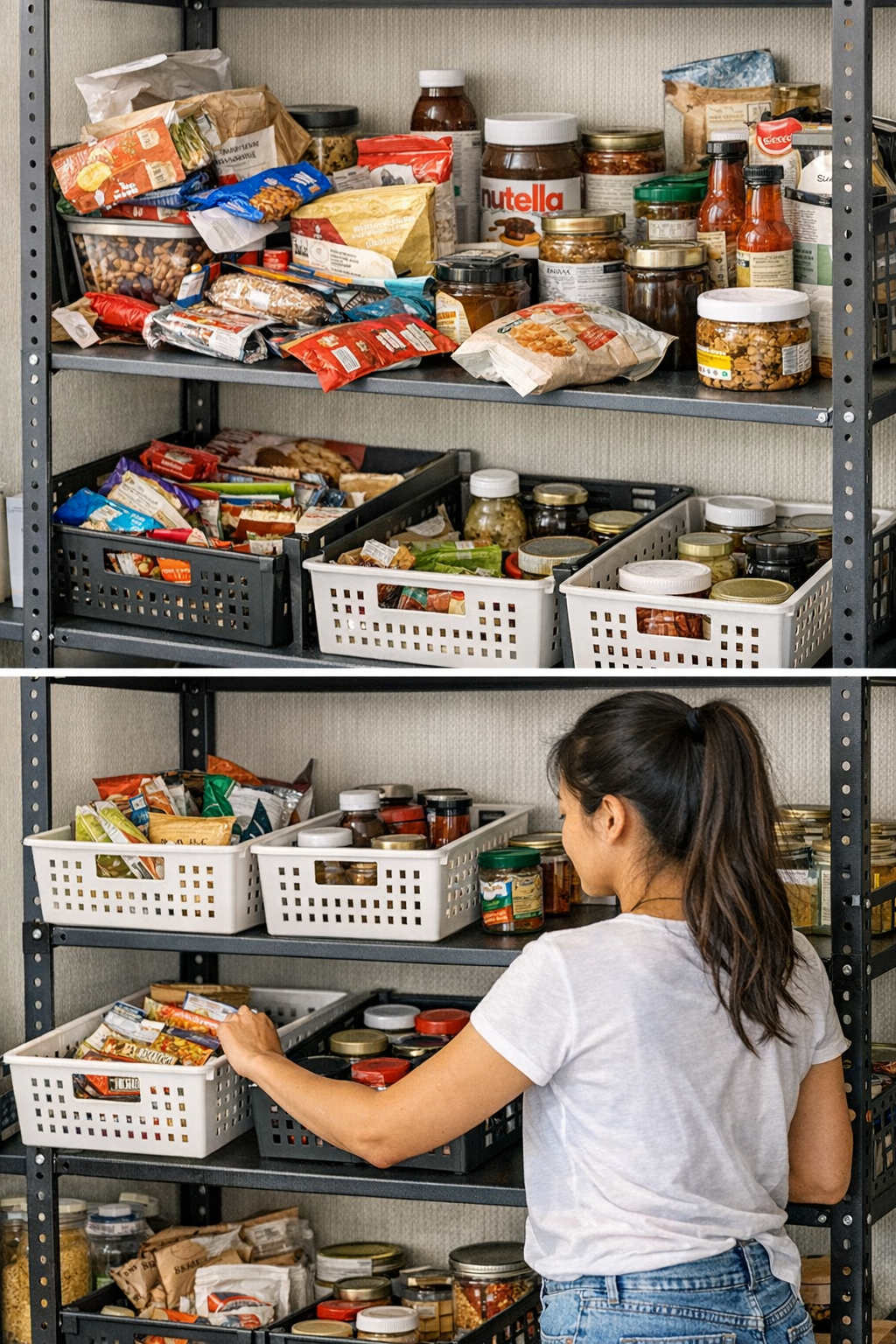
Open-shelf order is always temporary. A freshly organized pantry almost dares you to disturb it—crisp lines, everything visible, each category in its place. But real life rips through any system that relies on “just put it back where it goes.” By Wednesday, good intentions are buried under the chaos of daily use: you’re stretching around a leaning cereal box to grab pasta, fishing for snack bars behind collapsing chip bags, and stacking backup cans wherever there’s a gap. The divide between “baking,” “breakfast,” and “dinner” becomes blurred until you’re staring at a shelf that’s familiar, but not functional.
Open Shelves: The Fast Road to Shelf-Crowded Frustration
The fantasy is clear sightlines—no digging, just grab and go. But open shelves in busy kitchens or closets rarely deliver that promise for long. A shelf that starts the week neat and inviting becomes a battleground of sliding bags and toppling stacks. You reach for a jar at the back, and suddenly three snack packets spill forward. Small items—tea bags, seasoning packets, twist-ties—begin inching into every “empty” space, making every next reach riskier and messier.
Resets only get slower. After a big grocery trip, you’re not simply topping off categories—you’re moving piles and reshuffling stacks just to fit new stuff in. Soon, the system adapts to your schedule: when rush wins out, “just stick it anywhere” becomes the rule, and you stop trusting the shelf to behave. The more open the shelf, the faster it loses its structure.
Shelf Baskets: Structure Where You Need It Most
Baskets don’t just gather loose items—they impose needed boundaries that open shelves can’t enforce. Assigning a basket to snacks, to pasta, or to bottles keeps everything from drifting until the lines between categories disappear. That physical barrier may feel less “open concept” but makes the shelf sturdier under repeated use: snacks don’t spill into condiments, and oversized jars don’t swallow the breakfast shelf by Thursday.
Midweek Shelf Stress, Solved
Visualize the actual mess: foil-wrapped bars strewn beside collapsing bread, condiment packs stuck in oatmeals, everything askew. Now, slip in solid-sided bins: one for bars, a second for bread, a third for loose packets. Suddenly, you’re not dodging piles—you’re pulling a basket, grabbing what you need, returning the rest untouched. Packets stay together, no food lost in the back, and putting away a new box of crackers feels like a single smooth step, not a shelf-wide reshuffle. The shelf lasts through the week, lines hold, and resets feel manageable again.
Why Category Boundaries Prevent Chaos
Shelves with no boundaries breed mess. The challenge isn’t limited to pantries. Look at an entryway cubby: shoes migrate into bag territory, hats drape over mail, and each “zone” dissolves as things pile up. The same in the laundry room, where stray bottles and single socks roll from shelf to shelf. Introducing baskets puts walls between the categories that need to stay separate—for hoodies and hats, for sports gear, for those bottles that otherwise threaten to roll into the mop bucket. Awkward-shaped or round items finally have a “zone” instead of looming on a tilt into the next pile.
Faster, Less Painful Shelf Resets
The cost of losing boundaries is measured in wasted time and repeated frustration. Without baskets, you’re constantly restacking, shifting one stack to save another, rescuing tiny packets from under big jars. Baskets change the workflow: pull out, restock, slide back, all at once. The shelf resets in a single move, not five. The difference isn’t about looking neater—it’s about shaving minutes off the process, every single week.
Balancing Visibility and Real Access
It’s tempting to want every item visible, but a scattering of “see everything” means handling more chaos, not less. Clear or mesh bins work perfectly for snacks, small packets, or anything you need at a glance. Use these where grab-and-go speed matters—packing up lunches, prepping after work. Opaque, deeper baskets can hide bulk extras and backup supplies you check less often. Especially on high shelves, baskets save you from blind fishing: instead of reaching behind a row of bottles, you grab the basket and everything comes with it—no more awkward one-handed rescues.
Beyond Pantries: The Open-Shelf Challenge Everywhere
It’s not just a pantry problem. Anywhere you trust an open shelf to maintain order—closet sections, laundry rooms, wide entryway cubbies—the same drift happens. Shoes collect in entry corners, folded stacks lose their shape after a few days of quick grabs, and cleaning supplies scatter after just one shopping trip. Decorative baskets aren’t the answer—functional categories are. A shelf system that survives the week is one that expects the repeated, careless chaos of everyday life and has boundaries strong enough to push back.
Details That Strengthen Shelf Systems
- Pick mid-depth baskets—deep enough to contain, shallow enough to see inside and slide out quickly.
- Label for real-life use—not just “pasta” or “cans,” but “lunch prep” or “quick snacks” so family knows what goes where and random stashing slows down.
- Save opaque bins for rare-use or backup items—everyday categories belong in containers where you can confirm the contents in a flash.
What Actually Makes Storage Useful?
The best storage isn’t about picture-perfect stillness after a big reset—it’s about surviving weeks of real use without dissolving into a free-for-all. Open shelves only work if you’re willing to constantly rearrange. Baskets and dividers give categories a fighting chance, catch the stuff that naturally migrates, and mean you spend less time correcting the same shelf mistakes over and over. If your shelves keep losing shape within days, it’s the structure, not you, that needs fixing. Add barriers and boundaries that actually work for your routine—your future self will spend less time cleaning and more time just getting what you need, fast.