
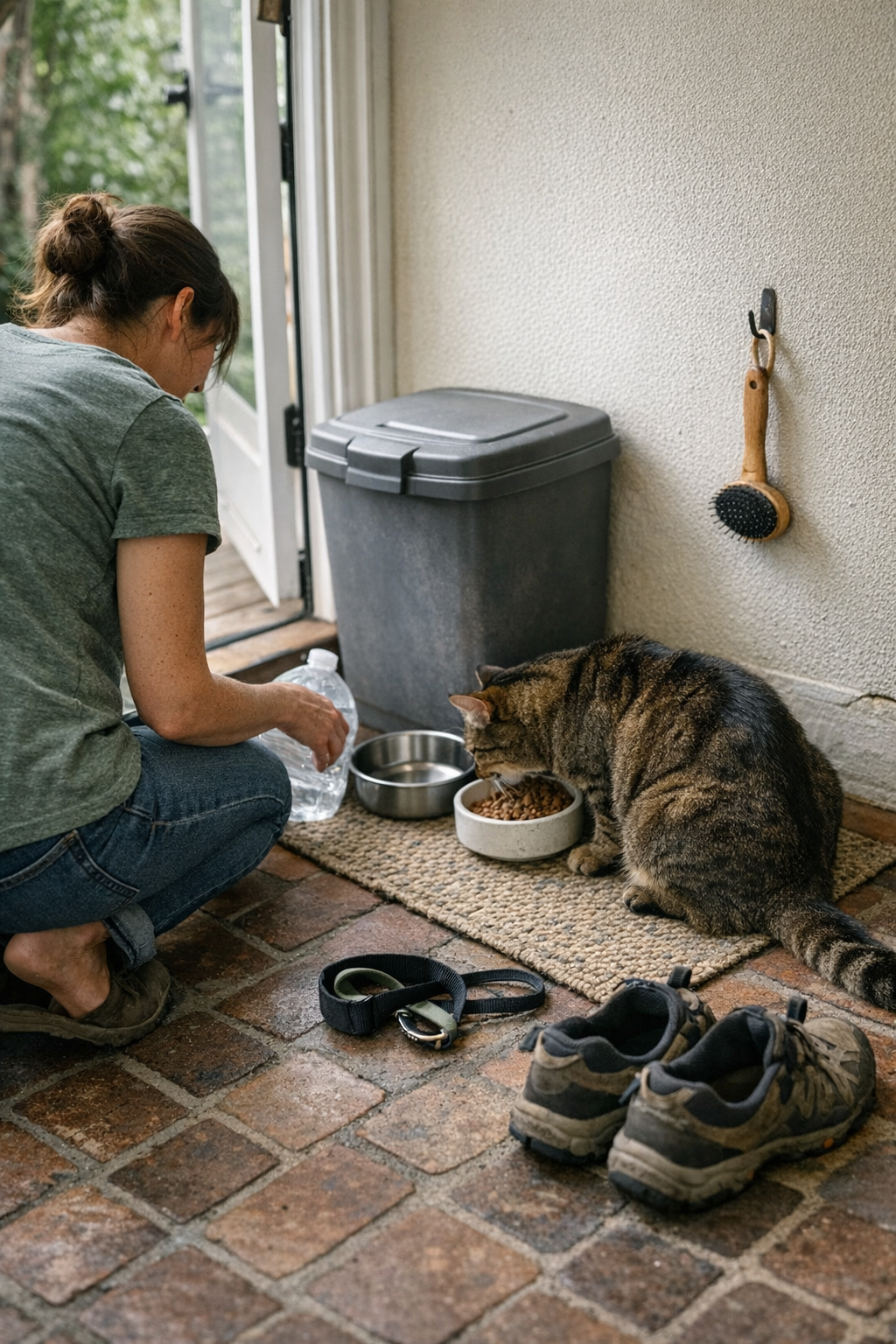
Feeding your cat should be as simple as refill, wipe, and move on. But as soon as the day gets crowded—or a guest steps inside—routine shortcuts start showing their cracks. The bowl that was easy to nudge aside alone is now blocking foot traffic. A grooming brush, left halfway between rooms, vanishes just when you need it. And the water jug? It’s been nudged behind a bag of litter that wandered out during last night’s rushed clean-up. The same setup that looked “fine” on a quiet night becomes a source of near-constant interruptions the minute routines stack up, or your cat decides to camp out in plain view.
When Routine Shortcuts Become Roadblocks
It’s easy to leave the water bowl by the doorway, or the food bin half-shut, when home is empty and pace is slow. But those habits snap into focus as soon as your cat lingers by the entry or a visitor starts a conversation within sight of the setup. Routine movements—grabbing the scoop, topping off water—bring unexpected snags: a foot kicks a misplaced bowl, a drawer jams because the brush migrated, or you scramble for cleaning wipes that wound up under a tangle of bags. The small-time wins that made solo care faster turn into real blocks when you have to keep pace with more eyes and a less predictable cat.
Here’s what that actually looks like: stretching to refill a dry water bowl, only to realize it’s shoved under the edge of a shoe rack. The refill spout, left open for a “quick return,” is now seeping near the back tile. You spot crumbs from yesterday’s meal under a side chair and reach for a cleaning cloth, but it’s buried—again—below a pile of cat toys and unopened litter. Every step adds another detour, and the reset you used to squeeze in quietly turns into a public scramble.
The Subtle Cost of Deferred Tidying
Skipping a post-meal wipe or closing bins halfway barely registers—until you look for the brush at feeding time and it’s missing, or find food scattered along the floor from a rushed scoop yesterday. The next routine starts with clearing leftover messes before real care can even begin. The gaps multiply: what “worked” for one person now means shuffling bowls, picking up stray tools, and explaining to anyone in the room why the system lags. Instead of smooth resets, you’re now doubling back, and even your cat starts pacing around the clutter.
Wiping after the fact or improvising with the wrong towel drags out the process. If the care spray is uncapped or hidden behind clutter, cleanup becomes two jobs, not one. These delays don’t just mean a messier routine—they build stress that eats into whatever calm you hoped setup would bring. The more corners you cut, the less reliable each reset gets.
Routine Friction: More Than Just a Mess
Routine friction isn’t about what the area looks like—it’s about function breaking down. If the scoop’s wedged behind paper mail, or water refills mean dodging a stack of bags, actual feeding gets stalled. Your cat waits, sometimes loudly. You lose time reshuffling the same items you hoped were already handled. Essentials drift into other parts of the house, forcing you to cross rooms for a brush or navigate a feeding zone that clutters normal walkways. A “tidy” space still interrupts you if every use comes with a micro-obstacle course.
Over time, incomplete resets mean every bowl swap requires clearing yesterday’s drying mat, and a grooming detour means searching for a comb that didn’t make it back to its hook. You start doing more work to keep the area acceptable, but every shortcut creates one more step to remember before the next routine can begin. Instead of calm, daily care feels like it needs a notepad.
Hidden Work in “Tidy Enough” Spaces
It’s easy to line up bowls, toss toys into a basket, or sweep supplies into one corner and feel organized—for a minute. But if the bin won’t close, the scoop isn’t actually within reach, or the spray bottle keeps popping up outside the feeding area, the difference between looking ready and working smoothly becomes clear after three or four rounds of repeated care. Every missed reset returns as a delay: feeding pauses while you hunt for liner bags, the broom for a quick sweep is now in the hall, and frustration spikes as the system keeps interrupting itself.
Think about a late-night check: you go to tidy up, reach for the last litter liner—then realize the cleaning spray is sitting in the wrong room and the broom’s gone missing, again. You lose minutes hunting for basics. The space looks fine at a glance, but nothing is ready when you need it, and every shift in routine just re-exposes the same weak points.
Improving Care Rhythm Through Placement and Consistency
Fixing these weak points doesn’t mean color-coding the house. It’s more about changing what lands where, and why. Use only bins that close completely so you don’t leave covers half-off. Hang brushes on hooks at the end of the reset route. Put water jugs and feeding tools just out of high-traffic areas but close enough for a one-handed grab. These aren’t organizing hacks; they’re friction-busters. Each small switch shrinks the odds of having to double back, clearing the route for a care routine you can repeat even if the room is full or the schedule is tight.
The payoff isn’t just tidiness—it’s being able to reset the area in one motion so you don’t have to scramble when something changes. Bowls that don’t block walkways, wipes at arm’s reach, bins that always close, and used items returned to a default spot: these are the differences that hold up when the cat stays underfoot or company turns up early. Even surprise interruptions don’t send you hunting for tools or trying to explain why the brush is in the bathroom again.
Maintaining Calm, Even as Routines Shift
The right layout acts like insurance for unpredictable days. Block routine clutter from drifting, keep reset points visible but unobtrusive, and set up care zones to support repeat use instead of just looking good for drop-in guests. Skip last-second scrambles by staying slightly ahead—reset after each use, not before company arrives.
As your cat grows more confident spending time around you or in shared spaces, the payoff of a functional setup isn’t just less noise. Both you and your cat settle into patterns that stay reliable even when the pace changes. A routine built for repeated resets means fewer stumbles, less waiting, and a system that works on real days, not just good ones.
Routine cat care isn’t about achieving perfect order—it’s about closing off small, repeated sources of frustration, so the feeding, filling, and quick cleanups stay easy even when the day stacks up and your cat chooses to stick around.
For more solutions and ideas adapted to real-life pet care, visit CalmPetSupply.