
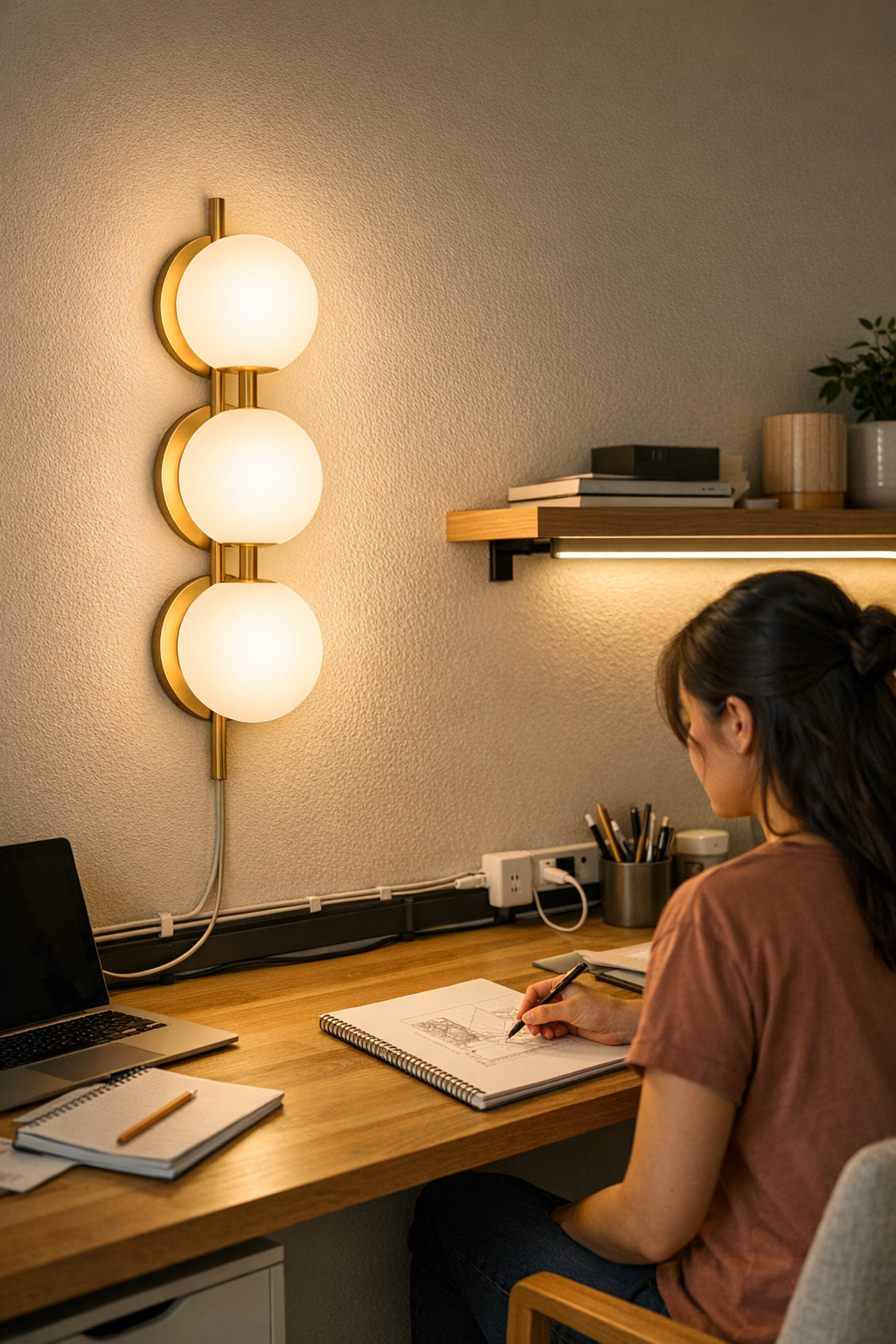
A lighting setup can look clean—cables hidden, brackets tight, desk surface bare—but as soon as you start working, flaws show themselves fast. You shift a lamp just once, and suddenly the cord slips back into view, dragging across the keyboard. After a morning of switching devices or sharing a table, one bracket loses tension, the lamp drifts sideways, and the “neat” arrangement starts breaking your focus with every fix. The promise of a tidy space collapses under real use: exposed wires reappear, arms sag, glare returns, and your attention divides between your work and the setup that was supposed to disappear into the background. This is where lighting that looked finished starts to fail, not because of how it appears, but because of how it holds up to daily adjustment, device swaps, and the pressure of shared or changing surfaces.
When Neat Becomes Nuisance: The Reality of Everyday Use
An out-of-the-box setup always looks resolved. But a desk that runs all day—papers moving, devices plugging in, two people sharing—quickly exposes hidden weaknesses. That cable you tucked out of sight one morning is sliding over papers by lunch. A lamp’s adjustable arm, solid at first, now drifts out of position, its beam skipping past your notes and onto the closed laptop. Instead of “set and forget,” you end up repeating the same corrections: fishing for cords, recentering brackets, shifting under-shelf lights that miss the work edge. The pain point isn’t a single failure. It’s the steady, daily drag of tiny distractions that pile up and break your routine again and again.
Everyday Distractions: The Small Setup Fails That Add Up
What should take no thought—adjusting for focus, moving a lamp, plugging in a device—turns into low-level friction:
- Cable creep: Slide a lamp once and its cord gradually covers the work area, coiling where your wrist needs to move.
- Drifting angles: A tired bracket fails, and light shifts off your reading zone, leaving the brightest spot shining on empty surface.
- Direct glare: An unshielded fixture hits your eye line instead of illuminating the desk, forcing you to squint or move.
- Shared desk chaos: Two users, one long surface: overlapping cables, lamps colliding, every device swap demanding five minutes of cable rescue and resetting angles.
The Real Difference: Support Accessories that Hold Up
The downfall of most setups isn’t inadequate lighting power or bad style—it’s flimsy support. The overlooked part of any layout is how well brackets hold position, cable guides stay fixed, and adapters fit without straining the system. Well-matched accessories set the line between a workspace that flows and one that pulls you out to fix it, every hour.
Cable Guides and Channels: Calm at the Desk’s Edge
Take two identical setups: one with cables loose, the other with a slim channel holding them to the desk’s edge. Without a guide, any lamp adjustment sends the cord snaking toward your keyboard or coiling across notepads—constant annoyance, always visible, always in the way. With a cable channel pinning the line out of reach, you adjust lights all day and never see the cord, never knock it with your wrist, never unplug the lamp by mistake. The effect is barely visible, but every motion is cleaner.
Brackets that Stay Where You Left Them
Most people tolerate a bracket that slowly sags or shifts after each use. Only with a proper, tensioned bracket does the difference stand out—a lamp placed for reading stays steady for hours. No re-aiming, no repeated leaning. Only when a wobbly arm goes back into service do you realize how much it disrupted your day before.
Real World Scenes: Shared Tables, Busy Surfaces, and Device Juggling
Picture two people carving out space on a shared table. One plugs in a monitor, another sketches. Halfway through the afternoon, extra plugs fight for one adapter. A bracket that loosens sends a lamp beaming across both workspaces, or cables droop into reference books below. When the support is weak, someone winds up managing chaos instead of making progress—untangling, moving lamps, even blocking out glare with a notebook just to keep going.
Swap in solid brackets and cable guides, and the dynamic changes. Cables hug the edge instead of claiming working space. Lamps serve one spot, then move for the next person without dragging wires through the middle. The distinction is clear—lighting stops being a daily project, and the entire setup reverts to what it should be: invisible and stable, letting work take front stage.
Repeat Annoyance: The Cost of Skipping Structural Support
Many accept minor clutter as the price of a clean setup. But if you ever move a lamp, share a desk, or swap cords, the mess builds relentlessly:
- Extension cords sneak across walkways and block quick movement.
- Power adapters overload a single shelf—just charging a device jams the whole arrangement.
- Under-shelf lighting slides, and now the reading edge is shadowed instead of bright.
These aren’t headline failures, but they chip away at focus and comfort: minutes lost rerouting cables, awkward stretches to get light where it’s needed, and the pressure to keep adjusting what should simply work.
One Small Fix, Lasting Improvement
For weeks, an extension cord dangled under my reading shelf, always slipping into view. Swapping in a slim cable channel and a bracket that actually held its angle, everything shifted—lamp where I wanted, no wires to adjust, glare finally gone. I could work without pause, the setup staying put whether I switched books or devices, so the friction of “tidying up the lighting” vanished. The gain isn’t only visual. The space felt faster, less fragile, and finally resolved in real daily use.
How to Tell When Your Setup Needs Help
Looks can deceive. If these patterns show up, it’s the structural support—not the fixture—that falls short:
- Frequent cord shifting or needing to move objects just to adjust a lamp.
- Surprise glare at certain hours, even after “fixing” the layout.
- Dim main work edges or tangled cables growing harder to ignore midday.
- Noticing brackets and wires more than the light itself.
If any of these are familiar, your setup isn’t matching the way you actually use the space. Small, silent upgrades—brackets that hold, guides that anchor, adapters that fit—turn daily interruptions into routines that run smooth in the background, not the foreground.
Why Subtle Structural Help Matters
The best lighting and support don’t call attention to themselves. When brackets, channels, and guides are matched to your actual workflow, you notice the work—not the lamp moving, not the cable clutter, not the daily feeling that something’s just off. It’s the invisible support that separates setups that look finished from those you can actually live with, adapt, and trust not to break your flow.
In spaces where surfaces get busy, gear moves, or people share a zone, the right supports aren’t extras—they’re the baseline for lighting that really works, every time you sit down.