
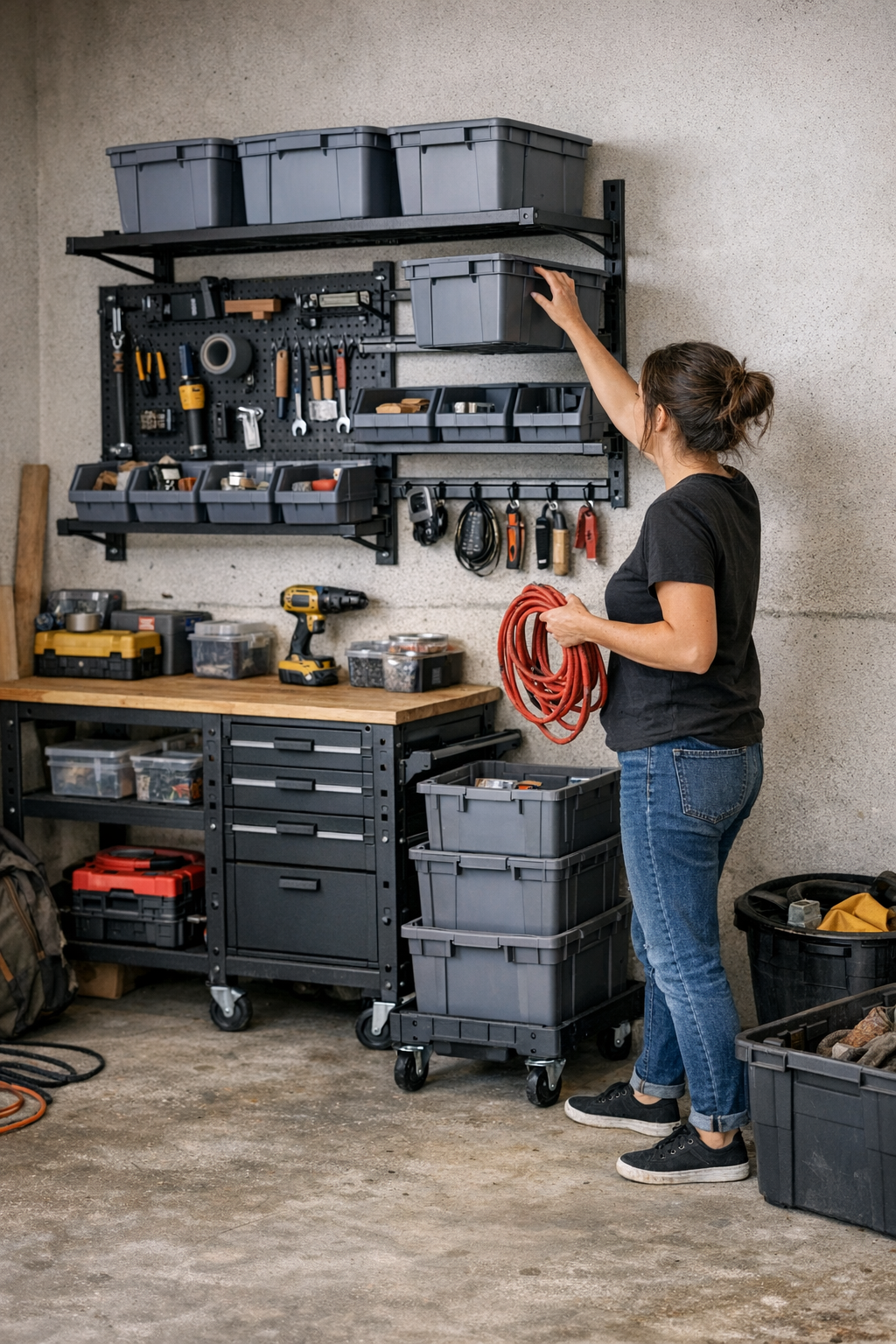
The promise of a fresh storage system in your workshop or garage always feels bigger than the sum of its bins and shelves. You break open boxes, snap together racks, and—suddenly—everything finally has a place. For a day or two, it’s close to perfect. But real projects don’t stay clean. Give it a few work sessions, a few rushed cleanups, and a different friction creeps in: bins aren’t as accessible as you’d hoped, movement through your own space feels tighter, and tools land in new clutter traps you didn’t see coming. The difference between simply “holding more things” and actually making your routine faster becomes obvious the moment you try to grab, reset, or move—again and again.
When “More Storage” Starts Creating New Problems
Every new setup looks ideal in the first light: racks lined up flush, mobile carts stowed away, wall space covered in hooks and bins. But fast-forward to a Sunday project or that late-night repair. Suddenly the system you designed starts pushing back: you’re nudging a rolling chest out of the walkway for the third time, digging awkwardly behind corner bins, and stacking half-finished hardware on top of what used to be an “overflow” shelf because it’s easier than doing the shuffle yet again.
What seems like efficiency on the surface—cramming more into every square foot—quickly exposes the spots where your routine actually breaks down. You know it’s happening when:
- You’re reaching around carts more than you’re working on your project.
- Simple grabs turn into two-step dances with edge bins or tucked-away racks.
- The leftmost shelf, always in your line of sight, ends up piled with loose screws and tape rolls you can’t really return to their slot without a reset.
- The floor closes in: one dropped bolt away from a trip hazard, just trying to keep tools off the surface.
Adding storage space doesn’t fix the underlying problem if it slows down your resets or interrupts real movement. The sign you’re in trouble isn’t how much you can fit—it’s how easily you use what’s there, day after day.
Why Edges and Corners Always Fill Up First
Watch what happens in the edge zones and corners after just a week of “real use.” The wall-mounted rail that looks great in the catalog—the one with five bins spaced just so—turns problematic when you actually use it. Three bins let you reach and return without thinking. Add any more, and you’re dragging out a whole row just to grab a tape measure or utility blade. That extra shuffle drains time and chips away at the seamless movement you need when your hands are full.
Corner shelves? They lure you in with “hidden” space. But by day three, they collect every oddball item, every “set it here for now” part, and every hardware pack you don’t quite know where else to put. The corner that started clear turns into a graveyard: tools collect, resets slow, and it becomes a spot you dread untangling at the end of any busy session. This slow-motion clutter is rarely loud until—suddenly—the main work area feels boxed in all over again.
Storage Friction: It’s About Flow, Not Size
Every trouble spot comes down to flow. If picking up your drill means inching around a chest of drawers, or if sliding out a bin disturbs everything around it, your storage is working against you. The real gap isn’t how much volume you have—it’s how much effort it takes to reach, return, and reset, especially when you’re moving quickly or cleaning up in a rush.
During project sprints, nobody wants to restack bins or re-nest tool trays to reclaim space. It doesn’t matter if the system looks tidy; if you’re making extra moves, storage is failing its one true job: making routine use as close to automatic as possible.
Spotting the Real Red Flags in Your Routine
After a cycle or two through your full routine, these signals start popping up:
- Shelves at shoulder or hip height that force you to pause—just to avoid knocking something else loose.
- Carts or mobile chests parked in your path because there’s no slot for them that doesn’t block return flow.
- Corners or ledges constantly catching hand tools and hardware that don’t quite “belong”—but never make it back to their home.
- Cleanup stretching into a multi-step shuffle, with each reset taking longer every week.
Every time you’re forced to move something extra just to tidy up or start your next task, it’s a sign: the system isn’t built for your real-life rhythm. Even wide-open wall panels or unused cubbies mean nothing if you’re fighting the same friction points every time you step in the door.
A Small Reduction That Changes the Whole Flow
It rarely takes a full overhaul to shift the setup—just the willingness to trim back. Real improvement comes from choices like yanking two bins off a shelf and leaving that spot open. Suddenly, the grab point you once struggled with is clean: one sweep of the arm, no awkward nudging or tangled sleeves. Clean up becomes muscle memory again. Over a week, you feel the difference as movement smooths out, resets get sharper, and the whole layout actually supports your pace instead of tripping you up.
Practical move: If an area always gums up your flow—even if it looks organized—pull a bin or a shelf out for a few days. Run your normal routine and feel whether movement improves. Most of the time, less “stuff” in the edge means more clarity and less hesitation at every step.
Smart Organizers Can Still Clog the Process
The temptation is always to add another tier, insert, or micro-organizer for every category. But each extra piece can chew up precious flow if it blocks quick returns or forces you to shift containers just to reach the basics. Doubling up with dividers in mobile chests or hanging racks can make you work twice as hard for the same result. The only organizers that earn their keep are those that actually make the reset easier, not simply maximize the number of small objects a shelf can hold.
Wall vs. Mobile: Where the Real Limits Show Up
In theory, wall-mounted rails and mobile carts both extend your storage. In practice, their strengths turn into weaknesses if you overload or misplace them:
- Wall systems: Free up your floor and create open sight lines—all good, unless you cram them so full that you’re stacking tools in front of tools. The second you have to reach past or pull out a row to get anything, you’re losing efficiency.
- Mobile chests and carts: Let you bring essentials closer, only if their “docking” spot doesn’t clog your most natural path. Even a half-inch of wheel sticking out in the wrong place is an invitation to slow down or sidestep, especially after a rushed cleanup.
Best outcome: keep the mobility and wall space, but veto anything that creates a dead zone, snags your motion, or adds friction to the simplest reset.
Is Your Storage Working with You—or Against You?
Check your space: if you’re always making multiple moves just to tuck things away, if you have to stop and think each time you walk through, or if you keep stashing overflow in the same tired corner, the pattern’s clear. Your storage system is technically organized—but functionally in the way.
Most frustrations are not about too few bins or racks—they’re about too much content crammed into the same routine. The storage that truly makes a difference is the one that lets your workflow stay automatic, that clears the path for the way you actually move, and that needs very little extra effort to reset. Find the chronic blockages. Remove what you can from the pressure points. Watch how quickly the space feels usable again—back in sync with how you really work, not just how you thought you might use it when everything was brand new.
When you no longer notice the storage system—when resets happen in a single motion without fumbles or re-stacking—you know the setup is finally supporting you, not the other way around.
Explore more practical storage setups and solutions at StackNest.