
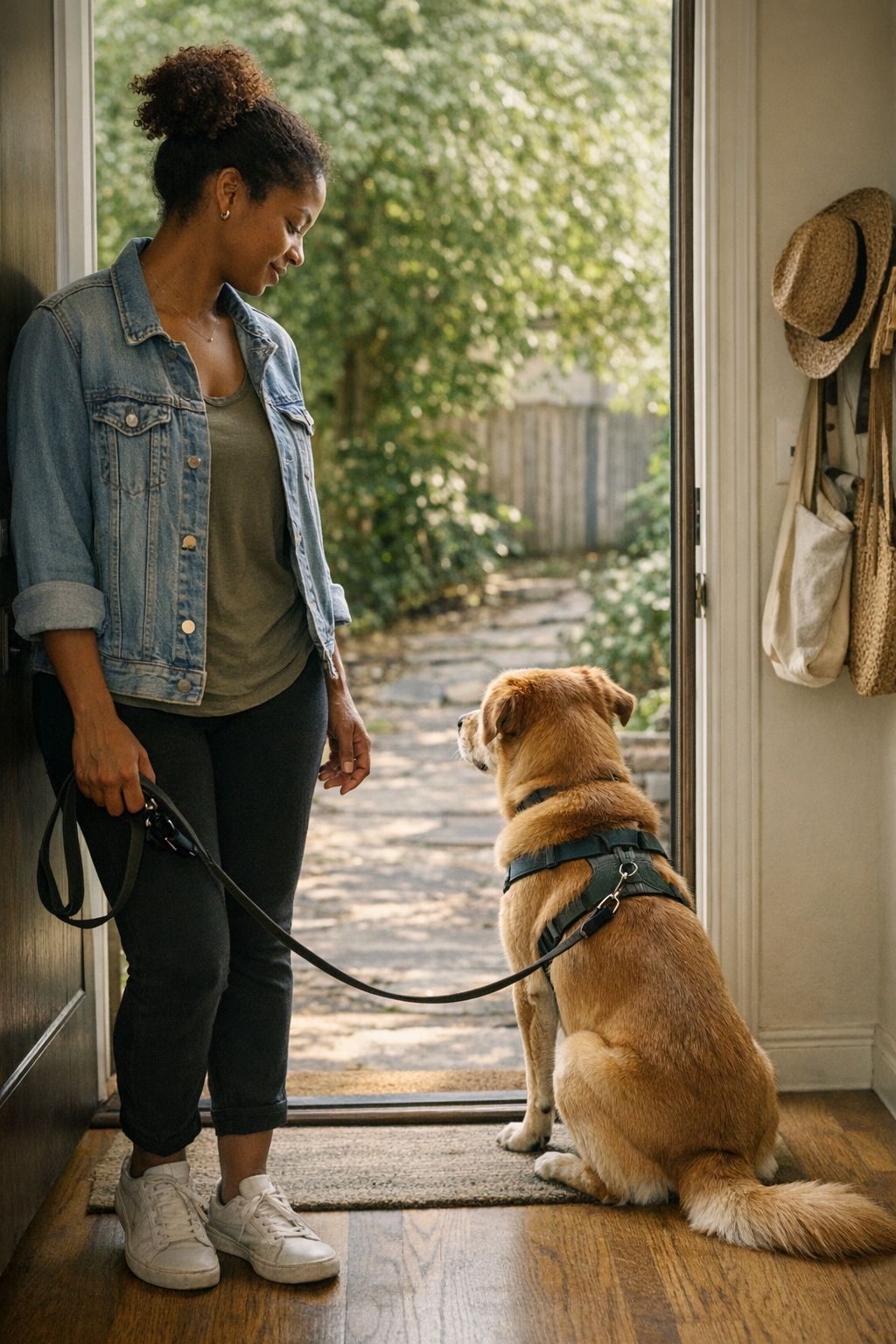
The difference between a smooth dog walk and a routine that grinds every morning often comes down to those 15 seconds at the door. You reach for the leash—only to find it half-hidden behind the coat rack. Your other hand tries to fish out the wipes because someone (maybe you) piled a muddy towel on top of the entry bench. The dog hovers at the frame while you shuffle shoes and keys and coax her out, but the leash snags, your knee bumps the bin, and already the walk feels like something you’re working against instead of for. These doorway pauses and gear bottlenecks aren’t random. They’re small signals that add up fast—and show exactly where a daily setup isn’t quite working. It’s the difference between a home that just stores dog supplies and a DogPile-ready zone where walk routines run smoother, not slower.
When the Doorway Pause Isn’t Just a Pause
Call it stubbornness or confusion, but most delays at the door start when dog supplies drift into paths meant for people—or when routines keep tripping over the same misplaced towel, leash pile, or rogue toy. The pause at the threshold stops being brief. You’re mentally ticking off missing items, trying to clear a strip of floor space, while your dog reads your tension and hangs back. That little hesitation isn’t neutral; it’s the first crack in the routine. Clumsy setups—gear edging into walking space, wipes buried under treat bags—turn doorway pauses from forgettable moments into slow buildups of irritation.
Each trip through the threshold with a tangle or a missing item reinforces the friction, not just for you but for the dog. You nudge; she resists. The walk starts with correction and tension. Over time, neither of you launches cleanly: leash tension replaces momentum, and anticipation gives way to correction. Walk energy drags before you’re out of sight of home. If every morning stumbles over the same five-second snag, eventually the walk itself feels like a series of corrections—right from the first step.
How Small Friction Grows into Habitual Snags
Rarely does dog routine friction blow up in a single flash; it builds from small, repeatable annoyances. Your dog hesitates because yesterday, her leash yanked sharply—because the harness was at the bottom of the pile, or you had to sidestep water bowls that always crowd the threshold after breakfast. Wiping muddy paws gets delayed because the wipes slid behind the shoes. The “cleanup zone” is technically there, but it never seems to be close enough when the actual mess happens. Eventually, daily prep devolves into a series of micro-recoveries—fetching, rearranging, and subtly hurrying through steps that should be simple.
Every repeated urge to keep moving—every “let’s go” said with growing impatience—adds a thread of tension that compounds with each walk. Watch for how quickly your leash snags now versus a week ago, or how often your dog turns back or pulls away before you’re halfway down the block. A walk interrupted at the threshold rarely gets its flow back. The speed bumps aren’t just at the door; they echo until you’re home again—and next time around, the cycle repeats, usually in the exact same spot.
The Walk Starts at the Threshold—Literally
Picture the weekday rush: keys wedged between your fingers, leash jammed under yesterday’s raincoat, and a vague sense you’re forgetting something. Your dog stands at the frame, bracing her paws, glancing back to see if you’re ready, even as your hands are busy untangling the gear mess that seems to remake itself daily. If every walk starts with this scramble, the result is obvious: a launch that feels late before it begins, a dog more alert to your frustration than to the world outside, a leash under tension before the first step.
This isn’t about a single step—it’s about your readiness and your dog’s. Rushed starts show up as more frequent leash corrections, zig-zagging at the curb, and failed attempts to find a rhythm. Owners notice it most when routines snarl: towels out of reach post-mud, harnesses MIA under a toy heap, bags buried behind other chores. Entryways that pass the “look neat” test in photos can still fail in live use, hiding obstacles that cost time and focus. Dogs feel these missed beats faster than you might notice—they know the difference between a settled launch and a scramble.
Turning the Pause Into a Useful Reset
After enough fumbled starts, some owners finally try a different approach: What if that threshold pause isn’t just tolerated, but used? Instead of dragging your dog or shuffling impatiently, both of you wait—feet and paws square, leash loose. You watch for the real sign of readiness: your dog’s body angles forward, attention shifts outside, and the hesitation melts. Sometimes you catch a tail wag, a sigh, or a subtle shift that tells you she’s unplugged from the hallway tangle and plugged into the moment outside. It’s not a trick; it’s a reset—brief, simple, and more powerful than most commands.
Add this reset to your walk prep and you’ll see the pattern change: the leash stays calm over those first ten steps, corrections fade, and the back-and-forth tension drops. Over repeat use, the threshold becomes less a battleground and more a shared launchpad. Dogs learn; so do people. The pause transforms into a clear signal, not a moment to rush or ignore.
Spotting True Readiness: What To Look For
Posture tells the story. A relaxed, upright dog—tail soft, shoulders loose, steady glance forward—signals true readiness at the threshold. If your dog averts her eyes, stiffens her stance, or fidgets every few seconds, she’s not with you yet. Owners who learn to wait (by seconds, not minutes) start to see the contrast: less rushing, more focus, fewer leash fights on the sidewalk. There’s no need for elaborate cues or endless patience. The takeaway is simple: allow a pause for both parties to sync up before heading out.
Practical Obstacles: When Setup Still Gets in the Way
Even if you master the pause, real-life setups keep testing you. Some days, you reach for the leash but grab a tangle of jackets instead. On return, the wipes you always mean to have close are lost behind a pile you rearranged just yesterday. The dog comes in muddy, tail wagging, while you’re patting down bins or digging in drawers—attention lost, mess spreading. Even “organized” spots sabotage you if the right gear isn’t right where you need it, at exactly the right moment. Cleanup supplies look accessible until it matters; bowls look tidy until your hands are full and a shoe rack breaks your stride; re-entry stalls because the towel is always just out of comfortable reach.
This is where most setups fail their real test—not that they look messy, but that they demand micro-adjustments mid-routine. The reset gets rushed, the flow stalls, and dog energy rebounds unfocused. However much the area looks “ready,” friction returns whenever actual need meets delayed access or tangled gear.
Making the Most of the Pause: Real-World Tweaks
To fix the routine, don’t just declutter—rethink reach and placement:
- Keep essentials truly at hand, not tucked away. Place leashes, towels, and pickup bags where your fingers touch them—no bins to dig behind, no awkward sideways shuffle. The most usable spot is just before the physical threshold, where you pause anyway.
- Add a joint reset cue. A mat, corner rug, or even a strip of tape can mark exactly where both you and your dog pause together—making the habit easier to repeat by design, not just luck.
- Check your body language for slippage. If you start to lean, fidget, or multitask at the door, your dog will mirror the distraction. Stand square, breathe, and watch how your dog settles faster with a calmer lead-in.
- Stage for the return, not just the exit. After muddy walks or scattershot outings, place towels and wipes in arm’s reach of the door—visible and ready, not buried under laundry or forgotten in another room. The right setup cuts time lost to scrambling and keeps your dog with you for the whole return routine.
The Long-Game: Less Tension, More Usable Trust
Repeating the threshold reset doesn’t solve every snag overnight. Some days you’ll backslide—reshuffling gear, losing wipes, fumbling through clutter you thought you’d fixed. Yet, over the weeks, the entry zone gets easier to use, the pause becomes a cue instead of a delay, and you’ll notice your dog checking in with you instead of resisting. The walk flows out the door, not against it. The post-walk reset gets easier, not harder, and the cycle of tension starts to break.
Routine friction hides in the little things—a leash in the wrong bin, a towel just out of reach, gear that spreads back into your space when you’re not looking. A setup that looks tidy but still makes daily flow harder signals exactly where DogPile thinking starts: