
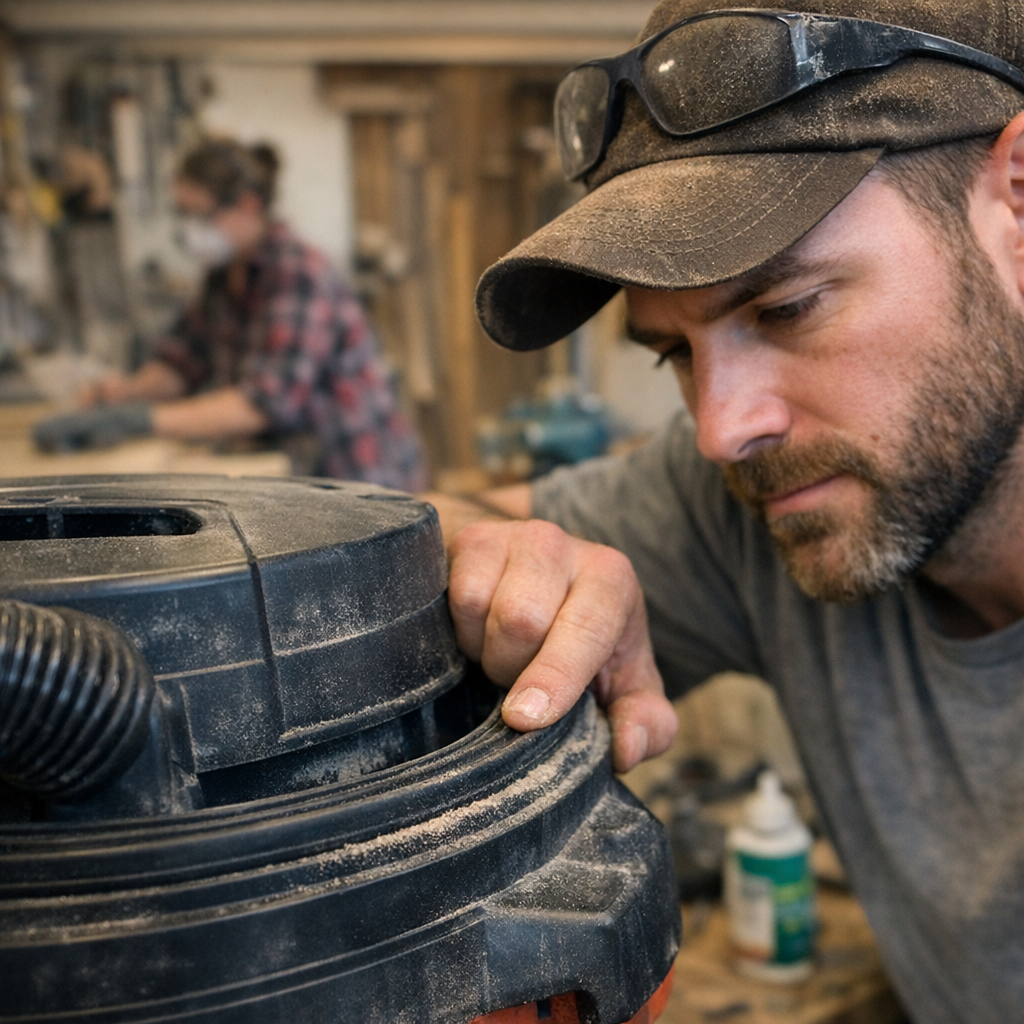
Dust doesn’t launch an all-out assault on your shop—it simply leaks in, bit by bit, until you’re wondering why nothing ever stays clean. You push into another long sanding session or swap between the miter saw and drill, vacuum humming in the background. Everything looks fine at first. But then grit collects in the corners of your work, dust streaks appear under clamps, and that dry, persistent film blooms onto tools and bench surfaces you just wiped. Most days, it isn’t a catastrophic failure. It’s the slow betrayal by a tiny part you rarely think about: the vacuum dust seal.
Good Seals Turn Problematic—And You Won’t Notice Immediately
Vacuum dust seals usually survive a few projects looking completely normal. The rubber feels intact, the fit still snug, so during your quick pre-job check—right before you line up that first cut or clamp down for sanding—there’s no hint anything’s off. But midway through a batch of router passes or while driving a run of screws, thin clouds of dust start leaking past. It’s subtle: traces of powder at the vacuum’s rim, buildup ringed around hose fittings, a thin residue edging into your finish zone. The next time you wipe down after drilling panel holes, you catch your own reflection in a thin layer of grime you could swear you’d handled hours ago.
These leaks add up fast in the real world. Seals wear out without dramatic visual cues—no bold cracks or rips, just a slow collapse. You get ghostly outlines under vise jaws, silt layering behind jointer stands, and dust sneaking into the spaces between tools. Suddenly you’re re-cleaning the same area or re-sanding a board you finished just minutes before, losing time and rhythm to dust you can’t keep up with. The missed warning signs are all small—until the mess becomes impossible to ignore.
How Real Inspection Feels—Not Just What It Looks Like
Don’t trust your eyes alone; dust seal failures rarely show up in a quick scan. The only way to catch problems early is to run your finger along the seal—feel for even compression, for that small but critical “spring” when you press in and release. Flattened, aging gaskets look perfectly normal but squash too easily or rebound only halfway. By the time the lid demands extra pressure to close, you’re already losing suction and containment, and dust is mapping out detours around your collection point.
With every tool you run—circulating saw, sander, router, even when swapping out batteries to keep pace—the pressure grows. A tired dust seal turns every vacuumed moment into a cycle of diminishing returns. You’ll see the difference on edge work, in those hard-to-reach shelf corners, and most annoyingly, on just-painted surfaces that refuse to stay dust-free. You clean, and the powder comes back. Every finish pass feels sabotaged; your grip slips from surprise grit, and blade life quietly shortens as debris keeps sneaking back in.
The Shift Midway: Telltale Signals That Matter in Real Time
Picture a busy afternoon cycling between sandpaper grits and the drill press. Early on, everything is under control—your vacuum setup keeps pace without fuss. After lunch, though, dust laces the fence, clamps feel gritty, and the same haze shadows your workbench. When you pop the vacuum open to dump the bin, the rear seal has gone stiff, nearly flat, demanding awkward force to seat it again. That slight increase in hassle is a real-world signal: the gasket’s elasticity is shot. By closing time, your tools and surfaces have collected a stubborn silt, creeping into every corner, spoiling your final results and dragging out cleanup beyond the last cut of the day.
The Real Cost: How a Faded Seal Wastes Time and Weakens Results
A leaking seal sabotages more than cleanliness. Finer dust infiltrates moving parts, gums up delicate adjustments, dulls drill bits, and erodes blade precision. If you’ve ever had to wipe down mid-project or re-finish wood because unseen dust settled after your last sanding pass, you’ve paid the price. In active shops—cycling between fast cuts, grinding, and repeated fastening—a single seam leak means more stops for vacuum resets, wasted prep, and energy spent chasing the source instead of focusing on the actual work.
Swapping out a crushed seal isn’t just a maintenance detail; it restores the baseline performance you need. That firm, uniform gasket isn’t hype—it’s the difference between an efficient cleanup that keeps your workflow smooth and a futile battle that eats away at your time and results. The fix is immediate: a fresh seal locks in airflow and stops the dust drift, so more goes straight into the vac and less finds its way underfoot or into your battery charger.
Quick Checks: Catch Subtle Failures Before They Compound
With each round of sanding, driving, or repetitive drilling, use these checkpoints:
- Dust edging the perimeter of vacuum housings or hose connections—especially if it rings only part of the seal
- Floating particles settling fast on just-cleaned tools, charger docks, or bench trays
- Resistance when opening/closing the vac, or a seal that sits noticeably low and doesn’t “bounce” anymore
Don’t be fooled by spotless appearances—dust will escape through the smallest breach, often lurking in baseboard nooks or drawer slides. Small, targeted checks catch trouble before it snowballs, saving you from wasted motion and drawn-out frustration.
Swapping and Keeping Up: Habits for Shops That Actually Stay Clean
If your days are spent knee-deep in sawdust or you’re clocking hours on high-dust jobs, make monthly seal inspections second nature. Press, don’t just look. If the seal compresses to half its original height, feels hard instead of pliable, or no longer rebounds, swap it—don’t wait until it ruins your next run. Most seals fail slowly, with stiffening rubber turning up only when the mess is already made.
Pro strategy: Keep at least one backup seal in reach, especially before heavy weeks—falling behind on dust control during critical jobs means trading quality for frantic rework, or losing time that drains the whole schedule. As soon as you feel the seal lag, or catch dust sneaking in by the end of the shift, make the swap. Fast action locks in better tool control, less fatigue from redundant cleaning, and more time spent actually building or finishing instead of just managing debris.
Chasing Dust Is Wasted Time: Rely on What You Can Feel
Dust seals do their job best when you barely notice them. When they slip, the difference cuts straight into your energy, precision, and end-of-day pride. Don’t let quiet failures and skimmed-over details pile up—let your hands and eyes lead routine checks, respond early, and keep seal swaps easy. It’s not just about a cleaner shop; it’s about controlling the small frustrations that slow you down and quietly wreck your finish. The sooner you build these habits, the less time you lose to the dust that’s impossible to ignore.