
When “Maximizing Space” Makes Storage Harder, Not Better
Open any closet or mudroom in a lived-in house, and you’ll spot the same frustration: bins packed to the brim, shelves lined with containers flush to the edge, everything looking “in order”—at first. That satisfaction fades fast. A few days later, you’re fishing for a missing glove, wedging in an extra towel, or shifting an entire stack just to put away a single sweatshirt. The logic seemed sound—use every square inch!—but now the system resists you. Instead of helping, every “just one more thing” becomes a moment of real friction. Before long, jackets land on chairs, socks gather on the floor, and bins meant to declutter quietly add new hassles to daily life.
When Storage Order Starts Working Against You
Packed bins and full shelves don’t just look orderly—they demand constant negotiation. Families cycling shoes in and out, tossing sports gear on the run, or restocking lunch containers don’t have time for delicate stacking. In theory, stuffing each bin means no wasted space. In reality, a week later you’re performing acrobatics every time you return something. Reach for a hat, and a folded stack flops sideways. Try to put gloves back after school, and you spare your future self the hassle by abandoning them by the door.
The real friction piles up unnoticed: the pause before opening an overfilled bin, the hesitation before cramming another piece in, the quiet decision to leave things out “just for now.” By the weekend, there’s a new mess—not because the system failed, but because it asked too much for real routines.
How Real Routines Reveal Storage Flaws
Imagine an evening in your entryway: muddy boots off, wet scarves flung in a hurry, hats dropped wherever they’ll fit. The storage “system” looks fine from a distance—everything snapped shut, nothing visible—until you actually use it. The scarf that didn’t quite fit last time is now hanging off a hook. The bin set aside for hats is overflowing, so you tuck today’s on top of the stack, half in, half out. A ball migrates from its cubby to roll under the bench. Folded sweatshirts begin perching on bin lids because breaking the packed stack inside feels like a hassle.
It’s not laziness. It’s the price of density. Storage that requires effort for every return quietly invites clutter to spread, one shortcut at a time.
Underfilled Bins: The Room Your Routine Actually Needs
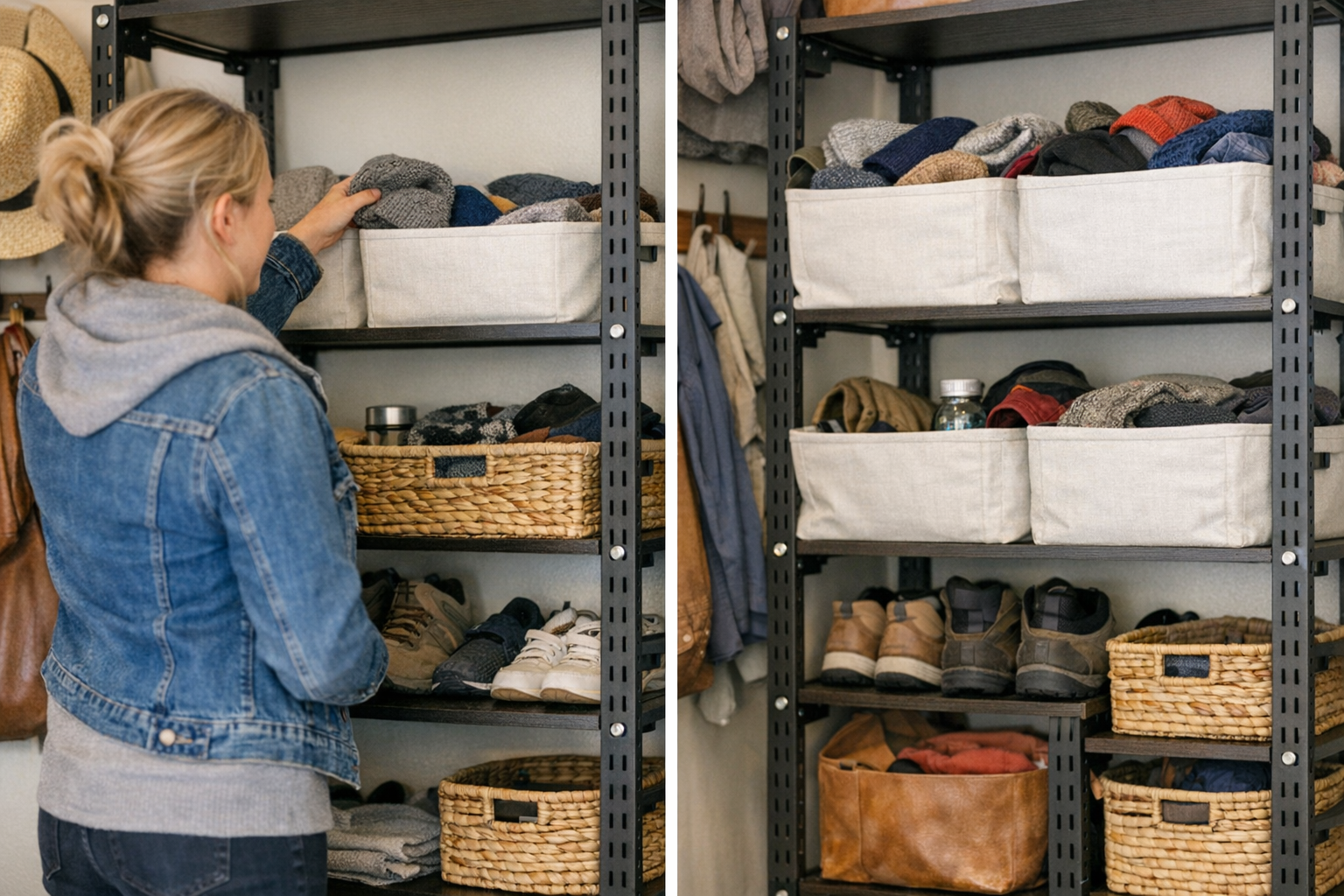
The fix isn’t more bins or better labels—it’s margin. Leave room at the top: not a token gap, but a hand’s width of open space, enough to drop, adjust, and move on. Leaving bins about a quarter empty creates just enough slack for daily life to flow uninterrupted.
Why That Visible Gap Pays Off
It feels counterproductive, but that empty zone isn’t wasted. You immediately see if there’s space before you return a beanie or a flashlight. If the bin isn’t crammed, you reach in and put something away, not strategize about the reshuffling required. Even a hurried hand can drop items without upending stacks or playing Tetris with socks. Before long, the area stays clearer because items actually return to their spots—and the bins inside don’t devolve into a jumbled mess.
Day by day, you notice something rare: fewer “for now” piles, less backup clogging the outside of the bin, and a smoother rhythm after inevitable family rushes. Resetting the space becomes an instinct, not a chore.
Scenes from Real Life: The Impact of Breathing Room
Less Digging, More Dropping
Picture a rainy day in the mudroom. The kids dump wet towels into a bin as they run past. If the bin’s full, you hesitate: try to squeeze it, or start another pile? With breathing room, it’s a quick toss. Tomorrow, nothing is left dangling off the bench or jumbled at your feet.
Bedroom Shelves That Don’t Collapse
Closet bins packed edge-to-edge unravel quickly. After laundry, the new shirts topple the pile, socks mingle, and you start parking “temporary” items in front of bins instead of inside. But with a hand-width of space up top, things change: you slide folded clothes in without unbalancing the contents, spot the pair you need immediately, and singles don’t topple over stacks. Visibility and access go up, mess goes down.
Smoother Mornings, Fewer Interruptions
Especially for kids’ gear and seasonal extras, margin makes all the difference. Scarves and mittens come and go with each weather swing, but a loosely packed bin means no avalanche when you grab one item. No minutes wasted re-tucking after a quick grab, just easy in-and-out—real convenience, not just the look of order.
Try It in Your Own Space—And Watch What Changes
The simple test: pick a high-traffic bin or two and pull everything out. Put back only what fills the bin about three-quarters full—the rest, store elsewhere or let go. Live with it for a week. Notice how often you return things smoothly, how few times you leave things out “for now,” and how the shelf itself stays steadier. The gain isn’t just visual—it’s how quickly you can finish the reset and move on.
Practical tip: If you resist trimming the contents, ask yourself: when was the last time you needed what’s buried at the very bottom? Keeping less visible, less-used items in secondary storage and prioritizing quick-return favorites up top preserves both calm and clarity.
The Difference Between “Looks Organized” and “Feels Organized”
Shelving, bins, baskets—they’re only as good as their ability to keep up with the real rhythm of your day. Underfilling isn’t about leaving space “unused,” but about preventing slow drifts toward frustration and surface clutter. When bins reset themselves with almost no thought, the area supports your life, not just your idea of tidy. A system that feels effortless to use—one-handed returns, no daily shuffling, no delayed clean-up—lasts much longer than one that just photographs well on day one. The real test is whether it still works next week, and the week after.
See storage solutions designed with real-life routines in mind at ClosetWorks.