
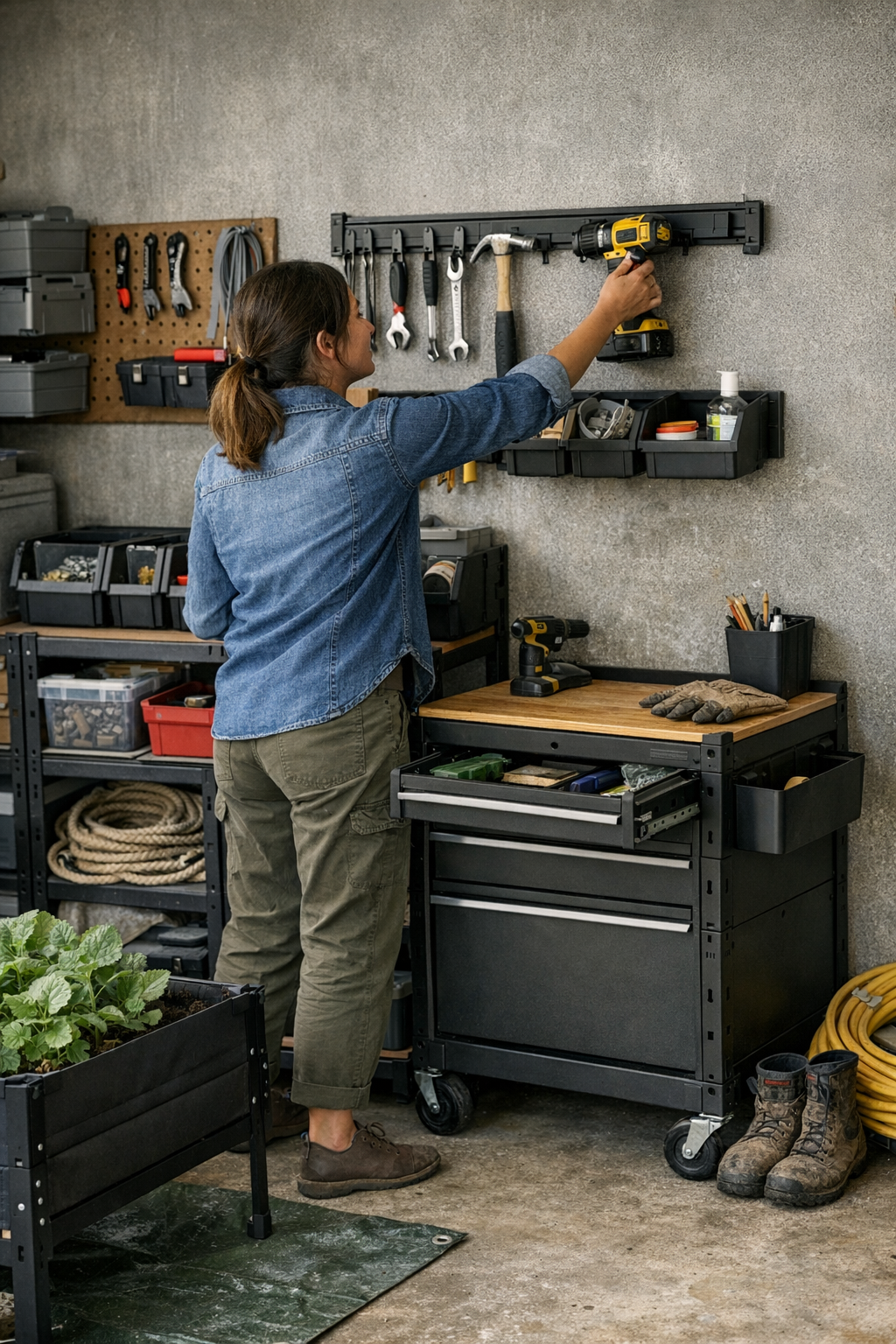
The real truth about workspace setup? It doesn’t reveal itself until the next time you need to get something done fast. That reorganized garage or workshop always looks brilliant right after you install the new rail, slide the fresh cabinets into place, or set up a rolling cart. But as soon as you’re halfway through a weekend project, reality creeps in—access is awkward, your main walking path is blocked, and your most-used tools vanish behind the very systems meant to make things easier. The difference between “organized” and actually functional only shows up when your real routine puts the new setup to the test.
When “Setup Day” Satisfaction Fades
Crisp cabinets, a gleaming open floor, every bin in its place—the first hour after revamping your space feels flawless. Give it a week. Suddenly, that rolling cart—once so easy to move—gets wedged right in front of wherever you need to stand. A bulky box of screws or winter gear pushes forward, shoving your everyday tools into the least accessible corners. You end up swinging a cabinet door just to squeeze past, or nudging the cart aside again and again just to leave the room. What felt like solved clutter becomes a new web of friction—just painted over with “organization.”
Spotting Storage That Adds Work, Not Ease
The warning sign is unmistakable: When do you find yourself pausing, shuffling, or sidestepping? If you need to move three things just to grab one, or if returning a tool means restacking a tower of bins, you’re working around your storage—not with it. And those moments add up: the late-night reset turns into restacking, untangling, even procrastinating because the system just feels heavy. The setup meant to save time drags the process out instead.
Busting the “Everything Has a Place” Illusion
Assigning every item to a home grabs neat before-and-after photos. But labeling a spot isn’t the same as making daily work flow. Wall baskets look orderly on install day, but the things you reach for constantly always seem to creep out of reach. Tape measures end up over head height, the screws you burn through each week fall to the back of the pile, and your “organized” system quietly forces new detours into each task. If a “place” is just where clutter collects, repetition and speed go out the window.
The Rolling Chest Trap: A Real Setup Stumble
Take the classic rolling drawer chest—ideal, until you use it. Sure, you can wheel it over. But when you actually need that clamp: brakes off, navigate around the car (again), open a deep, awkward drawer, extract one tool, then reverse the dance. Now the chest blocks your main route—there’s no good place to leave it except “in the way.” This is how a single tool turns a whole routine into a puzzle. What should have opened up space instead claims more of it, and every attempt to work faster only piles on new interruptions.
Meanwhile, dead corners don’t disappear—they just inherit overflow. Wall racks morph into visual catch-alls if you’re not careful, layering fresh visual clutter over what used to be empty space. With each routine reset, you ask: Why hasn’t this gotten any smoother?
Open Wall Storage: Potential and Pitfalls
Upgrading from a floor chest to a wall rail system with open bins seems like a quick, sensible move. Sometimes, it is. But a rail only works if every section serves a clear purpose. Your daily pliers and screwdrivers: right at eye level and within arm’s reach. Out-of-season gear or overflow: high and out of the way. As soon as “junk overflow” lands on the rail, it mimics the old floor clutter—only now it’s on display. A wall jammed with randomness just introduces new places to stall or search for basics.
From repeated use: One setup swap—a wall rail for the chest—opened the core work zone. No more bumping past a chest on wheels, no piles collecting on aisles. The main bench and floor lanes cleared, resets at the end of a long project shrank to a few seconds. Occasional-use items moved out of the process path. Nothing was perfect, but the difference was clear in the absence of friction—one less excuse to delay, one less thing to trip over, nothing shifting after each use.
Everyday Clues Your Setup Isn’t Actually Working
The signs rarely scream—they creep in. You’re always moving bins to get at something in back, or tiptoeing around a side cabinet that’s permanently “sort-of” blocking the aisle. Maybe that cart, parked “out of the way,” forces you to awkwardly swerve around it every time you carry something through. Efficiency isn’t about maximum storage—it’s about clear movement and frictionless resets.
- Are you shifting or digging for things more often than you use them?
- Find yourself hesitating—“Should I even bother putting this back?”
- Is there always a block somewhere between one station and the next?
- Does overflow collect in one spot, no matter how hard you try to clear it?
- Are “routine” tasks always stretched by micro-obstacles or constant reorganization?
Putting Routine Flow at the Center of Storage
The only measure that matters: Does the space still work for you on the fifth, fiftieth, hundredth use? The setups that last declutter, yes—but more importantly, they shape themselves to habit. If you return a wrench without breaking your stride, if your go-to bits and clamps don’t require detours or reshuffling, if the daily reset fits your rhythm instead of stalling it, that’s the shift you’re after.
That might mean pruning shelves instead of filling every one, or admitting that certain tools deserve “prime real estate” while the rest can live further down the accessibility scale. Sometimes just siding a rolling cart over to a wall-mounted zone, clearly marking a walking path, or grouping like-items in open bins ends up making the difference between “tidy” and genuinely effortless use. You’re not chasing showroom perfection—just less friction, more flow.
Sharpening Zones: One Focused Change at a Time
The most stubborn clutter magnet? Any zone without intent. Wall rails overloaded with odds and ends become a sideways junk pile. Reduce the sprawl—give each rail or shelf a job: high-frequency tools front and center, secondary gear stored where it’s present but not blocking the main event. The discipline of single-category zones eliminates extra shifting, protects your reset speed, and keeps your main routes open—no matter how hectic your project pace or storage needs change over time.
Each practical tweak pays off when you walk through, grab what you need, and finish up without a tangle of extra steps or the urge to shove things aside—giving you a space that feels ready and responsive, not just “organized.”
Explore more practical, modular storage solutions at StackNest.