
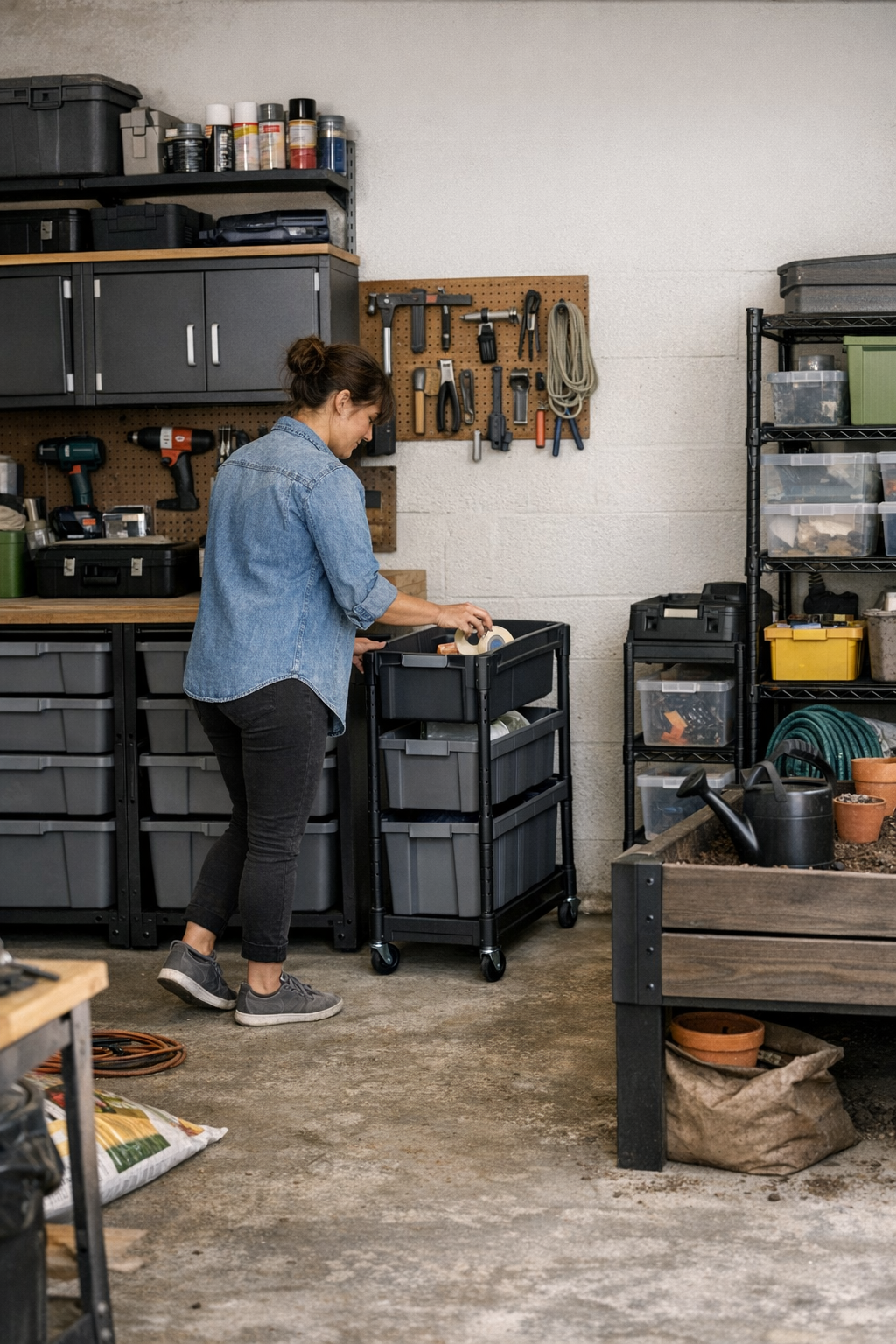
The fantasy of a perfectly organized garage, workshop, or utility space collapses fast—usually the moment you try to get real work done. At first, every shelf, cabinet, and cart lines up crisp and spotless. But give it one week. Before you know it, that “picture perfect” setup reminds you what the photo missed: shift a rolling cart just to squeeze by, reach awkwardly behind a stacked bin to snag a tool, find yourself boxed in by some heavy cabinet you thought you’d use more. The frustration isn’t cosmetic. It’s the grind of daily resets and slowdowns built into a system that looked organized—but never learned how you really move through the space.
Nice to Look At, Exhausting to Use
Too often, initial storage setups are designed by the eye—not by the way you work. The temptation is to create a seamless wall of closed cabinets or shelves. On day one, it feels complete—until the first project, repair, or weekday rush. Suddenly, every closed door becomes a barricade. The walkway narrows because there’s nowhere to park a cart. You sidestep into a corner just to avoid that cabinet edge (again), or find yourself nudging a bin into whatever spot looks least in the way.
The visual order that felt reassuring now steals time: you reach, shuffle, and reshuffle. That leftover stack of supplies? It lives in the overflow corner—the same spot that always seems one step too far. By the end of the week, “organized” means tripping over what you can’t put away and parking projects out of sight so they aren’t in the path. The result: a system that stores things but never truly supports how you use the area.
Where the Setups Really Break Down
The difference between a setup that helps and one that quietly wears you down becomes obvious with real, repeated use. It’s about flow: can you cross the workspace quickly, bring back supplies without re-stacking, and put tools away without detours? Packed, rigid systems conspire against you. Every extra shelf or closed cabinet adds a step—a little sidestep here, a reach over there—until you’re working around obstacles you paid to install.
Ask yourself: Do you avoid a certain route because the rolling cart blocks it? Is there a spot you instinctively skip because it gathers clutter or is just hard to reach? Are you always doubling back for the same tool? These aren’t minor annoyances—they’re repeated friction points, the sign that your storage “plan” is winning a war against your actual routines.
When More Turns Into Less
It’s logical to think that using every inch—floor-to-ceiling storage, deep shelves, wall-to-wall cabinets—means less clutter. But in practice, more often creates dead corners, crowded walkways, and zones that become permanent overflow dumps. That “just one more” shelving run easily traps heavy or rarely used gear where you can’t get at it without a sequence of moves. With each project cycle, these black holes of blocked access multiply, making every reset slower and more frustrating.
The Missing Ingredient: Space You Can Actually Use
The best workspaces are built for action, not just display.
One small tweak can shift everything. Instead of filling wall after wall, try this: leave a deliberate, open pass-through—maybe 16 inches wide—between major storage banks. Place a slim mobile rack on locking casters in the gap. Suddenly you’ve got a flexible “reset lane”: somewhere to drop a project-in-progress, move overflow bins temporarily, or just walk through cleanly, no rerouting required. It isn’t wasted space; it lets you keep using the setup even as your projects and supplies cycle endlessly.
What Actually Happens After the First Week
Walk through your own space on a Monday: the tool panel’s tidy, paint cans sorted, hardware in neat drawers under the bench. Then flash forward to Saturday. The rolling chest is wedged tight, half the bench blocked. Two bins sit in your usual path, and you have to slide trays just to get a screwdriver. That one supply box? It’s always in the way. The stuff looks stored, but you’ve lost clear movement. What used to take seconds now takes shuffling, searching, and second-guessing—proof that a “finished” setup can still interrupt work every single day.
Why Modular and Mobile Means Fewer Headaches
Locked-in storage lines work only for routines that never change. But most real setups serve shifting projects, rotating supplies, and shared spaces. Too much rigidity breeds bottlenecks and “dead zones”—places nobody uses except to hide overflow. Modular shelves, mobile carts, and purposeful gaps break that pattern. Need to clear the floor for a delivery? Roll something aside instead of unloading a whole wall. Got a new project? Wheel the parts where you need them, no reshuffling or full reset required. Weeks later, you’re still moving smoothly, and no corner is filled with a mystery pile of orphaned gear.
Real-World Storage Reduces Routine Friction
Every small instability in a setup—each needless reach, sidestep, or shuffle—turns into hours lost across a month. It’s easy to underestimate just how fast “organized” descends into “in the way.” Filling your garage or workspace with containers looks tidy for a day, but if every reset is a minor headache, the system failed. The best setups protect your movement: build-in pass-through zones, fallback areas for overflow, and mobile elements that flex with your tasks. Storage shouldn’t just corral mess—it should adapt to your routine so you can move, fetch, and put away without thinking twice.
Two Simple Fixes That Actually Matter
1. Hold back one open patch on purpose. Resist the urge to fill every wall. Leaving a single flexible area (just big enough for a cart or bench) gives you the breathing room to handle projects, manage temporary chaos, and survive busy resets without the whole setup unraveling.
2. Walk your entire routine—literally. Every few weeks, load your hands, walk your route, and notice what slows you down. Where do you shift things, detour, or give up and pile something random? If you find repeat friction, don’t wait: adapt the layout before the clutter takes over for good.
No One Notices “Perfect,” but Everyone Feels Clumsy Resets
Stacking, labeling, and filling shelves is satisfying—the photo looks great. But watch what happens after a week of actual use: blocked walkways, sticky corners, overflow spots where every stray item piles up. That’s the difference between appearance and reality. The best storage setups learn from that tension. Leave room to move, choose mobile options, build in a safety net for surprises—and your workspace stops being a source of friction, even on your busiest days.
Change doesn’t mean gutting everything you’ve built. Often, it takes just one smart, modular tweak to get you back on track—so every trip across the space feels easier and the “order” stays, no matter what the week brings.