
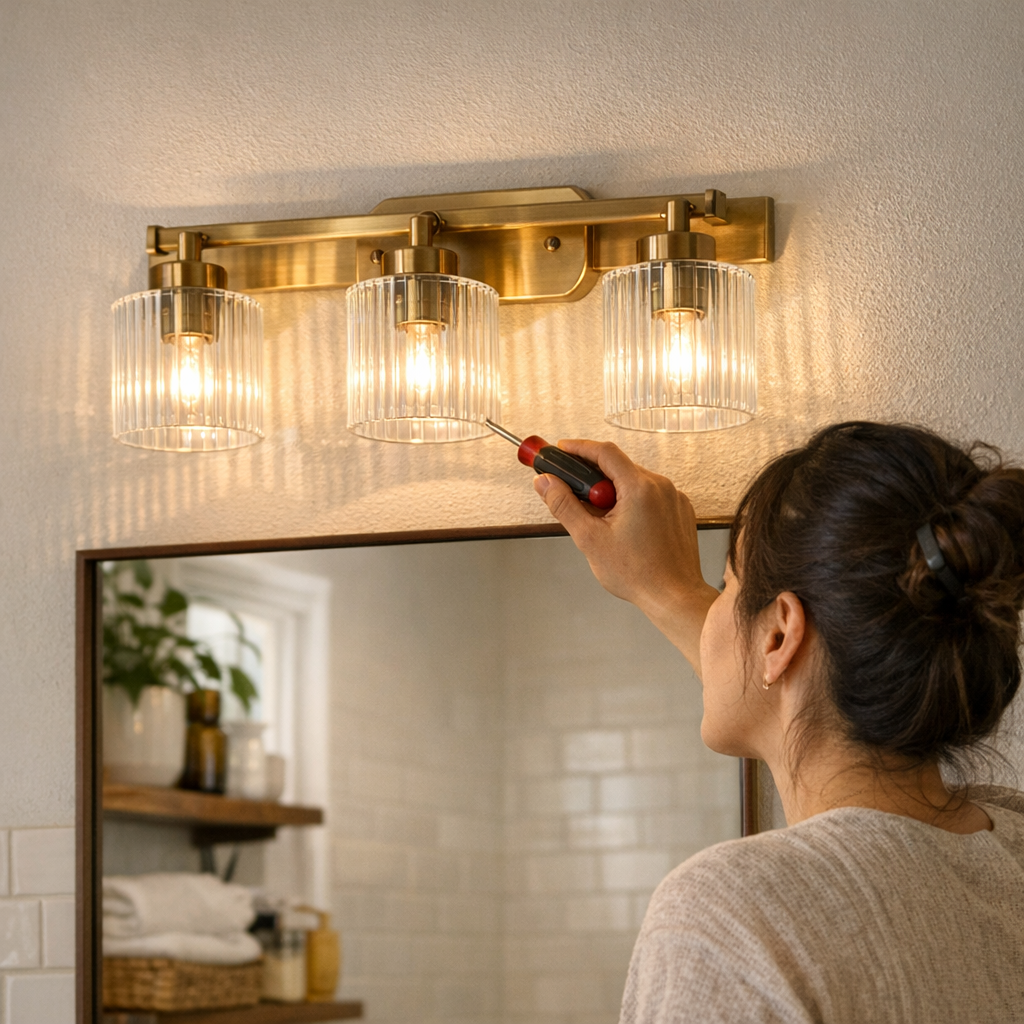
A light can look finished the day it’s installed—fitted flush, trim pressed flat, not a gap in sight. But fast-forward a month, and suddenly that ceiling or wall fixture reads differently: a crescent shadow appears at one edge, dust lines form in seams that were once invisible, or the fixture feels loose after a single bulb change. Most of these problems don’t trace back to faulty fixtures. They begin with one decision—the final over-tightening turn, usually done with a power tool, that feels secure but quietly warps, compresses, or strains the installation. That last twist changes how the fixture stands up to daily routines in real rooms, from hallway to bathroom to stairway, risking the friction and imbalance that turn lighting from reliable to irritating.
Why “Too Tight” on Day One Turns Into Trouble Months Later
No one spots the damage on install day. A powered driver gets the light up quickly, flush to the ceiling, apparently perfect. The catch: tightening too hard with power tools subtly deforms gaskets, distorts frames, or strips threads, leaving the fixture quietly vulnerable. A flush mount in a busy hallway might hold steady for a few weeks, but then a crescent shadow starts tracing one edge. In a bathroom after several humid mornings, a faint ring darkens around a compressed gasket—no amount of wiping removes it. The utility room fixture begins to rock slightly with every door slam or basket nudge. Each sign isn’t just cosmetic—it signals a gap, tilt, or seam that gets worse each time the room is used.
- Hallway flush-mounts cast uneven shadows, especially as doors open and foot traffic shuffles past.
- Bathroom fixtures collect condensation and dust along over-compressed seams, making fast wipe-downs nearly impossible.
- Utility room lights loosen after minor bumps, leaving them out of true and distracting every time you look up or walk past.
Manual Finishing: The Small Step With Real-World Payoff
Precision matters more than speed when it comes to lighting that endures. Swapping a power driver for a manual screwdriver on the final turns lets you gauge resistance—stopping as soon as the base holds steady, before the trim distorts or the gasket crushes out of shape. Hand finishing builds lasting alignment and a fit that stands up to vapor, vibration, and movement. Repeated frustration usually flares up in:
- Hallways and corridors: Small misalignments grow obvious as shadows pull unevenly along walls or ceiling edges.
- Bathrooms: Steam finds the weak point at warped seals, leading to a faint but persistent ring along the trim.
- Utility corners and stair landings: Dust, grit, and humidity turn small gaps into stubborn cleaning problems.
From Install Day to the Hundredth Use: How Small Mistakes Multiply
Picture a stairway at midnight—the panel light overhead is supposed to edge every step with clarity. After a power-tool overtighten, the fixture edge creeps loose over time. The light’s beam shifts left or right, sending a wedge of darkness across the treads. Each trip down you sense the risk—no matter how bright the fixture, the edge of the stairs now fades into shadow, and the balance of the space seems off. In a bathroom, a seam compressed by a rushed install turns into a grime-magnet line that scrubbing never quite clears. The initial mistake rarely seems important until it multiplies with every flip of the switch or weekly cleaning.
Bathroom Gaps and the Annoyance of the Shadow Seam
In bathroom zones, humidity reveals flaws fast. The smallest overtightened seam draws in water and dust, leaving a visible gray line that breaks the edge of the fixture. Suddenly, a light that looked tightly finished feels like a maintenance chore—the difference between one swipe to clean and a slow, finger-tracing scrub along the trim that never feels quite done.
Utility Room Lights: The Case of the Slowly Spinning Base
In utility spaces, door swings and passing baskets put real, repeated strain on ceiling fixtures. If the bracket isn’t finished by hand, the base gradually rotates, threads loosen, and the fixture won’t stay square—resulting in off-kilter light and an endless urge to adjust. The payoff of manual finishing is control: you feel the screw seat, the bracket snug into drywall, and you know the fixture will withstand dozens of minor hits without twisting out of line or cracking the ceiling.
How Lighting Performance Breaks Down in Real Routines
When first powered on, even an overtightened fixture looks fine—light spills out evenly, and the room appears “done.” A few weeks in, reality reasserts itself. Every attempt to change a bulb leaves the fixture wobbly. Shadow edges ring the base and—no matter how you try—won’t wipe away. The light may still be bright, but usable visibility disappears in corners and on working surfaces. The daily difference is sharp: a fixture that’s over-tightened simply doesn’t hold its lines, its seal, or its ease of cleaning.
- Bulb changes become a risky negotiation—will the fixture shift, tilt, or crack if you touch it?
- The trim starts to collect dust and grime along the compressed, uneven seams.
- The room feels lit yet somehow harder to use: counters half-shadowed, mirrors ringed, movement paths uneven.
Proper manual finishing lets you stop at “just right”—the fixture snug, edges even, trim flush, and nothing over-stressed. This isn’t just a fussy install detail—it’s how lighting remains usable and frustration-free after dozens of uses and cleanings.
Real Tips for Repeat Success (and Less Cleanup)
- Finish by hand. Use a manual screwdriver for the last turn or two; power drivers get you close, but hand control prevents over-compression and preserves the seal.
- Inspect edges before the final snug. If one side pulls away, don’t torque the opposite edge—reset gently and apply even pressure.
- Watch the gasket: If it buckles, loosens, or disappears under the trim, back off and reseat the fixture for a flush, uncrushed fit.
- Test stability: Press gently on different corners. If you feel a shift, reset immediately—don’t settle for “almost tight enough.”
Not Just a One-Time Fix: The Daily Advantage
Manual finishing is a long-game discipline. It’s the difference between a light that looks right for a week and one that stays tight, flush, and fuss-free after a hundred switch flips or cleans. The payoff is concrete:
- Bathroom mirrors stay streak-free—no ring of dust or water to scrub out after every shower.
- Hallway and entryway fixtures remain square, making cleaning and routine use frictionless instead of becoming a mild annoyance that distracts every time you pass.
- Under-cabinet and kitchen lights maintain their angle, so counters stay fully visible, without shadowed edges or lost corners.
The habit of hand-finishing every install means less realignment, less cleaning fatigue, fewer loose bases, and a more resilient seal against dust and moisture. It’s a small step that decides whether your lighting stays straightforward—lining up with your routines—or slowly turns into another source of daily disruption and cleaning work. Consistently tight, flush, and sealed, fixtures do more than illuminate: they let you use every corner of the room without pause or workaround.
LightHelper — Practical indoor lighting, selected for rooms you actually use.