
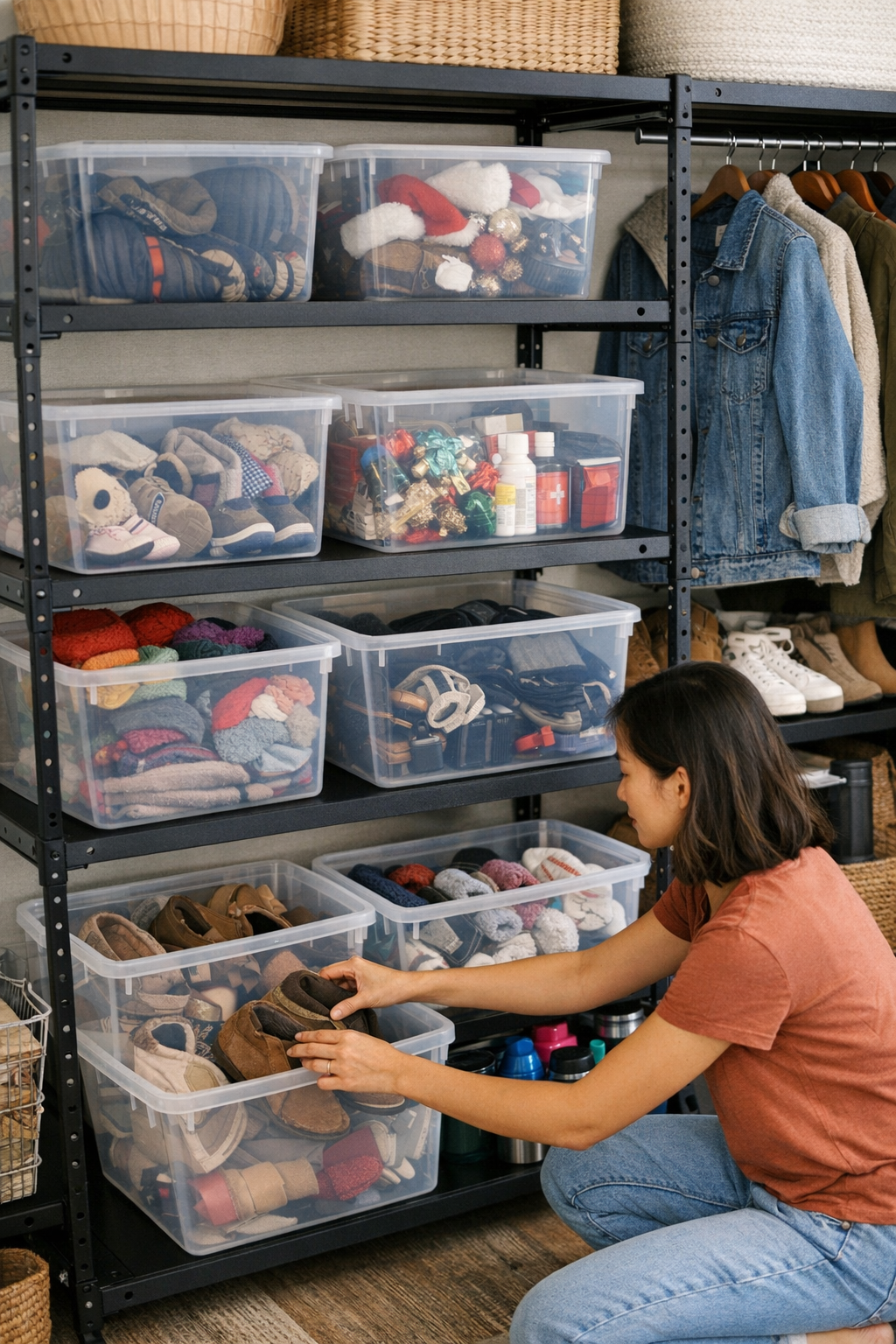
Every storage system gets tested by the same ordinary moment: you’re in a rush, you reach for a bin, and right then the cracks start to show. The choice between clear and opaque bins is more than a question of looks—it’s the line between surfaces that only look settled, and shelves that actually hold up under real, everyday pressure. When you use clear bins, any creeping mess, sagging stack, or doubled-up category is right there in the open. With opaque bins, the surface stays calm… until you’re crouched on the floor, lids off, hunting for one runaway mitten or that backup phone charger you’re sure was here last month. The hidden chaos builds quietly, and you’re left smoothing it over, again and again.
The Feedback Loop: Why Visibility Translates to Control
The real difference is not aesthetics—it’s a feedback loop that shapes how you interact with your shelves. Spaces that get touched daily—entry closets, kitchen overflow zones, laundry shelving—demand visible storage if you want order that lasts past the first week.
Clear bins put every frayed edge in sight. If your hats tumble into the scarf pile or the batteries migrate to the art supply bin, you see it at a glance—no need to stack and restack. Even as you pass by, you spot when folded towels start to lean, or when after-school clutter crowds out what’s supposed to be there. With opaque bins, you notice only when something’s missing… or after an offhand search has left lids as obstacles on the floor, with contents in mild disarray.
Everyday Storage Under Pressure: The Real Test
Consider the weekday squeeze: the closet’s stacked three shelves high. At the top, off-season hats hide behind a row of bins you barely touch. The shelf at eye level, though, is all action: gym shoes, extra jackets, the container for daily accessories. In a real moment—running late, hands full—it’s clear bins that keep you from digging through the wrong container for the fifth time. One look confirms: the phone charger lives here, the winter gloves are with the scarves, or not. No extra handling, no shifting a wobbly stack, no dragging containers onto the hallway runner just to find the lunch bag.
Opaque bins, in contrast, slow you down at the exact wrong moment. “Maybe it’s in this one?” repeats as you check, double-check, and create a mini-wave of clutter—the very thing you hoped to avoid. No matter how tidy the shelf appears, the system quietly breaks down each time the wrong item is tossed back, or two categories start sharing one bin out of short-term desperation.
When Order Slips Beneath the Surface
Opaque bins can be a storage mirage. Smooth fronts and matching colors lull you into thinking the system is working—until you go looking for something and realize: the dog leash is buried under holiday cards, a backup charger is mixed with random cords, and last season’s scarf has vanished. Categories blur and migrate. It doesn’t happen in a dramatic avalanche, but one minor mix-up at a time.
Clear bins, uncomfortable as the exposed mess may feel, keep those subtle disintegrations in check. If snack wrappers start piling on the towel shelf or garage clutter sneaks into the glove bin, you see it right away. Regular use doesn’t quietly unravel the whole system. Instead, those small corrections come naturally—no Sunday afternoon reset required.
Bouncing Back Faster: The Real Value of Clear Bins
Switch to clear bins and the daily reset becomes less of a chore. The path of least resistance is the right one—you drop folded socks into their bin with a glance, rather than a double-check. When groceries or seasonal gear come home, you spot open space (or overflow) in seconds. Fewer full-shelf rethinks, fewer moments lost searching, fewer “How did three chargers end up here?” discoveries. Over time, you spend less energy keeping categories straight and more time not thinking about storage at all.
Does it turn your home into a showroom? No. Mess still creeps in, especially in shared family spaces or when routines shift. But clear bins raise a gentle, constant flag—so clutter never gains the camouflage that lets it multiply. Even kids and guests can pitch in, because “put this where it came from” actually means something visible, not just another sealed black box.
Living With Nothing to Hide: The Honest Storage Tradeoff
Clear bins demand a bit of honesty—you’ll see the late-night drop-offs, the half-unpacked craft kits, the lone unmatched glove. The payoff is real: forgotten gear doesn’t fester at the back, and you only buy new batteries when you can see the old supply is low. Shelves feel lived-in, maybe less styled, but also less likely to turn into storage puzzles you dread untangling.
Opaque bins still have specific utility. Hide away messy yard gear or shield an open shelf from guest view—it does the job. But accept the compromise: faster to stash, slower to retrieve. Each layer of hidden buildup adds friction, and sooner or later, you’ll pay for it with lost time or duplicated purchases.
Small Choices, Big Impact: Storage That Works With You
Does your bin pick matter? Only every single time you reach for your stuff. Opaque bins lock you into a cycle of guessing and reshuffling. Shelves fill up before their time, vertical space gets wasted, and categories blend until “storage” starts meaning “somewhere, maybe.” With clear bins, you actually see when sections are drifting, when overflow is squeezing out original contents, and when a quick reset is due. Routine access stays fast. You waste less energy and fewer weekends battling back lost order.
For clean, display-ready surfaces, opaque bins are a shortcut. But for storage zones that have to work day in and day out, visibility wins. Not because clear bins prevent all mess, but because they make slipping standards so obvious you can’t ignore them. That’s what keeps your closet—and your sanity—intact.
Ready to see which bins actually fit your routines? Explore practical storage solutions at ClosetWorks.