
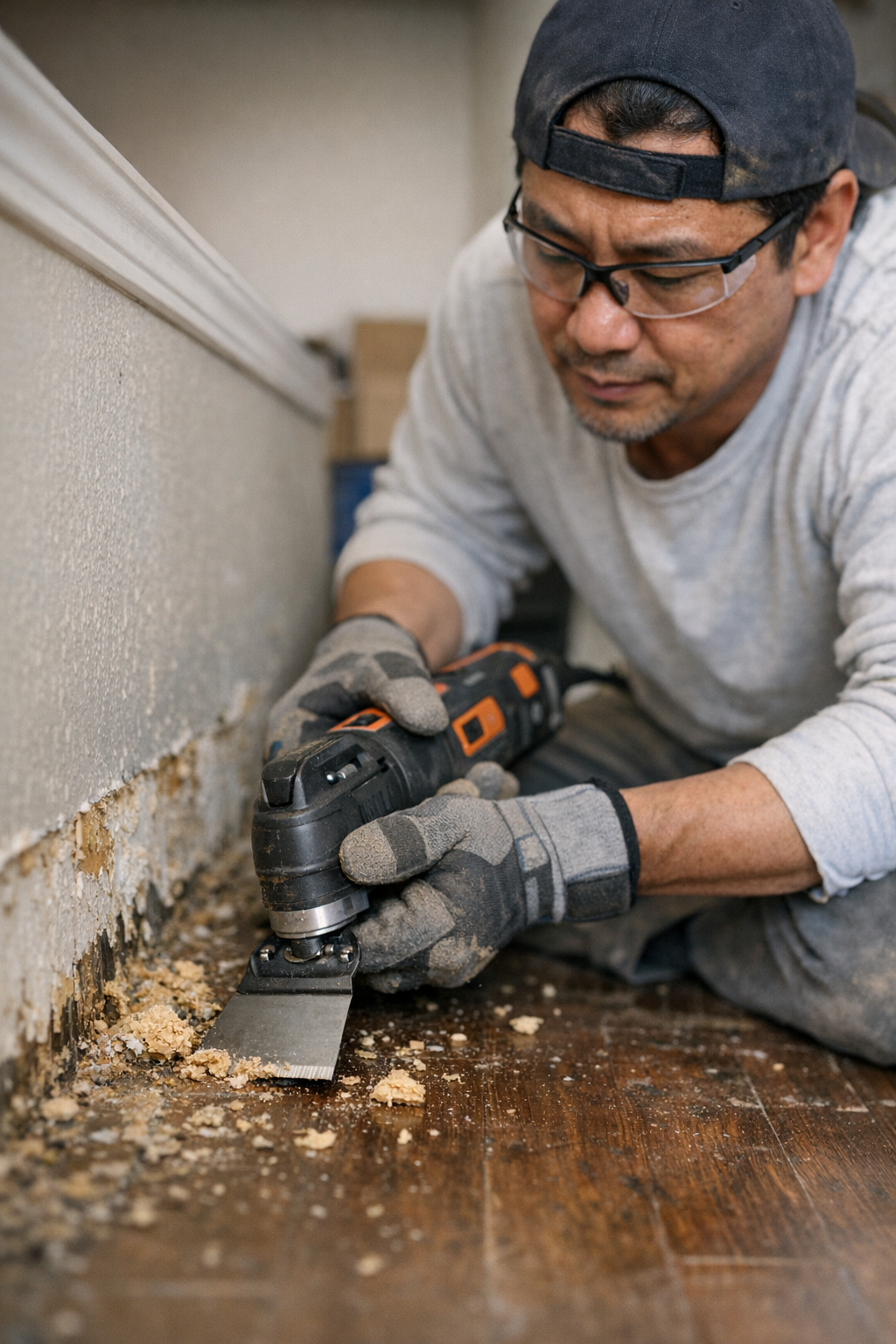
Adhesive removal always looks easier on paper—until you’re hunched over a floor, wrists throbbing, and every pass of the blade leaves behind more smears than progress. If you’ve wrestled with ancient carpet glue that won’t let go, or scraped mystery adhesive from a garage workbench for the tenth time, you already know the sinking feeling: the tool’s got muscle, but with the wrong blade, it’s like dragging a butterknife through tar. The right scraper makes or breaks your day. And that truth punches in much sooner—sometimes within the first ten minutes—than most people expect.
Why “Almost Right” Blades Turn Into Extra Work
At a glance, any oscillating blade feels pretty much like the next. Rip open a box of multi-tool accessories and most days you’ll just grab the nearest “scraper.” If it’s just a few glue blobs? No big deal. But under real pressure—stripping glue off old subfloor, or getting adhesive and dried caulk out of a hundred trim edges—a so-so blade burns through your energy faster than it clears anything.
Small, nagging problems pile up. Standard-issue blades might snag a patch or two, but as the hours drag on, your arm tingles and your patience thins. Sudden chatter. Blade veers. Streaks and gouges crop up where you least want them. Multiply every minor slip and shake by the number of corners, doors, and panels in an average job, and “good enough” quickly means “hours lost and surfaces roughed up.” When you realize you’re spending as much time sanding scars and recutting seams as scraping glue, that cheap blade feels more like a penalty than a shortcut.
What Really Happens When Adhesive Won’t Let Go
Adhesive removal is never just a clean pass and done. Real jobs bring years of dried glue, random paint streaks, maybe mud, maybe sawdust. After a few passes, blades start to heat up, fill with gunk, and lose their edge. Suddenly every motion requires a little more muscle and the tool begins to fight you—heat warping the blade, edge drifting, work slowing to a crawl.
That starter-kit flexible blade you tossed in for quick hits seems helpful—right up until the glue thickens. Now it bends, skips, even skates away from the surface. You chase the same patch two, three, even five times. The tool buzzes, the blade flexes, and before you know it, you’re fighting fatigue and making a tired mess of the job you meant to finish before lunch.
Real Scene: The Wall-By-Wall Difference
Imagine clearing six baseboards in a rental unit. The early runs, flexible and rigid blades fare about the same. But after a few meters, adhesive globbing onto a flexible blade turns every stroke into guesswork. The handle vibrates, scraping sounds go rough, and you find yourself buffing out streaks you didn’t see coming. Meanwhile, the worker who switched to a stiff, wide scraper is wrapping up steady, controlled passes—taking out old glue, leaving paint and trim lines sharp. Over a single board it’s subtle; by the entire room, you’re staring at a real divide in effort and finish.
The Workhorse: Rigid, Wide Scraper Blades
Here’s the overlooked truth: not every blade is built for the beating that real adhesive removal gives back. Rigid, broad blades—especially something like a 50mm reinforced edge—transform the way your tool hits the job. Size lets you plant the blade squarely and dig in instead of fighting slip and chatter. Pressure spreads out, so you cut instead of gouge. Passes grow consistent. Instead of tiptoeing around the surface, you work with confidence, making steady, workable progress you can feel in your hands and wrists by the end of the day.
Switching to a rigid blade partway through a job doesn’t just save time—it steadies your workflow. Stubborn, rubbery glue finally lifts in whole strips. You’re not stuck pausing for clean-up or tracking back to erase smeared streaks. Especially under counters, around old adhesives, or stubborn tile mastic, the relief in control and speed is the difference between a drawn-out struggle and a manageable, even satisfying process.
Quick Tactic: Don’t Ignore Blade Build-Up
If you see glue building up on the blade, stop. Don’t push through—clean it. Clogged blades heat up and slip, ruining the finish and burning through tool battery or your patience. A wiped-clean, rigid edge slices more efficiently, protects the surface, and keeps wrist fatigue at bay. Those extra seconds to clear gunk off pay back in smoother workflow—every single pass.
Blade Specs Matter—But Rigidity Wins Most Battles
Carbide-tooth blades talk up their toughness, and for concrete-thick glue or adhesives studded with grit, they have their place. But in the daily jobs—old floor glue, construction adhesive on trim, sticky residues under paneling—choose width and stiffness over fancy coatings every time. Stock your kit with blades meant for scraping, not just cutting. Narrow profiles work for tight corners, but when the job is long and the adhesive stubborn, a rigid, wide scraper is the tool that keeps the job on track and you off the struggle bus.
Better Blades, Lower Fatigue—Every Job, Every Room
Most of us don’t start a job expecting to swap blades halfway through. Only when vibration takes over, seams start to fray, and fatigue sets in do we realize a dull, flexible blade can double our work and halve the quality. The right scraper isn’t about instant speed—it’s about trading in stalls, scrap-outs, and wrist pain for steady, clean, predictable progress as the day winds on and stubborn adhesive keeps fighting back.
If you’re facing down old linoleum glue, caulk that won’t quit, or a deck patched with construction adhesive, don’t leave performance up to chance. The right scraper blade keeps its edge longer, delivers cleaner surfaces, and lets you end the job without the urge to switch wrists every hour. Less shaking. Fewer rough fixes. More stretches where the tool feels like an extension of your hand, not an enemy. Start smarter, and you’ll skip a world of rework no amount of grit paper or late-night patching will truly fix.