Blog

  • Why Anchored Drawer Systems Outperform Stacked Units in Daily Use

    Order that needs constant fixing is no order at all. Set up a hallway, closet, or bedroom corner with neat stacked drawers or modular bins and, at first, everything feels crisp. Shoes lined by the door. Toiletries in their cubby. Chargers in one tidy compartment. But it only takes a few days—and a few rushed searches or careless returns—before the weakness appears. Drawers lean, stacks slip, and suddenly the system that promised order starts multiplying sorting and retrieval work.

    Where the Setup Breaks Down: The Reality Check of Daily Use

    Most storage setups look strong right after install: drawers aligned, stacks tight, categories separated. But repeat use exposes cracks fast. Hallways gather stray shoes and bags. Closets swallow everything from winter hats to stray tech. It takes one overstuffed bin or misaligned drawer and suddenly, basic actions—like grabbing a towel or finding a charger—require detours, jams, or digging through mixups at the bottom. What should streamline busy mornings now blocks your path or slows you while you restack or re-sort drawers for the third time this week.

    The pain isn’t just visual. Category drift is daily: device cords wind up in the sock pile; folded linens inherit last-minute clutter. The floor unit that seemed clever now crowds your exit path or blocks a door. The setup “holds” your stuff, but the price is silent friction on every return and retrieval. What’s meant to help you move smoothly ends up forcing slowdowns or extra resets, especially when more than one person uses the same zone.

    Stacked Drawer Units: Fast Setup, Fragile Order

    Stacked drawers only thrive when no one disturbs them. At move-in or in solo spaces, there’s a drawer for every need: scarves, chargers, tools, undisturbed and neat. But daily routine quickly undoes this:

    • Drawers pulled halfway or returned just off-track start to skew the tower—one error throws every level above and below out of line.
    • Heavy or overfilled drawers lean or bow, risking a full collapse or tilting stacked units.
    • Anything buried at the bottom means unstacking half the system just to retrieve one item, disrupting order up and down the tower.
    • Different users, different habits: no two returns land the same, and shared spaces show entropy faster than any single-user setup.

    The cycle recurs: stacks drift, order softens, and what started as “organized” becomes another time sink, calling for regular overhaul just to stay functional.

    Anchored Modular Frames: Trading Flexibility for Usable Stability

    Anchored modular frames change the entire equation. Instead of balancing loose towers, every drawer or bin sits inside a fixed rail, wall slot, or mounted grid. That structural anchor makes visible difference over weeks of real use:

    • Rushed drawer pulls or careless slams no longer knock the whole system sideways. Each unit’s path is fixed within the frame, not able to wander into blocked positions.
    • Category boundaries hold: files don’t migrate into towels, chargers don’t tangle with socks—even under careless returns or shared hands.
    • The footprint never creeps forward or to the side; movement stays clear, access paths open, and resets are faster because items stay where they belong.
    • The frame itself takes the impact of daily churn, keeping the system readable and usable even as habits fray or users change.

    If you want to rearrange constantly, fixed frames push back—swapping layouts isn’t instant. But for most high-traffic zones and shared rooms, clarity and consistent retrieval outweighs the lost flexibility. You regain flow: less fixing, more direct access, fewer slowdowns midweek.

    Small Frictions, Big Delays: Common Scenes in Shared Spaces

    • Double grabs for the same item—try drawer one, find it’s shifted, now drawer two blocks you, and morning routines burn extra minutes.
    • Three drawers pulled before socks appear—all because stacks slipped, and now everything needs reordering just to reach basic items.
    • Wall fixtures that promise “space saved” but instead force awkward side steps or overreaching, as bins migrate outwards under repeated use.
    • Bare floor corners transition into dumping grounds, absorbing overflow from every system failure and stretching out the time needed to reset each week’s mess.
    • By midweek, it’s obvious: the more time you spend “maintaining order,” the less the zone helps you move or live in it.

    One Simple Tip: Prep for Your Own Pace

    Do this after your next reset: Mark the calendar for four days out. If you’re already restacking or reshuffling, or just subtly annoyed at drift and misplaced items, your setup is misaligned with your real daily pattern. Any system that demands correction that quickly is adding friction, not removing it.

    Seeing the Difference: From Correction to Calm

    What stands out after a month isn’t the look—it’s whether you can grab, return, and continue, no matter how imperfectly you and others use the space. Anchored frames win here: categories hold, drawers move cleanly, resets shrink to seconds, and you stop spending time realigning storage pieces just to keep things accessible. Multi-user setups breathe easier: you can pull a drawer while someone else grabs a nearby shelf, assign specific drawers with confidence, and trust that thresholds and paths stay open, not choked by creeping bins or unstable towers.

    The sound of “organization” becomes background—not another chore looming at the week’s end, but a system that absorbs daily disorder and quietly resets on its own terms.

    When Setups Become Another Chore

    If you catch yourself untangling, restacking, or re-sorting more than once a week, it’s a signal: the storage itself is now running your routine, not supporting it. Invisible wasted effort—the time spent fixing, nudging drawers back into place, or tracking down overflow—add up, making every morning or night a little more aggravating. A system that keeps its shape through shared use, carelessness, and the usual churn shrinks this silent workload: you get back clear paths, easy retrieval, and less forced reset, whether you’re hurrying to work or winding down for bed.

    Choosing What Fits: A Setup That Stays Accessible

    The right storage won’t just survive setup day—it will endure the chaos of real life, holding its structure even when days turn chaotic or hands change between uses. If you’re living with ongoing category blending, chronic restack needs, or a storage zone that crowds your routines instead of easing them, an anchored, modular frame can mean the difference between functional space and just another zone to fix. The calm isn’t cosmetic—it’s built into the daily, repeated flow that matters most.

    See more practical modular frames and anchored storage solutions at Gridry.

  • Transform Your Workspace with Balanced Ambient and Task Lighting

    The right ceiling light can make a room look finished in a single flip of the switch—but after a few workdays, the cracks start to show. That new flush mount floods your space with light, but by day three, you catch yourself sliding your laptop an inch to the left, shifting paperwork back to center, or squinting to dodge a stripe of glare across your monitor. The room seems bright, but clarity disappears at the desk edge; shadows under shelves don’t budge; and the mirror still leaves half your face in the dark. This is the real gap between “illuminated” and actually “usable,” and it doesn’t reveal itself until you repeat the same routine—and run into the same friction—over and over. In the world of indoor lighting, an apparent fix often hides the stubborn limitations of the wrong fixture choice.

    When Overhead Lighting Leaves You Guessing

    Step into most workspaces and they look ready: ceiling fixtures spread brightness wall to wall. But within hours, you’re back in the loop of small annoyances. Flush-mount and basic ceiling lights promise coverage, but leave precision behind. Glare lines show up where you need screen focus. You reach for a pen at the desk edge and it’s faded into a patch of shadow. Even with all lights on, certain zones—corners, shelves, cabinet edges—resist clarity. Every minor annoyance adds up: pulling a receipt into the center just to read it, adjusting your chair to catch a stray angle, or twisting the monitor to escape a hot spot. It’s not darkness, just a slow, steady drip of inexact lighting that keeps routines off-balance.

    This is the cost of lighting designed for brightness, not for real task behavior. As the workweek drags on, interruptions mount: squinting, shifting, pausing to get the setup “just right,” only to find the same weak spot tomorrow.

    Ceiling Fixtures: Coverage Without Control

    Flush mounts, semi-flush fixtures, and broad panels succeed at blanketing a room in ambient light. But they’re wide, not targeted. Shadow lines stubbornly track under cabinets and along shelves. Sinks, counters, and desk perimeters absorb just enough darkness to make you move items mid-task. In kitchen zones, you discover the counter never glows evenly—you chop vegetables under a broad central glare, but every edge is tinged with shadow. Home offices and utility rooms tell a similar story: each surface with a different height splits the light, leaving half-visible paperwork or dim tool drawers. The sense of “almost there” lighting never fully lands, and muscle memory starts compensating for poor visibility before you even notice you’re adjusting.

    The Cost of Repetition: Routine Frustration

    Poor lighting rarely sabotages a space all at once. It erodes comfort through repeated, avoidable distractions. You drag paperwork away from a murky desk edge for the tenth time. The washing machine controls are shadowed every evening, so you fumble with settings you knew by heart. In hallways, ceiling light pools above while your feet feel their way through a corridor that seems to darken just where you cross between rooms. Not one of these moments stops the day cold, but over a week, they stack up as constant, unnecessary friction. Maybe the room “looked” done after the last fixture went up, but by Friday, you’re leaning in closer just to finish ordinary tasks—proving the wrong fixture isn’t subtle; it’s quietly exhausting.

    How Directional Lighting Changes the Routine

    Aim a light the right way and the room’s habits change. Add a wall sconce, under-cabinet light, or an angled task fixture. Place it where hands cross paperwork, beneath a cabinet, or beside a bathroom mirror. Shadows disappear from working edges. Glare on screens fades out as light comes from the right direction, not just the ceiling. Clear visibility stretches to the corners, not just the desk middle. Instantly, you notice:

    • No more losing pens, receipts, or tools to the gloom at the edge.
    • Left and right sides of the surface match the middle in clarity.
    • Mistakes caused by missed details or hidden objects drop off—routine actions run smoother because nothing is buried in shadow.

    The routine shifts. You stop nudging items into a sweet spot. Corners hold up under close work. Bathroom grooming no longer means angling toward the window or leaning over the sink to avoid half-lit cheeks. It isn’t dramatic; it’s just one less thing breaking your flow, all because light finally matches the way you use the room.

    Scene to Scene: Real-World Lighting Friction

    Stair Turns That Keep You Pausing

    Standard ceiling fixtures brighten the stairwell air, not the actual treads. Every turn, your foot hesitates. You half-step, scanning for that next tread because the edges are left in a dim valley. Install a wall sconce low enough to target the steps, and suddenly, every riser is outlined—safe, clear, no hesitation.

    Mirrors and Shadow Faces

    Overhead lights create a mirrored split: one cheek lit, one in dull half-shadow. Shaving, applying makeup, or checking a spot—all interrupted by the same shadow arc, day after day. Vertical wall lights flanking the mirror erase this imbalance, replacing harsh contrast with soft, even visibility where it actually matters.

    Under-Cabinet Shadows: The Counter That Never Glows

    Countertops disappear beneath upper cabinets, no matter what’s overhead. Chopping or scrubbing under that overhang means hands cast hard shadows. Loading laundry at night? You miss buttons. Snap in a slim under-cabinet fixture and the edge glows evenly—no more guessing, shifting, or chasing the light left to right.

    Key Moves for Everyday Clarity

    Add targeted lighting where repeated routines stall. Use ceiling fixtures for ambient coverage; support them with wall sconces, vanity lights, or under-cabinet LEDs to attack the trouble spots: glare, persistent shadows, and half-lit surfaces. Run a quick test: hold a paper flat across your main work area and watch for shadow lines. Wherever detail fades, reposition your task light until no corner is lost. This isn’t a quest for more brightness—it’s a push for usable clarity, achieved by fixing the frustrating zones ceiling light can’t touch. Adjust beams and directions to dodge screen reflection and mirror glare; shift the location early so you spend zero time reworking finished routines later.

    Why Fixture Type Matters Over Time

    As days and weeks stack up, the wrong fixture leaves a fingerprint: tense shoulders, more shifting, and a creeping sense that the space fights back. The difference between a “lit” room and a clear, task-ready one is visible and felt, day after day. Pair ambient with directional lighting and that friction falls away—you move without seeking light, and every corner operates at the same level as the obvious center. When you notice fewer interruptions and no longer work around your lighting, that’s when the room is finally working for you—not just lit, but ready for whatever comes next.

    For clearer work areas, better hallway routes, and mirrors that show what you actually need to see, see more practical lighting options at LightHelper.

  • Choosing Between Bi-Metal and Carbide Blades for Tough Cutting Jobs

    The saw’s kicking. You’re halfway through a stack of nail-riddled studs—another gritty remodel, another mix of old wood and surprise fasteners. The first few cuts went smooth, but now each pass drags. Your blade flexes. Edges stray off course. Cut ends fray and splinter so badly you start dreading the cleanup. This is exactly when you stop caring about blade specs—and start caring about which blade keeps you working instead of fighting your gear.

    The Hidden Pain of “Good Enough” Blades

    When you’re ripping through clean, hardware-free lumber, nearly any new blade does the job. Bi-metal, carbide-tipped—they look the same out of the box, and both feel sharp on that first stud or two. That’s why the hardware aisle makes it seem like blade choice is an afterthought. But in the real world, jobs rarely stay textbook neat for long.

    Why Decent Suddenly Isn’t

    The real gap opens the moment a blade meets nails, screws, or composite—when you swap a trim-out for demo work, or hit a buried bracket nobody warned you about. Bi-metal teeth round off fast. Each push needs more muscle. The saw starts protesting, heat builds up, and every little shake in your arms gets amplified. By cut ten, you’re not slicing—you’re wrestling. By cut fifteen, you’re mentally tallying the extra sanding and recuts ahead.

    When the Material Fights Back

    Not every board wants to be cut. Fiber cement, bent-deck lumber with secret fasteners, old siding layered with staples—these materials grind down a blade quicker than you’d believe. With a bi-metal blade, two or three decently clean cuts often become an uphill slog of smoke, noise, and ugly kerfs. The saw vibrates, dust erupts, and soon, correcting a ragged finish takes longer than the cutting did.

    Carbide-tipped blades don’t just outlast—they outwork. Even on abrasive composites, or plowing through drywall with hidden conduit and nails, they keep their edge. Instead of burning through five blades, you’ll often finish the job with one, still sharp enough for a presentable cut. Every pass feels steadier: less wandering, less force, and less guesswork about where your cut is heading.

    Scene in Reality: Reno Wall, Hidden Headaches

    Picture a string of still-painted joists riddled with old finish nails. The job: cut out every last one, fast. Start with a bi-metal blade—first, clean, then every cut gets shakier. Your hands buzz, forearms tense, and the saw’s sound changes from a hum to a grind. Switch to carbide, and suddenly, the work is predictable again. Cuts run straight, the line doesn’t stutter, and tool vibration finally settles. Now it’s your work that sets the pace, not your blade’s mood swings.

    Dull Blades—The Real Cost You Pay

    We’ve all tried stretching a blade: flipping it after dulling one edge, clearing build-up, nursing it through “just one more” pass. Sometimes, that hack gets you through. Just as often, it leaves you with bad lines, extra sanding, and burns on both your cut and your patience. Tool fatigue sets in—the blade flexes, your saw jumps, and suddenly, you’re patching damage just to keep things presentable.

    The real cost isn’t the blade—it’s the compounding aggravation of unpredictable performance. Bi-metal blades, once dulled, start wandering, carving wider, less controllable paths that mean rework or filler. Even the most seasoned builder can’t sand away a bad cut made with tired steel teeth.

    Carbide-tipped blades aren’t a cure-all, but they take the edge off these headaches. On tough jobs—laminates, structural lumber riddled with hardware, or any mix of nails, screws, and stubborn glue—you get more cuts per blade, steadier hands, zero drama. That steadiness and control often mean less rework, less fatigue, and, in a tight deadline, the difference between finishing before dark and apologizing to a client for the dust and filler you left behind.

    The Subtle Impact of the Right Blade

    It’s not the badge—it’s the output at hour three that matters. The right blade keeps your workflow moving. Cutting more, stopping less. I’ve switched to a 6-inch carbide, 8 TPI, for demolition after losing whole afternoons nursing bi-metal blades. The difference: one blade lasted an entire teardown and cut the time I spent with a belt sander by a third. Not magic. Just sharper, and it stayed that way to the bitter end.

    When It’s Time to Go Carbide

    If you mostly handle single-pass trim work, or standard pine studs with the rare staple, bi-metal is fine—until the job isn’t. The grind starts when you’re stuck cutting reclaimed wood, demo-ing through layers of material, or facing run after run of abrasive composite. That’s when bi-metal chews through your patience and your budget.

    Carbide makes the grind routine, not a hassle. You notice it when the twentieth board cuts as cleanly as the first. When you’re not stopping to clear hot blades or breathing in clouds of dust from burned-out steel. In those repetitive, abrasive conditions, the return is less fatigue, fewer crooked lines, and a workflow you don’t have to keep interrupting for tool swaps or finish repairs.

    Pro Tip: Tag Your Blades, Control Your Downtime

    If you can’t predict what each job throws at you, stash both types. But when you hit the hard stuff—hidden fasteners, rough edges, weird laminates—send in carbide and keep it marked for demo. The difference isn’t just a longer-lasting blade, but fewer fixes at cleanup, and less time wondering which cut you’ll need to redo.

    The Takeaway: Field Reliability Over Factory Specs

    Blade labels tell you little. What matters is out there: repeated, messy, unpredictable cuts. Carbide delivers a steadier cut, a stabler saw, and a job that doesn’t get stopped cold by the wrong tool. For the work that pushes back—nails, mystery metal, multi-layer boards—the upgrade is visible, not theoretical.

    Forget the packaging. Next time the job kicks up more than chips and sawdust, you’ll know why your blade choice wasn’t just an afterthought—it was the difference between job done and job delayed.

    http://gumboll.myshopify.com

  • Creating a Pet Care Corner That Simplifies Daily Routines Without Clutter

    When Pet Care Corners Stop Helping Daily Routines

    A pet care corner can look like the answer: everything in one spot—bowls lined up, refill bottle within reach, towel draped, brush tucked in. Yet, by the third or fourth day, what seemed streamlined now slows you down. Reaching for the water bowl means nudging clutter, a towel slips onto the floor, the backup jug blocks what you need next, and “organization” turns into repeated shuffling just to refill, wipe down, or store the basics. CalmPetSupply knows: what looks organized on setup day often doesn’t survive real, repeated use.

    Everyday Friction Shows Up Fast

    The reality is obvious on a busy morning—your dog weaving between your legs, cat hovering underfoot, and you have to edge the water bowl out because another dish sits too close. The towel that started on a hook has slumped over the toy bin, half on the floor. Just grabbing the water jug turns into a shuffle: move the towel, avoid the backup bottle, squeeze past a forgotten brush. One off-placement doesn’t stay small—it crowds every quick step, multiplying hassle at each routine check-in.

    And it compounds: a “just in case” jug gets wedged in for the week, but most days, it blocks the primary refill. The extra brush always waits but never gets used; your hand bumps it daily, but it does nothing except take up space. Each supply meant to save time ends up demanding more of it.

    Looking Tidy Isn’t Always Working Well

    When setups focus on visual neatness, they miss where routines actually break down. Those tidy lines of bowls and stacked bins suggest readiness—until feeding time arrives. Cat food just inches from the water bowl, towel perfectly folded on a storage bin: it all looks calm at night. By morning, a pacing dog and darting cat mean bumped edges, the bin handle jams the bowl, and the towel drops to the floor or gets trapped out of reach. Refills start happening late, wipes get skipped, and the “tidy corner” quietly builds up sticky surfaces and pet fur.

    Nothing truly stays in place: the storage bin can’t lift without moving something else first. That one extra wipe now feels like a chore because the towel’s missing or under another supply. Instead of speeding up care, these setups generate an invisible drag line—routine steps that always snag.

    Small Interruptions Become Routine Headaches

    The first sign of a failing care corner is the daily block: the refill bottle that sits in the way, the brush no one uses, the towel that sinks into the pile. After a late walk, toys scatter, but the storage spot is buried behind supplies and not worth the extra reach. The pattern returns—slow bottlenecks, items stacked out of sight, a pet corner that gets slower after each reset. Some friction always returns, no matter how well you re-stack bowls or hang towels.

    The cost isn’t just minutes lost, but a routine stretched thin—what should be a simple sweep turns into five minutes of rearranging, bumping, restacking, or promising to “sort it later.” A tidy-looking corner isn’t the same as one that’s ready to work when you actually need it, over and over.

    Less Can Mean Actually Easier

    The real improvement doesn’t come from adding more options—it comes from clear subtraction. One refill jug out instead of two. The main brush on a plain hook, not buried in a bin. A single towel in reach without competition. A setup where each item out is the one you use, not just another thing to move or step around.

    With only daily-use gear left visible, routines stop getting tripped up. The bowl lifts without shifting bins. The towel hangs open, ready for a surface wipe, never buried or tangled. After multiple days, clutter stays in check; cleanup doesn’t snowball. There’s little urge to reset everything because the structure actually holds—even after a week.

    These corners don’t rely on visual perfection but on routines that keep moving. Every supply that stays out has to justify its place by making daily care noticeably easier—not just filling the space.

    Practical Takeaways for Real-World Pet Corners

    The best way to judge your care setup? Watch where routines snag in the middle—not just how things look before the day starts. If you’re moving an item every single time to reach another, or if night refills and wipedowns always get postponed because something blocks the way, it’s a signal: too much is getting in the way of actual care.

    The strongest arrangement is easy to spot: after seven days of feeding, refills, cleanups, and returns, everything’s still within reach, nothing’s blocking a bowl, and the extra shuffling is gone. Your setup isn’t measured by how tidy it looks, but by how little you notice it during the rush of daily routines.

    For most homes, a care corner works best when fewer, well-positioned basics win out over extra organizing pieces. The fewer times you need to reach past, unstack, or move something “just in case,” the less likely routines stall. Real function beats first impressions—and makes daily care smoother than any new shelf ever will.

    See practical pet-care setups and simple gear at CalmPetSupply.

  • How Vertical Storage Transforms Shared Yard Organization and Flow

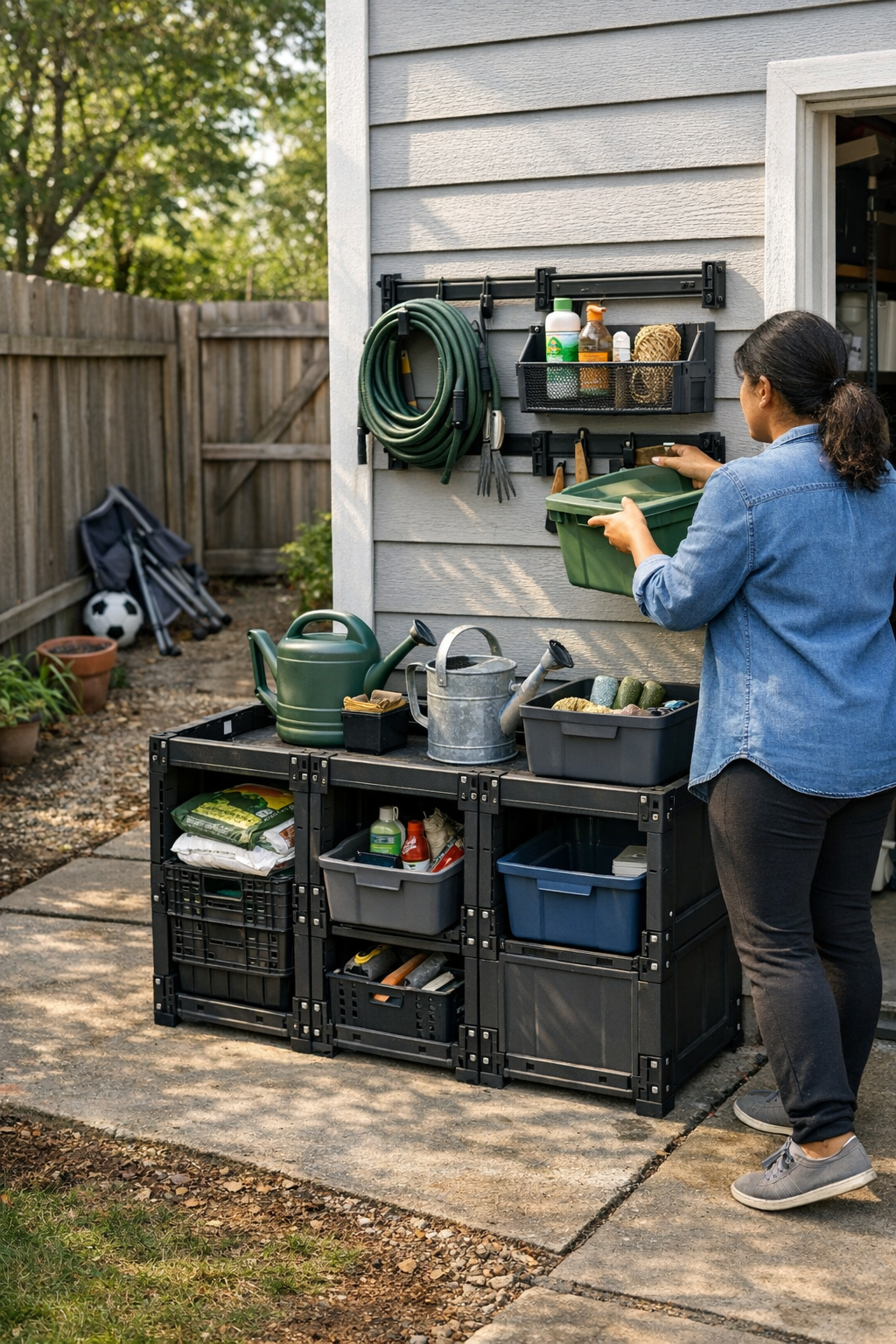
    Every shared outdoor space has its illusion of order: bins stacked neatly along a fence, racks squared off on the garage wall, the walkway cleared for once. For about five minutes, you’re convinced you’ve finally tamed the yard. Then the real day starts. Kids track boots past the bins. Someone’s hauling chairs in for the neighbors—or out for the third time this week. Afternoon sees garden tools piled next to the toys someone meant to put away “just for now.” By Friday, you’re dodging toppled buckets by the side gate and re-clearing the same path for the fourth time—wondering why the organization never seems to last past Monday.

    Floor Storage: The Reset Trap

    Outdoor floor space always looks more generous on day one than it feels on day six. Bins and shelves line up like a container-store catalog after the initial reset, but in practice, real routines muscle their way back in. Groceries stacked on bins block the gate just as someone’s trying to roll out the mower. Balls wedge themselves behind bulkier gear. Before you know it, overflow piles are back in the walkway, each one tracing the path of an interrupted task. Clearing the floor on Sunday doesn’t fix how fast it chokes up by Thursday—especially when even a single forgotten shovel can trip the whole system.

    Return Flow: Where One Move Unravels the Rest

    You see it in a single moment: someone returns folding chairs, but parks them in front of the boots. Now to get the boots, you have to move the chairs—and in the shuffle, a bucket gets knocked over. Instead of the system working, every return becomes a mini reshuffling. The end result: constant micro-resets and confusion about where things actually go, because the arrangement never matched the way people actually use the yard.

    Wall Storage: Useful Space or Out-of-Reach Hopes?

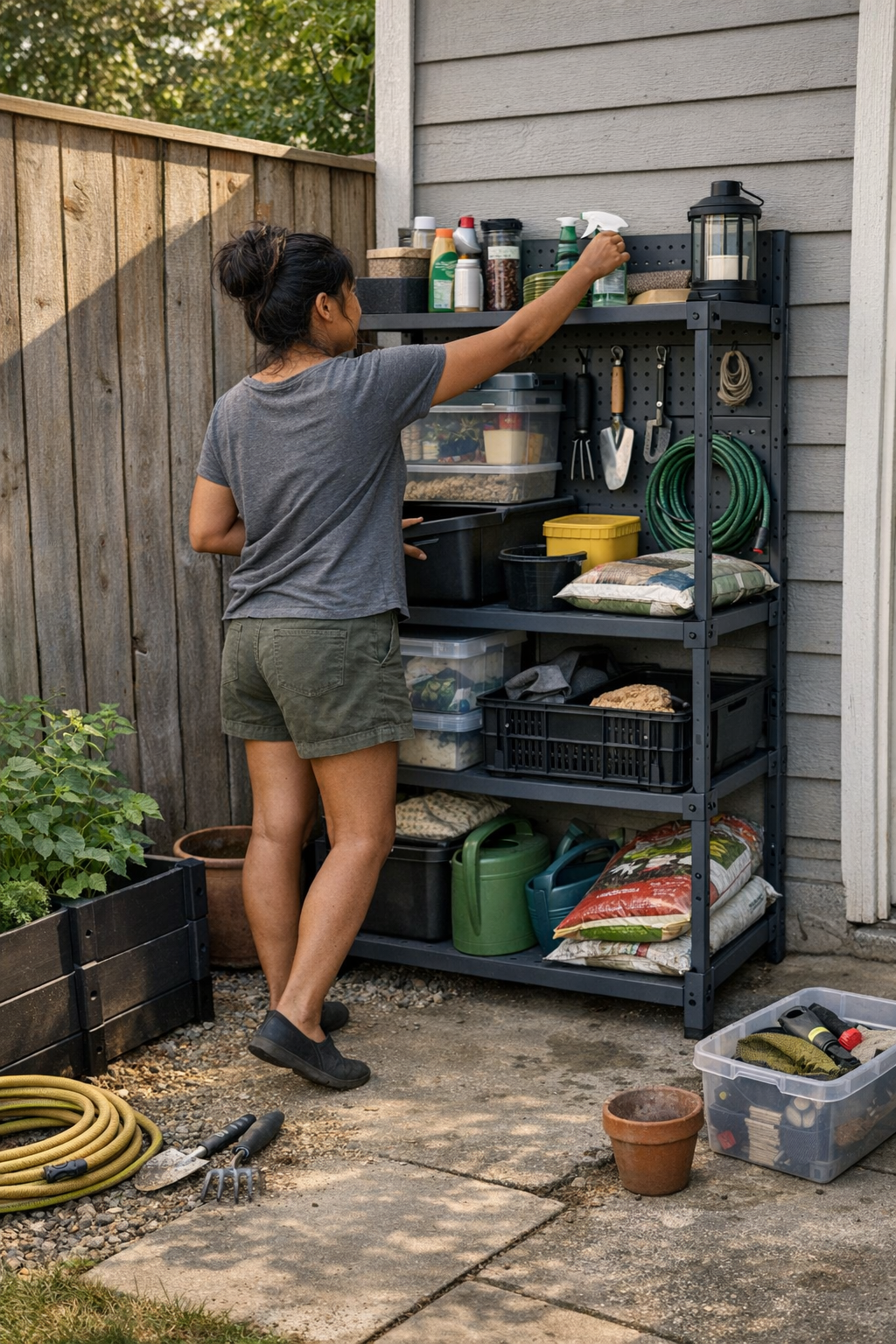
    Wall racks, hooks, and shelves seem like the next logical fix—take back the ground, make your edges “work.” But wall storage exposes a different set of flaws fast. Put one rack slightly too high or behind a bulky bin, and you’ve only moved the frustration upward. A garden tool rack everyone meant to use? If the youngest kid can’t reach it, the shovels end up blocking the path again. Hooks hidden by bikes or out of the natural return route become ghost zones: everyone ignores them, clutter collects below, and floor space clogs up anyway.

    The Reach Problem: When Storage Stays Just Out of Sync

    Every multi-user yard hits this reality. You put up new wall hooks but watch as hoses and gear continue to stack up just beneath them. It looks like a discipline problem, but really, storage has to meet people where they actually drop things. If a hook’s too high, if the path is blocked, if a bin is awkward to access, items default to the nearest open ground. Systems that work only for the person who set them up lose their hold fast in mixed-family, multi-user yards.

    The Reality Zone: Where Movement Bottlenecks

    Choke points always show up in the same places: narrow side strips, the patio edge, the main walkway past the bins. These spots collect clutter not by accident but by design mismatch. Collapsible chairs nestle into the walkway corners until no one can pass with a wheelbarrow. Sports gear piles up by the fence, edging its way into the path after every Saturday. Each “organized” system starts to break where routines overlap—and it’s these pinch points where you feel the reset pressure most.

    The Cost of Ignoring Real Traffic

    No wall rack or bin system stays neat if it ignores these flows. Weekend returns never follow the clean-out order. Someone tosses boots aside to bring in a cooler, or parks a bike across the shed entry. The neat stacking collapses, and you’re back to nightly or weekly corrections—always reactive, never ahead. The burden isn’t the storage itself, but setups that can’t flex for the actual beat of the yard.

    The Small Fix That Actually Sticks

    Not every improvement means a full overhaul. Sometimes, moving a rack six inches lower or shifting a storage bin a foot closer to the gate finally makes the right action effortless. In one side yard, just adjusting garden tool hooks so kids could use them stopped the daily pile of shovels in the walkway. The setup stopped demanding daily resets. True organization never comes from appearances on Sunday; it shows up in how little you have to think about clearing a path by Wednesday.

    Watch Where Gear Actually Lands

    Before blaming “no one puts things away,” map the mess. Notice where the boots get tossed, where buckets stack up, what doesn’t get returned—these are the spots where the current design loses to habit. Lower the unreachable rack. Move that heavy bin out of the dead corner and into the main traffic line. Reorganize for where returning hands go by default. The less friction, the less overflow shows up next week.

    Looks Sorted vs. Actually Working

    A polished setup is easy to stage for a photo—much harder to sustain through real weeks with real people running in and out, tracking mud and dragging gear. The only test that matters is how often you’re forced to clear the same jam, move the same chair, or unbury the same boots. The trouble spots—the corner by the gate that keeps filling up, the wedge of bins that blocks the garage entry—are signals, not failures. The strongest setups flex for movement and make returns idiot-proof. That’s the shift: less time spent apologizing for the mess, more actually using the yard without resetting it every time.

    No Setup Is Permanent—But Some Fixes Stick Longer

    Unreachable hooks, bins that don’t open easily, and paths blocked before the weekend always out themselves fast. Fixes that work grow out of watching—really watching—how your outdoor space gets used. It’s less about installing the “perfect” solution, more about improving what keeps breaking down in daily life.

    Get adaptable solutions built for real outdoor routines at TidyYard.

  • Streamlining Night Walks with Dogs for Safer, Smoother Outings

    Getting your dog out for a night walk looks simple—until you need to pull a waste bag or flashlight in the dark, one-handed, while your pet strains against the leash. That’s when the line between “packed and prepared” and “actually equipped for real use” appears. A setup can look organized inside your car, but the first time you pop the door in a dim parking lot and fumble through zipped compartments as your dog impatiently pulls, you see where most pet night-walk routines break down. It isn’t what you have—it’s whether you can reach it, move smoothly, and handle your dog without stopping everything else.

    When “Organized” Isn’t Enough: Night Walk Weak Points

    After-dark routines push every weak spot to the surface. The layout that seemed neatly “ready” during the day—leash looped, waste bags tucked, light packed just in case—starts to unravel after a few real-world stops. You might find the flashlight trapped at the bottom of a side pocket, forcing you to dig just as a car rounds the corner. Waste bags slide to the wrong section, hidden under backup gear or mixed with your own essentials. It feels minor until the fifth time you pause, blocking the door with one knee, dog impatient, pulling at your wrist—each extra second risking a lost moment, a missed cue, or an interrupted schedule. The neat look in daylight doesn’t survive repeated seat-side handling after dark. Instead, it exposes every setup that can’t shift from parked to moving—fast.

    Real Use, Real Pause: The Trip-Reset Trap

    The failure point in most night walk setups isn’t missing gear; it’s blocked access. As you swing out of the car, you’re juggling leash, keys, cleanup, and traffic. Cleanup bags buried under a loose jacket or flashlight wedged behind your wallet slow every handoff. Seconds pile up each time you reshuffle, restart, and dig. The friction isn’t always obvious—until you catch yourself opening the wrong pouch for the third time, or drop a waste bag on the ground while your dog darts past. Easy in theory, clumsy every night. A problem you notice, quietly, only once it repeats one stop after another.

    Why Access Timing Matters After Dark

    At night, losing a few seconds searching for the right item is enough to miss the window where your pet is controllable and the street is clear. It’s not about having every tool displayed, but being able to snag the one thing you need—by feel, not luck, even when your coat’s zipped and one hand’s full. Every missed cue—whether you’re struggling for a flashlight or untangling a bunched-up waste bag—pulls your attention from your dog and the road. Tidy internal compartments or double pouches sound practical, but force slow, awkward pauses where quick, single-move access is what the routine demands.

    How Setup Choices Play Out Under Pressure

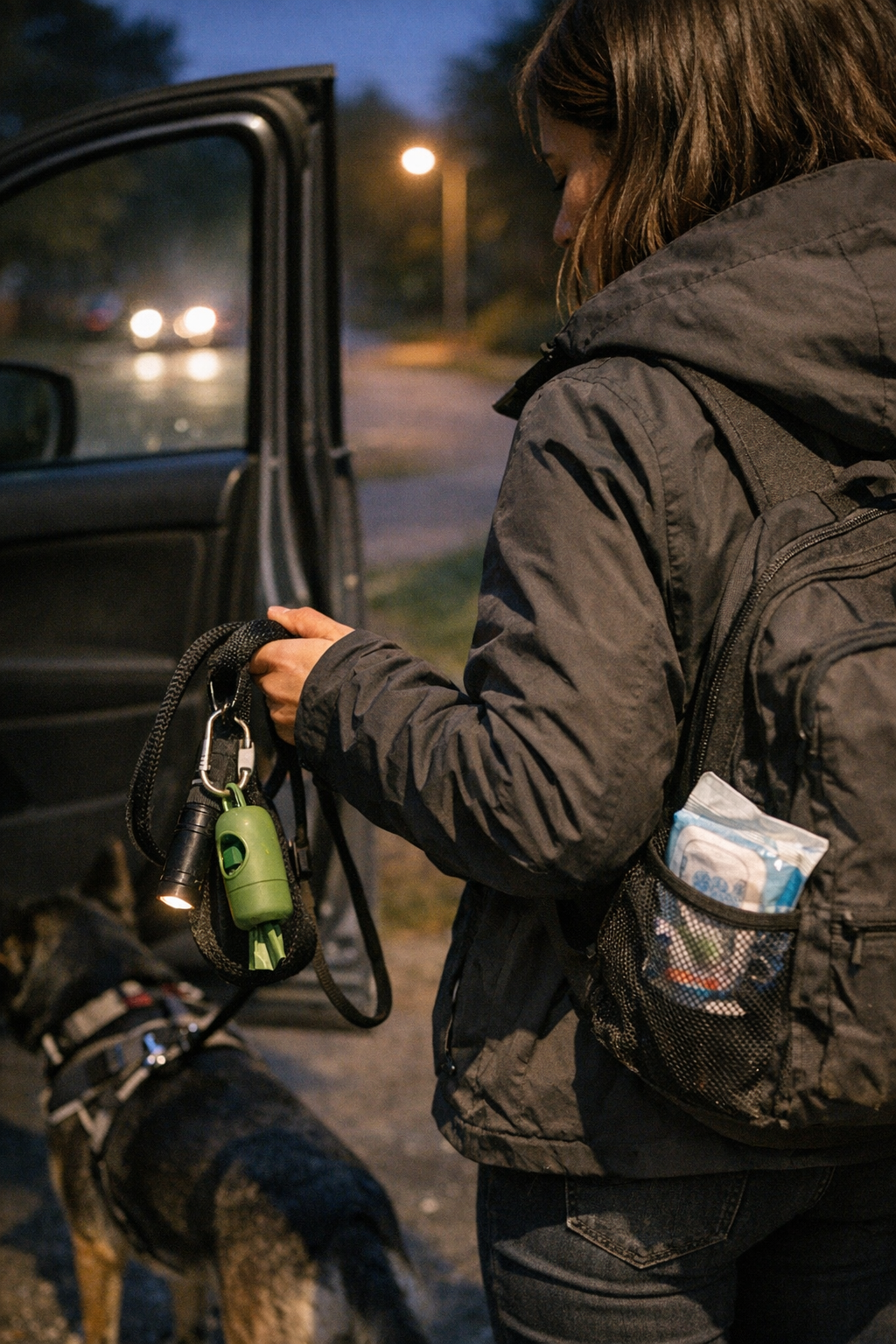
    What works on paper rarely lasts through a week of quick after-dark stops. Waste bags dropped in your jacket, wipes crammed with your own items, or a flashlight tucked out of reach make each trip slower. The “set it and forget it” approach turns into a shuffle-and-delay ritual. The adjustment is simple but makes a real difference: move waste bags to clip-ons, flashlight to your leash or belt, wipes to an outer pocket—so each one is ready, not buried, for each restart. Fewer stops. Less awkward re-packing. Less risk of dog and owner tripping over loose items. Perfection is rare, but a setup that keeps you in motion gives you a routine that doesn’t fall apart under pressure.

    Practical Adjustments that Actually Work

    Move Key Items to Fixed, External Points

    The “organized bag” only works if you never need anything fast. In reality, waste bag canisters clipped to the leash handle become a one-motion routine: grab, tear, done, even if your other hand’s full or your dog is already pulling forward. Clip-on lights—never zipped—cut out the seconds spent fumbling at every car exit and stop.

    Separate and Anchor Essentials

    Assign a visible, unblockable spot to every item that matters mid-walk. Puncture-proof mesh for wipes and belt clips for lights cut down the overlap. Stop stacking cleanup, hydration, and pet toys in the same space. When only one move is needed for each essential, the routine flows instead of stalling. Each double-layered pocket or mixed compartment adds another chance for confusion or delay—especially when conditions aren’t forgiving.

    Don’t Let “Backup Supplies” Crowd the Routine

    Keep extra towels and spare waste rolls out of direct reach. They belong in the organizer bag, trunk, or a secondary pouch. For daily stops, only the essentials—those you always reach for first—get an exterior, always-grab spot. The less you shuffle, the more time you control.

    What “Ready” Really Feels Like: Scenes from a Night Walk

    Imagine squeezing into a narrow parking space, your dog primed to jump out. There’s no time to fumble—one hook, bag in hand, light already on. Wipes are at your fingertips in an external mesh or belt pouch. The whole movement is over before your dog’s tension turns into pulling. The difference is seconds, but they add up: calmer handling, fewer mistakes, less stress on both sides. Flip that scene: you dig through three pockets, drop a bag on the ground, twist the leash as your dog pulls—every small snag stretches out the stop, magnifying restless energy and human impatience. The friction isn’t obvious at first, but it stacks up until the walks blur into a rolling set of micro-delays and misplaced focus. The weakest point isn’t your gear; it’s the overlooked gap between what looks tidy and what lets you move on demand.

    From Tidy to Usable: The Fix Is Focusing on Movement

    Night walks turn from routine to hassle if you set up for looks instead of use. Reworking your setup to prioritize access—waste bag, flashlight, wipes each in their own quick-grab spot—translates into fewer stops, quicker recoveries, and a walk your dog doesn’t fill with stress. What matters most isn’t the perfect layout, but the sum of small upgrades: less digging after dark, smoother transitions, less spilled frustration for you and your pet. That’s the PawGoTravel difference: setups shaped by actual movement, not just checked boxes. The payoff isn’t a flawless walk, but a routine that finally matches how you—and your dog—move in real time.

    Shop at PawGoTravel

  • How Cable Management Transforms Floating Monitor Arm Efficiency

    The floating monitor arm promises a desk that looks clean—screen lifted, surface emptied, fewer visual blocks. But fast-forward one workweek, and the minimal setup only solves half the real problem. The open area beneath the monitor becomes a catch-all: loose charger cables roam back, notepads drift, and the simple act of resetting after a quick break turns from a one-step move into a messy series of nudges and untangles. Neat in theory, friction-filled in repeated practice. If your main surface still attracts migrating devices and tangled lines, a monitor arm swap alone won’t deliver the workflow reset you expected—and every “clean desk” photo starts hiding a quieter, more persistent hassle underneath.

    Desk clarity—why the “clean look” isn’t the whole story

    At first glance, lifting your monitor makes the desk feel wider, clearer, more inviting. There’s open space, better lighting, and nothing blocking your keyboard. But the gap beneath the monitor doesn’t stay empty. Within days, your phone cradle inches closer to the display cables, charging blocks dangle just within reach but never get tucked away, and power adapters collect near the desk’s back edge. It’s the same desk, just with new clutter patterns. What looked streamlined resets to clutter with every cycle—each quick coffee break, every meeting break, every time you need to reach for something mid-task.

    The repeated friction isn’t dramatic—it’s the small, constant interruptions: reaching under the monitor for a notebook, clearing a charger out of mouse-cable range, shifting a pen off a trailing cable. Each move chips away at the “instant reset” the visual upgrade promised.

    Subtle chaos—where resets start to stall

    Resets should be automatic—sit down, shift the mouse, dive back in. Instead, stray cables slide across the working zone, folders wedge under the monitor, and you find yourself pausing for tiny rescues. On a busy day: sharing your screen means swinging the monitor, only to bump a repositioned notebook or catch the wire of a device left in the way. A chair pulled in after lunch nudges an abandoned mug into mouse space. Even grabbing a pen can mean brushing against a power cable you thought was finally managed.

    What starts as a clear runway gets congested between every call or focus switch. The surface might look organized, but resets slow as the desk repopulates with tools and chargers that have no fixed location—and every delay repeats, eating focus and momentum.

    What becomes obvious after real use cycles

    It’s easy to mistake more desk space for better workflow, but repeated use reveals the gap: so-called “free space” becomes resting ground for whatever doesn’t have a designated zone. Now that the monitor arm has freed the main area, cables and devices reclaim it, no longer pinned or forced out of reach. The effect worsens during heavy-use—tight deadlines, device rotations, or marathon calls—when every second counts and every micro-interruption adds up. The desk stays outwardly tidy, but work speed stutters as you push past predictably misplaced odds and ends again and again.

    Anchored solutions—how a single tweak can change the reset

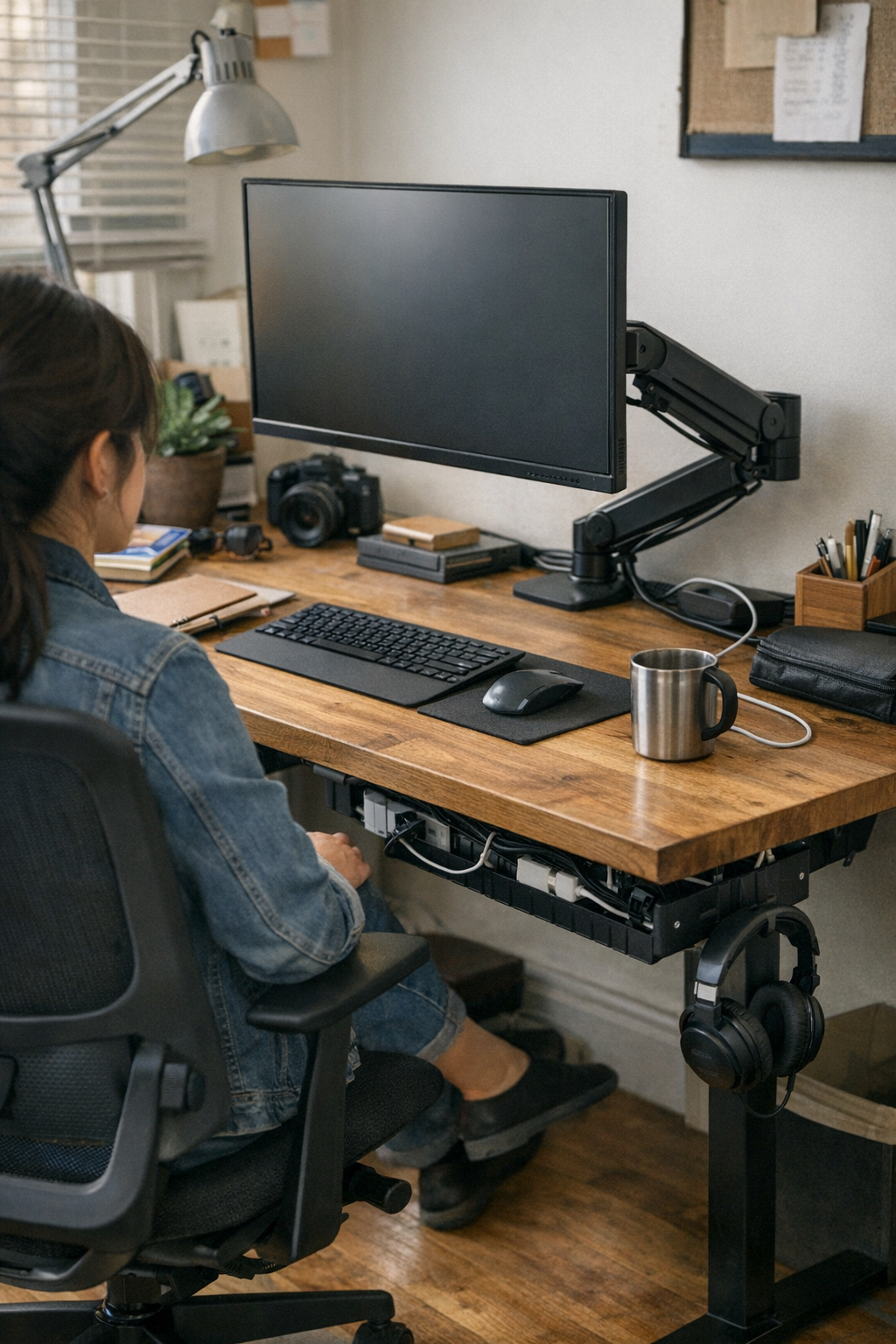
    The turning point comes when every cable and daily tool finally gets an assigned route or home—off the main surface. A cable tray fitted below the back right edge corrals all power and display lines; nothing hangs into your reach, nothing drags at your hand during resets. Slack is managed, not loose, and immediate tugs and snags disappear. Suddenly, post-meeting resets become quick: slide a pen, shift a notebook, and your workspace returns—no slow drag from collecting cables, no hunting for chargers, no cleaning up the same mess for the third time today.

    Recognizing when your reset needs an upgrade

    Small slowdowns repeat until you no longer notice them—unless you watch for these telltale signs of structure decay:

    • Cable drift across the desk—Cords and wires that keep returning to your main work zone mean resets are always interrupted.
    • Recurring tool creep—If the same accessories migrate to your writing or mouse-moving space, your workflow structure is leaking.
    • Floating notebooks and pads—Papers that have no fixed spot get swept away and regathered, slowing each transition.

    Floating monitor arms aren’t the solution by themselves

    Raising a monitor improves how your desk looks, but not how it functions—unless you back it with disciplined anchoring for everything else. True improvement comes from combining a monitor arm with cable trays, under-desk organizers, clip sleeves, or small drawers that convert “empty space” into reliable stations for everyday gear. When every cable is routed, every repeated-use item knows its place, resets shift from cleanup back to immediate use.

    The floating arm is only the beginning. Structure is what finishes the reset.

    Quick workstation checks—fast signals for desk friction

    • Do you need to move the same device or cable out of the way—every single time you sit down?
    • Are cables, chargers, or adapters drifting back across your working zone after every round of “tidying”?
    • Does your desk look open, but feel just as slow to reset as when it was cluttered?

    If “yes,” visual reorganization isn’t enough—structural tweaks like cable management trays, under-desk organizers, or anchored tool holders make a difference you’ll actually feel every work cycle.

    Why repeated use changes which features matter most

    First impressions flatter, but it’s the week-after test that reveals what fails. Ergonomics and clean lines only matter if resets are truly faster, distractions reduced, transitions smoother. If every “declutter” still requires shifting something out of your way, the desk is just dressed up, not genuinely improved. Over time, small hardware—like an under-desk tray, a cable box bracketed out of leg space, or a drawer that doesn’t block your reach—trumps any surface tidiness for real daily efficiency. The real investment is in the move you never have to repeat.

    The difference between a desk that works and a desk that just looks organized comes down to this: Can you jump back in without thinking about what needs to be shifted, untangled, or found? If not, it’s time to rethink the underlying structure—and commit to changes that make every reset easier, not just prettier.

    Explore the full WorkBasic collection

  • Choosing Between Pull-Out and Fixed Pantry Shelves for Better Storage

    The state of your pantry—orderly or chaotic—often comes down to a single, invisible factor: shelf style. If you’ve ever wedged a bag of groceries onto an already-crowded shelf, or found yourself restacking boxes just to reach one unlabeled can, you know the hidden negotiation behind every “organized” pantry. Pull-out or fixed—your choice doesn’t just shape how your shelves look. It quietly controls whether your pantry works with you, or against you, every time you open the door.

    Why Shelf Design Makes or Breaks Your Pantry Over Time

    Open a freshly organized pantry and both pull-out and fixed shelves give you that staged, picture-perfect moment: boxes in neat rows, everything upright, nothing lost. But real use doesn’t freeze in this snapshot. Kids grab snacks from the front, last week’s soup slides backward, a new haul of pasta finds the only open space—behind what’s already there.

    The real difference appears not on install day, but in the weeks that follow. Organization unravels by inches. Easy access—the promise of every storage system—gets chipped away by hidden layers, overstuffed bins, and the quiet creep of disorder across every shelf.

    Where Fixed Shelves Frustrate in Daily Kitchen Life

    Invisible Stock, Repeated Reach-Arounds

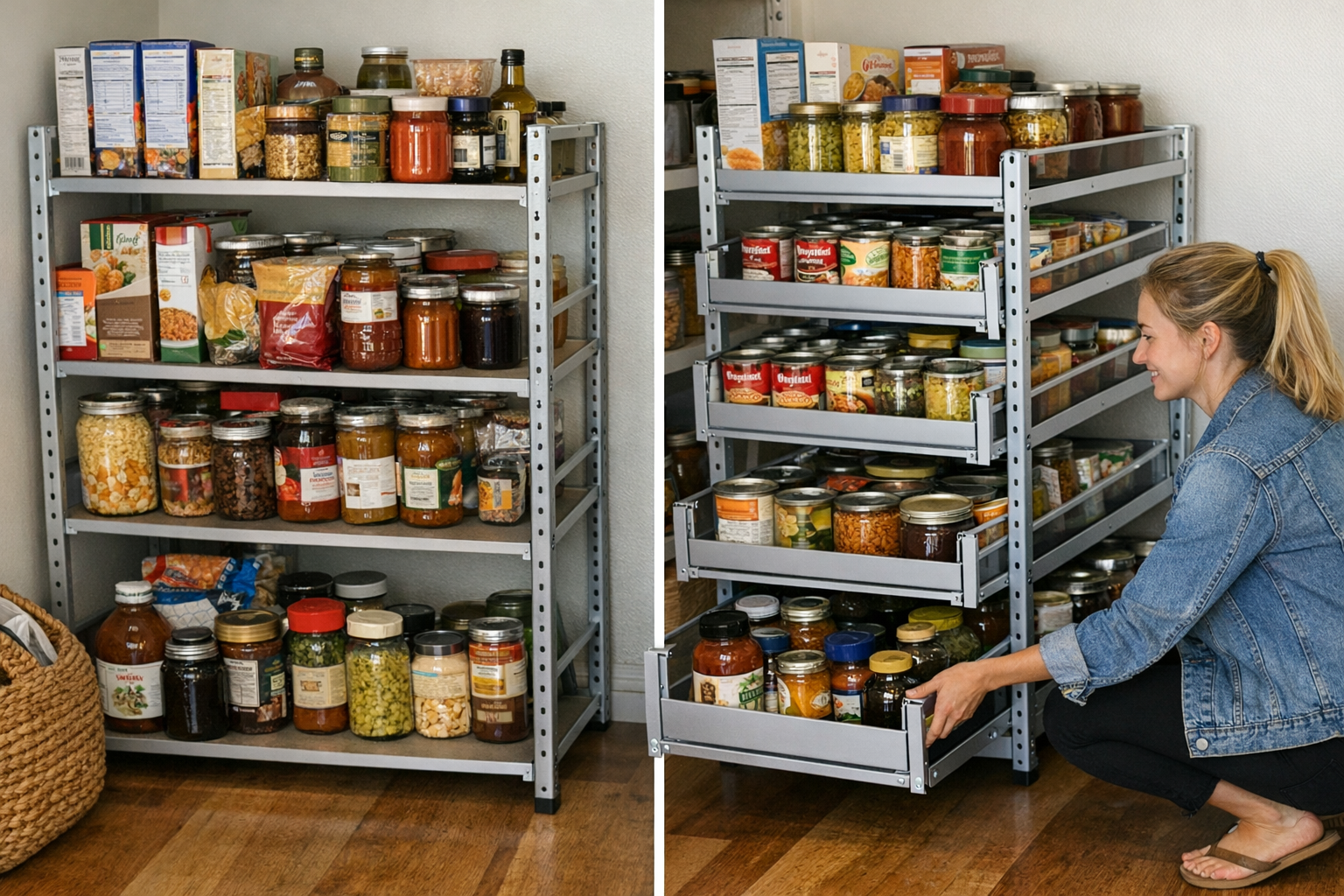
    With fixed shelves, the routine is familiar—and frustrating. You reach for oatmeal and remove an entire row of boxes just to see if it’s still hiding at the back. Deep shelves tempt you to stack and layer, but the price is always convenience: crushed snack bars, toppled jars, and long-expired cans gathering dust in the unseen rear. After a busy week, the front may still look organized, but the back is pure guesswork.

    Refilling after shopping rarely means just adding—more often it’s reshuffling, stacking, trying to find space without knocking over last week’s order. Small items vanish behind larger packages. That package of rice you bought “just in case” becomes a yearly discovery, not a current ingredient.

    Why Pull-Out Shelves Change the Game

    Pull-out pantry shelves aren’t about adding space. They reveal what you already own—no digging, no shifting, no forgotten corners. Whether you’re prepping dinner or composing a lunchbox, a single pull instantly lines up every can and box. Pasta is visible. Soup isn’t hiding. The question “are we out?” turns into a quick glance, not a scavenger hunt.

    The day-to-day impact sneaks up: organizing no longer means emptying half the shelf. There’s less double-buying (“I didn’t know we already had two jars of salsa”) and fewer minor avalanches when you reach for something in the middle. And perhaps best of all, habitual clutter fails to take root because the shelf surface never disappears from view.

    The Hidden Downsides of “Tidy-Looking” Fixed Shelves

    Even the best-looking fixed shelf setup breaks down faster than you expect. As weeks go by, single categories blend, bins that made sense fill with mismatched items, and the back-half of the shelf becomes a no-man’s land for orphan snacks and backup supplies.

    These slow-burn problems linger: food waste from lost items, accidental duplicate purchases, and the slow loss of category clarity. Every “quick” tidy-up just delays the full-on reset that, inevitably, comes when you can’t find a core ingredient.

    Pull-out shelves act as a self-correcting system: everything’s visible, so you don’t end up building accidental stockpiles or discovering mystery cans months later. Adjusting, restocking, and spot-sorting all happen in the open—no need to excavate. Even after a heavy shop, realignments are fast and intuitive.

    When Deeper Shelves Aren’t the Solution

    It’s easy to think deeper shelves equal better storage: more depth, more supplies. But this logic breaks down in practice. Deep, fixed shelves turn into dark zones where forgotten items go to hibernate. Piling up fancier vertical stacks only accelerates disorder—unstable towers topple, bags in the back never see daylight, and the time required to reset climbs higher every week.

    Pull-out shelves unlock the entire depth without forcing you to stack, bend, or blindly reach. You access the back as simply as the front, and every inch is equally useful. Instead of shifting rows, you regain both visibility and speed—with no untidy collapse waiting by Friday evening.

    One Shelf, Noticeable Difference: Where the Shift Pays Off

    Sometimes you only need to swap one shelf to see the change. Convert the hardest-working zone—like your bottom pantry shelf—from fixed to pull-out, and the relief is immediate. Post-grocery restocks stop being a clumsy shuffle. Cereal stays lined up instead of buried. The back wall no longer grows forgotten towers. Forgotten spices and snack bars stop multiplying—because nothing is stuck out of sight.

    What used to take fifteen minutes—pulling, sorting, repacking—shrinks into a few simple motions. Even occasional batch resets feel lighter, because the shelf’s transparency stops buildup before it starts. If you’re short on time or patience, this one swap buys back both.

    Tip: Don’t Overcrowd Your Pull-Outs

    Pull-out shelves do the heavy lifting for you, but they have limits. Distribute weight evenly and avoid cramming the edges—overloading can strain the hardware and shorten lifespan. Treat them as practical helpers, not infinite storage, and they’ll save you daily aggravation for years.

    When Fixed Shelves Still Work—And Where They Don’t

    There are places where fixed shelving holds its own. Ultra-shallow shelves—where everything’s in one row—don’t develop the “hidden layer” problem. If you can always see every item in a single glance, fixed may be just right and mechanically simpler. Corner niches, tight utility closets, entryway cubbies: anywhere that makes layering impossible lets fixed shelving pull its weight without becoming a future headache.

    The Shelf Test: How Much Work Do You Do?

    The real assessment isn’t about what looks good. It’s about how often you’re forced to fix, search, or restart your order. If every restock feels like defusing a delicate tower, or if “resetting” means pulling half your inventory just to see what’s left, your shelves are working against you.

    Sometimes clarity is the best upgrade: a single shelf that removes the blind spots, a system that gives up hiding spots for lost ingredients, or a reset routine that finally fits the rush of weeknights. Whether it’s your pantry, crowded laundry wall, or the zone where household chaos gathers, the right shelf shifts your daily effort from “constant correction” to “occasional adjustment.” One sliding shelf often keeps the whole system intact, even when everything else feels one step behind.

    Explore practical storage solutions from ClosetWorks

  • Why Short Familiar Loops Improve Dog Walks and Reduce Stress

    Everyday dog-walk routines stumble right at the front door. You reach for the leash—except it’s tucked beneath yesterday’s damp towel, or wedged behind an avalanche of scattered gear. Your dog bounces or circles, impatient, while you untangle leashes and dig for the right collar, the simplest outing already slowed. Before your hand even finds the doorknob, a minor bottleneck has started a chain reaction: routines turn messy, tempers shorten, and the urge to just “get outside” collides with gear that never seems ready when you need it.

    The Quiet Trouble Spots Before You Even Leave

    Those “two-minute leash-and-go” plans evaporate the moment your setup starts working against you. Even with neat hooks or labeled bins, daily pressure points keep returning: the towel never dries right, bags spill from their basket, and the dog keeps weaving underfoot while you reshuffle keys, wipes, or treats. The first five minutes become half scavenger hunt, half dodgeball. Small delays stack up, already stretching everyone thin before the walk begins—leaving you tense and your dog overexcited.

    Each missed cue or scramble for the right gear doesn’t just cost seconds; it erodes that sense of calm you want the walk to create. Instead of leaving stress at the door, you drag it out with you, woven into the routine itself.

    Why Longer Walks Don’t Always Bring Peace

    The common fix—walking farther in hopes of wearing your dog out—often works against you if the setup back home keeps buckling. Rather than calm, a high-energy loop through unfamiliar blocks tends to spiral:

    • Leashes knot in tight corners as you fumble mid-traffic or dodge new distractions.
    • Dogs jolt at sudden bikes or barking from open windows, testing your grip and patience.
    • Every hydrant or mailbox turns into a negotiation while the routine unravels.
    • Back at home, your dog paces or stares by the door, unsettled instead of satisfied.

    The friction isn’t just out on the sidewalk. Unpredictable routines build unpredictable energy. Instead of draining tension, a disorganized walk keeps adding micro-frustrations—reset after reset, both before and after the outing—leaving both of you more wound up than when you started.

    The Surprising Value of a Short, Predictable Loop

    Run the same short route a few days in a row and the effect is immediate: frayed interactions smooth out, and repeated locations start acting like signals instead of trouble zones. Leash hangs loose at the familiar curb, your dog waits by the same bush, and both of you move with less hesitation. Knowing what’s next drains away the drama.

    By day three, the change is clear—even when walks stay short:

    • Exiting becomes automatic instead of a tug-of-war at the threshold.
    • Homecomings lose their chaos—your dog heads to the mat or towel spot, not into another lap around the entryway.
    • The interruptions shrink—less scrambling for supplies, less leash fumble at corners.

    Predictability—not distance—anchors calm. A fixed route maps out signals for both dog and human, shrinking the gap between intention and actual routine. Structure beats novelty when friction is high and time is short.

    What a Repeated Route Looks Like in Daily Life

    This isn’t about perfection. It’s about building visible anchors: pausing at the same tree, holding the leash loose for a breath, entering and exiting the house with a single reset action. Suddenly, you’re not improvising with one hand on your dog and the other rooting for wipes buried behind old mail. Instead:

    • Your dog heads for the towel before mud hits the hallway rug, sometimes even waiting in the exact spot you expect.
    • Cleanup supplies are in arm’s reach—because repetition taught you where to keep them, not just where they fit on a shelf.
    • The walk ends with a direct move to calm—not another hop and spin at the door.

    The dog picks up on these signals as quickly as you do. Routine curbs the leash snarl, the threshold dance, and the supply scavenger hunt because both of you anticipate what comes next—and friction has a harder time finding a foothold.

    • Sticking spots clear up: leashes aren’t tangled, towels are where they need to be, and your movement in the entryway actually flows instead of colliding with yesterday’s mess.
    • Cleanup is faster, less intrusive: you wipe paws as soon as you cross in, before your coat’s even off.
    • Dog items stop spilling into your path: the walk’s end spot gathers what’s needed, not what was left from the last five outings.

    Repeated Friction: Why Organization Isn’t the Only Answer

    It’s the difference between a neat entryway that photographs well and one that works in motion. Labelled bins, matching hooks, and tidy towel racks are easy to assemble, but hard to live with if cleanup and prep always get jammed at the same step. If every “improved” setup still leaves you rerouting around scattered toys, blocked wipes, or leashes that never hang right, you’re just managing surface clutter, not cutting routine drag.

    Functional routines show their worth only when tested: Not when everything’s in its place once, but when nothing interrupts your reach on day five.

    • You grab the same leash without looking—because it hasn’t moved since the last walk.
    • Your dog waits at the precise reset spot, not in the middle of your exit path.
    • Wipes and bags sit at hand, not under a coat pile or behind the recycling bin.

    When You Know the Routine Is Working—And When It Isn’t

    Watch for proof in transitions—not in tidy spaces. Clear signals of a friction-free routine look like:

    • Quick exits and entries—no clusters at the door, no gear reshuffle to get everyone outside.
    • Dog flows ahead instead of freezing, darting, or hesitating at key points.
    • Calm, predictable resets—not restless circling or new messes after you return.
    • Supplies always right where routine needs them, not wherever they landed last.

    When a routine falters—even after an “upgrade”—the warning signs return quickly: hesitation at the door, pacing after walks, a hunt for towels or a missing bag just as the mess starts. Longer or more exciting walks won’t solve it; sometimes, just keeping a familiar route and stubbornly simple gear order does more to cut chaos than any new product or corner rearrangement.

    Route Boredom: When to Tweak the Pattern

    Not every dog settles for strict sameness forever. If you see a dog digging in, stalling, or veering toward novelty, restore a touch of variety by swapping blocks or mixing the order of a familiar route. The test: does the tweak restore focus or break the flow? For most dogs and most days, a sturdy routine wins, but small pivots keep it from buckling under predictability’s weight.

    Small Routine Anchors That Change the Whole Experience

    Tiny pivots matter. One reliable anchor—a deliberate pre-door pause, a gear order that never changes, the same quick wipe at the same mat—dissolves days of scrambling. Over time, these routine points reshape:

    • Pre-walk hassle turns into a rhythm—no more backward shuffling for the right leash or last-minute gear swaps.
    • Walks flow smoother—navigating corners, crossing streets, or bypassing triggers with practiced confidence instead of jerking correction.
    • Cleanup stops feeling like a setback—paws wiped and leashes dropped in one pass, not as a trailing chore.

    Repeating these anchors doesn’t guarantee a mess-free routine, but it shrinks the gap between what you hope the walk will be and what happens most days.

    Where the Routine Keeps Buckling—And Why That Matters

    Identify the sticking point: a leash that always gets caught on the stair rail, a towel forever half-buried, a rest mat that drifts out of place, or supplies “almost” in reach but never truly accessible. Each small breakdown shapes how you feel about the dog routine as a whole—turning a single minor failure into a recurring frustration that crowds out any benefit the “organizer” look was supposed to provide.

    The upgrade is never just new gear or prettier bins. Improvement lives in a repeated, pressure-tested routine: one that survives the Monday rush, the muddy-paw Wednesday, or the late

  • Maximize Entryway Space with Door-Mounted Storage Solutions

    The entryway feels wide until the moment you need to get through. Step inside, and the space that seemed clear yesterday turns into a bottleneck: a half-unzipped backpack half-off the bench, yesterday’s shoes jutting across the mat, a grocery bag “parked for a moment” that’s still there tonight. The path from door to living space doesn’t just narrow—it contorts. Shoulders turn sideways to dodge a dropped jacket, and the bench that should anchor the threshold becomes another overflow landing. Every day, the clutter resets the entry—not with one big mess, but with a hundred small intrusions that slowly choke off the centerline.

    Why Standard Storage Struggles Near the Threshold

    If your door opens straight onto a tight zone—or if the “entry” is really a slice between kitchen, hallway, and garage, acting as gear stand, shoe pile, and pause point—the tension builds fast. Routine solutions unravel under real pressure:

    • Shoe benches and floor racks create a fleeting sense of order. But as the week fills up, shoes edge past the bench, “emergency” bags stack on the seat, and you’re left navigating an obstacle course instead of sitting down.
    • Wall shelves help visually, until they protrude just enough to force you sideways, or overflow piles beneath them because no one wants to reach that high for one glove.
    • Catch-alls and extra baskets only shift the border—they don’t stop gear from leaking into the path.

    The core problem isn’t storage capacity, but sideways spread—the constant slide of items off intended surfaces and into movement lanes. That’s when the “just set it down” pattern wins and the pathway clogs. It looks okay for a day, then builds up in patches that make even a quick trip in or out a source of friction.

    Opening Up the Walkway: The Structural Advantage of Door-Mounted Racks

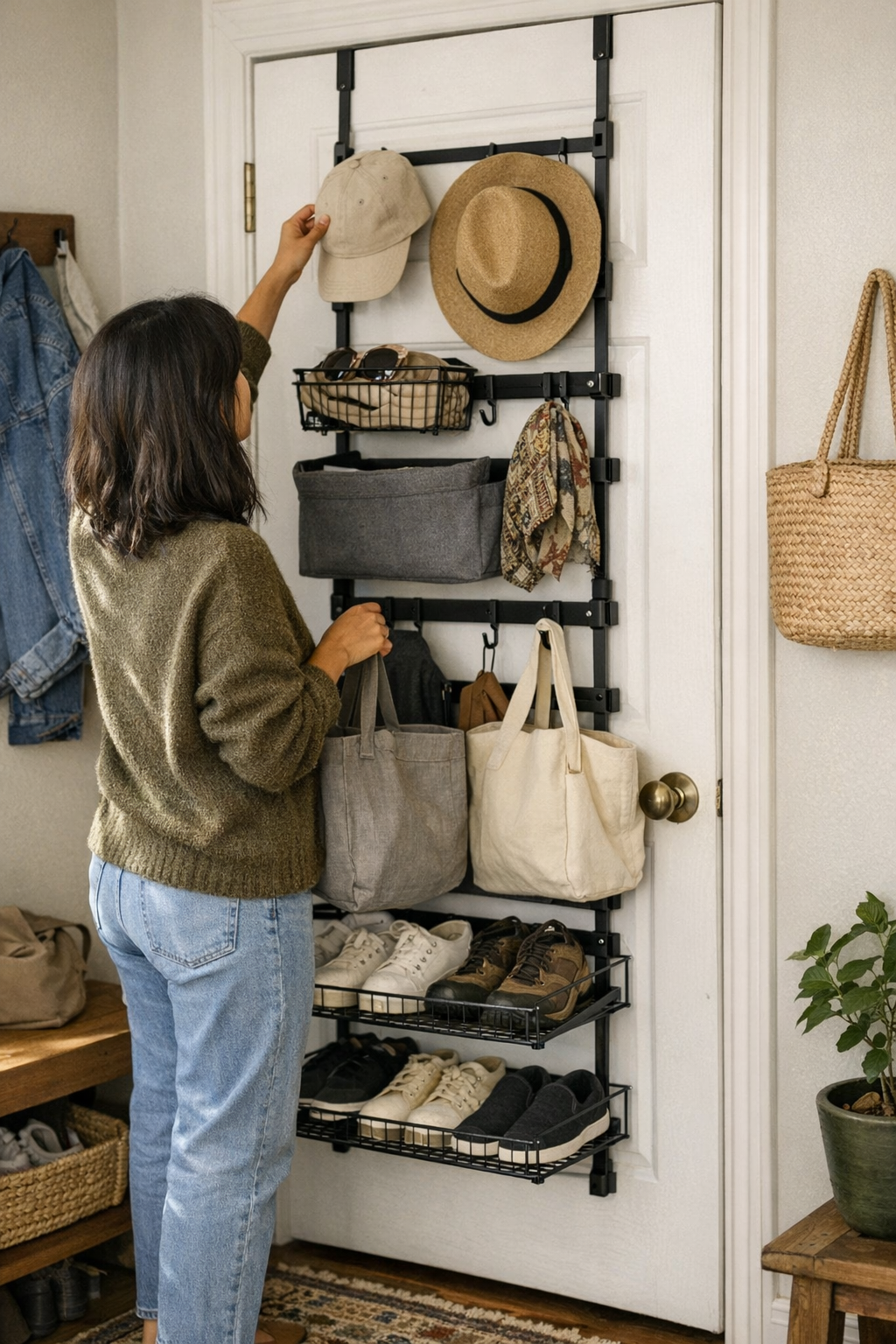
    Most entry storage fights for floor or wall space, but a door-mounted rack uses the back of the threshold itself—a zone most setups ignore. Where benches and shelves compete for every inch, a door rack converts unused, vertical territory into active storage. That means:

    • No second row of shoes tripping up the first step inside
    • No sitting surface lost under handbags or random returns
    • No need to shuffle piles before the door even closes

    The effect isn’t empty minimalism—it’s functional clearance. Things used most often (light jackets, hats, small bags, gloves, daily shoes) move up and behind, leaving the core pathway open just enough to avoid the side-step shuffle, especially when everyone piles in at once. You notice it most during those high-pressure surges: wet school mornings, late returns, or that five-minute window before heading out again. When the path behind the door is open, movement stays fluid—even as routines get chaotic.

    The Real Test: What Changes After Moving Overflow to the Door?

    Door racks either hold up under pressure or quietly unravel. The difference shows in real use, after the novelty fades:

    • The floor around the mat stays clear. Shoes go up or in, not sideways across the entry’s only flat space.
    • Bench space returns. You can actually sit—no juggling mail or moving yesterday’s tote just to tie laces.
    • Resets shrink. Instead of a 10-minute sort, it’s a quick rack-to-bag handoff after a long day. You spend less time reshuffling and more time just moving through.

    Overflow doesn’t disappear—but it’s sent into one vertical zone instead of sprawling outward. That control is the difference between a habit you keep and one that keeps tripping you.

    Scene Check: A Day in the Life of the Door Rack

    Picture a crowded Friday: rain, mixed gear, kids and adults coming and going in shifts. Boots hit the mat, extra shoes slide into lower pouches, hats and gloves up top. Someone swings back through, grabs a backpack from behind the door—no pile teetering, nothing blocking the threshold. The main area doesn’t feel showroom-perfect, but the difference is immediate: you actually get through the door, drop-off barely slows the flow, and resets demand less negotiation.

    Best Practices: What Works—and What Doesn’t—With Door-Mounted Racks

    Door-mounted success depends on what you load—and what you don’t.

    • Best for: Daily shoes (not every pair you own), light bags, compact jackets, hats, gloves—whatever cycles out and in most days and doesn’t weigh the door down.
    • Keep off: Heavy toolboxes, winter coats, large sports gear, anything that strains hinges or feels risky to swing with the door. If you need two hands or a warning, it belongs elsewhere.
    • Watch the limits: Overpacking turns racks into new clutter points and stresses door hardware. Lean categories last longer and reset faster.
    • Stay disciplined: “Temporary” storage always tries to go permanent. Schedule resets—weekly, if not more—to keep buildup in check before small piles become permanent obstacles.

    For high-traffic doors (quick opens, lots of hands, partial closes), check mounts regularly and use lightweight categories. Renters and thin-core doors should prioritize lighter, removable racks or alternative placements. The system works best when the load matches the threshold—useful, accessible, but never overloaded.

    Making the Most of Tight Entryways Without Sacrificing Movement

    The difference plays out in small, everyday moves:

    • Groceries in one arm, you can still walk straight in—the drop zone isn’t a minefield.
    • Kids reach hats without emptying baskets or sprawling across the mat for one sneaker.
    • You pivot, turn, or wait near the threshold and still have space to breathe—even when it’s crowded or messy.

    When floors and walls are packed, the back of the door becomes a pressure release. Not perfect—shoes still sneak under benches, bags still appear “just for a second”—but the pressure point softens. Cleanups shrink, reset effort drops, and the entry stops feeling like a penalty box after every busy day.

    A Small Move With a Noticeable Difference

    Adding a door-mounted rack doesn’t make the entry problem-free. It does shift the way entry routines work—less scatter, fewer trip hazards, and resets that finally stay manageable. The advantage isn’t just looking tidier, but functioning better where friction used to win. With the right category discipline, a door rack turns neglected space into a buffer that holds under real, repeat use—never just another surface to pile on, but a tool for breathing room.

    Visit Betweenry for practical entryway storage that adapts to real routines.