Blog

  • How Light Door Racks Transform Entryway Organization and Accessibility

    The front-door overlap zone is where routines jam up, not just where intentions get misplaced. Mornings reveal the problem: shoes multiply out from the wall, bags topple onto the bench or floor, and someone’s already digging for a key that disappeared into yesterday’s pile. That entryway setup—a bowl on the bench, a basket underfoot—lasts about three days before it loses any sense of order. Suddenly, what was meant as a simple drop-and-go station becomes a bottleneck: shoes block the path, keys get buried, and resets turn into a full-blown search-and-rescue instead of a one-step tidy as you come and go. This is the real cost of the wrong threshold setup: not just clutter, but a routine that breaks every time it’s used.

    Why Vertical Storage Changes the Game in Transition Spaces

    Layout—not just storage amount—determines if a transition zone stays usable under pressure. Floor baskets and wide benches pose as solutions, but quickly unravel. Add two people’s morning habits and things go sideways:

    • Shoes march off the mat and narrow the pass-through, especially after a wet day.
    • Keys get stuck under junk mail—every single rush-out a mini excavation.
    • Small items like gloves or cards disappear into the stack, resurfacing only after a second reset.

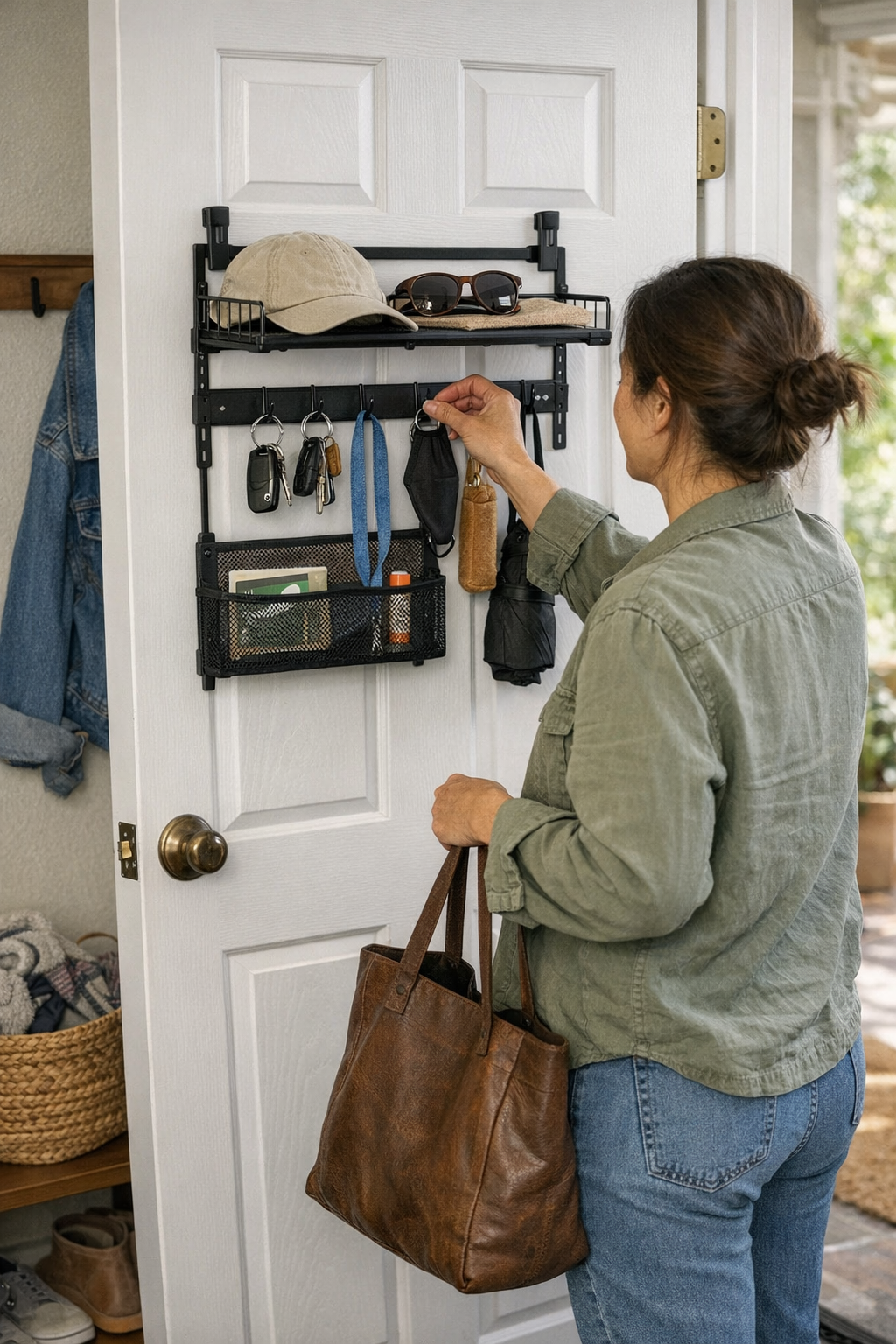
    Switching to a wall-mounted rack—a slim, eye-level unit by the door—alters this fallback cycle. Hooks and sleeves make daily-access gear visible instead of buried. You feel the shift not in the first few days, but deep into the third week, after the treadmill of returns and exits: where the bench would’ve been an overflow trap, now essentials hang right where you reach as you pass through. No more digging. And the “clean zone” stops flooding back onto the floor.

    Real Friction: What Happens Before and After the Switch

    The Pre-Rack Shuffle

    Picture a workday entry: a gym bag lands crooked on the bench, shoes nudge up against the edge, and someone’s elbow-deep in a bowl for a key, only to yank out someone else’s badge by mistake. Another bag enters the lineup; mail and sunglasses pile in random order. By next morning, that bench is a small mountain. There’s no easy “grab and go.” Instead, each arrival or departure requires sorting, shifting, and guessing what’s still missing. Multiply that chaos by a busy week, and the entryway becomes a friction zone—resetting doesn’t shrink, it compounds with every use.

    The Immediate Impact of a Wall-Mounted Rack

    Add a slim rack at the right height near the threshold, and something snaps into place. Keys and badges claim visible hooks; hats and sunglasses stay out of the fray. You don’t stack accessories—each has a slot. The gym bag? Still needs ground space, but what’s truly “daily” hovers above the avalanche zone. At first, the change is quiet. But later, you notice: no one’s lost a card in two weeks, shuffles are down to a few seconds, and you don’t dread opening the door to unsteady piles. The system prevents return of the old pile-on, even when routines clash by the entryway.

    The Capacity Tipping Point: Knowing the Limits

    Wall-mounted racks create visible order—but only up to their real limits. They’re ideal for fast-grab essentials: keys, passes, small wallets. Stack them with too many hats or bulky bags, though, and you’re right back in overflow territory:

    • Jammed hooks breed snarls and “what’s mine?” moments in the morning scramble.
    • Too much bulk makes the unit sag—or strains the door if it’s a hanging model.
    • Once grab-and-go takes more than one motion, the reset time grows again, and mess radiates outward.

    The best setups broadcast their own limits. An overloaded wall rack doubles as a warning: if you hesitate to hang one more item, it’s time for a quick sort long before the mess spreads to the floor or bench again.

    Entryway Movement: How Setup Shapes Traffic Flow

    Small entryway changes can shift the whole flow pattern. In the crunch of a weekday pass-through: two people grab for shoes, one reaches for a bag, another heads for the rack. Floor baskets mean feet tangle and elbows bump—the reset takes up physical space and time. Shift that everyday clutter vertically: now each person sees and grabs what’s theirs, the walk-through path stays navigable, and guests reach for visible hooks instinctively. It’s not that the entryroom becomes perfect—it just avoids that slow-building crawl from clear to blocked that most households resign themselves to. Less tripping, less waiting for a corner to clear, more functional movement.

    Setup Tweaks That Make a Difference

    Placement Is Everything

    A wall rack only works if you get the details right: mount it at reachable height in the natural grab zone near the door, not tucked out of immediate sight or blocked by hardware. Too high, and it gets ignored; too low or behind a swing, and it sits empty. The practical test? Mark the spot with tape and run a week’s worth of comings and goings before drilling in—you’ll know fast if the location interrupts movement or invites use. That one tweak can mean the difference between a rack that actually empties your hands and one that gathers dust while clutter piles elsewhere.

    Keep It Slim, Keep It Dedicated

    Wall racks solve for “grab-and-go,” not for everything. Oversized boots, winter coats, sports gear—they need floor space or closed storage, not another crowded hook. Overloading the rack with mixed categories just migrates the mess to a higher plane. Instead, limit the rack to the few items you always reach for and edit it weekly. When the rack’s purpose gets diluted, so does its everyday impact—and the clutter creep returns, a little more vertical but just as inefficient.

    What Real Improvement Looks (and Feels) Like

    A door rack isn’t there to make your entryway pretty—it’s there to keep the entry functional under real, repeated pressure. This difference becomes obvious as:

    • Resetting the threshold drops to a 10-second task instead of a 10-minute hunt.
    • Lost accessory searches disappear from the daily routine.
    • Thresholds stay clear, even as people overlap on busy days.
    • Everyone in the house can spot and take what’s theirs—handoffs become smoother, not another reset chore.

    The space doesn’t freeze at “just right”—but the right rack helps edit the mess before it ever sprawls. Overflow stops spreading outward, and the bench and floor actually stay usable between resets.

    Recognizing the Difference Between Neat and Functional

    Not every “organized” zone survives real use. If three arrivals in seven minutes still creates gridlock and disarray, a setup is cosmetic, not functional. Wall-mounted racks don’t end the need for editing; they just shrink the work from a full sweep to a minor correction, and let real use—not showroom looks—set the standard. Movement gets smoother, lost-item hunts fade, and what felt like a permanent bottleneck at the door finally lets routines flow in and out without the old friction hanging around.

    Explore practical wall-mounted storage for real-life transition zones at Betweenry.
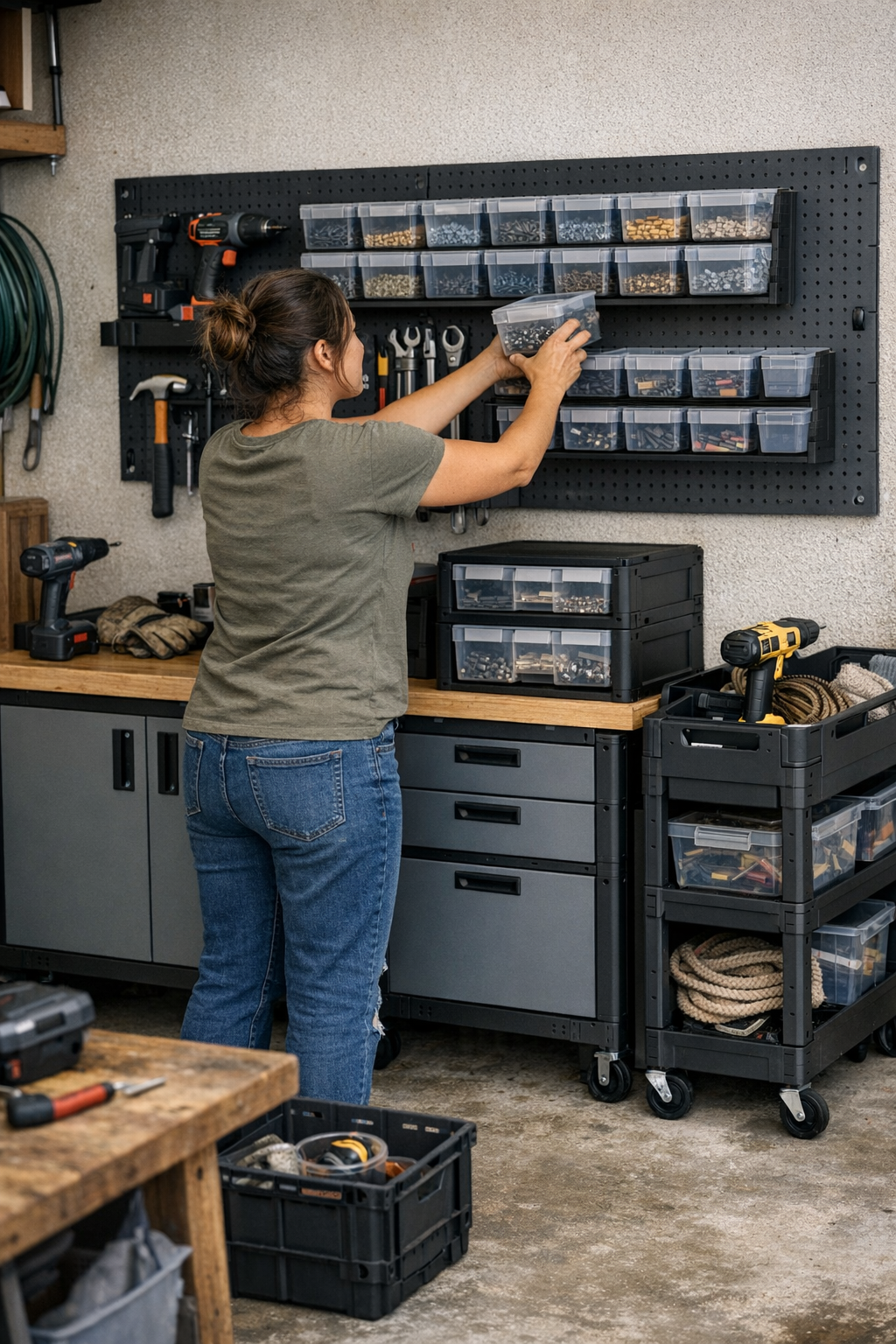
  • Streamlining Storage Solutions to Reduce Clutter and Boost Workflow

    The real verdict on any garage or workshop setup isn’t the way it looks on install day—it’s what survives a week of actual use. Projects pile up. Hardware and hose reels creep onto open countertops. Carts—meant to be mobile helpers—drift sideways, blocking paths. Pegboards fill, plus one more hook gets squeezed into every sliver of wall. A few days later, the promise of order already unravels. Every reset drags out longer; the sense of control you built is chipped away by the return of clutter, disguised as “flexibility.”

    More Options Don’t Equal More Order

    It’s easy to believe that another shelf or bin will finally fix the chaos. Why not add just one more rack, try another cabinet with deeper drawers, or squeeze in a second rolling cart? On the surface, these tweaks seem smart—tools off the floor, every supply sorted. But as the real routine resumes, the trap sets in. Each new surface competes for your attention. Tools drift: the hammer lands on the new shelf “for now,” screws get split between wall bins and the bench tray. Instead of a single obvious return spot, you end up with a dozen “temporary” drop zones battling for permanence.

    Bit by bit, clear floor space surrenders to piles that have no real home. That rolling cart, meant for efficiency, wedges itself in front of the cabinet you use most. The path from the garage entry to your workbench? Blocked again, this time by a tote you only meant to leave out for a minute. Even a quick reset after mowing or fixing a bike turns into an extended shuffle: shoving carts aside, rerouting around half-empty bins, deciding (and re-deciding) which shelf “should” hold the mallet today. The space that looked so usable on paper now asks for detours every day.

    Choice Overload: How Storage Stops Serving You

    When every tool has several options, putting things away gets harder, not easier. That moment of mental pause—“Does this belong on the pegboard, in the drawer, or maybe the top of the cart?”—kills return speed and builds resistance. Multiply those split-second choices across a Saturday’s worth of fixes, and what should be a quick cleanup turns into a wandering circuit through your own maze.

    You start to feel it in daily habits. Clamps get parked on the workbench corner “just for now.” Hose nozzles, left out because the wall bin’s out of reach, start multiplying by the doorway. Screws never travel back to the right shelf, because the cart they landed on is still sitting by the door—where you dropped it mid-project. Little by little, the system that once felt crisp and organized slowly bogs down into familiar frustration.

    Spaces That Work Against Your Routine

    If you find yourself dragging a cart into the hallway just to swing a cabinet open or sidestepping around a wall shelf that stays half-used, you’re not alone. These small, regular hassles are the fallout of overlapping zones and storage footprints that take more than they give back. That “versatile” rolling cart? If it’s living in the thoroughfare, it’s just another obstacle. Dead corners in the garage get even less useful, while lines of motion—carefully mapped out in theory—clog up under the weight of competing organizers. Resets get slower, and those quick grabs turn clumsy, not precise.

    Clarity, Not Quantity: The Zones That Outlast the Mess

    The best setups aren’t the ones with the most spots—they’re the ones with the clearest, most defined paths. When every essential tool or supply has exactly one predictable home, you don’t have to think about where it goes. Resetting after a project becomes a short routine: each piece in its place, each bin with a single job. The habit sticks—not because you’re suddenly tidier, but because the return is frictionless.

    For smaller shops, shared garages, or tiny backyard sheds, paring back options usually makes the biggest functional difference. If you have one labeled hardware bin, two key hooks for the hand tools you use daily, and a single, purpose-built utility cart (never parked in the way), movement and access feel effortless. Clutter recedes—not because you own less, but because what you do own is easier to put back, every single time.

    Two Saturdays, Two Very Different Resets

    Picture it: one weekend, you pull out the drill from a wall hook, fumble for the right bit in a mobile cart, and find fasteners in one of a few overhead boxes. Ten minutes in, halfway through your task, every flat surface is buried under drill bits, clamps, and hardware. The return trip is a mess—walking long, uncertain routes to return each tool, dodging a cart that’s now blocking the only open lane. Resetting takes twenty minutes; the urge to “just leave it for later” follows.

    Now try it with a cleaner setup. You ditch that second cart. Fasteners go in one bin—always—right next to the tool they match. Suddenly, you work in straight lines; movement is direct instead of zigzag. The open section of your workbench stays open all week, not buried in “to be sorted.” There’s no question about where things go, so nothing sits out “just until next time.” Your space doesn’t just look organized—every piece of it genuinely makes your routine faster.

    Micro-Tweaks With Major Impact

    Real change isn’t about stripping down to the bare minimum or adding new “miracle” organizers. It’s about recognizing dead-end zones, combining redundant bins, and tuning each spot for daily flow. Group garden hand tools on a single rack, not scattered between pegboard, drawer, and windowsill. Rework any cart that never stows cleanly—convert it into a project kit, or simply let it go. If a certain corner catches overflow week after week, that’s not a coincidence; it’s feedback. Tighten boundaries until every returning item lands without a second thought.

    Set a simple timer on your weekly cleanup. If putting everything back eats up more than a few minutes, you’re still fighting your own setup. A strong layout isn’t about visual minimalism—it’s about resetting without a mental list or wasted trips. That’s the sign your storage is finally working with you, not against you.

    Quick Fixes for Real Storage Trouble

    Is less storage the same as having less gear?
    Not at all. What needs to go are the extra, optional drop zones—the holding tanks for stuff that rarely sees use. What you actually use stays, but its home gets easier to spot and harder to forget.

    How do I know if my setup’s too complicated?
    Ask yourself how often you hesitate at the end of a job. If tools wind up on the floor, chairs, or migrate to surprising corners, setup sprawl and decision fatigue have crept in. A little annoyance now is a lot of clutter later.

    Wall storage or carts: which works best?
    Walls are gold for daily grab-and-go tools and predictable routines. Carts work when they’re single-purpose—rolling out for a specific project, then stowed. When floor and wall systems start overlapping or fighting for the same tools, dead space and blocked access are right behind.

    Routines Decide If a Setup Actually Works

    The best-organized space isn’t the one crammed with organizers. It’s the space where you can move, reset, and grab what you need—without pausing, rerouting, or reshuffling every time. Every time a return path gets blocked, or a reset takes too long, it’s a sign to consolidate, not expand. Your area should fit your habits, not slow them down.

    For storage that’s actually designed for the way real routines run—not just for showroom photos—visit StackNest.

  • How a Simple Carry-On Habit Can Transform Your Boarding Experience

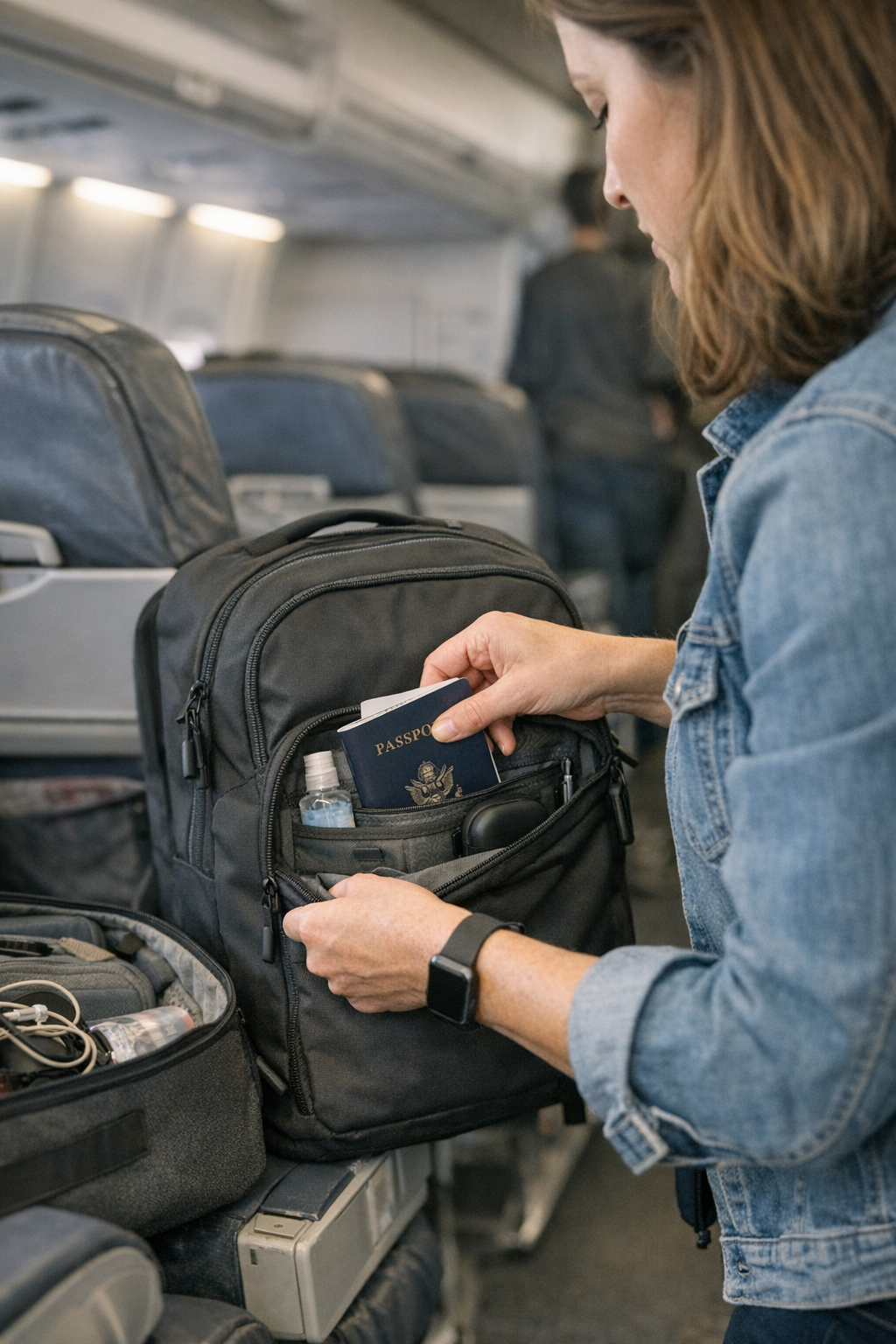
    Your carry-on only looks organized until the airport exposes its weak points. That outer pocket you packed so carefully turns into a black hole when you’re three document checks deep and suddenly unzipping, digging, or reshuffling in the boarding line. Even if your bag “looked sorted” back on your hotel bed, most setups miss one thing: under pressure—at security, boarding, or gate changes—the real friction isn’t clutter; it’s awkward access, pointless pausing, or having to hunt for what should be at your fingertips.

    The Unseen Slowdown: When “Organized” Isn’t Practical

    Carry-on frustration doesn’t always come from visible mess. It starts subtly: a passport slid under one too many pouches, or a travel wallet trapped under a carefully stacked gear grid. That feeling of order crumbles the moment you need something now—like hitting check-in with your phone in one hand, a flattened boarding pass hiding below your headphones, and sanitizer tucked three pockets back. Every extra zip, rummage, or shuffling to find just one item—especially with travelers closing in behind you—breaks your movement. The bag didn’t fall apart, but your airport flow did.

    The risk sneaks in quietly: a slim outer pocket packed just a layer too deep, an “everything-essentials” pouch morphing into an interchangeable catch-all. You aren’t failing, but after each gate, checkpoint, and aisle squeeze, the time loss becomes obvious. Missed beats pile up: a small delay at security, a pause finding your docs at boarding, or that moment mid-aisle when you expose half your bag to get to just one thing.

    Real Carry-On Moments: Where the Friction Builds

    Document Retrieval During Boarding

    In the boarding queue, the flaw shows up the moment you attempt a quick reach—phone and ticket in one hand, carry-on nudged along with your foot. Now essentials are layered: a cable pouch covering the travel wallet, sanitizer wedged between, and the only way to your passport is to lift, tilt, and sort through pouches. The “organized” setup is suddenly blocking quick retrieval, and every second spent unpacking triggers the impatient shuffle of the line behind you.

    The Security Tray Scenario

    Security is the most unforgiving test. As soon as you unzip for your laptop, you realize documents are elsewhere—maybe pressed into a secondary pocket or lost between an organizer and a mesh pouch. Cords tumble out as you reach. Edges catch on zippers packed too tight. Every move multiplies: device here, ID there, something else tumbling, and the tray fills with loose items. The scramble signals the setup was never tuned for real-world flow.

    Pocket Overlap in the Aisle

    Down the airplane aisle, tight space turns minor setup flaws into full stalls. One overlapping pouch blocks the zipper path so badly, grabbing headphones with one hand means propping the bag in the crook of your knee and peeling open half your outer pocket. Your seatmates wait as you untangle. The better your bag looked at boarding, the more glaring it feels when simple retrieval turns into a balancing act just to reach what you need before sitting down.

    After Arrival: The Repack Reset

    Organization rarely survives the trip. Once you’re back on your feet and prepping to deplane, every rushed grab leaves gear scattered: passports shunted behind chargers, sanitizer sliding loose, pouches out of order. Repacking doesn’t really restore flow—it just hides the drift until the next checkpoint, and the same chaos returns with the next fast retrieval.

    What Actually Works: Structure That Holds Up Under Pressure

    More organizers don’t solve this problem—more often, they add layers rather than fewer. Only after repeating the same awkward reach for essentials on flight after flight does the fix start to surface: commit one outer pocket to real in-transit essentials only—not “might needs,” just the items you repeatedly reach for between curb and seat.

    Test narrowing your grab zone to passport, boarding document, sanitizer, and a single comfort item—no stacked cases, no pouches to shuffle. What sounds like a small change turns out critical under pressure: at security or the jet bridge, a single reach replaces the instant where your bag blocks you and everyone behind you. The “clean” look at the hotel means nothing if it doesn’t survive repeated use; the best setup is the one that always offers one-move access while in motion.

    Smart Separation: Reduce the Overlap, Cut Down the Delay

    Letting your tech, documents, and comfort items blend in the same space guarantees redundancy and slow retrieval. It’s not about grouping by category; it’s about how—under pressure—you actually reach for each thing. If your hands never need passport and charging cable at once, splitting them pays off every time you move.

    Reserving one exterior pocket for pure transit essentials—then making a habit of resetting it after each use—restores speed without more layers. Every checkpoint becomes a single, predictable motion, not multi-step recovery. Cutting overlap turns your bag from a mobile storage locker into a tool: ready to access, re-close, and move, not just get packed “neatly.”

    On the Road: Living With the New Setup (And Where It Still Bends)

    No method resists entropy forever. By your third airport in a week, even the best exterior pocket shows signs of drift. But with fewer layers, bouncing back is easy; essentials shift but stay visible, and instead of constant re-ordering, you just reset the pocket post-move. Not perfection—just friction drop.

    The real signal your structure works isn’t the photo on packing day—it’s flashing your boarding pass instantly at a gate after a seat swap, or one smooth unzip for your passport at check-in, even after a rush. You’ll still get caught once in a while (wrong pocket, surprise transfer), but the time lost is less, and the need for a total unpack vanishes. Travel order isn’t cosmetic; it’s how well your setup survives repeat interruption and recovers when routine gets broken.

    Small Improvements, Repeated Gains

    The biggest difference isn’t what your bag can hold—it’s how that setup stands up during repeat airport demands. Cutting layers and overlap delivers smoother movement, faster resets, and less friction flight after flight. The best setups don’t win on looks—they keep you moving even when habits slip or travel days get long.

    Match your packing to your actual in-transit behavior: fewer pockets to fuss with, one path to repeated essentials, and the hidden delays fade into the background. The smartest fix is often subtracting a pouch, not squeezing in another. If your current carry-on fails to keep up when you double back for one last item or juggle a last-minute gate change, it’s time to rethink the structure, not the surface.

    For real-world-tested carry-on setups, organizers, and accessories that cut daily friction, visit CarryOnSupply.

  • Why Touch-Focused Cleaning Transforms Your Car’s Interior Comfort

    You can keep your car vacuumed, free of cups and trash, and still dread grabbing the wheel. If you routinely climb in, go to shift into drive, and your fingers catch on a tacky gear selector or your phone leaves your screen streaked after every dock, you’re right in the zone most drivers forget. The visible mess is gone—yet the contact spots you use every day pick up silent grime that no quick tidy will touch. Every return—from groceries to work to school pickup—means hand-to-car and car-to-phone transfer, the kind of residue that doesn’t show but signals itself instantly in sticky, slick, or smudged touchpoints. The result? Even a spotless cabin creates a catch, a small moment of discomfort, and makes every short errand, fast commute, or rushed family drive feel subtly “off.”

    When Clean Looks Fine, but Driving Still Feels Wrong

    Consider normal routine: you open the door after errands, check the seats—no wrappers, no dirt—car looks ready. But each time your fingers land on the gear shifter, there’s a smoothness that isn’t quite clean. The steering wheel edge, right where your hand waits in traffic, feels either sticky or filmy despite looking untouched. Every control becomes suspect: knobs, display buttons, the same phone mount you cleaned last week, all building up an invisible layer of skin oil and road dust fast enough to catch you off guard. General cleaning doesn’t touch these zones, and even a lined-up interior still leaves fingertips greasy or makes you pause before sharing rides.

    High-Friction Spots: Where Residue Beats Normal Cleaning

    Most car tidying targets what’s obvious on quick glance: floors, seats, glass, loose items. But it’s the contact points—where routine pressure, sweat, and handling hit hour after hour—that undermine the sense of “done.” The touchscreen’s edge, gear selector seams, steering wheel stitching, phone cradle, and window controls all collect buildup quietly: every “just a second” swipe, every turn in traffic, every cable-drag across a mount. These areas take more abuse than cabin surfaces and rarely look dirty, which is exactly why they get skipped in most cleanups. But one wrong texture—slippery, sticky, gritty—will be the first thing you feel on your next drive, even if you vacuum yesterday.

    • Steering wheel, especially rim edge and behind the spokes
    • Gear selector, including base nooks and shift paddles
    • Infotainment knobs, screen frames, and volume dials
    • Door pulls and window switches (driver and passenger sides)
    • Phone mounts, charging trays, and nearby cable touchpoints

    Vacuum and wipe down as often as you want—these are the spots where “pretty clean” always loses to real use. That odd wheel texture or unexplainable smudge on your favorite button shows up long before dust is visible anywhere else.

    Why the Buildup Gets Ignored (and Why It Matters)

    Drivers skip cleaning high-touch points because they blend in: dirtless, mostly matte, never obviously contaminated. But repeated use is a giveaway—sleeve streak on the console, phone picking up a faint film, or a slow itch to use a sanitizer after every school drop-off. And because this residue returns within days, even immediately after most deep cleans, it’s easy to just live with the drag. But here’s the problem: every overlooked contact zone becomes low-level friction in your normal driving loop. It doesn’t just annoy—over time, it shapes your routine. You start reaching for less-used controls, wiping hands on jeans, or hesitating before lending your phone, because comfort has dropped below the look of the car.

    The Reset That Actually Works in Repeated Use

    This isn’t about a show car or weekend detailing. Resetting tactile comfort means targeting the points you actually touch, not just the view from the door. Once a week—or when you hit a fueling stop or unload groceries—take a microfiber dampener to:

    • The wheel rim (loop over and grip, not scrub)
    • Gear selector and nearby buttons—quick dabs, not heavy pressure
    • Infotainment controls and favorite app buttons
    • Phone dock, charging slot, and corded areas
    • All door handles and window toggles—especially the neglected ones

    The trick is to think placement over polish. If your elbow lands next to a console edge after parking, or one door handle gets the most post-grocery grabs, give these five seconds. The most-used spots build gunk fastest and reset quickest with the right wipe-then-dry motion.

    The Difference in Routine: What Changes (and What Doesn’t)

    You’ll notice the shift the next day: handing a phone over without a grease streak, gripping a clean wheel during a long red light, not bracing for a sticky transfer when the weather heats up. Your shirt sleeve stays cleaner, and you stop subtly avoiding certain dials. But it’s not magic. Miss just one spot—leave the phone tray dirty or the climate knob untouched—and the annoyance returns right at the wrong moment. Most trunk organizers and seat covers help with the big chaos, but neglecting contact zones lets tiny friction creep back into every drive.

    That’s the daily difference: organization means less visual clutter, but comfort comes from touchpoints working as clean as they look. A quick, routine-focused wipe bridges the gap, making your car less of a silent distraction in heavy use—and less likely to leave friends or family catching stray mess after three errands in a row.

    Turning Quick Cleanups into a Working Ritual

    This isn’t a detailer’s job or weekend overhaul. The system works best when built into ordinary routines—keep a microfiber in the side pocket, inside a trunk organizer, or next to bulk wipes in the center bin. Link the habit to fill-up stops, weekday returns, charging cable untangles, or dog unloading, not a scheduled deep clean. A few seconds spent on contact zones keeps sticky mess at bay, softens entry and re-entry, and puts real control back in your driving setup—not just the appearance.

    For more tools and car-use solutions designed to help with real-world routines—not just surface appearances—visit: DriveWellSupply

  • Adjusting Evening Lighting to Reduce Indoor Cat Nighttime Activity

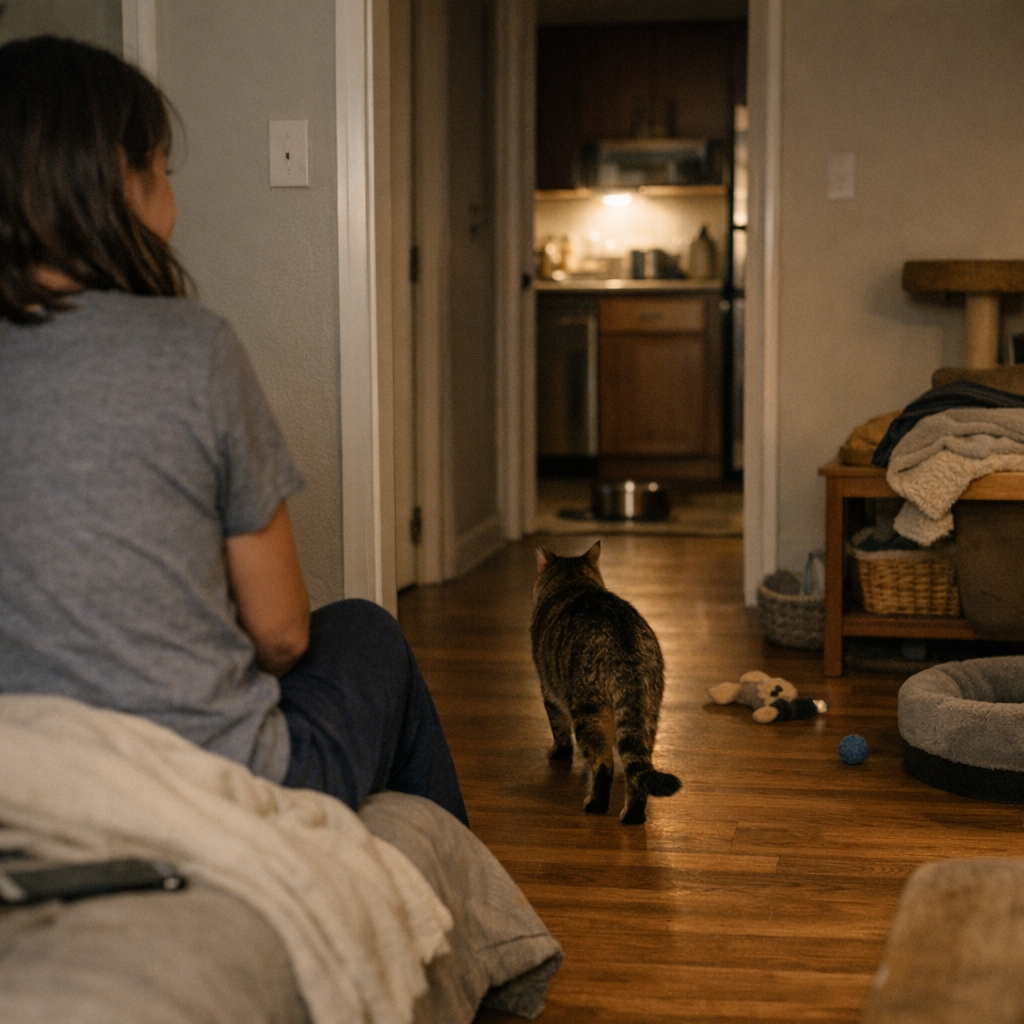
    Late at night, just after you shut off most of the lights and try to pull the house into quiet, your cat is already pacing half the rooms. Not a one-off—this is the same routine that keeps popping up: bowl clinks, water just out of reach, a folded blanket nudged apart, toys scattered where you thought they’d all been put away. The evening was supposed to be done, but instead, you’re circling back to half-fixed cat setups, resetting spots you handled an hour ago, and breaking the wind-down rhythm that was almost holding. Every time an area looks finished but fails to hold up overnight, the whole space—kitchen, hallway, couch, mat—feels just a little less settled. This is the kind of nightly friction the right StillWhisker arrangement is built to reduce, if not remove.

    The Unseen Cost of Nighttime Cat Pacing

    At first, your cat’s nightly wanderings seem minor. But the small interruptions stack up fast—a half-empty bowl means one more detour, a blanket edge tugged loose means it’s never ready for you, a toy finds its way underfoot where you almost step on it in the dark. Nights that should wind down quietly now stretch, with unplanned resets and cleanup creeping into what was supposed to be rest time. The cost isn’t in one big mess; it’s in the rhythm that keeps breaking because one cue after another doesn’t land when you need it.

    Every evening becomes a cycle of missed signals. The cat patrols the same paths, pauses by doorways, tests each “done” spot for unfinished business. Each trip is a test—spill, nudge, or rummage upends any fragile sense that the space is done for the night. What looked ready ten minutes ago now feels open-ended, and your own downtime keeps getting nudged further away.

    When a Tidy Evening Hides a Repeated Problem

    Maybe you straightened blankets, topped up bowls, dimmed lights, and put away tonight’s toys. But for indoor cats, these setups don’t always signal “the end.” If one piece is off—water barely enough, a toy rolling back out, a rest spot not quite right—cat routines fill the gap with another lap, another inspection. That “nearly finished” feeling only guarantees extra interruptions. You catch yourself, again, refilling water you just checked or fixing bedding you thought was settled. The surface looks tidy, but each overlooked gap creates another round of minor fixes—often after you’ve already started to relax.

    This isn’t a problem you see in the moment, but one you feel as you’re pulled from a book or sidetracked on your way to bed because the setup “didn’t hold.” The home stays visibly neat, but the effort to keep it that way drags on longer and feels less satisfying each cycle.

    Evening Routines That Keep Falling Short

    Mistimed resets are all it takes for the friction to return: toys left in the wrong place, water bowls not double-checked before lights-out, litter that gets handled just a little late. Cats notice—and respond—with more searching and movement. Next thing, you’re tripping over a ball you meant to store, kneeling for a water splash on the tile, or grabbing a blanket already bunched up before midnight. The easy calm of the room gets chipped away by these small, repeated breakdowns—burying your downtime under a layer of small, necessary course corrections.

    If every reset finishes out of order, or the tools to handle it aren’t where you need, your evening gets stretched thin. Even good organization loses its grip, and small failures show up in the slow drag of routines that never quite click into place.

    The Light Shift That Quietly Alters Nighttime Pacing

    One detail makes a difference fast: dimming lights 30 to 40 minutes before your cat’s usual pacing window, not after. Start early and the shift sends a clear, physical signal—“night is closing.” It isn’t instant, but after a few nights of preemptive dimming, patterns shift:

    • Almost no pawing at water after 10pm—bowl checking drops off
    • Blankets stay folded and used, not restlessly poked and left in piles
    • Cats settle—actually settle—on beds or mats instead of fidgeting
    • Cleanup for water, toys, or mess outside the “cat area” drops noticeably

    It’s not a theory. If the signal comes early and every cue lines up (water, toys, blanket, light), you stop scrambling to “jump ahead” of your cat’s pacing. The new routine slides in with much less pushback, and late-evening work shrinks down to a few easy steps.

    Why Syncing Cues Works—And Where Gaps Still Show

    Lighting alone isn’t magic if the rest of your setup is stuttered or out of order. Miss a refill, or leave a toy behind, and the cat’s expectation for one more round stays alive. Repetition matters as much as timing. The smoother setups are the ones where everything clicks in at the same notch every night:

    • Consistent feeding time—without nightfall drift
    • Water bowl topped before the room goes dark
    • Toys rotated and binned in the same order, not left for chance cleanup
    • Litter handled in sequence, never lagging behind the rest of the flow

    Cats don’t settle for dimness alone—they settle when the sequence closes down fully. Half-done resets, missed tools, or a piece forgotten at the edge all break the illusion of “night finished.” If everything aligns, the signal is clear; if not, the friction restarts.

    Scenes from Real Use: Where Friction Builds Up

    • Reaching for the water bowl, you have to move yesterday’s mug and a single stray toy, breaking rhythm. The cat lingers—a signal clearly missed.
    • You straightened a blanket after dinner, but your cat circles, waiting for a better spot. By the time settling happens, you’re pulled into another room to wipe a corner missed during late cleaning.
    • A toy bounces from bin to hallway—step on it at midnight, and the cat’s chasing behind. The “tidy” look lasted for six hours, and now it’s back to reset.
    • Wipes or cleanup tools are kept nearby, but never within reach at spill time—the delay lets paws track water further than you intended, or the rug edge picks up what should’ve been avoided.

    None of these scenes are dramatic—they’re just the drag of an almost, but not quite, finished setup. Gaps add up, minor corrections pile on, and the routine’s extra fatigue shows up long before you notice it in the general mess.

    The Difference Between Looking Done and Feeling Finished

    Give it a week with new cues: the room that’s held up well isn’t the one that just looks clean when you walk through—it’s the one that needs no double-checking by midnight. Bowls don’t need inspection later, blankets hold their shape, toys quit returning to shared space, and doors go closed for the night. The point isn’t perfection (cats will still pull a toy out of nowhere or nudge at a mat), but fewer interruptions, easier resets, and a routine that stops eating into relaxation time. What matters is that “done” now holds up through repeated, nightly use—not just for the first half hour but all the way to morning.

    Adapting Routines When Lighting Isn’t Enough

    If dimming lights before pacing isn’t possible—maybe you share space, maybe schedules collide—then success lives in predictability, not ambiance. What actually shrinks cat pacing and owner interruptions is a locked sequence:

    • Feeding, play, and cleanup always in the same order, every night—no improvising, no last-minute switches
    • Litter handled before the final feeding or play, not left for an afterthought reset
    • Cleanup gear (wipes, vac, scoop) never in a bin “nearby,” but out and ready by the right surface and at the right moment—the seconds matter when you’re losing momentum

    Even without early lighting, a reliable system trims down the cat’s drive to revisit “almost finished” corners, lowering your late work and interruptions that keep you from bed.

    Small, Steady Changes That Don’t Quietly Unravel

    No giant hacks needed—just routines that survive real repetition. Early cues, set order, tools where you actually need them. Every night your cat gets the same sequence—feeding, water, cleanup, close-down—means less roaming, less testing, and fewer surprise resets. When that one toy finally stops camping under the kitchen cabinet and blankets don’t pull up after midnight, you’ll see: the routines you keep are the ones that last, not the ones that simply look good the first time through.

    March 18, 2026

  • How Drawer Design Impacts Maintaining a Clear Minimalist Bedroom Surface

    Every bedroom storage setup looks promising the first morning: drawers empty, tops wiped down, everything in its assigned place. By midweek, that illusion cracks—a phone charger shows up on the surface, socks and glasses form a row of “for now” clutter, and the evening book perches permanently above a drawer. Real disorder doesn’t erupt from having too little storage, but from storage that can’t keep up with daily habits, leading even spacious dressers to become crowded landing zones instead of actual storage systems.

    Where Drawer Design Collides with Daily Routines

    Many dressers claim versatility—clothes, gadgets, toiletries—but the test isn’t what fits, it’s what stays usefully sorted under real-life pressure. Drawers that look generous enough on paper quickly reveal awkwardness: too-deep sections turn socks and cables into a scavenger hunt, and mismatched compartments force you to shuffle or stack daily. Retrieval slows, categories blend, and every “I’ll put this away later” becomes a risk to visible order.

    Clutter isn’t an explosion; it’s a signal that the structure is failing to match the routine. As the days go by, high-use items—headphones, charger, a watch—escape closed storage because returning them is inconvenient. They linger on top, expanding until the difference between “organized” and “reset-required” fades completely.

    What Makes a Dresser Top a Drop Zone?

    The friction isn’t just about drawer count but repeated access. If you hesitate to open a drawer—because it’s too full, unsorted, or hard to reach—the surface becomes a default parking lot. The “easy reach” drawer nearest your bed or most-used path might be so packed or undefined that it slows you enough to build external clutter. What looks like a single out-of-place object is really a queue: each time you skip the headache of finding the right section, the overflow grows more permanent.

    Category Creep and Disrupted Flow

    Shallow drawers promise oversight but fail when categories go undefined—shirts slide into work cables, creams wander past small tech, all blurring into an uneasy mix. Deep drawers invite layering, making every retrieval an exercise in rearrangement. When you’re forced to lift three stacks to access the bottom, or hunt for one cable among clothes, it’s clear: the system encourages out-of-drawer hoarding by making return flow awkward.

    This is category drift at work—you start with tidy lines and end with a random inventory. The more times you reach twice or abandon a tough-to-reach corner, the less your system is working with you. It becomes a cycle of micro-delays and pileups, not a functional routine.

    Small Shifts: How Drawer Structure Can Reset the Routine

    Lasting order isn’t about more volume but sharper structure. Adding a shallow divider or slim compartment to the upper drawer—just enough for everyday essentials—gives those items a predictable return spot. When the path back is direct and simple, the “leave it on the surface” habit breaks down: putting the cable or tape measure away is faster than abandoning it, and the surface stays available instead of clogged by overflow.

    This setup beats the common fix of trays or bowls atop the dresser, which merely catch—rather than prevent—spillover. Internal division carves out true zones, making it much harder for pens, watches, and pills to invade each other’s space or migrate outward into constant view.

    What Repeated Use Reveals

    Early changes feel subtle—maybe an extra second sorting at bedtime, maybe a single redirected reach. But by the end of a week, the payoff is visible: the top is still clear, high-frequency items are easy to find, and there’s no buildup hiding just out of sight. The cycle of quick resets shortens, and you spot “clutter creep” before it becomes a full reset project. It’s a structure that flags disorder early, not a system you only notice when it’s already failed.

    Recognizing Signs Before the Reset Is Needed

    The crucial signal isn’t sudden chaos but creeping inefficiency: if a drawer gets slow to open, always feels full, or the wrong categories are colliding, your setup is quietly breaking down. When you have to dig, dislodge, or dodge one item to get to another, each return becomes friction—faster to toss it somewhere else than to deal with the jam.

    Reset by quickly emptying the top or a trouble-drawer every few weeks, even for a minute. This shows which items genuinely belong within arm’s reach and which are just accumulating. If you find yourself constantly rehousing the same cable or bottle, it’s a sign your structure isn’t holding—leading to another cycle of surface buildup and reshuffling.

    Drawers vs. Trays: Why Surface Organizers Often Fail

    It’s tempting to add trays, thinking more defined surface zones will absorb the chaos. But trays do little if the core storage stays unsorted or overloaded—they become overflow bins, not organizers. Stray objects, loose change, and accessories simply shift from one visible spot to another, making resets slower and disguising deeper problems.

    Instead, let divided drawers carry the organizational load. When small boundaries inside match your routines, less clutter escapes—reducing the chance that “just tonight” turns into “always out.”

    When Storage Matches Routine, Calm is Easier to Keep

    Real order isn’t about creating a perfect snapshot but about a storage setup that absorbs normal mess without requiring constant oversight. When a dresser’s drawers match their internal zones to real item flow, the surface becomes less of a battleground. Reset pressure drops, daily use speeds up, and you spend less time correcting the system because it bends with, rather than resists, your habits. Overflow doesn’t disappear, but it stays contained, letting the space support daily movement—not interrupt it.

    You’ll know the difference: instead of thinking about where to put things or how to reclaim an organized look, you simply use the space—and visible calm holds, not because you’re tidying constantly, but because the inside matches the outside. That’s the signal of a storage routine that quietly does its job and makes ongoing clutter one problem you leave behind.

    Gridry – Simple, practical inside-storage systems for easier daily living

  • Why Choosing the Right Indoor Lighting Fixture Saves Time and Stress

    If you’ve ever knelt behind a washing machine to recover a vanished bolt or found yourself groping for a wire cap at the base of a cold stairwell, you know lighting installs aren’t just about style—they’re about real, persistent friction. The difference between flush mounts, semi-flush fixtures, and wall-mounted lights feels academic until you’re squinting at a ceiling in a tight hallway, watching small hardware skitter out of reach. A fixture can seem perfect on a product page, but once you’re kneeling on tile at 7 a.m. with a screw embedded beneath an appliance, the real implications show up: simple maintenance stalls, workarounds stack up, and the wrong choice keeps biting back.

    The Domino Effect of Lost Lighting Hardware

    In actual rooms—above laundry counters, jammed against mirror walls, tucked under cabinets, crowding narrow hallways—dropped screws don’t just disappear, they reroute your entire routine. The two-minute bulb swap stretches to thirty minutes as you hunt for a part that’s slipped behind a washer or vanished beneath baseboard. Suddenly, a routine fix turns into a mini project, with exposed wiring or loose covers left lingering until you can dig out the missing piece. The fallout isn’t just inconvenience: the fixture stays unfinished, a shadow spreads across a work surface, or a loose fitting turns into a safety uncertainty you notice too late.

    Routine Lighting Maintenance: The Real Test Zone

    The real test of lighting isn’t on install day—it’s every routine maintenance round after. Laundry rooms with damp air, vanity areas with awkward grip, or stairwells where a step-stool barely fits: these reveal how flush mounts can bury vital fasteners up against the ceiling or wall, out of direct sight and beyond easy reach. The practical moment is never glamorous: slippery hands, a poor angle, and gravity combine, and now you’re reaching blind for a screw that matters more than it seems. Once the cap is gone—wedged under a cabinet or lost behind the machine—you rethink “simple” lighting. With flush mounts, this isn’t a one-off: every cleaning, every bulb change, the setup keeps refueling the same hassle.

    Looks Versus Real-Life Use

    Side by side, flush and semi-flush fixtures can look nearly identical—but the use difference is impossible to ignore after a few cycles of real work. Flush mounts give a seamless, low-profile look that works right up to the ceiling but hide their hardware, forcing every twist of the cover into a guessing game. In a crowded vanity or above a laundry run, there’s nowhere for fingers, nowhere for dropped parts except into trouble. Semi-flush and panel designs, by contrast, add just enough clearance for hands and tools—giving you line of sight to each connection, space for a controlled grip, and a much lower risk of runaway screws. On day one, this is invisible; on day one-hundred, it’s the gap between quick swaps and repeat crawling.

    A Laundry Room Scene: When a Small Drop Snowballs

    Picture a damp laundry room, heat rising from the dryer, and you’re wedged into the space between counter and wall. You need to change the LED above the far edge. The flush mount’s cap, slippery with condensation, flips from your hand—bounces once—and vanishes behind the machine. Productivity stops. That little part halts your day, now demanding a flashlight, a coat hanger, or a contorted tilt of a heavy appliance. In bathrooms, a single wayward wire cap behind the vanity can leave the mirror light dead for days. Stairwells make it risky—one fallen nut skips steps and turns recovery into a safety hazard, with poor lighting compounding the danger.

    Breaking the Lost-Part Cycle: A Field-Tested Tweak

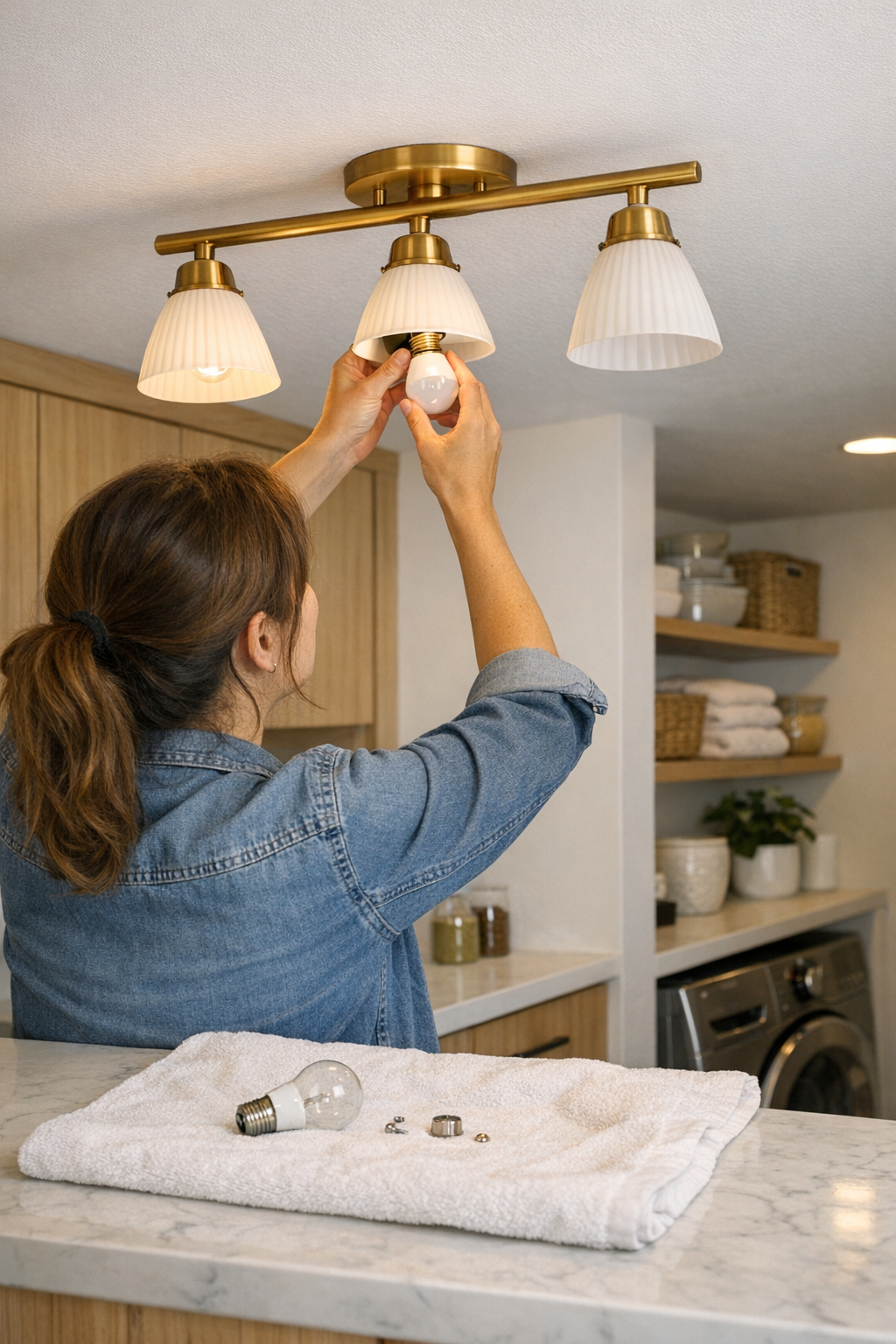
    After enough lost parts, one adjustment cuts the repeat drama: put a thick towel or folded mat on the floor or countertop right under the fixture before any work starts. This turns hardware escapes from a chase to a catch—no fastener rolls out of sight, no part bounces straight to the void behind machines. In laundry rooms, simply folding a towel to meet the fixture edge keeps everything within view. In tight halls or bathrooms, a defined catch zone snaps the chaos back under control, letting you finish the fix and move on, not just start another search session.

    Real-World Tip: Prep the Maintenance Area

    Always set your own work boundaries—no matter how quick the job feels. Tile, grout, and trim eat dropped hardware alive. A towel or piece of cardboard on the floor is a small setup for a major payback: you get parts back instantly, kill the creep of delay, and reclaim lost minutes every time gravity strikes.

    Why Fixture Type Repeats the Story

    Flush mounts naturally choke access. Each cover removal holds a hidden dare: will a screw or bracket fall somewhere only a full-room upend can reach? Over time, frustration sets in—not because lighting isn’t bright, but because simple upkeep keeps getting sabotaged. Needed cleanings and quick swaps get postponed; dust collects, shadows spread, and the light that looks right overhead feels increasingly wrong in day-to-day use.

    Semi-flush and panel fixtures—looser-fitting, with just an extra inch of drop—unclench the process from the start. That space is not cosmetic—it translates to steadier hands, fewer hardware fumbles, and easier lineup of cover and socket every time. In rooms where space is already tight—under cabinets, by stair railings, facing narrow corridors—that difference multiplies. It’s the quiet detail that keeps daily routines smooth instead of sabotaged.

    The Bigger Picture: Lighting That Actually Supports Your Routine

    It’s tempting to treat ceiling and wall fixtures as one-time set-and-forget—until they start breaking momentum at every routine pass. Good lighting isn’t only about lumens or finish: it’s about a fixture handling your routine without spitting parts behind appliances or forcing contortions for a bulb swap. In entryways, corridors, over worktops and mirrors, the wrong fixture keeps generating friction you don’t need. When setup syncs with how you actually move and work—hands steady, hardware visible, maintenance fluid—the whole space gets easier, not just brighter.

    Everyday Proof: Lighting Frictions that Add Up

    If you catch yourself pausing an extra beat at stair turns, leaning in to banish mirror shadow, or dodging bright glare that never seems aimed right, odds are the fixture type is fighting your routine. Pretty silhouette means little if the shadow keeps creeping on your countertop, or you need to fix, prod, or improvise every few weeks. The right fixture reduces these interruptions—making your space feel grippable, visible, and reliably usable, not a series of stops and workarounds.

    Reducing Routine Hassle, One Small Fix at a Time

    The real cost of poor lighting isn’t aesthetic—it’s the wasted time, the forced reroutes, and the sense that your home resists you instead of backing you up. Trade flush-mount friction for semi-flush ease, lay down your catch mat, and treat lighting as part of your working rhythm. Small tweaks accumulate. Over weeks and months, this adds up to less crawling, less squinting, less lost motion—rooms that run with you, not against you. When maintenance becomes routine again, not a setback, even the smallest fixtures change how every corner actually works.

    Find ceiling and wall lighting that supports your real routines—not just your style—at LightHelper.

  • Maintaining Circular Saw Performance Through Regular Motor Vent Cleaning

    The first sign isn’t always a breakdown—it’s when the cut starts to resist you. You’re pushing the circular saw through plywood, aiming for a clean line you’ve cut a hundred times before, and something shifts: the motor strains, the blade stalls for half a heartbeat, and the steady, confident hum flattens into a deeper groan. Lines that should be crisp start to splinter, and the edge feels rough even before you reach for the sander. You pause, press forward, try not to read too much into it—maybe it’s just a tough patch of glue or the blade’s getting old. But the drag keeps building. Dust has slowly choked the motor vents, air is trapped, and the tool is quietly falling behind your momentum. For anyone who cuts, drills, or sands on real jobsites, this is a creeping friction you’ve felt more than once—always threatening to stall your pace right when there’s still half a stack of panels waiting.

    Dust Isn’t Background—It’s the Thing That Wears You Down

    Every workspace tells the same story: dust never stops coming, and it never floats in just one direction. When you rip down MDF or score fiber cement, those clouds hang tight in the air, sink into the grinder, and invade every vent in your saw, drill, or sander. The floor might get swept at the end of the day, but the real mess settles inside your tools. When vents clog, the results go way beyond a dirty case: the inside runs hotter, airflow drops, and the RPMs you depend on for control start to slip, cut after cut.

    This isn’t about the first board or a single screw. Usually, you feel it mid-way through a project—the fifth panel into a built-in, or returning after hours of trim work. The saw won’t glide, your drill feels labored driving long screws, or the sander bogs down on corners it once breezed through. Tasks that once felt automatic suddenly eat twice the focus and double your energy. Fatigue creeps up, and your workflow goes off-track. The real cost isn’t just the rough edge you have to sand—it’s the way tool drag chips away at your control, your speed, and your willingness to keep pushing through the day.

    When a Tool Starts Fighting Back: The Hidden Toll of Neglect

    Set two circular saws side by side—one vent cleaned, one ignored for a stretch of heavy jobs. Outwardly, they’re twins. But swap blades and run the same board, and the difference is immediate. The clean saw breezes through, the gummed-up one lags on every push or stalls on denser knots. You end up leaning harder, chasing accuracy you could once trust on instinct, and every pass turns into a minor wrestling match.

    Picture the tail end of a built-in shelving marathon: the panel cuts keep coming, the inside corners get trickier, and fatigue starts to seep into your grip. With a tool breathing easy, you hit your marks with less strain, less overcorrection, and minimal cleanup. Let vent dust stack up, and suddenly you’re breaking rhythm—waiting for a motor to cool off or powering through a lineup of rough, splintered cuts, knowing every mistake means more work before the job’s done. By the time you finally stop to check the vents, the handle’s hot and the casing radiates a heat that doesn’t fade with the trigger off.

    One Missed Cleaning Becomes Ten Minutes Lost—Over and Over

    The decline sneaks up. Maybe a drill needs longer between holes, or the saw leaves you nervous on long rips. You blame the workpiece, your blade, even your own technique—rarely considering that weeks of ignored vent dust are stacking fatigue and time loss into every session. As the pressure builds, you spend more effort keeping cuts on track and correcting “almost good enough” surfaces, adding micro-delays that snowball straight into overtime.

    Cleaning Vents Isn’t Just Maintenance—It’s How You Keep Control

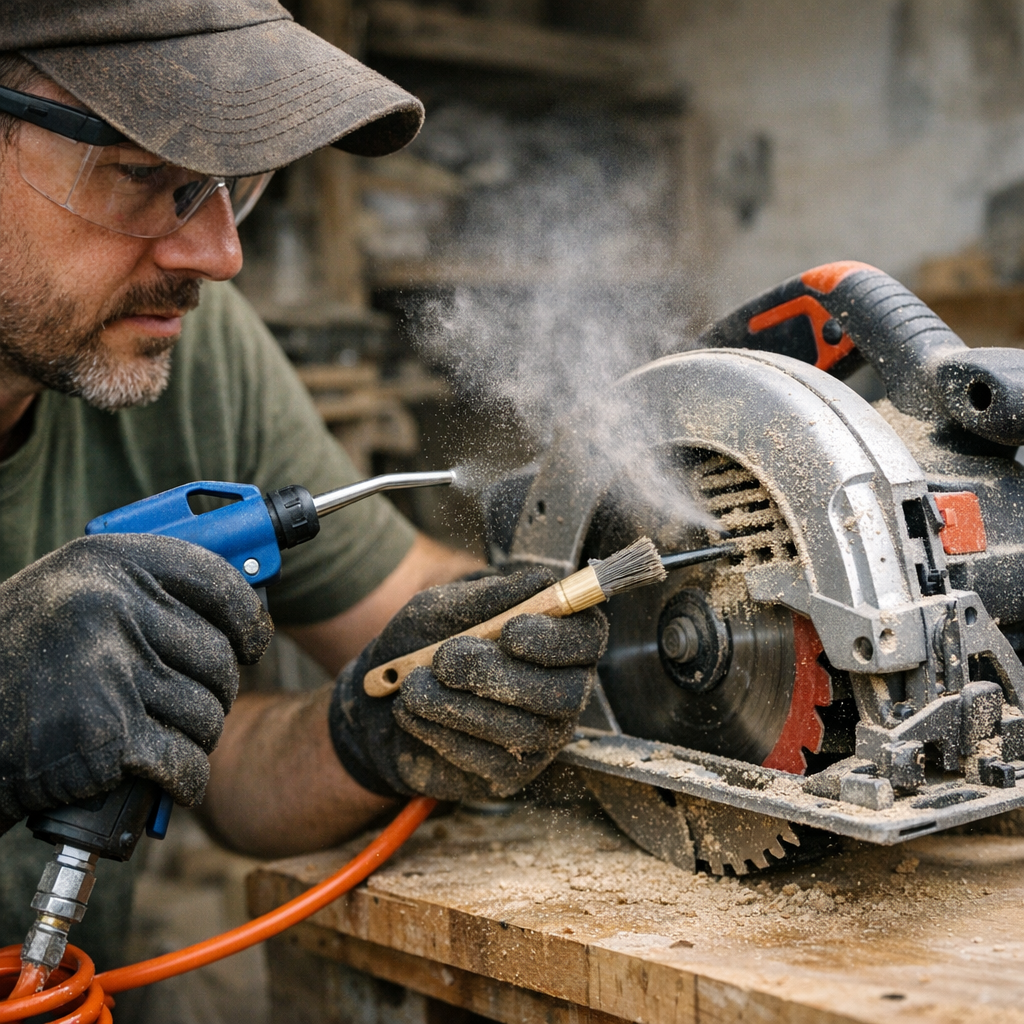
    No one wants to halt progress for maintenance, but payback is obvious where it counts: smoother action, less frustration, and work that moves at your speed. Surface dust wipes away easy. The problem is inside—compacted around vent fins and motor slots where a rag never reaches. The difference came for me after wrenching through an MDF-heavy week: a dedicated, narrow brush (under 10mm, stiff bristles) plus a hit of compressed air, fired against the direction of vent slots. Hit this routine every other day as dust piles up, or faster during high-output weeks, and the slow fade in tool performance simply doesn’t arrive.

    The results feel real: blade RPM drop stays barely noticeable, my sander’s pace is steady, even after hours of use, and the saw’s casing stays touchable—even at day’s end. Every pass is closer to what a sharp blade—and a sharp tool—should feel like. Less chipping, smoother lines, and, most of all, the rare pleasure of not having to backtrack on rough cuts just to make the finished piece look right.

    Read the Signals Early—Then Act

    Be quick on the symptoms: trigger feels sticky on start-up; the saw’s body warms up fast, even on short cuts; the workpiece smells scorched after what should be routine. Don’t wait for problems to snowball. Spot these red flags and put the vent cleaning at the top of your punch list—the longer you delay, the more upstream work gets undone by a sluggish, unpredictable tool.

    Fast, Practical Vent Cleaning: No Excuses for Skipping

    Start every vent cleaning session with the tool unplugged—don’t skip safety for speed. Go in with medium-pressure compressed air (not maxed out, avoid pushing more dust in), following the vent orientation to clear instead of compacting debris. Follow up with that narrow brush for anything stubborn. For heavy composite or particle board work, clean every two days—or even daily if you see buildup smothering the slots.

    No air on site? That stiff brush still loosens most gunk if you keep at it. Skipping the process just means you’re banking on luck—a bad bet when a few minutes of care keeps hours of trouble off your back.

    Know These Signs—And Don’t Wait:

    • Tool hesitates to spin up or never quite sounds right, even after swapping to a new blade or bit
    • Handle and casing uncomfortably hot mid-job, not just sun-warm
    • More burning or discoloration than you expect in the kerf or screw hole
    • Lines go rough, wander, or turn splintery no matter how careful you are

    If even one of these shows up, deep clean the vents before finishing another cut or run—you’ll notice the difference within the first hour back on task.

    Keeping Vents Clear Means Keeping Your Workflow Yours

    One gummed-up vent won’t ruin your week, but layer on neglect and suddenly you’re working harder for worse results, tired before lunch, struggling to trust your technique. Cut quality drops, battery swaps become constant, tool control grows unpredictable—and you start looking for problems everywhere but at the real source.

    Routine vent cleaning isn’t glamorous, but it’s the line between fighting the job and keeping your hours in your own hands. The sharpest blade, highest-torque drill, or smoothest sander is only half the story—consistent performance is about letting your tools breathe, every day, so they can deliver for you instead of holding you back.

    http://gumboll.myshopify.com

  • How Returning One Pet Item Can Transform Your Daily Routine

    Daily pet care seems simple at first: scoop the food, refill the water, wipe up, move on. It’s only after a week or two that a pattern appears—key items vanish just when you reach for them, or simple routines take longer than they should. If you’ve found yourself balancing a stacked bowl to access the water dish, or searching for the brush at grooming time because it wasn’t put back, you’re seeing the quiet drag that starts when setups in feeding, water, and routine cleanup don’t actually stay ready. These aren’t one-off hassles—they’re the small, repeated slowdowns that show a pet care area isn’t really working. In the CalmPetSupply world, these moments define what needs fixing: not just scattered clutter, but the practical faults in how dog and cat basics are stored, reached for, and put back after every use.

    Why Do Pet Care Routines Slow Down?

    Surfaces can appear tidy—supplies lined up, kitchen counter clear. But real pet routines aren’t static. Yesterday’s towel ends up buried under groceries, the treat bin lands in the wrong cupboard, and the scoop gets moved far from the station where you need it. These minor slips don’t spark chaos; they just stretch the next task. Suddenly, refilling a bowl means hunting through two cabinets, and cleaning up spilled food requires a trip down the hall for the right towel.

    The real cost is in the wasted motion and lost attention. No one grabs the towel immediately because “it’s only a little mess.” But skip a reset here and there, and your whole setup grows harder to use. Sharing the routine with a partner? That growing disorder turns a two-minute handoff into a five-minute clarification, since the basics can’t be trusted to be where they belong.

    Everyday Examples: Where Routine Friction Begins

    Picture a rushed morning: you’re ready to feed before leaving, but the scoop wasn’t returned last night. You substitute a spoon—now you’re guessing at portions and picking up stray kibbles around the mat. The cleaning spray is tucked behind laundry supplies, so you postpone the wipe-down. Next, you attempt a quick grooming but the brush has migrated to the living room. These aren’t failures of organization—they’re the real-life breaks that snap the flow of pet care, even when shelves appear organized on paper.

    The effect builds: a tidy space offers zero help if the brush or bowl isn’t right when you reach for it. Order means nothing if your hand lands on an empty spot, forcing a shuffle through drawers or detour around cluttered hallways.

    The Risks of “I’ll Put This Back Later”

    Most routines slide because of the easy shortcut: leaving things for “later.” You mean to return the bowl after feeding or fetch the refill bottle after work—but these pauses add up. The next dog walk, the water jug waits near the door, towel on a chair, treats on the kitchen counter. It doesn’t feel messy, but each missing item multiplies the effort for every handoff or shift in task, breaking up flow at every basic step.

    By morning, routines sprawl. Feeding means an extra loop for each item. After-walk cleanups take three trips instead of one. These costs aren’t dramatic, but they’re real—especially in shared homes, or when routines rely on someone else to fill in.

    Looking Tidy vs. Actually Running Smoothly

    A pet area can look swept and neat after a cleanup. But when your brush gets buried behind mail, or you need to move baskets to access the wipes, organization becomes performance—it’s visual, not functional. Resets stay half-finished. And the second someone else takes over, the illusion vanishes: a partner searches for the refill bottle or can’t find the treat bin just when needed. Even a calm-looking space exposes its weak points the first time routines speed up or get shared.

    A routine that depends on moving a stack, opening two bins, or explaining where the “real” supplies are—this isn’t a ready zone. Tidy doesn’t count if it jams up again with each round of feeding, refilling, or cleaning.

    Scenes from Daily Care: Small Interruptions Add Up

    • You go to feed, but the dish is behind cookware, so dinner drags out.
    • Wiping the mat is delayed because the towel’s with bathroom linens, not at arm’s reach by the food area.
    • Toys and brushes keep reappearing in walkways—so every transition means another step or reach-down.
    • During busy spells, one blocked shelf turns grab-and-go care into a mini detour.
    • The area seems organized, but if you’re hunting supplies or stacking things mid-task, the routine is losing ground.

    How Immediate Return Restores Flow

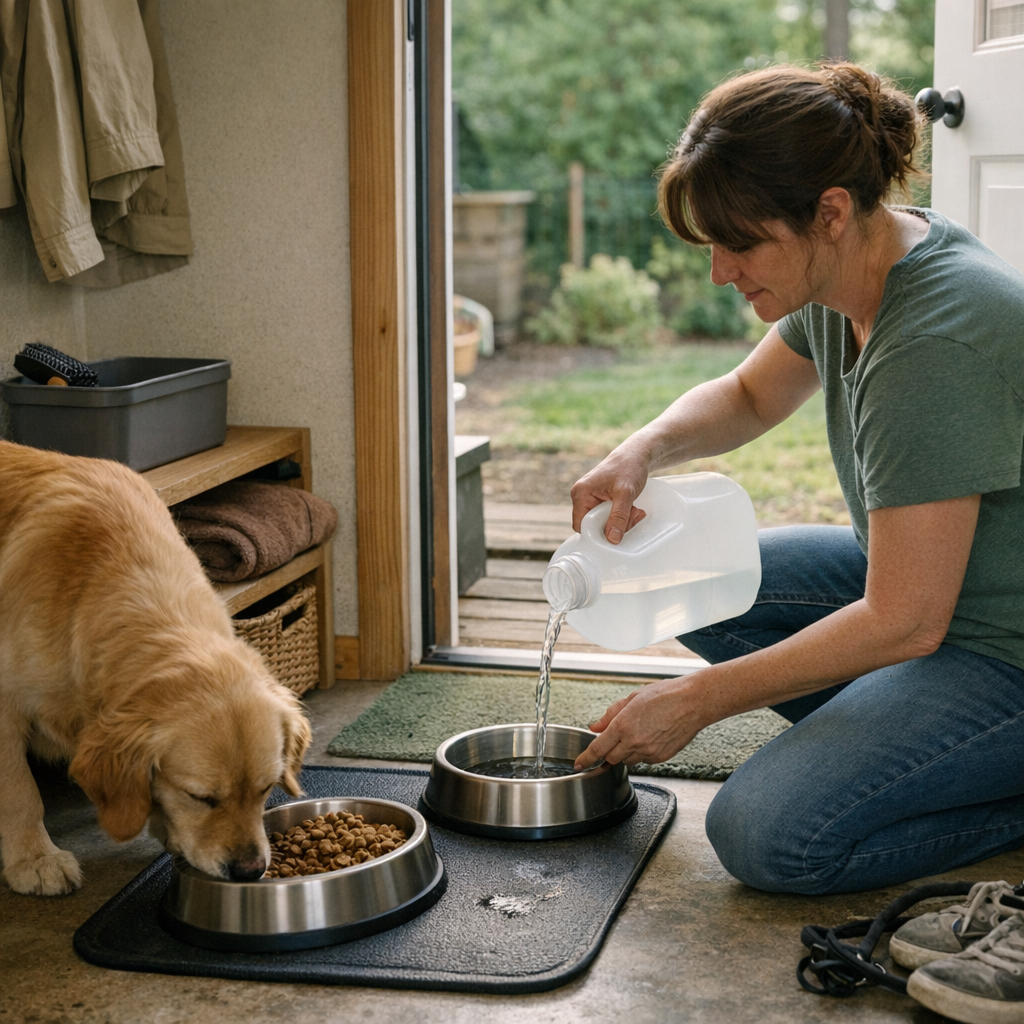
    The simplest, strongest shift comes from restoring each item to its one spot every time, no exceptions. Refill bottles return to their hook, towels back to their own hook or bin, scoops never drift from the feeding zone, and treat lids get snapped shut before you walk away. The result is visible: bowls line up, tools stay within arm’s reach, and no part of the routine gets bogged down by a missing tool. Messes shrink before they require a cleanup.

    Over a week, cycles speed up. Cleanup never piles up, water refills don’t stall, every essential is exactly where logic says. Anyone can jump in—there’s no recitation of “the real spot,” just a smooth, obvious system. The area looks calm because the flow is real, not just cleaned up.

    Bottom Line: Organizing for Life, Not Just for Show

    It’s easy to race for a tidy look or clear countertop and declare the space “finished.” But a truly practical pet care zone—feeding, water, grooming, cleanup—stays ready because every tool snaps back to its spot with no delay. You’re not organizing for appearances; you’re building a routine that doesn’t fall apart after the third reset. The test is simple: if feeding, refilling, or cleanup gets slower or more stressful as days go by, the visible calm hasn’t translated to true ease. A system that’s always ready means every daily care job—no matter how rushed or shared—just works.

    See everyday-ready routines and practical pet care setups at CalmPetSupply.

  • Why Wall-Mounted Storage Systems Outperform Standalone Units Outdoors

    Most outdoor utility zones look organized—for about five days. By week two, patterns settle in: a rake left somewhere between garage and gate, soccer balls forming a minefield along the walkway, hoses and buckets choking the fence line. Each reset feels temporary because it usually is—the problem isn’t you, it’s how the area handles real, repeated use.

    How Floor Storage Collapses Under Routine

    Picture your side yard after a normal week. Tools start out lined up, bins tucked in the corner. But by Sunday, the ground tells another story: a shovel upends the path, a pile of shoes spreads near the door, and a bag of soil creeps from the wall almost to the patio table. Even spilling sweat on a Saturday reset doesn’t change the rhythm—overflow returns to the same dead spots within days.

    This isn’t just an untidy look—it’s floor pressure that keeps stacking up. Every time you squeeze past a muddy boot or nudge a bag aside to open the gate, your setup is actively blocking you. The more the space is used—gardening days, ball games, kid traffic—the narrower the walkways, the heavier the friction. Resets turn into reruns: handling the same handful of stuff, over and over, each week.

    The Hidden Stall in Standalone Boxes and Sheds

    The appeal is obvious: stash all the loose gear in one big weatherproof lift-top or mini shed. And for the first week or two, it might feel like the problem’s solved. But next, reality creeps in—a buffer zone develops right in front of the chest. You find yourself stepping over a lean-to stack of chairs, dodging hoses, or moving a pile of “for now” shoes and gloves just to return a single shovel.

    A heavy lid turns a 10-second tidy into a chore nobody wants. If the latch is sticky or the box is blocked by a wheelbarrow, items hang around the threshold. What looked like maximum capacity quietly loses ground to impromptu piles and awkward workarounds. The box itself becomes ringed by gear that never goes back in, simply because access doesn’t match your real routine.

    Blocked Paths, Delayed Returns

    If putting something away takes two hands, a heavy lid, or moving another object, it lingers outside. Lawn chairs begin roosting beside the shed. Toys drift down the walkway. In any squeezed zone—a patio edge, garage strip, or skinny fence line—friction multiplies fast. Suddenly, the main path becomes a slalom course, slowed by stalled returns and “just until tomorrow” piles.

    What Actually Changes With Modular Wall Systems

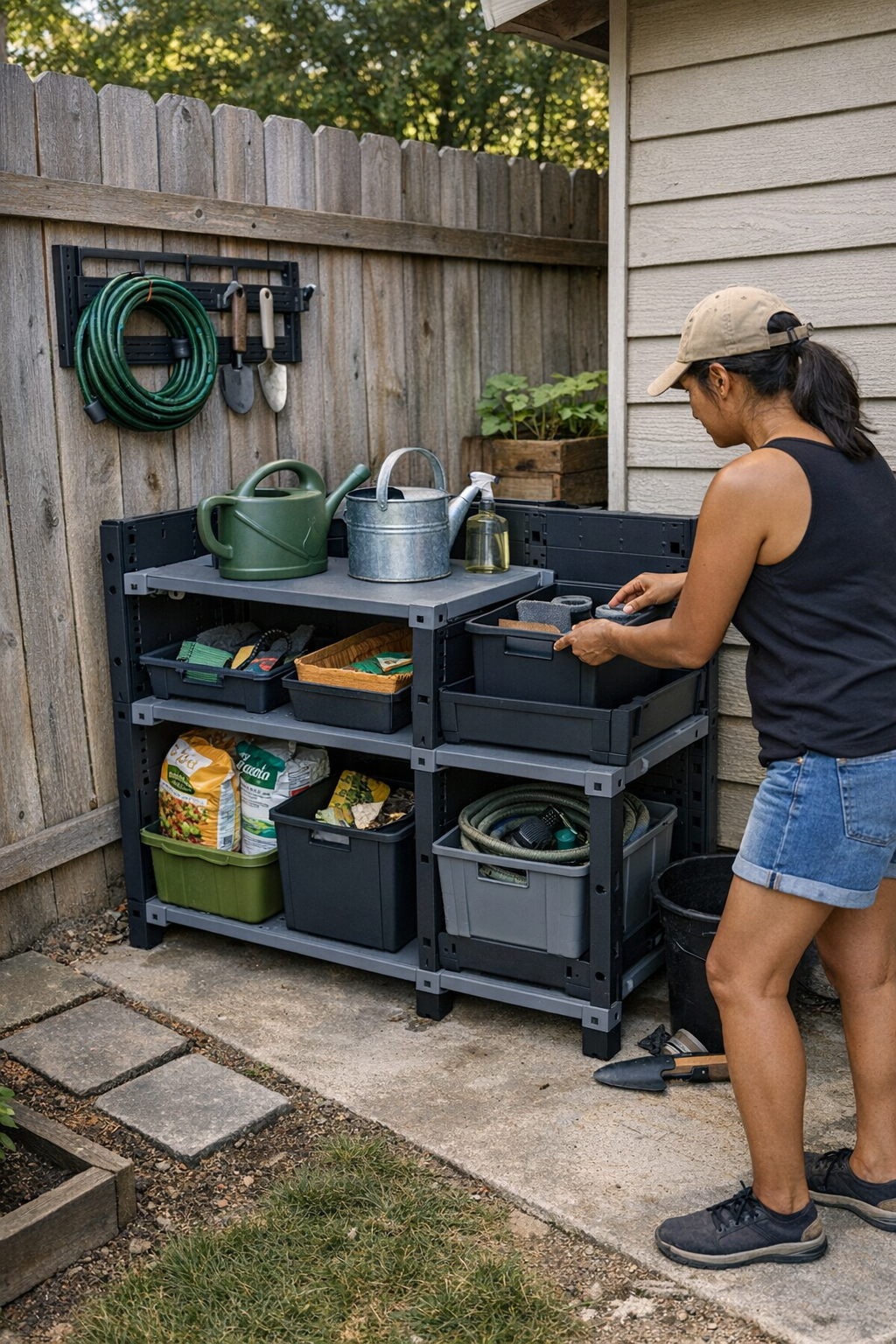
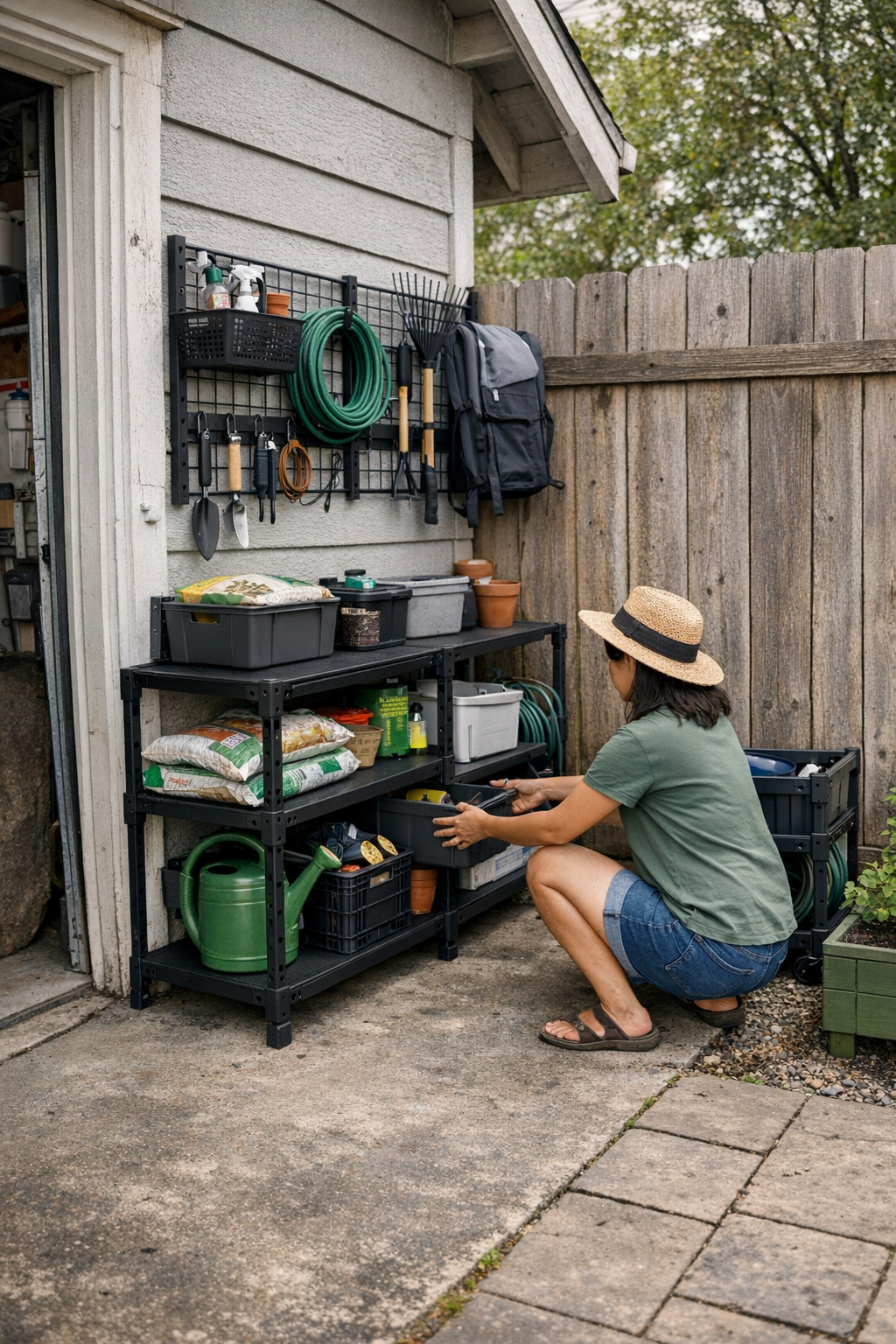
    Now, picture the same area after a swap: along the fence or garage wall, a few sturdy panels, some adjustable racks, well-placed hooks. Garden tools hang clean and visible. Balls and cones perch above the ground. Folding chairs hang high enough to clear the gate. Each pass-through, you see what belongs—and nothing begs to pile up.

    The battle moves off the floor. Movement is clearer. The reset, lighter. Items don’t hide behind lids or get jammed behind bins. Drop-off points stay visible and easy to reach, even when routines shift from weekdays to weekends. The difference is obvious: a walkway that stays usable, even after a week of hard use, versus the quiet creep of clutter that closes the path within days.

    The Trap of Wall Space Used Wrong

    Not every wall fix works. Slap up too many hooks behind a bin, and you get a dead zone. Put shelves beyond normal reach, and tools start piling up below instead. The smart setups map to how hands actually move: hose reels at hip height, not above the mower; kids’ toy bins at the natural end of play, not at the farthest fence post; flower-pot shelves just inside the gate, visible every time you walk out.

    • Hang that hose reel where it sees daily use, even if it breaks symmetry.
    • Let kids’ bins meet them at the natural finish line, not tucked out of view.
    • Keep active-use shelves within one step of the entry, not lost behind lesser-used items.

    Modularity isn’t a buzzword—it’s what pulls the system back into sync as seasons shift and uses multiply. Swapping a hook or folding out a shelf means the system stays relevant, not another fixed annoyance.

    Overflow Zones and ‘For Now’ Creep

    Watch for the “just for now” pile: a drenched garden cushion on the box lid, folded chairs leaning “temporarily” by the threshold, a tangle of gloves sagging on the closest surface. These clusters aren’t laziness; they’re feedback. If stuff stays outside the unit for days, the flow of putting it back is broken. Each new drop-off makes the next reset slower and the next block larger.

    Does one section always collect the backup gear before every party, yardwork day, or rainstorm? If so, your setup is losing the battle against live use. Maybe the gate needs to swing wider for spring planting or the basketball hoop gets moved for a summer dinner—modularity lets you reclaim or reroute those storage clusters fast, adapting to how your yard actually lives, not just to how it looked on move-in day.

    Why Flexibility Stops the Reset Spiral

    Outdoor spaces never freeze. Shade shifts hour by hour. Tables migrate for a barbecue. Suddenly a corner is needed for a wading pool or a load of firewood. The heavy, anchored box or rigid shed doesn’t move; soon it traps itself in awkwardness, becoming a new obstacle instead of a solution—especially where every foot of breathing room matters.

    Wall-based panels and modular frames work because you can shift, trial, and re-stack layouts. Renters aren’t shackled by anchors in the siding, and homeowners aren’t stuck with yesterday’s guess. Utility zones remain flexible, the friction drops, and the setup keeps pace with the way you actually move through the space.

    Is Your Setup Holding Back Your Routine?

    You’ll see the signs long before the setup “fails”:

    • Do you zigzag more than walk on your own path after a regular weekend?
    • Do “for now” piles quietly take over the edge of the main storage unit?
    • Are you shuffling something every single time you open the gate or reach for a tool?
    • Does the memory of a sticky lid or blocked bin make you skip returning gear?

    If any of these feel familiar, your friction isn’t about trying harder. It’s that your setup isn’t tuned to your real patterns. Moving to a visible wall system or modular setup isn’t about making the space pretty—it’s about clearing repeat bottlenecks, keeping resets quick, and giving every square foot back its actual use.

    Outdoor Setup Practices That Actually Hold Up

    Protect the ground. Movement is gold. Treat floor space as non-negotiable. Each tool, ball, or basket lifted onto the wall is one less thing tripped over. The less gear you shuffle just to reach the gate, the faster you reset—minutes, not hours.

    Build for sight lines—skip the memory games. If it’s in plain sight and an easy stretch away, you’ll use the return spot. Hide it behind a lid or above your head, and the “for now” pile wins again. Let the structure do the reminding for you.

    Stay ready to shift, not just once but every time the routine does. Modularity keeps your sanity. Whether it’s a moved potting bench in May or an extra rack for holiday decor, adapting the storage to match actual changes removes the creeping irritation of spaces “almost” working.

    And when you need a shelter for muddy soccer cleats or rain-soaked gloves, a tough box still works—but keep the flow gear high and wide, and away from every natural choke point.

    If your weekly resets feel like reruns, it might be time to see how real-world setups can make your routine lighter. See TidyYard’s current wall systems, modular structures, and storage units here.