Blog

  • How Sideboards Keep Dining Tables Clear and Organized Daily

    No dining table stays clear for long—not when every surface in a busy home pulls double duty. The first trouble isn’t a mess, but the drag of repeating the same action: clearing scatter just to sit, stacking work gear in a precarious edge pile, shuffling chargers and mail so the meal can happen. Every “quick reset” adds up, becoming daily friction that quietly eats into mealtime flow. One day’s envelope, a dangling cord, a stray condiment—they don’t leave. Instead, you end up re-clearing the same outliers, sometimes hour by hour. The loss isn’t just visual order, but the steady erosion of function: a landing zone that never resets, a table that resists its real purpose.

    When Dining Doubles as Storage: Where the Problem Starts

    A dining table rarely gets to exist as simply a place to eat. Shared rooms, open-plan layouts, and thin boundaries between work, school, and family time mean “temporary” items become semi-permanent. That pile of utility bills, the headphones left mid-charge, kid projects half-finished—the line between categories fades fast. Items gravitate to the edges, then start migrating inward, taking over any space not formally claimed.

    This is where the true friction builds. It isn’t just the visual clutter, but the repetitive reset cycle: needing to push, stack, or remove the same obstacles before laying out even a basic meal. The moment routines overlap—breakfast half-cleared, lunch squeezed into a corner, dinner delayed as someone hunts for salt—the absence of a containment zone forces every activity to start with a fresh interruption.

    Sideboards: Not Just Storage, but an Active Barrier

    The right sideboard doesn’t just offer storage—it builds a real divide between “table use” and “everything that wants to creep onto it.” If daily routines keep sending items back onto open surfaces, a reachable sideboard with well-fitted compartments acts as a daily block. Instead of scrambling for space, there’s a stable, nearby landing spot for repeat offenders—and critically, a frictionless route for getting them off the table without wandering to another room.

    But not all sideboards hold up in repeated use. The payoff only arrives when storage matches real patterns: drawers sized for mail and gadgets, shelves that can handle the volume, no awkward bending or blocked access. A “good-enough” unit quickly becomes a new dumping ground if it’s inconvenient—while one that actually fits your in-and-out flow keeps cycles short and the reset simple.

    Scene: Two Tables, Clear by Morning or Crowded by Dusk

    Picture two dining zones at 8 a.m.: both clean, both ready. By evening, the difference becomes stark. At the first, with no sideboard or thin storage, mail and devices stack loosely at one end, chargers slither under books, napkin holders retreat under papers. The meal is bracketed by shuffling and apology. At the second table, a sideboard sits within reach: mail slips into its own drawer, remotes and headphones drop into hidden bins, placemats reclaim free space. The difference isn’t perfect order—it’s the vanishing of repetitive clearing. By the next meal, returns are automatic, not a fresh battle.

    Containment Beats Surface Clearing Every Time

    Resetting a dining table is satisfying—briefly. But if all you have is a flat surface and nowhere logical to transfer clutter, the mess will creep back as soon as routines collide again. Sideboards with category-specific compartments don’t just hide the overflow—they block it from rebounding. If your only “storage” is a basket or bare shelf, small items migrate back to hand’s reach, and the discipline of a clear table never lasts two full days.

    You’ll inevitably find yourself nudging placemats to the corner, hunting under paperwork for the remote, or sliding chargers aside just to set down plates. With no dedicated landing zone, resets fade as quickly as they’re made, and every “clean up” feels like a temporary break before the same problems return.

    The Real Test: Does Storage Match the Way You Actually Live?

    The value of a sideboard isn’t measured the week you buy it. The real test comes after several rotational cycles through work, meals, weekend projects, and rushed mornings. If drawers are too deep or compartments too generic, edge piles reappear—first slowly, then relentlessly. If the closest storage is two steps too far, “just for now” objects end up back on the table.

    One household replaced their surface catchall with a single sideboard drawer, precisely sized for overflow: mail, keys, remotes, and chargers. Instead of repeated room scans, post-meal cleanups meant a quick sweep—items slid straight to where they belonged, almost by muscle memory. The difference wasn’t willpower; it was path-of-least-resistance storage that matched their actual habits, so return flows stayed smooth week after week.

    “Right Sizing” Storage Is Everything

    Overestimate what you’ll keep, and the sideboard fills with random clutter. Underestimate, and the surface overflows—leaving you back at the start with items camping on placemats. The ideal balance: enough compartmentalization so nothing fights for the same slot, but not so many zones that you slow down every retrieval. Open shelves are tempting for fast grabs, but every exposed cubby invites stray objects, and most families end up one day away from overflow.

    Closed drawers and smooth doors pull the line tighter. They offer a visual break and prevent daily drift, particularly for those prone to leave miscellaneous gear in sight. But design matters: poorly placed drawers force awkward crouching, and broad doors block dining routes if clearances are tight. Make every compartment reachable in the middle of the routine, not just when you have time to plan a full reset.

    Reality Check: Flow, Footprint, and Movement Feel

    Any storage unit (especially freestanding sideboards) rewires the flow of a dining room. If opening a drawer requires shifting chairs, or the footprint narrows your traffic lane, new friction quietly replaces the old. Watch for how the sideboard sits against wall and floor: does it create a squeezed pass-through? Does its door swing bottleneck the space? “Storage that crowds movement” is a frequent fail—especially with kids, multiple users, or open layouts where dining and living zones bleed together. What works on a floor plan or catalog can feel clumsy by the third week if it slows down everyday re-entry or forces detours around hardware.

    Containing Category Drift

    It’s not enough to stash clutter out of sight if everything slides together in the same drawer. Chargers knot around school forms, hot sauce packets wedge under envelopes, and the search process becomes its own routine. The best setups assign every repeat item—chargers, pens, remotes, loose napkins—a specific nook, not just a shared bin. When every return has its particular place, “where does this go?” no longer slows the reset. Less category drift, less shuffling, easier retrieval—and critical in a room fighting for calm surfaces against constant pressure.

    The Lasting Advantage: Easy Reset Wins Over Fake Perfection

    A dining zone will never be frozen in display mode—nor should it be. What matters is how effortless it is to reclaim the table’s purpose after each use. The right sideboard, in the right place, trims the reset time to seconds: placemats stay free, mail vanishes quickly, gadgets have a slot you don’t have to think about. As family shape or routines shift—more work from home, bigger tech footprint, school projects on rotation—the unit you choose should adapt with you, offering flexible access and specific containment as categories and pressures evolve.

    Find practical storage for living, dining, and daily use at Gridry.
  • Preventing Glass Diffuser Cracks Through Smart Fixture Placement

    A cracked glass diffuser is rarely an accident—it’s a warning from the room. Where your ceiling light meets everyday movement, the first sign isn’t always a shatter. It’s a faint fissure at the rim, a patch of glare that’s grown sharper, or a subtle dull spot after a week of cleaning. Ignore these changes, and what started as minor damage becomes a chain of regular interruptions: glass chips near the closet, uneven shadows across the hallway, or light that seems bright but leaves work surfaces dim and awkward to use. The problem isn’t the glass itself—it’s a mounting, a placement, a choice that fails under the friction of real routines. And the wrong fixture in the wrong spot turns every pass-through, arm-reach, or bump into hidden stress. Most owners miss these signals until the fix becomes a scramble, not a choice.

    Trouble Spots: Where Glass Diffuser Cracks Begin

    Lighting durability is shaped by the room’s pressure points, not just ratings or catalog look. A flush mount ceiling light appears neat overhead, but in everyday pinch zones—narrow hallways, cramped laundry aisles, or humid corners near a shower—the risk multiplies. Glass installed directly in the path of baskets, swinging doors, or storage bins absorbs hit after hit: a closet opened too fast, steam collecting along the surface, or a hamper brushing the edge again and again. Each encounter is small—a brush from an elbow, a sway in airflow from the door, a forgotten swipe during cleaning—but together, this routine contact seeds stress lines and weakens the diffuser’s edge. The glass isn’t failing all at once; it’s being slowly worn down by movement the fixture was never placed to avoid.

    Cracks don’t show up because of a single dramatic mistake. They build up invisibly. That thin line at the rim, that bit of glass that suddenly reflects more glare, or a patch that looks more clouded after wiping, all reveal that a fixture is absorbing the room’s habits. Ignore them, and you’re not just risking a break—you’re signing up for scattered shards underfoot, uneven lighting, and hours wasted on cleanup and replacement.

    Matching Fixture Type to Real Room Flow

    The right diffuser doesn’t just look flush or stylish—it survives the daily routine. Too often, though, ceiling fixtures go wherever there’s enough overhead space, not where they remain clear of crossing arms, bin lids, and laundry swings. That flush mount by the closet seems harmless until a supply run nudges the diffuser every time. Chores tap, jostle, and unsettle glass that should be out of reach. The result is a creeping web of stress that isn’t visible day one but spells early failure, extra spend, and uneven spreads of glare or shadow just where you most need clarity.

    Contrast this with semi-flush mounts or wall sconces: raising the fixture by even a few inches, or shifting it off the main path, means every loading, crossing, and cleaning motion clears the glass. The change is easy to overlook at installation but blindingly obvious the first time a supply basket passes by with nothing to catch, or when a damp-rated fixture outlasts steamy cleanup without spider-web cracks spreading from the edge. What looks like a minor shift—three inches off the usual arc—quickly becomes the thing that saves you from the next splintered clean-up or lopsided light cast over the hallway floor.

    Routine Scenes: Signs You’re Headed for a Crack

    Crossing the Hallway—One Subtle Bump at a Time

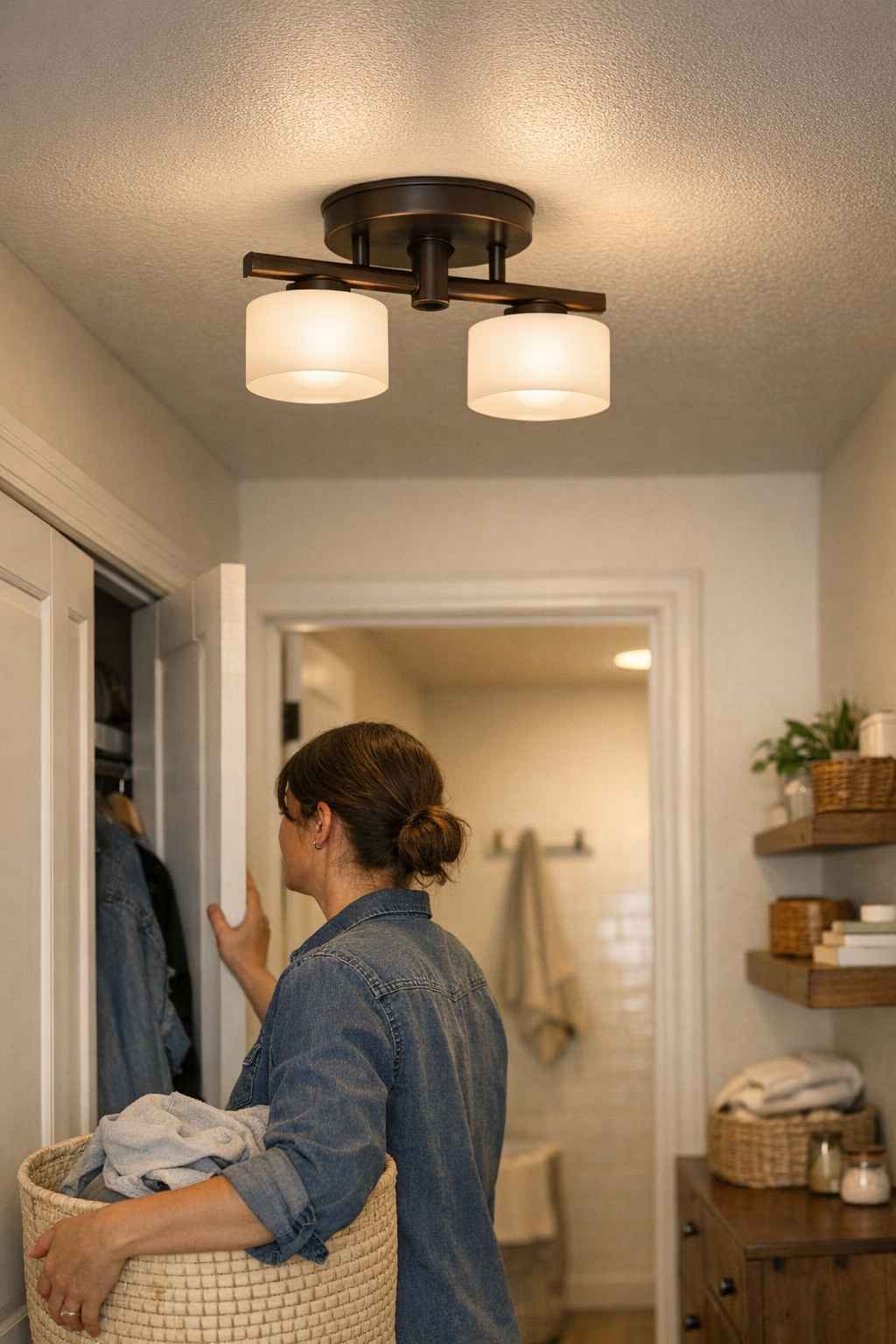
    A flush mount centered just a foot from a closet door is set up for slow motion trouble. First week: smooth glass, sharp light. By week three, the edge of every laundry basket nudges the diffuser. It’s nothing forceful—a swipe rather than a thud—but after a few cycles the rim grows dull, a faint fissure appears, and shadows start scattering unevenly across the floor. Every open closet door gives the glass another small rattle. That micro-crack, invisible at first, becomes the reason for a sudden break right as you’re restocking the closet or grabbing towels in a rush.

    Bathroom Corners and Laundry Tangles

    Utility rooms and small bathrooms punish poorly placed glass twice as hard. A flush mount near a mirror or above cabinet runs endures temperature swings, humidity from repeated showers, and stray hits from stacking and unstacking supplies. Even careful use wears at the edge: damp air seeps in, fine stress lines multiply, and residue sticks where you can’t quite reach or clean. That gleaming fixture from the spec sheet quickly dulls and starts scattering both light and frustration—leaving you with more cleaning, less usable light, and, eventually, a cracked glass replacement schedule.

    The Difference a Small Adjustment Can Make

    Replace a cracked glass diffuser once and it feels unlucky. Replace it twice, and the cause isn’t hidden—placement matters more than the fixture’s polish. Push a semi-flush three inches out of a swinging arc, or mount a wall sconce just above bin-height, and the everyday friction stops. Now, you walk under the light, reach for the closet, mop, move baskets—without causing a hairline split by accident. Even if the fixture drops slightly lower, there’s no jagged edge waiting overhead. Glare softens. That background worry—the constant “Will it break again?”—starts to fade from your routine.

    Especially in spaces people actually use, this small structural move is the difference between dependable lighting and a maintenance headache. Clean-up loses its risk. The diffuser stays clean, the light spreads evenly, and your focus returns to the room—not the next round of repairs.

    The Value of Chosen Placement in Real Use

    Lighting placement isn’t just a nice-to-have—it’s the line between invisible reliability and constant friction. Move the diffuser clear of door arcs, bin sweeps, and main circulation paths, and the rate of cracks and unexpected failures plummets. Watch for these stress points during installation, not after the second glass swap.

    Critical signals include:

    • Glass aligned with swinging doors or covers—prime crash spots.
    • Fixtures exposed to repeated humidity, steam, or surges in airflow.
    • A need to clean, reach, or maneuver close to the glass after every use.

    If any are true, cracks aren’t a matter of “if”—they’re queued up for “when.” Spot these now and you sidestep a cycle of repairs, lost visibility, and daily inconvenience.

    Fixture Choices That Hold Up to Repeated Use

    Semi-flush, wall-mounted, and task-oriented lights outperform flush mounts in real-world traffic zones. Set above head reach or moved along the wall just out of circulation, they avoid the worst of everyday impact. Even if you opt for a damp-rated fixture to handle humidity, it won’t withstand repeated brushes or bumps if installed in the routine’s line of fire. Reliable lighting means matching fixture type and placement to what your room actually demands—not just what fills the space cleanly on paper.

    Real-World Tip: Stay Ahead of the Weak Spots

    If you’ve replaced a glass diffuser more than once, that’s your room asking for a fix. Figure out what in your routine keeps colliding with it—door swings, mopping patterns, basket handling. A two-inch move outside a pathway, or mounting above cabinet height, makes all the difference. Notice new lines, a loosening rim, or dullness after each bump: these are early warnings, not background wear. Act before a visible crack forms. When uncertain, mount the light just above hand level or outside the reach of daily traffic—not directly overhead in a high-use corridor or utility zone.

    The change might not feel dramatic on day one. But over months of closet crossings, laundry cycles, and late-night cleaning, the right placement delivers—glass intact, lighting steady, and no more apartment-pausing repairs. That’s the gap between light that just happens to be there, and light you don’t have to think about at all.

    Browse practical indoor lighting options at LightHelper.

  • Prevent Overheating in Long Cuts with the Right Drill Bit Choices

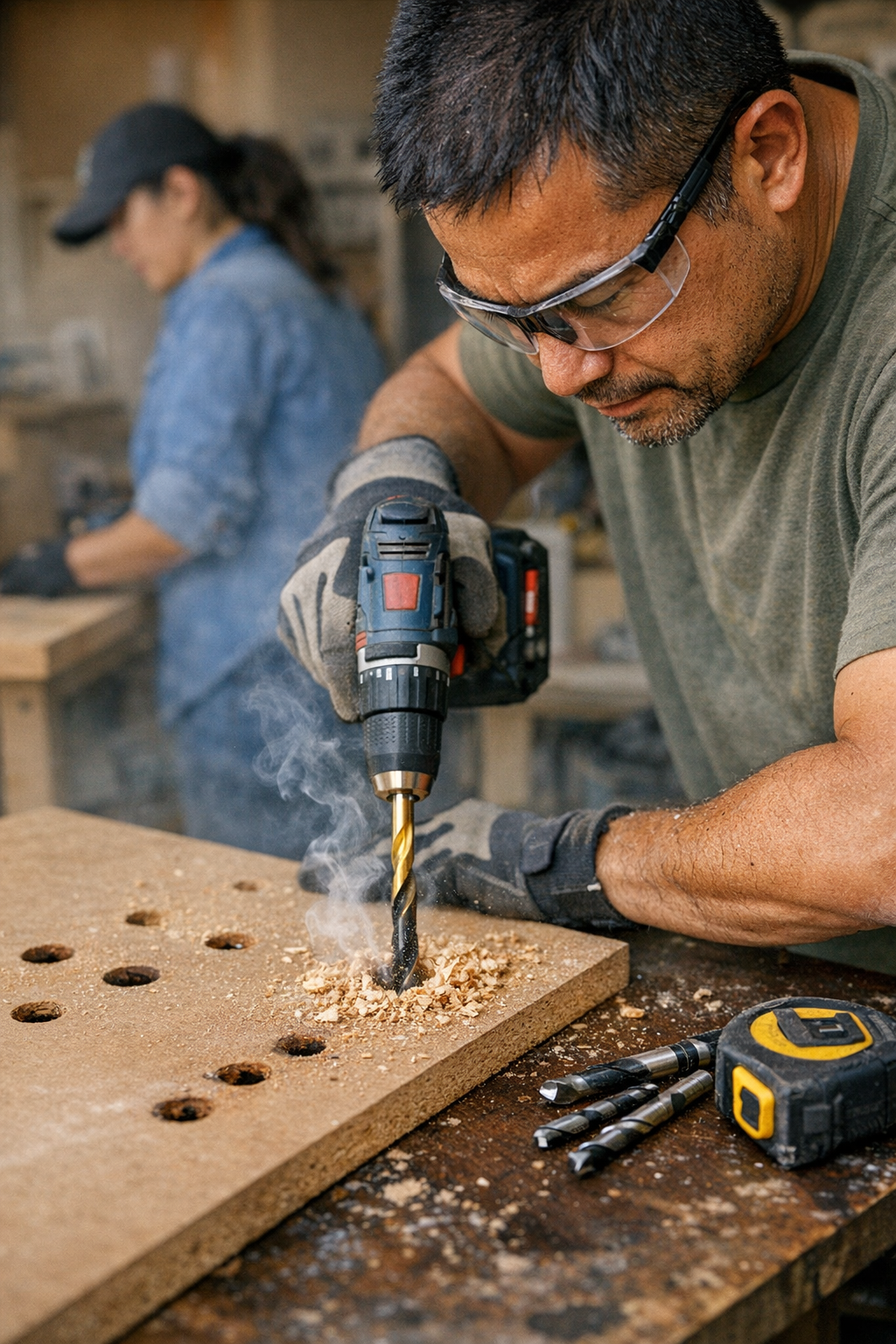
    If you’ve stood over a half-finished panel drilling your twentieth hole—shoulder tensed, drill spinning hot, bit tip feathered with smoke—you know the real bottleneck isn’t your muscle or your patience. It’s whether your bit, blade, or driver holds up when the work gets repetitive, the wood gets denser, and every inch starts to fight back. The difference between a clean run and a dragged-out mess is usually the moment your tool starts to lose its edge—or you start to wrestle it just to keep going.

    The Moment Your Drill Bit Turns Into Work

    The warning signs don’t jump out at hole number three. For a handful of fast cuts, nearly any new bit can fool you—but on the twelfth, or the sixteenth, friction creeps in. You press the trigger, but now the bit whines, hesitates, and you’re pushing harder chasing that smooth exit—except the far side splinters, the wood smells burnt, and you’re suddenly one step closer to a sanding marathon.

    Miss these early cues and your progress stalls: edges chip out, holes run ragged, and your finish work multiplies. The real trouble isn’t a dull point. It’s the heat rising, chips clogging the flutes, and a worn edge that turns both tool and workflow against you—dragging the whole job down a notch at a time.

    Where Overheating and Drag Sneak Up

    Soft pine lets you get away with a cheap bit. But start drilling in MDF, red oak, or face a stack of repeated fastenings, and bit quality announces itself—sometimes too late. Heat and drag only show up after a pocketful of holes, when you’re already shouldering through each pass. The burn line by the exit face, the tight aroma of scorched fiber: they’ll cost you in clean-up, and they’re a sign your bit has crossed a line.

    Let these “minor” signs pile up and suddenly hardware doesn’t seat flush, pilot holes wander, and each new set takes longer. Day after day, tiny losses compound. The difference isn’t theoretical—it’s lining up panels that refuse to cooperate and cleaning up material that shouldn’t need it.

    Chip Removal: Non-Negotiable for Good Drilling

    There’s no shortcut—chip buildup is the silent killer of both pace and edge. Clogged flutes mean trapped heat, slow progress, scorched stock, and an arm that aches from compensating. Assembly lines and shop teams know the pattern: swap in bits that clear chips fast, and everything speeds up. Rely on muscle instead, and you’ll churn through bits—and patience—twice as fast.

    The Bit Quality Divide—Exposed by Real Work

    One new bit looks much like another until you face a stack of tasks. Anyone who’s ruined a project after a half-day of repeat drilling can tell you: bargain bits start to whine and bind, producing little more than scorched powder long before you’re done. The tell? Instead of steady shavings, you’re left with dust and rising temperature at your fingertips.

    Compare that to a titanium-coated split-point with an honest chip-clearing design. Each pass throws thick, healthy chips and comes out clean—not just for three holes, but for thirty. The downstream effect is obvious: fewer scorch marks to sand, entry and exit holes that actually match, and less fatigue in your grip and your time sheet.

    When Shop Fatigue Sets In

    You’ve likely lived it: a production wave installing hardware, sheet after sheet on the table, a box of screws waiting. Early on, things move. By set three, the bit drags, and you find yourself withdrawing mid-hole, checking for heat, or waiting it out. Every extra pause telegraphs to the next step—control slips, alignment drifts, and you’re wrestling trial fits and filler instead of stacking finished panels.

    Small Tweaks, Big Payoff

    Switching to a well-designed, coated bit—especially those split-points built to clear chips fast—won’t magically fix sloppy work. But you’ll feel the change as the day runs: chips clear with less effort, heat doesn’t linger, and you’re not constantly stopping to let the tool cool down. In real tests, tip temperature drops from 230°F to 170°F is believable—and so is getting to cleanup with less sanding because exit holes stay neat.

    Pro tip: Don’t wait for clogs. Build a habit of clearing chips every three or four holes—even a quick tap or blowout keeps things moving. Across a day, those saved seconds grow into fewer tool changes and less grip fatigue.

    Know When to Step Back and Reset

    When the bit starts to complain—smoke wafts up, chips turn brown, you feel yourself leaning in—it’s time to stop pushing. That shiny-glazed look on the bit? That’s lost edge, not “just hot.” If you hesitate to touch the bit for fear of burning yourself, that’s the moment for a break, a bit swap, or a check-in with your drilling rhythm. Touch with care; let it cool before even checking.

    Pacing Over Speed—How Drilling Gets Smoother

    Hammering through at max speed only guarantees heat and wear. Keep RPMs steady and moderate. Pause often, clear chips, and don’t be lured by the promise of faster cutting—the bit and material last longer, and your line stays true. You’ll finish cleaner in the same time or better, with less touch-up required.

    Do Specialized Bits Actually Matter for Repeat Drilling?

    They do—and the difference is cumulative. A bit built for chip ejection, with a tough coating and precise point, means steadier holes, minimal blow-out, and much less frustrating rework. The payoff isn’t hype: it’s noticing how much less you’re fixing, patching, or adapting your workflow over the long haul.

    Don’t Let Small Problems Grow Into Big Delays

    Dull edges and creeping heat can be tolerated hole by hole, but over an afternoon of repeat drilling or fastening, the slowdown—and the fatigue—compound. The real fix is as much habit as hardware: watch for that extra resistance, the hint of smoke, or the tiny scorch at the edge. Adjust your rhythm, make chip clearing a reflex, and choose bits matched to the task. Smart adjustments and honest tools don’t just get you to the finish—they keep you sane on the way there.

    Find proven bits and accessories for real work at Gumboll.

  • How Evening Resets Simplify Your Daily Pet Care Routine

    Why Daily Pet Care Starts the Night Before

    Everyday pet care rarely falls apart in one dramatic moment. It happens in smaller, repeatable ways: last night’s water bowl sits half-full on the floor, the feeding scoop isn’t by the dry food, and the towel meant for a “quick wipe” is nowhere near the bowls. Instead of a fresh start, your morning means scanning for missing items, rinsing a used bowl, or clearing half the counter before you even reach for the food bin. The smallest skipped resets quietly multiply. This is the difference between a pet care setup that works for you—and one you end up working around. CalmPetSupply centers practical routines that keep your next reset from snowballing into tomorrow’s mess.

    When Little Things Become Tomorrow’s Chore

    Imagine walking into the kitchen, ready to feed your pet, and seeing a not-quite-clean surface, yesterday’s scoop out of place, towels stacked somewhere else, and the brush nowhere obvious. Instead of a single motion, you shuffle aside takeout containers, chase down the missing scoop, and wipe up dried food only to realize the towel you need was left drying in the bathroom. After a few days of these missed handovers, clutter starts seeping past the feeding zone—onto the dining table, under chairs, and into shared counters, making each step a backtrack rather than a quick routine.

    The Real Cost of Skipped Evening Resets

    A missed evening reset rarely seems urgent—but its cost shows up fast when repeated. Each time bowls go unwashed, or basic tools drift out of reach, you lose a clean launch point for the next day. What could be two minutes of feeding becomes five or more, picking up yesterday’s slack: scrubbing bowls you meant to soak, pulling out cleaning supplies stashed in another room, or refilling water you overlooked. Each missing item becomes an obstacle at the exact wrong time—like running late, or right before bed, when the last thing you want is added work. “Out of sight, out of mind” doesn’t pay off by morning; it builds up as friction that drags every routine.

    How Clutter Grows (and Spreads)

    Pet care clutter doesn’t wait for an invitation. One left-behind bowl becomes a magnet for treat bags, scattered toys, grubby towels, or the brush the cat just sent flying. These items drift onto prep surfaces and edge out the space needed for simple tasks. Most people end up reshuffling the same small pile—returning things to their “spot” only to see them migrate again one night later. The result: more bending, more reaching, and more time spent rerouting around the same crowding mess, regardless of how neat the rest of your home looks. Each out-of-place tool isn’t just visual clutter—it turns the easiest part of daily care into a chore that never quite resets.

    This cycle isn’t broken by appearances alone. Each missed step at night plants a new round of cleanup, pause, or search for the next day. Routine drag sets in not because you’re careless, but because pieces keep slipping just out of place, again and again.

    What a Reliable Evening Reset Looks Like

    Breaking this loop doesn’t mean doubling your cleaning effort; it means making resets automatic and consistent. Effective setups have bowls washed and dried before bed, towels parked at reach (not buried), and feeding scoops always returned to the same spot. Even one wall hook by your prep zone can hold towels you’ll actually grab, while a small open bin keeps leashes and brushes from wandering. With these details set, nothing is left to chance overnight—by morning, everything needed sits within arm’s reach, so the entire care routine kicks off without detours or missed steps.

    Practical Use Scenes and Common Friction Points

    Most friction in pet care is born out of tiny, repeating failures. Every pet household recognizes these moments:

    • You reach toward the food bin and bump into mail, last night’s mug, or lids you forgot to store.
    • The refill bottle sits empty, but the cleaner you need is still under the laundry sink.
    • Wiping up gets skipped because the towel is always behind a cabinet door, never next to the bowls.
    • Grooming tools hang out on the counter edge—until someone’s elbow sends them to the floor, making “quick brushing” a full reset.
    • Extra dishes and supplies drift from the kitchen into living spaces, crowding out your own meal prep or spotless counter, so simple tasks now mean constant reshuffling.

    Each missed step doesn’t look big alone. But strung together, they steal the ease from every feeding or cleanup, leaving your routines feeling like sets of half-finished chores instead of easy daily flows.

    More Than Appearance: The Value of a True Reset

    Pushing pet gear aside for a cleaner look helps only on the surface. Resets that last are resets that put every item—bowl, scoop, towel—right where you’ll need them, not simply out of direct sight. Stacking items in the corner or hiding tools under a cutting board is a short-lived fix; tomorrow will still bring a frustrating search and repeat work. The real benefit of a reset is reducing the steps between you and your next action. Predictability—knowing every item is exactly where you expect it—shrinks hassle and leaves less room for routine drag to creep in.

    In practice, the improvement is immediate. You prep breakfast without detouring for missing bowls, spend less time rehunting tools, and let your morning run without a leftover cleaning domino effect. The actual reset rarely takes longer—the secret is in repeating the right small habits so your effort pays off each time, not just for one tidy moment.

    Simple Habits for Smoother Daily Care

    Smoother pet care stems from small, automatic resets that put essentials in predictable, reachable places—trays at the feeding area, towels on a hook by the door, bins for leashes and brushes by their point of use. Even when you’re tired and tempted to skip, two extra minutes to clear and reset spare you the irritation of a crowded or interrupted routine the next day. The real payoff is not just a tidier home, but a lighter load in the parts of the day when anything extra tips into frustration. The routine that’s ready before you need it keeps your care light and your shared spaces yours.

    For more ideas on practical pet care setups that keep your daily flow friction-free, visit CalmPetSupply.

  • How Wall-Mounted Storage Transforms Busy Family Outdoor Spaces

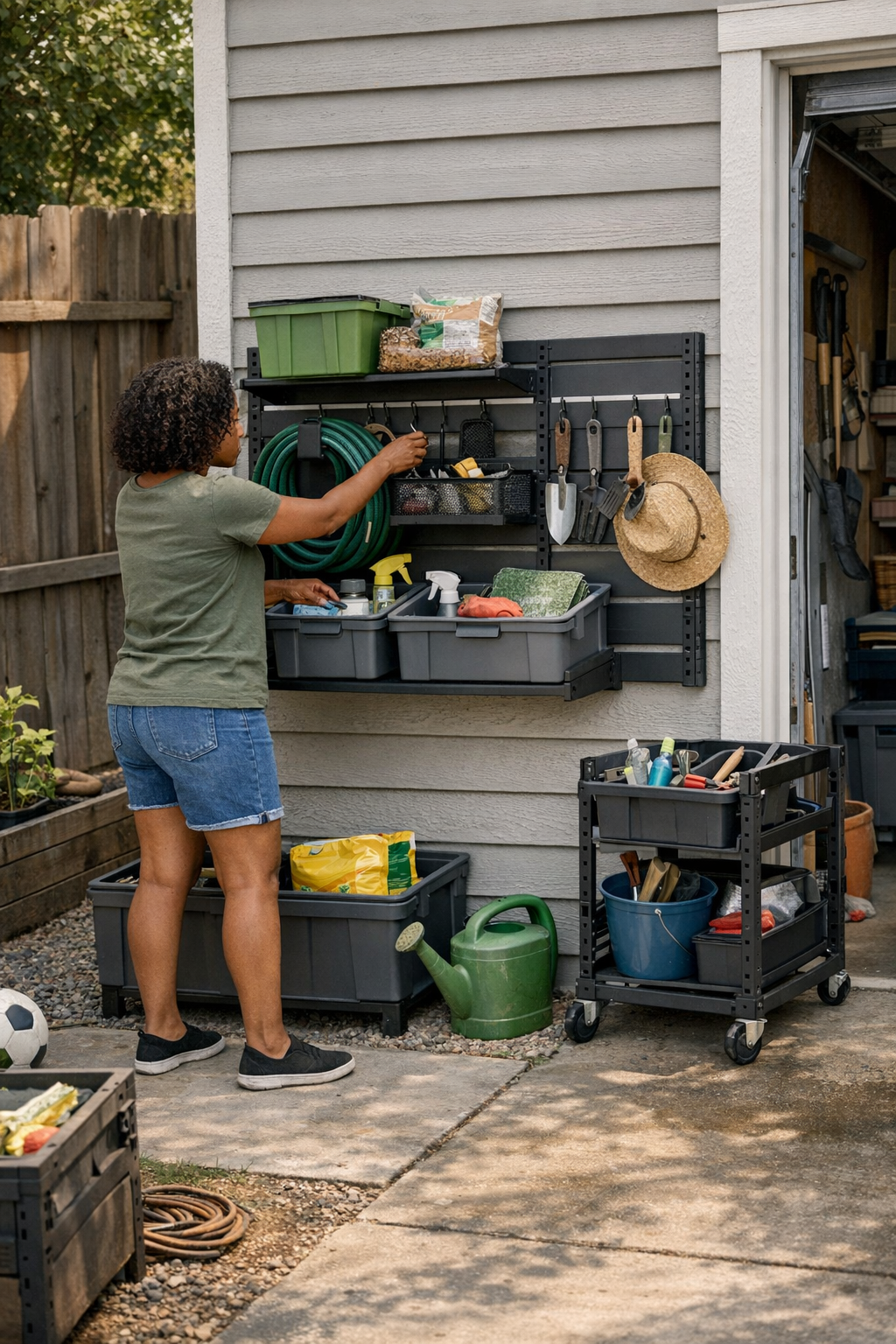
    Is your outdoor storage setup actually working, or does it break down the moment real life kicks in? The cracks show up fast: a soccer ball abandoned halfway to its bin, garden clippers dropped and forgotten where the job ended, bins wedged sideways in the shed corner just to make space for the new batch of gear. What looked “organized” yesterday starts to break down by late afternoon, as the family unloads after practice, watered plants, or a messy project. The return flow bottlenecks, and suddenly that clear floor or open path you worked for is buried again—right when you need it most.

    A Closer Look at Everyday Clutter Creep

    Storage that stays “reset” during a quiet hour often collapses during the real rush. Picture this: two people lugging shovels, someone else balancing pool floaties, one kid zig-zagging in hunting for a missing ball—everyone’s dodging leftover gear just to get in the door. What looked spacious the night before becomes blocked with every return, until you end up shuffling buckets and stepping over shoes just to clear a path.

    The trouble rarely roars in—it seeps. A rake left across a threshold nudges the next person off course. A bin overloaded with sports gear forces the soccer net to rest on top, which means someone else leans it elsewhere “for now.” Step by step, zones meant for movement—garage thresholds, narrow strips next to the fence—become chokepoints. The system punishes fast returns, so the friction multiplies. You finish putting one thing away only to realize you’ve blocked the way for something else.

    The Real Cost of Floor-Based Storage

    Most setups start out with lined-up bins, a low shelf, maybe a storage box near the garage wall. That works until the rush returns—especially after a real Saturday outside:

    • The rake doesn’t fit back so it gets propped beside the bin, waiting for “later.”
    • A basketball rolls under the bench, out of sight and one more thing to remember next time.
    • Drippy boots stack up inside the back door because there’s no fast outside option.

    Before you know it, the floor isn’t storage—it’s a drop zone. Especially in the narrow side-yard or the busy path inside the gate, every quick unload slows the next. Pathways shrink. Resetting at day’s end feels like getting ambushed by your own system. More stuff lives “almost put away” because fully returning it just isn’t worth the hassle.

    Wall Space Wasted: When “Mounted” Means “Still a Pile”

    Wall storage sounds like a cure, but too often it’s only halfway there. Hooks get put where only adults can reach. Wall rails bunch up, forcing bulky kids’ toys or garden tools into tangled clusters. Even when the floor briefly looks emptier, one overloaded hook becomes the new pile-up corner—replaced but not fixed. The friction shifts but doesn’t go away.

    Wall-mounted systems matter only if they match real movement. You need to hang, snap, or sling gear in place on the fly. If tools don’t go up quickly, or kids can’t reach their hooks, the clutter just flows to wherever’s easiest. True wall systems create “see it, grab it, return it” zones—visible, reachable, and unmissable when they start to overflow. But it still falls apart if all the action hits a badly planned section. Wall space, done wrong, just hides a problem in plain sight.

    Return Flow: Where Real Clutter Begins

    Think about those busy, back-and-forth afternoons: kids rotating toys, gardeners tossing gloves, someone else trying to fish folding chairs from behind half-blocked bins. The only way the reset holds is if everything lands in the right spot, fast—without detouring or double-handling. But deep shelves and stacked bins invite “good enough” returns: stuff tossed nearby, not actually back, waiting for a big organizational sweep that gets put off yet again.

    Each half return is a setup failure multiplied. One item placed “almost there” pins another behind it, tripping up the next use. A too-full bin causes a sports bag to get dropped on top, where it slides, spills, or goes missing. A crooked tool blocks the pathway until someone finally does a reset—usually later than planned. The setup breaks down exactly when the routine speeds up.

    Wall-Mounted & Modular Systems: Why the Shift Matters

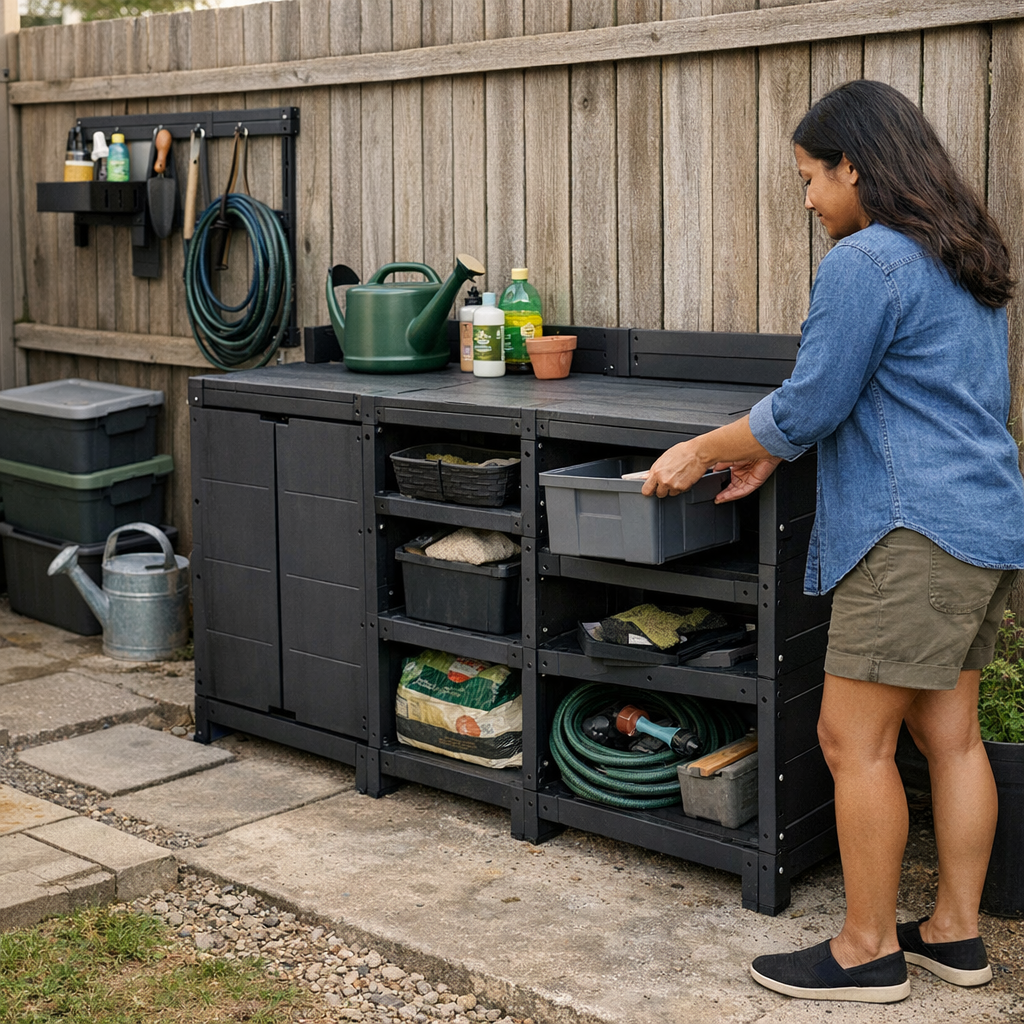
    Getting storage off the floor changes not just how things look, but how everything moves. Suddenly, the easiest path is the real system path. A muddy ball goes right onto a wall hook, not underfoot. Tools snap back onto a rail—no balancing act with packed bins, no tripping over dropped boots at the gate. Raised storage—say, 18 inches off the ground—kills the excuse for “just for now” drop-offs and keeps the walkway open. There’s less pushing stuff aside just to get to the grill or back gate.

    Swap bins for a modular wall panel and you see it in daily life: every return is faster, and the traffic lane stays clear. Overflow can’t hide—if something lands on the ground, it sticks out, drawing a quick adjustment instead of a delayed scramble. Patterns build: you hang it, grab it, move on. “Usable” and “overflow” zones become obvious. Reset sessions shrink.

    Tip: Zones That Match Life, Not Just Storage

    Tacking up rails or panels is only half the answer. Your setup must fit your actual routines. Break storage into clear, labeled, or color-coded sections: a row for tools, separate bins for balls, child-height hooks for kid stuff. If you don’t, boundaries start to blur and everything drifts out of place—gear returns fast, but not where it belongs, feeding future chores. Real, lived-through zones mean anyone—adult or child—knows what “put away” means as soon as they’re at the wall.

    Problem Spots: See Them, Reset Them

    Every system, even a smart one, has slippage: dead corners fill with misplaced gear after a rain, or a single overworked hook starts growing a nest of random tools. The trick is catching these breakdowns early, before “just for now” becomes permanent. Sometimes a hook needs to shift left a foot or a dead crate becomes a “quick throw” tray that gets cleared at sunset. Notice the pattern: the same spot always attracting overflow? Time to update, not ignore.

    Visible is better than hidden—mess seen is a mess you’ll solve. Wall setups keep the truth exposed. Pileups can’t bury themselves at the back of a floor bin. You see small issues while they’re small, so resets are short and regular, not rare and overwhelming.

    When Routine and Setup Sync, Maintenance Shrinks

    Most “clutter” comes from a mismatch between setup and movement—not a lack of space. As a true-fit system takes root, the loop gets faster: gear leaves, gear returns, lanes stay open. Less gear gets stranded halfway home. Overflow stops hiding. That means less shuffling and more real time outside. The difference goes beyond a tidy look—it’s about not getting tripped up by your own stuff every weekend. Over time, resets feel less like chores and more like five-minute tune-ups.

    Small Tweaks, Real Results

    The right adjustment—like raising storage above trip height or adding a flexible bin for quick seasonal swaps—can unblock the whole flow. Catch yourself dumping overflow in the same spot? That’s an alert: either make it a real zone, or fix the system so the routine finally works. The goal isn’t showroom-perfect. It’s a setup that hands back your space, opens the path, and shrinks the reset so you aren’t always fighting the same pile over and over.

    Let the real-use patterns guide you. No solution lasts forever, but the setup that fits your rhythm keeps the clutter and frustration in check—especially when the yard’s busy and nobody’s got time for a massive reset.

    Find practical outdoor storage solutions for real-life routines at TidyYard.

  • Streamline Pet Travel with a Single Home Base for Essentials

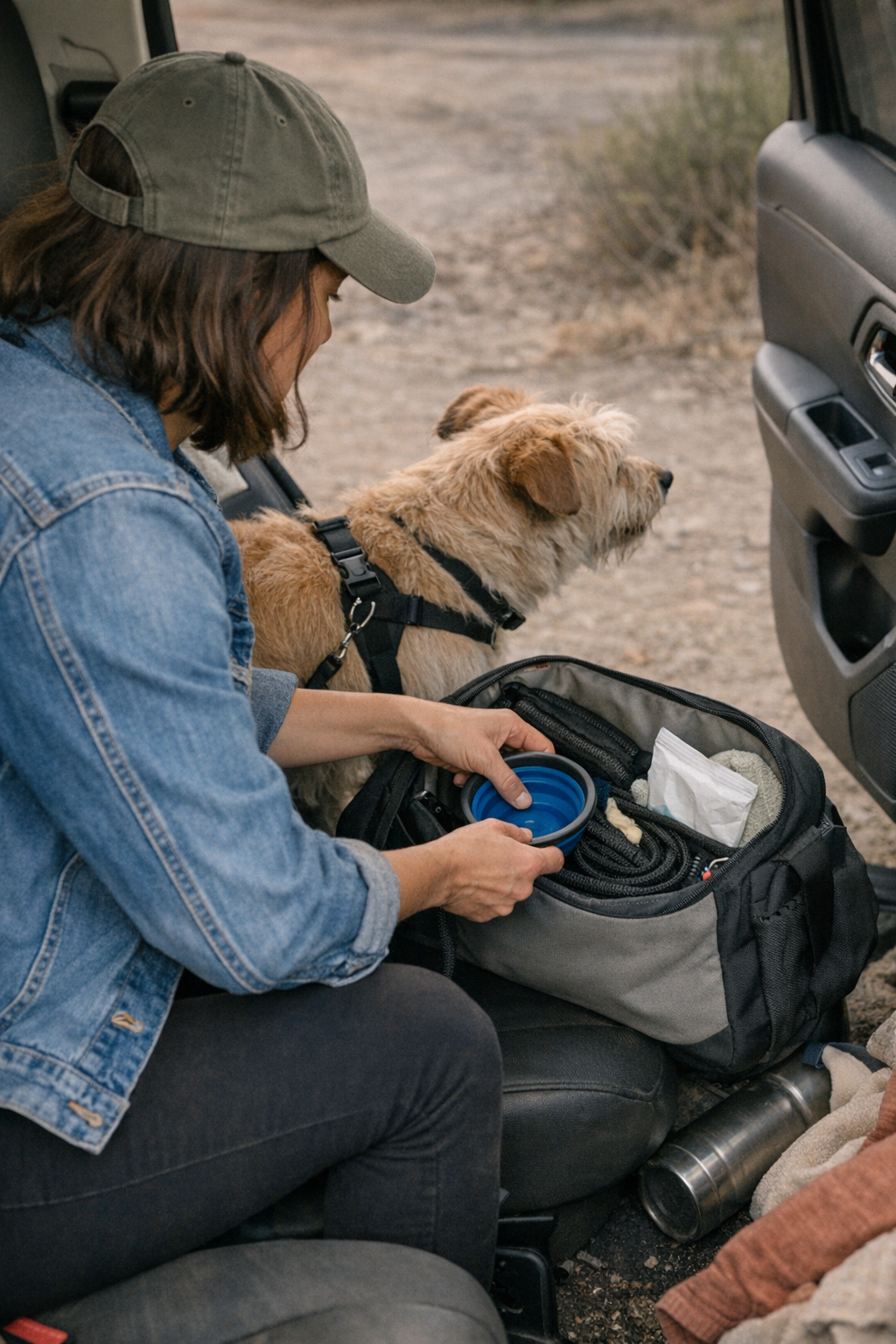
    Most pet owners hit the road feeling organized—leash packed, wipes ready, each item in its own spot. But after just a few stops, that “prepared” setup falls apart where it matters most: The bowl now buried by a shifting jacket, wipes out of reach when you need them, leash clipped somewhere you can’t find from the front seat. On paper, every pocket has a purpose, but in fast, repeated movement—rest stops, quick leash-outs, messy snack breaks—a travel bag’s structure either makes life easier or quickly becomes another thing to wrestle with.

    When “Organized” Isn’t Useable

    Initial neatness is deceptive. Those split pockets feel smart until the third stop, when you’re caught nudging aside treats to find waste bags, or a leash disappears behind the seat after your dog’s impatient tug. The problem isn’t disorder; it’s the friction of splitting essential items when the real world wants you to move, grab, reset, and go—without a scavenger hunt at every pause. What looks like control at home collapses into awkward resets in the car’s cramped reach or at a busy rest area.

    Each Tiny Delay Costs Real Time

    Small hang-ups—unclipping the wrong zipper, juggling through the wrong section—feel minor at the start but start stacking up. By the second or third round, one missed grab leads to another: treats spill, wipes slide under a coat, your dog grows restless in the back, the seat area starts to sprawl. The trip’s rhythm breaks every time you dig for one simple item and find three others tangled first.

    The “Divided” Bag Trap

    More compartments promise more control, but when you have pet items here, your phone there, and keys in a “human” section, the split makes quick access harder, not easier. A leash hiding next to your wallet or wipes wedged behind snacks forces you into an endless reshuffle. It’s not that things are lost—it’s that the effort to restore order pulls you out of the driving, handling, or just enjoying the trip. Compartmentalization solves nothing if you’re always patching overlap with half-trained muscle memory.

    The Cost of Routine Stops

    Picture this: First outing feels fine—everything in its place. But by the second quick stop, you’re digging for wipes behind a jacket, reaching past a spilled treat box, fishing a leash out from the wrong pocket. Friction builds—not because you’re disorganized, but because the bag’s logic unravels after each move, each stop, each rush to restart. The difference between organized and truly accessible only shows up when you need speed and control, not perfect packing.

    Unified Essentials: The Actual Solution

    Real travel clarity comes from one predictable “home base”—an intentionally placed seat-side pocket that puts high-frequency items (leash, bowl, wipes, calming toy) within reach, regardless of travel chaos. This isn’t about “sorted” bags—it’s about making the fastest grab the easiest one, even when the route’s gotten messy. Seat-side placement matters: whatever your hand naturally falls toward becomes the true control center. The rest is just storage.

    Designing for Clean Resets

    A strong home-base pocket makes resetting after a stop nearly automatic. Instead of re-sorting, you just drop core items back into the same spot—no hunting, no delay, no new mess. Stops become a two-step: grab, return, move. No forgotten wipes rolled under seats; no leash vanishing behind a changing pile. Unpredictable routes stop stealing focus or patience because your setup works with your routine, not against it.

    Scattered Gear: More Than a Minor Headache

    When essentials are split—leash here, wipes somewhere else, bowls at the bottom—each mini-search eats energy, and small awkwardnesses become routine. Grab for the leash, send a snack bag rolling. Dig for wipes, pull out a treat container instead. Your dog’s anxiety ramps up as you fumble with sections designed for showroom neatness, not real use. After a handful of stops, momentum tanks and your mood shifts from “ready” to “why is this taking so long?”

    Pockets That Work Against You

    Extra pockets often introduce new failure points. Wipes tucked under a jacket? Forget it if the jacket slides. Calming toy lost beneath waste bags? Now you’re digging as your pet whines. Too much structure fragments your access: your muscle memory misfires, waste bags hide, comfort items lose their purpose by being out of reach. The bag’s promise of “organized” falls apart against the reality of repeated, rushed movement.

    Real Moments When Structure Decides Everything

    Consider three flashes from any pet trip:

    • At a gas station, you reach for the leash but grab the snack pouch first—everything shifts and a waste bag jumps out of reach.
    • Post-snack cleanup: wipes are buried in the main compartment, so you’re twisting with your other hand on your dog, moving slower with every step.
    • After a quick walk, you want to get back on the road, but a toy blocks the waste bags, forcing another shuffle before the dog can even climb in.

    None of these are disasters. But each time, the seconds and movements wasted add up—a structure built for display doesn’t hold up to the pace and randomness of actual travel.

    Choosing Structure That Handles Real Travel

    When routines matter, having one core, seat-side access pocket for both pet and owner’s high-use essentials (leash, bowl, wipes) beats splitting them into isolated, easy-to-forget zones. Letting “organized” mean split-up just means more seams for reality to break through. A setup that survives jolts, quick stops, and jumpy paw movements keeps your trip moving without collapse, no matter how many unplanned pauses or spilled snacks happen. The real world rewards reliability and quick reset, not simply good looks.

    The travel setups that work aren’t flawless. They just shrug off mishaps, let you recover fast, and don’t ask for attention every three steps. The real test isn’t how tidy your bag looks when leaving—it’s whether you can reach, reset, and move without breaking stride after multiple stops. If your setup keeps your hands freer and your temper calmer, you’re already ahead—however messy the trip gets.

    Find practical, seat-side-ready carriers and pet-travel essentials for real-world movement at PawGoTravel.

  • How Reducing Desk Clutter Enhances Daily Workflow and Comfort

    The gap between a desk that looks organized and a workstation that actually works shows up fastest midway through the week—right when routines stress-test your setup. At 8 a.m., the surface checks every box: matching trays, cable sleeves lining the back edge, drawers tucking clutter out of sight. But by the third reach for your charger or the fifth switch from keyboard to notebook, the friction surfaces. You dodge around a clip cup to scribble notes, nudge a storage bin with your elbow, or reroute your mouse cable—again. That so-called “clean” desk exposes its flaw: order that interrupts flow is just new clutter in disguise. The desk looks calm, but the workflow stutters.

    Where order starts becoming a source of friction

    More storage always sounds like the solution—no tangled cords, no scattered pens, drawers tucking everything neatly below eye level. But every layer promises control and delivers distraction: under-desk drawers tighten leg space, so you’re forced to rotate, perch, or stretch. Monitor risers and cable trays promise structure; in repeated use, they creep into your workspace, nudging against your mouse hand, cutting your writing area, or making you reach further for anything not staged front and center.

    Friction builds quietly. Need to unplug a laptop? First, wrangle the cable box open. Want your notebook? Slide past two organizer edges to reach it. During each work session, micro-delays stack up—and the layout that seemed logical now demands small, constant adjustments. A strategy that once promised efficiency now parses every move into extra steps, more scanning, more resets—especially when you’re busiest, or shifting between meetings, emails, and real-deadline work.

    The workday in repeat: small interruptions add up

    By Friday, the “pristine” desk from Monday has shrunk. Move your laptop to free up camera space, and it bumps a storage bin hard against the edge. Monitor sits perfectly centered on its riser, but your wrist perches off a sharp corner during note-taking. That cable sleeve—meant to organize—now pulls, snags, or needs repeated tucking every time you add or swap a device. What’s supposed to streamline instead produces static: layers of order slowing basic movement, and making every reset heavier than it looks on paper.

    Every action choreographs itself around edge lines: reaching for a sticky note means tracing a path around bin corners. Dropping a pen means angling past the stacked tray. Even the simple act of sitting shifts—a drawer edge presses at your knee, and you adapt posture unconsciously. The difference hits hardest after lunch resets or back-to-back calls: an “organized” desk is easy to admire, but harder to work in when everything blocks the direct path to action.

    The turning point: what changed when visual weight was reduced

    Fixing friction didn’t mean shuffling boxes, but stripping the desk back—removing, not just rearranging. One oversized organizer gone: now a notebook slides aside in one gesture, not three. Ditching a bulky riser for a monitor arm cleared a whole zone behind the keyboard—charging cords dangle just long enough to grab, not so long they tangle, and you stop reaching around covers just to dock your phone. Removing even a single item shifted the rest: finally, your dominant hand had true open space, quick actions happened in the direct line of sight—not forced around a container or interrupted mid-reach.

    With density reduced, movement followed. No more bumping a cup or tray at every transition—typing, writing, mouse movement became continuous rather than punctuated by dodges. Most surprisingly, the left-hand zone—where a stack of sticky notes and pen holders always waited—when emptied, became the “instant transition” spot; nothing blocked the most-used line on the desk, and every task sped back up. Accumulated frustration—the kind you barely notice except in its absence—finally faded, replaced by smoother resets, less searching, and fewer micro-shifts each time you started over.

    The hidden costs of “hiding” clutter

    The myth: hide everything and you’ll have a perfect setup. The reality: tucking away cables, notebooks, or accessories usually means every plug-in, grab, or device swap slows down. Neatly concealed breaks rhythm—every access comes with an extra open-unthread-return step. Visual weight isn’t just about tidiness—it’s about whether your workflow stops for its own systems. As containers stack and drawers fill, each layer saps directness, shaves seconds, fragments focus, and adds small posture shifts that wear down comfort across longer sessions.

    FAQ: Navigating visual weight and workstation habits

    Isn’t hiding cables and accessories always better?

    Only if you rarely use them. Gear you move in and out daily—laptops, tablets, headphones—suffer most when you have to untangle cable sleeves or open storage just to connect. Inconsistent access usually slows you down more than a little visible clutter ever would.

    How do I recognize when my desk is carrying too much visual weight?

    When you pause to find routines—having to push past containers to use core tools, re-scan the surface before every task, or slide items aside just to begin—it’s a signal your setup is now working against, not with, your pace. If desk resets feel like rearranging a display, not prepping for real work, friction has taken over.

    Does streamlining always mean less storage?

    No; it means better placement. Sometimes the fix is moving a drawer so your legs don’t knock it all day, letting a monitor arm float the screen for more surface, or leaving one cable visible right where you unplug by habit. The focus moves from hiding to smoothing the most frequent actions—so the desk works with your patterns, not against them.

    Finding the balance: clarity over perfection

    What keeps a desk usable is never just how little sits on it, but how directly your hands, eyes, and devices work together in cycles. Comfort is cumulative: every subtraction that makes resets faster or avoids extra steps returns more value in repeated daily use than a photo-perfect moment ever could.

    No one wins for “best hidden cable” if that cable delays you hundreds of times. The real test is how quickly your workspace returns to neutral, and how easily you can reach what’s next without thinking about storage. A lighter-feeling arrangement—even if some elements stay visible—delivers steady relief over time. That sense of ease multiplies, far outlasting the first-hour impression of tidiness.

    Explore the full WorkBasic collection

  • Choosing Between Wire and Solid Shelving for Efficient Closet Organization

    Wire or solid shelving? The question seems minor—until your closet gets a week of real, daily traffic. At first, both options promise easy tidiness: socks off the carpet, bins upright, shoes no longer fighting for floor space. But as routines stack up—those ten-second grabs before work, the quick stashes before guests arrive—the gaps show up fast. What once looked “organized” starts requiring extra hands, extra resets, and a little more patience than you usually budget for on a busy morning.

    When “Neat” Starts to Slip: The Surprising Friction in Closets

    That first Sunday, everything’s sharp—shirts folded into perfect rows, bins lined up by color, nothing crowding the floor. But watch what actually happens by midweek: a couple of shirts lean toward the edge, socks poking through wires, and bins drifting out of alignment. Suddenly, grabbing one t-shirt means nudging a whole stack back in place. The frustration is subtle—a lift here, a rescue there—but it adds up, making what should be two steps into a slow-motion shuffle, especially when you’re late or sharing the closet rush.

    Solid shelving hides its usefulness—items stay put, bins keep their shape. With wire, every gap is a chance for something to sag, snag, or disappear just out of reach.

    Your Routine, Reshuffled: How Shelf Choice Changes Daily Use

    Grabbing in a Hurry: One Smooth Reach or Clumsy Double-Grab?

    Solid shelves turn a grab-and-go into just that: pick up a folded shirt and the rest stay in line. But reach for the same shirt on wire shelving and you might slide out a second one, or unfold half the stack edging through the gaps. Socks or lightweight scarves? They slip through the wires, falling to wherever’s hardest to reach—often vanishing until your next deep clean or morning panic.

    Stack Shape vs. Fresh Air

    Wire shelving wins for drying boots or letting gear breathe—great for mudrooms or keeping mustiness at bay. But when it comes to piles of t-shirts, towels, or work clothes, the lack of a flat surface slowly takes its toll. Corners droop, stacks shift sideways, and before Friday, categories mingle. Suddenly, “organized” means restacking, hunting, or just sighing at a now-lumpy pile.

    Bin friction is silent until it isn’t: Bins on solid shelves slide in and out, no guesswork. On wire, they catch, tip, and sometimes spill, especially when you need just one thing from the bottom. Over time, those tiny snags eat away at the sense that your closet has a clear system—and slow you down just when you need it most.

    Real-World Closet Scenarios: Shelving Differences That Actually Matter

    Imagine a typical reach-in closet. Shoes lined on a wire shelf, clothes folded overhead, bins waiting at the back. It looks great after your Sunday reset. Midweek reality?

    • You reach for a mid-stack shirt—half of it’s been creased by a wire rung, the sock that once sat on top is now on a shoe below.
    • Sliding a bin back into place, it tips against the wire rather than gliding home, scattering odds and ends into your neatly hung shirts.
    • That stack of folded towels? They’ve started to wander, each pile blending into the next as small sags and sideways shifts blur any real category.

    This isn’t chaos—it’s a quiet creep toward clutter. Instead of a clean grab, now you’re chasing socks, restacking shirts, rescuing a bin, all in the time you meant to spend just getting dressed. It’s not about “mess”—it’s about how quickly small problems add minutes (and irritations) to your reset routine.

    Why Resets Get Slower—And How to Fix Them

    Laundry day should reset everything. But if wire shelves underpin your most-used stacks, you’ll notice: creases deepen, piles slip, and bins tilt out of formation by Wednesday. Fixing it means more steps—unstack, restack, poke things back through the wires. Swap in a solid shelf and this friction fades: you place a pile and it holds, lines stay neat even if you’re digging for that one favorite tee. The more you skip these micro-corrections, the faster and easier the space is to actually live with.

    Dust, Droppage, and What Actually Stays Clean

    Solid shelving shields your lower shelves—no dust raining down on shoes or winter coats. The tradeoff: you’ll notice dust accumulate and need a wipe now and then, but it’s all on one easy-to-clean surface. Wire lets dust (and sometimes loose change or tags) fall to whatever is underneath—usually right onto the boots or bags you don’t want to wipe every week. That means extra cleanup, a little frustration, and another maintenance habit you didn’t ask for.

    Shelf Strength: Keeping Categories Clear, Not Crammed

    Weight isn’t the main issue—most shelves take whatever you stack. What changes is how each type handles off-center weight or shifting piles. Wire shelves flex, making one stack tip into another, so separation blurs and your categories become a jumbled lineup. Solid shelves hold their own, so categories stay distinct: sweaters don’t spill into the towels, and bins keep their lane. Less flex means less mixing, less double-checking, and more time saved on every reset.

    The Real-World Mix: Where Both Shelf Types Fit

    It’s rarely about picking one format for your whole closet. Use solid shelves anywhere you need stacks to hold, categories to stay crisp, or bins to actually slide. Keep wire for spots where airflow matters—soggy boots, running shoes, gym gear. The trick is getting honest about your habits: If you dread constant straightening, go solid where you reach most. If you need speed-dry for outdoor gear, let it breathe—just not under the folded stacks that drive you nuts.

    Immediate upgrade, zero remodel: If changing shelves isn’t in the cards, use a rigid liner or board cut to fit the wire section holding your stacks. Suddenly, shirts and bins stop tilting, and you keep the airflow (and easy cleaning) below.

    The Subtle Shift: From “Looks Organized” to Truly Usable

    The surest sign your closet setup is working? You back away midweek and nothing’s toppled, drifted, or disappeared. Stacks hold their shape. Bins return home after each use. There’s no morning hunt for socks lost through the wire, and resets don’t drag on. It’s not showroom-perfect—just easier, clearer, faster. That’s the difference: less reshuffling, better flow, and a closet that quietly supports your routine instead of sabotaging it.

    If you’re looking for custom storage that fits your real routine—not just a tidy Sunday photo—explore practical solutions at ClosetWorks.

  • Transform Your Dog’s Chaotic Door Routine Into Calm Transitions

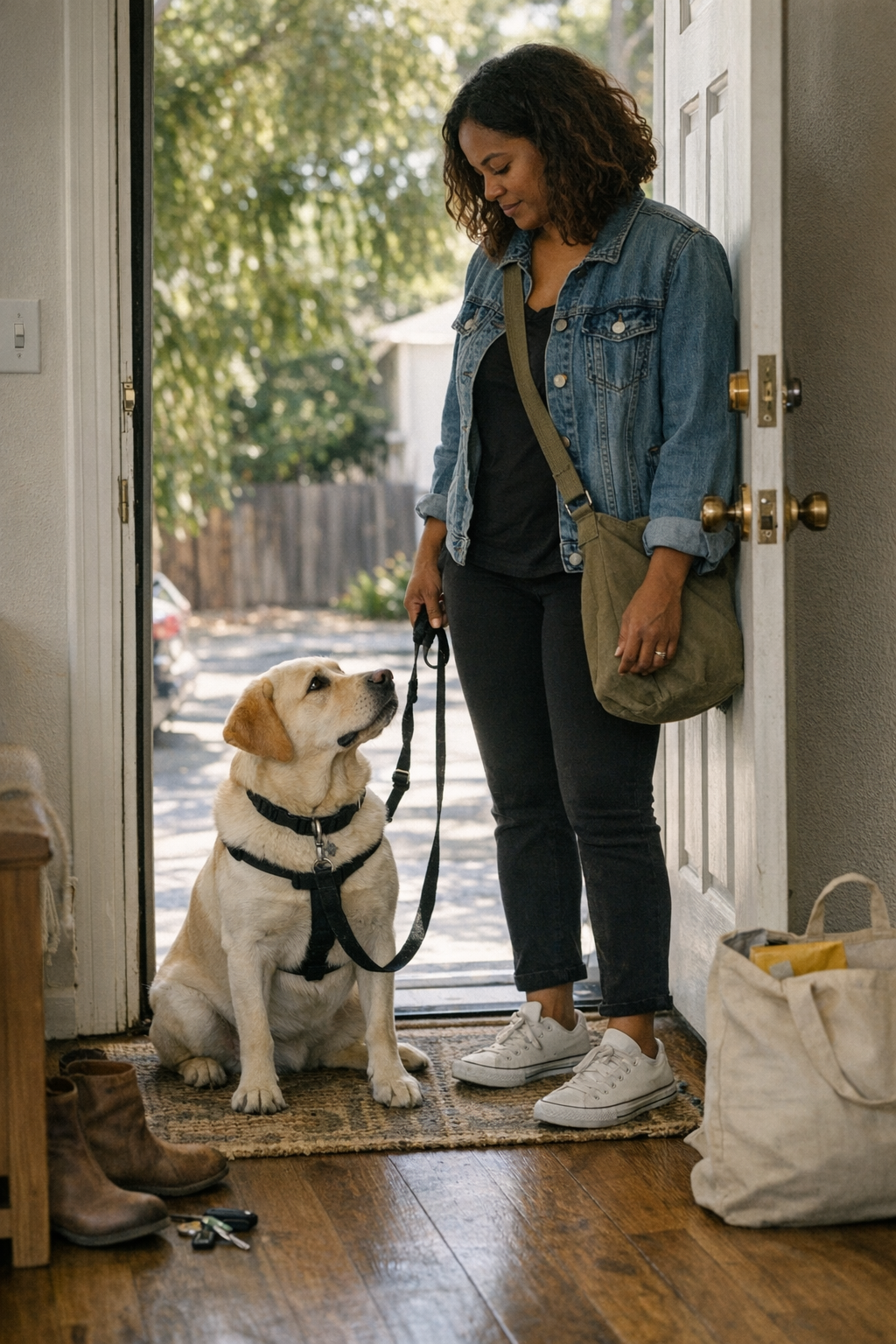
    The real test of any dog setup isn’t how tidy it looks, but the moment you step back inside with your hands full and your dog pulling ahead. Straight away, the leash handle brushes against the bag looped over your wrist, keys slip sideways, and the towel you meant to grab sits just out of reach. The front door isn’t just the entrance—it’s the flashpoint where everyday gear, restless paws, and repeated friction collide. Small delays—leash tangles, missed wipes, bowls nudging underfoot—don’t feel like a problem until you see how every return home keeps running into the same pile-up and leaves you a step behind your own routine. If your setup only solves mess on the surface, DogPile territory is where pattern friction really shows itself.

    When the Door Is More Than Just a Door: Seeing Routine Friction in Action

    Most dog owners chalk up front-door chaos to “just how it goes.” But after a few weeks, the interruptions repeat: you squeeze in with wet gloves, a half-torn poop bag, and a dog bouncing against your shins. You reach for a towel or wipes, but the excitement window snaps shut—your hands are juggling keys while your dog’s leash coils around your ankle. The first moments are a blur of negotiating movement and attention. The ordinary return has turned into a scrappy traffic jam, every object crowding for space at once.

    This isn’t a crisis. It’s routine friction. Step inside after a walk, and even with a supposedly “organized” entryway, you’re still untangling a leash, sidestepping a water bowl, and catching a dog body-slamming the crate before you’ve reset the mood. The actual test comes in those first twenty seconds—the time when a smooth transition is either recovered or completely lost.

    It Always “Works”—Until Time Is Short

    Most days, the mess is manageable. But run late, hear the phone ring, or find someone waiting at the door and those small snags add up fast. The leash blocks your step just when you mean to grab your phone. A bowl placed “out of the way” slides exactly into your path as your dog races past. Cleanup supplies are in view, but your arms are too loaded to actually reach them. Each thing is minor, but together, it all slows down your whole flow and makes every return a hassle you fight repeatedly instead of a routine you trust.

    Managing the Front-Door Rush: Why Small Resets Matter

    “Off!” turns into background noise. Shoes become obstacles. A towel “within reach” feels like a setup only until you try grappling one-handed with a muddy, bouncing dog. Small skipped resets harden into permanent friction. Each unaddressed leap, missed wipe, or half-managed bag becomes the new baseline for “normal,” making the next entry not smoother, just more work to manage.

    The first few seconds at the door set the tempo for everything that follows: feeding, crate entry, post-walk cleanup, and even bedtime reset. Let excitement win at the threshold, and every next step steals more of your focus. Instead of fading, that tension compounds—turning expected relief into yet another interval of restless movement and delayed calm.

    Repeated Routines, Repeated Friction

    Whether it’s a long walk or a two-minute mail run, the cycle returns: leash underfoot, bags blocking the hall, paws skipping across the mat before you can wipe them. “We’ll settle later” becomes wishful thinking, because every rushed, crowded entry resets the mood for distraction instead of calm. Hands full and brain elsewhere, you feel the drag of slow reset every single time—never dramatic, but always there, quietly stealing time and adding stress you only notice after the fact.

    Common Weak Spots in the Entry Routine

    Hooks, bins, and bowls can make an entryway look perfect. But tidy is not the same as usable. A leash on its hook only helps if you aren’t gripping groceries. The towel’s “right there” until you’re blocking yourself with your own dog. All looks fine until speed, cold hands, or a bouncing dog reveal which part of your setup isn’t actually working. What interrupts you isn’t clutter, but how easily—under pressure—you can move, grab, and reset. “Organized” setups stall out when actual routines keep producing the same stumbles, because visual order isn’t built for repeated motion under real conditions.

    When Items Interfere With Flow

    Dog gear constantly invades human pathways. Mats slip, wipes vanish under jackets, leashes snag on boot trays, bowls inch closer to where you actually want to walk. It’s fine for five minutes, but by evening, you’re dancing around the same misplaced items and wiping paws in a half-crouch with the wipes now lurked behind the mail. A bowl that saves the floor can block cleanup; a clever towel hook can require an awkward pivot at exactly the wrong time. Most setups look better for a day, but the weak point returns—where gear spread, access, or dog excitement interrupts every transition you’re hoping to smooth out.

    The Real Reset: Turning the Door Into a Pause, Not a Pass-Through

    The true shift comes when you use the doorway as an intentional reset zone instead of a rush-through bottleneck. Instead of letting energy spill in—bags dropped, leash off mid-spin, bowls nudged aside—you build in a pause: everyone stops, every single time, before anything else moves.

    In practice: you step in, no gear dropped, no shoes kicked. Your dog halts beside you—leash slack, two paws anchored, attention turning back for a split second. You reclaim control of the space before it turns chaotic. There’s no correction, no bustle—just visible quiet until both of you are steady enough to finish the return. This small stop is what flips the entry from a scramble to a transition you can actually trust.

    Breaking the Excitement Loop

    Most entry routines teach dogs (and people) to rush through the chaos. Every hasty squeeze past the door, every “off!” or urgent redirect is part of the same feedback loop—attention fuels excitement, and the scramble repeats. Breaking the pattern means doing less, not more: requiring a real pause first, so the body language and tension reset before the next move. Over repeated returns, you’ll find fewer corrections needed, calmer entries, and routines that start to feel possible instead of chronic hurdles.

    Results You Actually Notice (and Why the Routine Lasts)

    The effect is measurable in small physical ways: you don’t trip over tangled leashes as often, supplies that looked “useless” become reachable, and your dog learns to pause in the entry zone—even before you say anything. Suddenly, the time from door to “everyone’s calm” is shorter; the stress you used to accept just fades out of the routine.

    How It Feels After a Month of Use

    • Leash tangles and bowl collisions drop, replaced by quick, predictable movements
    • Dogs start pausing in the entry, often before you ask
    • Cleanup and feeding zones remain functional, not buried under bags and shoes
    • Returning home feels less like staging a rescue, more like reclaiming a useful transition
    • Pausing at the door becomes a reset you can count on, not a fleeting correction

    There are still weather days, late arrivals, and multiple pets to juggle. Routine doesn’t mean perfection—but now the scramble is an exception, not the baseline.

    Real-World Tweaks to Support the Pause

    No single product fixes flow, but setup decisions sharpen or soften every return. Useful improvements include:

    • Sturdy entry mats: Big enough to claim “pause” territory, grippy enough not to slide under paws or rushed feet.
    • Leash hooks and wipe bins within arm’s reach: Set so you can use them while still outside or with the door open, not after you’re boxed in.
    • Bowls kept clear from crossing zones: Placed past that initial flurry, so quick returns don’t mean stepping directly into the water bowl.
    • Bag drop spots that claim their own zone: Prevent packages and groceries from overflowing into leash-and-dog space.

    But the real change happens when these spots are tied to the same habit every return—stop, reset, then move. Decorative mats won’t fix friction. Only setups used as intentional pause zones really clear the bottleneck.

    From Tidy to Trustworthy: Why Visual Order Isn’t Enough

    A neat setup isn’t a functional one until it can handle repeated movement, hasty returns, and out-of-sight moments. If your entryway only looks organized, you’ll keep wrestling the same invisible delay: towels out of reach when you need them fast, bowls that clean the floor but block the hallway, toys that roll back into the path you just cleared. A trustworthy setup isn’t just arranged—it’s used, adapted, and tested against the friction of real returns.

    Ready for fewer entryway stumbles and smoother returns?

  • Why Adding Wall Lighting Transforms Rooms with Overhead Fixtures

    A ceiling light claims to finish a room, but it rarely finishes the job you need. Even in an uncluttered space, overhead-only lighting quickly reveals harsh gaps: shadow creeping over your desk as evening hits, the corner armchair left straining your eyes, workstation edges barely visible unless you lean and chase lamp positions. The cable mess might be gone—until you start dragging in floor lamps, clip-ons, or power strips, all in search of real, usable light where the clean ceiling fixture keeps falling short.

    Ceiling-Only Lighting: A Setup That Stops Short

    A single ceiling fixture promises order. No wires tangle across the floor, sightlines stay unbroken, and the room looks architecturally “done.” But the appearance is deceptive once you try to work, read, or relax at the room’s edge. Sitting at a side desk, you’re forced under a band of shadow. Typing late, the desktop feels consistently underlit and uneven. So the cycle starts: a floor lamp lands by your chair, a table lamp appears for the far end, then another along the wall—a patchwork escalation that never truly covers the gaps. The space stays tidy in theory, but whole work zones and room edges stay awkwardly dim in practice.

    Where Overhead Lighting Falls Short in Everyday Use

    Overhead fixtures spill general light downward, but the beam misses real-life surfaces: desktops along the wall, alcove workstations, or shelves where you fumble past shadows. The edges and corners always feel off, no matter how strong the bulb. The room’s center glows, but shift your seat closer to a wall and your own shadow—plus the shadow of the furniture and shelving—moves right across the task spot you actually use.

    Another problem: glare becomes hard to avoid. Angle your chair wrong and that neat ceiling fixture highlights everything except your work, even reflecting right into your eyes when you glance up. No visible cables, but just as much arranging and readjusting now happens at the activity layer—not in the fixture plan above your head.

    Adding Lamps: Patchwork Solutions, New Problems

    The typical fix is to gather more lamps—one for the chair, one beside the desk, another clipped to shelving—each with its own cable that starts to show up before the light does. You get a burst of coverage, but at a cost: visible cords everywhere, an overcrowded surge protector, and a creeping sense that you’re working around the lighting instead of with it. Cables angle from power strips through open pathways, and walking across the floor now means navigating a maze of cords and unstable lamp placements.

    Each added lamp brings its own problems. Bump a chair and the lamp shifts, casting an instant shadow where you just cleared one. Glare spots shift to new surfaces—never quite aligning with where your eyes or hands need help most. And that “dark spot”—often the same workspace or reading corner you aimed to fix—never fully goes away, proving that you can multiply lights but still miss the actual solution.

    Why Effective Wall Lighting Changes the Routine

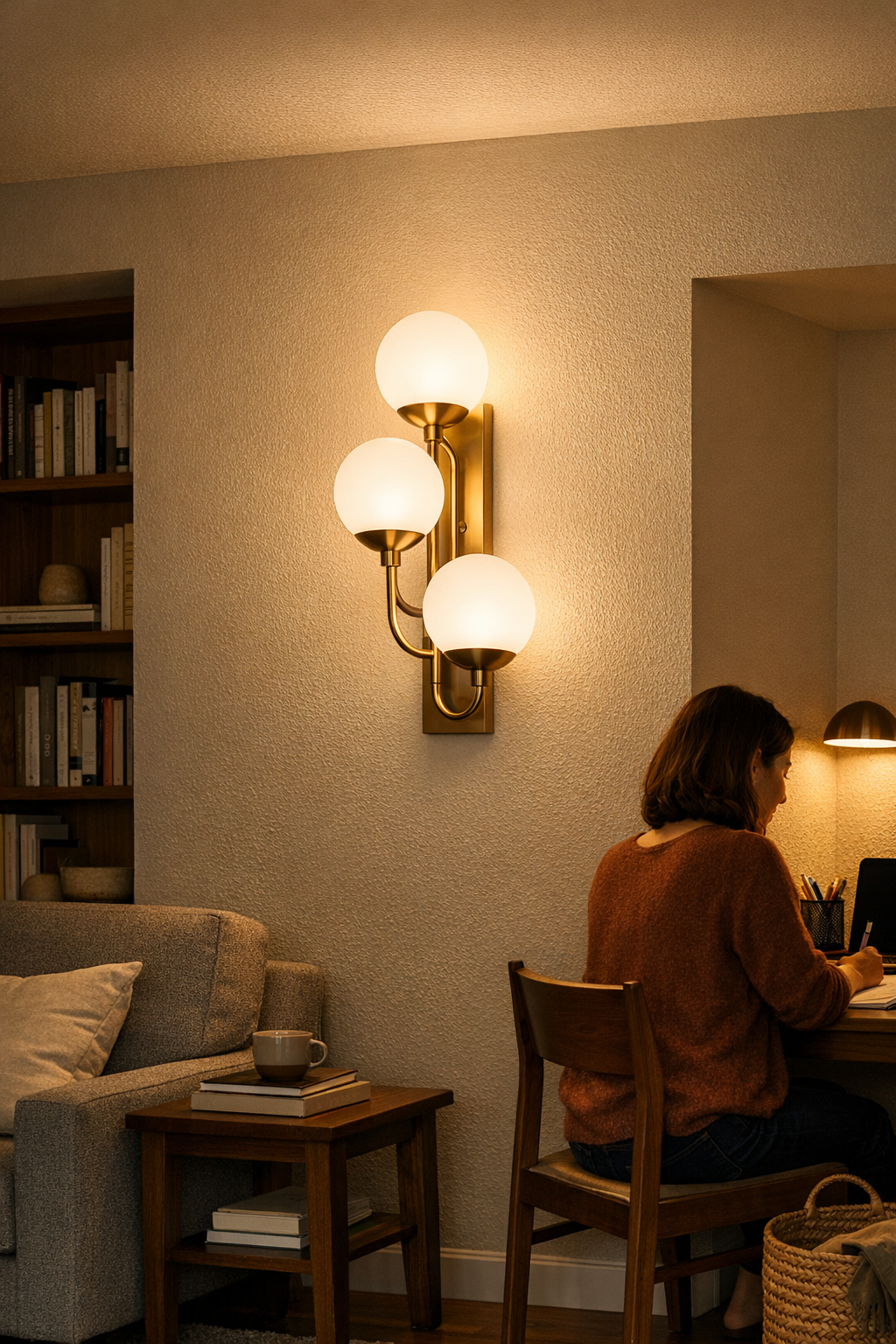
    Wall-mounted fixtures address the recurring mismatch: a space that looks finished but never feels resolved. Instead of endless plug-ins, a well-placed wall light pushes targeted brightness straight to the chronic dim zones, without adding clutter or giving up floor space. The difference isn’t theoretical—it’s obvious the first week you actually live with the change.

    Take a family room where only the ceiling light is fixed. The space looks clean until regular life kicks in: homework on a side desk, evening reading against the wall, or game night at a deep table edge. Shadows return to every surface you care about, and you end up back at square one, dragging a lamp around and unplugging cords just to open a cabinet or shift a chair. The whole lighting “plan” becomes nightly maintenance. Install a wall light above desk height and angled toward the seating or table edge, and the routine flips: the reading chair stays lit, the workstation edge is clear, the path is open—all without the cable sprawl or rearrangement ritual. Now the fixture supports how you actually use the room, not just how it looked at move-in.

    Placement and Setup: Details That Decide Everyday Comfort

    The real gain isn’t from more light, but from smarter light—delivered by placement. The sweet spot: mount a wall fixture above eye level, below the ceiling, so the beam stretches across both your task surfaces and adjacent seating without flooding the space. High placement misses the desk and drops shadows; low placement throws glare back at seated eyes. Mistakes show up fast: place a fixture too close to the corner and one half of the shelf or wall glows while the other is back in the dark. The right wall light is all about coverage that matches routine use, not just architectural lines.

    Supporting Elements: Keeping the Setup Reliable and Clean

    Support details decide whether your lighting becomes invisible—or a daily distraction. Flimsy brackets and loose wall mounts don’t only look precarious; they wobble after a week of accidental bumps, pulling the wire further into view and breaking the sense of stability. Cable runs left to dangle turn even well-placed lighting into a visual tripwire—especially in shared spaces or high-traffic zones. Tidy, solid support and controlled cable routes are what keep the actual space working: you move freely, adjust furniture, and the light never becomes part of the room’s daily struggle.

    Real World: Before and After the Move to Wall Lighting

    On the surface, ceiling plus wall lighting seems like a minor adjustment. But swap out scattered plug-in lamps for a focused, supported wall fixture, and the daily differences stack up. Reading in the old shadow corner stops coming with a head-throbbing squint. The desk’s edge—once a routine guess in low light—is now visible at a glance, making work, crafts, or night reading feel possible instead of patched. The cables you used to shuffle, dodge, or re-tape against the floor slip out of sight or disappear entirely. Both the floor and your line of focus feel less interrupted—more space to use, less clutter to manage or explain.

    Most telling: when the setup slips, you catch it immediately. Cables in the open, new shadows at the workspace, bracket shake—the setup’s daily feel goes off before things even look wrong. These are signals: move the fixture, change the bracket, rethink the cable path. Wall lighting lets you tailor the room to fit you—so lingering mess is a warning sign, not something you have to just accept.

    Tips From Repeated Use: What Makes the Difference

    • Test light placement with real routines, not just by standing back. Sit, work, and read where you actually need brightness—notice where shadows land and glare begins, before putting holes in the wall.
    • Prioritize cable control from day one. Even the best fixture makes the space harder to use if the cord slips out, sways loose, or bunches up near a desk or walkway.
    • Use sturdy, well-matched support for every wall fixture. In shared, busy, or family rooms, a weak mount becomes clutter fast—bracket shake, lamp tilt, or cable tug all show up quickly and start to undo the solution.

    Results That Hold Up—Not Just Look Good

    Real wall lighting isn’t about style or first-impression neatness. It’s about the routines becoming easier—the desk edge finally clear, the reading chair finally relaxing, the floor finally open for people and cables out of mind. When lighting is set up to support what you actually do—and hardware, cables, and coverage match that routine—focus shifts to the things that matter, not the setup getting in the way. If you’re still shifting lamps, fighting glare, or ducking cables, the space is asking for change—make the fixture serve you, not the other way around.

    For products and support that help you actually see and use your space better, visit LightSupport.