Blog

  • Why Mixing Storage Categories Causes Car Clutter to Return Quickly

    Your car resets fast after a quick clean—cords coiled, surfaces wiped, everything looks controlled. But that order shatters within days: chargers tangle with coins, dog leashes spill past the console, and wipes or pens drift across trays meant for something else. The real test isn’t how tidy your car looks after cleaning—it’s whether you can actually reach, grab, and use what you need without shifting, detangling, or hunting every time you drive. If your hands keep brushing aside the same clutter, you’re not alone. The gap between visual order and daily drivability is wider than it seems, and ordinary car-use routines quietly expose every weak spot in your setup. This is where most setups break down, even with the best intentions—especially if you haven’t looked closely at what stays separate versus what instantly starts to overlap.

    The Real Trap: Storage Overlap that Undermines Order

    No one drives around planning to make a mess. What actually wears down order is category overlap—when emergency tools, snacks, tech gear, and dog supplies all funnel into the same catch-all area because that’s what routine demands. You might start your week with everything separated—chargers tucked, tissues stacked, wipes anchored. By the third trip, cords creep under snack packs, and cupholders hide both quarters and dog treats. Plugging in your phone means untangling a cord from a grocery receipt, two steps slower than it should be, every time. What looked “organized” at the start is already resisting you at each reach.

    The core problem: setup boundaries vanish after only a few real-world drives. With every acceleration or quick stop, small items migrate—chargers slip under gloves, wipes edge into phone-mount space, and sanitizer rolls into tech zones. This kind of chaos doesn’t come from neglect—it comes from daily movement. If you rely on one pocket or center bin to do everything, routine use will blur those boundaries almost instantly.

    How Micro-Delays Build Up in Everyday Routines

    Most setups look fine until you’re pressed for time. Imagine returning to your car in the rain, hands full, expecting a quick exit. Instead, your charging cord is wound around a snack wrapper, with your mask stuck under stray receipts. These aren’t big messes, but they chip away at your patience: an extra moment here, another second there, detangling and digging for basics. These micro-delays aren’t dramatic, but they grind on you, making each drive feel slightly slower and less predictable. With every short commute, quick errand, or family handoff, you sense the interior shuffle—never quite as crisp as after the clean, with little frictions multiplying across the week.

    Especially in busy routines—school drop-offs, parking scuffles, shared car use—these delays compound. Instead of reaching and moving, you’re re-sorting before driving off, every time. Fast access vanishes. The “reset” you worked for is gone before you even notice.

    Why Shared Dump Zones Break Down Fast

    The center tray or deep door pocket is supposed to simplify everything—a go-to zone for fast storage. But these combined spaces quickly break down under repetition. What starts clean becomes a layered stack: sanitizer jammed under phone cords, water bottles bumping against forgotten wrappers, and tech gear buried between spare change and emergency wipes. On the surface? Still looks “fine.” In practice? Each reach means knocking over some other item, juggling cords, or dislodging half the bin. Even the simple act of grabbing a charger becomes a disruption, and fetching a mask means pushing past unrelated mess.

    One rushed grab, one bump in traffic, and your supposedly organized zone collapses into a mixed clutter pocket. The issue isn’t truly losing things—it’s that nothing stays reliable. Every small trip erodes your system until the idea of “quick access” is just a memory, replaced by mini-sorting rituals that slow you down.

    Stress: The Moment Mixed Storage Really Fails

    The real cost of mixed storage hits during pressure—returning to your car with arms full and a phone battery dying, only to find every cable, snack, wipe, and coin jammed together in the supposed “access spot.” Suddenly, regardless of how carefully you cleaned last weekend, you’re digging through mess to find what you need, risking spills or knots, and—once again—leaving coins and trash to slip under the seat. Rushed days reveal how quickly a tidy look loses its usefulness, and how grueling it can feel to keep resetting what never stays set for long.

    Recognizing the Cycle: When Tidiness Doesn’t Survive Real Use

    The cleanup cycle is predictable: sort, separate, return to order—then blend and drift, again and again. But if categories aren’t strictly divided, this order collapses early. The routine becomes about restoring lost boundaries more often than actually using your space. By the third normal trip, what looked “done” is already creating slowdowns: tangled charging lines, mask slides, water bottles rolling past tech gear, each one a reminder that visual neatness doesn’t mean faster, easier drives.

    How Purposeful Separation Transforms Your Driving Flow

    The change that actually lasts comes from enforced separation—giving chargers, tech pieces, dog leashes, and wipes clear, dedicated organizers or routed spots. With each core item in its own holder or lane, friction drops instantly. Charging a phone becomes a reach, not a dig. Seats stay free from tool drift, and cargo isn’t a scatter plot by the end of the day. A charger run along the center edge and anchored away from the catch-all means no more coiling up to use your device at each stop. Dog travel setups that limit access to their own pocket stop their gear from sliding into tech or everyday spaces.

    Is this setup perfect forever? Of course not. Real driving still means tossing items and shifting as needed. But the repeated pauses, the little hesitations—where did the cable go, which compartment buried the wipes—fade out. Over an ordinary week, it takes less effort to keep things in place, and the idea of “resetting” your car becomes a rare need instead of a daily chore. The system holds up under weekday chaos, not just after a big vacuum and wipe-down.

    Small Fixes That Make a Daily Difference

    Simple changes—using high-grip organizers, limiting each pocket to one item type, or routing cables into single zones—do more than just look tidy. They shift your whole car experience. Repeated reach and return becomes easier: you aren’t knocking over bottles to untangle a charger, or brushing wrappers off a mount to answer a call. Loading gear is quicker, and cleanup starts to feel manageable. Family members find what they need on a first try, and pet supplies are less likely to drift into tech corners. The difference isn’t in having less stuff—it’s in not having to fight to access the things you actually use.

    The daily win is obvious: less wasted motion, less second-guessing, and a car that works with you, not against you, even after a stretch of back-to-back errands or shared drives.

    For practical solutions that keep your essentials sorted and your routine moving, visit DriveWellSupply.


  • How Adjusting Short Lighting Wires Can Improve Everyday Room Functionality

    One invisible wire controls the life of your room more than you think: a too-short connection pins your ceiling light or wall sconce in the only place the wiring allows—not where you actually need light. The problem isn’t dramatic at first. Over time, though, the buried compromise becomes obvious: you cross a hallway and visibility trails off at one end, you reach the top of the stairs and your footing feels a shade less certain, you lean closer to the mirror to escape a band of shadow, or your laundry counter stays stubbornly dim while the far wall glows. This isn’t a problem you’ll spot by reading wattage or browsing product photos. Every day, the room’s layout—and that just-out-of-reach wiring point—quietly undercuts how well your lighting works, no matter how bright the fixture claims to be.

    When Wiring Dictates Lighting, Use Falls Short

    Most people only realize how much a misplaced ceiling box shapes their routines after months of repeated annoyance. Placing a fixture wherever the original builder stopped the wire isn’t a neutral choice—it’s a real-use limitation you can’t tune away with a stronger bulb. The pattern shows up everywhere:

    • Stair turns left murky at night, forcing cautious steps.
    • Hallways where you move from glare into fading darkness by the far wall.
    • Work counters where one hand is always in shadow, no matter how intense the light source.
    • Bathroom mirrors caught between stripes of brightness and dead zones, complicating every routine.

    These issues feel small until they accumulate. You hesitate before stepping, adjust your angle at the mirror, shift laundry baskets, or subtly alter your path each evening—reminders that brightness alone never fixes the sense that the light isn’t really on your side. Within weeks, this isn’t a rare annoyance but a constant, low-grade drag on comfort and movement.

    The Real-World Cost of Misplaced Fixtures

    Scene: Crossing the Hallway

    Picture this: each night you walk down a hallway with a ceiling light bolted near the entry door—because that’s where the box was. The far side? Dim. You slow instinctively, eyes adjusting to the shift. That darkness at the end may not be dangerous, but every trip is less automatic, every turn a moment of vigilance you’d rather not need. The route is lit, but not really visible.

    Scene: At the Bathroom Mirror

    A vanity light fixed by a short wire means all your morning routines happen in a zone wrestling with both glare and darkness. Light travels across the mirror at an awkward angle, creating a hot spot up top but leaving your cheeks and jaw in shade. Shaving, brushing, applying makeup—you find yourself tilting and squinting, working around a problem that started with wiring, not the fixture or the finish.

    Scene: The Laundry Counter’s “Dark Side”

    In a cramped laundry, the ceiling light near the wall lights up the entrance, but the spot where clothes pile up stays dim. You angle baskets for better visibility, sometimes just to fold a dark shirt. One misplaced box trades dozens of future hours for a less-functional workspace you end up resenting on every wash cycle.

    Short Wires Force Workarounds—or Unseen Risk

    Compromised placement means repeated fixes, none ideal. When your fixtures can’t reach where they matter, real work and real comfort start slipping:

    • Dragging in table lamps or temporary stick-on lights, cluttering your surfaces
    • Changing routines—folding laundry near the lit wall, never in the dark corner
    • Rushing stair turns in shadow, increasing the chance of awkward slips
    • Straining eyes to avoid harsh glare or chasing better brightness at odd spots

    This isn’t about perfect decor or “designer” results—it’s the difference between a room you move through naturally, and one that slows you down in dozens of invisible ways. Weak coverage doesn’t just annoy; sometimes it puts you at risk in places—stairwells, laundry rooms, cluttered halls—where visibility matters most.

    Why a Powerful Bulb Doesn’t Fix Placement Problems

    You can replace a bulb with twice the lumens and still have the most important area stuck in shadow. When placement is defined by the closest box instead of the real focal point, extra wattage just throws misplaced light onto surfaces you weren’t trying to see. Examples turn up everywhere:

    • A hallway light installed near the door blasts the wall but leaves a corridor corner dark
    • A bathroom sconce placed high and to the side turns your mirror into a guessing game
    • A laundry ceiling light stuck over the entry floods the wrong wall, never reaching where you fold

    No amount of brightness makes up for a setup that always makes you move, squint, or guess where shadows will land. Fixture placement defines real usefulness—not just advertised output.

    The Quiet Impact of Better Wire Planning

    Fixing these everyday frictions doesn’t always mean new fixtures—it usually means moving them to where they serve. Extending wiring, shifting the box, or using a code-compliant extension lets your lighting actually reach the areas you use. Small moves make the most difference when:

    • A ceiling light shifts two feet, finally centering over the folding counter or stairwell
    • A hallway or stairway fixture moves away from the door, covering the walking path end-to-end
    • A vanity or mirror light comes into true alignment, wiping out odd face shadows in seconds

    The real benefit is in the day-to-day: you stop dodging dark zones, stop making “workarounds” part of your routine, and rooms stop signaling caution every time you walk through. No major remodel—just practical relief, making old annoyances quietly vanish.

    Tips for Addressing Short Wire Limitations

    Whenever you plan to move a fixture, keep it code-compliant. Use only approved extension kits or install a new box with all wires properly secured. If the requirements seem unclear, a licensed electrician is the surest answer—less trouble later, less hidden hazard now.

    Practical move: Before touching wires, tag your real-life “dark spots” using sticky notes as you run through chores for a day. Don’t trust the plan—let the use patterns show you where the light belongs. The best mounting point often appears through lived-in friction, not layout drawings.

    Lighting Should Follow Use—Not Just Old Wiring

    Lighting is structural, not just cosmetic. The original wire run shouldn’t decide how safe your stairs are, how clean your mirror zone looks, or whether you can see the counter edge at all hours. Rooms that get lighting placement right start to feel open, dependable, and unremarkable—in only the best way—because the fight with darkness and glare drops away. You stop thinking about the light, because now it finally follows you, not the other way around.

    Browse coverage-first indoor lighting solutions at LightHelper.

  • Why Night Zoomies Signal More Than Just Cat Energy Levels

    Every indoor cat owner knows the friction: you step into the kitchen after midnight, water pitcher in hand, and there it is—a pawprint-smudged blanket jutting into the walkway, or a supposedly “tidy” rest corner now rumpled and scattered. Night zoomies aren’t a joke when sleep is broken by restless paws and the setup you organized keeps coming undone. The real interruption isn’t just leftover cat energy—it’s the way our rest, water, and cleanup setups quietly reset themselves in the background, turning a peaceful setup into a nightly cycle of mess, minor detours, and broken rest. If your cat’s downtime never truly settles or your “organized” area stubbornly asks for attention, your home is already showing common StillWhisker signals: comfort zones that don’t survive through real, repeated use.

    Hidden Triggers Behind 2 a.m. Cat Zoomies

    Late-night pacing, sudden sprints, or restless cats aren’t always about boredom or lack of play. Even well-exercised, calm cats will bolt if their resting area collapses under routine pressure: when a bed becomes a shortcut on the way to the water bowl, or a once-straight mat is now folded over from your last sweep. That “just off by an inch” feeling—mat edges slipping, blankets bunching, a bed that migrates after every refill—creates invisible tension that keeps building. These setup glitches rarely draw attention in the moment, but stack up fast: by midweek, your “rest” zone has become the hardest spot to keep settled, and your cat’s deepest sleep happens somewhere else.

    Repeated, Subtle Disruptions

    Notice how grabbing a bowl or topping off water always seems to involve stepping around, or even disturbing, the same crumpled blanket or half-displaced bed. Over days, small shifts from your routine—one foot nudged the mat, one lift of a stray toy—drift your cat’s rest area out of line. It looks organized for hours, slides out of place during the first cleanup, and needs constant micro-adjustment just to keep from unraveling completely. Unlike a spilled water bowl or scattered litter, these friction points tempt you to ignore them—until every reset starts to feel obligatory and burdensome.

    By Thursday, you can trace the evidence: a mat that’s never quite in the right place, toys stuck out of reach, and nightly decisions about whether to fix things now or live with awkward mess. The result isn’t outright chaos—but a nagging, low-level upkeep drain that quietly breaks both cat rest and owner patience.

    When “Tidy” Setups Multiply Problems

    The urge to hide the bed or design a “cute” rest corner—under a side table, beside the kitchen, behind a sofa—feels like the right move at first. But repeated routines quickly reveal friction: a refill bottle stashed beside the mat, a half-pushed basket knocking everything sideways, a broom that unravels the whole arrangement just to sweep nearby. The cost isn’t obvious on day one, but as you find yourself re-centering a mat or smoothing a blanket—again, and again—it’s clear “tidiness” alone doesn’t last.

    Placements sandwiched into high-traffic or overlapping-use zones quietly backfire. Beds or mats pushed to hallway edges, near food prep lines, or within a broom’s reach get nudged, jostled, or crumpled into the background of daily living. The cycle repeats: the moment things look organized, normal routines undo it. By the end of the week, the rest zone bleeds into walkways, toys huddle by table legs, and your original setup gets stranded between cat comfort and constant rework.

    The Lost “Invisible” Comfort

    An out-of-the-way cat bed that keeps shifting becomes an invitation for mess, not rest. Every storage shortcut—baskets tucked close, wipes stored underneath, toys dropped within arm’s reach—begins to claim more space than it saves. What started as “organized comfort” becomes another inconvenient cleanup zone. Owners feel this not as one big problem, but as a hundred extra actions: nudging, straightening, reshuffling, or second-guessing every step just to keep basic order.

    Real-Life Friction: Scenes From a Sleep-Starved Cat Room

    Reach, Reset, Repeat. The usual late-night water refill means dodging a bed that’s migrated half a foot into your path. You catch the blanket with your heel; by sunrise, the sleeping spot is a bare patch the cat ignores. Every reset is work just to get back to “good enough.”

    Cleanup Interrupted. Sweeping up litter or stray crumbs never goes smoothly: mats tangle with the broom, beds have to slide out of the way, blankets pick up dust simply because they’re in the collision zone. Once moved, nothing fits back as easily as before.

    Toy Migration. New toys promise “hours” of play, but in practice, they gather under the nearest chair—and you end up on the floor every night, reaching past a bunched-up bed to recover each one. Five square feet hijack a much larger patch of your room during cleanup and reset.

    Within a week, what began as a multi-purpose, “tucked” corner becomes a minor battleground of cat comfort versus owner effort. Resetting turns from an afterthought into a daily, disruptive loop—and the cat sleeps less deeply as the area grows less stable.

    Why Some Rest Zones Work—and Others Don’t

    The difference is structural, not decorative: setups that hold their shape under repeated, real-life use actually reduce nightly disruptions. Mats or beds that don’t shift when you step by for refills, aren’t caught in sweep runs, and aren’t buried with stray storage allow both you and your cat to forget about that area—because it works without demanding attention.

    Tucked-Away Doesn’t Mean Peaceful. “Invisible” beds behind shelves or under tables break down as soon as routines overlap, or whenever access for cleanup interrupts their stay-put promise. Open, low-traffic spots just outside the direct paths—far enough from traffic, but not buried behind clutter—quietly outlast styled setups. While unremarkable after cleaning, they shine during actual daily life by staying restful with minimal intervention.

    Reducing the Reset Loop

    You’ll spot the difference after several resets: an easy-to-nudge bed monopolizes your time across a week, while a stable, accessible mat in an open corner simply stays put. After meals, litter cleanup, or toy pickup, the mat stays aligned, doesn’t pick up dust, and lets your cat settle—so you’re not fixing the same problem nightly. The less you have to correct, the more rest both you and your cat actually get.

    How to Make a Cat Rest Area That Survives Real Daily Life

    Choose position before style. The best setups avoid high-traffic “collision” zones and skip the urge to hide beds behind obstacles. Instead, aim for:

    • Firm edges: Mats and beds with enough weight and grip stay where you put them, resisting drift from quick footsteps or a passing broom.
    • Open but not in-the-way: Visibility for the cat, but not in central walkways or underfoot during food prep or cleanup.
    • No storage pile-ons: Keep rest areas away from the zones where you tuck baskets, toys, or cleaning supplies—each overlap multiplies disruption.
    • Instant reset: Pick structures you can realign in one move, not rebuild from scratch after every shift, so the barrier to keeping order stays low.

    What holds up isn’t how well a zone organizes during cleanup—it’s whether the design survives the next dozen ordinary passes through the room without breaking down. Practical layouts may underwhelm the eye, but they “disappear” in the best way by not drawing repeated upkeep.

    The Real Payoff: Nights That Stay Calm—And Days That Stay Smoother

    Only over time does the improvement become obvious: the mat isn’t out of place after a couple days, resets are a one-second gesture, and the cat actually seeks out that stabilized spot to nap. Night zoomies don’t vanish, but they lose their edge—there are fewer explosive bursts from sleep interrupted by background mess.

    More telling is how your routines shift: less weaving around cat items, fewer late-night resets, and a room that feels genuinely usable without constant rearrangement. The gap between “looks organized” and “actually works” emerges only after multiple rounds of use—and the setups that pass that test subtract daily strain rather than shuffling it around.

    The strongest indoor cat rest setups aren’t hidden or perfectly styled. They’re the steady, friction-reducing corners that endure daily churn, protect actual rest, and quietly lighten every owner routine that comes after. One less source of frustration, one more spot that simply works—those are the signals of a StillWhisker-ready home.

    Find more practical indoor cat setups at StillWhisker

  • Why Narrow Pivot Doors Improve Entryway Flow and Reduce Clutter

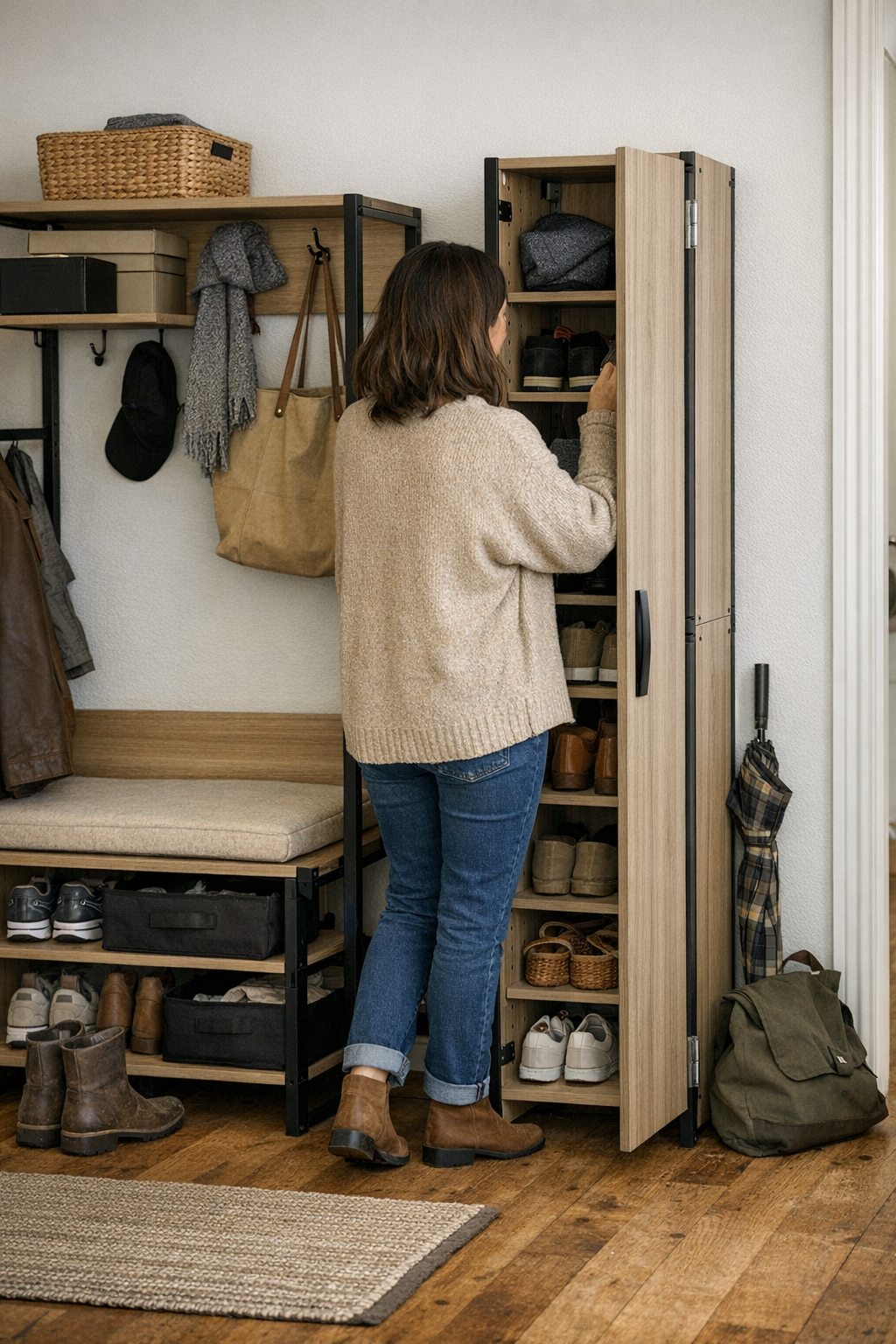
    If your entryway makes you stop to clear a path just to open a cabinet—or if dropped bags and creeping shoe rows keep turning “organized” into blocked and awkward—your storage setup isn’t helping, it’s fighting you. In high-traffic thresholds, the swing and footprint of a cabinet decide whether your daily routines flow or jam up. That’s where the real difference between wide-swing and narrow storage doors appears: not in showroom images, but in the grind of everyday use as items pile, shift, and the so-called tidy zone keeps falling apart under real movement.

    How Wide-Swing Cabinets Turn Flow Into Friction

    On paper, a wide-swing entry cabinet looks like it makes things easy—open the door, see everything, grab what you want. But this only works as long as the floor in front stays empty, which almost never happens. The moment routine kicks in—a rainy drop-off, arms juggling bags, someone else squeezing by—the wide door’s oversized arc bulldozes shoes out of line, catches on bag straps, and demands a cleared strip of floor every time you need to get inside. The “open access” quickly turns into a moving blockade right at your chokepoint.

    This isn’t random clutter—it’s predictable: Shoes left even slightly forward get swept out or tripped over. Bags stacked near the hinge get toppled or pinched when you open up. Jackets hung near the action lose sleeves to the swinging door. Each trip starts a mini reset, copying yesterday’s cleanup. You don’t see the cost at first, but after a few days, your “organized” entry is just a new obstacle course—slowed, crowded, and demanding extra steps you barely notice but always feel.

    The Cumulative Effect of a Wide Arc

    These little interruptions stack up fast. Step back to open the cabinet, put something away, and that tidy walk line you made yesterday instantly fills with today’s shoes and bags. The reset never holds. If your square footage is tight or your entry gets heavy use from several people, a wide-swing cabinet makes the space feel like it’s set up to resist you—not support you.

    Narrow Storage Doors Make Space Behave

    Now compare a cabinet with a narrow pivoting door—one that opens close to the cabinet face and claims no more than 12–15 inches into the room. Suddenly, shoes and bags can accumulate near the front without blocking storage at all. You can walk in, kick off shoes, drop a bag, and still open the cabinet freely. The threshold stays passable, resets are faster, and you don’t have to rearrange everything just to grab a coat or stash wet boots.

    Slim doors, easier routines. Slim vertical storage uses wall space, not walkway, so it rarely forces you to step around a giant moving door. You get access along the side margins—the zones where overflow usually starts to sprawl—rather than needing a clear, empty rectangle for a door arc. Items get put away with less chance of triggering a domino effect of shuffled piles or misplaced gear.

    When Real Life Crowds the Threshold

    You feel the difference on any standard morning: one person wrestling with shoes, another squeezing through with a bag, someone else dropping their stuff halfway inside. Wide-swing cabinets force people to wait, back up, or shuffle around the door. A narrow-door unit lets movement continue; you’re less likely to block the flow or trap yourself and others between piles and swinging edges. Even when piles form, they aren’t automatically in the way.

    Everyday Scenarios: Where Design Collides With Routine

    Real entryway setups show their true behavior in ordinary moments:

    • The “Quick Reset” That Stalls: Putting away one pair of shoes should take seconds. But when a wide-swing door needs room, a simple reset becomes a full-shuffle event—move shoes, shift bags, maybe even slide the bench—just to open the cabinet fully and finish the task.
    • Drifting Overflow: Shoes neatly aligned by a bench edge stay that way only until a door swings through—then the row spreads wider, the bench collects items, and your walk zone eats clutter instead of containing it.
    • Bag Drop Problems: If your storage needs a “safe zone” to function, there’s nowhere good for bags except in the walkway or in corners where they become trip hazards—or get dragged by the next opening.
    • The One-By-One Backup: Rainy days and family entries expose the flaw: every person waits for the giant door to clear before moving through—when the goal should be quick movement, not staged procession.

    Each repeated friction point—tripping over bags, shifting shoes, apologizing for blocking the way—chips away at any entryway system’s claim to be organized. Good storage doesn’t just look neat on moving day; it lets you move and reset with minimal hassle when the week is in full swing.

    What Actually Changes With a Slim Vertical Storage Unit?

    Switching from a wide-swing to a slim, wall-hugging vertical cabinet resets the threshold for real. With a swing limited to about 15 inches, shoes and bags now pile near the door without blocking access. Instead of stopping to clear a landing zone or nudge shoes aside, you open, stash, grab, and step through—no pivot, retreat, or tactical sidestep needed. No one waits in the hall. No one has to step back. Movement stays continuous—even as piles appear and disappear through the day.

    The result is everyday pass-through—not just first-day tidiness. Over a few weeks, the difference is quietly but visibly real: the bench is for sitting, not overflow. Shoes go back on shelves, not back into traffic. Less drama at the threshold, fewer end-of-day resets. Problems don’t vanish, but they stop piling up right in your movement path.

    Does a Narrow Door Limit Storage?

    This is often the big question. In use, vertical units trade extra swing space for height and adjustability. For most mixes—shoes, hats, backpacks, or a rotating set of seasonal gear—capacity holds up if you set the shelves to match your highest-traffic items. Unless you’re parking winter boots for six people or storing large sports equipment, nearly all entryway needs fit. If the area is still crammed, it’s often the overflow of “just-in-case” items, not a storage pattern flaw.

    Points to Watch: Not Every Narrow Door Is Equal

    One repeated headache with narrow doors: weak hardware. Cheap hinges or flimsier doors can’t keep up; they flex, slam, or drift out of alignment after just a few weeks of hurried use. When considering a change, check hinge strength and door stability, or upgrade hardware so the door survives the cycle of slammed, pulled, and leaned-on use it’ll see at real thresholds. A narrow swing only helps if the door stays squared up after 100 daily grabs and drops.

    When and Where Wide-Swing Still Makes Sense

    There are spaces and routines where wide-swing cabinets can work—mainly when you control every variable. If you have a guaranteed clear floor in front (at least two feet, reliably), and your entry routine is smooth, timed, and never involves piles or sudden drop-offs, a wide-swing door won’t punish you. But for most lived-in homes—where entry space shifts from gear landing pad to hurried reset zone—each wide door is an invitation for daily pileups and extra steps.

    One visible rule: If you’re regularly sliding items aside to open your cabinet, the door is eating up your movement zone. Any bag, shoe, or bench edge within about 24–30 inches of the hinge is at risk—and will get swept, blocked, or stranded in daily use.

    The Big Difference: How Entry Storage Shapes Daily Life

    This isn’t about looks or matching covers—it’s about function when things get messy. Every time a pile forms, the wrong door turns a small hassle into a blocked threshold. Wide arcs demand wide lanes and daily vigilance. Slim pivot or sliding setups trim that demand, letting your routine—including the inevitable drift of shoes, bags, and wet things—play out with fewer slowdowns. “More storage” isn’t the answer; storage that respects your real movement is.

    Find transition-space storage that adapts to your routine at Betweenry.

  • How Categorizing Wall Rails Transforms Your Workspace Efficiency

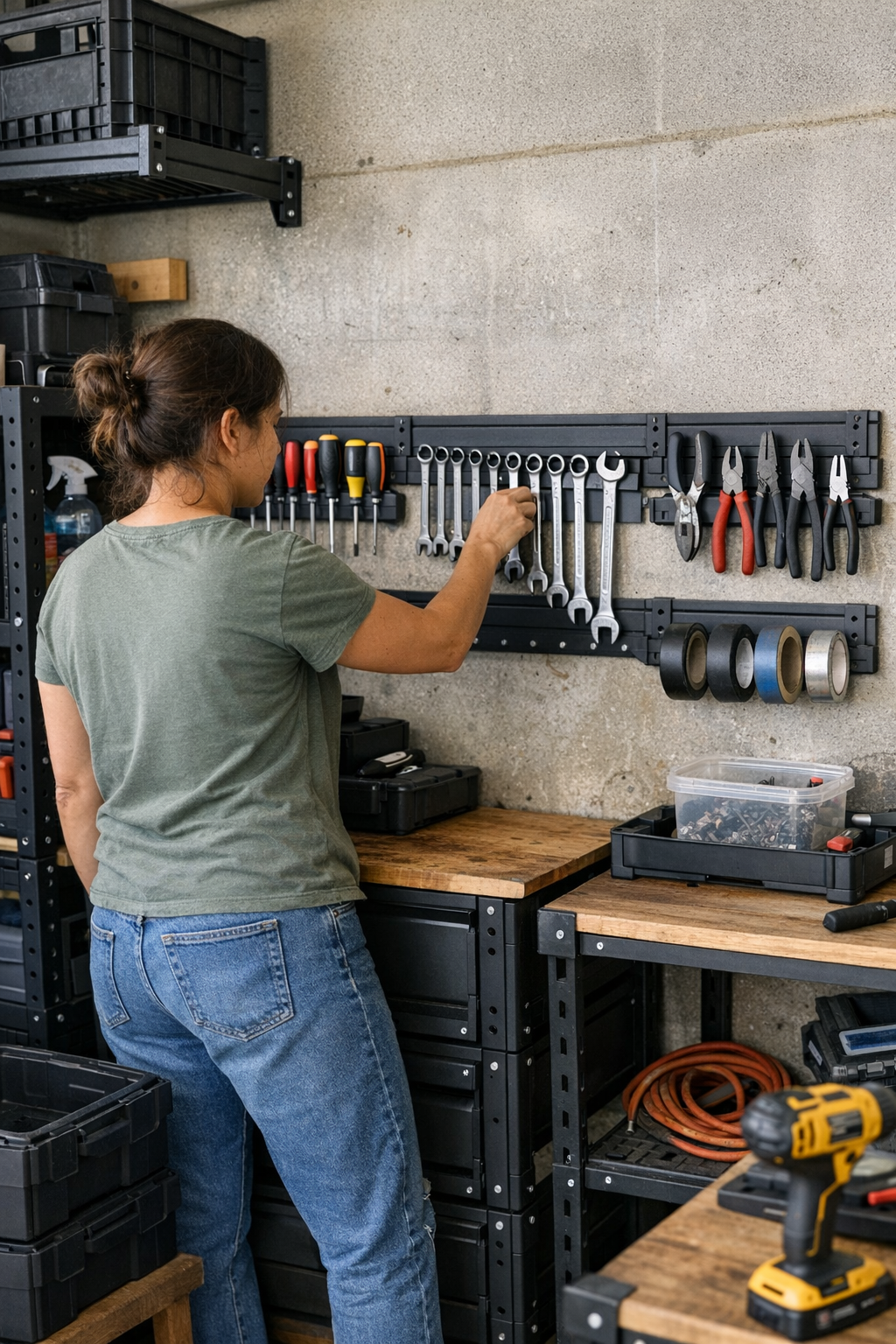
    The wall rail system is almost a trap—a setup that lures you in with that first-day perfection. The rails go up, the hooks line the wall, and suddenly every screwdriver, pliers, tape roll, and wrench has a spot. For a brief window, the workspace transforms. You snap a photo: wall looks tight, every handle lined up, not a tool in a pile. Whether it’s the garage side wall, a converted shed, or the back edge of a basement workshop, the promise is clear—no more wasted time digging through bins or stepping around stray parts on the floor.

    But the reality starts showing within a few days. Your fixes and projects turn into a daily rhythm: a garage cart gets shifted to open up the path, you reach around a cabinet edge again, the work zone briefly clear before the tools start shuffling back into motion. That first wave of satisfaction? It’s always just a bit too fragile.

    Where “Good Enough” Organization Quickly Breaks Down

    Fast forward a week. Regular use exposes all the friction the clean wall photo missed. Grabbing a tool means knocking into another. Reaching for the tape measure requires moving the big wrench out of the way; two screwdrivers tangle for the same slot. Even just returning tools after a late-night tweak feels clumsy. You hesitate, balancing items, scanning for a free hook, finally wedging a tool wherever it’ll fit. Each micro-improvisation, barely noticed in the moment, adds up to a crawl when trying to keep pace.

    To the casual eye, the setup passes. “Everything’s on the wall,” someone might say. But for the person who actually uses the space, a pattern emerges: one main rail jams up, the others stay half-vacant. Your reach zone clogs with orphan bits—drill bits shoved sideways, a clamp doubling up next to the tape. A slot that technically “holds” gets blocked, and gradually, clutter concentrates wherever your hands keep landing. The other rails might as well blend into the paintwork. By Wednesday, the area’s still “organized”—but it’s subtly sabotaging your momentum.

    Mixing Categories: Recipe for Routine Clutter

    It feels efficient to slot tools wherever they fit. You fill up by shape and size, not by use. For a while, that’s enough. Until, that is, you’re in a rush—three tools to return, none slot back cleanly. The screwdriver’s only free spot means wrestling past a big wrench; tool grips overlap, slots begin to bow, maybe something tumbles behind the bench. A couple tools land “just for now” on whatever surface is closest. Ignore it once, ignore it twice, and now you’re living with a slow drift back toward chaos—the system demanding your attention just to function.

    The Clutter Magnet: Why the Mess Finds One Spot

    The tightest rail—the one in your main workflow—becomes a magnet. A stray fastener or marker gets dumped in the gap “until later.” A tape reel ends half-hung, the backup tape ghosting behind. Meanwhile, three feet down the wall, perfectly fine rails are wasted. This is the zone that starts to resist resets. Suddenly, clearing up takes willpower and a full stop, not just flowing as part of the routine. That “organizing” moment feels heavier every time.

    Category Rails: Simple Shift, Tangible Difference

    This is where splitting rails by tool category doesn’t just tidy up—it unlocks friction you’ve learned to live with. Screwdrivers finally get their own rail, tapes stay clustered together, wrenches drop into their lane. Now, cleanup stops being a mini-puzzle: each return is direct, quick, brainless. No more doubling up or stacking tools by size rather than type. Overflow is obvious. You’re not hunting for a slot—you’re moving on.

    Even in cramped spaces—a bench tucked against a wall, a narrow garage aisle—this small discipline matters. Instead of reshuffling mid-task, the layout runs on autopilot. Grab, use, return. Two users aren’t stepping on each other’s system; everyone can scan the wall and see what’s missing. Return speed picks up. The zone stops bottlenecking. And the mental drag lifts.

    Pushing Past the “Neat Wall” Myth

    Picture the old way: a Saturday, tools stacked for a repair. Four rails, all jumbled. By noon, you’re struggling—misplaced screwdriver blocking cleanup, screws sliding behind a pile of wrenches. Dead corners catch orphan parts. The job’s pace slows to hunt-and-fit, with tools landing on carts or benches just to stay out of the way. That’s what “organized enough” really feels like—a setup that stores things, but keeps interrupting the work flow.

    After relabeling and splitting the rails, the same rush job flows. Each tool snags its exact spot, no reshuffling needed. When something is missing, there’s a clean gap—not a guessing game or a scavenger hunt. No more stumbling into loose bits two days later. Resetting the area just happens as part of working. It isn’t flashier; it’s just less friction, time after time.

    Beneath the Surface: When Looks Aren’t Enough

    Most wall rails claim “a place for every tool”—but in practice, it too often means “it fits somewhere, for now.” That’s not what gets you through real projects. The difference between a wall that looks tidy and one that truly flows is huge. A packed, photo-ready setup impresses, but if you’re pausing every step to move a tool, that organization is just busywork in a new disguise.

    The cracks show up fast: an early-morning rush, two projects colliding, or a quick fix before dinner. The system can’t keep up. Tools cluster in high-use zones, corners fill, and soon movement feels pinched. Resetting isn’t just returning things, it’s wrestling the space back from daily entropy. The outer order hides a deeper resistance that drains routine work.

    Setup Tweaks That Pay You Back Every Day

    This isn’t about a prettier wall. Assigning rails by category gives you smoother movement, faster returns, and less energy lost cleaning up after yourself. Leave an extra slot or two open on every rail—that bit of slack lets you flex during busy spells or absorb odd overflow without the whole system collapsing. And mount rails so the furthest slot is comfortably reachable for everyone using the space. A tool that’s hard to return will wander; don’t give friction a foothold.

    Even with tools in and out, benches shuffling for bigger projects, or a cart wheeled in to clear the walkway, a zone built by function—not just form—holds. You won’t find wrenches marooned in random corners days later. When something is out, it’s obvious and it’s fixable. The whole system leans toward clarity rather than confusion, and that carries through every job—big or small.

    There’ll always be late nights when you dump a handful of fittings on the nearest shelf. Even the sharpest layout can’t guard against every rush or distraction. But when your rails are set up with real, daily flow in mind—clear categories, extra slots, easy reach—you get more than a fleeting “organized” look. You get a setup that actually helps you work, recover, and keep moving. In any busy, lived-in workspace, that’s worth far more than a photo on the wall.

    http://stacknest.myshopify.com

  • Choosing the Right Reciprocating Saw Blade to Prevent Spray Project Rework

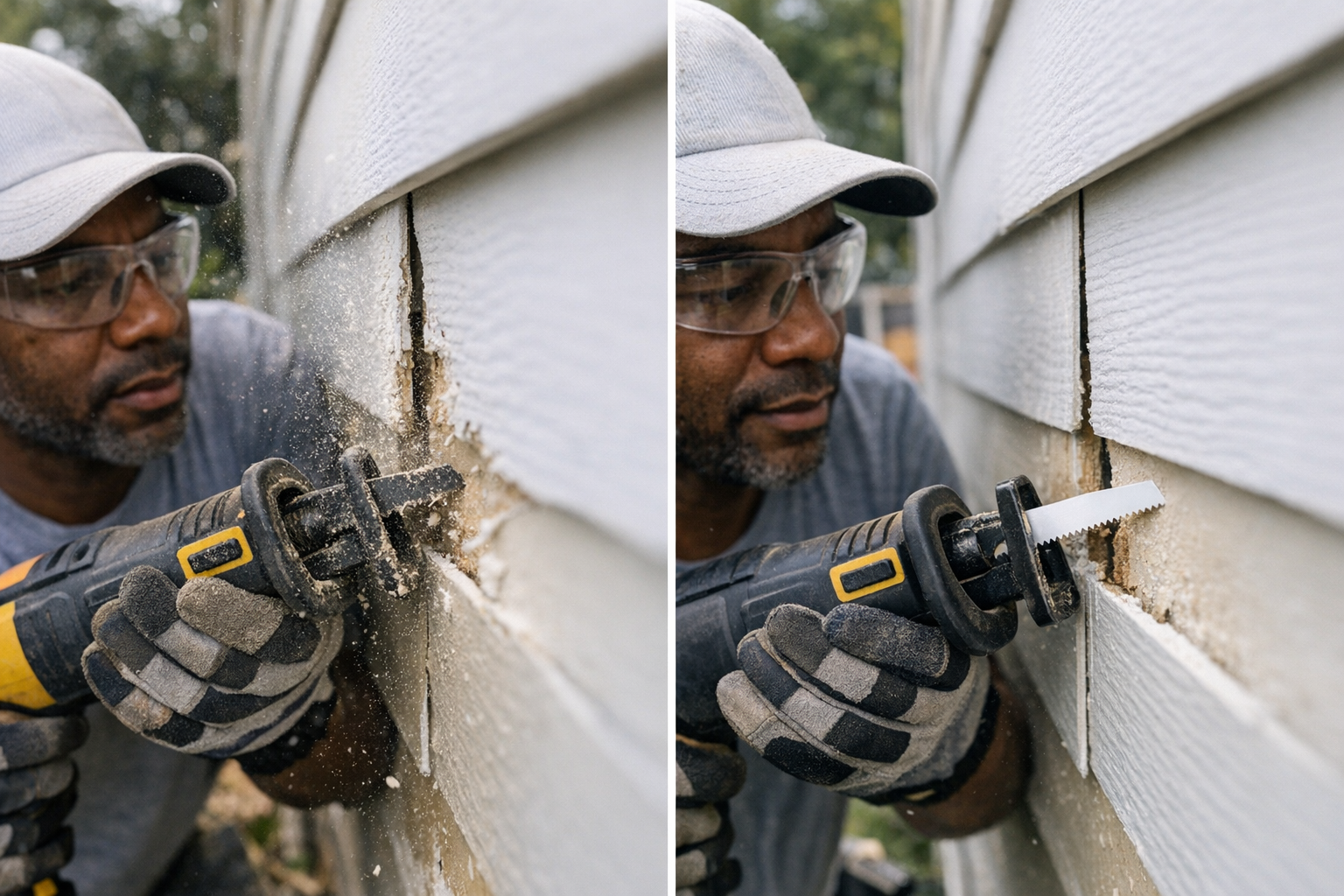
    The difference between two reciprocating saw blades isn’t in the packaging—it’s in the ugly grind after your third board, when dust cakes your shirt and your finish work is hanging by a thread. In the aisle, blades all look the same: bi-metal, wood, composite, fiber cement. Easy to think any will survive a day of cutouts, trim work, or quick demo. But a real job exposes the flaw: a minor mark in the kerf, an edge chipping out mid-swing, the blade fighting you at every seam when it should track clean. Out in the field, it’s never the specs—it’s that repetitive saw chatter that tells you, too late, where you cut corners and where the frustration begins.

    When a Sharp Blade Goes Dull Ahead of Schedule

    Every job starts the same: fresh blade, decent cut, straight line. Maybe you’re running the saw along drywall, opening up a run on siding, or roughing out space in fiber cement. The first pass feels smooth enough—until a couple of sheets in, you sense drag setting in. Suddenly, the blade stutters. Your hands adjust on reflex, steering harder to fight the tool’s rebellion. What was a crisp line starts to crumble. You’re tracking the edge more than cutting, compensating for bites and splinters. Prep that should have been a single sanding pass morphs into a dusty, time-eating cycle of “just one more round” to fix jagged seams.

    Lose the blade’s edge, and you lose the finish long before the spray hits. Chips and rough joints don’t disappear beneath paint—they catch light, collect dust, and trap mistakes. That quick finish coat only magnifies every flaw, pushing you back into patching, spackling, and redoing work you thought you left behind.

    The Warning Signs You Can’t Ignore: Vibration, Dust, and That Familiar Grit

    Vibration is the earliest red flag. As a blade wears, it shakes control loose from your hand, making each push more deliberate and less stable. Worksite reality sets in: you’re muscling through a board you should have skated across. By late in the run—especially in weathered trim or layered siding—dust flies, edges fuzz, and the once-steady cut chokes up. It’s not the environment, it’s your tool screaming for a swap you hoped to avoid.

    The kerf tells the real story. Blades that keep to a tight cut—think a 1.2 mm kerf, not one that widens with every pass—hold edges clean, shoot out less dust, and mean less work chasing splinters. The difference is subtle in motion: a faint rasp, a shift in pitch, resistance where you didn’t expect it. Dismiss those signs, and you’re in the trenches later, fixing damage that’s already baked in.

    Why Identical Blades Split in Real Use

    Try running two blades—both “wood and composite” on the wrapper—through the same paces. Early on, you might not notice much. But switch to denser material or hit a patch of old siding: one blade walks the line, the other stalls, gums up, and leaves you wrestling just to finish a straight slot. The aftermath is obvious: a decent seam on one side, chips and chew-marks on the other. Paint or spray accentuates every rough spot, and suddenly, one “identical” blade has cost you triple the cleanup.

    This isn’t hypothetical—a single slip turns three clean runs into one headache with extra sanding, patching, or even a recut to save face.

    Compounding Fatigue: Humidity, Heat, and Workflow Breaks

    Imagine knocking out exterior trim on a sticky summer afternoon. As the humidity creeps up, so does the fatigue. Two or three cuts in, your blade goes from slicing to snagging. Now you spot chips at every restart and a faint haze of splinters under the saw’s shoe. Do you stop for a fresh blade, burning time, or tough it out? There’s no winning: every flaw requires more sanding later, every break in rhythm knocks the schedule off. The “almost good enough” blade adds up—each small chip snowballs, every error compounds, and the finish suffers before you even reach for a sanding block.

    Long-Term Damage Control Starts with the Right Blade

    After enough jobs, you stop thinking in cut speed—you think in cleanup time and wasted effort. A blade that keeps its edge means less mess, less sanding, and more control as you switch across drywall, cement, or composite. The value isn’t just about cutting quick—it’s about not having to chase splinters through prep, not scattering dust in every direction, not losing the line because the blade flexed late. The payoff: a seam you can finish once and move on, with less arm fatigue and a cleaner bench at the end of the day.

    Read the Signals and Minimize Rework

    Spotting a blade on its way out isn’t guesswork. Increased pushback, new tremor in your wrist, a sudden rasp breaking the usual rhythm—these tell you the blade’s served its time. When dust clouds up faster, seams spit out splinters, or the kerf feels ragged, don’t wait: swap it. Early detection saves serious labor. Ignore the signs, and you’re staring at your workbench, redoing steps you shouldn’t have had to repeat.

    Spray Reveals What the Saw Hides

    Spray prep has no mercy. The paint gun will spotlight what you hoped would disappear—every chip, rough patch, or lifted seam gets showcased under a clean finish. Rush the earlier steps with a soft or spent blade and you guarantee yourself rework. This is the crossroads: the difference between “done enough for now” and a jobsite finish you actually want your name on.

    The Small Setup Choice That Sets Up Your Whole Day

    What you pick off the shelf echoes by late afternoon. A blade that starts clean and stays true is more than a quiet advantage—it’s fewer mistakes, less dust in your lungs, and time saved where it counts. The blade that vibrates, tears, and fights back? It’ll haunt your cleanup and drag the job out, eating energy you can’t spare. Listen to your tools, catch the change before you’re fixing problems instead of making progress, and you’ll end each project with seams as crisp as you planned—no compromises, no extra passes, and nothing the spray gun can’t forgive.

    Find jobsite-ready reciprocating saw blades and more at Gumboll.

  • Streamline Your Carry-On for Stress-Free Airport Boarding

    The biggest weakness in most “organized” carry-on bags isn’t visible until you’re actually moving: Standing in a slow security line, shouldering your bag while juggling a passport, or squeezed behind the person who’s already loading trays, you find that “order” breaks down fast. A bag that looks perfectly packed at home turns clumsy with every forced reach—one hand fishing beneath zipped pouches, a passport trapped under orderly layers, earbuds buried where you can’t get to them. The true test isn’t the tidy layout on your table; it’s the moment you need to grab something in real airport flow and your setup adds friction with every repeated move. This is where most travelers discover their perfectly arranged carry-on just became their biggest travel hassle.

    When “Organized” Falls Apart: Friction in Real Transit

    The most common travel mistake is believing packing order alone guarantees a smoother trip. You arrive at airport security, confident because your bag holds every item—each in its pouch, every pouch in its slot. Then reality checks in: your passport is under three other pouches, and your headphones require a full unpack just to drown out boarding announcements. Meanwhile, the line presses forward. The setup that felt streamlined in your living room now means you’re popping zippers, shifting stacks, and losing seconds at every interruption. Every extra reach interrupts your flow and signals to everyone behind you that you’re not quite ready for travel pace.

    Travel friction builds by the minute—not just from pouches and zippers, but from forced, repeated rearrangement. What starts as a minor pause as you dig for documents grows bigger each time you need access, especially as crowds grow more impatient. If you’ve ever found yourself in mid-queue, holding up a line because your travel layout needs constant untangling, you’ve already seen how “order” can quietly work against you when the clock is ticking.

    Layers vs. Access: Where Packing Logic Breaks Down

    Many carry-on bags sell the promise of “complete organization”: document sleeves deep inside, neatly stacked packing cubes, everything zipped away tight. It feels secure—until you actually need to move fast. What makes sense in static packing falls apart under live airport pressure, where repeated access is the rule, not the exception.

    Imagine you’re called for boarding or another document check. The sleeve holding your ID is “safe,” but accessing it means bending your bag in a cramped space, rooting around blind, yanking out a pouch, then re-layering awkwardly on your knee. The third or fourth time this shuffle happens—often before you’ve even reached your seat—the so-called organization feels like a trap. Your setup might protect every item, but at the cost of speed, confidence, and real usability.

    Where the Friction Shows:

    • Hidden sleeves demand repeated full unzips—forcing a reset for every small item
    • Pouches stacked tightly together—pull one, two others shift, nothing returns perfectly
    • Essentials vary in placement by segment—constantly reopening the main compartment for routine checks

    Several retrievals in, “secure” packing turns into a string of micro-delays—each one piling up stress during boarding calls, gate changes, and seat entries. Travelers quickly learn that looking organized and staying accessible are not the same thing.

    Repeated-Use Realities: Movement Exposes Weak Points

    The biggest gap in many packing systems appears when travel stops being linear. Tight layovers, unexpected crowd surges, or those last-minute boarding zone calls—suddenly, your neat setup isn’t helping but holding you back. With one hand tied up by a bag, the other juggling a phone or tag, every inefficient reach becomes obvious and expensive.

    Seconds lost hunting for routine items add up in ways you only notice when the stakes are high. The traveler who pauses at the x-ray tray for a buried document, or steps out of the aisle to reshuffle pouches after a bag check, is living the flaw of overdone order. These are not just minor delays—they risk missed boardings and heighten the pressure at every checkpoint. Real travel flow is broken not by messy packing, but by “neatness” that chokes access at critical moments.

    Boarding and Seat Entry: Small Advantage, Big Relief

    The difference jumps out when you compare opening an outer pocket and producing your ID in seconds to those wrestling deep-pouch setups. By the third or fourth document check, every extra zipper feels heavier—and each awkward reach increases the chance you’ll drop or misplace something vital. This isn’t a rare problem; it’s the default for most new “organized” layouts that never saw real-life, repeated access before being labeled travel-ready.

    Small Changes, Big Difference: The Case for Quick-Access Zones

    After too many trips repeating the “layered pouch” dance, switching to a carry-on with one consistently reachable outer pocket changed my entire travel sequence. Now, boarding passes, passports, and earbuds stay in a single, hipside zip—always retrievable with the bag upright, never demanding a full compartment repack. Access is instant, using one hand, and never disturbs the rest of the bag’s order.

    Does this pocket look as sleek as the pre-trip flat lay shot? No. But the trade-off is a carry-on that finally matches the speed of airport movement. Suddenly, reaching for essentials isn’t a disruption—it’s routine. Every document check, boarding pass flash, or last-minute repack happens without losing your place in line or compromising everything else inside. In airports, that seamless quick-access zone proves more valuable than the illusion of perfect organization.

    The Quiet Wins of Quick Access:

    • Retrieving documents without opening the main bag (or disturbing its layout)
    • Grabbing earbuds or comfort items mid-line, never disrupting the bag’s stack
    • Sitting down in a narrow airplane seat fully prepared, already holding everything you’ll need for the first hour
    • Reducing that subtle embarrassment of holding up impatient travelers behind you at key checkpoints

    Accepting Visible Imperfection for Smoother Travel

    It’s tempting to pack for a perfect photo: every pouch in line, every zipper closed, nothing left out. But repeated travel almost always breaks that visual order. If you sacrifice quick-access to keep your bag looking pristine, you invite needless friction at every gate, checkpoint, and seat entry. The real test is how the setup works after three, five, ten retrievals on a single trip—across miles and terminals, not just a flat surface.

    The lesson lands quickly: order counts only when it survives real movement. A sharp-looking bag won’t matter if grabbing your passport, phone, or headphones pulls you out of the flow every time. Over repeated segments, functional access always saves more stress—and the best setups are the ones you barely have to think about, even after hours on the move.

    Packing for Movement, Not Just for Show

    Real carry-on utility depends on whether your bag supports you in the small, repeated travel moments: airport security, spontaneous gate changes, tight aisle shuffles, or the mid-flight hunt for a charger. A packing system that demands frequent full unzips or repacking will let you down far more quickly than one that trades a little visual neatness for reliable, one-move retrieval of your essentials.

    Across dozens of flights, small changes—putting high-use items in consistent exterior pockets or switching to a carry-on with a dedicated quick-access area—delivered more relief than any stacking scheme. The best carry-on isn’t the prettiest on pause. It’s the one you trust to move with you, not against you, checkpoint after checkpoint.

    Shop CarryOnSupply for practical travel solutions that work in real movement.

  • How Proper Monitor Alignment Transforms Your Workstation Comfort and Efficiency

    The desk that looks organized—but feels subtly wrong after an hour—is more common than you think. The daily details tell the truth: your monitor slides just out of line, pushing you into a constant neck tilt; a cable sags over your notebook’s space, tugging as you write; the riser that made sense at setup now feels like an obstacle when you reach for anything. Creative hacks pile up—books for monitor height, clamps angled for stability, trays nudged to fit a shifting workflow—but every workaround rearranges how you sit, reach, and move. What starts as a small fix becomes a cycle of micro-adjustments and posture drift. A supposedly “improved” workspace actually reprograms your movements—shoulders raised, chair twisted, trays skating to a new edge—because the basics won’t stay put.

    When “tidy” is not the same as usable

    Desk setups fool most people at first glance. The monitor lines up at the center; cables vanish behind the surface; organizers frame the edges. Everything appears under control, but the hidden friction starts immediately in real use. The screen is a touch too low, or worse, slowly slides out of place over the morning. Charging a device sends the whole cable nest shifting—and hands keep bumping into the riser meant to declutter. Trays block one another, even as the surface looks clear.

    These aren’t just quirks—they pull your routine off track. You skip the notebook because a cable’s in the way. You swivel your entire chair rather than adjust the screen. Even a video call demands shuffling trays or restacking something just to see the screen straight on. By midweek, the tidy layout from Monday becomes a silent source of distraction, extra reach, and lost time.

    The real-world cycle of misalignment

    Repeated use exposes the split between a stable-looking desk and one that works under pressure. Day after day, your routine isn’t just sitting and typing. It’s a loop: flipping between keyboard and notebook, reaching for a phone, plugging in headphones, riffing on a call, pulling open a drawer for documents, nudging the screen to regain your view. Every reset introduces a new interruption—none huge, but together unavoidable.

    The loop never quite closes cleanly. The monitor slides out of sight, demanding another push; stray cables wedge behind a riser or snag on a pen as you pull them forward. The drawer unit—meant to keep clutter down—commandeers leg space or blocks the reach for your mouse. Set the monitor at the wrong height, and your neck will remind you by lunch. Try to re-balance one piece (cable slack, storage, or light) and you unsettle another—screen stability, viewing angle, or elbow room.

    How posture and workflow bend around the setup

    It’s not always obvious on the first day. But over dozens of work cycles, your body stops fighting the problem and starts working around it. That means you swing the chair instead of moving the screen. You shift trays sideways to fit your elbow, or avoid drawers blocking your knees altogether. Behavioral workarounds take over—tiny imbalances building up, until “routine” means compensating for equipment that never quite fits. The clearest cue isn’t in the look but the fact that re-entering your workspace always costs a few extra movements you barely register.

    The shift: What changed when alignment held steady

    Replacing a riser stack and tangled cable bundle with a strong, tensioned monitor arm isn’t a dramatic before-and-after—it’s a gradual unraveling of friction. The monitor locks in at 52 cm from the desk edge, lined up with your main seat. It stays put, doesn’t pitch forward, and never needs you to nudge it back after opening a notebook. Cables now cross the desk in managed paths, above the real work zone, not dangling beneath your reach or pulling gear off-center. Trays only migrate if you move them, not because the screen does.

    This isn’t desk perfection. It’s the slow fade of awkwardness. Posture centers itself. The reach to your notebook no longer crosses a cable cluster. Getting back to work after each break is frictionless, not punctuated by a minute of setup. After several days, instead of picking up new minor habits to avoid inconvenience, you simply stop thinking about the desk at all. The difference accumulates: the desk becomes something that gets out of the way instead of being one more thing to manage.

    Recognizing the signals of a desk that’s fighting back

    You don’t need analytics to spot when your monitor setup is quietly sabotaging you. Look for these in everyday routines:

    • You keep nudging or rotating the monitor just to center your view.
    • Stiff shoulders and a tired neck slowly creep up by late afternoon.
    • Cables never seem to stay where you set them; you’re always untangling, re-routing, or shifting them out of your work zone.
    • Trays, drawers, or desktop organizers migrate across the surface—not for better reach, but because the core screen-to-seat line keeps shifting or getting blocked.
    • The desk looks magazine-ready, but your body keeps shifting or adapting, never quite comfortable.

    Why organizing for appearance can sabotage actual work

    The most common trap is optimizing for symmetry or a “clean” look while sidelining how you actually move through the workday. A balanced, photo-ready desk invites posture shortcuts that turn chronic. A monitor placed for looks can knock cables into the wrong spot, block storage, or force your chair into an angle that settles into bad habits by the end of a week. The cost is paid in dozens of small adjustments that build up, never quite landing on a setup that suits what you really do hour after hour.

    What a workstation that actually holds together looks like

    A strong desk setup is practically invisible in use. The monitor stays locked to your main sightline—no more intermittent drift to correct. Cables follow consistent paths that don’t block quick notebook flips, keyboard swaps, or fast device changes. Storage drawers are accessible but never steal your leg space or force you to reach sideways. This is less about perfect order and more about a workspace that finally stops fighting back.

    What changes? You reach for what you need without a dance of micro-adjustment. Resetting for the next task means returning to your seat, not another round of pushing, untangling, or re-centering. Attention stays on the work, not the surface. Ergonomics stop being a checklist and become routine without effort.

    Quick FAQ: Real-use setup questions answered

    How do I know my monitor position is sabotaging my routine?
    If you nudge the screen more than you realize, twist or lean for a clear view, or feel body tension by day’s end, your monitor’s placement isn’t working. If you have to shift trays or reorganize cables just to fit a notebook, the main problem is likely misalignment at the heart of the desk.

    Do monitor arms actually solve real-world desk friction?
    Yes, for anyone switching devices, referencing paperwork, or working long hours, a well-tensioned arm eliminates drift, enables precise placement, and helps cable and storage management play along instead of against you. Riser stacks or static stands tend to fix one pressure while creating new ones—a clear surface but a blocked reach, stable monitor but tangled cable, and so on.

    What should determine your monitor position?
    Forget the literal midpoint of your work surface. Start from where your main seat meets natural posture and line of sight; arrange cables, lighting, and storage to support that position, not dictate it. Accessories should orbit your main workflow, not interrupt it.

    Why an aligned workstation pays off beyond appearance

    A desk that locks in—monitor reliable, cables tamed, viewing line stable—won’t erase every workday annoyance, but it eliminates the small, repeated resets that quietly eat into comfort and attention. With the right arm, the right distance, and storage arranged for real reach, your desk supports you instead of scolding you. The benefit is cumulative: you may not notice it in a single day, but after a week, only the right structure prevents those hidden, stackable interruptions from returning.

    Explore the full WorkBasic collection

  • Why Ceiling Lighting Outperforms Lamps in Shared Compact Rooms

    The real weakness of shared rooms filled with a mix of desk and floor lamps isn’t subtle—it shows up every time you plug in one more cord, shuffle the lamp for a better angle, or catch yourself glancing at cables before even noticing the room. A patchwork lamp setup might feel flexible at first, but in daily use, it turns into a sequence of micro-annoyances: dim edges just out of reach, exposed cords rerouted around chairs, and glare that never fully disappears. This quiet friction is what keeps routines off-balance: every “fix” for a dark spot creates a new loop of distraction, and the space keeps demanding more work just to stay useable.

    The Patchwork Problem: Lamps Fix Spots, Not Spaces

    Step into any shared room depending on freestanding lamps and you’ll see it. What started as a “smart” lamp in each activity zone—reading, working, relaxing—turns patchy fast. Each fixture throws a contained pool, leaving surface edges lurking in shadow. Add more lamps and the lighting never truly evens out; instead, cords start dictating paths around desks and under tables, forcing people to walk the long way or trip on a surprise slack loop. Suddenly, the urge to move the lamp or untangle a cord becomes part of the routine, and function slips while clutter creeps in.

    The longer this setup stays, the more energy goes into managing the light instead of using the space. Rearranging cords becomes chore number one. Someone’s always nudging a lamp, shielding their eyes from glare, or stretching to see beneath a shelf. Spaces that double as work and circulation zones become tension spots: there’s always a task or a corner with a dim, inconvenient edge or a cable waiting to catch a foot.

    Ceiling Lighting: The Step Up Most Spaces Need

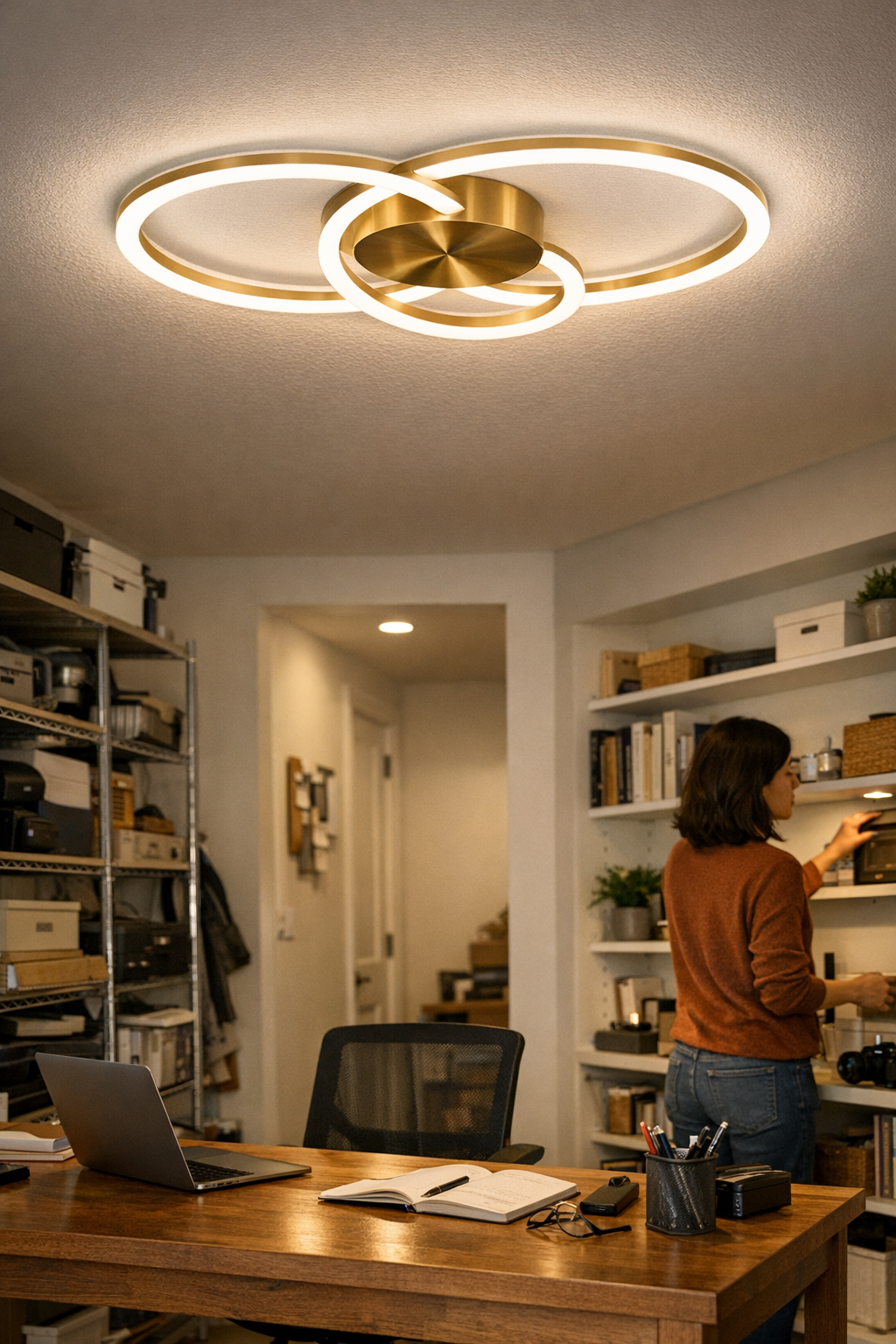
    When you swap scattered lamps for a ceiling fixture, the difference isn’t subtle—it’s structural. Ceiling lights cover the whole area, pushing even, reliable light across work surfaces and walking paths. Suddenly, you’re not rotating lamps between tasks or negotiating who gets the best lighting for that project. Surfaces stay visible; clutter drops. The drag of cord-removal, lamp-shifting, and glare-checking mostly disappears.

    Put this to the test: try finishing a group project at a wide table. With lamps, there’s always someone caught outside the pool of brightness, scooting a light for edge papers, or stepping over a cable half-hidden under a seat. Switch to a ceiling panel above the main zone—now, nobody’s covering shadows with a hand, no one’s dodging a cord just to stand up, and the whole table sits in stable, consistent light. The only risk is a fixture positioned too far off-center or a panel that throws glare, but those are easy to see and fix; the baseline leap in usability is immediate.

    Beyond Appearance: Why “Neat” Isn’t Enough

    It’s easy to mistake a tidy lamp cluster for a working solution. Cord wraps and careful placement can make a space look settled—for about a week. Reality settles in when someone moves a chair, and the cord drags loose, or the lamp gets bumped off-angle. Routines devolve into endless small corrections: bending to re-coil cables, moving a lamp because a book or laptop blocked the spread, or trying to smooth the cord that’s always just a bit too exposed for comfort.

    The right ceiling light solves this at the source: Raising the lighting up and off the surfaces frees every desk, shelf, and chair for real use, not cable management. It’s not just a better look—it’s a setup you don’t have to keep perfecting every day. The system becomes harder to break, and daily routines run cleaner because nothing is waiting to snag or shift at the edge of comfort.

    Scene in Focus: The Shared Workspace That Stays Frustrating

    Picture a narrow, lived-in workspace edged with shelves and scattered devices. On paper, several small lamps—one for the desk, one under the shelf—should be enough. In practice? Shadows show up at eye level and beneath shelves, right where small things disappear from view. To actually see into the corners, you find yourself leaning awkwardly, and cables bulk up in the tightest spots, waiting for a chair wheel, backpack, or shoe. Sessions start and end with two minutes untangling something, resetting a lamp, or tugging at cords to prevent a snag. Efficiency drops before the work even starts.

    Introduce a ceiling panel—replace the lamp collection with one well-placed fixture overhead. Now the previously dull shelf edge stays clear even as daylight fades. The walkway is finally free—no more cable bumps at foot level. The main activity zone gets full light, so you’re not stuck staging everything under that one “good” lamp or splitting focus between shadows and glare. The disruption cycle ends: the space cooperates instead of fighting back.

    Real Consequences: Routine Disruption Adds Up

    The cost of lamp-based setups doesn’t just add up—it compounds. Each time you stop to adjust a light, reroute a cord for a Zoom call, scoot a lamp toward a drifting shadow, or shift your chair out of a half-lit zone, you lose time and focus. Shared spaces—coworking rooms, home-offices, anywhere routines overlap—get stuck in constant minor resets. Every new user inherits last session’s tangle and shadow, and the whole process repeats, creating a loop of small but real disruption.

    Ceiling Lighting Is Rarely a Perfect Cure—But It’s a Better Baseline

    No setup escapes trade-offs. Ceiling fixtures fix the repeated annoyances of lamp scatter, but only if they’re positioned to match the real work and walk zones. A panel set too far off pulls the shadow back in, and harsh bulbs can bounce glare if spread is ignored. Still, for most compact or mixed-use rooms, moving from a lamp patchwork to ceiling lighting neutralizes the main routine breakers. It means fewer cable piles, no clumsy lamp shuffle, and near-total surface visibility. Sometimes you’ll still want a small lamp for detail work or warmth—but you lose the endless cycle of untangling and readjusting for basic clarity.

    Small Shifts, Lasting Gains: Where the Value Shows Up

    A space can appear finished and still trip you up every day. The practical value of shifting to ceiling lighting reveals itself less in appearance and more in the vanished distractions: reaching for a file without fishing for a cord, scanning the shelf without squinting for contrast, setting up for a new task without needing to rearrange the room. The room stops announcing its lighting problems and starts quietly supporting whatever happens in it. That’s the shift between a space that’s just “put together” and one that finally works—routine after routine, even as needs and layouts evolve.

    Find practical lighting and support solutions at LightSupport.

  • How Small Changes in Pet Care Can Prevent Daily Cleanup Chaos

    Where Daily Pet-Care Routines Break Down

    Most pet owners think their setup is “organized”—bowls lined up, container nearby, towel within sight. But daily pet care rarely collapses from obvious mess. Instead, routines stall when a basic item isn’t where it needs to be: a water bowl that’s almost dry after work, a wipe stashed behind groceries, a brush tangled with unused leashes. Every small miss, every second spent hunting down the right thing, adds up to slower mornings, repeated double-backs, and cleanup tasks that get pushed off—until they’re no longer quick fixes. If your system looks fine but fails the daily reach test, you’re not alone. This is where CalmPetSupply’s practical setups start to matter.

    Micro-Messes: Easy to Miss, Harder to Undo

    It seems harmless to delay wiping the feeding area—until sticky bits dry before lunch, and “one swipe” turns into a full soak later. When wipes live on a top pantry shelf or behind a stack, cleanup gets skipped, then postponed. Multiply this across feeds, days, and pets, and you’re left correcting buildup that could have been handled in seconds earlier. Each missed moment—one soaked bowl edge, one abandoned towel drying somewhere unseen—drags out the reset. This isn’t about sloppiness; it’s how skipped steps, repeated, quietly turn into more work and visible clutter the next time you circle through.

    When “Organized Enough” Isn’t Enough

    Pet-care stations reveal their real gaps during busy weeks, not on setup day:

    • You reach for the water bottle only to find pots blocking the way under the sink.
    • The brush lives “in the drawer,” but now it’s wedged under dog toys and treats.
    • The quick-clean towel vanished, leaving only kitchen towels you avoid using on fur or paws.

    These aren’t one-time annoyances. They return—when you’re running late, have company coming, or just want to finish and move on. What started looking orderly turns into half-finished jobs, awkward reshuffles, and five-minute chores that sprawl into ten as you keep tracking down supplies that never actually stay ready.

    Shared Spaces, Repeated Interruptions

    Items migrate. Grooming tools left by the sofa block a cabinet later. Bowls inch into busy walkways, ready to trip someone in the hallway. Toys scatter into sightlines and land on kitchen counters simply for lack of a basket. These shifts force extra resets—bending to move bowls again, collecting misplaced towels, hunting for brushes that no longer live by the door. Even “neat” solutions can undermine routines: a lidded storage bin looks clean, but if it requires effort or is stored out of reach, the basics end up left out again, reintroducing friction and visible clutter.

    Real Scenarios: Small Friction, Big Impact

    It’s usually these moments that break the flow:

    • Back from a walk: paw towel missing from the hook, so dirt tracks in and needs later sweeping.
    • Dinnertime: scooping kibble means moving bags, crumbs end up scattered instead of contained.
    • Night check: the water bowl has a sticky ring, but the cleaning cloth is in the laundry, not the drawer.
    • Early morning: kibble container not refilled the night before, so now you’re juggling it between coffee and the door—more crumbs, less time.

    “Clean setups” don’t always solve this. If any step adds time or blocks access, the friction surfaces—slowing routines, raising frustration, and making every task demand more attention than it should.

    Smoother Routines Rely on Certain Details

    The fix is rarely a total overhaul, but a handful of targeted tweaks: a washable towel always parked on its hook beside the bowls—no searching, no waiting for it to come out of the wash. Brushes in an open bin within easy reach, not hidden or mixed into unrelated drawers. The key is placement that favors use on the spot—where you already pause, not where you’ll forget. Put a refill bottle within arm’s reach of the feeding zone, and suddenly topping off water is just a flick, not an interruption that derails the routine.

    True “easy access” isn’t just about visible order. It means resetting the area is so simple you’ll actually do it before small messes become big chores—or before skipped steps stack into next week’s work.

    Closing the Gap Between “Looks Good” and “Works Well”

    An area can look calm, but the difference shows when routines speed up or break down. Is the brush back in the bin or missing every other day? Is a towel dry and hanging—every time—or balled behind the door and useless until the next laundry? The real test for any setup is what survives busy mornings, evening fatigue, and unplanned interruptions. When you keep thinking, “I’ll get to it later,” the daily gap between order and upkeep steadily widens—and every delayed fix becomes that much harder to close.

    Practical Changes, Better Flow

    Watch yourself move through home routines: the pauses, repeat actions, things you touch twice. Supplies that get skipped or detoured are signals: hooks that go unused, bins that are always full but never convenient, water stations that demand a trip to the kitchen instead of a quick reach. Changing just the point of access or moving one tool puts you back in control—a towel where you wipe, not just where it “belongs”; an open tray instead of a hard-to-open bin; water refills waiting in the pet zone, not behind pantry doors.

    These small shifts cut down on double-backs and delays. Over time, they add up to smoother, more reliable care routines—an everyday CalmPetSupply result that doesn’t need a glow-up, just a smarter layout.

    See more practical fixes and tools that match real routines at CalmPetSupply.